
Ticks are tiny pests that can cause big problems. These small creatures latch onto skin and feed on blood, and the longer they stay attached, the more they swell up. When a tick has been feeding for a while, it becomes what experts call “engorged.” Knowing what an engorged tick looks like and how to handle one can help keep you, your family, and your pets safe from tick-borne diseases.
What Is an Engorged Tick?
An engorged tick is simply a tick that has been feeding on blood long enough to become swollen. When ticks first attach to skin, they are flat and tiny. But as they drink blood over several days, their bodies gradually fill up and expand.
Once fully fed, a tick can balloon to several times its original size. Think of it like a tiny water balloon slowly filling up. The tick needs this blood meal to survive and, in the case of females, to lay eggs later on.
This feeding process does not happen quickly. A tick may stay attached anywhere from a few days to over a week while it fills up with blood. During this time, it can potentially pass along harmful bacteria or viruses that cause diseases like Lyme disease.
What Does an Engorged Tick Look Like?
Spotting an engorged tick is actually easier than finding one that just attached. That is because engorged ticks look very different from their normal form.
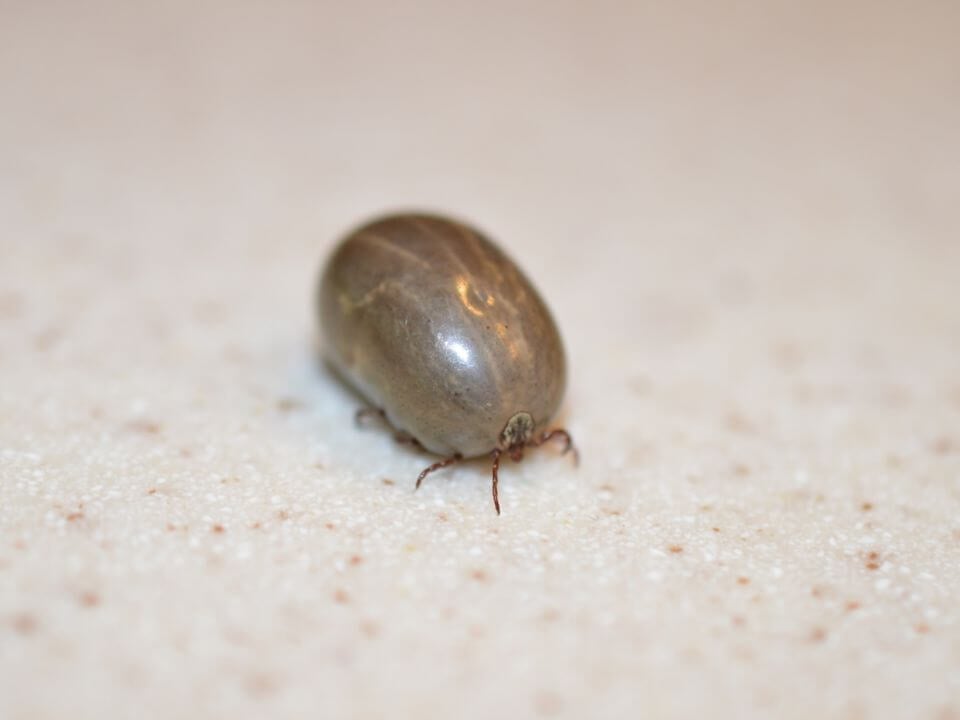
Size changes: Before feeding, most ticks are about the size of a poppy seed or apple seed. After feeding for several days, they can grow to the size of a small grape or pea. Partially engorged ticks measure about one eighth of an inch across. Fully engorged ticks can reach up to two thirds of an inch, looking like small inflated sacs.
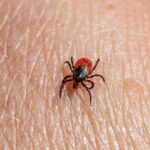
Color changes: Unfed ticks are usually dark brown or black. As they fill with blood, their color shifts to lighter shades. Engorged ticks often appear grayish, bluish, or even greenish depending on the species. Some people call them “white ticks” because the stretched skin looks so much lighter than before.
Shape changes: The flat, oval body of an unfed tick becomes round and bloated when engorged. It looks puffy and balloon-like rather than flat like a seed.
One helpful identification tip is to look for the scutum, which is a hard plate near the tick’s head. This plate stays the same size even when the rest of the body swells up. You can often see it as a darker patch at one end of the bloated body.
Engorged Ticks vs. Unfed Ticks: How to Tell the Difference
Telling an engorged tick apart from an unfed one is pretty straightforward once you know what to look for.
An unfed tick is small, flat, and dark colored. It looks like a tiny seed with legs. You might not even notice one crawling on your skin because they are so small and flat.
An engorged tick is the opposite. It appears larger, rounder, and lighter in color because it is full of blood. If the tick has only recently started feeding, it may still look like a small sunflower seed kernel. But if it has been attached for days, it can swell up to the size of a grape.
The key giveaway is the puffy, balloon-like appearance. If you see something on your skin or your pet that looks like a grayish or bluish blob with tiny legs sticking out the sides, you are probably looking at an engorged tick.
Be careful not to confuse an engorged tick with other skin issues. On dogs especially, nipples can sometimes look similar to ticks. Both male and female dogs have nipples on their bellies, so take a close look before trying to remove anything.
How Long Does It Take for a Tick to Become Engorged?
Ticks do not fill up overnight. The engorgement process takes time, which is actually good news for preventing disease.
Young ticks called nymphs typically need two to three days to become fully engorged. Adult ticks take even longer, usually four to seven days to fill up completely. Some sources say adult female ticks may feed for seven to ten days before becoming fully engorged.
This timeline matters a lot when it comes to disease transmission. Most tick-borne illnesses require the tick to be attached and feeding for a significant amount of time before any bacteria or viruses can pass into your bloodstream. For Lyme disease specifically, the tick usually needs to be attached for at least 36 to 48 hours before transmission can occur.
This is why checking for ticks regularly is so important. If you find and remove a tick before it becomes engorged, your chances of getting sick drop significantly.
Why Finding an Engorged Tick Is a Concern
Spotting an engorged tick on yourself or a loved one can be alarming, and for good reason. An engorged tick means the tick has been feeding for a while, which increases the risk of disease transmission.
Ticks can carry all sorts of nasty illnesses. The most well-known is Lyme disease, but ticks can also spread Rocky Mountain spotted fever, anaplasmosis, babesiosis, ehrlichiosis, Powassan encephalitis, tularemia, and other diseases.
The longer a tick stays attached and feeds, the greater the chance it could pass along one of these diseases. Ticks need to be fully embedded and engorged to have had enough time to transmit common diseases. Health experts estimate this takes at least 24 to 36 hours of attachment.
So if you find an engorged tick, do not panic, but do take it seriously. Remove it right away and watch for any symptoms over the following weeks.
Where to Check for Ticks on Your Body
Ticks love warm, moist, hidden spots on the body. After spending time outdoors, you should do a thorough tick check in all the places these pests like to hide.
The most common spots to find ticks include behind the knees, in the groin area, under the arms, inside the belly button, in and around the ears, along the hairline at the back of the neck, between the toes, and anywhere along the waistband or underwear line.
One survey found that the thigh was actually the most common place people reported finding attached ticks. But ticks can attach anywhere, so checking your entire body is important.
Parents should help children with tick checks since kids cannot easily see certain areas. Use a mirror to check your own back, or ask someone to help you look in hard-to-see places like behind your ears and on your scalp.
Do not forget to check your scalp thoroughly, especially if you have long hair. Run your fingers through your hair and feel for any small bumps that should not be there.
Where to Check for Ticks on Pets
Pets can pick up ticks just as easily as people, and they cannot tell you when something is biting them. Regular tick checks on your furry friends are essential.
Run your fingers through your pet’s fur and feel for any lumps, bumps, or swollen patches on their skin. Pay special attention to your pet’s ears, face, neck, legs, belly, and between their toes.
Adult dog ticks usually attach around the ears or between the toes. These are warm, protected spots where ticks can feed without being disturbed.
An engorged tick on a pet will have a gray, oval-shaped body with a brown or black head and legs. Since the tick buries its head in the skin, you usually will not see the head part, just the swollen body sticking out.
If you feel something suspicious, part the fur and take a close look. Remember that dogs have nipples on their bellies that can feel similar to ticks, so look carefully before attempting removal.
How to Safely Remove an Engorged Tick
Finding an engorged tick is stressful, but removing it properly is straightforward. The key is to stay calm and use the right technique.
Step 1: Grab a pair of fine-tipped tweezers. Regular household tweezers can work, but pointed ones are best for getting a good grip close to the skin.
Step 2: Grasp the tick as close to the skin’s surface as possible. You want to grab it by the head or mouthparts, not by the swollen body.
Step 3: Pull upward with steady, even pressure. Do not twist, jerk, or yank the tick. A slow, steady pull works best.
Step 4: If the mouthparts break off and stay in the skin, try to remove them with tweezers. If you cannot get them out easily, leave them alone. Your skin will naturally push them out as it heals.
Step 5: After removing the tick, clean the bite area and your hands thoroughly with soap and water, rubbing alcohol, or hand sanitizer.
Step 6: Get rid of the tick safely by placing it in a sealed container, wrapping it tightly in tape, flushing it down the toilet, or dropping it in alcohol. Do not crush the tick with your fingers because this can expose you to any pathogens it may carry.
You may want to save the tick in a sealed bag or container in case you develop symptoms later. Having the tick can help your doctor identify what type it was and what diseases it might carry.
What NOT to Do When Removing a Tick
There are plenty of old wives’ tales about tick removal, but many of these methods do more harm than good. Here is what you should avoid.
Do not use petroleum jelly, nail polish, or other substances. Some people think smothering a tick will make it back out on its own. This does not work. It may actually agitate the tick and cause it to release more infected fluid into your skin.
Do not burn the tick with a match or lighter. This is dangerous and ineffective. You could burn yourself, and the tick will not detach any faster. It just gives the tick more time to potentially transmit disease.
Do not squeeze or crush the tick’s body. Squeezing an engorged tick can force infectious fluids back into your bloodstream. It can also cause the tick to burst, which is messy and increases your exposure to whatever the tick may be carrying.
Do not use your bare fingers. Always use tweezers or a tick removal tool. If you must touch the tick, wear gloves or use a tissue as a barrier between your fingers and the tick.
Do not twist or jerk when pulling. A steady, straight pull is much more effective than twisting. Jerking motions can cause the tick’s mouthparts to break off and stay embedded in your skin.
Symptoms to Watch for After a Tick Bite
After removing an engorged tick, your job is not done. You need to keep an eye on the bite site and watch for any signs of illness over the next several weeks.
Watch the bite area for an expanding red rash. A Lyme disease rash typically spreads outward in a ring-like pattern, often with a clear center that makes it look like a bullseye. This rash usually appears three to thirty days after the bite and can grow to several inches across.
Not everyone with Lyme disease gets the classic bullseye rash though. Some people get different-looking rashes, and some get no rash at all. The rash may also be harder to see on darker skin tones.
Beyond the rash, watch for flu-like symptoms including fever, chills, fatigue, headache, muscle aches, joint pain, stiff neck, weakness, and swollen lymph nodes.
Keep monitoring for symptoms for at least 30 days after the tick bite. Some tick-borne illnesses take weeks to show up, so do not assume you are in the clear just because you feel fine right after removal.
If you notice any of these symptoms, contact your doctor right away and let them know about the tick bite.
When to See a Doctor After Finding an Engorged Tick
Not every tick bite requires a trip to the doctor, but certain situations definitely call for medical attention.
See a doctor if you develop symptoms. Any rash, fever, or flu-like illness after a tick bite should be checked out right away. Early treatment for tick-borne diseases is usually very effective, but waiting too long can lead to more serious complications.
See a doctor if the tick was attached for a long time. If a tick was embedded in your skin for more than 36 hours, it is a good idea to see a healthcare provider. The longer the tick was attached, the higher the risk of disease transmission.
Talk to your doctor about preventive antibiotics. In some cases, doctors may prescribe a single dose of the antibiotic doxycycline to help prevent Lyme disease. This is usually recommended when the tick was attached for 36 hours or more, the bite occurred in an area where Lyme disease is common, and treatment can be started within 72 hours of tick removal.
See a doctor if you cannot remove the tick completely. If the tick’s head or mouthparts stay stuck in your skin and you cannot remove them, a healthcare provider can help.
See a doctor if the bite area looks infected. Signs of infection include increasing redness, swelling, warmth, pus, or pain around the bite site.
When you visit the doctor, let them know when you found the tick, how long you think it was attached, whether it was engorged, and where you might have picked it up.
How to Prevent Tick Bites in the Future
The best way to deal with ticks is to avoid getting bitten in the first place. A few simple precautions can make a big difference.
Use tick repellents. EPA-registered insect repellents containing DEET, picaridin, IR3535, or oil of lemon eucalyptus work well on exposed skin. Apply repellent according to the label directions whenever you spend time in tick-prone areas.
Treat your clothing with permethrin. Permethrin is a treatment you apply to clothing, shoes, and gear. It actually kills ticks on contact rather than just repelling them. You can buy pre-treated clothing or treat your own items with permethrin spray. The protection lasts through several washings.
Wear protective clothing. Long pants, long sleeves, and closed-toe shoes create physical barriers against ticks. Tuck your pants into your socks to prevent ticks from crawling up your legs. Light-colored clothing makes it easier to spot ticks before they reach your skin.
Stay on trails. When hiking, walk in the center of trails and avoid brushing against vegetation. Ticks wait on tall grass, shrubs, and leaf litter for animals and people to walk by.
Do tick checks. After spending time outdoors, check your entire body for ticks. Shower within two hours of coming inside to wash off any ticks that have not attached yet.
Dry your clothes on high heat. Toss your clothes in the dryer on high heat for at least 10 minutes after coming indoors. The heat kills any ticks hiding in the fabric. Regular washing alone will not do the trick since ticks can survive in water.
Check your pets regularly. Pets can bring ticks into your home, where the ticks might later attach to you or your family members. Check your pets after they have been outside and talk to your vet about tick prevention products.
Keep your yard tidy. Mow your lawn regularly, clear leaf litter, and remove brush piles near your home. Creating a tick-unfriendly environment around your house reduces your risk of encounters.
With these precautions in place, you can enjoy the outdoors while keeping yourself and your loved ones safe from ticks and the diseases they carry.