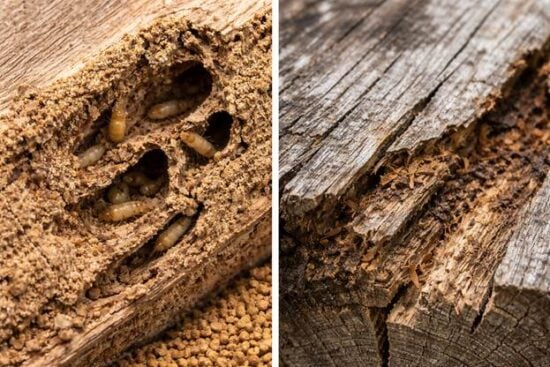
Finding damaged wood in your home can stop you in your tracks. A cracked baseboard. A hollow sound when you knock. A window frame that looks rough and flaky. The first thought that usually comes to mind is termites.
But not all wood damage means termites. In fact, many homes show wood damage for reasons that have nothing to do with insects at all. Age, moisture, rot, and past repairs can all leave marks that look suspicious at first glance.
The key is knowing what to look for. Termite damage has patterns. Old wood damage does too. Once you know the difference, it becomes much easier to tell with what you are dealing with.
Let’s break it down in a simple and practical way.
Table of Contents
Why Wood Damage Gets Confusing
Wood changes over time. It dries out. It absorbs moisture. It expands and shrinks with the seasons. In older homes, this process has been happening for decades.
Termites also change wood. They eat it from the inside. They leave the surface looking fine in many cases. That overlap is what causes confusion.
A damaged piece of wood does not come with a label. You have to read the signs.

- KILLS TERMITES AND CARPENTER ANTS: Indoor plus home foundation treatment against termites, carpenter ants, carpenter bees and other insects as listed.
- FOR INDOOR AND OUTDOOR USE: Up to 9 months control indoors
- KILLS CARPENTER BEES: Kills wood-destroying insects on contact.
- CLEAR FORMULA: Non-staining spray leaves no odor.

What Termite Damage Usually Looks Like
Termites eat wood for food. They work quietly and stay hidden as long as possible. Because of this, the damage they cause has some very specific traits.
● Hollow sounding wood
Tap on the wood with your knuckles or the handle of a screwdriver. If it sounds hollow or papery, that can be a warning sign. Termites eat the soft inner layers and leave a thin outer shell behind.
● Wood that breaks easily
Wood damaged by termites often crumbles when pressed. You might push lightly with a screwdriver and see it break apart. Healthy wood resists pressure. Termite damaged wood does not.
● Mud tubes nearby
Subterranean termites build thin mud tubes to travel from soil to wood. These tubes are usually found on foundation walls, crawl spaces, or basement walls. Their presence is a strong indicator of active termites.
● Blistered or bubbling paint
Paint that looks warped or bubbled can point to termite activity underneath. Moisture builds up as termites work, which affects the paint layer.
● Small piles of pellets
Drywood termites leave behind tiny pellets that look like grains of sand or pepper. These are often found below damaged wood or window sills.
What Old Wood Damage Usually Looks Like
Old wood damage tends to tell a different story. It often comes from moisture, age, or poor ventilation.
● Surface cracking and splitting
As wood dries out over time, it develops cracks along the grain. These cracks are usually visible on the surface and do not run deep into the wood.
● Soft wood near moisture sources
Bathrooms, kitchens, basements, and window frames are common trouble spots. Water exposure causes wood rot. Rotting wood feels spongy and stays damp longer than normal.
● Dark stains or discoloration
Old moisture damage often leaves stains. These can appear black, gray, or brown. Termite damage does not usually change the color of wood in the same way.
● Damage limited to exposed areas
Old wood damage is often easy to see. It affects surfaces that have been exposed to air, leaks, or humidity. Termites prefer hidden areas and interior wood.
The Sound Test That Helps a Lot
One of the easiest ways to tell the difference is sound.
Tap several areas along the damaged section. Compare them to solid wood nearby. Termite damaged wood sounds hollow and thin. Old wood damage sounds dull but solid.
This test is not perfect. It is still a useful first step.
The Location of the Damage Is a Big Clue
Where the damage appears can tell you a lot.
Termites usually target:
- Baseboards near the floor
- Structural beams
- Floor joists
- Door and window frames
- Areas close to soil
Old wood damage is common in:
- Window sills
- Bathroom trim
- Kitchen cabinets
- Deck boards
- Exterior siding
Damage near plumbing or windows often points to moisture. Damage deep inside walls or near foundations raises more concern.
Age of the Home Plays a Role
Older homes naturally show more wear. Wood used decades ago may not have been treated the same way modern lumber is treated today.
That does not mean termites are not possible. It does mean that some damage is simply the result of time.
Newer homes can still have termites too. Especially in warm climates or areas with high humidity.
Why Termite Damage Often Goes Unnoticed
Termites avoid light and open air. They work behind walls, under floors, and inside beams. Homeowners often do not see the damage until it becomes serious.
Old wood damage is usually visible earlier. It shows cracks, stains, or warping on the surface.
If you see damage that seems to appear out of nowhere, termites should be considered.

- TWO TERMITE PRODUCTS IN ONE: Pop-up indicators detect termite activity, and the stakes kill foraging termites.
- REPLACEMENT STAKES: Includes 5 stakes with locator shields – designed to replace termite stakes already in use with the Spectracide Terminate Termite Detection & Killing Stakes2 complete kit (sold separately).
- INSTALLS IN MINUTES: Place stakes in the ground 2 to 3 feet away from your home and no more than 10 feet apart.
- POP-UP INDICATOR: Check the stakes for termite activity when the pop-up indicator is seen.
Mistakes That Can Make Wood Damage Worse
Many homeowners jump to conclusions too fast. Others brush off early signs and hope the issue goes away. Both reactions can lead to bigger problems over time.
The goal is to balance. Take damage seriously without panicking. Observe patterns. Look beyond the surface before deciding what to do next.
Some common mistakes include:
- Assuming all wood damage means termites
- Ignoring soft or hollow wood
- Painting over damaged areas
- Treating moisture problems without checking for insects
Signs That Deserve a Closer Look
You should investigate further if:
- Damage appears suddenly
- Wood sounds hollow
- You see mud tubes
- You find pellets or dust
- Multiple areas show similar damage
Why Professional Inspection Helps
A trained eye can spot patterns that are easy to miss. Professionals know where termites hide and how old wood damage behaves over time.
They use tools that check moisture levels and wood integrity. They also know how to tell active damage from old damage.
An inspection does not always mean treatment is needed. Sometimes it simply gives peace of mind.
If you want to learn more about pest control and how inspections work, you can explore helpful guides and resources on BC Pest Control. Understanding the process makes it easier to protect your home with confidence.
Knowing the Difference Makes All the Difference!
Not all wood damage means termites. Many homes show wear from age, moisture, and daily life. At the same time, termites are sneaky and destructive when left unchecked.
Knowing what to look for puts you in control. Listen to the wood. Look at the location. Pay attention to texture and sound.
When in doubt, do not ignore it. Getting clarity early is always better than guessing later.
Your home gives clues. Knowing how to spot them helps you act early.
FAQ
How can I tell termite damage from old wood damage?
Termite damage often sounds hollow, breaks easily, and may come with mud tubes or pellets. Old damage is more surface cracking, stains, or rot near moisture.
What does termite damaged wood usually look like?
It can look normal on the surface but sound hollow. It may crumble when pressed and sometimes appears with bubbling paint or nearby mud tubes.
What are mud tubes and why do they matter?
Mud tubes are thin tunnels termites build to travel from soil to wood while staying protected. Seeing them is a strong sign termites are active.
What are termite pellets and what do they look like?
Drywood termites can leave tiny hard pellets that look like grains of sand or pepper under window sills or damaged wood.
What does old moisture or rot damage usually look like?
Moisture damage often leaves discoloration, soft spongy wood, and damage near bathrooms, kitchens, windows, or plumbing.
Does the sound test really work?
It helps. Termite damaged wood often sounds hollow or papery compared to solid wood nearby. Use it as a first check, not the final answer.
Where should I worry most about termite damage?
Areas close to soil, baseboards near floors, structural beams, and hidden spaces like crawl spaces or behind walls deserve extra attention.
When should I get a professional termite inspection?
If damage appears suddenly, you notice hollow wood, find mud tubes or pellets, or see similar damage in multiple locations, an inspection is worth it.