
If you have ever spent a morning staring out a window at a gray, drizzly sky, you have probably wondered if the local deer are doing the same thing from the safety of a thicket. It is one of the most common questions for hikers, wildlife photographers, and hunters alike. The short answer is yes, they absolutely do. In fact, deer in the rain are often more active than they are on those bright, blue-bird days that we humans tend to prefer.
In fact, how a shift in the weather impacts deer movement rain is the secret to seeing more animals. Deer do not have the luxury of heading inside for a hot coffee when the clouds open up. They live in the elements every day. However, they are smart, and they change their strategy based on how hard the water is falling. If you know how to read the clouds, you can predict exactly where they will be and when they will decide to move.
Table of Contents
How Rain Affects Deer Behavior and Movement
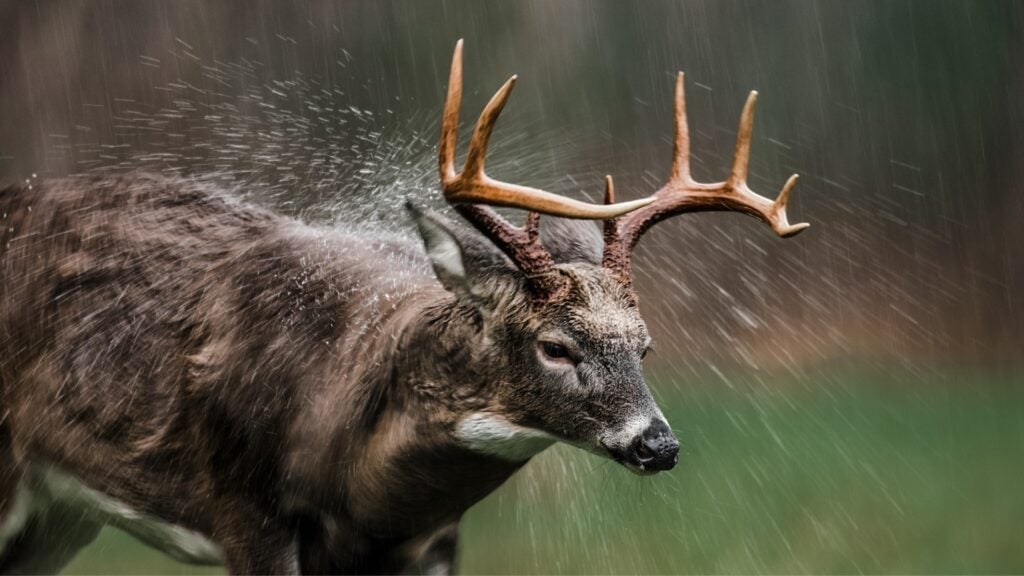
Deer are high-strung animals that survive by staying hyper-aware of their surroundings. Their primary defenses are their nose, their ears, and their eyes. When it starts raining, the environment changes in a way that actually plays into their favor. A light drizzle creates a natural scent mask by pulling scent molecules out of the air and pinning them to the damp ground. This makes it harder for predators to catch a whiff of them from a long distance.
Besides, the pitter-patter of drops on leaves provides a perfect sound cover. On a dry day, a deer snapping a twig sounds like a gunshot in the woods. In the rain, that noise is muffled. Because they feel less exposed, deer movement often increases during these damp windows. They feel like they have a cloak of invisibility, which encourages them to stretch their legs and wander further from their bedding areas than they usually would during the daylight hours.
Light Rain vs Heavy Rain – What Really Happens?
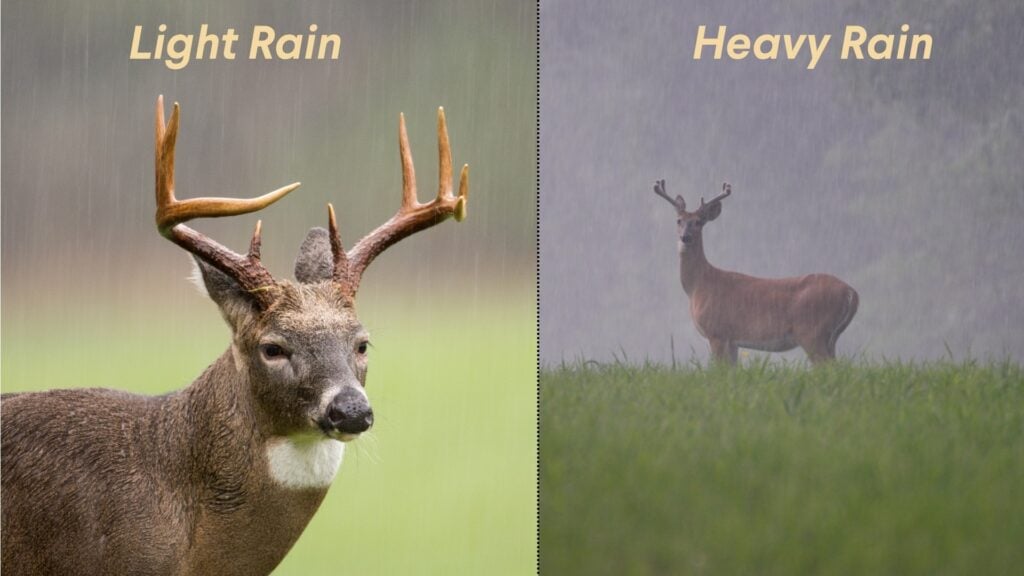
Not all rain is created equal. A misty morning is a completely different experience for a whitetail than a summer thunderstorm. To see more deer, you have to categorize the intensity of the weather.
Light Rain or Drizzle – Often Increases Deer Movement
When there is just a light rain falling, it is usually business as usual for the local herd. In many cases, it is actually better than usual. These are the days when deer continue their normal routines but with added confidence. You will see them browsing on the edges of fields or moving through open hardwoods. This is especially true during the early season or when temperatures are a bit warmer. The moisture cools them down and keeps the bugs away, which makes for very comfortable deer activity rain levels.
Steady Moderate Rain – All-Day Activity Possible
If the rain is steady but not violent, it can lead to fantastic viewing or hunting opportunities. On these days, the deer often skip their midday nap. Because the sun is blocked by heavy clouds, their internal clocks get a little skewed. They might stay on their feet during the typical “dead zone” of 11:00 AM to 2:00 PM. This feeding time expansion is great for anyone willing to sit through a little dampness.
Heavy Rain or Downpours – Reduced Movement
When the sky really opens up and the wind starts whipping, the party is over. Heavy rain is loud, it stings their eyes, and it makes it hard for them to detect danger. During a true downpour, deer will almost always find a cedar thicket or a low-lying drainage to hunker down in. They will press their bodies against the ground and wait for the worst of it to pass. You won’t see much deer behavior rain patterns here other than them trying to stay dry.
Right After Rain (Post-Rain)
The period immediately following a storm is the “Golden Hour.” This post-rain window is when the woods come alive. Once the sun peeks out or the dripping stops, every deer that was hiding is now hungry and ready to move. They head straight for the open fields to dry their coats and fill their stomachs.
Weather Comparison Table
| Rain Type | Movement Level | Best Action |
| Light Rain | High | Stay on the field edges or travel corridors. |
| Steady Rain | Moderate | Hunt or watch near transition zones all day. |
| Heavy Rain | Very Low | Wait it out in the truck or a dry blind. |
| Post-Rain | Extreme | Get to a primary food source immediately. |
Best Times for Deer in the Rain
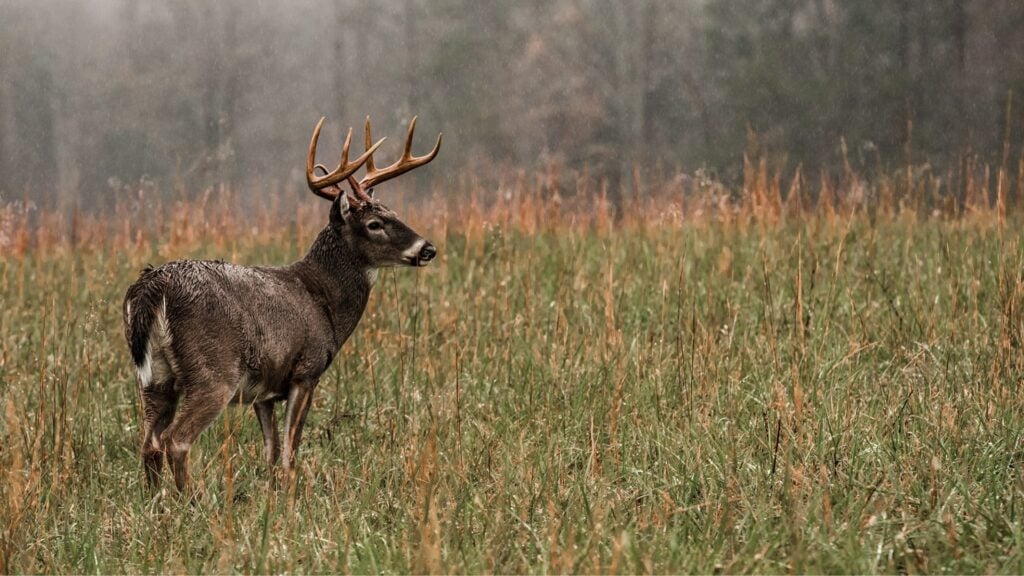
If you want to time your outing perfectly, you need to look at the clock and the radar simultaneously. During a light rain, the early morning and late evening remain the peak times, just like any other day. However, a steady drizzle can keep them moving well into the afternoon.
The most important thing to watch for is the break in the weather. If a storm has been hammering the woods for six hours and it finally quits at 3:00 PM, you need to be in position. That three-hour window before dark will likely see more deer movement than the previous three days combined. This is also the time when mature bucks are most likely to step out into the open. These older, wiser deer usually stick to the shadows, but the need to feed after a big storm overrides their usual caution.
- Prioritize the Drizzle: Always choose light rain days over days with torrential floods. The deer will be moving, and you will be much more comfortable.
- Stay Close to the Bedroom: During a steady rain, hunt near bedding areas. Deer will not want to travel miles for food, so catching them just as they stand up is a winning move.
- Watch the Clock for Post-Rain Sprints: Focus your energy on the feeding time right after a storm ends. This post-rain surge is the most predictable movement in the woods.
- Quiet Your Approach: Use your high-quality rain gear to sneak in. The wet leaves and natural sound cover from the rain mean you can get much closer to your spot without being heard.
- Look for the Big Boys: Keep an eye out for mature bucks. They love the security of a rainy day and are much more likely to show up in the daylight when the pressure is low and the clouds are thick.
- Trust Your Scent Control: While the rain provides a natural scent mask, do not get lazy. Still pay attention to the wind, as the high humidity can sometimes make scent “heavy” and cause it to linger in low spots.
- Embrace the Day: Look for increased daytime deer movement. If the barometric pressure is dropping and the rain is soft, stay in the woods as long as you can.
- Target the Food: When the rain stops, deer head for high-protein food sources. Alfalfa fields, clover patches, or fresh acorns are the places to be.
- Keep Your Gear Dry: Use a lens cloth for your optics and keep your strings or action protected. Hunting rain is only fun if your equipment actually works when the moment of truth arrives.
- Safety First: Watch out for slick tree stand steps and falling limbs if the wind picks up. No deer is worth an injury.
Common Myths About Deer in the Rain
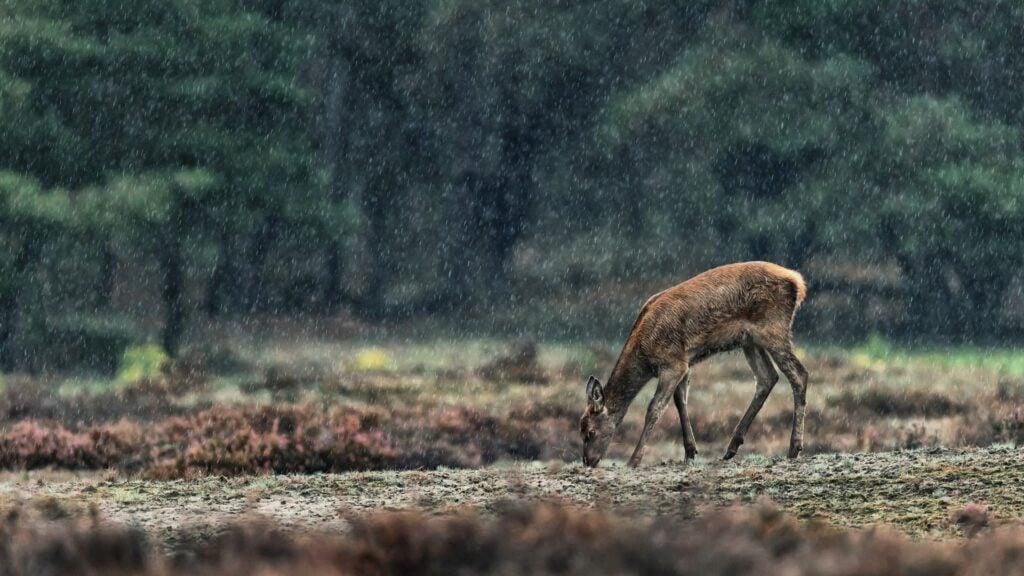
There are a lot of old wives’ tales about how wildlife reacts to weather. Let’s clear a couple of them up right now.
- Myth: Deer hate getting wet and will never move in the rain.
- Fact: A whitetail deer rain experience is very different from ours. Their coats are oily and shed water well. Light rain actually makes them feel safer and often boosts their activity levels.
- Myth: Rain ruins the hunt because you can’t smell or hear anything.
- Fact: While it is harder for you, it is also harder for the deer. This levels the playing field. It is one of the best times to see mature bucks because they let their guard down just a little bit.
When to Hunt vs When to Stay Home
You have to know when to hold them and when to fold them. If you see a forecast for a light, misty day or a steady shower that breaks in the evening, you should go. Those are the days that make memories. You will see plenty of deer in the rain and likely have the woods to yourself.
However, if the forecast calls for a “weather bomb” with sideways rain and 40 mph winds, stay on the couch. The deer will be hunkered down in the thickest brush they can find, and you won’t see a thing. Plus, it is dangerous to be under big trees when the wind is screaming. Wait for that post-rain window and head out then instead.
Wrapping Up…
At the end of the day, deer in the rain are just animals trying to make a living. They don’t have a roof over their heads, so they have learned to use the weather to their advantage. Whether it is using the scent mask of a drizzle to move safely or hitting the fields during a post-rain feeding frenzy, they are always reacting to the sky.
If you can learn to embrace the dampness and understand how deer movement rain patterns work, you will be a much more successful woodsman. Pack your waterproof gear, keep an eye on the radar, and get ready for some of the best wildlife viewing of the year.