
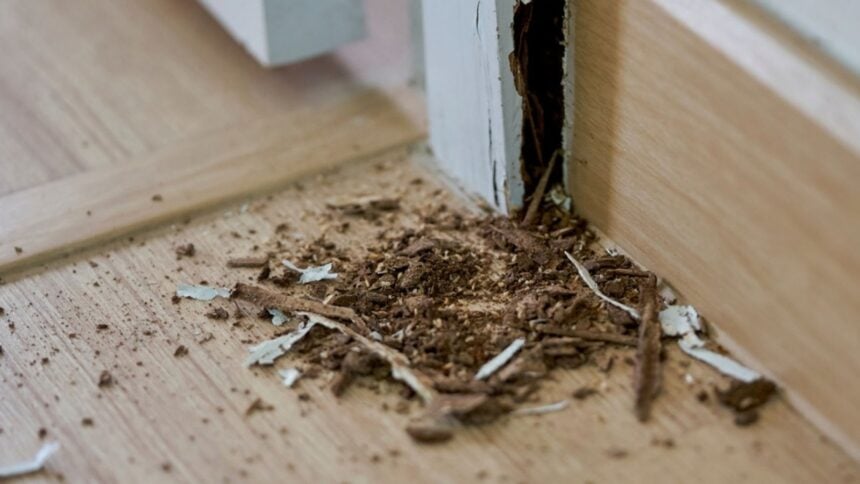
When it comes to home maintenance, few issues are as alarming as termite damage. These tiny invaders can quietly weaken wood, floors, and walls long before you notice a problem, sometimes leaving homeowners with repairs that cost thousands of dollars.
Knowing how do you repair termite damage depends on the severity and location of the destruction. Some fixes, like minor surface repairs, can be handled on your own. Others, especially structural issues, require a licensed professional with the right expertise.
In this guide, you’ll learn how to assess termite damage, follow the proper repair steps, and restore both the strength and value of your home.
Table of Contents
First, Confirm the Termites Are Gone
Before you repair termite damage, you must verify that the termite infestation has been completely eliminated through professional treatment. Attempting repairs while termites remain active is pointless because the pests will simply continue destroying your work as soon as you complete it.
A licensed professional should conduct a thorough inspection to confirm no live termites remain and that treatment has successfully eliminated the colony. Wait at least a few weeks after treatment before beginning repairs to ensure the termiticide has done its job completely and no new activity emerges.
Signs of Termite Damage You Should Look For
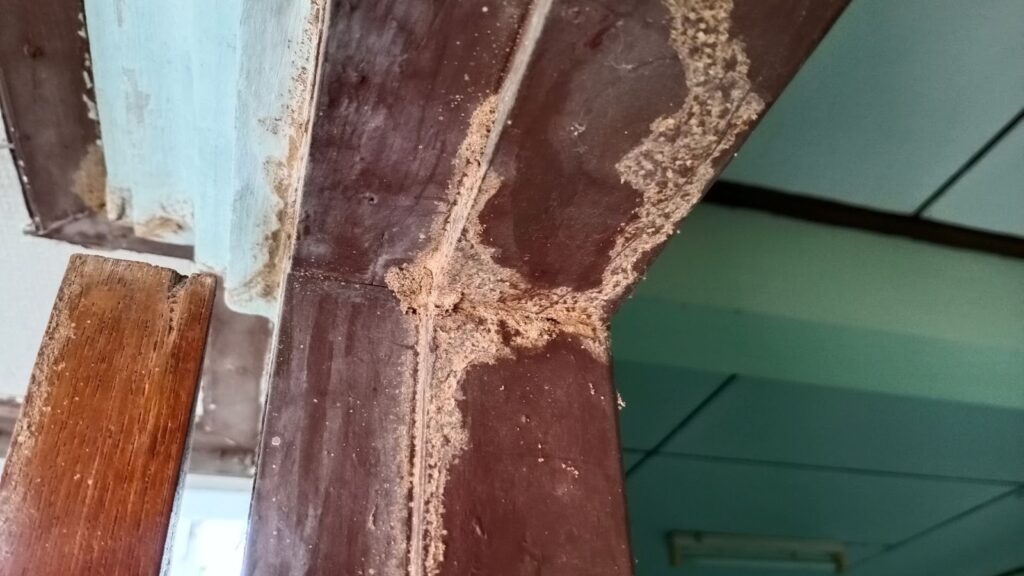
Identifying the signs of termite damage throughout your home helps you create a complete repair pla. Start by tapping wooden structures with a screwdriver handle and listening for the telltale hollow sound that indicates termites have consumed the interior wood. Check for these specific indicators throughout your property:
- Hollow sounding wood when tapped, particularly in floor joists, wall studs, and baseboards where termites commonly feed.
- Bubbling paint or warped surfaces that resemble the appearance of water damage, but occur in areas with no moisture exposure.
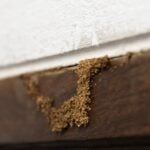
- Mud tubes running up foundation walls or crawl space supports that termites built to travel between soil and wood
- Sagging floors or ceilings caused by structural members that termites have severely weakened through extensive feeding
- Buckling ceilings or walls where termite damage has compromised the underlying support structure.
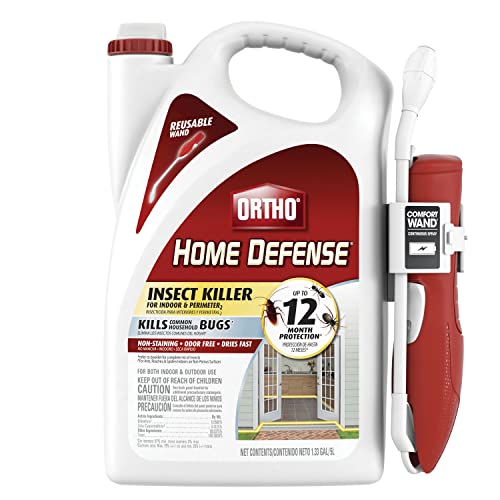
- Ortho Home Defense Insect Killer for Indoor & Perimeter2 kills the toughest home-invading insects, including ants, cockroaches, spiders, fleas, ticks, scorpions, earwigs, silverfish and periodical cicadas (as listed)
- This insect killer spray provides a long-lasting bug barrier of up to 12 month protection against ants, roaches and spiders indoors on non-porous surfaces
- Use this pest control spray indoors in kitchens and bathrooms or around doors and windows, and outdoors to the perimeter of foundations, patios, decks, garages or wherever insects are a recurring problem
- Apply this bug killer anytime as a preventative treatment or after you see evidence of insect activity

How Do You Repair Termite Damage? Step-by-Step Process
Step 1 – Assess the Extent of the Damage
Begin your termite damage repair steps by conducting a comprehensive inspection of all areas where you’ve found evidence of termite activity. Remove baseboards, check behind walls, and examine crawl spaces and attics to reveal the full scope of damage.
Take detailed notes and photos of every damaged area. This could, in turns help you document which structural members are affected and how severely. Distinguishing between cosmetic damage and structural compromise determines whether you can handle repairs yourself or you’d need to bring in contractors with engineering expertise.
Step 2 – Remove Damaged Wood
Once you’ve catalogued all damage, remove every piece of termite infested wood that no longer provides structural integrity. Cut away damaged sections of non-structural wood like trim, baseboards, and decorative elements that termites have hollowed out.
For structural members like studs, joists, or beams, you’ll need to support the load they’re carrying with temporary bracing before removing them. This prevents collapse during the repair process.
Dispose of all termite damaged wood properly, sealing it in plastic bags before placing it with regular trash. Don’t leave damaged wood sitting on your property because it might attract new termite colonies or other wood destroying pests.
Step 3 – Reinforce or Replace Structural Components
Structural repairs form the most critical part of efforts to repair termite damage because these elements literally hold your house up. Damaged floor joists, ceiling joists, and wall studs must be either reinforced if the damage is minor or completely replaced if termites have consumed too much material.
For reinforcement, attach new lumber alongside the damaged member using construction adhesive and structural screws or bolts. This technique called sistering effectively doubles the strength of the compromised element.
Step 4 – Repair Surface Damage
After addressing structural issues, you can repair termite damage to cosmetic and finish materials throughout your home. Replace ruined carpeting, walls, furniture, or flooring that termites destroyed or that you damaged during the repair process.
Install new drywall where you removed sections to access termite galleries behind walls. Replace baseboards, crown moulding, and trim pieces that termites hollowed out. Apply fresh paint to areas where bubbling occurred due to termite activity beneath the surface.
When Termite Damage Requires Professional Help
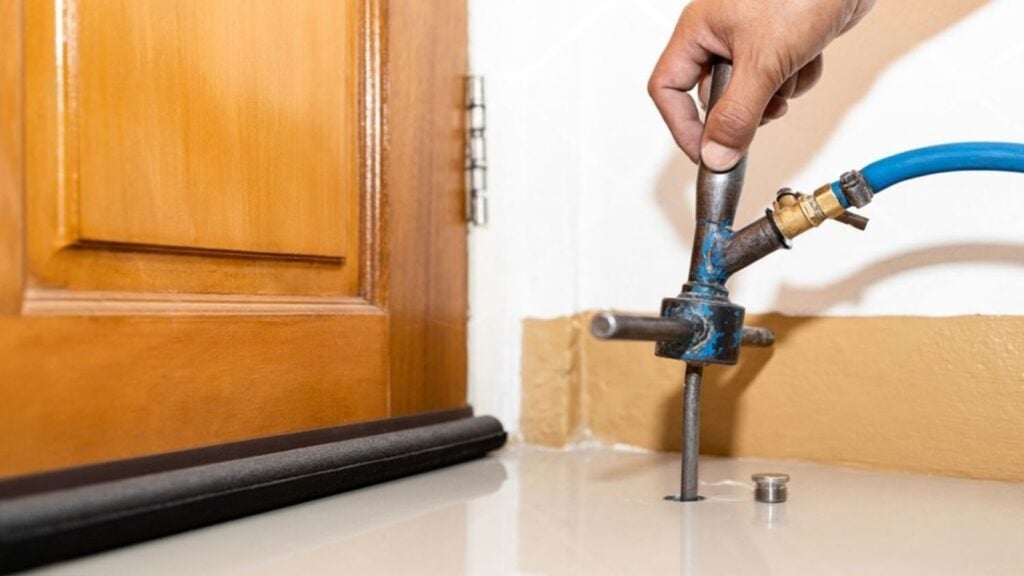
- Structural beams that support significant weight require engineering knowledge to repair safely without causing collapse or creating long term stability problems.
- Load bearing walls that termites have damaged need professional assessment to determine whether reinforcement suffices or complete replacement is necessary.
- Electrical wiring risks emerge when termites damage walls and ceilings where wiring runs.
- Foundation damage from the most destructive termite in the U.S., the Formosan termite, a particularly aggressive subterranean termite common in the southern U.S. and in coastal areas.
- Situations where it is rare but possible for some termite species to damage a house beyond repair.
Cost to Repair Termite Damage
The cost to repair termite damage varies dramatically based on extent and location of destruction. Minor cosmetic repairs might cost just a few hundred dollars for materials if you do the work yourself, though. Moderate structural repairs typically run between $1,000 and $3,000, depending on how many elements require replacement.
Extensive damage affecting floor systems, multiple walls, or roof structures can easily exceed $10,000 or more. To do this properly, a licensed professional should provide a detailed estimate that accounts for both visible damage and potential hidden problems discovered during repair work.
Final Thoughts: Repair Termite Damage the Right Way
The process of how do you repair termite damage starts with confirming the termites are gone and thoroughly assessing every affected area before beginning any work. Simple surface damage in non-structural areas might qualify as DIY projects, but anything affecting your home’s structural integrity demands professional expertise to repair termite damage safely. Even if damage does not affect your home’s structure, your family’s experience at home can still be impacted by cosmetic destruction that makes spaces look shabby or damaged. Whether you’ve had a termite problem that caused minor surface issues or major structural compromise, addressing repairs properly protects both your home’s value and your family’s safety.
FAQ
Should you repair termite damage before treatment is finished?
No. Repairs should start only after an inspection confirms active termites are gone. Otherwise, termites can continue feeding and undo your repairs.
How do you know if termite damage is structural?
Look for sagging floors, bouncy spots, cracked drywall near openings, and hollow-sounding studs or joists. If a beam, joist, or load-bearing wall is involved, treat it as structural until a pro confirms otherwise.
Can you repair minor termite damage yourself?
Often yes, if it’s limited to trim, baseboards, small sections of non-load-bearing wood, or surface-level cosmetic damage. The key is removing compromised material and restoring it properly.
What is “sistering” and when is it used?
Sistering is reinforcing a damaged joist or stud by fastening a new piece of lumber alongside it. It’s used when the original member still has enough integrity to support reinforcement, not when it’s extensively hollowed out.
When should you call a professional for termite damage repair?
Call a professional if damage affects load-bearing walls, beams, floor systems, roof framing, or if you suspect hidden damage behind walls. Structural repairs need proper support and fastening to stay safe long-term.
How much does termite damage repair usually cost?
Costs vary widely based on location and severity. Cosmetic repairs can be relatively low, while structural repairs can quickly climb if multiple joists, studs, or subfloors need replacement.