
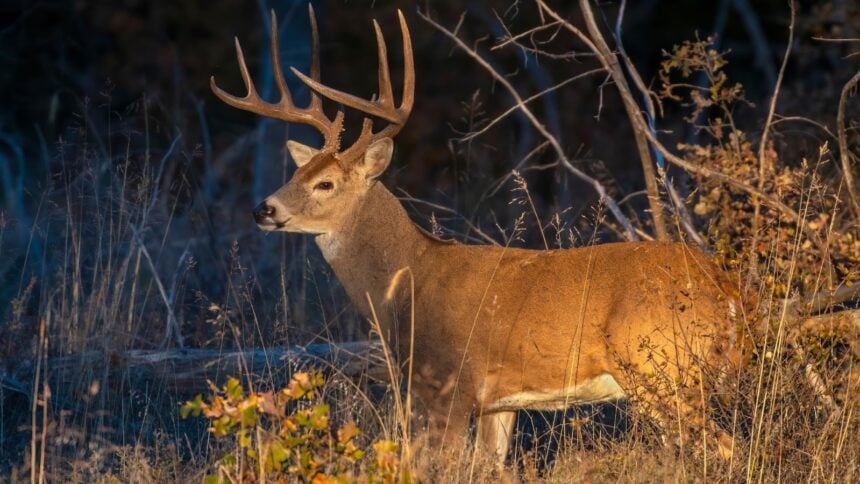
If you have ever wondered how tall are deer antlers, the short answer comes early. On average, white-tailed deer antlers reach about 30 inches from base to tip on a mature buck. Some grow far beyond that, while many fall short.
Deer antler height depends on age, nutrition, genetics, and environment, all working together over a short window each year. The growth season lasts roughly 120 days, yet during that time a buck builds an incredible amount of bone.
In rare cases, hunters come across a deer with massive antlers that stretch 40 inches tall and 42 inches wide, though those are exceptions. Keep scrolling to get to know more about deer antler height and what those measurements actually mean.
Table of Contents
What Do Different Antler Sizes Mean?
Antler size communicates information about the individual deer carrying them. Larger antlers generally indicate a buck that has access to quality nutrition, good genetics, and has survived long enough to reach physical maturity.
Smaller antlers don’t necessarily mean a young deer though, as poor nutrition or injuries can limit antler development even in older bucks. The spread and height of whitetail antlers also play a role in dominance displays during the breeding season, with impressive racks helping establish hierarchy without actual fighting.
Understanding that antler height is just one component of overall antler mass and configuration helps you better evaluate what you’re looking at when you spot a buck in the field. A deer might have tall antlers but lack mass and spread, while another might have shorter but much thicker and wider antlers that actually score higher using standard measuring systems.
Another Good Read: Do Deer Eat Sunflowers?
What Factors Contribute to Antler Sizes?
Nutrition
Growing antlers, and quickly at that, requires a lot of energy and a tremendous amount of nutrients. The growing season lasting for roughly 120 days means White-Tailed Deer must consume enough protein, calcium, phosphorus, and other minerals to support the rapid bone growth happening on top of their skulls. In those 120 days, a deer grows over 200 inches of bone on the top of their head when you add up both antlers and all their points.
Age
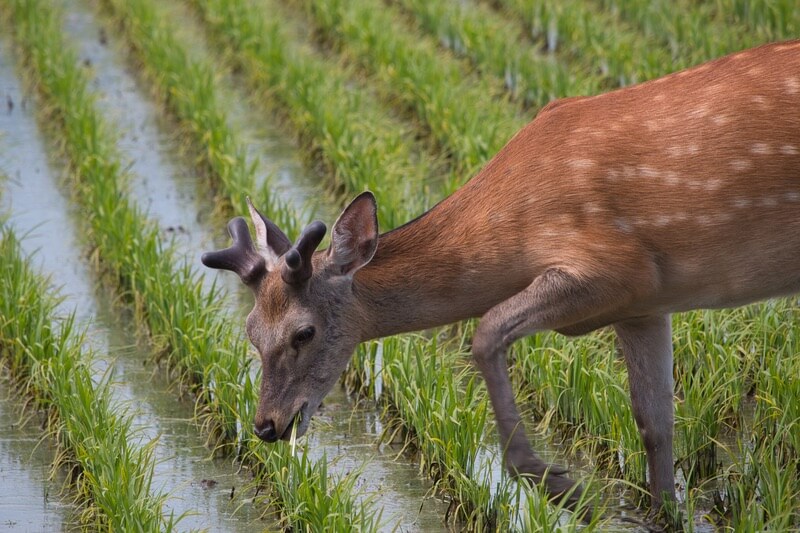
Age, of course, plays a crucial role in determining buck antlers size. Young bucks in their first year with antlers might only produce small spikes or forks measuring 8 to 12 inches tall. As bucks mature through their second and third years, antler size increases substantially with each season.
Peak antler production typically occurs when bucks reach 4.5 to 6.5 years old, assuming they have adequate nutrition and good genetics. After this prime period, antler quality may plateau or even decline slightly as the White-Tailed Deer ages further.
The challenge is that relatively few wild bucks survive to reach their peak antler producing years due to hunting pressure, predation, vehicle collisions, and other mortality factors. In heavily hunted areas, the average buck age might only be 2.5 years old, which means the population never produces the impressive antlers that older age classes would generate.
Human Selection
Hunting pressure and management decisions dramatically influence the antler genetics within a deer population. How so? Well, White-Tailed Deer with big antlers tend to be targeted more heavily by hunters who specifically seek trophy animals.
This selective harvest removes the best genetics from the breeding pool before those bucks can pass their superior antler growing traits to the next generation. Over time, populations under intense hunting pressure for large antlered bucks may actually see a decline in average antler size as the genetics favoring large antlers get removed faster than they can spread through the herd.
Genetics
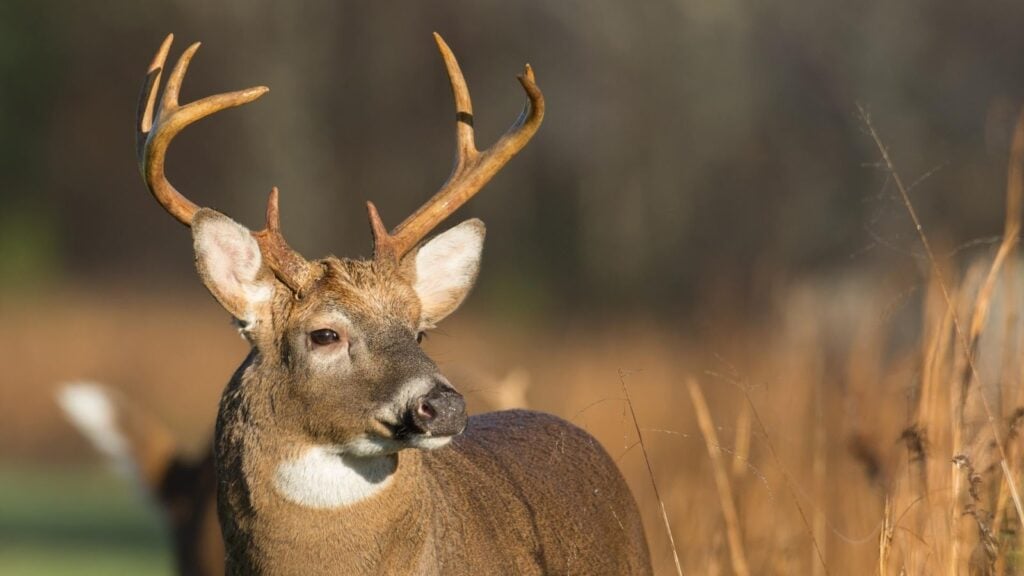
The genetic component of antler size cannot be overstated. Two bucks of the same age eating identical diets in the same habitat can produce dramatically different antlers simply due to their inherited traits.
Some family lines consistently produce bucks with tall, heavy antlers, while others generate deer that never quite achieve impressive racks regardless of other factors. Antler configuration also has a genetic basis, with certain bucks predisposed to wide spreads, others to tall tines, and some to exceptional mass.
Injuries
Physical damage to growing antlers can permanently affect their final size and shape. White-tailed deer antlers grow covered in velvet, a soft tissue rich in blood vessels that nourishes the developing bone.
Any injury to the velvet during the growing season can cause abnormal growth. This would, in turn, result in misshapen or stunted antlers. Injuries to other parts of the body can also impact antler development on the opposite side through a phenomenon not fully understood but well documented by wildlife biologists.
A broken leg on the right side might cause abnormal antler growth on the left antler. Severe injuries or illnesses that compromise a buck’s overall health will redirect energy away from antler production toward healing and survival, often resulting in smaller antlers that year, even if the buck had previously grown impressive racks.
Do Bigger Antlers Mean an Older Buck?
The relationship between antler size and age is strong but not absolute. Generally speaking, larger antlers do indicate an older, mature buck that has had multiple years to develop his full potential.
However, you can’t reliably age a White-Tailed Deer solely by looking at its antlers. A two year old buck with exceptional genetics and nutrition might produce antlers that rival what an average five year old buck grows.
Conversely, an older buck dealing with poor nutrition or recovering from injury might sport antlers smaller than a younger White-Tailed Deer in his prime. Body characteristics like chest depth, neck thickness, and overall body mass provide better aging clues when combined with antler evaluation. The most reliable aging method remains examining tooth wear, which requires having the deer in hand rather than trying to judge from a distance.
Final Thoughts on White-Tailed Deer Antler Height
Understanding white-tailed deer antlers requires appreciating the complex interplay of genetics, nutrition, age, and environmental factors that determine final size. When you consider that 30 inches represents a good benchmark for how much 30 inches of antlers really are, you gain perspective on just how impressive those occasional 40 inch monsters truly are. The next time you spot a buck in the field, you’ll have better context for evaluating what you’re seeing and understanding the biological story those antlers tell. Whether you’re a hunter seeking a trophy, a wildlife enthusiast enjoying nature, or simply curious about the animals sharing your woods, knowing about White-Tailed Deer antler height and the factors influencing antler size enriches your outdoor experiences and deepens your connection to these remarkable animals.
FAQ
How tall are white-tailed deer antlers on average?
A mature buck often averages around 30 inches from base to tip, but it varies widely. Some bucks come in noticeably smaller, while exceptional deer can push past 35 inches and rarely reach 40 inches.
How tall are antlers on a 1-year-old or 2-year-old buck?
Yearlings commonly have small spikes or short forks around the 8 to 12 inch range. Many 2-year-olds show a clear jump in tine length, but they typically still fall well below mature-buck averages unless conditions are excellent.
What matters more: antler height or antler spread?
Height and spread both matter, but they tell different stories. Height reflects tine development, while spread shows width across the rack. Some deer look “big” because they are wide, even if the tines are not especially tall, and vice versa.
Do bigger antlers always mean an older buck?
Usually, bigger antlers suggest a more mature buck, but it is not guaranteed. Great genetics and nutrition can make a younger buck look older, while stress, injury, or poor habitat can shrink antlers on an older deer.
How long does it take for whitetail antlers to grow each year?
Antlers grow fast over a short seasonal window that is often around 3 to 4 months. During this period, bucks need high-quality calories, protein, and minerals to build bone quickly.
Can injuries change how tall antlers grow?
Yes. Damage to the velvet while antlers are growing can cause uneven, stunted, or misshapen tines. Major health stress can also reduce antler growth that season because the body prioritizes survival and recovery.