
Mold mites are frustrating little creatures that many homeowners don’t know much about. In fact, there’s probably more misinformation about these pests online than any other we’ve seen!
To make things easy, we put together this comprehensive guide on mold mites and how to get rid of them.
Let’s get started.
Table of Contents
What Are Mold Mites?
Mold mites (Tyrophagus putrescentiae) are tiny pests that are practically invisible to the naked eye. They belong to the same family as other common household mites. In fact, many homeowners mistake them for cheese or flour mites.
While they’re all undesirable, mold mites present their own distinct problems. As you probably guessed, this species feeds on mold (however, they’re also a common type of computer mite).
Mold is a form of fungi that grows in wet and humid environments. It’s the primary food source for these mites. They can eat foods that are high in protein and fat, but mold is the go-to.
As mold forms in leak-prone areas around your home, these bugs can quickly gather to feed on the fungi. They’re about 0.3 millimeters big, making them difficult to see with your eyes alone. These insects are so small that even a single patch of mold can house thousands of mites.
Physically, mold mites look relatively simple. They’re arthropods with smooth bodies and several legs. Typically tan or off-white, the bugs often blend into the mold they’re feeding on.
Quick Tip: Mites don’t live very long, surviving up to 30 days at the most. But in that short window of life, mold mites can proliferate. Females can lay up to 800 eggs during their life. As a result, it doesn’t take long for mold mite infestations to spread and become a significant problem.
Are They Dangerous?
Fortunately, mold mites don’t pose a serious threat to humans. They’re not like other mites or parasitic bugs that rely on humans to survive. Bites are not a concern.
Mold mites aren’t even big enough to present a structural issue in your home. Most go unnoticed until mold spores start to flourish and spread.
Quick Tip: Even if infestations reach challenging levels, mold mites won’t pay any attention to you. They’re there to eat fungi and nothing more.
All that said, potential issues can still pop up. Mold mites might not bite you, but they can indirectly cause allergic reactions and breathing difficulties.
The arthropod’s body is covered in tiny sensory hairs called setae. Like other pests, mold mites do not see or smell the world in the same way we humans do. Instead, they have to rely on setae to find food and navigate their surroundings.
The hairs occasionally fall out to make way for new ones. When this occurs, the old setae become airborne. That’s when the mite’s presence starts to cause trouble.
Some people may experience allergic reactions. Those who are prone to contact dermatitis may suffer from skin rashes, itchiness, and more.
The effects on the lungs are even worse. The hairs can pollute your home’s air, leading to coughing fits, sneezing, and sore throat.
Your approach when it comes to mold mites will depend entirely on your sensitivity. Some react strongly to these invisible pests, while others have no problem with them. Either way, you don’t want mold mites in your home.
The mold they feed on could pose significant health issues if left untreated. Household mold is common, but that doesn’t mean that it’s safe to inhale. Black mold can cause chronic irritation, persistent headaches, and even poisoning.
Mold mites alone might not be enough to cause health concerns. But the mold they consume certainly can.
How To Spot Them
As we mentioned earlier, mold mites are practically invisible to the naked eye. At only 0.3 millimeters long at the most, they’re difficult to spot even if you have perfect vision.
But there are a couple of ways to locate them.
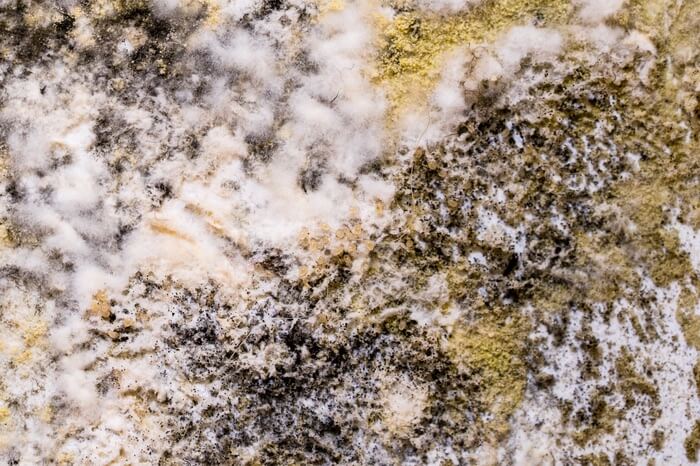
The easiest method is to look for mold spores. Individual spores and patches can get progressively larger as the fungus thrives. Mold needs only moisture and humidity to spread.
If those spores go unnoticed, they can eventually grow to the point that they create visible spots of discoloration. Take a close at those spores. If you have access to a magnifying glass or high-powered camera, observe the area closely.
Quick Tip: Many mold remediation specialists and exterminators use cameras to photograph the affected area. Then, they’ll use computer software to zoom in close and see if the mites are visible.
If the infestation is extensive, you might see the colony itself. Typically, the mite colonies appear as tiny spots of brown or tan discoloration. They’re most visible on light-colored moldy surfaces.
Shine an LED to the mold, and you may see the patch moving a bit. Believe it or not, those small colonies can house thousands of mites.
It’s safe to assume that any patch of surface mold is supporting a thriving community of mites. Typically, the mold will take some time to develop before it’s visible enough to spot. However, you might notice other signs.
For example, mold tends to give off a distinct smell. You may even start to feel the effects of the spores as they cause headaches and listlessness. Look around high-risk areas for leaks.
Bathrooms and kitchens are the most likely places to find mold and mites. The same goes for old doors and windows. Observe the area closely and make a note of any wet spots. If there’s leaking water, it’s only a matter of time before mold forms and the mites follow.
How To Get Rid Of Mold Mites
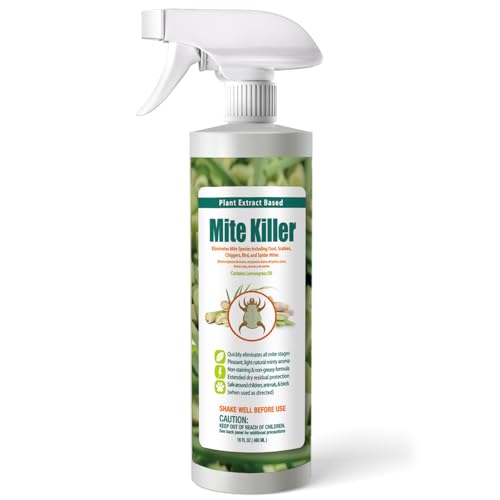
- KILLS MULTIPLE MITE SPECIES — ALL LIFE STAGES: — Eliminates mites on contact with 95%+ proven efficacy. Kills dust mites, scabies, bird mites, red spiders, two-spotted spider mites, rodent mites, chiggers, and more—across all life stages: eggs, larvae, adults.
- PLANT-POWERED FORMULA: Powered by botanicals and enhanced with molecular technology, this mite spray is free of toxins and synthetic pesticides. It provides a natural solution that is safe to use around plants, pets, and your home.
- PET RELIEF & POULTRY PROTECTION: Effectively eliminates scabies and ear mites to stop itching and discomfort at the source. This gentle yet powerful formula also provides natural protection against poultry mites, keeping your pets and flock healthy and infestation-free.
- SAFE FOR PLANTS & HOME: Spray directly on indoor plants to control spider mites or use as an effective dust mite killer to neutralize hidden allergens in bedding, upholstery, carpets, and mattresses. Just let it dry, no cleaning needed.
It’s important to know how to get rid of mold mites if you’re a homeowner. Even though these bugs don’t cause direct harm, you need to address them as soon as possible. There’s a genuine risk of spread and worsening problems the longer you ignore the issue.
The good news is that getting rid of mold mites is pretty straightforward. Because these mites prioritize mold as their prime food source, you can use that to your advantage. The key to successfully eradicating these bugs is to deprive them of their means of survival.
Here’s what to do.
1. Protect Yourself
Before you run around your home trying to kill mold mites and the mold they feast on, you need to protect yourself. You should never touch mold with your bare skin.
There’s always a chance of an adverse reaction. Even touching the fungus can lead to rashes, itching, and more. Not only that, but you can quickly spread it to areas that stick.
For example, you could end up getting it on your clothes, which spreads the spores to another room. Or, you could get the spores on your hand before rubbing your eyes. Either way, it’s best to avoid all worst-case scenarios.
Gear up with all the protective items you need. At the bare minimum, most recommend wearing gloves. That way, you can attack the spores without skin contact. It’s also a good idea to wear a mask to avoid inhalation and future breathing problems.
2. Locate The Mold Mites
Next, you’ll need to find the mold mites. If you have mold somewhere growing in your home, there’s a good chance that the mites have already moved in for a feast.
Mold can be tricky to find. It tends to pop up in places you least expect. However, the first places you should look are around water and waste pipes in your kitchen and bathroom.
Leaking pipes are one of the leading causes of mold growth. You might have to get a little creative when searching for potential sources. Take a peek under cabinets, beneath fixtures, and even adjacent walls.
Your plumbing runs behind the drywall and meanders throughout your entire home. That means that leaks can appear anywhere!
Quick Tip: Luckily, you can use your sense of sight and smell to spot mold issues. Mold usually takes on a musty smell. Fungi thrive in damp and humid environments, so you’re most likely to encounter the smell in places with poor ventilation.
If the problem gets bad enough, you might see discoloration on your wall. The discoloration could be water stains, mold growth, or even a small colony of bugs.
Use some close-up photography equipment as we talked about earlier. The mold mites are not visible to the naked eye, so you’ll need to get close and personal to see the arthropods moving around. You can sometimes see them with bright LED lights, too.
Mold mites are covered in fine sensory hairs and usually have about eight legs each. Their bodies are tan or off-white, creating a distinct milky appearance.
Don’t expect to see individual bugs crawling around. These bugs live in massive colonies, which usually appear tan or light-brown.
3. Use Spray

- NATURAL & NON-TOXIC FORMULA. Plant-based ingredients provide a safe alternative to harsh chemical treatments. Designed for use in homes, farms, chicken coops, cages, and pens when used as directed.
- SAFE FOR FAMILY & PET AREAS. Gentle enough for use around children, pets, and livestock when applied as directed. Ideal for households, farms, and shared living environments.
- NON-STAINING & SCENT FREE. Leaves no stains or strong odors behind. Perfect for use on mattresses, couches, pillows, and other fabrics, keeping your home fresh and clean.
- MADE IN THE USA – VALUE SIZE – Produced under high-quality manufacturing standards. Helps control common household and animal mites, including poultry mites, and clover mites. Effective for ongoing mite management when used regularly.
Once you find these little buggers, it’s time to start eliminating them!
There are two goals with spraying mold mites:
- The first is to kill the mold mites. These bugs aren’t the most resilient pests around. As a result, it doesn’t take much to kill them at all.
- The second goal is to clean off the mold. Mold attracts mites in the first place, and it will continue to do so until you eradicate it. You can get rid of the existing mites, but they’ll just reappear in due time.
For lasting results, you need to treat both the mites and the surface mold.
To do this, you have several options. To keep things simple, you can use store-bought products. Generally, they contain some kind of disinfectant.
The disinfectant kills mold mites almost instantly. Not only that, but it can help inhibit mold growth.
Homemade sprays are a good option as well. Acidic sprays that utilize vinegar and lemon are surprisingly effective.
To make a vinegar spray, mix one cup of white vinegar with one cup of water. The diluted vinegar is acidic enough to do the job without causing any harm to your walls or floors. Spray it onto the bugs directly and wait a few minutes for them to die off.
If you want to use lemon, you don’t have to do any diluting. Juice about four fruits and apply the spray to the moldy surface. Let it sit before giving it a good scrub.
The lemon will break down the mold and leave behind a fresh scent.
Mites are no match for some typical household products. You can try using disinfectants and multi-surface cleaners. However, more potent products like baking soda, bleach, and borax have a much better chance of killing the mold bugs.
To use baking soda, mix it with some water and use it to scrub the surface down. The powder provides some light abrasion, which should dislodge the mold for a more straightforward cleaning process.
For bleach or borax, use water for dilution. All you have to do is apply the mixture and scrub the affected area clean.
4. Eliminate Humidity & Moisture
The final step in getting rid of mold mites is to address excess moisture and humidity. Doing so will mitigate mold growth, resulting in less food for mold bugs to survive.
Mold is a living organism, albeit a tiny one. Thus, it requires moisture to grow and spread. Fungal spores pull water vapor from the air to flourish, which is why mold tends to prosper in high-humidity areas.
If you’ve ever experienced a leak in a poorly ventilated basement or crawlspace, you’re probably familiar with the struggle involved in mitigating mold issues. Air needs to circulate around the affected area to promote evaporation and prevent high humidity levels.
The easiest way to get rid of moisture is to open up some windows. Cross-ventilation can work wonders to speed up evaporation and control water vapor.
To improve efficiency, consider adding some fans into the mix. Small room fans are enough for a small space. But if you’re dealing with a massive leak or a sizable moldy surface, you may want to upgrade to some industrial-grade blowers.
Quick Tip: Whatever you use, position the fans so that air constantly flows over the damp spot. The goal is to facilitate evaporation and move those vapors out of the room.
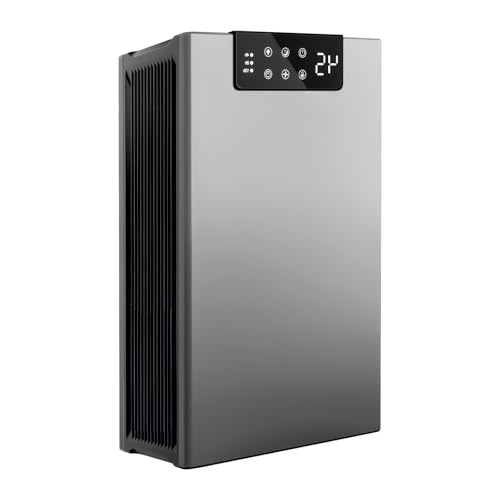
- 【Efficiency Advanced Dehumidifier】KeepGlad dehumidifier feature advanced dual chip semiconductor condensation system that quickly and efficiently removes excess moisture from the air. You can enjoy more comfortable and drier life! Dehumidifiers for home reduce humidity to below 45% rapidly. Home dehumidifier covers up to 1000 sq.ft., ideal for bedrooms, closets, bathrooms, basements, garages, kitchens
If all else fails, you can also use a dehumidifier. These machines come in many sizes, making it easy to find one that’s right for your space. Heavy-duty dehumidifiers can treat entire basements!
A dehumidifier pulls water from the air and stores it in a container. All you have to do is remember to empty the reservoir. Alternatively, some let you connect a drainage hose.
Dehumidifiers are a worthy investment if you live in a humid environment. They can provide long-term results in damp basements that lack proper ventilation. Continued use may prevent mold growth in the future (as well as mold mites).
The Best Way To Prevent Them From Coming Back
So you eliminated the mold and got rid of the mold mites. What now?
While you might think the job is over, you can’t rest on your laurels. Mold mites have a penchant for returning the moment mold rears its ugly head. There’s a reason why the mold appeared in the first place.
To prevent mold bugs from returning, you need to address the mold-causing issue. Temporary fixes are only going to buy you time. There’s always a chance that mold can come back, bringing the mites along with it.
If the issue is simply stagnant air and moisture-prone areas, think about investing in long-term solutions for dehumidification. You can benefit from heavy-duty dehumidifiers for basements and other damp rooms.
Those who have the budget can try installing some form of ventilation. A full-blown AC system will provide the best results. However, built-in fans and ventilation exhaust systems can go a long way.
In those cases where a water leak caused mold, take some time to fix the issue.
Minor leaks are easy enough to take care of with help from an experienced plumb. That said, older homes might suffer from chronic leaks that appear regularly. If that’s the case, you may benefit from a plumbing assessment.
Relaying pipework is a significant investment, but your home will be better off in the long run. Not only will you avoid mold and mold mites, but the absence of constant water issues will keep your home’s structural integrity in check.
Finally, there are those mold problems that come from structural issues. Often, these problems go unnoticed for months or years! For example, most homeowners never realize a leaking roof is to blame until severe mold or structural problems occur.
Invest in routine inspections to avoid nasty surprises like this. If you determine that a damaged foundation, leaking roof, or poor weatherstripping around your doors is causing your mold issues, don’t hesitate to get it fixed.
Again, the costs can be substantial depending on the severity of the problem. But, it’s the only proper way to get rid of mold mites once and for all.
Constant water leaks will only create endless headaches in the future. Protect your home and family by eliminating all potential water leaks. Once that’s done, mold mites will be a thing of the past.
Final Thoughts
Getting rid of mold mites isn’t tricky, as long as you address whatever mold problem you have. These pests are only as resilient as their food source!
If you take the process seriously and don’t let these bugs get out of hand, this should be a very manageable issue. If you’re having trouble and want some advice you can always send us a message.
FAQ
What are mold mites?
Mold mites are tiny mites that feed mainly on mold in wet, humid areas of a home.
Are mold mites dangerous to humans?
They don’t bite, but they can trigger allergy-like symptoms, and the mold they feed on can also affect health.
How small are mold mites?
They’re extremely small, around 0.3 mm, so they’re hard to see without magnification.
Where do mold mites hide during the day?
They stay right in or near mold growth, often around leaky pipes, damp walls, bathrooms, kitchens, doors, and windows.
How do I know if I have mold mites or just mold?
A moving tan or brown “patch” on a moldy surface can be a colony. A magnifying glass or close-up photo helps confirm.
What kills mold mites fast?
Sprays and cleaners can kill mites quickly, but long-term success requires removing the mold they feed on.
Does vinegar work on mold mites?
A diluted white vinegar spray can help with surface mold and mites, especially when followed by scrubbing and drying the area.
How do you prevent mold mites from coming back?
Fix leaks, reduce humidity, improve ventilation, and stop mold from returning, because mold is their main food source.