
We don’t often think of birds as dangerous when we’re watching them at feeders or listening to their songs in the morning. They seem harmless compared to bears, venomous snakes, or even aggressive dogs, though. Several species of dangerous birds in North America possess the physical capabilities and territorial instincts to cause serious harm to humans when circumstances align.
Perhaps surprisingly, a few species can also be a peril to humans who get too close to nests, encroach on hunting territory, or simply find themselves in the wrong place at the wrong time. Back in prehistoric times, there were probably more avian threats to worry about. Anyway, in this guide, we’ll be sharing the top 8 most dangerous birds in North America, how they can attack, and essential bird safety tips to help you stay safe if you happen to encounter any of them.
Table of Contents
The Top 8 Most Dangerous Birds in North America
1. Bald Eagle
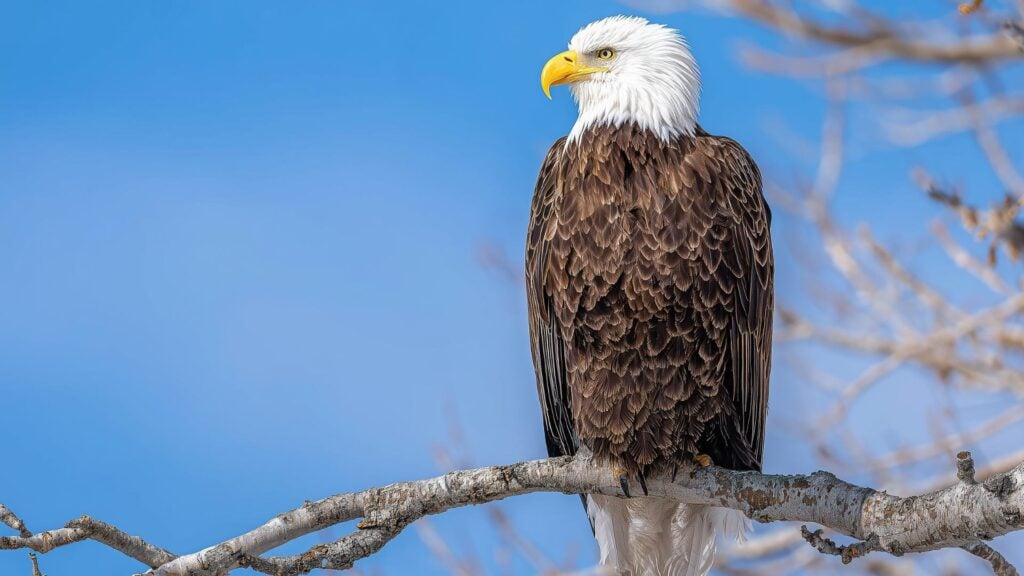
The bald eagle stands as America’s national symbol, but this majestic raptor is far from a gentle creature. These birds of prey are fast, large, have sharp beaks and talons or all of the above.
Adult bald eagles can weigh up to 14 pounds with wingspans reaching eight feet, and their talons exert crushing force measured at roughly 400 pounds per square inch. That’s more than enough pressure to break bones or cause severe lacerations.
Bald eagles rarely attack humans, though. Documented cases do exist of these birds swooping down on people who ventured too close to nesting sites. One wrong step near a nest could nearly trigger a defensive strike that comes with little warning.
The eagle’s primary weapons are those massive talons designed to pierce fish and grab prey from water. They don’t distinguish much between an intruding predator and a curious human photographer.
They could dive at speeds exceeding 100 miles per hour when attacking, and their excellent vision means they could spot potential threats from incredible distances.
2. Great Horned Owl
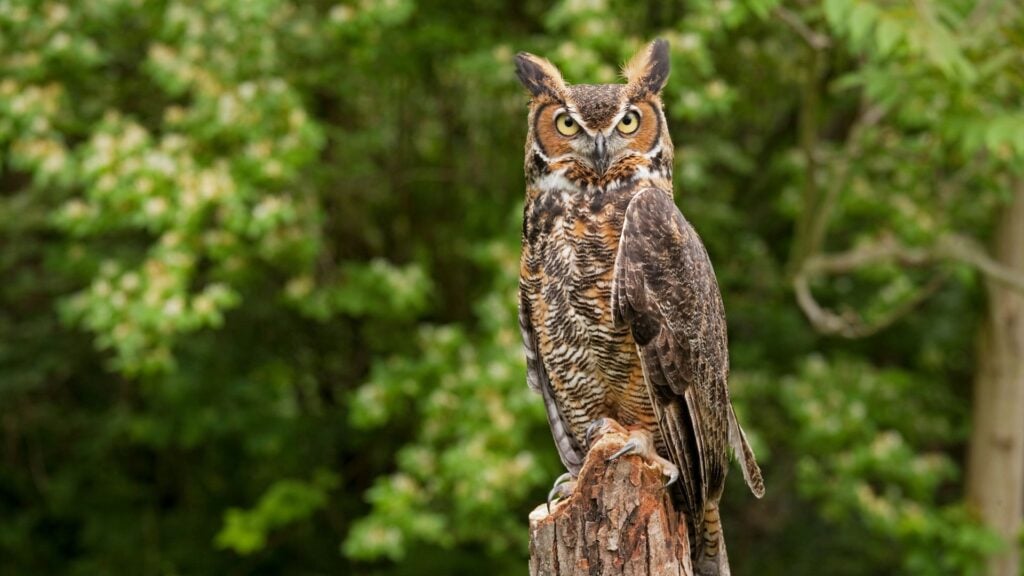
The great horned owl earns its reputation as one of the most aggressive birds due to its fierce territorial nature and powerful hunting capabilities. These owls are apex predators in their ecosystems, capable of taking down prey as large as great blue herons, other raptors, and even small deer. Their talons generate a crushing force similar to bald eagles, and their silent flight means you could barely hear them coming until it’s too late.
Great horned owl attacks on humans spike dramatically during nesting season when these birds defend their territory with shocking aggression. Joggers, hikers, and people simply walking their dogs have been struck from behind by owls protecting nearby nests.
The attacks typically target the head and face, with the owl’s sharp talons raking across the scalp and causing deep cuts that bleed profusely. Unlike many raptors that strike once and retreat, great horned owls sometimes make multiple passes, continuing to attack until the perceived threat leaves their territory.
Several factors contribute to the great horned owl’s status among dangerous birds in North America. Their excellent night vision means they’re active when humans have reduced visibility. Their powerful build and aggressive temperament make them willing to attack creatures much larger than themselves.
3. Red-Tailed Hawk
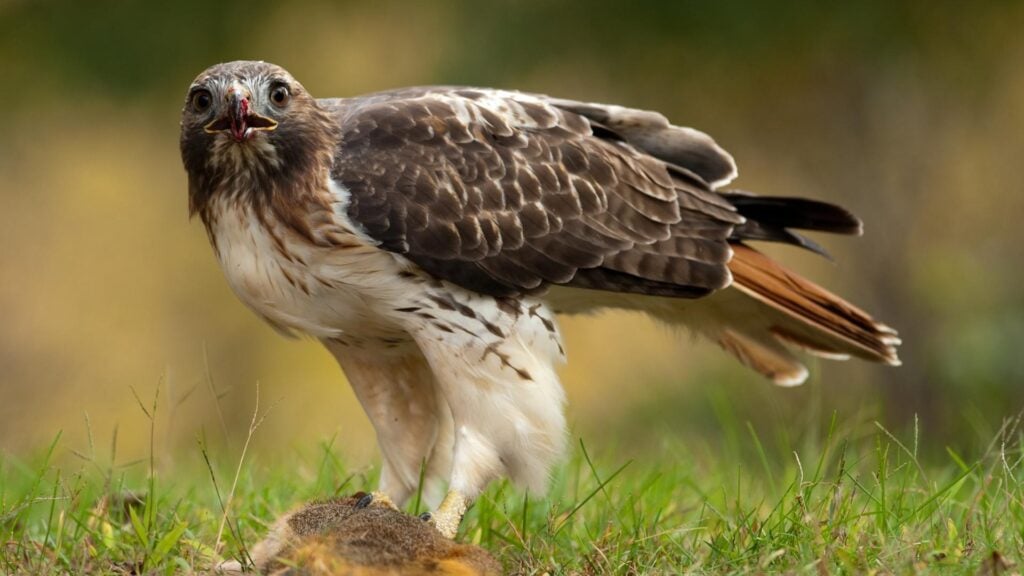
Red-tailed hawks are among the most common raptors across North America, which unfortunately means they’re also responsible for more human encounters than rarer species. Although they are generally less aggressive than great horned owls, red-tailed hawks will vigorously defend their nesting territories when they perceive threats. These powerful hunters possess impressive weaponry, including sharp, curved talons and hooked beaks designed for tearing flesh.
The typical red-tailed hawk weighs between two and four pounds. It might sound modest until you consider that weight is largely muscle and bone designed for capturing and killing prey. Their talons can puncture deeply, and their grip strength allows them to hold struggling rabbits and squirrels.
4. American Crow
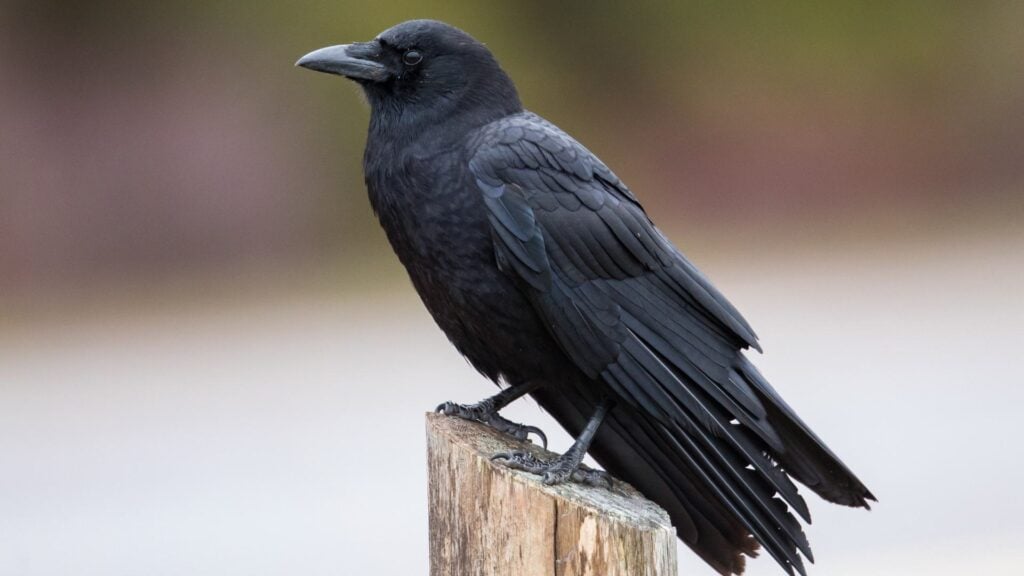
It might seem strange to include American crows among dangerous birds in North America when they weigh barely a pound, but these intelligent birds punch well above their weight class when defending nests.
Crows possess remarkable memory and problem-solving abilities. Turns out, they could easily identify specific human individuals who’ve threatened their nests and target those people for harassment that can continue for weeks or months.
During breeding season, parent crows become extremely protective of their young. They’ll mob and dive bomb anyone who passes too close to a nest, often striking the person’s head with their feet or pecking with their sharp beaks.
What makes crow attacks particularly unnerving is the birds’ ability to recruit help. When one crow identifies a threat, it can call in relatives and neighbors to join the mobbing behavior. You might suddenly find yourself facing not one but five or six crows all diving and calling aggressively. The attacks typically involve the crow swooping from behind and striking the back of the head before quickly gaining altitude for another pass.
Crows also hold grudges and share information about threats with other crows. Research has shown that crows can recognize individual human faces and teach their offspring to recognize and harass specific people. This means a single negative encounter during nesting season can lead to years of harassment from multiple generations of crows.
5. Peregrine Falcon
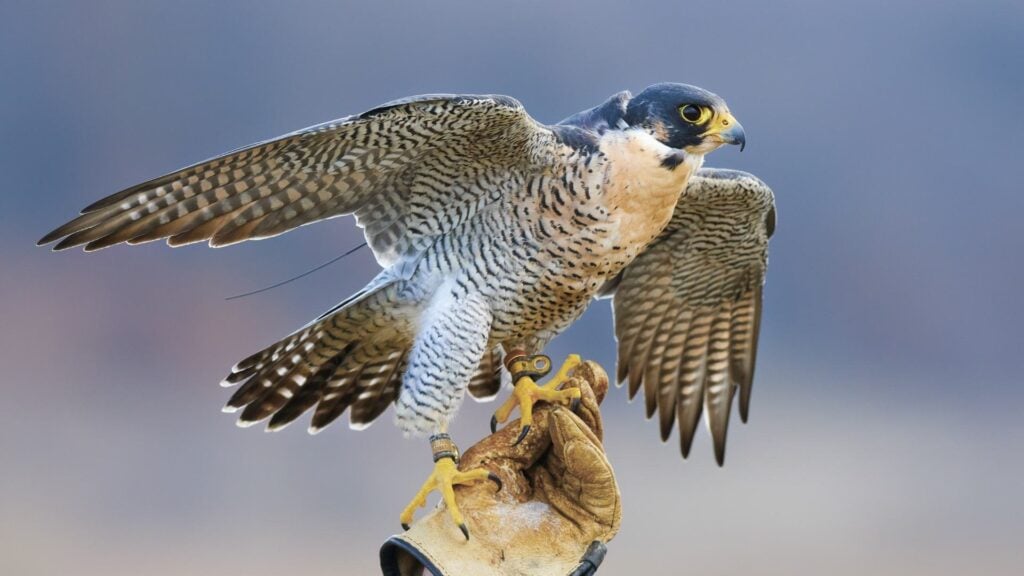
The peregrine falcon holds the title as the world’s fastest animal, capable of reaching speeds that sometimes approach 300kmh during its hunting dive known as a “stoop.” When it comes to the gruesome consumption of prey, the peregrine falcon ranks among the most efficient killers in the bird world.
It can do this, of course, in a very special way, diving down from great heights and using gravity to accelerate it to extraordinary speeds. The talons hit the prey with great force, sometimes breaking the neck in an instant and killing birds mid flight without the falcon needing to engage in any struggle.
While peregrine falcons rarely view humans as threats or prey, their presence on this list of dangerous birds in North America stems from their defensive behavior near nest sites. These falcons have made remarkable comebacks in urban environments, nesting on tall buildings and bridges where the high perches mimic their traditional cliff nesting sites.
A peregrine falcon diving at even a fraction of its top hunting speed represents a serious threat. The impact of the bird’s body and talons can cause significant injury, and strikes to the head can result in concussions or serious lacerations.
6. Northern Goshawk
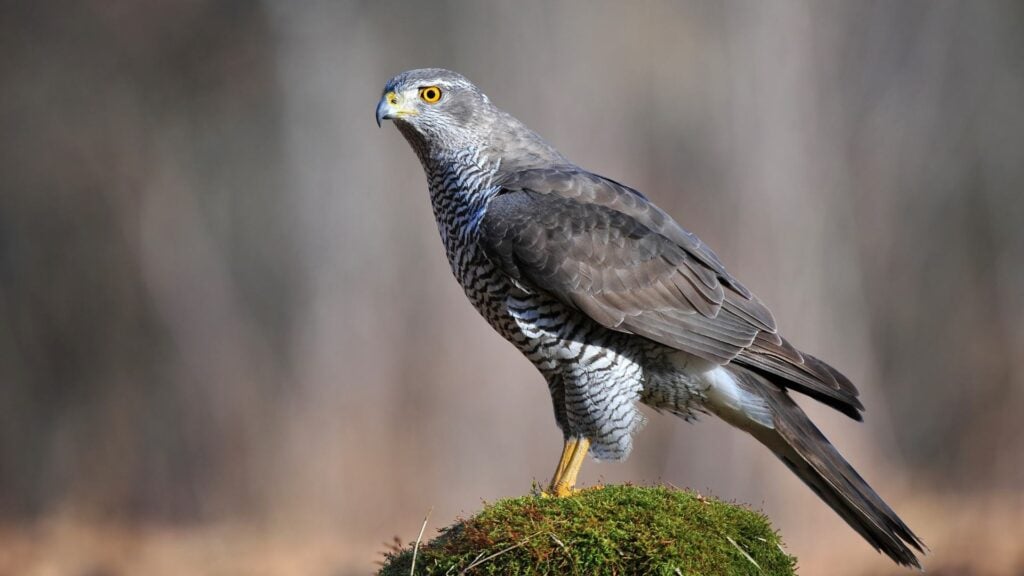
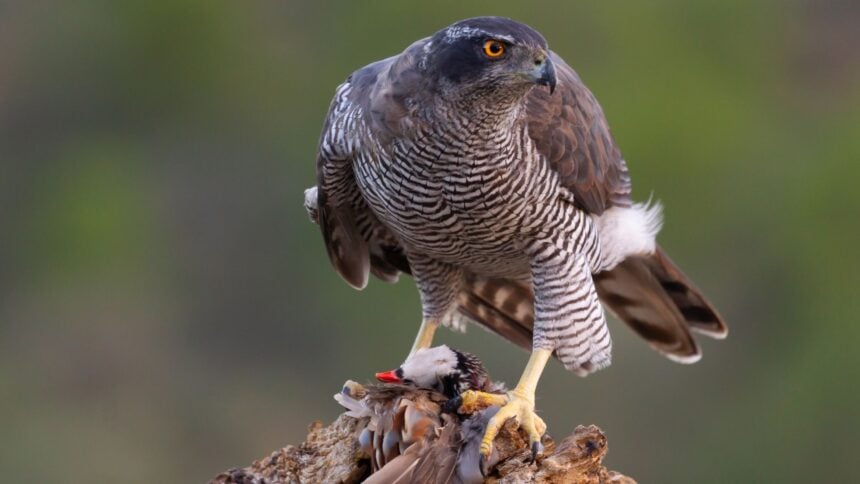
The northern goshawk might be less familiar to many people than bald eagles or red-tailed hawks, but it has probably the worst temper of any raptor in North America. These forest dwelling hawks are notoriously aggressive, especially during breeding season, and they show little hesitation in attacking humans who enter their territory.
Goshawks are powerful, agile hunters that regularly take prey as large as snowshoe hares and grouse, which gives you some sense of their capabilities. When defending a nest, northern goshawks attack with a ferocity that exceeds most other raptors. They don’t just make a single warning pass but will repeatedly dive bomb and strike intruders, sometimes drawing blood with their sharp talons.
Forest workers, hikers, and wildlife photographers have all been victims of goshawk attacks. The bird’s ability to maneuver through dense forest at high speed makes it particularly dangerous in its preferred habitat. You might not see the bird until it’s already making contact, as goshawks can weave between trees and attack from unexpected angles. The strikes come hard and fast, with the bird’s momentum adding force to the impact of its talons.
7. Cassowary (introduced species in captivity)
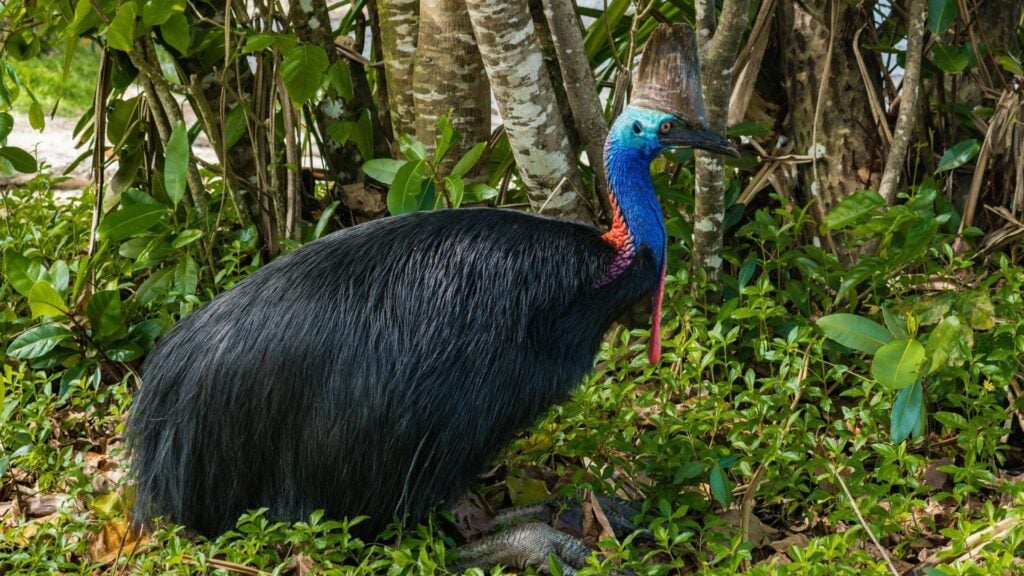
The cassowary deserves mention despite not being native to North America because several facilities house these birds, and they represent potentially the most dangerous bird species humans might encounter. Cassowaries are the only modern birds that have been recorded killing humans in combat in the wild.
These massive flightless birds from New Guinea and Australia stand up to six feet tall and can weigh over 130 pounds. Their middle toe is a long, up to 12cm, very sharp, slightly curved claw that functions as a devastating weapon.
When a cassowary is threatened, it can leap upwards and kick towards the danger with both feet simultaneously. The dagger like claw on each foot can disembowel prey or inflict mortal wounds on threats.
Unlike ostriches or emus that primarily kick forward, cassowaries can attack in multiple directions and use their powerful legs to knock down opponents before delivering killing strikes with those claws. The bird’s bone plated head also serves as a weapon, allowing it to charge and batter threats.
Cassowaries belong on any list of deadly North American birds even as non-native captives because the danger they represent is very real to anyone who might encounter them professionally. Zoo visitors are safely separated from these birds, but the staff who care for them work with one of the few bird species genuinely capable of killing an adult human. Their inclusion serves as a reminder that aggressive wildlife comes in many forms, and birds at the extreme end of the size and aggression spectrum command absolute respect.
8. Blue Jay
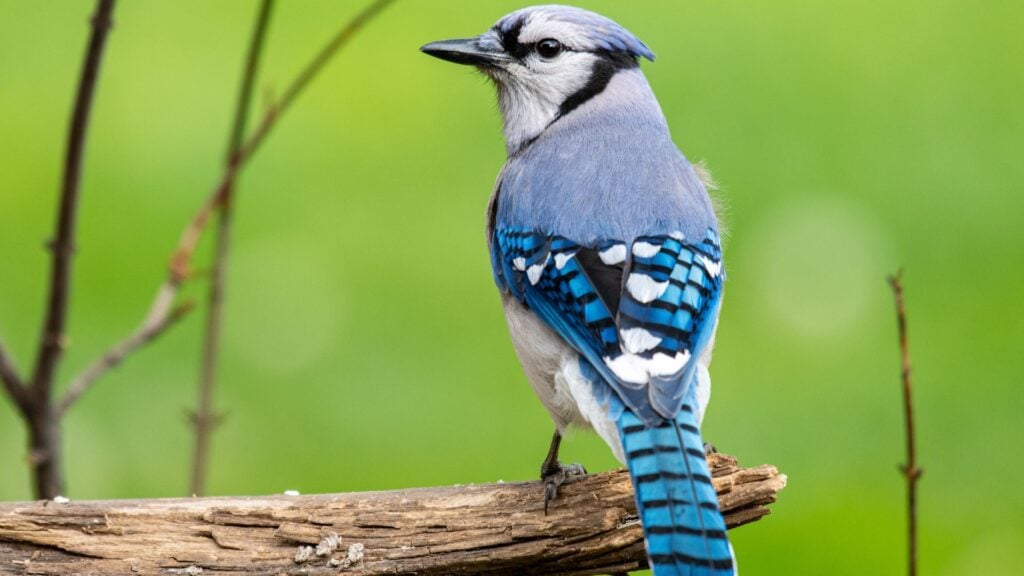
Blue jays might seem like an odd addition to a list of dangerous birds in North America, but these common backyard birds can become remarkably aggressive during nesting season. While they lack the size and weaponry of raptors, blue jays make up for it with boldness and persistence. These birds will divebomb people, cats, and other potential threats that venture near their nests, often making contact with their beaks and feet.
The danger from blue jays is more about annoyance and minor injury than serious harm. However, their attacks can be surprising and unsettling, particularly for children or people unaccustomed to bird aggression. Blue jays strike quickly and repeatedly, sometimes drawing blood with pecks to the head and scalp. The bird’s sharp beak can break skin, and multiple strikes can cause a surprising amount of bleeding from scalp wounds.
What are the Signs a Bird May Attack
Recognizing the warning signs that bird attacks might be imminent can help you avoid dangerous encounters.
- Most aggressive bird behavior follows predictable patterns that provide opportunities to retreat before things escalate.
- Loud, persistent calling often indicates you’re near a nest or territory that a bird is defending. If you hear repeated alarm calls that seem directed at you, it’s time to change your route.
- Physical displays provide another clear warning. Birds that are preparing to attack often engage in obvious threat behaviors including diving close to your head without making contact, flying directly at you before veering off at the last moment, or hovering above you while calling.
- Body language in perched birds can also signal aggressive intent. A bird that’s puffed up, has raised crown feathers, or is bobbing its head while staring directly at you is displaying threat postures. Raptors that are mantling over prey or facing you directly with spread wings are showing aggression. If you see these behaviors, you’re too close and need to increase distance.
- The time of year provides context for likelihood of aggressive behavior. Breeding season, which varies by species but generally runs from early spring through mid-summer, is when most bird attacks occur.
How to Stay Safe Around Dangerous Birds
Preventing bird attacks primarily involves awareness and respecting birds’ space, particularly during breeding season. If you’re hiking or recreating in areas where aggressive species nest, stay on established trails and avoid going off trail where you might inadvertently approach nest sites. Watch for warning signs posted by land managers in areas where problem birds are known to nest.
If you’re attacked, protect your head and face with your arms while calmly but quickly leaving the area. Don’t run wildly, as this can trigger further pursuit, but do move steadily away from the attack zone. Wearing a hat or carrying an umbrella in areas where attacks are known to occur provides some protection. Once you’re clear of the immediate nesting area, the bird will typically break off the attack.
Report aggressive bird encounters to local wildlife authorities or park managers so they can post warnings for other users. Never attempt to retaliate against an attacking bird, as most species are protected by law and their behavior is simply natural nest defense. Understanding that the aggression is temporary and confined to nesting season makes it easier to take minor detours or adjust your routines for a few months.
Wrapping Up
The most dangerous birds in North America possess impressive physical capabilities, strong territorial instincts, or both. While serious injuries from birds remain relatively rare, understanding which species can pose threats and recognizing warning signs helps prevent negative encounters. These birds aren’t villains but rather animals defending their young or territory using the tools evolution provided. Respecting their space, especially during sensitive breeding periods, allows humans and birds to coexist safely. The next time you’re outdoors during spring and summer, that awareness of dangerous birds in North America might just help you avoid an unpleasant surprise.
FAQ
Do dangerous birds actually attack humans often?
Serious injuries are uncommon, but defensive attacks happen every year, especially during nesting season. Most incidents involve birds protecting eggs or chicks, not hunting people.
Which birds are most likely to dive-bomb people?
Territorial species that defend nests tend to dive-bomb, including some owls, hawks, and even smaller birds like crows and blue jays. The risk increases if you walk close to a nest without noticing.
What are the most common warning signs before an attack?
Loud repeated calls, swoops that pass close to your head, hovering overhead, and a bird staring you down from a nearby perch are common signals. If the behavior escalates, increasing distance usually ends the problem fast.
What should I do if a bird keeps swooping at my head?
Cover your head and face with your arms and calmly move away from the area. A hat can help, and an umbrella can add quick protection in known hot spots.
Are raptors like hawks and eagles dangerous to pets?
Small pets can be at risk in rare situations, especially if they are left unattended outdoors. The simplest prevention is supervision, keeping pets close, and removing attractants that draw wildlife.
Is it legal to harm a bird that attacks me?
Most wild birds are protected by law, and attacking behavior is typically temporary nest defense. The safest and simplest solution is leaving the area and reporting repeated aggressive behavior to local park staff or wildlife authorities.