
If you have ever spent a summer afternoon dodging a persistent yellow jacket at a picnic, you have probably wondered when these territorial insects finally pack it in for the day. It is easy to assume they might take a midday nap when the heat becomes unbearable, but the reality of their daily routine is a bit more complex. Figuring out exactly when wasps sleep is not just a matter of curiosity. It is actually the most important piece of information you can have if you are trying to manage a nest or simply enjoy your garden in peace.
Table of Contents
Do Wasps Actually Sleep? What’s Their Circadian Rhythm?
It seems cosy to think of wasps returning to their nests at night, young ready for a night of rest, but wasps do not sleep in the same way humans do. Although we experience deep REM cycles, wasps follow a strict circadian rhythm wasps have evolved over millions of years to maximise daylight. Instead of a traditional slumber, they enter a state of “torpor” or wasp rest.
During these periods, their metabolic rate drops and they become remarkably still. Wasps do return to their nests and may appear inactive at night, but they do not sleep in the way we might think of sleeping.
They remain alert to vibrations or light changes. This resting state is essential for conserving energy, especially for diurnal wasps that spend their entire day foraging. While they are technically “off duty” from flying once the sun goes down, the hive remains a hive of internal industry.
Wasp Daily Activity Schedule – Hour by Hour
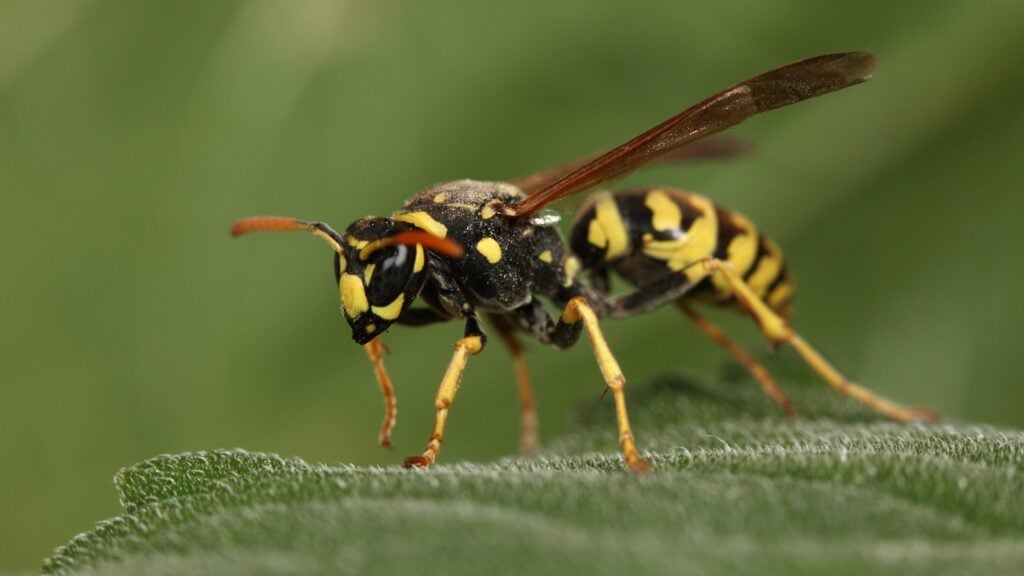
To truly understand wasp activity, you have to look at their day through the lens of temperature and light. They are solar-powered creatures, meaning their ability to fly and hunt is almost entirely dependent on the warmth of the sun.
Early Morning (Dawn to 10 AM) – Lowest Wasp Activity
The early morning is the quietest time in the life of a colony. Because wasps are ectothermic, they cannot easily fly when the air is crisp. You might see a few early morning wasps twitching near the entrance of the wasp nest, but they are usually waiting for the dew to dry. This is the period of the lowest wasp activity, as they require the ambient temperature to rise before their wing muscles can function at full capacity.
Late Morning to Mid-Afternoon (10 AM – 3 PM) – Peak Activity
Once the sun hits its stride, you will witness peak wasp activity. This is the time when foragers leave the nest in droves to find protein for the larvae and nectar for themselves. Between 10 AM and 3 PM, the workers are at their most aggressive and determined. They are covering large distances, scouting for food, and scraping wood from fences or garden furniture. If you are planning an outdoor lunch, this is the window where you are most likely to be bothered by them.
Late Afternoon to Dusk (3 PM – Sunset) – Slowing Down
As the shadows lengthen, the frantic pace of the afternoon begins to settle. Foragers start navigating back home, using the waning light to find their way. They are less active at night, so they use these final hours of light to ensure the colony is stocked for the evening. You will notice a steady stream of traffic heading towards the eaves or the garden shed as the temperature begins to dip.
Nighttime (After Dark) – Full Nest Rest
By the time it is truly dark, you have reached the period of inactive night. Wasps don’t fly at night because they lack the visual hardware to navigate in the dark. Instead, they huddle together inside the nest. However, they still carry out duties such as caring for larvae and strengthening the nest walls. They are tucked away, but they are still very much awake and capable of defending their home if they feel a vibration.
| Feature | Day Activity | Night Activity |
| Movement | High flying, foraging, and hunting | Stationary, clinging to the nest |
| Aggression | High, especially near food sources | Low, unless the nest is touched |
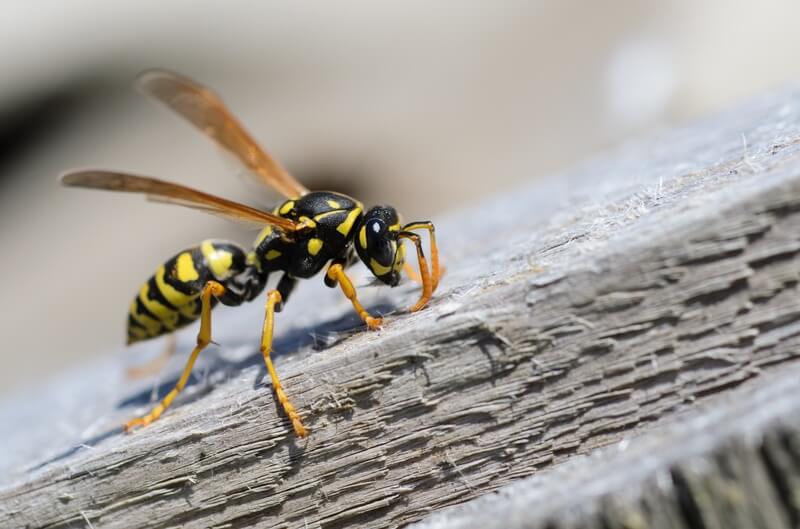
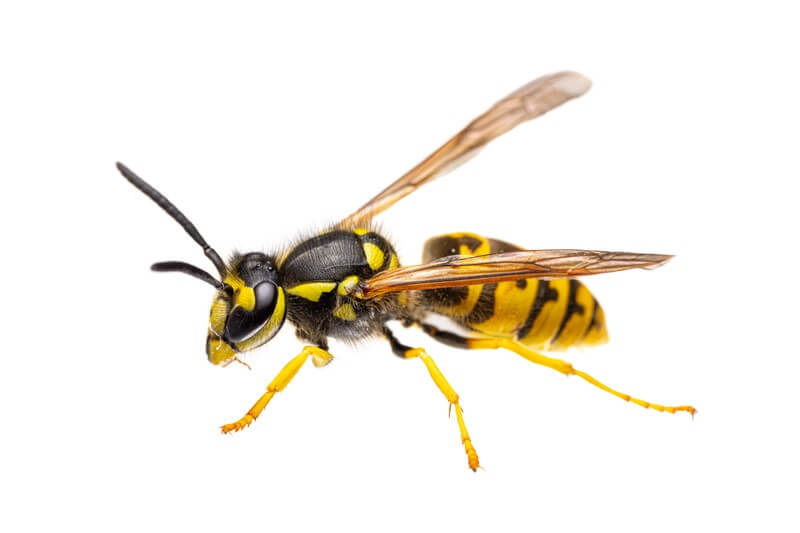
| Yellow Jackets | Scavenging for sugars and proteins | Clustered inside ground or wall nests |
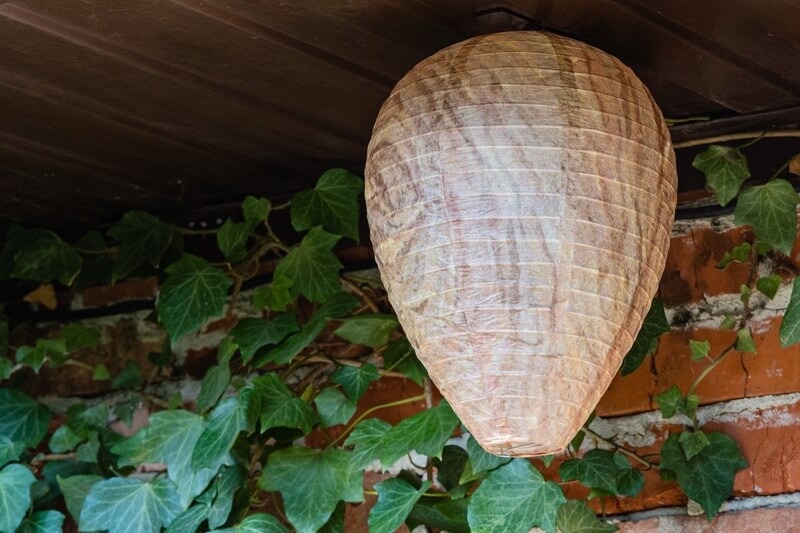
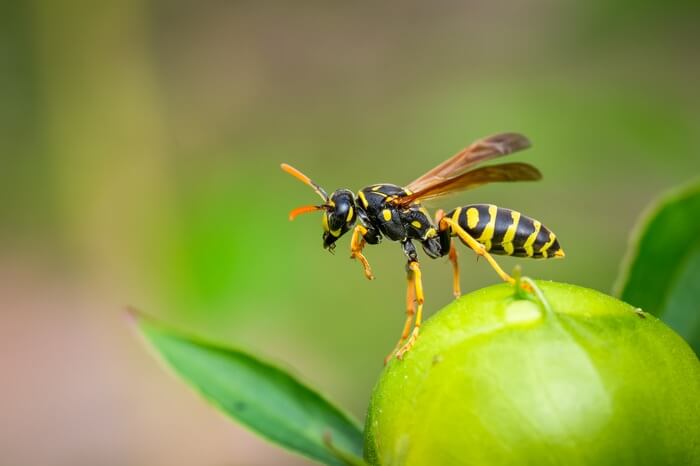
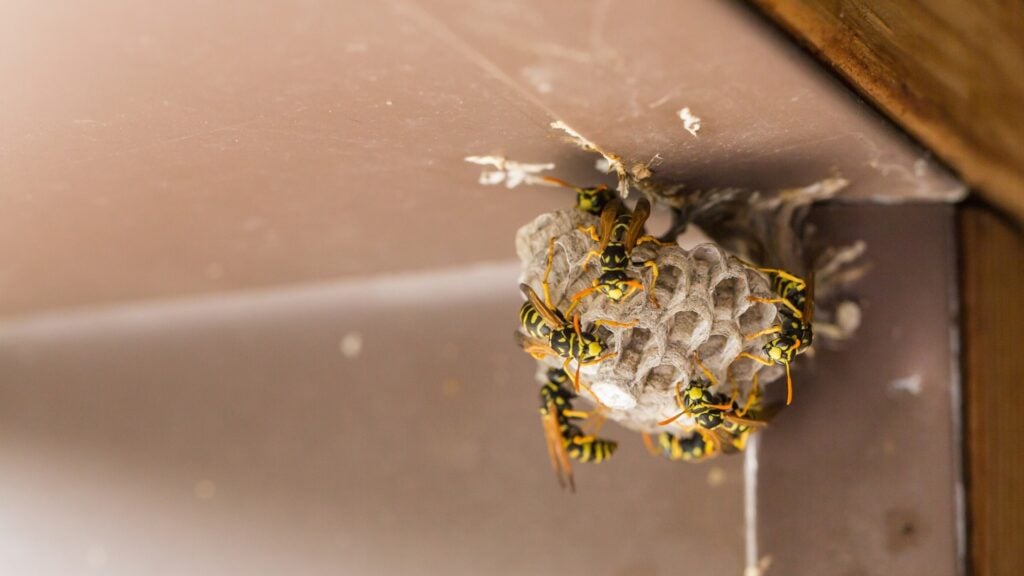
| Paper Wasps | Busy building and feeding larvae | Resting on the open umbrella-shaped nest |
| Primary Goal | Resource collection | Larvae care and energy conservation |
Common Myths About When Wasps Sleep
There are plenty of old wives’ tales regarding when these insects are “out of it,” but believing the wrong one can lead to a nasty sting. Here is the truth behind the most common misconceptions:
- Myth: “Wasps sleep in the middle of the day when it’s hot.”
- Fact: High heat does not put them to sleep. They might seek shade under leaves or eaves to prevent overheating, but they remain fully active and ready to defend their territory.
- Myth: “All wasps are nocturnal.”
- Fact: Almost all common UK species are diurnal wasps, meaning they are active in the day and rest at night. Only a few rare, non-native species hunt after dark.
- Myth: “If a wasp is still, it is asleep.”
- Fact: During the winter, female wasps are known to hibernate. They can become very inactive and appear to be asleep, but they are just dormant. In the summer, a still wasp is often just grooming or regulating its body temperature.
Practical Tips Based on Wasp Activity Patterns
Knowing the schedule of a colony allows you to manage your home and garden much more effectively. If you understand when wasps sleep, you can plan your outdoor maintenance without the risk of a confrontation.
- Avoid peak activity hours for outdoor meals. If you are hosting a barbecue, try to eat later in the evening or very early in the day when foragers are less likely to be patrolling for food.
- Schedule wasp nest removal in early morning. If you must approach a nest, the break of dawn is when the fewest wasps are outside and their reaction time is slowest due to the cold.
- Use pest control sprays only after dark during inactive night. Applying treatments at night ensures the entire colony is present in the nest, making the pest control much more effective.
- Seal entry points before yellow jackets or paper wasps become active. Late autumn or early spring is the best time to close gaps in your loft or garage before a new queen starts a colony.
- Recognize infestation signs during high wasp activity. Watch for “flight paths” where multiple wasps follow the same line to a hole in your brickwork or under the eaves.
- Check sheds and outbuildings you access regularly. Wasps love the shelter of a garden shed. Check the corners of the ceiling in the spring for small, golf-ball-sized starter nests.
- Keep bins sealed tightly. Since they are active all day, an open bin is a 24-hour buffet that encourages them to build a wasp nest nearby.
- Do not swat at them. During their peak hours, swatting releases pheromones that signal other wasps to come and help, turning a minor annoyance into a group attack.
When to Call Professional Pest Control for Wasps
We do not recommend any attempts to remove a wasp nest yourself, especially if the insects are bothering you or have made a home in a loft, garage, or under the eaves. When a colony is established, the queen lays eggs, hatching more workers who then set about scraping more wood, turning them into pulp, and building the nest bigger and bigger.
Eventually, she can be encased within it and focus entirely on laying eggs. Dealing with thousands of wasps in a confined space is dangerous. If you have a nest in a place you access regularly, it is time to call in the experts.
Wrapping Up…
Understanding when wasps sleep is essentially about understanding their dependence on the sun. They are daytime workers that retire to the nest at dusk for a period of wasp rest. While they are less active at night, they never truly “switch off” in the way we do. By respecting their wasp activity cycles, you can stay safe and keep your property clear.
What smell do wasps hate the most?
Wasps are highly sensitive to strong scents. They generally detest peppermint oil, eucalyptus, and clove. Planting these herbs or using essential oil sprays around your patio can act as a natural deterrent during the summer months.
Will wasps ignore you if you ignore them?
Generally, yes. A foraging wasp is looking for food, not a fight. If you stand still and do not flail your arms, they will usually fly off. However, if you are near their nest, they will perceive you as a threat regardless of how still you are.
How to know if a wasp is sleeping?
You cannot tell by their eyes because they do not have eyelids. However, a resting wasp will have its antennae tucked closer to its head and its body will be pressed firmly against the surface it is sitting on, showing no signs of the typical rhythmic abdominal pumping used for breathing during activity.
Can a wasp recognize a person?
Some studies on paper wasps suggest they can recognize individual faces of other wasps in their colony. While there is no definitive proof they can distinguish between different humans, they certainly remember where a perceived threat or a consistent food source is located.