
Have you ever spotted your cat in the middle of what appears to be a day spa? One second they are pouncing on a toy, the next moment they turn to each other and start grooming like they are in a BFF’s dream? This particular behavior from your cat is part of the complex social structures of cat behavior and communication.
When two cats groom each other, they are practicing what is known as social grooming, or in cat language, allogrooming. They are silently saying to one another, “I trust you. Whether you’ve got two cats who’ve been together since kittenhood or they’re new roommates still figuring things out, mutual grooming tells you volumes about their relationship.
Keep scrolling to figure out why do cats groom each other, and what these grooming sessions really mean for your furry family members.
Table of Contents
Why Do Cats Lick Each Other – 6 Surprising Reasons
Bonding & Affection
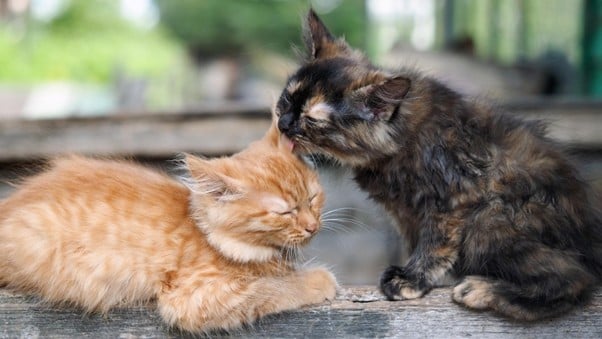
To refer to cat grooming in human terms, it could be likened to a cat’s acts of licking to hugs. Cats show affection to each other when they lick each other, and in some cases, groom each other.
The act releases feel-good endorphins for both the groomer and the groomed. It’s like a mutual massage that says, “You matter to me.” Some Cats groom to show affection. Cats typically lick the hands of their owners and will ignore other neighbor cats. Cats usually groom in relaxed, safe settings.
Hygiene Help
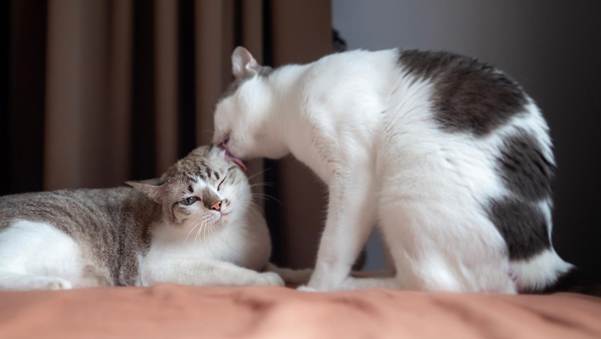
Cats are one of the cleanest animals, and they can clean themselves. However, there are limits to how clean a cat can make itself. For social grooming to take place, there has to be a social cat around. Help is always available with friends to clean those hard-to-reach areas, such as the head, back of the neck and the ears. This mutual cleaning arrangement makes perfect practical sense. One cat handles the spots the other can’t quite twist around to reach, and vice versa.
Stress Relief
Cats also feel stress, and for pampered house cats, there are several real issues that can cause stress, such as changes in the daily routine, rearrangement of the house, and funny outside sounds. These issues will make house cats anxious, and when that happens, one stress-relief tool is for cats to start licking one another. In nature, the motion of licking creates a bond, and for house cats, a comforting smell from the partner can reduce anxiety.
You may see that there is more mutual licking and grooming when there is a stressful situation, such as neighborhood construction, vet visits, or other stressful events. This is a normal social behavior, and in the absence of other stressful events, licking and mutual grooming serves as a stress-relief activity. They even have their own therapy sessions, where in addition to social licking and grooming, they also physically lower their heart rate and reduce the number of stress hormones in their body.
Another Good Read: “10 Best Sprays To Keep Cats Off Your Furniture”
Scent Sharing
Cats bond in scientific ways, and one of the ways is the colony scent they create. Scent is one of the most powerful tools that brings cats together. When your cats groom each other, they combine and make a new scent that represents a family unit.
In multi-cat households, this scent sharing is crucial for peaceful coexistence. It’s part of their cat communication system that says, “We’re a team.” Cats have scent glands around their faces and heads, which is why they often focus their grooming rituals in cats on these areas. They’re literally creating a shared identity through licking.
Hierarchy & Dominance
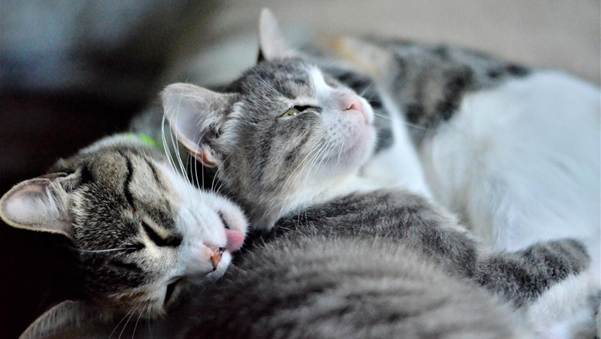
It may seem surprising, but cat grooming is not solely an act of friendship. At times, it’s also about establishing an order of dominance. During grooming sessions, you may witness the dominance hierarchy of the cats in your household.
The head honcho cat will head-groom a lower cat more often than others, especially in the head and neck areas. Not to worry, this doesn’t mean they have an issue with each other. That’s just how cats operate socially. The head honcho cat is actually reinforcing their dominance and maintaining the friendship. Pay attention to the grooms in the order and frequency of initiators, and you’ll notice a social order structure in your little pride.
Health Issues
Excessive grooming can sometimes signal a medical issue. If a cat in your household starts licking a particular spot on another cat, they could be trying to alert the other cat to a possible injury, infection, or skin issue.
Cats pay close attention to each other, often noticing things we don’t. When a cat is trying to get the other cat to pay attention to a particular spot, it is a clear example of cat health awareness.
They may not be trained medical professionals, but on their own, they try to address injuries and sore spots. If there is a particular area that is being licked repetitively, it is a good idea to go see the veterinarian. Your cats could be trying to communicate something important to you.
Conclusion
Knowing why cats groom each other is helpful in understanding their behaviors. Grooming is an obvious sign of affection, but also serves other purposes such as helping with hygiene, or social behaviors within hierarchy. These social behaviors are very important to your cats, so it is helpful to understand them. You will notice a wide variety of social behaviors as you watch for them in your own cats.
FAQ
Is It Normal for Cats to Lick Each Other’s Butt?
Yes, completely normal! Cats help each other stay clean in areas they struggle to reach themselves. The anal area needs attention, too, and cats don’t share our squeamishness about it. This is basic hygiene assistance, especially common between mother cats and kittens. Although, as long as it is a routine that they do not get tired or become bothersome to one another, they are simply assisting each other.
Is it a bad thing that my cats fight after they groom each other?
Not necessarily. Sometimes cats get carried away with grooming, and what starts as a bonding session can escalate to a playful fight, or even a real fight. Over licking can be a cause of overstimulation in cats, and can also trigger a fight. Usually, if the fights are brief and no injuries result, it is a normal part of their interaction.
Should I separate my cats if they fight after grooming?
Only if the fighting becomes aggressive or one cat seems really worried. Some fighting is acceptable, however if you notice fur flying, yowling, or one cat is cornered, intervene. A calm approach is fine. Avoid direct separation, unless you need to. Instead, try a toy or a treat before getting in the way. This teaches them to calm themselves, which is better than associating punishment with you stopping them.
Why do cats groom each other?
Cats groom each other to bond, help with hygiene, reduce stress, share scent, reinforce social hierarchy, and sometimes respond to health issues.
When is grooming another cat a sign of a problem?
If one spot gets licked repeatedly, fur thins, skin looks irritated, or grooming becomes obsessive, it may signal pain, parasites, or infection and a vet visit helps.