
Just spotted a reddish-orange spider with oversized fangs lurking in your basement? That’s likely a woodlouse spider. While their menacing appearance can be alarming, these nocturnal hunters are far less dangerous than they look. Here’s everything homeowners need to know about identifying, understanding, and managing woodlouse spiders.
Table of Contents
What Are Woodlouse Spiders?
Woodlouse spiders (Dysdera crocata), also called woodlouse hunters, are a species of spider found throughout most of North America. Unlike web-building spiders that wait for prey to come to them, these are active hunters that stalk their favorite food: woodlice, including sowbugs and pillbugs (those “roly-poly” bugs found under rocks and in gardens).
Should Homeowners Be Worried About Woodlouse Spiders?
The short answer is probably not. While woodlouse spiders do have venom and can bite, they pose minimal risk to humans and pets.
Their bite typically causes mild irritation similar to a mosquito bite or minor bee sting. Homeowners might experience slight redness, minor swelling, or a brief stinging sensation that fades within a few hours to a day. Woodlouse spiders only bite if directly handled or threatened, and they’re not aggressive toward humans.
Compared to truly dangerous spiders like brown recluse or black widow spiders, woodlouse spider venom is not medically significant. Their bites don’t cause tissue damage, systemic reactions, or require medical treatment in healthy adults.
That said, anyone experiencing unusual swelling, spreading redness, severe pain, or signs of infection after any spider bite should contact a medical professional. People with allergies or compromised immune systems should be more cautious with any spider encounter.
How to Identify Woodlouse Spiders
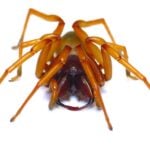
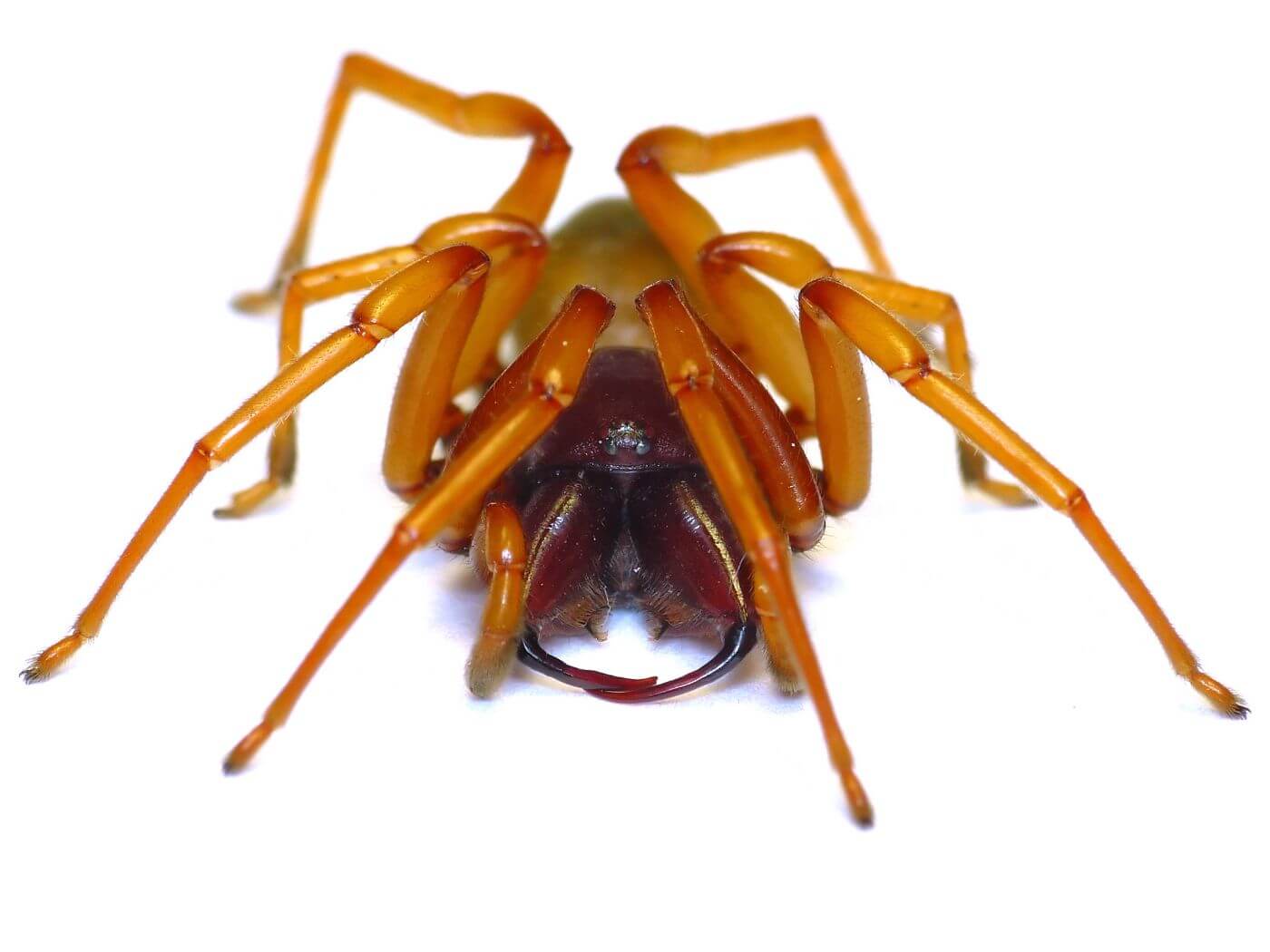
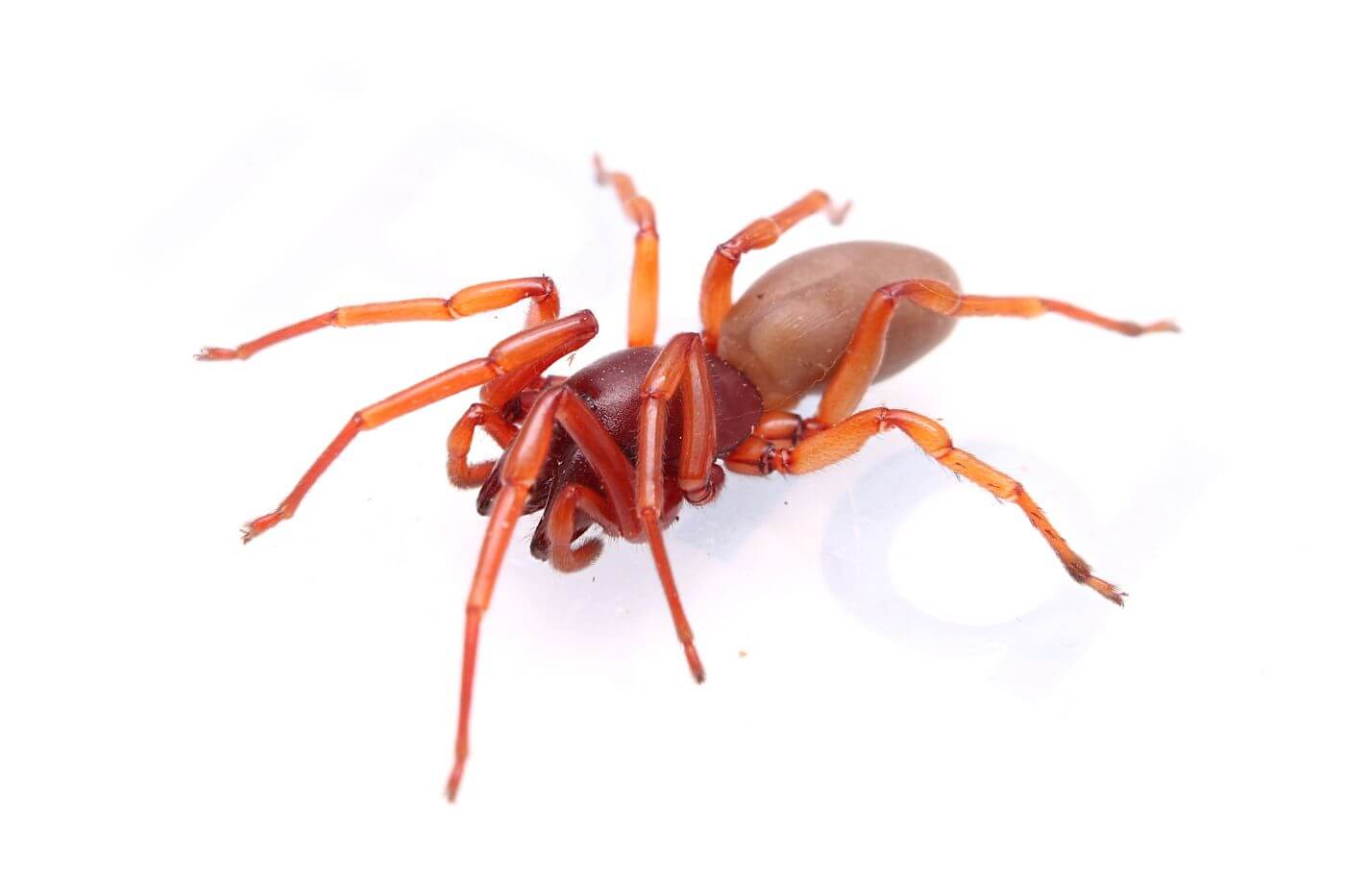
Woodlouse spiders have a distinctive appearance that sets them apart from other common house spiders. Their body shows a dark red to orange cephalothorax (front body section) with a contrasting grayish-white or tan abdomen. This two-tone coloring is unusual among house spiders and makes them relatively easy to identify.
Females measure approximately half an inch in body length, while males are smaller at just over a quarter inch. Their leg span can make them appear larger than they actually are.
The most striking feature is their prominent, forward-facing fangs (chelicerae) that are unusually large for their body size. These powerful mouthparts are designed to pierce the hard exoskeletons of woodlice. They have six eyes arranged in a cluster, rather than the eight eyes found in most spider species. Their eight long, thin legs show the same reddish-orange coloring as their body.
Woodlouse Spiders vs Brown Recluse Spiders
Many homeowners worry they’ve found a brown recluse when they spot an unfamiliar spider. The two species look quite different once you know what to look for.
Woodlouse spiders have a dark red or orange body with a gray abdomen, six eyes in a cluster, and prominent, visible fangs. They’re active hunters that don’t build webs and prefer damp areas. Brown recluse spiders are light to medium brown throughout with a distinctive violin-shaped marking on their back. They have six eyes arranged in three pairs and show reclusive behavior, building irregular webs in dry, undisturbed spaces.
If the spider is in the northeastern, midwestern, or northwestern United States, it’s far more likely to be a woodlouse spider than a brown recluse. Brown recluse spiders primarily inhabit the south-central states.
Woodlouse Spider Behavior and Habitat
Understanding how these spiders behave helps explain why they’re in a home and how to keep them out.
Unlike most house spiders, woodlouse spiders don’t build webs. They’re nocturnal hunters that actively stalk their prey at night. Using their powerful fangs, they bite through the hard shells of woodlice and inject venom that immobilizes and kills their prey.
During the day, woodlouse spiders rest in dark, secluded areas. Outdoors, they hide under logs and rotting wood, rocks and landscape stones, leaf litter and mulch, tree bark, dense ground cover plants, and woodpiles.
When woodlouse spiders enter homes, they gravitate toward areas that mimic their outdoor habitat. Basements and crawl spaces are common hiding spots, along with spaces under floorboards, behind baseboards, in wall voids near moisture, utility rooms with plumbing, and garages with stored items.
In suitable conditions, woodlouse spiders can live up to three years, though most don’t survive that long indoors due to lack of food.
Why Are Woodlouse Spiders in the House?
If woodlouse spiders are showing up indoors, it’s usually due to one or more specific factors.
Homes primarily serve as winter shelter for these spiders. In the northeastern and midwestern United States, woodlouse spiders typically appear indoors from October through April. Pacific Northwest residents may see them during wet winter months.
Woodlouse spiders need humidity to survive and are attracted to damp environments. A wet basement or crawl space, leaking pipes or poor drainage, high indoor humidity, or water damage and condensation issues create ideal conditions for these spiders.
They enter through gaps under doors, cracks in foundations, openings around windows, utility line penetrations, damaged weather stripping, and vents without screens.
Since woodlouse spiders feed exclusively on woodlice, their presence often indicates sowbugs or pillbugs are also in or around the home. These land crustaceans thrive in the same damp conditions that attract the spiders.
Having woodpiles, thick mulch, or landscape debris against the foundation provides perfect habitat right next to entry points.
Signs of a Woodlouse Spider Problem
One or two woodlouse spiders wandering indoors occasionally isn’t necessarily cause for alarm. However, certain indicators suggest a larger issue.
Seeing several spiders over a short period, especially in the same area, suggests they’re finding suitable conditions in the home. If these normally nocturnal spiders appear during the day, they may be displaced by overcrowding or searching for moisture.
Finding sowbugs or pillbugs indoors indicates a moisture problem and a food source for woodlouse spiders. Female woodlouse spiders guard their silken egg sacs, which may contain 20 to 30 eggs. Finding these suggests established populations.
How to Get Rid of Woodlouse Spiders
The most effective approach combines eliminating what attracts them with preventing their entry.
Control Moisture First
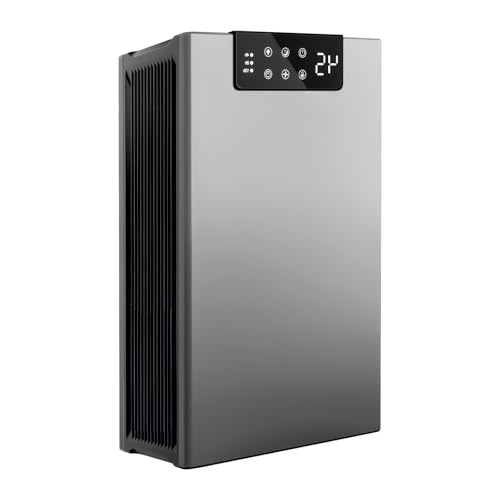
- 【Efficiency Advanced Dehumidifier】KeepGlad dehumidifier feature advanced dual chip semiconductor condensation system that quickly and efficiently removes excess moisture from the air. You can enjoy more comfortable and drier life! Dehumidifiers for home reduce humidity to below 45% rapidly. Home dehumidifier covers up to 1000 sq.ft., ideal for bedrooms, closets, bathrooms, basements, garages, kitchens
Since moisture is the primary attractant, start here for the best results.
Indoors, run a dehumidifier in basements and crawl spaces with a target humidity of 30 to 50 percent. Fix leaking pipes, faucets, and water heaters immediately. Improve ventilation in damp areas with fans or vents. Repair any water damage to wood or drywall. Make sure bathroom and kitchen exhaust fans vent outside. Check for and fix condensation on pipes or HVAC ducts.
Outdoors, grade soil away from the foundation for proper drainage. Clean gutters and make sure downspouts direct water at least 6 feet from the house. Fix any exterior drainage problems or standing water.
Homeowners should notice fewer spiders within 2 to 3 weeks of addressing moisture issues, as conditions become less hospitable.
Eliminate Food Sources
Remove the woodlice that attract woodlouse spiders. Apply diatomaceous earth in areas where sowbugs or pillbugs have been spotted. Remove organic debris from around the foundation. Fix the moisture problems that allow woodlice to thrive. Reduce mulch depth near the house to 2 to 3 inches maximum.
Seal Entry Points
Prevent spiders from getting inside by applying weatherstripping to doors and windows. Seal cracks in foundations with polyurethane or silicone caulk. Install door sweeps on exterior doors, especially garage doors. Screen vents and utility openings with fine mesh. Fill gaps around pipes, wires, and cables where they enter walls. Repair damaged window screens.
For caulking, DAP Kwik Seal Plus or GE Silicone II work well. M-D Building Products makes quality door sweeps for standard doors.
Remove Outdoor Habitat
Make the area around the home less attractive to woodlouse spiders. Move woodpiles at least 20 feet from the house. Clear leaf litter and organic debris from foundation areas. Remove rocks, logs, and yard waste piled against the house. Trim dense vegetation and ground cover back from the foundation. Store firewood off the ground on racks.
Direct Removal Methods
For spiders already inside, there are several options. Use a cup and piece of cardboard to trap and relocate individual spiders outdoors for those who prefer not to kill them. Regular vacuuming of basements, closets, and other hiding spots removes both spiders and their egg sacs. Dispose of the vacuum bag or empty the canister outside immediately after vacuuming.
Place spider traps along baseboards and in corners to monitor and catch wandering spiders. These won’t solve an infestation but help with individual spiders.
If woodlouse spiders appear regularly despite prevention efforts, or if there’s a severe moisture problem that can’t be addressed alone, contact a pest control service. They can identify the root cause, treat active infestations, and implement long-term prevention strategies.
Are Woodlouse Spiders Ever Beneficial?
Despite their intimidating appearance, woodlouse spiders actually provide valuable pest control outdoors. In gardens and landscaping, they help manage populations of sowbugs and pillbugs that damage seedlings and tender plants, along with other small insects and arthropods and various garden pests that share their habitat.
Many gardeners and farmers welcome woodlouse spiders because they don’t damage plants and exclusively hunt other creatures. If they’re found outside in the garden or yard, they’re likely helping more than harming.
The key is keeping them outside where they belong, which is exactly what the prevention steps above accomplish.
What to Do If a Woodlouse Spider Is Found
Stay calm. Remember, these spiders aren’t aggressive and won’t bite unless handled directly.
If one is spotted, don’t panic or attempt to grab it with bare hands. Use the cup and cardboard method to catch and release it outside, or simply vacuum it up. Check the area where it was found for moisture problems, entry points, or woodlice. Take note of the location and time to identify patterns.
If a bite occurs, wash the area with soap and water. Apply a cold compress to reduce minor swelling. Take an antihistamine if itching occurs. Monitor for signs of infection like increasing redness, warmth, or pus. Seek medical attention if symptoms worsen or there are concerns.
If multiple spiders turn up, inspect the basement, crawl space, and other damp areas. Check for moisture problems and address them immediately. Look for entry points and seal them. Consider calling a pest control professional for assessment.
Long-Term Prevention Tips
Once active woodlouse spider problems are eliminated, maintain a spider-free home with ongoing practices.
Each month, check the basement and crawl space humidity levels. Inspect weatherstripping and door sweeps for damage. Clear debris from around the foundation. Look for new cracks or gaps that need sealing.
Seasonally, clean gutters in spring and fall. Move outdoor woodpiles before winter. Inspect stored items in the garage and basement. Check for water damage or new moisture sources.
Address any plumbing leaks immediately when they occur. Replace damaged screens or weatherstripping as needed. Trim back overgrown vegetation when it gets too close to the house. Remove yard waste and organic debris regularly.
Professional Pest Control Options
If professional help is preferred or DIY methods aren’t working, pest control services can provide thorough solutions.
A professional inspection includes assessment of moisture issues, entry points, and conducive conditions. Treatment involves targeted applications of residual insecticides in key areas where spiders travel and hide. Exclusion means professional-grade sealing of entry points and installation of barriers. Monitoring includes regular follow-up visits to make sure the problem is resolved. Ongoing protection means preventive treatments as part of comprehensive pest management plans that address multiple household pests.
Most pest control companies provide plans that protect against woodlouse spiders along with other common household pests like ants, roaches, silverfish, and other spiders.
The Bottom Line
Woodlouse spiders may look frightening with their prominent fangs and unusual coloring, but they’re relatively harmless to humans. These hunters enter homes primarily to escape cold weather, and their presence usually indicates moisture problems or woodlice infestations that need addressing.
By controlling humidity, sealing entry points, and eliminating outdoor habitat near the foundation, homeowners can keep these spiders where they belong: outside, where they actually provide beneficial pest control. If dealing with persistent problems or large numbers of woodlouse spiders, don’t hesitate to contact a pest control professional for help.
Remember that the occasional woodlouse spider wandering through isn’t a crisis. But if they’re showing up regularly, it’s time to investigate the underlying conditions that are making the home attractive to them.