You spot a dark, fast-moving bug scurrying across your kitchen floor, and your heart sinks. Before you panic and call pest control, take a breath and look closer. What you think is a cockroach may actually be another type of insect that just happens to share similar features.
Not all insects are treated equally, even if they happen to look alike. Many harmless bugs that look like cockroaches wander into homes accidentally without any intention of setting up camp.
Understanding the difference between true roaches and their look-alikes saves you money, stress, and unnecessary chemical treatments. This guide breaks down seven common cockroach look alike bugs you might encounter so you can identify what’s really crawling around your home.
Table of Contents
What Do Roaches Look Like
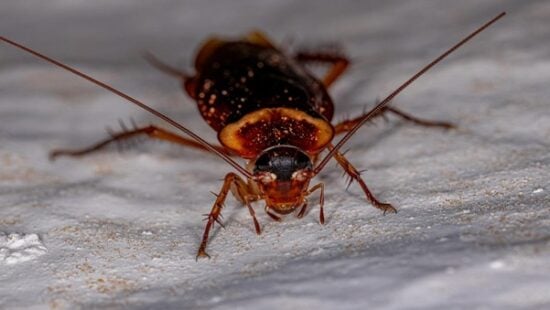
Real cockroaches have distinct characteristics that separate them from innocent impostors. These oval-shaped insects with flat, low-lying bodies range in size from a half an inch to almost two inches long, depending on the species.
Their wings fold tightly against their backs, and this creates a signature streamlined silhouette. You’ll notice they have two long antennae that constantly sweep back and forth as they navigate their surroundings.
Cockroaches move with quick, erratic scurrying that seems almost frantic when you turn on the lights. Their bodies appear greasy or shiny under light, and they tend to stay close to walls and corners rather than wandering into open spaces.
Most species are brown or reddish-brown, though some, like the German cockroach, appear more tan. The shield-like plate covering their head gives them an armored appearance that’s fairly unmistakable once you know what to look for.
Quick Comparison
| Insect Type | Body Shape | Antennae | Movement | Key Feature |
| Cockroach | Flattened oval | Long, thread-like | Fast scurrying | Shield-like head cover |
| Ground Beetle | Domed, hard shell | Short, club-shaped | Fast running | Hard wing covers |
| Cricket | Cylindrical, humped | Very long | Hopping | Enlarged hind legs |
| Water Bug | Large, boat-like | Short, hidden | Slow crawling | Raptorial front legs |
| Earwig | Elongated, narrow | Medium length | Steady walking | Pincer-like cerci |
| Carpet Beetle | Round, compact | Short, clubbed | Slow wandering | Fuzzy or scaled texture |
| June Bug | Thick, rounded | Short, segmented | Clumsy crawling | Metallic sheen |
| Wood Roach | Flattened oval | Long, thin | Quick scurrying | Tan coloring, outdoor habitat |
7 Bugs That Look Like Cockroaches
1. Ground Beetle
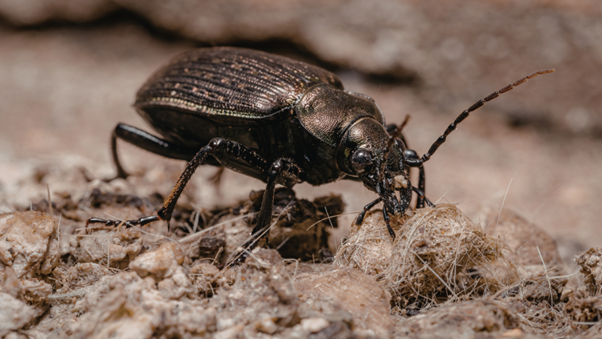
Ground beetles share that same dark brown to black coloring that makes people immediately think of roach when they spot one indoors. These beetles have shiny, hardened wing covers that reflect light similarly to a cockroach’s glossy body. From a distance or in poor lighting, the resemblance feels strong enough to trigger that familiar sinking feeling.
The key differences reveal themselves when you look closer at these beetles that look like cockroaches. Ground beetles have a distinctly domed or humped back rather than the flat profile cockroaches sport. Their antennae are much shorter and often club-shaped at the tips instead of the long, thread-like antennae that roaches wave around. When ground beetles run, they move in straight lines with purpose rather than the erratic scurrying pattern cockroaches use.
You’ll typically find ground beetles near doorways, basements, or garage areas where they accidentally wandered in from outside. And the good thing is, they pose zero threat indoors and won’t establish populations inside your home. For the most part, these are accidental visitors that simply want to get back outside.
2. Water Bug (Giant Water Bug)
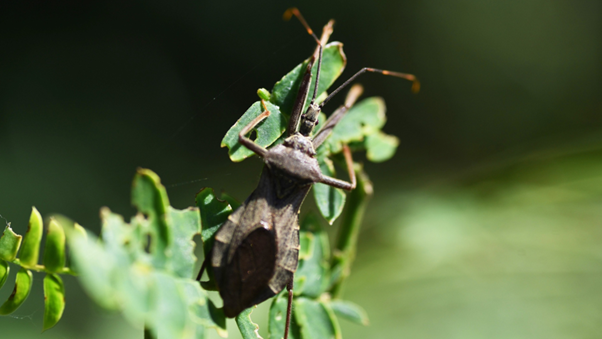
Giant water bugs earn their confusing reputation because of their substantial size and brown coloring that resembles larger cockroach species. These aquatic insects could grow impressively large, with some species reaching over two inches in length. Their oval-shaped bodies and brown coloration. This could create enough visual similarity that people often mistake them for roach bugs when they encounter them.
The differences become clear when you examine their adaptations for aquatic life. Water bugs have specialized front legs designed for grabbing prey. Their bodies are thicker and more boat-shaped to help them swim efficiently. Unlike cockroaches that constantly scurry, water bugs move slowly and deliberately when out of water. They also have shorter antennae that sit more hidden against their heads.
3. Wood Roach
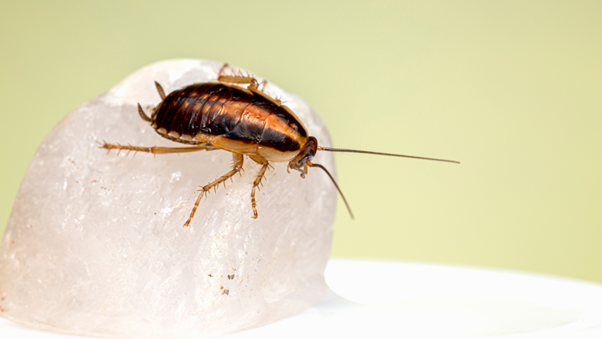
Wood roaches create the most confusion because they actually are cockroaches, just not the indoor-infesting variety that causes problems. These outdoor roach species look remarkably identical to their problematic cousins, though. They do have completely different behaviors. Wood roaches are lighter in color, usually tan or pale brown, compared to the darker German or American cockroaches.
The critical difference lies in their habitat preferences and reproduction patterns. Wood roaches live in leaf litter, rotting logs, and woodpiles outside, where they help decompose organic matter. They cannot reproduce successfully indoors because they require the moisture and conditions found in outdoor environments. When wood roaches enter homes, they do so accidentally while seeking shelter or are quite attracted by outdoor lights.
Wood roaches are often found alone or in very small numbers, usually near doors or windows through which they entered. They tend to be sluggish indoors and don’t exhibit the frantic hiding behavior of true pest roaches. If you’re only seeing one or two lighter-colored roaches near entry points rather than multiple darker ones throughout your home, wood roaches are the likely culprits.
4. Carpet Beetle (Adult)
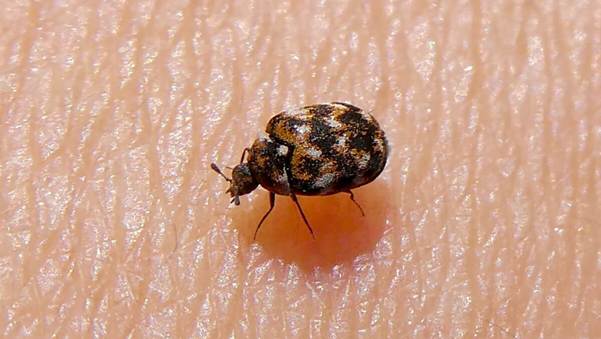
Adult carpet beetles confuse people less than their larvae, though. They still get mistaken for small roaches occasionally. These tiny household bugs, like roaches, have rounded, pretty compact bodies that can appear oval from certain angles. They’re typically dark brown to black with small scales or hairs covering their bodies. Their movement pattern of slow wandering across walls and windowsills mimics how some roaches move.
Carpet beetles have a fuzzy or scaly texture when viewed up close that cockroaches lack. Their antennae are shorter and clubbed. These pests do reproduce indoors and could cause real damage to belongings, so they require treatment even though they’re not roaches.
5. June Bug
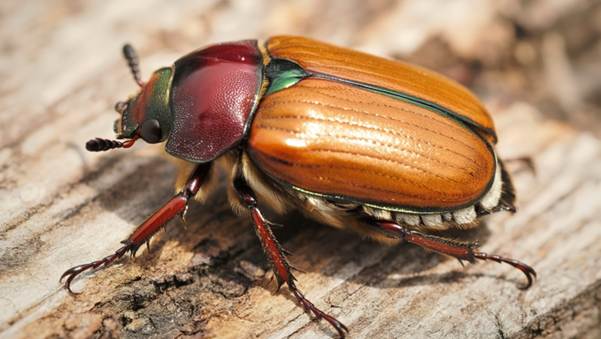
June bugs get confused with cockroaches mostly during their nighttime flights, when people catch only brief glimpses. These thick-bodied beetles are reddish-brown to dark brown, matching common roach coloring. Their size falls within the same range as many cockroach species. When they land and start crawling clumsily across surfaces, the initial identification can feel uncertain.
The flight behavior separates June bugs from roaches immediately, once you observe it quite closely. These beetles are notoriously poor fliers that bump into walls, windows, and people with loud buzzing sounds. Cockroaches are capable fliers but rarely take to the air, and when they do, they glide more efficiently. June bugs have a thick, rounded body that’s much bulkier than the flattened cockroach profile. Their wing covers often show a metallic or iridescent sheen that cockroaches don’t have.
6. Oriental Cockroach Look-Alike Beetles
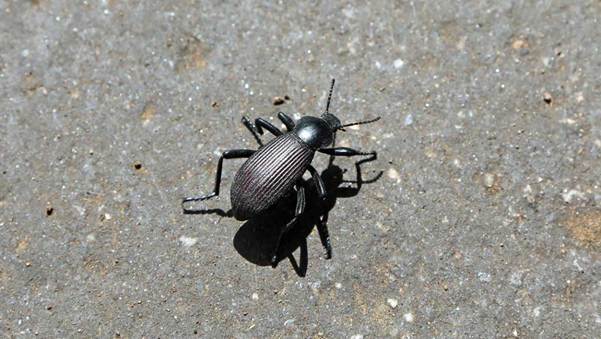
Several beetle species get regularly mistaken for Oriental cockroaches because of their dark, almost black coloring and similar size range. Black ground beetles and certain darkling beetles share that shiny, dark appearance that triggers cockroach alarms. These beetles appear in basements, garages, and lower levels of homes where Oriental roaches also prefer to hide.
The shell texture gives these beetles away. Beetles have hardened wing covers called elytra that meet in a straight line down their backs. Cockroach wings overlap slightly and don’t form that distinct central line. Beetle shells feel harder and more rigid if you happen to catch one, whilst cockroach bodies have way more flexibility. The beetles’ antennae are noticeably shorter and often segmented differently.
7. Crickets (Dark Varieties)
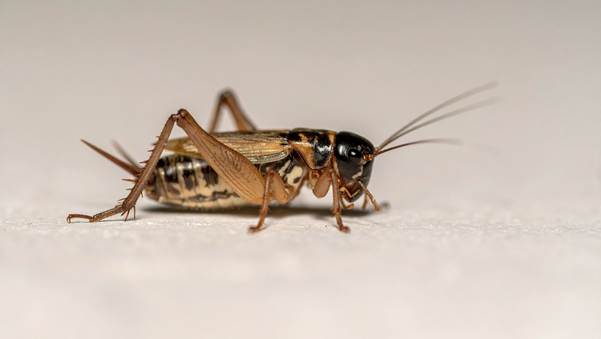
Dark-colored crickets, especially young ones without fully developed wings, are among bugs that look like cockroaches. Crickets have alike brown to black coloring to cockroaches. Their body size overlaps with many roach species. When you catch a glimpse of a dark cricket from behind or in dim lighting, the resemblance feels strong enough to cause concern.
The jumping behavior serves as the clearest identifier that separates crickets from roaches instantly. Crickets have massively enlarged hind legs designed for powerful jumping that cockroaches completely lack. When startled, crickets leap away while cockroaches run. Crickets also have a more cylindrical, humped body shape compared to the flattened oval profile of roaches. Their antennae are extremely long, often longer than their entire body.
Which Bugs Mean an Infestation and Which Don’t?
If you could differentiate between which bugs multiply indoors versus those that are one-off accidental invaders helps you respond appropriately. True pest cockroaches like German, American, and Oriental roaches reproduce successfully inside homes and establish gigantic colonies. Carpet beetles also breed indoors and can build populations that cause ongoing damage. These insects require active pest control intervention.
Ground beetles, water bugs, June bugs, and most crickets are casual guests that wandered in from outside. They cannot complete their life cycles indoors and won’t establish breeding populations. Turns out, you barely need to be worried if you catch any one of them. Although Wood roaches fall in between as actual roaches that don’t infest, indicate outdoor populations near your home.
When to worry comes down to numbers and location.
- Seeing multiple bugs of the same type, especially in kitchens or bathrooms, suggests a real problem.
- Finding bugs near food sources, in cabinets, or behind appliances raises concern.
- Single bugs near doors, windows, or in basements during seasonal weather changes usually mean random entry.
- When you can relax is when you’ve identified an accidental intruder that showed up alone in an area near an obvious entry point.
What to Do If You See a Roach Look-Alike Bug
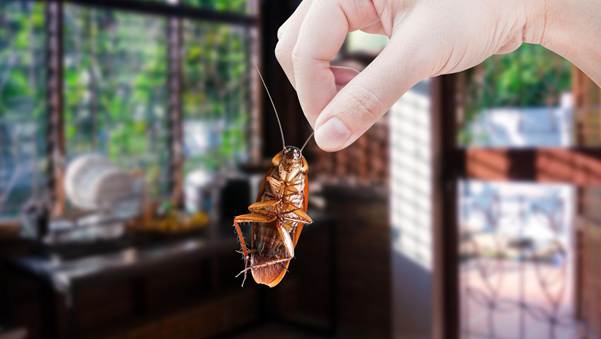
Rapid steps after identification begin with not killing the bug if possible. You could capture it in a jar and that would let you identify what bug type it is. Or even if you do not want do that, take close photos from multiple angles and online AI tools can do the rest of the job.
One more thing, it would be extra helpful for you if you could note the location where you found it, what time of day, and whether you’ve seen others.

- ELIMINATES ROACHES EFFECTIVELY — Get rid of unwanted roaches in your kitchen, dining room, or food storage areas. EcoVenger kills on contact and repels them for 4 weeks or longer, immediately cutting down roach activity without attracting them like baits do. As one customer raved, “Not one nasty bug has been seen or heard from since we first sprayed.”
- VERSATILE FOR HOME & COMMERCIAL USE — This easy-to-use remedy is perfect for home infestations, restaurants, or commercial properties. It’s ideal as a flushing agent for restaurant re-openings or post-flood recovery, eradicating severe infestations without requiring vacancy. It’s also super effective against pesticide-resistant populations and can eliminate other common crawling insects or be used for perimeter pest control.
- UNIVERSITY-PROVEN EFFICACY — Trust a solution backed by science. EcoVenger (formerly EcoRaider) was rated #1 as “the most effective among many other natural products” in a leading university study published by the Journal of Economic Entomology. Further studies show its efficacy is comparable to or even higher than popular chemical pesticides, and it outperforms them by several folds against pesticide-resistant “superbugs.”
- NATURAL, NON-TOXIC & HIGHLY EFFECTIVE — This powerful formula contains no pesticides or toxins. Its active ingredients are a proprietary combination of botanical insecticidal compounds organically extracted from aromatic plants. These compounds are lethal to insects by blocking their neuron transmitters but do not affect humans, animals, fish, or birds.

Final Thoughts: Don’t Panic, Identify First
The importance of calm identification cannot be overstated. When you spot a bug you don’t want to welcome into your home. Rushing to conclusions and treating for roaches when you actually have harmless beetles wastes resources and potentially harms beneficial insects. Take time to properly identify what you’re dealing with using the characteristics outlined here. Most indoor insects turn out to be temporary visitors rather than permanent residents.
Preventive home maintenance solves most bug problems regardless of species. Seal cracks and gaps that let insects inside. Fix moisture issues that attract various pests. Store food properly and clean up spills promptly. Remove clutter that provides hiding spots. These basic steps keep both roaches and their look-alikes from becoming problems. Regular inspections help you catch issues early before they escalate.
FAQ
Are all bugs that look like cockroaches dangerous?
BIG NO. Most bugs that are mistaken for cockroaches pose little to no danger to humans. Ground beetles, June bugs, and crickets are essentially harmless, even if they startle you. Water bugs can deliver a painful bite if you handle them, but they’re not aggressive and won’t seek you out.
Can beetles infest homes like roaches?
Most beetles that resemble roaches cannot establish indoor infestations the way pest cockroaches do. Ground beetles and analogous species require outdoor conditions to complete their life cycles and will eventually die if they are trapped inside. Carpet beetles represent the main exception as they can reproduce indoors and build populations that damage stored items.
Do roach look alike insects mean poor hygiene?
Many roach look alike insects end up indoors regardless of how clean your home is. Crickets seek shelter from weather changes. June bugs fly toward lights accidentally. Ground beetles wander in through gaps. True cockroaches do correlate more strongly with available food sources and moisture issues, though even clean homes can get roaches from neighboring units or incoming packages. Finding accidental intruders doesn’t reflect on your housekeeping, though it might indicate structural gaps worth sealing.
Should I treat my home even if it’s not a cockroach?
Treatment depends entirely on what insect you’ve identified and whether it can reproduce indoors. Carpet beetles require specific treatment focused on fabrics and storage areas rather than general pest sprays. Accidental invaders like ground beetles or crickets need no treatment beyond fixing entry points. Applying roach treatments for non-roach insects wastes money and exposes your home to unnecessary chemicals. Proper pest sign identification ensures you use the right approach. Focus your efforts on sealing gaps and reducing attractants rather than blanket pesticide application.
What smell do roaches hate?
Cockroaches strongly dislike several scents that you can use as deterrents, though these won’t eliminate existing infestations. Peppermint oil repels roaches effectively when applied along baseboards and entry points. Bay leaves placed in cabinets and pantries keep roaches away from those areas. Citrus oils, particularly lemon, also deter roaches. These natural repellents work best as prevention in conjunction with proper sanitation and sealing rather than as treatments for active infestations.
What causes cockroaches in the house?
Cockroaches enter homes searching for three things. And these are;
Food
Water
Shelter
Unsealed food containers, crumbs, and grease buildup provide roaches with easy meals. Leaking pipes, dripping faucets, and standing water attract them to moisture. Clutter, cardboard boxes, and undisturbed storage areas offer hiding spots. Structural issues like foundation cracks, gaps around pipes, and poor door seals create entry routes. Roaches also hitchhike into homes via grocery bags, used furniture, and packages. Addressing these factors reduces your chances of developing common pest problems.