
The most reliable way to protect a young tree from deer rubbing is to put a sturdy physical barrier around its trunk before bucks begin rubbing their antlers in fall. You can use a wire cage, hard tree guard, or properly placed fence to stop the buck from rubbing away the bark.
This damage, although, can be heartbreaking when you have spent several years watering and nurturing an evergreen or fruit tree, only to find its trunk shredded overnight. Young trees are especially vulnerable because their bark is thin and their trunks are flexible. If you get one bad rub, it can cause permanent damage or even kill the tree.
The good news is you do not have to put a fence around your whole property. As long as you put the right barrier up at the right time, you can protect that young tree.
Table of Contents
Why Do Deer Rub Their Antlers on Young Trees?
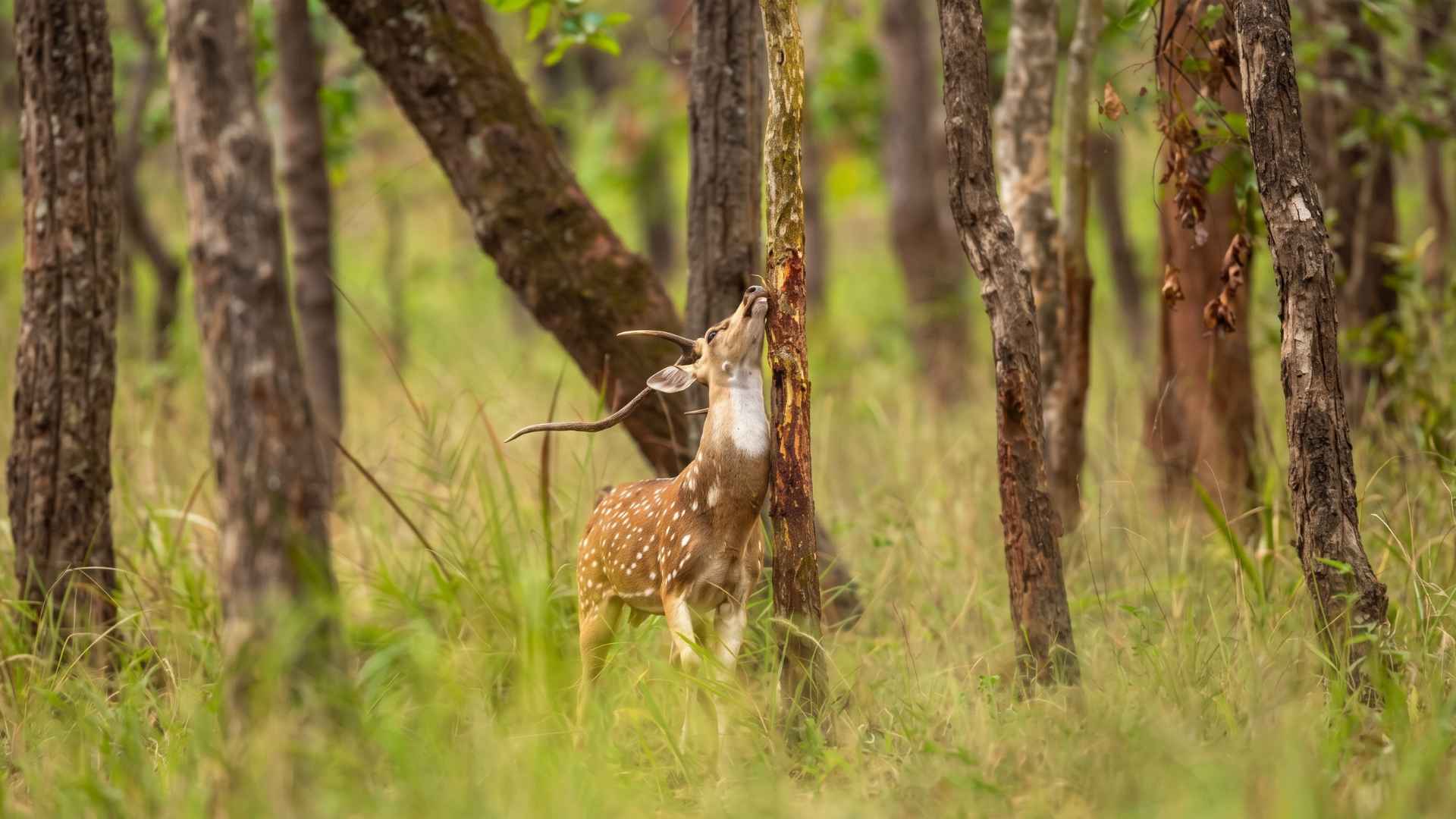
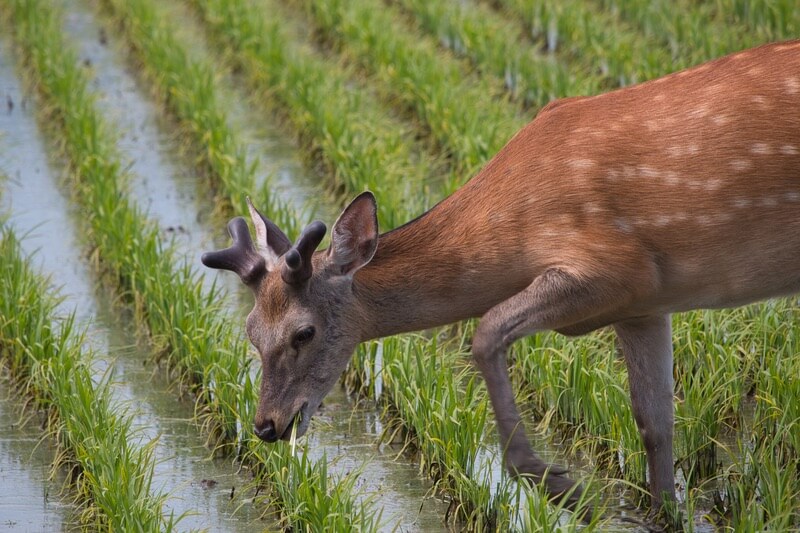
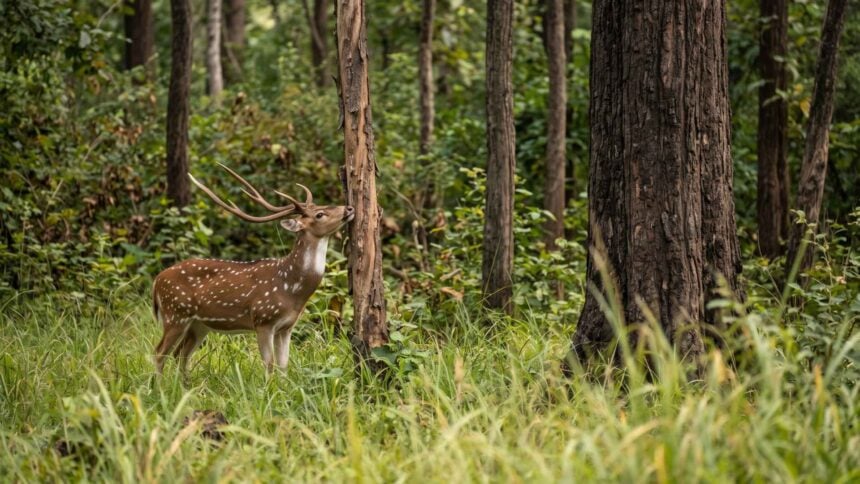
In late summer, a buck’s new antlers carry a layer of skin called velvet, and it itches as it dries. Bucks scrape it off in the fall by rubbing against tree trunks, and that deer antler rubbing often strips bark in the process.
Itch relief is only part of it. Bucks also rub to mark territory and leave scent from forehead glands on the exposed wood, and to show dominance to other bucks. The rut starts in early September and can run to mid December.
Most damage lands in those months. The trees most likely to be damaged are young ones, 1 to 5 inches in diameter, that have smooth bark, such as maples, birches, and magnolias.
How to Recognize Deer Rubbing Damage on Young Trees
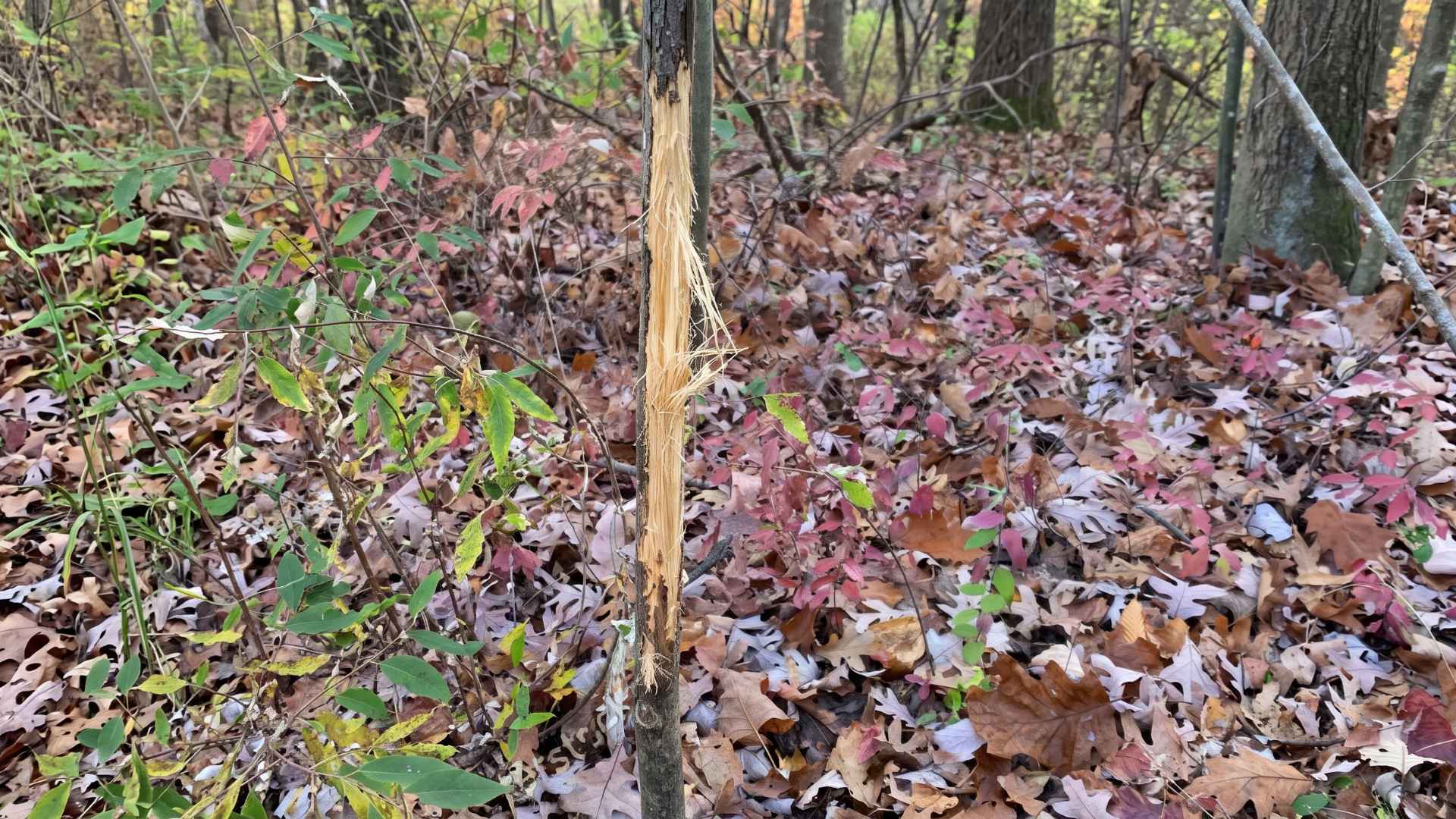
Deer damage to trees and shrubs comes in two forms. They browse leaves and twigs, and bucks rub trunks with their antlers. Rubbing leaves obvious signs that you can spot from a few steps away.
- Bark stripped or shredded, with ragged edges and pale exposed wood.
- Strips of bark lying on the ground or hanging from the trunk.
- Scuffed soil, hoofprints, or a bare patch of dirt near the base.
- Snapped or bent lower branches, or a leaning stem.
- Several damaged trees in a line along a fence row or trail.
- Bark missing all the way around the trunk, the most serious sign of all.
How to Protect Young Trees From Deer Rubbing
If you want to keep your saplings alive, proactive physical exclusion is the single most reliable strategy. Here are the seven most effective ways to prevent deer from rubbing trees this season.
1. Install Heavy-Duty Tree Guards

Rigid guards are the simplest way to prevent bark damage. Look for thick plastic mesh tubes or welded wire sleeves, and skip the thin netting sold for flower beds, because an antler tears through it.
Quality tree protectors from deer should stand at least four feet tall to cover the 1½ to 3½ foot zone where bucks rub. Choose tree protectors deer cannot crush or pull off, and anchor each one to the ground with a stake and a wire tie.
Leave a little slack around the trunk so the stem can thicken, and open up the mesh as the tree grows. Check the guard every few months for pests, moisture, or a trunk pressing into the edge.
2. Build a Sturdy Wire Cage (with Stakes)
If you have slightly larger saplings with low branches, a custom wire cage provides much better coverage than a tight wrap. You can construct these using heavy-duty woven wire or welded utility fencing. To build an effective cage, you must anchor the wire mesh using rugged metal T-posts or wooden stakes.

Depending on how soft your soil is, you can usually hammer the supports directly into the ground without digging. Usually you want your stakes to be between 36 and 48 inches long so that they remain completely rigid when an eighty-pound buck pushes his weight against the frame.
Drive the stakes just outside the perimeter of the root ball. That way you don’t ruin any of the roots whatsoever during installation. Wrap the wire around the stakes and fasten it securely with zip ties or fencing clips.
3. Fence Off Several Young Trees Together
When you have planted a small grove, a mini orchard, or a cluster of privacy screen evergreens, building individual cages for fifty different plants becomes exhausting. Instead, you can save time by creating a single perimeter fence around the entire collective group.
For fencing, leave your tree enough room to grow so that the branches won’t become entangled with the fence. Fencing can go as high and wide as you like, but four feet tall by several feet wide is usually enough to at least limit the amount of area that a deer can reach.
You can use temporary polypropylene deer netting suspended by tall step-in fiberglass posts for a fast, economical solution that you can take down once winter ends.
Another Good Read: Do Deer Come Out in the Rain?
4. Apply Deer Repellents
If physical barriers ruin the visual appeal of your formal landscaping, a chemical deer repellent for trees is a pretty good alternative option. These sprays mainly contains foul taste or predator odor that keep deer away from trees.

The main drawback to this approach is that it requires constant maintenance. You must reapply the liquid spray every two to three weeks, and immediately after any heavy rainstorm, otherwise the protective scent boundary completely evaporates.
What to Do if Deer Have Already Damaged Your Tree
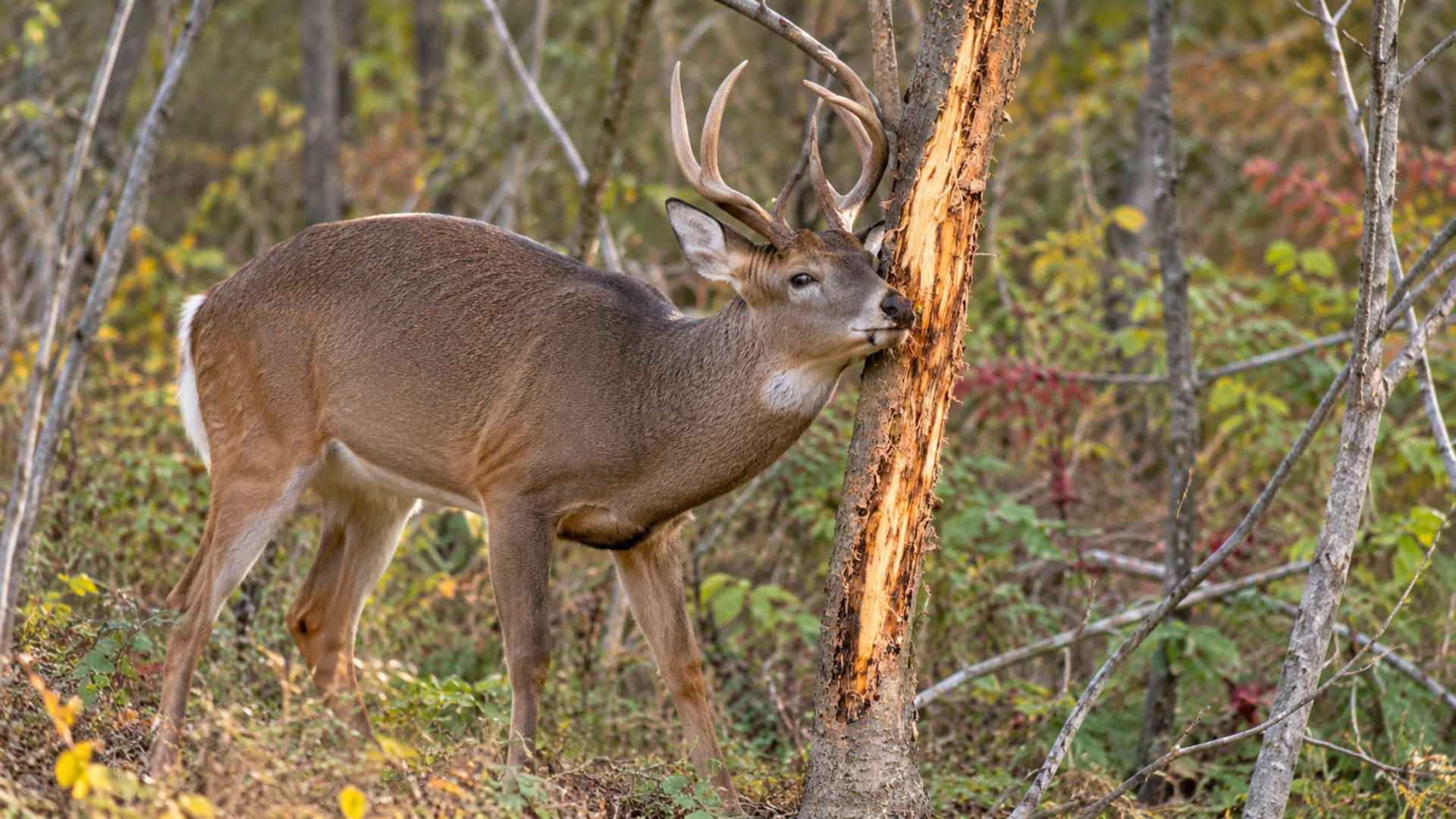
- Check how far the damage goes: If the shredding wraps all the way around the trunk in a complete circle, a condition known as girdling, the tree will unfortunately die because the flow of nutrients has been permanently cut off. If the wound covers less than half of the total circumference, the sapling has a strong chance of survival.
- Trim the ragged edges. Use a clean, sharp knife to cut loose bark back to a smooth oval that runs up and down the trunk. Do not make the wound much larger.
- Skip wound paint and wraps. Tar, paint, and dressings do not help, and they can interfere with healing. Leave the wound open to the fresh air so it can dry naturally.
- Guard it right away. Install a tree guard deer cannot push aside before the next rut. Bucks often return to the same trees.
Frequently Asked Questions (FAQs)
Can a small tree survive a deer rub?
A small tree can survive as long as the damage does not completely girdle the trunk. If there is a continuous vertical strip of intact bark connecting the roots to the upper branches, nutrients can still move through the plant. You just need to clean the wound and apply a tree protectors deer wrap immediately to prevent a second attack.
What time of year do bucks rub trees?
Bucks will rub trees mainly between late August to mid December, but most activity will take place between September to November when they shed their velvet and are in the mating rut.
How to keep deer from rubbing on new trees?
Put a guard or a cage around the trunk in late summer, anchor it with stakes, and use fencing for a group of trees. Chemical sprays can work as a secondary line of defense, but physical exclusion is the only way to guarantee total protection.
Will a buck come back to a rub?
A buck may return to the same area, and deer activity can recur from year to year. However, a return to the exact same tree is not guaranteed. If a tree has been rubbed once, you really need to protect it before the next season.
What trees do deer rub the most?
Deer prefer young trees with smooth, soft bark and flexible stems that yield slightly to their pressure. They target species like maples, pines, birches, cherries, willows, and young oaks. They will also ruthlessly target any newly planted orchard trees, including apple, pear, and plum varieties.
Wrapping Up…
There is nothing more frustrating than nurturing a beautiful evergreen tree a seedling, only to have it grow for a couple of years, then a buck comes along, takes one big rub down the side of it and kills the tree. In some cases, perhaps you’ve been watering it and then really nurturing the plant for multiple seasons. To fix this issue, install the barrier early, anchor it securely, and check it throughout the year. Leave enough space for the trunk to grow, and replace any guard that bends inward or begins to press against the bark.