

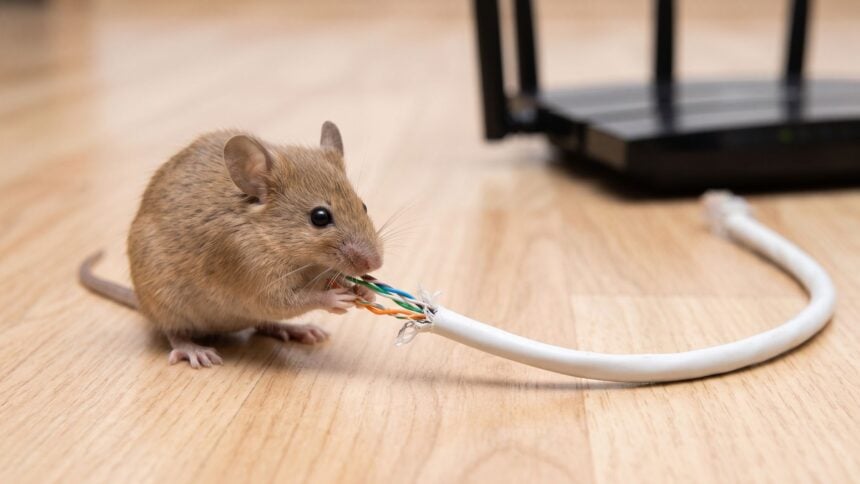
If your lights suddenly flicker or your kitchen appliances stop working, you would probably find yourself working backwards to figure out what went wrong. You trace the cords, look behind the drywall, and find a shredded mess. The culprit behind that sudden blackout might very well be mice chewing on the wires or cables!
If you’re seeking answers to why do mice chew on wires and cables, well, these little pests chew things for numerous reasons, the most obvious being that they have to eat. Keep scrolling and get to know everything in this guide.
Table of Contents
Why Do Mice Chew a Lot?
To truly understand a rodent, you have to look at its skull structure. A mouse’s teeth never stop growing. This, in turn, forces them into a lifelong battle against their own anatomy.
Specifically, their incisor teeth act like self-renewing chisels. Mice’ incisor teeth grow continuously throughout their lives at a rate of about 0.3 mm per day (or roughly 1 to 2.8 mm per week, depending on whether they are upper or lower incisors).
Because of this rapid biological development, they have a deeply ingrained Gnawing Behavior. If they do not actively grind their teeth down against rough materials, the enamel spikes will eventually curve backward and could pierce their own jaw, and prevent them from eating entirely.
Turns out, mice chewing is not malicious. It is somehow a necessary survival mechanism to keep their dental health at a reasonable length. They must gnaw daily just to stay alive.
Why Do Mice Chew Wires and Cables?
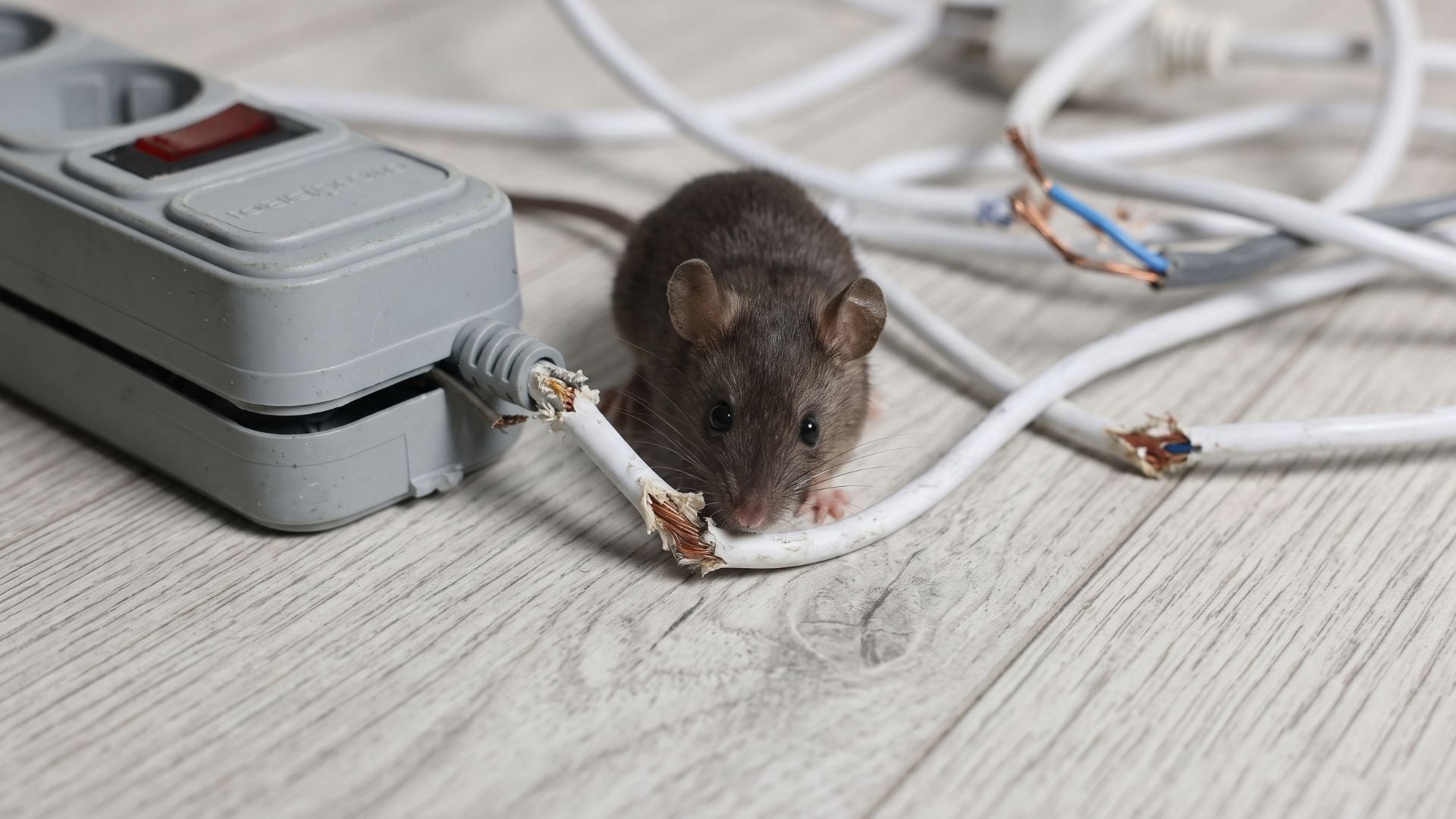
There are several reasons that explain why rodents chew on wiring. Mice are commonly found in attics, kitchens, garages, and basements. Behind the drywall, or on the structures’ joists, there are cable tracks.
Sometimes, a thick power line is simply in the way of where they’re trying to go. In other instances, a cornered mice will chew through materials to escape a situation they don’t want to be in. The warmth of live cords tempts the mice as they seek a comfortable temperature to nest.
When mice chew wires for nesting material or to wear their teeth down, the result is Insulation Damage that can expose copper. That mouse wire damage often goes unnoticed until chewed wires trip a breaker or kill power to an appliance.
Signs Mice Are Chewing Your Wires
- Fresh Chew Marks on plastic power cords, utility lines, or appliance wiring.
- Piles of scattered, colorful plastic shavings directly beneath exposed cabling.
- Unexplained power surges, tripping circuit breakers, or flickering overhead fixtures.
- Scattered Mouse Droppings near your main electrical panel or behind heavy kitchen appliances.
- Foul, musky odors lingering around utility closets and baseboard gaps.
- Audible mice squeaking coming from the drywall during evening hours. It, in some sort of ways, points out a growing mouse infestation signs.
What Should You Do If You Find a Chewed Electrical Wire?
- Stay clear of exposed copper and never touch a damaged cable.
- Switch off power to that area at the breaker, but only if you can reach the panel safely and know the right switch. If you see sparks or smell burning, turn off the main breaker and leave the area.
- Unplug nearby appliances and stop using the damaged device.
- Call a licensed electrician to replace the damaged section.
- Treat every mouse chewed wire as part of a longer run, and ask the electrician to inspect the whole circuit, since damage often continues out of sight.
How to Stop Mice From Chewing Wires
Securing a property requires a systematic strategy that targets both the architecture of the building and the physical wires themselves. You cannot rely on luck. You have to actively stop mice from chewing wires by creating a multi-layered defense system.
If you leave your utilities exposed, resident rodents will eventually find them and destroy them from the core. The following targeted steps will help you establish absolute rodent proofing across your entire living space.
1. Install Metal Conduits and Protective Shields
The most reliable method to achieve permanent mouse proof wiring is to physically block their teeth with heavy metal. You should run all exposed basement, attic, and garage lines through flexible metal conduits (FMC) or rigid galvanized steel pipes.
Mice cannot cut through steel. If routing lines through metal pipes is too difficult for certain tight corners, you can wrap the exterior of the cables in heavy duty stainless steel mesh sleeves or specialized split wire looms.
This would help you get rid of the mouse wire-chewing problem alone, but you will still face mouse droppings, squeaking sounds, and food damage. For that, you really need to kick mice out of your home.
2. Apply Rodent-Repellent Tapes and Sprays

Mice repellents based on taste and smell can work well. Tapes containing capsaicin, along with sprays made to make cables taste bad, and produce an unfavorable taste at the first bite. In turn, many mice avoid the cables.
Tape the cables at spots where you saw chewing. Peppermint oil is very popular, but its scent disappears after a few days, and there is very little evidence for its effectiveness. You need to reapply it periodically to get the most out of it.

3. Seal Entry Points With Steel Mesh
Mice do not magically appear inside your walls. They slip inside through external structural vulnerabilities, including utility lines, pipes, vents, foundation cracks, and door sweeps. Do a thorough inspection, and if you find any gap bigger than a quarter of an inch (about the width of a pencil), you need to fill it up to stop mice from getting through.

You can pack small gaps with coarse steel wool and seal over it with caulk. Cover larger openings with quarter inch hardware cloth screwed down or fastened with metal flashing.
4. Set Traps Near Warm Electrical Hubs
You can use traps to catch the mice already inside the house. Set up snap-type traps along baseboards and in the places where you have noticed mouse activity. Avoid placing traps directly against exposed wires or inside electrical equipment.

Warm appliances may attract mice because they provide shelter or are located along a familiar route, but the equipment itself is not necessarily what draws them in. Also, metal components of snap traps or the moisture from a caught mouse can cause short circuits, damage appliances, or, in the worst-case scenario, create a severe fire hazard.
5. Remove Heat Sources and Nesting Clutter
Mice tend to stay where they can find food, water, and shelter. Therefore, to get rid of mice, you should put pantry goods and pet food in tightly sealed containers, clean up crumbs, and use garbage cans with secure lids. Do not leave pet food out overnight if mice have access to the area, which in most cases they surely have.
Clear piles of cardboard, paper, fabric, and other materials from around electrical equipment. In attics and garages, store belongings in sturdy containers and keep the area accessible enough for inspection. If you want to stop mice from chewing wires for good, combine these changes with suitable cable protection, sealed openings, and ongoing checks for new activity.
When Should You Call a Professional?
If you notice persistent structural chew marks or find that your trapping efforts are failing to reduce the mice infestation around your home and wiring, you need to bring in elite reinforcements. We recommend Orkin as a strong option for this stage. Their pros start with a full Pest Inspection inside and outside the home, locate the openings mice use, set traps, seal gaps, and send a report afterward. This will lift the weight off your shoulders and help you get your home back without the nasty mouse infestation.
Frequently Asked Questions (FAQs)
Do mice chew wires even when food is available?
Mice do not gnaw on electrical wires because they are extremely hungry. They do it to fulfill a biological need to grind down their fast growing front teeth. Even if your pantry is completely filled with accessible grain and seeds, a resident mouse will still actively target your structural wiring to maintain its dental health.
What material can mice not bite through?
Mice cannot penetrate solid galvanized steel, heavy iron pipes, thick copper plating, or dense concrete mixes. They also avoid chewing through stainless steel mesh or packed copper stuffing cloths because the metal fibers painfully poke their gums and dull their teeth.
Do mice get electrocuted when chewing wires?
Mice can get electrocuted instantly if their teeth bite deep enough through the plastic casing to bridge the gap between a live hot wire and a ground wire. However, many smaller rodents manage to chew through the outer coating and escape before receiving a lethal shock.
Wrapping Up…
Chewing is how mice stay alive, and your wiring happens to sit in their path. Their incisors grow without pause, and cables running through warm, hidden spaces give them a convenient place to wear those teeth down. That is why mice chew wires in homes with plenty of food and in homes with almost none. To stop mice from chewing wires and cables you need to combine metal conduit, sealed openings, and well placed mouse snap traps.