
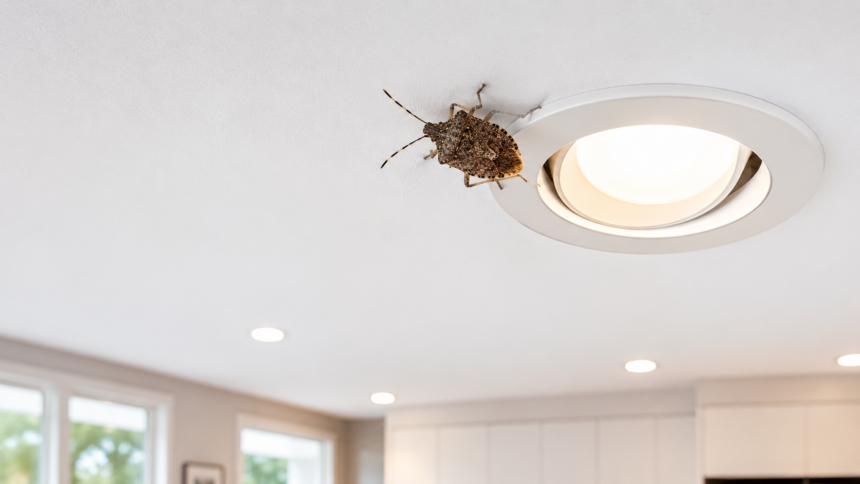
Last autumn, I began finding stink bugs inside our master bedroom, and they arrived with nearly zero warning sign. There were no open windows, we had no visible cracks in the plaster, and yet these insects kept gathering right by the overhead trim as though someone dropped them directly from the attic space. Sounds scary, right? Um, what’s even surprising is, the moment winter starts, you’ll barely see them around your house.
Does it mean they go away? Well, no. They have managed to find their way into wall voids, attics, and ceiling cavities. Turns out, when you catch stink bugs in ceiling lights or see one crawl through the tiny seam of an unsealed recessed light, you may be dealing with a structural vulnerability that most likely you ain’t aware of.
But can stink bugs actually enter through recessed lights, or is the light simply where they happen to emerge? Below, we break down how these unwanted guests migrate from the outdoor vegetation into your ceiling joists, the evidence that proves it, and the professional moves that kick them out for good.
Table of Contents
Key Takeaways
- Stink bugs don’t chew through drywall. They travel through existing gaps around siding, rooflines, and utility openings, then work their way into wall voids and attic space before showing up near lights.
- Stink bugs coming through recessed lights almost always means there’s a gap somewhere in the housing, the wiring penetration, or the ceiling seam around the fixture itself.
- Sealing exterior entry points stops far more stink bugs than any spray you’ll put inside a light fixture.
- Fall is peak season, since these insects are searching for a warm, protected place to spend the winter.
What Are Stink Bugs and Why Do They Get Indoors?
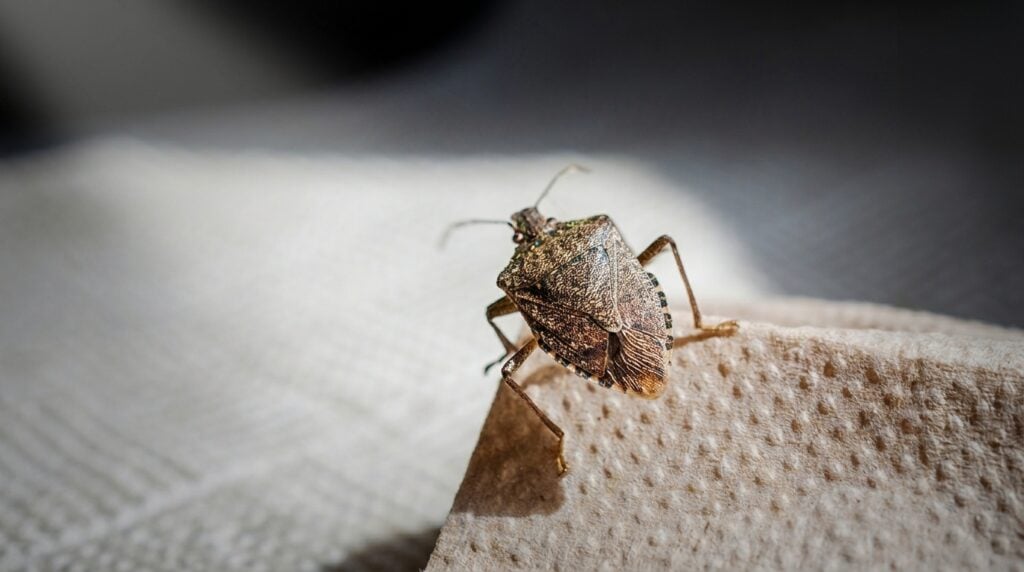
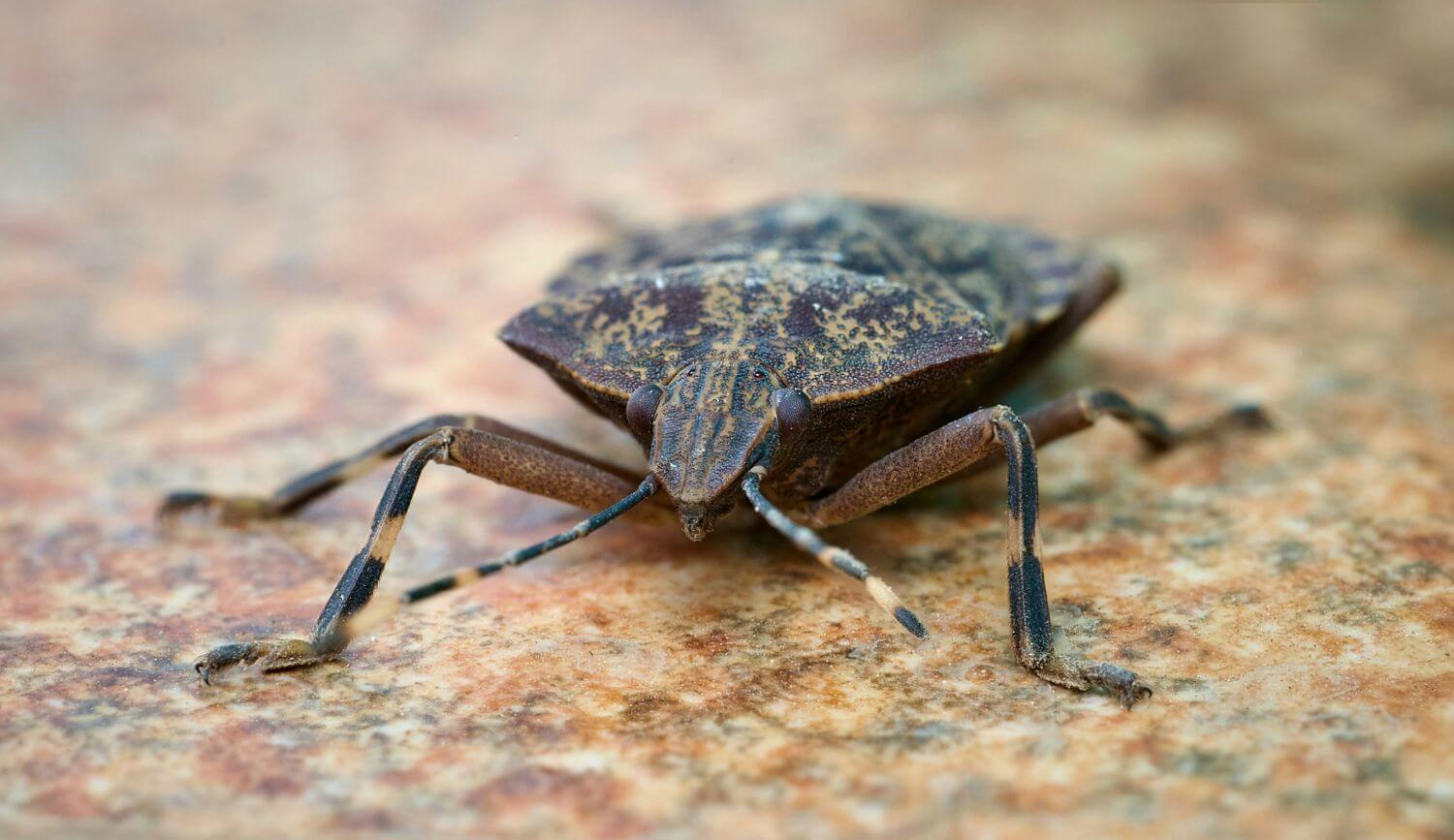
Stink bugs are members of the Pentatomidae family, and everyone recognizes them by their unique shield shaped armor. The brown marmorated variety is the specific type that invades residences across America most frequently. Fully grown adults measure roughly half an inch to five eighths of an inch long, and they sport a speckled brown hue alongside banded with antennae.
Once stink bugs slip inside your house, these pests ain’t looking to gnaw on your drywall, electrical lines, or expensive decor.They are mainly seeking a protected place to shelter, especially when temperatures drop.
This search pushes the stink bugs straight into roof spaces, wall cavities, and alternative dark spots located near the highest points of the building. This behavior is where the whole canister lamp puzzle begins.
When an overhead bulb housing connects directly to a pocket where the colony rests, the tiny cracks around that trim become the exit point where they emerge. To put it another way, the fixture is merely the spot where you catch them instead of the actual hole where they first broke in.
How Do Stink Bugs Get From Outside to a Ceiling Light?

Get practical help identifying pests, preventing infestations, and protecting your home throughout the year.
View the Pest Control eBookThey Enter Through Exterior Gaps
Every stink bug found indoors started outside. None of them tunnel in. They walk, crawl, or fly to your exterior walls and search for an opening, then follow that gap inward until they hit a protected cavity.
Common paths in include:
- Gaps around window and door frames
- Loose or warped siding panels
- Fascia boards that have pulled away slightly from the roofline
- Openings where the roof meets the wall
- Vents that lack proper screening
- Utility penetrations, like cable lines or pipe entries, that were never fully sealed
The moment a stink bug enters a wall void, it often keeps moving upward or toward light and warmth, which frequently leads straight into stink bugs in ceiling lights where a recessed housing sits in the ceiling void above.
7 Signs Stink Bugs Are Coming From a Ceiling or Wall Void
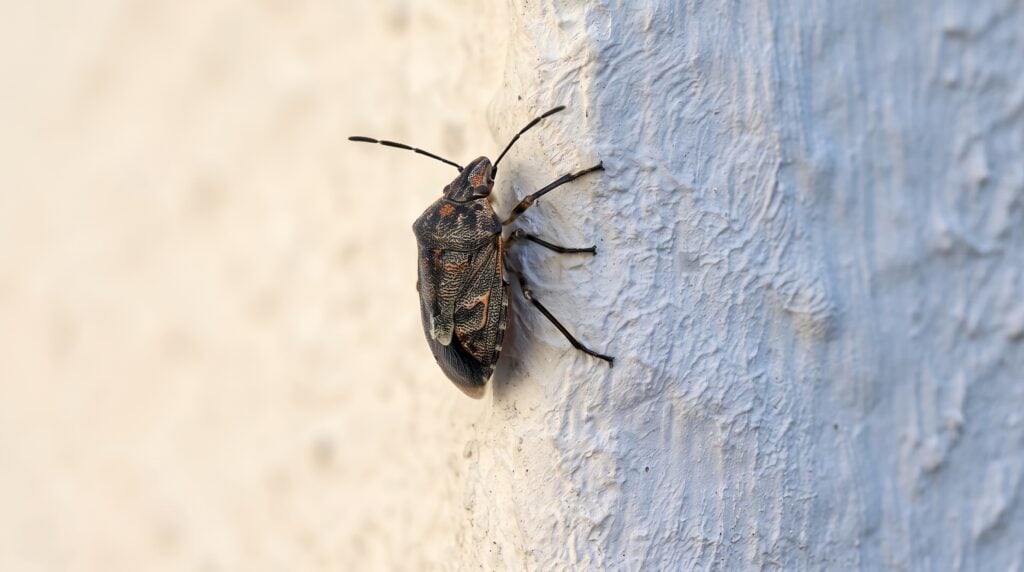
- You keep finding them around one light: When the problem centers on a single spot, you have an explicit breach point nearby instead of a random coincidence.
- Bugs appear when the light turns on: Heat from the bulb draws them out of hiding, since stink bugs attracted to lights will move toward warmth even from inside a wall cavity.
- They appear from a small ceiling gap: A seam in the trim ring or a crack where the housing meets drywall is often the exact exit point.
- You find them near attic access: Pull down stairs and attic hatches are common staging areas before bugs descend into ceiling voids.
- Several upper fixtures show activity: More than one light with sightings suggests a shared attic space as opposed to isolated fixture problem.
- You notice them around window and door trim too: This pattern proves you have an outer wall breach instead of a problem that is exclusive to the ceiling.
- Activity increases in fall or during warm spells: Cooling temperatures push overwintering behavior, and a sudden warm afternoon in January can bring dormant stink bugs back out.
How to Stop Stink Bugs From Coming Through Recessed Lights
Find the Real Entry Point First
Before sealing anything, figure out where the bugs are actually getting in. Look at the ceiling seam around the fixture in good light. A hole in the seam where the trim ring meets the housing is one of the most common culprits, and it’s often small enough to miss on a casual glance. Check for a loose socket or a gap where the wiring enters the housing as well.
Seal Exterior Cracks and Openings
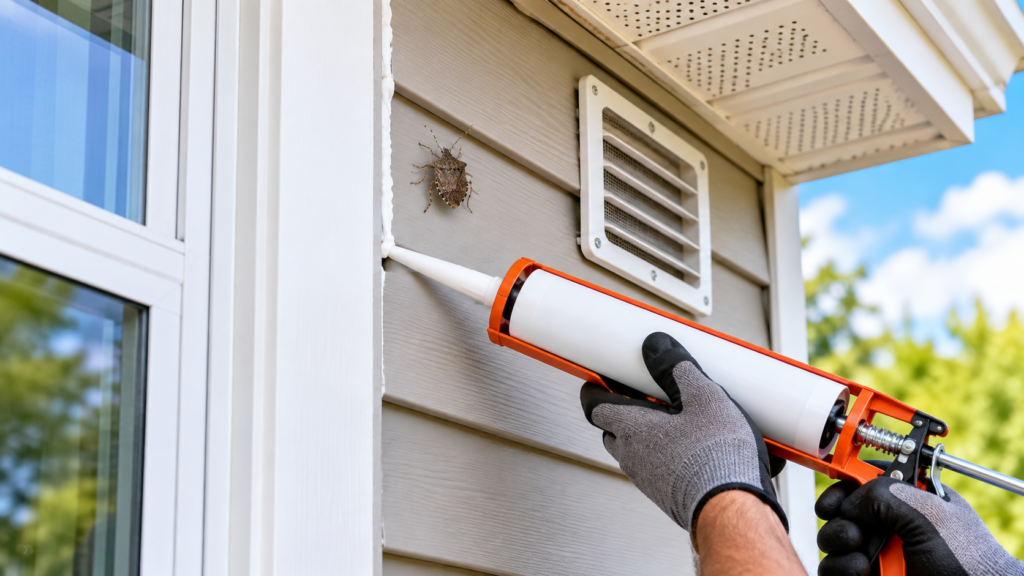
This is the step that actually solves the problem long term. Caulk gaps around windows, doors, and siding. Check the fascia and soffit for separation. Screen any vents that currently sit open. Poorly sealed exterior openings are the starting point for nearly every indoor stink bug sighting, and no amount of indoor treatment fixes an unsealed exterior.
Check the Recessed Light Area
Once the bulb is out and the power is off, inspect the housing itself. Foam gasket kits made for recessed lighting can close gaps around the trim without blocking ventilation for the fixture. If the housing sits in an older, poorly insulated ceiling, this is also a good moment to check for daylight leaking through, which usually means insects can get through too.
Inspect Attic and Ceiling Access Points
Attic penetrations around plumbing stacks, wiring, and HVAC lines are frequently overlooked. Damaged chimney or soffit vents let bugs move freely between the attic space and the outdoors, then down into ceiling voids from there. A flashlight inspection during daylight hours will usually reveal gaps that are invisible at night.
Should You Spray Insecticide Into a Recessed Light?
Generally, no. Spraying directly into a fixture rarely reaches the stink bugs hiding deeper in the wall void. Crushing or disturbing stink bugs releases a characteristic pungent odor that lingers far longer than the bugs themselves would have.

If you’re dealing with live insects around a fixture, switch off the circuit at the wall switch and, if you’re uncertain, at the breaker before touching anything. Once the power is off and the bulb has cooled, take out the trim and gently vacuum survivors into a bag using a narrow hose attachment with a cloth over the end. It keeps insects from getting sucked into the vacuum motor itself. Treating the exterior entry points does far more good than any spray applied inside.
How to Stink Proof Your Home Before Fall
- Seal windows and doors with fresh weatherstripping and caulk.
- Inspect roofline and fascia for gaps that widen with age and weather.
- Screen appropriate vents, including soffit and gable vents.
- Seal utility penetrations where cable, gas, and water lines enter the house.
- Reduce easy access around the house by trimming vegetation and firewood stacks away from the foundation.
When to Call a Professional
Some situations go beyond a caulk gun and a Saturday afternoon. If you’re finding stink bugs in ceiling lights across multiple rooms. If the attic shows signs of a larger stink bug infestation, or if you simply don’t want to be climbing around wiring near an active light fixture, it’s worth bringing in a licensed pest control company. Orkin has decades of experience identifying the exact entry points causing indoor stink bug problems and can treat both the exterior perimeter and interior hot spots with products that aren’t available to homeowners. For a persistent or widespread issue, a professional inspection tends to save both time and repeated frustration.
Frequently Asked Questions (FAQs)
Can stink bugs live inside recessed lights?
They can hide there temporarily, since the housing offers a dark, protected cavity close to warmth. They aren’t nesting or breeding inside the fixture itself, but they’ll use it as a waypoint between the attic and your living space.
Can stink bugs enter through electrical outlets?
Occasionally, though it’s less common than ceiling fixtures. Outlets on exterior walls sometimes have small gaps around the box that connect to a wall void, giving bugs another route inside.
Why do stink bugs appear around lights at night?
Warmth and brightness both play a role. Stink Bugs already hiding in a nearby cavity will move toward interior fixtures once the heat from the bulb becomes noticeable.
What attracts stink bugs into houses?
Shelter, mainly. They aren’t chasing food indoors. Cooling fall temperatures send them searching for a safe, insulated place to overwinter, and homes with unsealed entry points make an easy target.
Wrapping Up…
Stink bugs are good at finding their way in and famously bad at finding their way back out, which is exactly why one bug near a light fixture in October can turn into a dozen by December if the entry point stays open. Getting rid of gross stink bugs isn’t much complicated, though. Track down the actual gap, seal the exterior first, and treat the recessed fixture as the last stop. Handle it early in the fall, and you’ll spend the winter without company in the ceiling.