
Clover mites have a strange habit of showing up exactly where you least expect them. For a lot of homeowners, that means the second floor. You’d think a tiny bug with no wings would stick close to the ground, yet somehow they end up crawling across an upstairs windowsill or gathering in a corner of a bedroom that hasn’t had a window open in weeks.
If you’ve dealt with clover mites upstairs, you already know how baffling that feels. The good news is there’s a clear explanation for it, and once you understand how these mites actually travel, keeping them out becomes a lot more manageable.
Read on to figure out where they come from, why upstairs rooms attract them so often, and exactly what to do about it, whether you’re dealing with a handful of mites or a real invasion.
Table of Contents
Key Takeaways
- Clover mites don’t fly. They ride up exterior walls and squeeze through window gaps, which is why upper floors often see them before the ground floor does.
- Clover mites upstairs almost always trace back to a specific entry point near a window, siding seam, or utility line.
- Sealing gaps and creating a bare soil barrier around the foundation solves the problem at the source, far more effectively than any indoor spray.
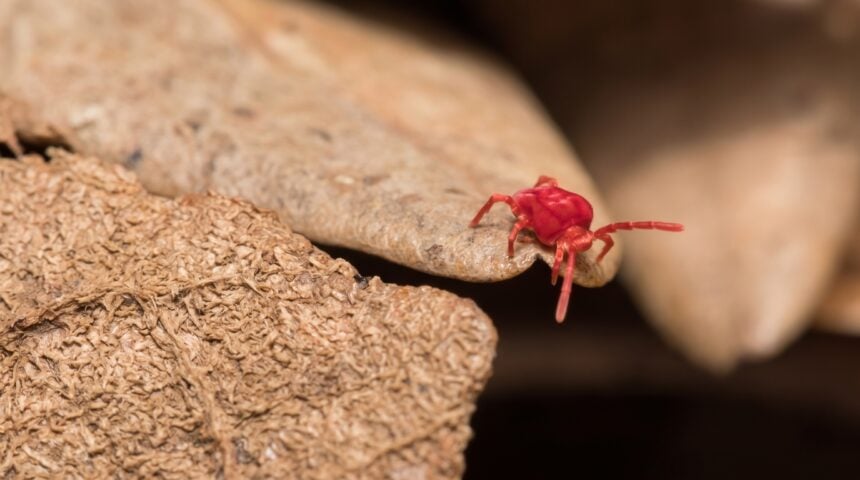
- These mites don’t bite, don’t damage your home, and won’t reproduce indoors, but they will leave a red stain if you crush them.
Why Upstairs Windows Are Often the First Place You Notice Clover Mites
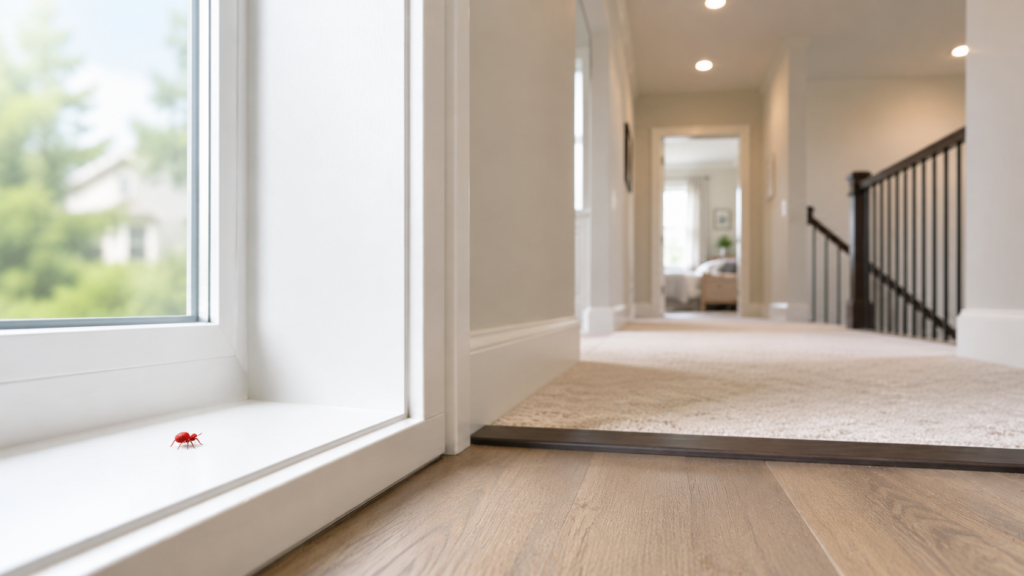
Sun exposure is the biggest factor here. Clover mites are drawn to warm, sunlit surfaces, and upstairs windows tend to catch more direct sun through the afternoon than ground floor windows shaded by porches or landscaping.
As the mites climb the exterior wall searching for a way in, they naturally gravitate toward that warmth, and second story windows sit right in the path.
Once they reach the top of the siding or the edge of a window frame, any gap in the caulking or the screen becomes an open door. That’s the whole story behind Clover Mites Out of Upstairs Rooms showing up before you ever notice a single one downstairs.
7 Places Clover Mites Can Enter Your Upstairs Rooms
- Window frame gaps: Old caulking shrinks and cracks over time, leaving a thin seam mites can walk straight through.
- Damaged window screens: A torn screen or one that doesn’t sit flush against the frame gives mites direct access to the interior.
- Cracks around exterior walls: Settling and weathering open up hairline cracks that widen year after year if left unattended.
- Gaps around doors: Even upstairs doors leading to a balcony or attic access point can have worn weatherstripping.
- Siding and foundation gaps: Mites climb from ground level upward, and any separation in siding gives them a route to follow.
- Wall voids: Once inside the wall, mites travel through insulation gaps and stud cavities until they find an opening into a room.
- Gaps around utility penetrations: Cable lines, vents, and pipe entries near upper floors are often poorly sealed from the outside.
How to Keep Clover Mites Out of Upstairs Rooms
Start With the Windows
Windows are the first line of defense, and honestly, most infestations trace back to this exact spot. Check every upstairs window for gaps around the frame, and replace any screens that are torn, warped, or not sitting flush.
If you’re serious about learning how to keep clover mites out, this is where the work actually pays off, since it’s the most direct route these mites use to get from the exterior wall into your living space.
Seal the Gaps Around Your Home
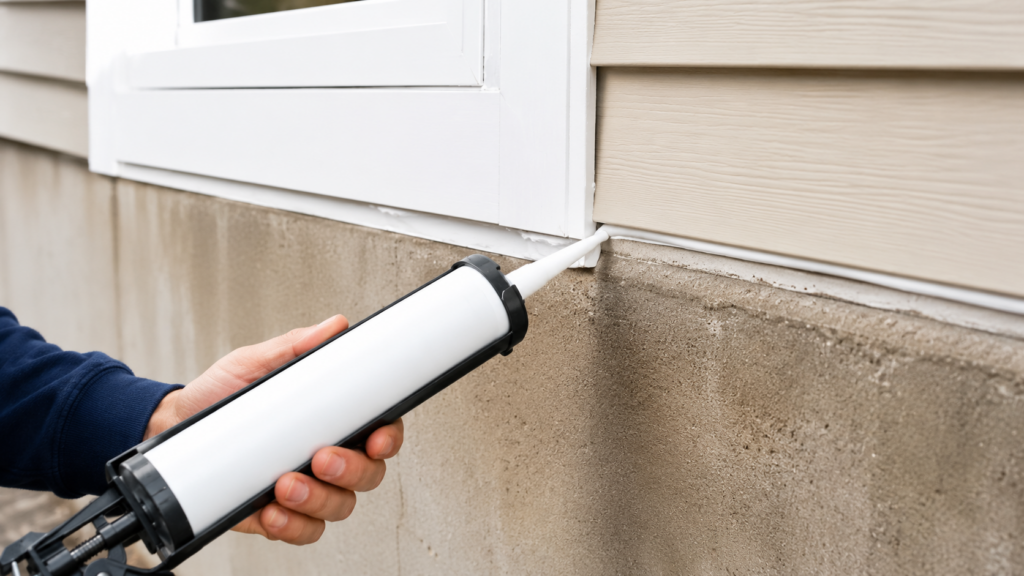
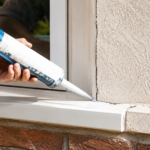
Caulk works well here, and it should go around all exterior walls where you notice cracks, particularly near window trim, siding seams, and foundation lines.
Pay close attention to spots where different building materials meet, since that’s where gaps tend to form fastest.
A tube of exterior grade caulk and an afternoon spent walking the perimeter of your home will close off far more entry points than most people expect.
Create a Plant-Free Barrier Around the Foundation
Clover mites feed on grasses, clovers, and other low growing plants, and dense vegetation touching your foundation gives them a direct bridge to the exterior walls.
Clear a strip of dry, non organic material, gravel or mulch works fine, around the base of your home, and place any plants at least two feet away from the foundation.
This single change removes the food source and the walking path at the same time, which makes a noticeable difference in how many mites show up near your windows each season.
What to Do If Clover Mites Are Already Upstairs
- If clover mites have already made it into a bedroom or hallway, you should resist the urge to crush them on sight.
- Clover mites leave a reddish stain when squashed, and on carpets or hard surfaces, that stain can be tough to fully rinse off.
- You can use diatomaceous earth, then vacuum them up. Dispose of the vacuum bag or empty the canister outside immediately to prevent them from finding their way back inside.
- Once you’ve cleared the visible mites, trace the room back to its likely entry point, usually a nearby window or a gap along the exterior wall, and seal it before moving on.
- Treating the symptom without addressing the source just means you’ll be vacuuming again in a week.

How to Stop Clover Mites From Coming Back
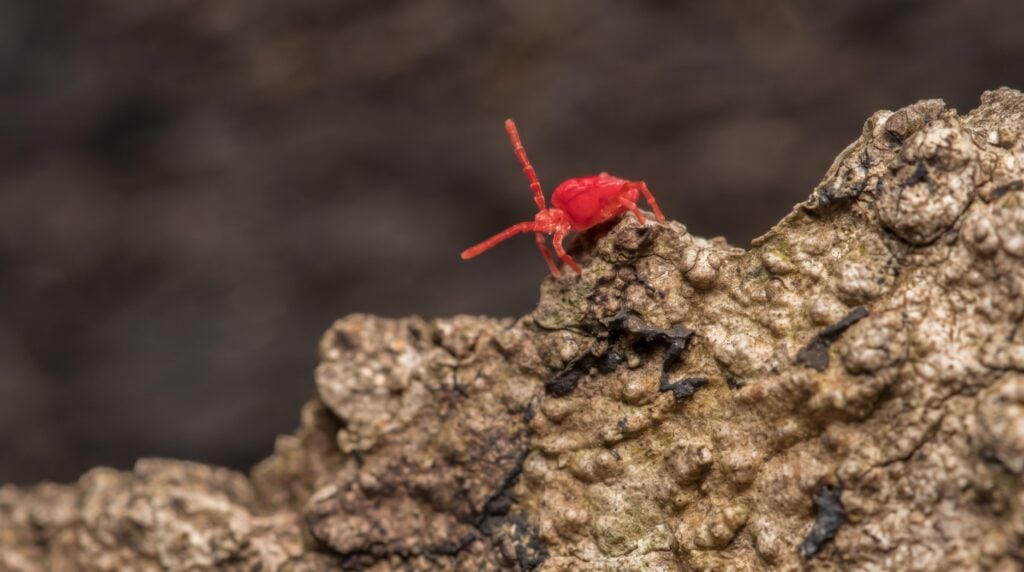
Long-term prevention depends on steady maintenance over a single quick fix. You need to check the spots you patched up in the past, because caulk and weatherstripping dry out and break down after a season or two.
Keep that bare dirt line wide around your home foundation, and cut back the lawn turf and weeds before they touch your outside siding.
Clover mites swarm your living space the second they find a clear path inside, and a house with tight seals this spring can still face a pest outbreak next year if your upkeep slips. A brief seasonal inspection keeps your barrier strong, and it ensures the bugs stay outside on the lawn.
Can You Use a Perimeter Spray for Clover Mites?
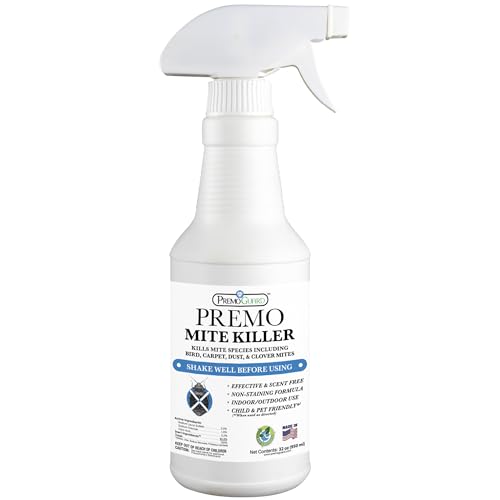
You can absolutely use one, and a liquid barrier serves as an excellent defense for big properties or stubborn infestations. When you spread a protective coat right on your concrete foundation and up the base of your siding, you cut down on the clover mites population before they ever crawl close to your window sills.
Pick a chemical formula that specifically targets mites on the bottle label. You should spray the area in early spring or early autumn, because these two periods match the exact weeks when the clover mites wake up and move around the most.
Cover a wide path a few feet deep around your entire house instead of just treating the spots where you noticed the bugs. Clover mite colonies frequently hide out in hidden areas you have not found yet. When you pair this chemical spray with tight home seals and a clear dirt line, you handle both the physical and chemical sides of property defense.
A Simple Upstairs Clover Mite Prevention Routine
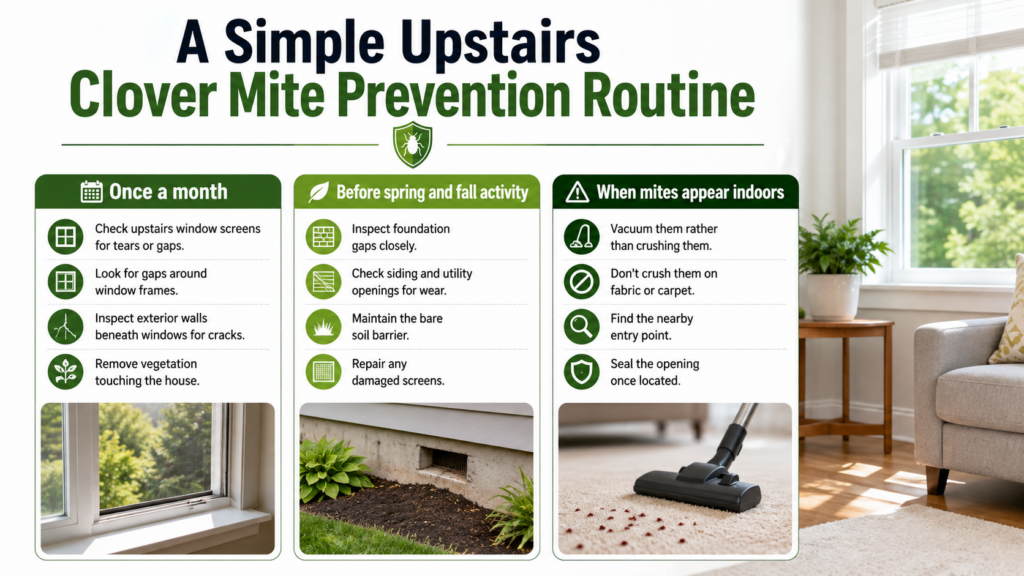
Once a month
- Check upstairs window screens for tears or gaps.
- Look for gaps around window frames.
- Inspect exterior walls beneath windows for cracks.
- Remove vegetation touching the house.
Before spring and fall activity
- Inspect foundation gaps closely.
- Check siding and utility openings for wear.
- Maintain the bare soil barrier.
- Repair any damaged screens.
When mites appear indoors
- Vacuum them rather than crushing them.
- Don’t crush them on fabric or carpet.
- Find the nearby entry point.
- Seal the opening once located.
Do You Need a Dehumidifier for Clover Mites?
Clover mites actually prefer dry environments. A machine that controls moisture will not stop them from crawling through a window gap, but a very dry upstairs room can occasionally create a cozy spot for them to hang out near your sunny windowsills.
A dehumidifier serves better as a general home comfort device over a dedicated pest control tool, so you should not treat it as a standalone fix. When you look at the big picture, sealing up entry points and managing your outdoor perimeter barrier will always do more heavy lifting than turning the dial on your indoor humidity levels.
Using Caulk to Seal Clover Mite Entry Points

Caulk remains one of the most effective and least expensive tools available to get rid of clover mites. A quality exterior grade caulk applied around window frames, siding seams, and foundation cracks closes off the exact pathways mites use to travel from soil level up to a second story window.
It’s worth reapplying every couple of years, since sun exposure and temperature swings cause even good caulk to crack eventually. For homeowners asking how to get rid of clover mites for good rather than just managing an occasional sighting, caulk paired with the outdoor barrier is usually the combination that finally breaks the cycle.
When to Call a Professional
Some infestations go beyond what caulk and vacuuming can handle, especially if mites are entering through multiple points or returning season after season despite your best efforts.
Orkin has the training and product access to treat both the perimeter and the specific entry points causing repeat activity, and their technicians can identify gaps that are easy to miss during a DIY inspection.
If Clover Mites Out of Upstairs Rooms keeps happening no matter what you try, a professional treatment plan is often the fastest way to actually close the door on the problem for good.
Frequently Asked Questions (FAQs)
Why are clover mites suddenly appearing upstairs?
Sun exposure draws them toward upper floor windows, and any gap in the frame or screen gives them a path inside. A sudden appearance usually means a new crack or a screen that’s come loose.
Can clover mites climb walls?
Their long front legs and light bodies let them move quickly across brick, siding, and drywall alike, which is exactly how they travel from ground level up to a second story window.
Do clover mites reproduce inside the house?
Adult clover mites can lay eggs at a steady pace outdoors, with females producing up to seventy eggs each without needing a male, but they don’t reproduce once inside a home and will typically die off within a few days.
Are clover mites dangerous to people or pets?
They don’t bite, sting, or carry disease, and they cause no structural damage. They’re a nuisance pest, not a health risk.
Why do clover mites leave red stains?
Their bodies contain a reddish pigment that releases when they’re crushed, which is why vacuuming rather than squashing them is always the better move on carpet or fabric.
Wrapping Up…
Clover mites upstairs don’t show up by accident. They follow sun, warmth, and whatever gap gets them from the exterior wall into your home, and upper floor windows just happen to check every box on that list. Seal the obvious entry points, clear vegetation away from the foundation, and stay consistent with seasonal checks, and you’ll cut off the problem well before it becomes an annual headache. A little maintenance now saves a lot of vacuuming later.