
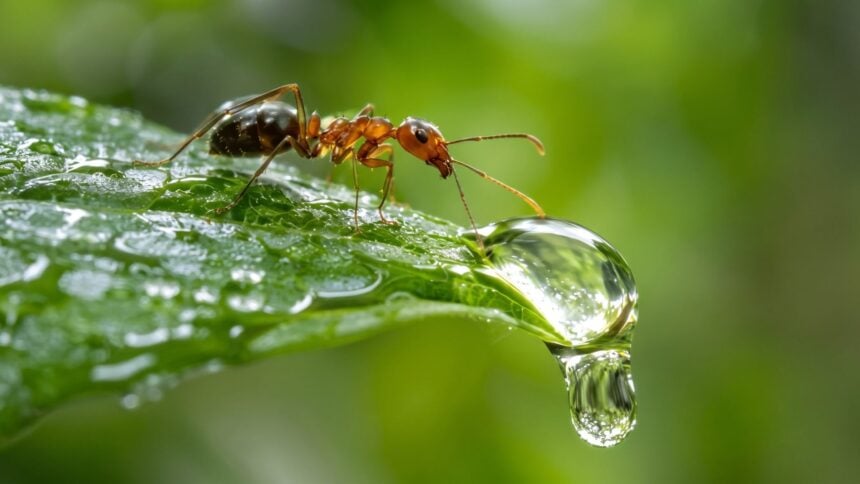
Lately, if you have been noticing ants in your lawn grass making hills, you probably want them gone before they ruin your yard. Seeing a few ants however wandering around your grass isn’t a big deal. In fact, small groups are sometimes helpful to have around because they loosen tight soil and dine on grubs, mites, termites, and other pests and save you from their infestation.
Where things change actually when a massive ant colony takes over your turf and has a few ant species you would wish you don’t deal with. If you are thinking of grabbing a can of bug spray and soak the top of the dirt pile it is only gonna wipe out a few surface workers while the whole ant colony lives securely beneath. To actually kill ants in grass you need to reach the heart of the ant nest.
We walk you through the best ant killer for lawns along with how to use them properly, and when it is wise to contact pest control pros to handle severe infestations.
Table of Contents
Are All Ants in Grass Bad? (The Few to Watch Out For)
As we mentioned earlier, a few ants in your yard are nothing to worry about. Most species stay out of your way and actually keep your soil healthy. Trouble only starts when a massive colony takes over or when aggressive species move in. Here are the main troublemakers to watch for:
- Fire ants thrive in warmer climates and deliver painful, blistering stings to kids and pets.
- Harvester ants also pack a nasty sting and chew away every blade of grass around their nests, which leaves ugly bare dirt circles across your lawn.
- Field ants build wide, rock hard soil domes that smother green turf and wreck mower blades.
- Leafcutter ants live in southern yards and strip grass blades and garden plants to feed their underground fungus farms, and they leave behind massive dirt mounds.
- Carpenter ants can chew right through damp wooden decks, tree stumps, and home siding when they show up in large numbers.
- Cornfield and Argentine ants cause indirect damage because they protect sap sucking pests like aphids and mealybugs in exchange for their sweet honeydew waste.
Even with harmless species, an oversized underground colony creates endless tunnels that dry out grass roots and leave brown, dead patches on your lawn. Once things get to that point, you need to step in and kick out the entire nest before the damage spreads.
What Kills Ants in Grass? 7 Proven Ways to Wipe Them Out
1. Scatter Granular Ant Bait (Best for Killing the Queen)

Ant bait is widely considered the best ant killer for lawns because it uses the insects against themselves. Unlike contact poisons, granular baits mix a slow acting insecticide with tasty oils, proteins, or sugars.
Worker ants mistake these tiny granules for food. They pick up the pieces and carry them straight down into the nest. Once inside, they share the toxic meal with the larvae and the queen. Because the poison works slowly, the workers stay alive long enough to feed the whole nest before dying off.
You should apply granular bait during dry weather when ants are actively foraging. Check your yard in the late afternoon or early evening. Sprinkle the granules evenly across the grass using a hand spreader, and keep the product a few feet away from active mounds.
Never dump a giant pile of bait directly on top of an ant hill. Ants treat items dumped right on their mound as trash or threats to clear away instead of food to forage, so they will ignore the bait completely.
Avoid watering your grass for at least 24 hours after spreading bait. Rain or sprinklers wash away the food attractants and ruin the granules. Within one to four weeks, the queen dies and the entire nest collapses.
2. Liquid Insecticide for Ant Mounds
If you need pretty fast relief from large ant hills in grass, a liquid mound drench delivers more immediate results. Liquid concentrates containing bifenthrin, permethrin, or lambda cyhalothrin soak deep into the soil.
If you apply it, it would flood the underground tunnels and kill ants in grass on contact. It works great for isolated mounds that pose an immediate hazard near patios, swing sets, or walkways.

To do this right, mix the liquid concentrate in a clean watering can or pump sprayer according to the label directions. Do not disturb or kick the mound before pouring.
When ants feel vibrations, they scramble to rush the queen into deeper, safer chambers. Gently pour about a quarter of the mixed liquid in a 10 to 12 inch ring around the outer edge of the mound first to block escape tunnels, then pour the rest of the one to two gallons straight over the center.
Treat the area early in the morning or apply at dusk when mild temperatures between 65°F and 80°F bring the colony close to the surface. When the thorough soak reaches the brood chambers it’ll wipe out the nest within a few hours.
3. Spread Contact Ant Killer Granules
Although these products look similar to granular baits, they work in a completely different way. Instead of attracting ants as food, contact granules release fast acting insecticides into the thatch and top layer of soil.
When foraging ants crawl across the treated ground, the active ingredients stick to their legs and bodies and kill them off.

You need to load the granules into a standard broadcast spreader and walk your yard in overlapping passes. Pay extra attention to your home’s foundation, driveway edges, and fence lines where ants love to travel.
Once you finish spreading, lightly water your lawn with sprinklers for 15 to 20 minutes without causing runoff. Water washes any stray granules off the grass blades and activates the insecticide down in the thatch layer. Keep pets and kids off the lawn until the grass dries completely.
After it gets dry the treatment keeps protecting your turf for four to twelve weeks based on the active ingredient and rainfall.
4. Borax or Boric Acid Ant Bait
You do not always need harsh synthetic chemicals to clear out a yard ant infestation. Boric acid is an effective ingredient for stopping ants, and standard household borax works in a similar way. Both minerals disrupt an ant’s digestive system and slowly dehydrate its body. Because low doses of borax act slowly, foraging workers carry it back to the nest before they perish.
- To make your own bait, mix 1 teaspoon of borax with 3 tablespoons of sugar and 1 cup of warm water.
- Stir the mixture until the sugar and borax dissolve into a clear, sweet liquid.
- Put the solution into a shallow dish that lets them access and eat the bait easily.
- You can use old jar lids, bottle caps, or small plastic containers placed near active ant trails.
Workers will swarm the sweet liquid and drink their fill. They’ll take it back to share with the rest of their colony underground. Refresh the liquid every few days if it dries out in the sun.
5. Dust Mounds with Diatomaceous Earth
Diatomaceous earth is a good choice for controlling ants if you would like to go the organic route. It consists of a fine powder that is made from the fossil remains of algae. When ants walk on its surface, they get cut and lose their outer shell’s oily moisture.

In addition, it is pet safe unlike other chemical ant killing methods. However, diatomaceous earth can lose its effectiveness after getting in contact with water. You should therefore be ready to dust again after wet weather.
6. Pour Boiling Water Down the Nest
When you want zero chemicals in your yard, one of the simplest methods to kill ants in grass is to pour boiling water straight onto the ant mound. Extreme heat scalds the tunnels instantly and kills ants almost instantly.
According to research from Texas A&M AgriLife Extension, pouring 2 to 3 gallons of boiling water onto an ant mound eliminates the colony roughly 60 percent of the time. While it may take a second round to catch a deep queen, this free trick costs nothing but give you pretty decent results.
7. Call a Lawn Pest Control Pro
Sometimes DIY buckets, ant baits, and powders simply cannot keep up with a massive yard takeover. If you have loads of carpenter ants nesting in old tree stumps, or if aggressive fire ants keep returning after multiple treatments, hiring a Lawn pest control specialist makes complete sense.
Professional technicians have access to commercial grade baits and non repellent liquids that are not sold at local hardware stores. They can also select an appropriate treatment based on your lawn, surrounding plants, and household needs.
How to Kill Lawn Ants Without Ruining Your Grass
Wiping out pests means nothing if you leave behind dead, yellow patches across your yard. Follow these four smart habits to protect your turf while clearing out unwanted ants nests.
- Figure Out Which Ant You Have: Fire ants sting and build large mounds. Carpenter ants chew wood. Pavement ants leave small sand piles along cracks. The right product depends on the species. Identify the ant species you are dealing with and bring the right products.
- Skip Harsh Home Remedies: Internet hacks often tell homeowners to dump bleach, gasoline, vinegar, or heavy dish soap onto dirt mounds. Those harsh liquids burn grass roots, poison your soil, and create ugly dead spots that take months to grow back. Stick to proven baits or proper natural ant control methods instead.
- Target the Nest, Not Stray Ants: Spraying ant killers onto random ants walking across your grass will waste your product and stress your lawn. Follow the foraging trails back to the main dirt opening. Putting your treatment right at the source stops the colony without drenching your whole yard in chemicals.
- Treat Early or Late in the Day: You shouldn’t spray liquid ants insecticides or dust powders during the blazing midday heat. Hot sun causes liquid sprays to scorch grass blades and makes ants hide deep underground. Apply your treatments at dawn or dusk when temperatures drop and workers actively forage near the surface.
Frequently Asked Questions (FAQs)
How long does it take for lawn ant bait to work?
The time taken by lawn ant bait to eliminate the colony varies from a few days to several weeks. Ants that have consumed the bait may die within 48 hours, however, full nest elimination takes time due to the transportation of the bait back home by the workers in order for it to be shared with the queen and larvae.
Will lawn ants eventually go away on their own?
As long as the queen has access to food, moisture, and good soil the entire ant colony would rarely move on their own. Without a targeted treatment they are gonna stay put and expand each warm season.
Does watering your lawn get rid of ants?
No, it does not eliminate an ant colony, but it surely makes them move to another spot, where they eventually build the mound again. Regular watering, however, keeps the soil moist, which is unappealing for new queen ants in the zone.
What is the fastest way to kill ants in grass?
Liquid insecticides, such as mound drench, or simply pouring 2-3 gallons of boiling water directly over the mound are the fastest ways to do this. Both methods flood the tunnels and kill surface workers and brood within hours.
Wrapping Up…
Getting rid of ants in your lawn takes more than spraying the mounds you see. You need to choose a treatment that reaches the colony and keeps the workers from rebuilding elsewhere. If there is a large infestation, granular bait could be a good option, and if only individual nests are found, liquid drenches could be used. Boiling water can also be an effective option, however it could cause damage to surrounding plants and grass. Always follow the product instructions, and allow enough time for it to take effect. Once ants have been removed from your grass, keeping your yard thick and healthy is the best way to stop ants from coming back.