
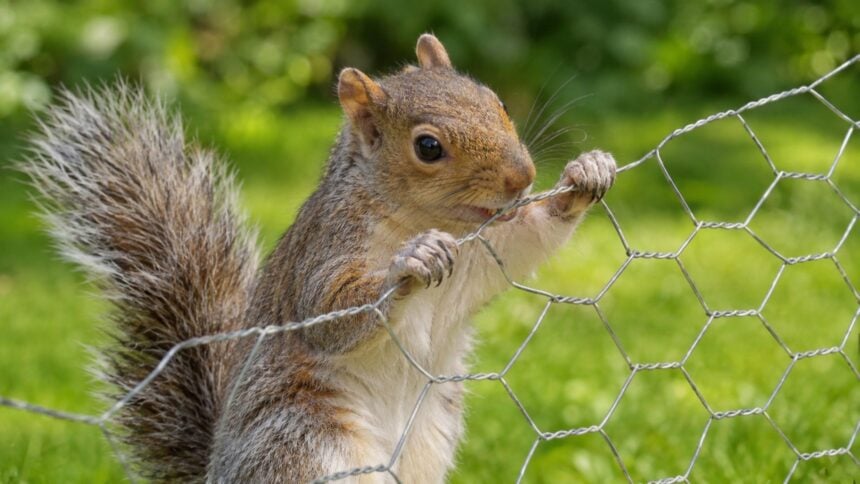
Chicken wire is inexpensive, easy to cut, and useful for many garden projects. You can wrap it around raised beds, use it to build a chicken run, or attach it to a wooden frame to protect plants. The problem is that squirrels are persistent animals. They climb fencing, investigate weak spots, and can pretty much damage thin wire mesh when they repeatedly chew or push against it.
Ordinary chicken wire does not provide a solid barrier to stop determined squirrels. Although it can cause them to slow down, it can be bent or broken. Most importantly, squirrels can chew through chicken wire with their powerful teeth. A sturdier type of wire such as hardware cloth or welded wire will help to keep squirrels out if you make sure to cover all sides, top and bottom of your enclosure.
We walk you through why chicken wire fails, which mesh works better, how to build a barrier, and which natural squirrel deterrent methods give you solid backup.
Table of Contents
Why Chicken Wire Often Fails to Keep Squirrels Out
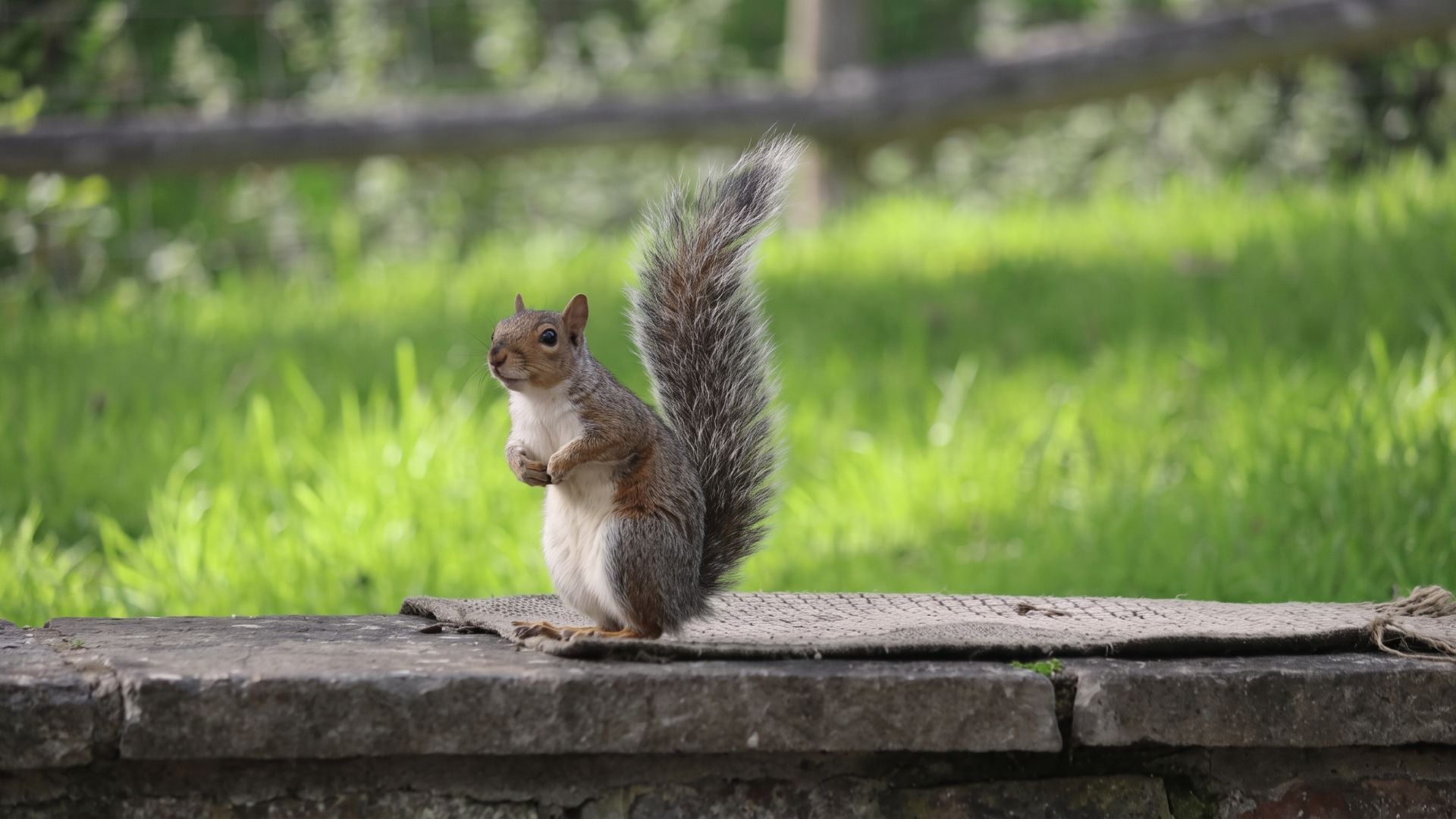
Chicken wire has several weaknesses when you use it as a squirrel barrier. Here is why it may not hold up once squirrels discover an easy food source.
- The wire is often too thin: Squirrels have 4 front incisors that grow continuously at a rate of about 6 inches per year. Because their teeth never stop growing, squirrels must constantly gnaw to wear them down. This gives them the ability to chew through wood, plastic, soft metals like aluminum, and thin wires when they smell ripe tomatoes or sunflower seeds on the other side.
- The mesh can stretch or bend: Chicken wire is flexible. Turns out, it is easy to shape around garden beds and posts. Unfortunately, that flexibility also makes it easier to push out of position. Squirrels may bend a loose section until they can squeeze through.
- The openings may be too large: Standard chicken wire (hex netting) usually has 1-inch or 2-inch holes. Adult gray squirrels can easily squeeze through 2-inch holes, while smaller red squirrels and juveniles can slip through 1-inch holes or easily chew the thin wire wider since squirrels only need an opening of about 1 to 1.5 inches to pass through.
- Squirrels can climb it: Even if the sides remain intact, squirrels can climb wire mesh with their claws. An enclosure without a secure top leaves an easy route inside.
Why Squirrels Keep Targeting Chicken Coop/Garden
Squirrels are habitually attracted to food sources in gardens. They will forage all day long and are often most active during morning and evening. Chicken feed, fallen bird seed, fruits, nuts and new bulbs can all attract squirrels into your yard.
They could approach from the sides, climb over the enclosure or investigate the ground beneath the coop to find a way inside. Once a squirrel has made its way into your garden it could become a recurring problem you really have to get rid of.
Ground squirrels create a slightly different challenge because they can dig beneath fencing. If you have a ground squirrel invasion, the lower edge of your barrier needs attention too. A strong enclosure with no protection beneath it may still leave an easy route into the run.
Best Chicken Wire Mesh Alternatives for Squirrel Protection
If you want the best wire mesh to keep squirrels out, look at the wire thickness, opening size, material, and how you plan to install it. Not every metal mesh protects your plants the same way. Here are four great options to keep your garden safe.
1. 1/2 Inch Galvanized Hardware Cloth (Best Overall for Gardens)

Half inch galvanized hardware cloth is some of the most practical mesh to use within your raised beds, chicken runs and small garden spaces. It has a tighter grid than ordinary chicken wire and uses a more rigid metal construction. Hardware cloth is welded at every joint, so a squirrel can’t peel it apart the way it can with chicken wire.
The half inch grid is small enough to stop adult squirrels and still lets rain, light, and plant stems through. For many garden projects, this is the best wire mesh to keep squirrels out without paying the higher cost of stainless steel.
2. Heavy Gauge Welded Wire Fencing (Best for Large Enclosures)

Welded wire fencing is a good option when you need to protect a larger area. The metal strands are joined at their intersections. Turns out, the mesh holds a more uniform shape than flexible poultry netting.
It works well around walk in garden cages, larger chicken runs, and outdoor storage areas. You can attach it to wooden posts or a metal frame with suitable fasteners.
Look for 14 or 16 gauge wire with openings no larger than half an inch for a squirrel exclusion project. Thicker wire generally offers greater resistance to bending, although the quality of the welds and the frame also count.
Although this will be more expensive than standard chicken wire, it can give a stronger structure for a large squirrel proof enclosure.
3. PVC Coated Wire Mesh (Best for Curb Appeal and Rust Resistance)
PVC coated wire mesh has a protective plastic layer over the metal. The coating gives the fence a cleaner appearance and also helps shield the underlying wire from moisture. Squirrels may nibble the coating, yet the wire stays intact only if it is strong enough as it measures much of its strength. A thin wire with a plastic covering is still a weak barrier if squirrels can bend or damage it.
4. Stainless Steel Rodent Mesh (Best for Attic Vents and Home Gaps)

When squirrels try to enter a warm attic during winter, their chewing persistence skyrockets. A desperate animal trapped outside a roofline vent can eventually wear down thin galvanized wire.
For structural home repairs around soffits, foundation vents, and roof returns, 304 stainless steel rodent mesh is the best wire mesh to keep squirrels out permanently. Stainless steel resists corrosion for decades and offers superior tensile strength that stops even the most aggressive gnawing
How to Build a Squirrel Resistant Hardware Cloth Barrier
Buying stronger mesh is only part of the job. You also need to install it correctly. Even sturdy metal can fail if you leave gaps around the frame or allow squirrels to climb over the top.
1. Measure and Select Your Material
Start off by measuring the full perimeter and height of the space you need to protect, then add at least twelve inches to the height measurement for underground burial. Pick up 19-gauge half-inch galvanized hardware cloth, heavy-duty tin snips, leather work gloves, and galvanized U nails or fence staples. If you are protecting poultry, remember that having food in the run all the time is ideal, and not having a treadle feeder will draw wild rodents straight to your yard. Strong steel mesh is your main defense when squirrels try to get to the chicken food.
2. Cut and Secure the Sides
Unroll the hardware cloth on a flat driveway and weigh down the ends with bricks so the coil does not snap back. Use tin snips to trim your panels to size and keep your cuts flush against the welded cross wires so you do not leave sharp spikes sticking out.
Staple the mesh directly onto sturdy wooden posts every four to six inches. Pull the wire tight as you work so there are no loose waves that squirrels could without much effort grab or bend.
3. Cover the Top and Seal Bottom Gaps
Squirrels are great climbers. If you leave the top uncovered after putting up the hardware cloth, you’re still going to see them in your garden.
Build a hinged wooden lid wrapped in hardware cloth so you can still harvest vegetables or collect eggs easily. Dig a trench, 8-12″ deep, along the outer edge of your enclosure. Bend the bottom skirt of the wire outward in an L shape inside the trench, then backfill with soil and heavy rocks.
This underground apron stops critters from digging and coming up from under the coop or raised bed.
Other Natural Ways to Deter Squirrels From Your Garden
Physical barriers provide the most dependable protection, but a few additional steps can help deter squirrels and make your garden less attractive.
- Apply Cayenne Pepper Spray: Hot pepper contains capsaicin, which can discourage squirrels from eating treated plants.
- Plant Bulbs Squirrels Avoid: Squirrels tend to avoid daffodils and alliums. Plant these around your garden beds to make the area less appealing. They may help deter squirrels from digging, but they will not protect every plant.
- Install Motion Activated Sprinklers: These sprinklers spray water when an animal (squirrel) passes in front of the sensor. The sudden spray may startle squirrels and encourage them to leave. Move the sprinkler from time to time so squirrels do not get used to it.

- Remove Nearby Food Sources: Sweep up spilled birdseed beneath feeders, pick up fallen tree nuts, and bring pet bowls indoors after feeding time. Cutting off free calories is the fastest way to keep squirrels away from your property long term.
Frequently Asked Questions (FAQs)
What Is the Smallest Hole a Squirrel Can Get Through?
An average adult eastern gray squirrel can typically squeeze through a rigid opening as small as 1.5 to 2 inches wide, while smaller American red squirrels and juveniles can pass through gaps around 1 to 1.25 inches. Because squirrels have flexible rib cages and reduced collarbones, their skull is usually the widest rigid part of their body. Turns out, if an average-weight squirrel can fit its head through an opening, the rest of its body can usually follow.
Will Half Inch Hardware Cloth Keep Squirrels Out?
Yes, half inch galvanized hardware cloth blocks squirrels completely. The half inch square openings are far too narrow for even a young squirrel to push its head through, and the welded 19 gauge steel wire resists chewing. Many backyard growers report they haven’t had a single rodent breach after switching to half inch mesh, even in yards that still had squirrels and occasional deer passing through daily.
Can Squirrels Climb Chicken Wire?
Squirrels are agile climbers and can grip wire mesh with their claws. Even if the sides of your enclosure remain intact, an uncovered top can give them access. Use a secure mesh roof if you need to protect a fully enclosed garden or chicken run.
What Is the Most Effective Squirrel Deterrent for Gardens?
A sturdy physical barrier is usually the most reliable option. Use galvanized hardware cloth or welded wire with openings of half an inch or less. Secure the sides, top, and lower edges. You can also keep squirrels away by storing feed properly, removing fallen fruit, and cleaning up spilled birdseed.
Wrapping Up…
Ordinary chicken wire may work for basic garden fencing, but it is not reliable enough to keep determined squirrels out. The wire is thin, the openings can be too wide, and squirrels may also climb over it or find gaps around the edges. If you want to protect your vegetables, chicken coop, or other outdoor areas, go with sturdy half inch galvanized hardware cloth or heavy gauge welded wire. Both offer much better protection when properly installed. Make sure you secure the sides, cover the top, and close any gaps along the bottom. Also, keep chicken feed, spilled birdseed, and fallen fruit out of reach. These simple steps will give you a stronger barrier and make your yard less attractive to squirrels.