
Rice and granary weevils are two common pests of stored grains that many homeowners have to deal with. You may find them crawling through a bag of rice, wheat, corn, or cereal, often before you notice any obvious damage to the food.
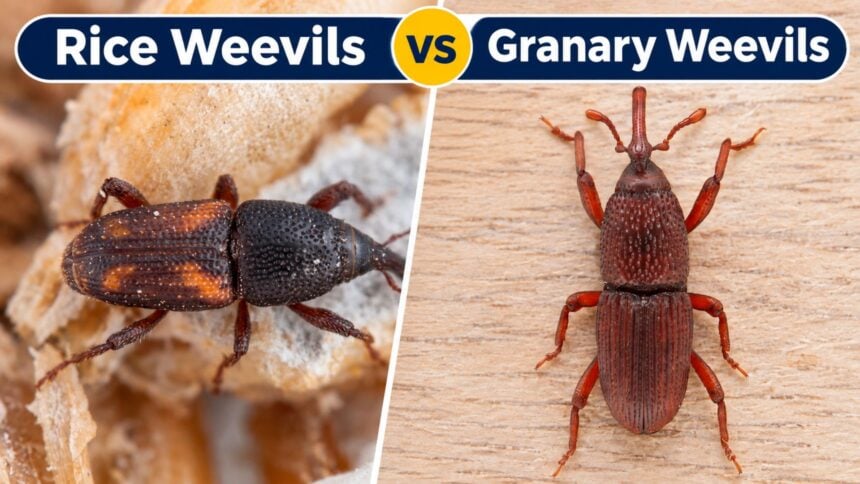
Although these beetles look similar, they are separate species with a few useful differences. Rice weevils have 4 pale spots on their wing covers and can fly. Granary weevils have a more uniform color and cannot fly.
Both pests can lay eggs within single grain kernels. Turns out, it is nearly possible to have eggs and larvae in your food package well before you see any adult weevils. Fortunately, if you carefully check your food items, clean properly and store your food better, you can safely get rid of them. Below are some helpful tips to help you identify which type you have and what to do about it.
Table of Contents
Are Rice Weevils the Same as Grain Weevils?
If you are asking whether rice weevils are the same as grain weevils, the answer depends on how someone uses the name. Rice weevil is the common name for a specific species, Sitophilus oryzae. The granary weevil, Sitophilus granarius, is a different pest that attacks many of the same stored foods.
People sometimes use the term grain weevil as a general description for beetles that infest stored grain. In other cases, they use it when referring specifically to granary weevils. That loose naming can cause confusion when you are trying to identify the exact weevil.
Both species belong to the same genus with six legs, folded antennae, and a distinct elongated snout. And they pretty much have similar body shape, diet, and life cycle. Despite sharing a family tree and destructive feeding habits, both rice and grain weevils have unique physical traits and survival tactics that set them apart once you look closely.
Most notably, rice weevils can fly and prefer warmer climates, whereas granary weevils cannot fly because their hard outer wing covers are fused together and they lack functional flight wings underneath, though they are much more tolerant of colder temperatures.
Rice Weevils vs Grain Weevils: Key Differences
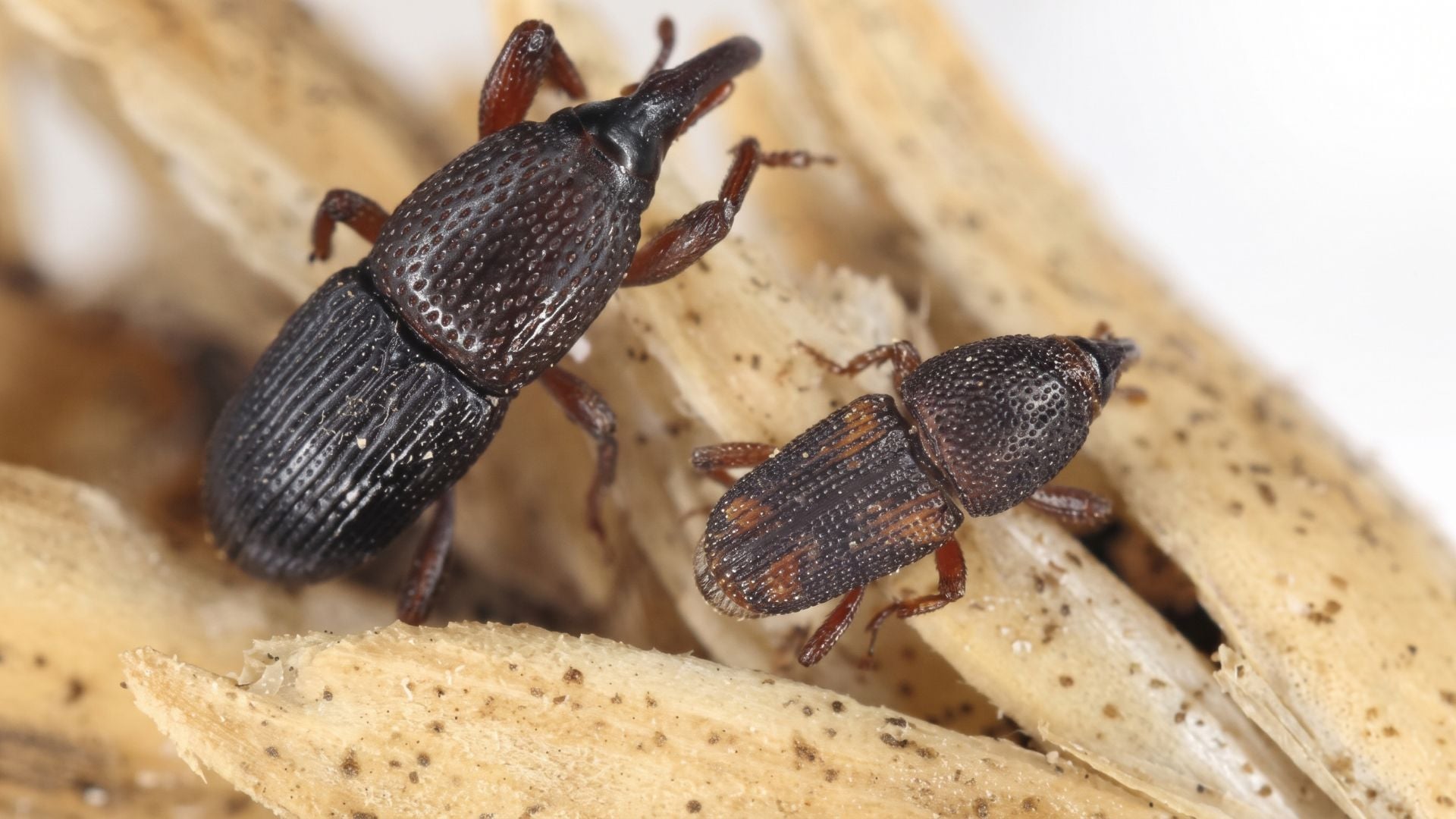
One of the simplest ways to differentiate between the two types of weevil is by looking at the insects’ backs. Rice weevils are typically marked with four pale red or yellowish spots on their wing covers. Grain Weevils, on the other hand, have no markings and typically appear more evenly brown or black.
Both have 6 legs, a narrow snout, and antennae that extend from the sides of the snout. Their mouthparts sit at the tip. They also have small pits on the area behind the head, although the shape of these pits differs between species.
Rice Weevils
- Scientific name: Sitophilus oryzae
- Size: Usually around 1/8 inch long, or approximately 3 to 4 mm.
- Body color: Dull reddish brown to dark brown.
- Snout: Long, narrow projection from the head, with the mouthparts at the end.
- Legs: Six legs, like other adult beetles.
- Rice weevil markings: Four faint reddish or yellowish spots on the wing covers, also called elytra.
- Flight ability: Adults have functional wings and both sexes can fly. They are also attracted to light.
- Rice weevil larvae: Creamy white, legless grubs with a darker head. They develop inside grain kernels.
- Lifespan: Adults can live for several months (about 4 to 5 months) and if the conditions (environment and food availability) are highly suitable, they could live for up to 6 months or more.
Grain Weevils
- Scientific name: Sitophilus granarius
- Size: Around 1/8 to 1/4 inch long, often slightly larger than rice weevils.
- Body color: Reddish brown to nearly black.
- Snout: Long and narrow, with chewing mouthparts at the tip.
- Legs: Six
- Grain weevil markings: No four pale spots on the wing covers. The thorax has elongated pits, though.
- Flight ability: Adults cannot fly and are not attracted to light either.
- Grain weevil larvae: White, legless grubs with a dark head. They develop inside grain.
- Lifespan: Unlike rice weevils, granary weevils survive for 7 to 8 months on average, and if conditions are in their favor, they can live up to 13 months.
Where Do Rice Weevils and Grain Weevils Come From?
Most pantry infestations start off with food that already contains eggs or developing insects. Weevils can enter grain during cultivation, processing, transport, or storage. You may bring them home inside a package that looks perfectly normal from the outside.
They feed on rice, wheat, barley, oats, corn, sorghum, buckwheat, and other stored grains. Some also attack beans, peas, nuts, birdseed, and dry pet food.
Warm conditions help these rice weevils develop and reproduce insanely faster. That is why you may notice more activity during summer months or if you have had your dry goods in a cupboard for a while.
How Do Rice Weevils Reproduce Inside Grain?
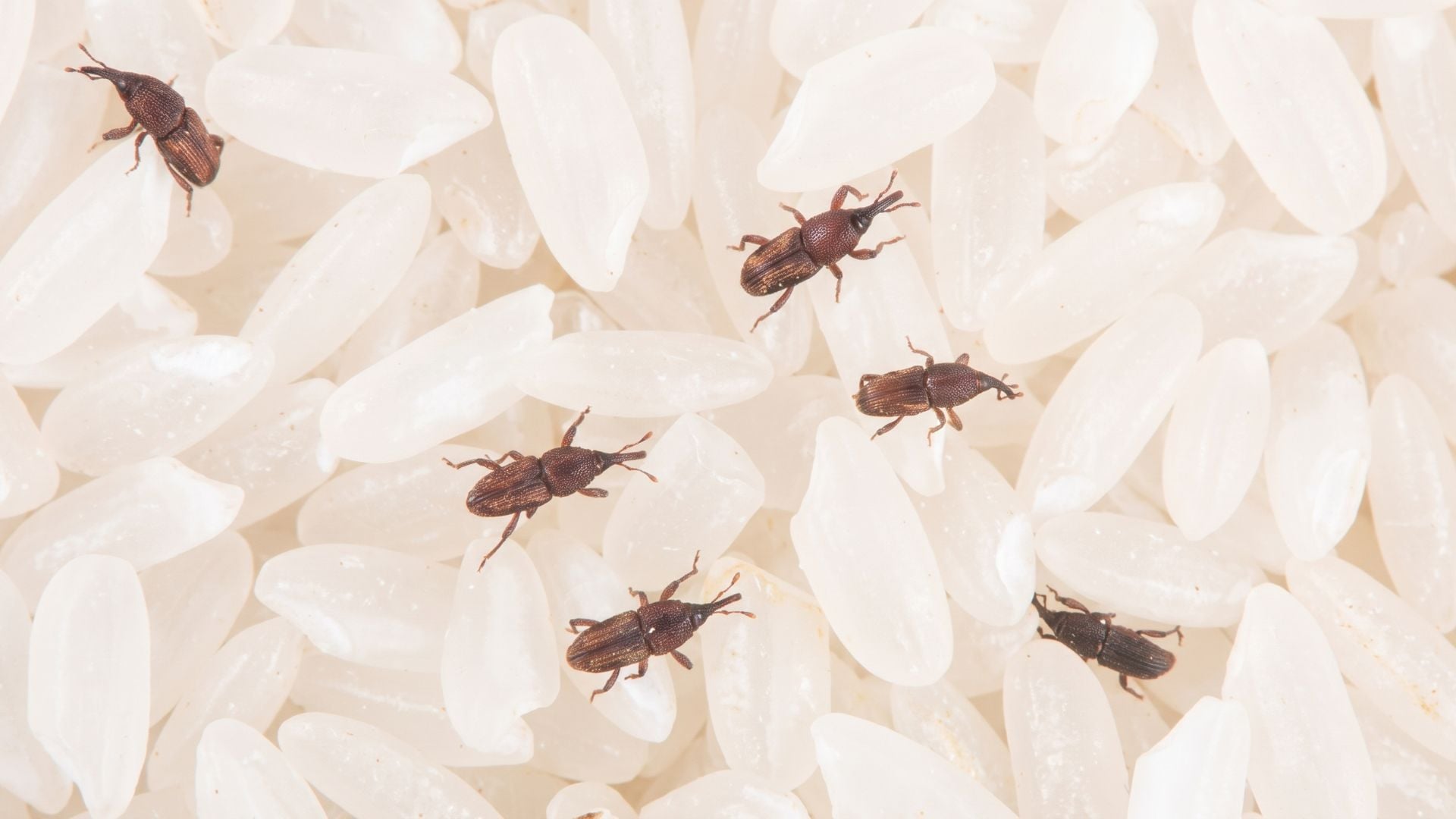
Rice and granary weevils have four main life stages: egg, larva, pupa, and adult. Their reproduction takes place mostly inside individual grain kernels.
The female uses her snout to chew a small opening into a kernel. She deposits an egg inside and seals the hole with a gelatinous secretion. A female rice weevil can lay 300 to 400 eggs during her lifetime, while a granary weevil may lay roughly 50 to 200.
After the egg hatches, the Weevil Larvae feed on the inside of the kernel. They develop into pupae before becoming adults. The new beetle then chews its way out, often leaving a small, round exit hole behind.
Under warm, favorable conditions, the complete development of a rice weevil can take about 26 to 32 days (3 days as an egg, 18 days as a larva feeding inside the grain, and 5 to 6 days as a pupa before emerging as an adult). Cooler temperatures slow the process considerably. Rice and granary weevils can therefore multiply quickly when stored food remains undisturbed in a warm cupboard.
Signs You Have Rice Weevils or Grain Weevils in Your Pantry
Spotting an infestation early saves you from tossing out your entire pantry. If you have a suspicion that there could be an issue with either Rice Weevils or Grain Weevils, look out for these signs;
- Tiny exit holes: Grain kernels will have small, round exit holes where adult weevils chewed their way out.
- Hollowed-out seeds: Lightweight, empty grain shells will float to the top when you rinse rice or oats in water.
- Live or dead bugs: Look for sluggish, dark beetles crawling along shelf corners and inside spice racks, or check windowsills near light sources for dead adults.
- Dust and frass: Insects inside the grain constantly eat and leave waste behind. This creates a fine, powdery residue at the bottom of packages.
How to Get Rid of Rice Weevils and Grain Weevils
Well, there is something you can do if you have been dealing with either a rice or grain weevil infestation. You indeed do need toxic sprays to get rid of rice weevils and their granary counterparts. Because these bugs do not nest inside walls or wooden cabinetry, eliminating their food source stops the problem at its root. Follow these four practical steps to wipe out rice and grain weevil infestations and protect your food storage setup.
1. Use Airtight Containers to Store Food
Check your dry goods and separate out any packets that look fine. Then put the appropriate foods into airtight containers with tight fitting lids. Glass jars, strong plastic containers and metal canisters are a good option.
Avoid using very thin plastic bags or cardboard boxes for storing food for long periods of time. The weevils can easily bite through these materials. Having tight fitting lids will also help keep adult beetles out if they are already present in the cupboard.
2. Throw Out Buggy Food
Inspect rice, wheat, oats, cornmeal, cereal, pasta, beans, and other dry products you have saved for the next couple of months. Check unopened packages too, since either rice or granary weevils may already be inside.
Discard products with visible beetles, larvae, damaged kernels, or signs of active infestation. Seal the food in a plastic bag before placing it in an outdoor trash bin. Do not leave an affected package open in the kitchen.
If you find Infested Rice, do not assume that picking out the adult beetles will solve the problem. Eggs and larvae may still be hidden inside the kernels.
3. Clean All Pantry Shelves
Empty every cabinet, shelf, and storage area where you have seen beetles. Check the corners, shelf joints, cracks, and gaps around cupboard fittings. Even a small amount of spilled grain can provide food to weevils that remains after you discard the affected package.
Vacuum the shelves and corners thoroughly. Take the vacuum contents outside and dispose of them promptly. Then wash the shelves with warm, soapy water and let them dry before you put food back.
4. Freeze Grains for 4 Days
You can freeze uninfested or slightly infested kitchen-sized packages of grain at 0°F (-18°C) for 4 days (or up to 7 days for large bulk bags) to kill all life stages of pantry pests like weevils. Afterward, let the grain come to room temperature and dry completely before sealing it in an airtight container to prevent condensation and mold.
Alternatively, spread the grain in a thin layer on a shallow pan and bake it in an oven at 140°F (60°C) for 15 to 30 minutes. Either way, you will need to pick out the dead insects or rinse the grains thoroughly (skimming off anything that floats) before cooking.
Frequently Asked Questions (FAQs)
Can rice and granary weevils fly?
Adult rice weevils have fully developed wings tucked beneath their spotted shells and can fly short distances, especially toward bright windows or kitchen lights. Granary weevils, by contrast, lack functional wings and must crawl everywhere they go.
Are rice weevils harmful?
Rice weevils do not bite or sting people, and they are not known to transmit human diseases. They can, however, damage stored food and contaminate it with insect remains and waste.
How long does it take to get rid of grain weevils?
It depends on how quickly you find every affected package. If you toss out the contaminated packages and scrub your shelves thoroughly, you can clear an infestation in a single afternoon. You might spot a few stragglers over the next week, so keep your dry goods sealed tight until every last beetle disappears.
Can I eat rice with rice weevils?
Accidentally eating a cooked weevil will not make you sick, since the bugs carry no toxins or pathogens. Still, heavy infestations leave behind waste and ruin the texture of the food. Turns out, tossing heavily infested bags is usually the best call.
Are grain weevils hard to get rid of?
They can be frustrating because their eggs and larvae develop inside grain kernels, though. They are actually quite easy to eliminate if we compare them with cockroaches or ants. They rely entirely on whole seeds to reproduce and therefore if you clear out their food supply it’ll eventually starve them out without any need for insecticides.
Wrapping Up…
Rice and granary weevils look alike, but their wing markings and ability to fly help you tell them apart. Rice weevils have four faint spots and can fly, while granary weevils have no pale spots and cannot fly.
Once you identify the type of weevil you have an infestation of, inspect your dry goods and take out any affected packages. Clean the shelves thoroughly, freeze suitable food when needed, and keep the remaining supplies in sealed containers. These steps will help you get rid of both the rice weevils and grain weevils and also reduce the chance of another infestation.