
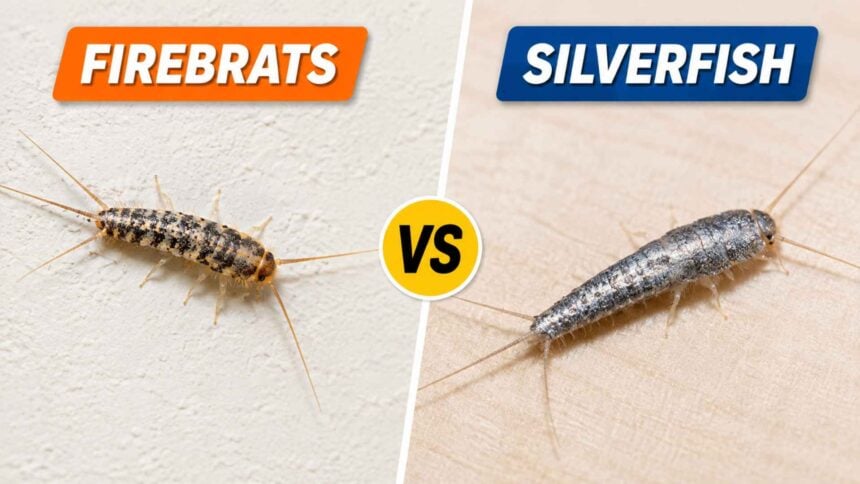
Silverfish and firebrats are easy to mistake for one another, especially when one suddenly darts across the floor and disappears before you get a good look. Both are small, wingless insects with flattened bodies, long antennae, and three thin filaments extending from the rear. They are also closely related and share many of the same feeding habits. It makes identification even more confusing.
The biggest clue is usually where you find them. Silverfish tend to favor cooler, damp areas such as bathrooms, basements, and storage spaces, while firebrats are drawn to warmer, humid locations around furnaces, ovens, fireplaces, and heating pipes.
We’ll break down firebrats vs silverfish in detail, so you can identify the pest correctly, understand its life cycle and behavior, find out what attracts it, and choose the right approach to boot it out of your home.
Table of Contents
Firebrats vs Silverfish at a Glance
| Feature | Firebrats | Silverfish |
|---|---|---|
| Scientific name | Thermobia domestica | Lepisma saccharina |
| Typical color | Gray, brown, mottled | Silvery or pearl gray |
| Body shape | Stockier | More slender |
| Preferred temperature | Very warm | Cooler |
| Humidity | High | High |
| Common areas | Furnaces, ovens, hot pipes, attics | Basements, bathrooms, closets, sinks |
| Activity | Mostly nighttime | Mostly nighttime |
| Wings | None | None |
| Tail filaments | Three | Three |
| Main concern | Nuisance and material damage | Nuisance and material damage |
What Are Firebrats?
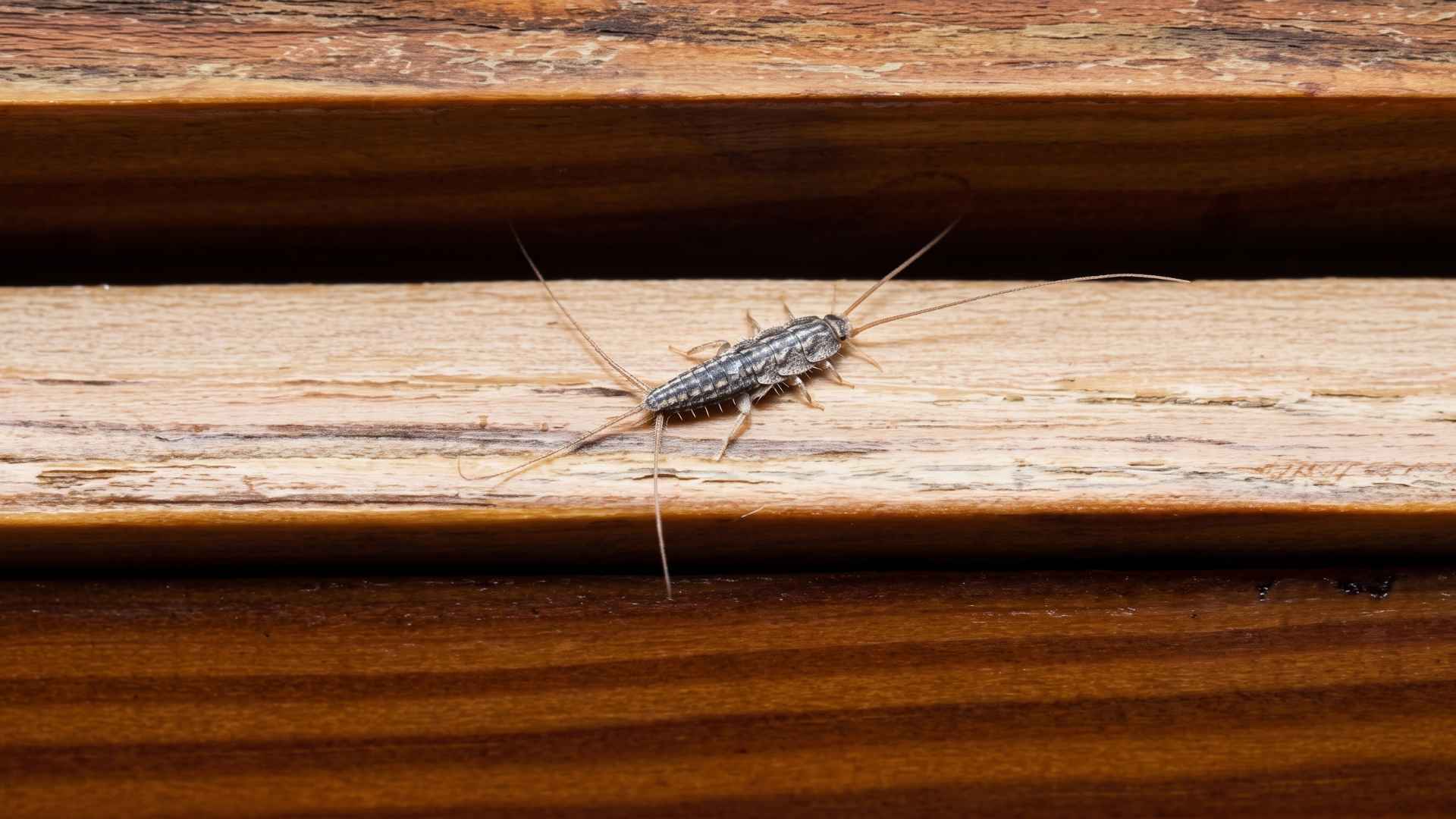
Firebrats are the heat loving relatives of silverfish, and their name gives away one of their biggest traits. These insects do well in very warm conditions, especially when temperatures climb above 90 degrees Fahrenheit.
That is why you are unlikely to find them wandering around an ordinary cool room. They usually settle close to reliable heat sources, such as boiler rooms, bakeries, warm attics, furnaces, and hot water heaters. In these places, the temperature gives firebrats the conditions they need to survive and reproduce.
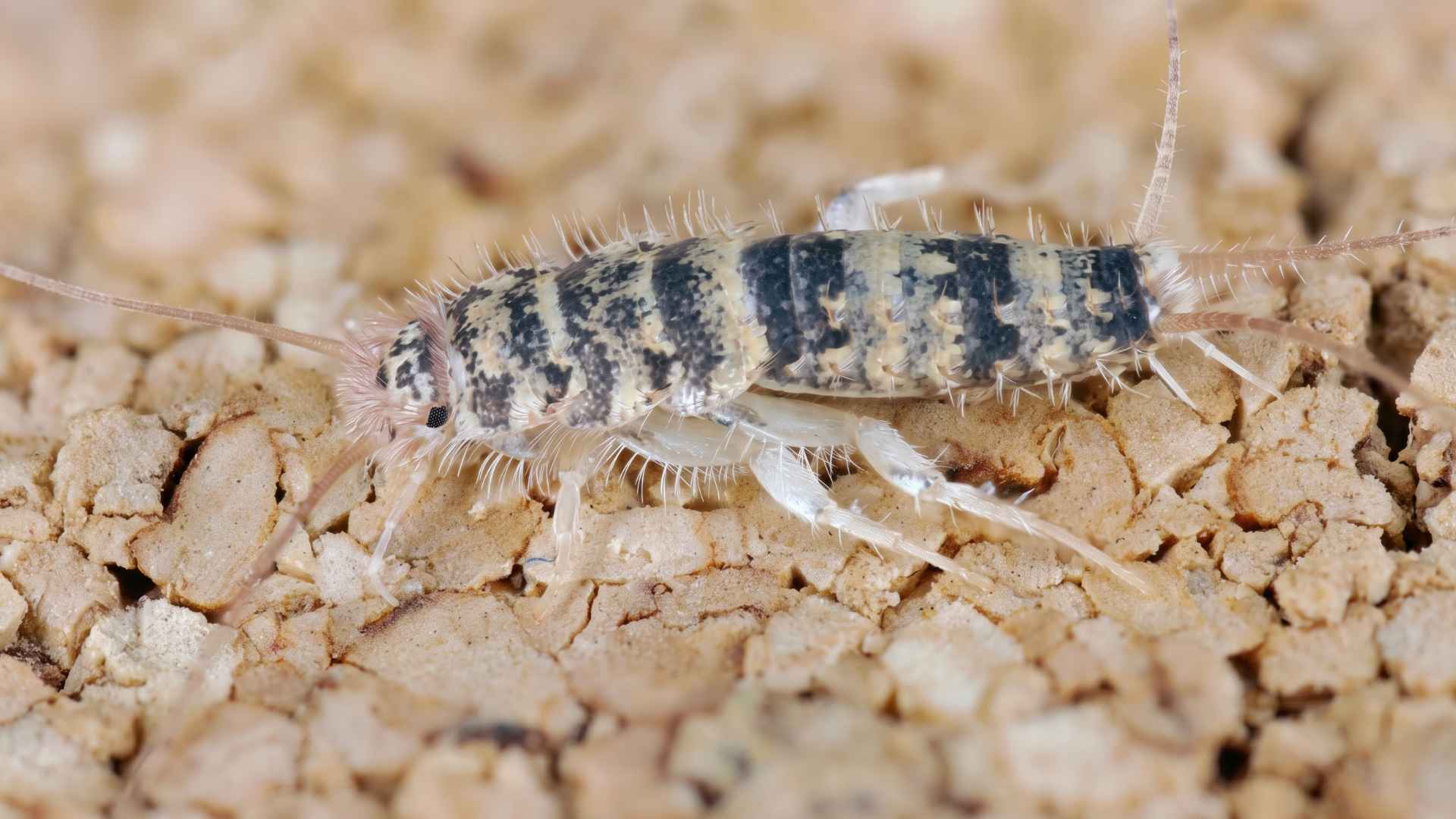
The common firebrat, Thermobia domestica, typically reaches about 1/2 inch in length. Its body has a shiny gray or brown color with a mottled pattern that can give it a distinctive salt and pepper appearance.
Firebrat Identification
If you spot a small, carrot shaped insect near a furnace, hot water heater, or oven, there is a good chance you are dealing with a firebrat. The insect has no wings and a soft body that tapers toward both ends. Its surface is covered with fine scales that give it the same slightly dusty appearance you see on silverfish.
Two long, narrow antennae extend from its head, while three thin, tail like appendages stretch out from the back of the abdomen. Young nymphs that are less than 1/8 inch long do not have the scales yet, so they can look somewhat different from adults.
As they mature, those scales develop and become much easier to notice. If you find loose scales around damaged paper, cardboard, or fabric in a warm area, that can be a useful clue that firebrats are responsible.
What Are Silverfish?
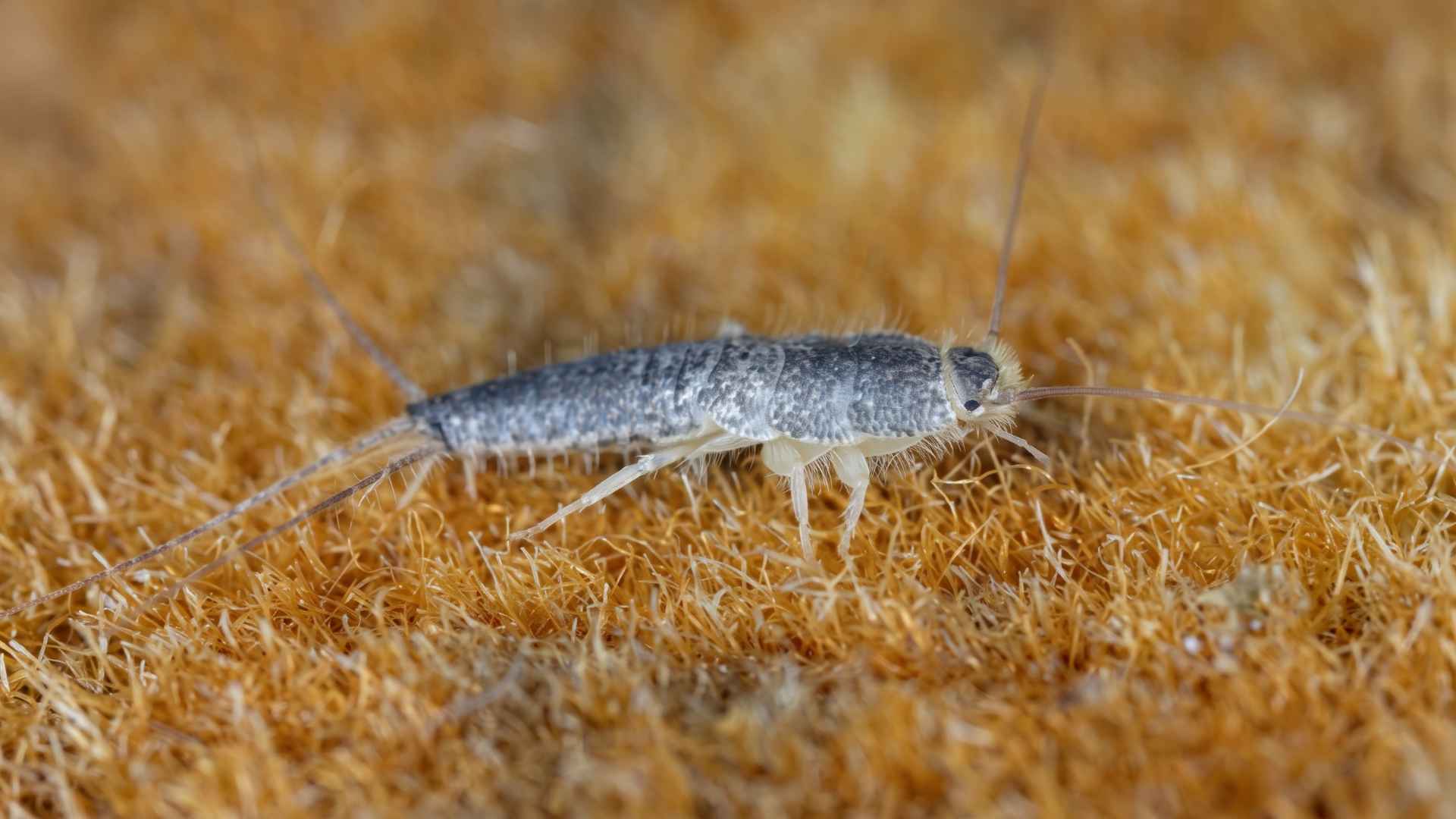
Silverfish are probably the more familiar of the two pests, mostly because they tend to turn up in parts of the home where people spend plenty of time. Bathrooms, basements, laundry rooms, and the space beneath sink cabinets can all provide the cool, humid conditions these insects prefer.
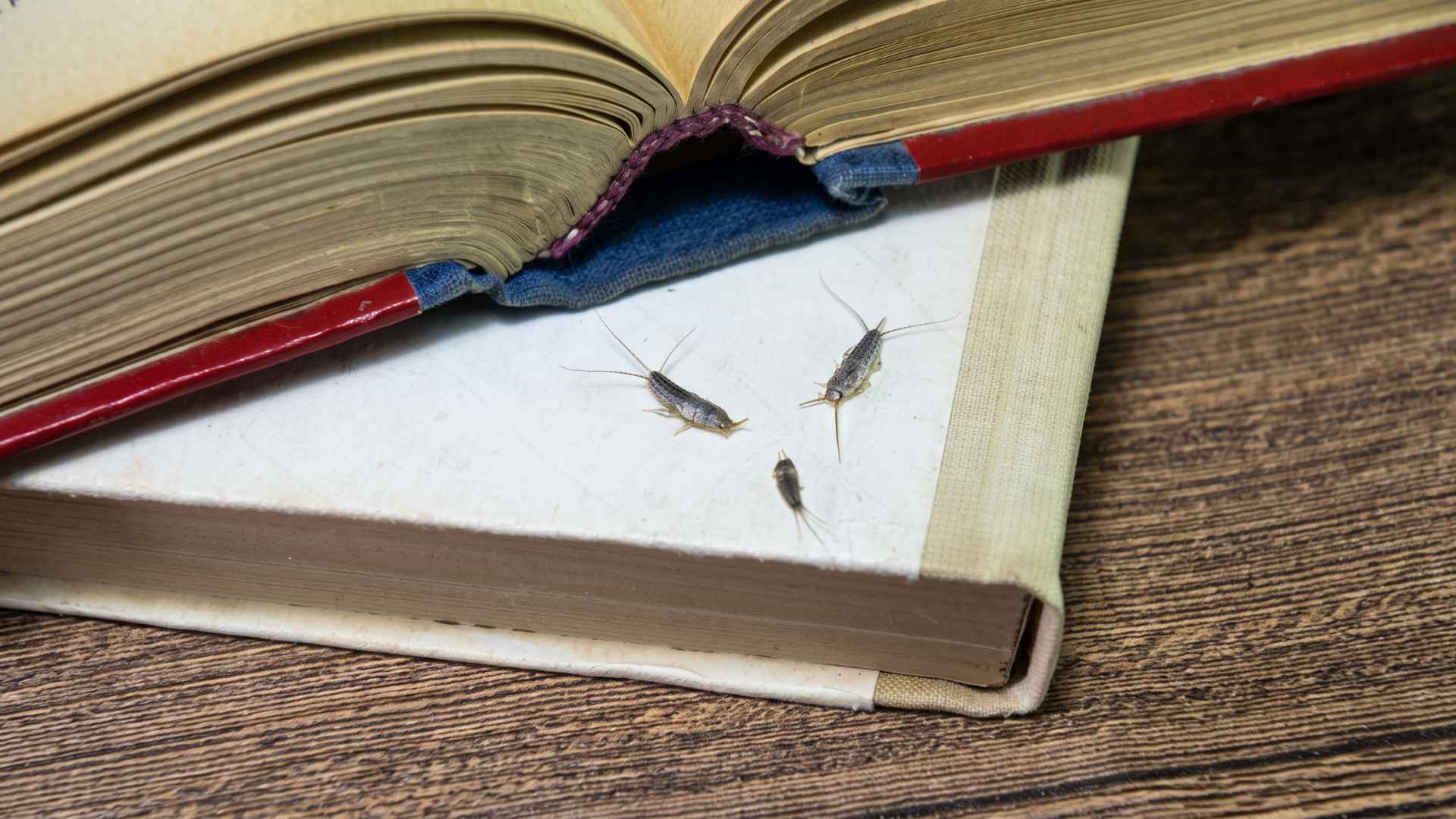
The common silverfish, Lepisma saccharina, gets its name from the silvery or pearl gray color of its body. Under favorable conditions, it can grow to around 3/4 inch long. Heat is one thing silverfish generally avoid. They are much more comfortable in cool, damp areas where moisture is readily available.
Silverfish Identification
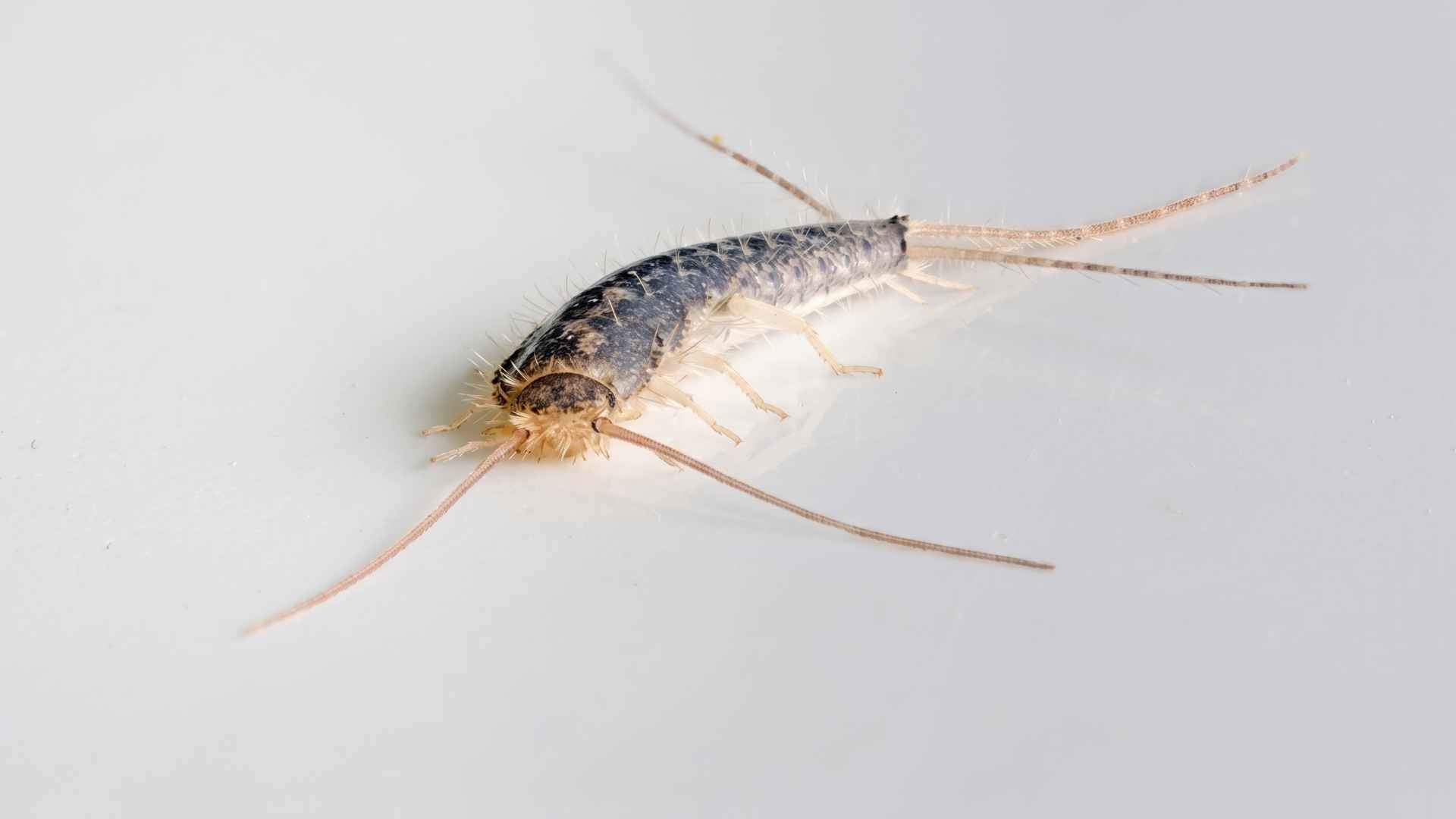
The body shape mirrors a firebrat closely, flat, tapered at both ends, and covered in overlapping scales that catch light with a faint metallic shimmer. Silverfish are wingless, with small heads and threadlike antennae that run notably long relative to the body.
Like firebrats, they carry three long, thin, tail like appendages at the rear of the abdomen, and this is exactly why the two insects get mistaken for each other so often at first glance.
Firebrats vs Silverfish: How Their Appearance Compares
Color and Body Pattern
The color of the body can give you one of the quickest visual clues. Silverfish typically have a smooth silver or pearl gray appearance with no obvious markings across the back. Firebrats tend to look less uniform.
Their bodies have a mottled gray or brown pattern that creates the familiar salt and pepper appearance associated with this pest.
When you get a chance to look closely, pay attention to whether the back has visible patches and uneven markings. A consistent metallic gray points more toward a silverfish, while a noticeably mottled pattern is a strong sign that you are dealing with a firebrat.
Body Shape
Firebrats run slightly stockier and less tapered toward the abdomen tip compared to silverfish, which have a more slender, streamlined profile. It’s a subtle difference, and honestly hard to judge with certainty unless you have both insects side by side, but combined with color, it adds another data point toward correct identification.
Antennae and Tail Filaments
Both firebrats and silverfish share the same basic structure here, long threadlike antennae up front and three tail filaments at the rear.
There’s no meaningful difference between firebrats and silverfish on this particular trait, which is part of why appearance alone often isn’t enough to confirm which pest you’re dealing with.
Where Do Firebrats Live?

Get practical help identifying pests, preventing infestations, and protecting your home throughout the year.
View the Pest Control eBookFirebrats stick close to heat, full stop. Indoors, that means boiler rooms, the area directly around furnaces, ovens, fireplaces, and hot water pipes. Bakeries deal with heavy firebrat activity for the same reason.
In a typical home, you’re most likely to spot them in an attic during summer months when heat builds up under the roof, then near the furnace once winter sets in and that becomes the warmest, most humid spot in the house.
Where Do Silverfish Live?
Silverfish gravitate toward the opposite conditions, cool and consistently damp. Basements top the list, along with laundry rooms, bathrooms, and the cabinet space under sinks where moisture tends to linger.
Closets and bookcases also attract silverfish, particularly ones tucked against exterior walls where temperature and humidity stay more stable than in actively used rooms. Anywhere paper, glue, or starchy material sits undisturbed for long stretches becomes a likely silverfish hideout.
Firebrat vs Silverfish Life Cycle
Stage 1: Eggs
Females of both species lay eggs in crevices, on cloth, or buried in food or dust, wherever conditions stay hidden and reasonably humid.
An average clutch contains around 50 eggs, though this can vary anywhere from 1 to 200 depending on the individual female and surrounding conditions.
Timing differs meaningfully between the two species. Firebrat eggs hatch in about 14 days under warm conditions, while silverfish eggs typically take 19 to 32 days.
In colder environments, eggs can remain dormant for up to 6 weeks, and males often lay a sperm capsule on a moist surface to keep it from drying out before females can access it.
Stage 2: Nymphs
Once the eggs hatch, the young insect looks surprisingly similar to the adult it will eventually become. This type of development is called ametaboly, and it means firebrats and silverfish skip the dramatic transformation seen in many other insects.
There is no separate larval stage and no pupal stage waiting somewhere in between. A newly hatched firebrat or silverfish is essentially a much smaller and paler version of the adult.
From there, it grows gradually and develops the features you would expect to see on a mature insect. That makes firebrats vs silverfish early life cycle fairly easy to follow compared with insects such as beetles and moths, which can look completely different during their immature stages.
Stage 3: Molting and Growth
Both species molt repeatedly as they grow, continuing to shed their exoskeleton even after reaching sexual maturity. That is unusual among insects and part of what makes this group so evolutionarily distinct.
Shed skins left behind near damaged items are actually one of the more reliable signs of an active infestation, since they’re delicate, dustlike, and slightly reflective in the light, and tend to stick to nearby surfaces.
Stage 4: Adults
Once they reach adulthood, silverfish and firebrats are far from the end of their life cycle. Silverfish can live for two to three years under favorable conditions, and some may survive even longer.
Firebrats can follow a similar timeline when they have steady access to warmth, food, and suitable shelter. Both insects continue to feed and molt after reaching adulthood, which is one reason an infestation can stick around for so long.
A population that goes unnoticed for a year or two may not consist of insects from just one generation. You could have several generations living in the same walls, closets, storage areas, or other hidden spaces at the same time.
What Do Firebrats and Silverfish Eat?
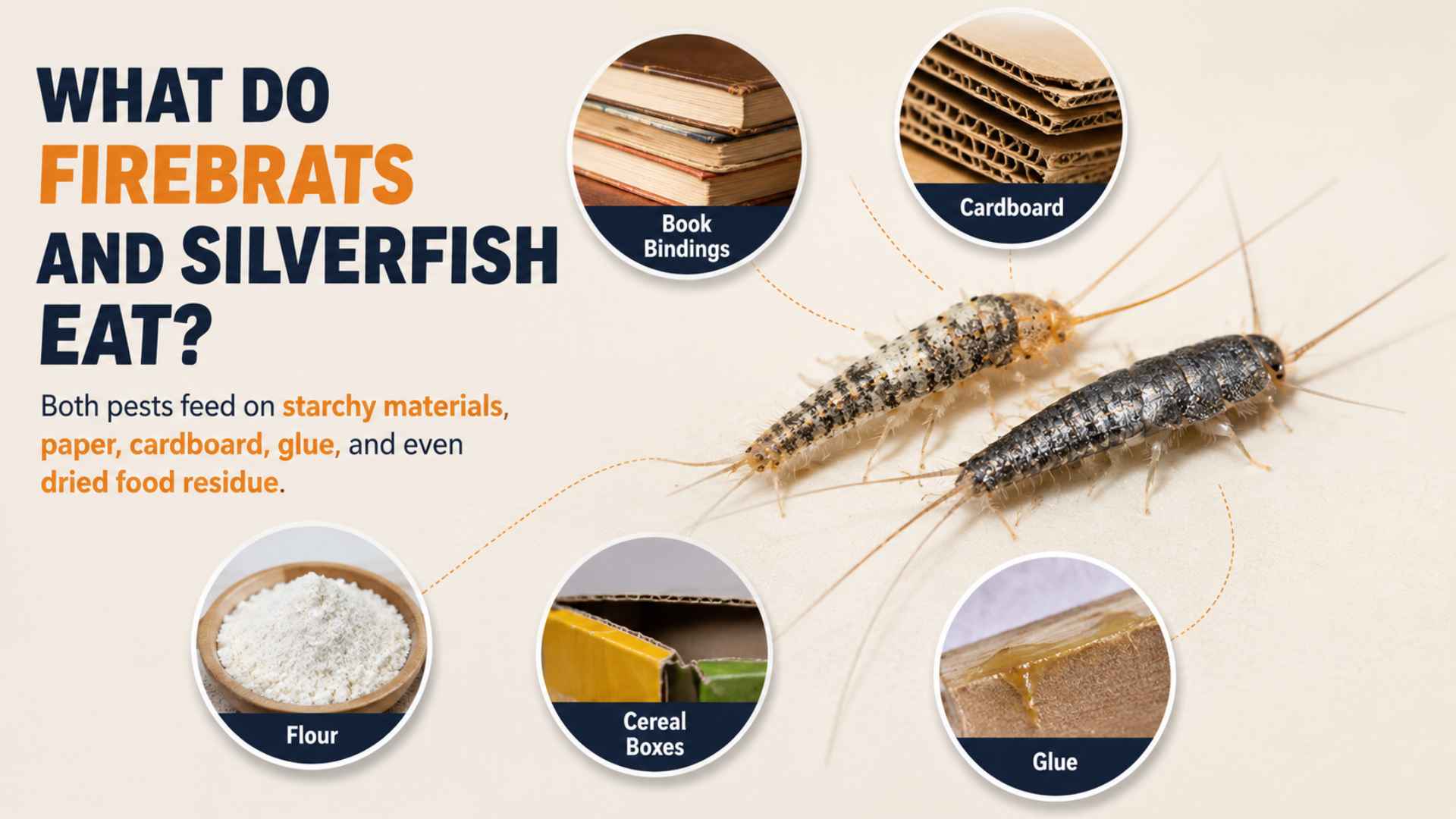
When it comes to food, firebrats and silverfish are remarkably similar. Both are drawn to starchy materials, paper, cardboard, and glue, all of which can be surprisingly easy for them to find inside a home.
Their digestive systems contain enzymes that help break down cellulose, the structural material found in paper, cardboard, and some types of fabric. That puts plenty of ordinary household items on the menu.
Book bindings, wallpaper paste, cereal boxes, and the adhesive used in cardboard packaging can all become food sources. They are also not limited to household materials. Dried food residue, flour, pet food, and other starchy products can attract them too, especially when those foods are left exposed in a pantry, cabinet, or storage box for a long time.
Firebrats vs Silverfish: Behavior and Activity
Firebrats and silverfish have one major habit in common: they prefer to come out at night. During the day, they stay hidden in cracks, behind baseboards, beneath stored items, and in other quiet areas where they are unlikely to be disturbed. Once the house settles down, they become much more active.
That nighttime schedule is a big reason people can have an infestation for months without realizing how many insects are actually around. You simply are not seeing them during their busiest hours. Both firebrats and silverfish are also remarkably quick when startled.
They tend to dart away in sudden, unpredictable movements, which is part of the reason silverfish got their name. The way they move can look a little like a fish cutting quickly through water. Neither firebrats nor silverfish bite people or are known for spreading disease, but that does not mean they should be ignored. Over time, they can damage books, paper, cardboard, wallpaper, and other starchy materials.
How Do Firebrats and Silverfish Get Into a House?
Firebrats and silverfish can get carried indoors on cardboard boxes, secondhand books, paper goods, and bulk packaging that comes from a garage, storage unit, grocery store, or another building. Once they make it inside, they start looking for a place that gives them the conditions they need to survive.
Firebrats usually move toward warm areas, especially spots close to furnaces, boilers, and hot water heaters. Silverfish tend to take the opposite approach and seek out cool, damp, quiet spaces.
Their small size also makes it easy for them to slip through openings that most homeowners would never consider an entry point. Cracks around pipes, gaps in foundation walls, spaces around windows, and other small openings can all give these insects a way into the house.
Firebrat vs Silverfish: Signs of an Infestation
Signs of Firebrats Infestation
- Repeated sightings around heat sources
- Insects around furnaces or hot pipes
- Damage to stored paper or food
- Shed skins
- Droppings or staining
- Multiple sightings at night
Signs of Silverfish Infestation
- Repeated sightings in bathrooms
- Activity around sinks
- Silverfish trapped in tubs
- Damage to books or paper
- Shed skins
- Droppings or staining
How to Get Rid of Firebrats and Silverfish
Firebrats

- Use Sticky Traps: Place sticky traps along walls, in corners, and near areas where firebrats have been spotted. They can help confirm activity and show whether the population is declining after treatment.
- Reduce Heat: Since firebrats depend on temperatures above 90 degrees to thrive, lowering the ambient temperature in an affected room, where practical, disrupts their ability to reproduce and survive long term.
- Seal Pipes: Use caulk or foam to seal gaps around hot water pipes and furnace ductwork, cutting off both entry points and the humid microclimates firebrats rely on around these fixtures.
- Clean Up: Vacuum regularly around furnaces, attics, and any storage boxes sitting near heat sources, removing eggs, shed skins, and food debris that sustain an active population.
- Remove Food: Store flour, cereal, and pet food in airtight plastic containers rather than paper or cardboard packaging, since starchy material left exposed is exactly what keeps firebrats coming back to the same spot.
Silverfish

- Reduce Humidity: Run a dehumidifier in basements and bathrooms to bring moisture levels down below the range silverfish need to survive and reproduce.
- Seal Crack: Caulk gaps around baseboards, pipes, and window frames throughout damp areas of the home, cutting off both hiding spots and entry points.
- Store Items Properly: Keep books, papers, and starchy pantry items in sealed containers rather than open shelving, since exposed paper and cardboard are exactly what draws silverfish in.
- Clean Regularly: Vacuum along baseboards and under sinks where shed skins and droppings tend to accumulate unnoticed, removing eggs and food debris before a population can build.
- Set Sticky Traps: Place traps in bathrooms and closets to monitor activity and confirm whether treatment is actually reducing the population over time.

What Are The Similarities Between Firebrats and Silverfish
If you ignore how they look, firebrats and silverfish share an evolutionary background that is honestly mind-blowing. These pests belong to one of the absolute oldest insect groups left on the planet. Scientists tracked their fossils back over 400 million years, so they outdate the earliest dinosaurs by double.
Neither species has wings, and they both still have the same three tail hairs, flat bodies, and scaly armor that their ancient relatives had. They share a diet, love the night shift, and keep molting even after they grow up.
Their reproductive cycle is a match too, complete with hidden eggs and slow growing nymphs. The only real split between them comes down to room temperature, and that single detail determines exactly where they set up camp inside your house.
Firebrats vs Silverfish: Which One Is Worse?
Neither insect poses a health risk, and neither bites or stings, so worse really comes down to which pest is harder to eliminate given your home’s layout. Firebrats can actually be trickier in one specific way.
Standard silverfish treatments often fail against firebrats because the underlying problem isn’t humidity alone, it’s heat, and lowering the temperature in that room is often the most effective first step, one that’s easy to overlook if you’re following generic pest control advice built around silverfish instead.
Silverfish, on the other hand, tend to spread across a wider range of rooms simply because cool, damp conditions are more common throughout an average house than concentrated heat sources are.
Firebrat or Silverfish? Use This Quick Identification Test
- Is it shiny silver and found somewhere cool and damp? Silverfish is more likely.
- Is it brown or gray with mottled markings and found near intense heat? Firebrat is more likely.
- Are you seeing them in a warm, humid area, like near an oven or hot water heater? Firebrat becomes more likely.
- Are they appearing around bathrooms, basements, sinks, or damp storage? Silverfish becomes more likely.
- Still unsure? A clear close up photo plus the location where you found it can make identification much easier, especially since the two insects genuinely do look alike enough to confuse most people on sight alone.
When to Call a Professional Pest Control Service
Seeing a firebrat or silverfish once in a while does not necessarily mean you need professional help. You can deal the situation mostly by using the repellents we’ve listed above though. The situation changes when you start finding them in several rooms or they keep coming back even after you clean thoroughly and seal the obvious gaps.
At that point, there may be a larger population hiding somewhere you cannot easily reach. Firebrats can be especially difficult to track because the heat source attracting them may be tucked away behind a wall or inside part of the building.
Silverfish can hide just as well in damp, undisturbed spaces. Hidden activity behind walls, inside insulation, or deep within stored belongings is easy to overlook without the right experience. A professional service such as Orkin can identify which pest you are dealing with, locate the areas where they are active, and apply treatment based on what is actually causing the problem.
Frequently Asked Questions (FAQs)
Are firebrats the same as silverfish?
They come from the same broader insect group and look almost identical at first glance. Even so, firebrats and silverfish are completely unique species with their own color patterns and temperature needs.
Can firebrats turn into silverfish?
These pests are born as separate species, and neither one ever switches over to the other during its life. A young firebrat grows up to be an adult firebrat, and a silverfish follows that exact same rule.
Why am I suddenly seeing firebrats?
A sudden appearance usually points toward a new heat source nearby. A furnace running more often as the weather cools, or a recently disturbed area near pipes or an attic where an existing population has been building for a while unnoticed.
Why am I suddenly seeing silverfish?
This often follows a spike in humidity, a leaky pipe, seasonal dampness, or new clutter in a basement or closet that gives silverfish more places to hide and breed undisturbed.
Can firebrats and silverfish live in the same house?
Yes, and you see it happen all the time. A single property can hold firebrats right next to the furnace while silverfish take over the damp basement or bathroom floors. Each pest group simply settles down in the exact spot that gives them the climate they want.
Which lives longer, firebrats or silverfish?
Silverfish are documented living two to three years under favorable conditions, sometimes longer. Firebrat lifespans track a broadly similar range, though their survival depends more heavily on consistent access to high heat.
Are firebrats harder to get rid of than silverfish?
In one specific way, yes. If you’re seeing insects near an oven, furnace, or hot water heater, it is almost certainly firebrats, and standard silverfish treatments might fail because they don’t address the underlying heat source driving the infestation.
Wrapping Up…
Telling firebrats vs silverfish apart comes down to two things above everything else, coloring and location. A mottled gray or brown insect camped out near your furnace is a firebrat. A smoother, silvery insect turning up in your bathroom or basement is a silverfish. Both share the same ancient lineage, the same diet, and the same nighttime habits, which is exactly why appearance alone rarely settles the question. Once you’ve correctly identified which one you’re dealing with, the fix follows naturally, adjust humidity for silverfish, adjust heat for firebrats, and seal up the gaps both species rely on to move freely through your home.