
By late October, stink bugs can seem to be everywhere. They land on window screens, crawl across porches, and gather on the warm exterior walls of houses. Then the first real freeze arrives, and suddenly they are gone.
That can leave you wondering where they went and whether the cold finally killed them off. So, do stink bugs survive the winter? Yes, and just like mosquitoes and flies, they do so by finding sheltered areas to enter a hibernation-like state, something called “diapause” until temperatures rise.
Table of Contents
What Do Stink Bugs Look Like?
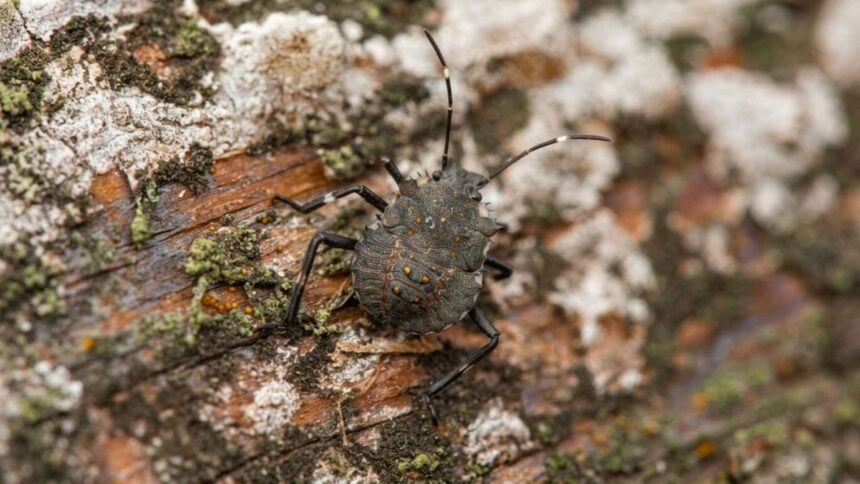
The stink bug you see on a window in September does not look much like the tiny nymph it started out as. Young nymphs are small and can have yellow and red bodies with bright red eyes, so they can actually be pretty noticeable when they are sitting on a leaf. They go through five molts as they grow, and their appearance changes each time they shed the old exoskeleton.
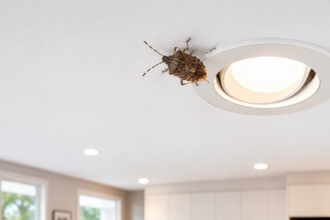
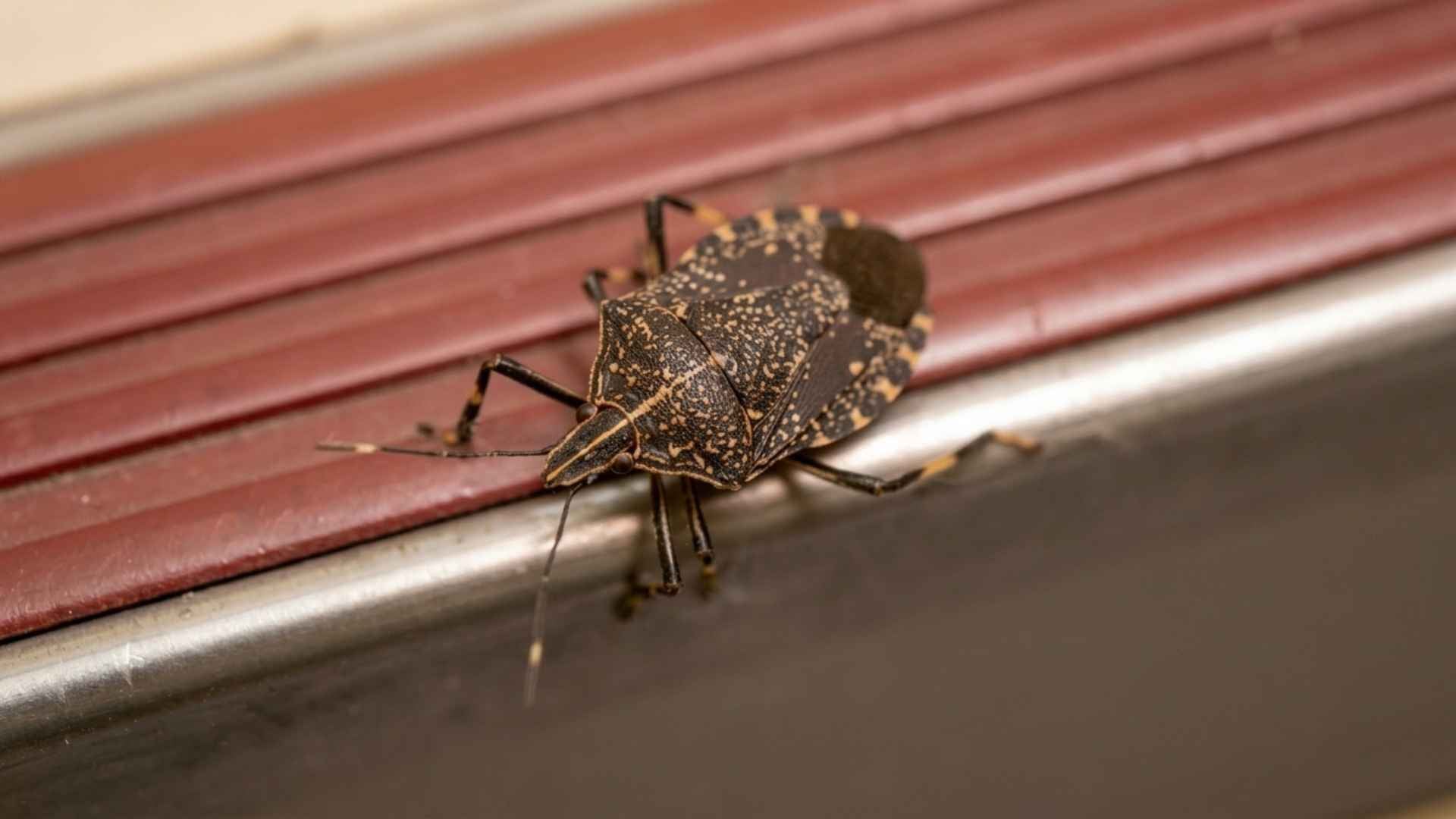
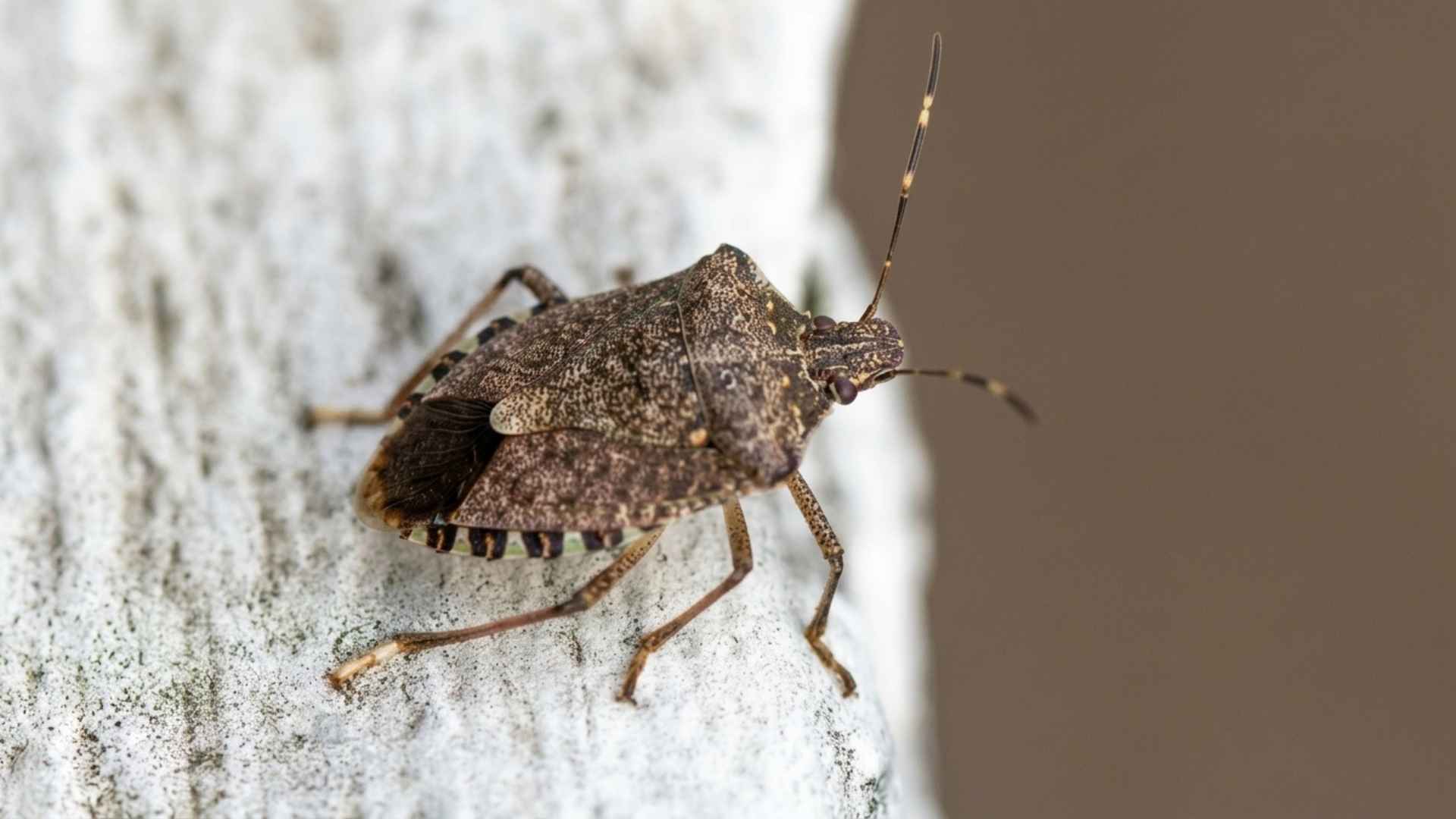
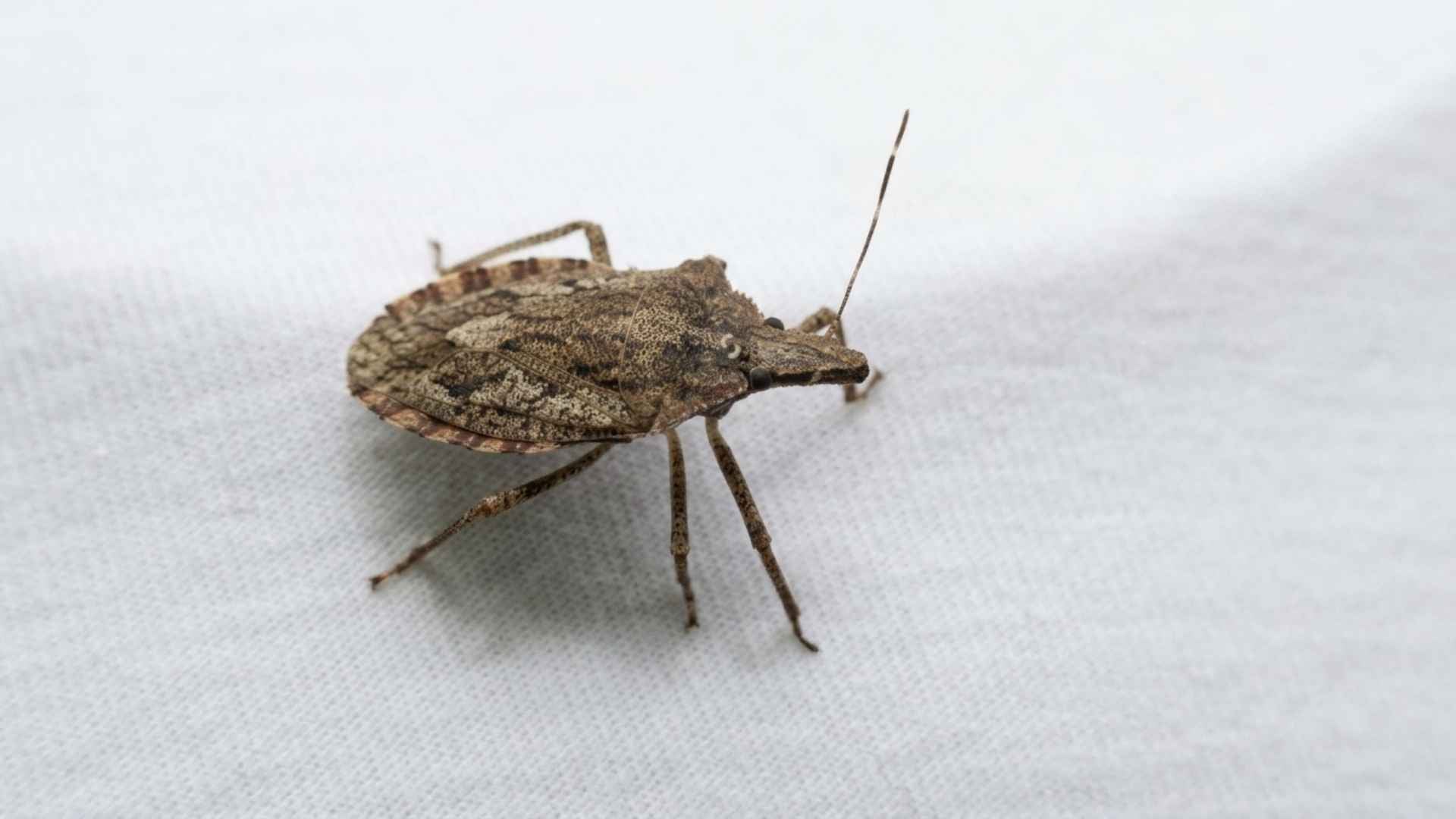
Eventually, they develop into the larger adults most people recognize around the house. The adults are usually grayish brown, although some have red or dark green coloring along the edges. Their body shape is another easy clue. It is broad and triangular, with the familiar shield shape associated with stink bugs.
The species responsible for many of those fall appearances, particularly in the eastern half of the United States, is the brown marmorated stink bug, commonly called BMSB. These are the stink bugs that often turn up on curtains, windows, screens, and other warm surfaces as summer gives way to fall.
Do Stink Bugs Die in the Winter?
Cold snaps alone don’t wipe out stink bugs in winter populations, since diapause protects the ones that made it indoors or under bark before the first hard freeze.
Diapause is a hibernation like state, and it’s the whole reason adult stink bugs outlast their own offspring. Eggs and nymphs caught outside when temperatures drop don’t have that option and die off fairly quickly.
Adults do, and once they enter diapause, their metabolism drops so low they can go months without eating. Stink bug winter survival depends almost entirely on finding the right hiding spot before the cold sets in.
Where Do Stink Bugs Go in Winter?
When winter arrives, stink bugs head for shelter instead of simply dying off. Outdoors, they can spend the cold months beneath layers of leaves and mulch, inside hollow logs, beneath ground level debris, or within firewood piles and dead trees. Inside a home, they have even more options.
Stink bugs can tuck themselves behind siding, settle into attic insulation, or slip deep into wall voids where temperatures remain more stable than they do outside. That is why finding a few stink bugs in the house during fall does not tell you much about the size of the population.
There may be many more hidden in places you cannot see. As nighttime temperatures drop, homes become especially appealing because walls and attics can hold onto warmth long after the outdoor temperature has fallen.
Why Are Stink Bugs Coming Into My House in the Fall?
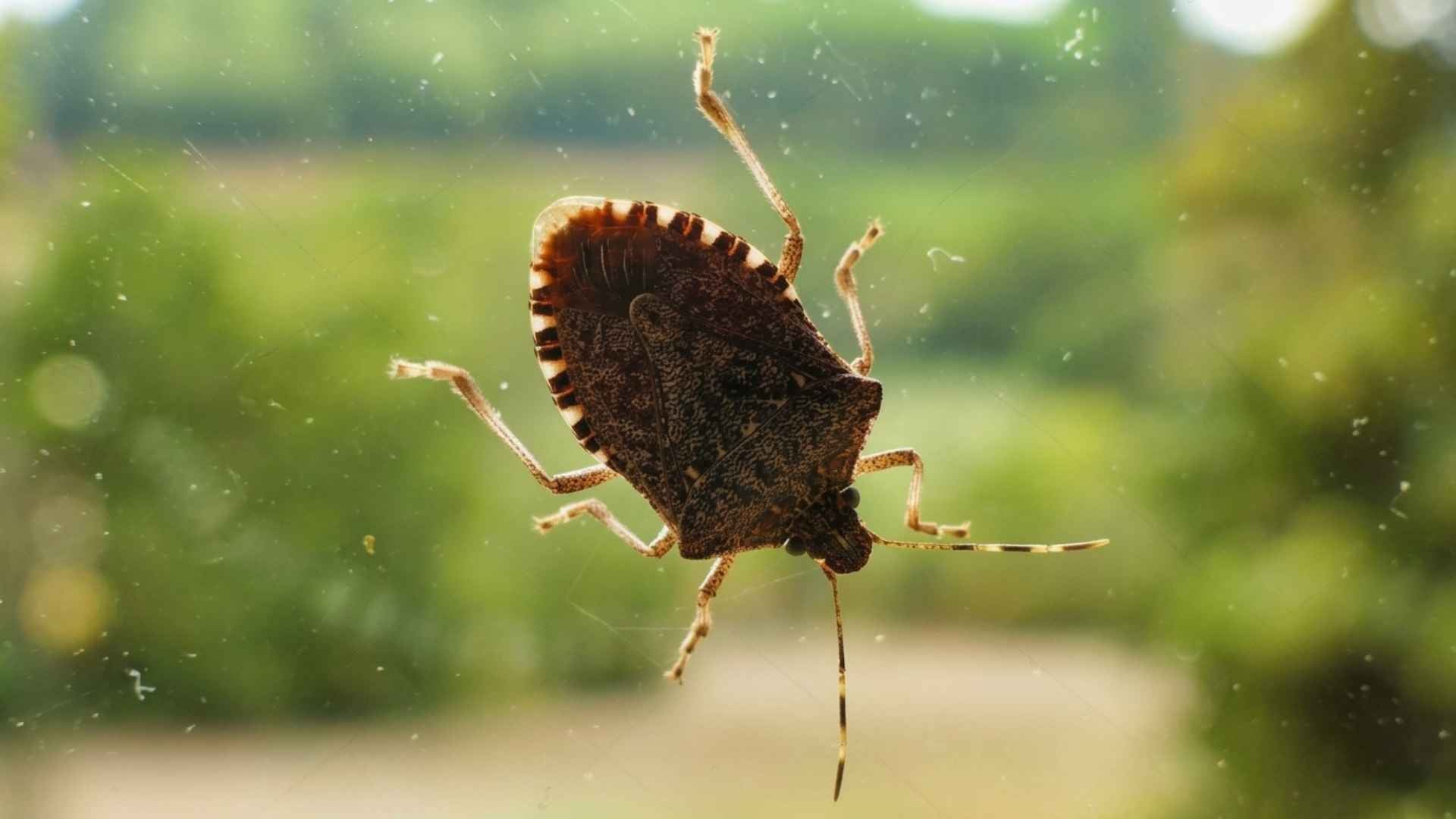
Brown marmorated stink bugs respond to changes in temperature well before the first frost actually arrives, and that response kicks off the search for winter shelter. They squeeze through cracks, windows, doors, and vents, often in the same spots year after year, on chimneys, along vents, and around utility pipes especially.
Once one finds a good home entry point, it releases pheromones that attract other stink bugs to the site, which is why one bug on a Tuesday can turn into a dozen by the weekend. If you see them out and about on a mild fall afternoon, they’re usually looking for a sunny spot to soak in some warmth before settling in for good.
How to Get Rid of Stink Bugs in Winter
Repair Pest Entry Points
Every gap around a window frame or utility line counts as a possible entry point, and stink bugs test dozens of them before settling on one. Caulk around window and door frames, replace worn weatherstripping, and check screens for tears you can barely see.
Utility pipes and vents need attention too, since a gap the width of a pencil is plenty of room for a bug looking for stink bugs in walls to call home.
Once they’re behind the siding or inside a wall void, no spray reaches them, which is exactly why sealing gaps has much more importance than treating what’s already visible on the glass.
Adjust Your Home’s Lighting
The lights around your house can quietly work against you during stink bug season. At night, bright white outdoor bulbs can attract stink bugs toward the building. This makes porch lights, entry fixtures, and other illuminated areas worth looking at first.
Switching those bulbs to a warmer yellow tone can reduce the attraction without leaving your home in the dark. Your windows deserve some attention too. A brightly lit room behind an uncovered window can stand out just as much to an insect outside, especially after sunset. Closing the blinds or curtains at night takes out that glow and gives stink bugs one less reason to investigate the house.
This will not create a perfect barrier. You ain’t going to stop every bug, and you will probably still see some insects during a heavy fall invasion. They can, however, make your home less attractive during the fall season when stink bug activity is at its peak.
Use Sticky Traps & Stink Bug Killer Spray

Most people looking for how to get rid of stink bugs are looking for a solution they can put to work immediately. Sticky traps are a practical place to start because they can catch insects around windows, doors, and light fixtures before those bugs spread farther into the living areas of the house.
Pheromone traps offer another option by using an attractant to draw stink bugs toward the trap. For insects that have already made their way inside, a spray labeled for stink bugs can help handle the ones you can reach.

It is important to keep expectations realistic, though. A spray only deals with the insects you can actually treat and will not reach those tucked behind walls or inside other protected spaces.
Vacuuming is often a better choice for indoor removal, especially with a shop vac that lets you collect the insects without crushing them and creating the strong odor they can release.

When the sightings keep adding up, successful stink bug removal usually requires more than one tactic. Traps, targeted treatment, sealed entry points, and a little patience work better together than any single product on its own.
Take Away Their Food Sources
Stink bugs feed on a wide range of plants. Turns out, cleaning up the yard cleared out some of the draw before it started. Clear fallen leaves and mulch away from the foundation, stack firewood well away from exterior walls, and trim back plants that touch the siding directly.
Stink bug prevention works best when it starts outside in September. Seasonal prevention beats emergency treatment nearly every time, since a sealed and cleaned up yard in October means a lot fewer surprises once December rolls around.
When Should You Call a Professional Pest Control Company?
A handful of bugs on a windowsill is a weekend project. A full stink bug infestation behind the walls is a different problem entirely. It usually shows up as a strong musty odor in a closed off room or repeated sightings in the same spot no matter how many times you seal it. Professional stink bug control makes sense once the population outgrows what traps and caulk can manage on their own.
Experienced teams like Orkin treat void spaces and entry points that homeowners cannot reach safely. If you find new bugs weekly through winter, take out the guesswork and call the pros.
Frequently Asked Questions (FAQs)
Do stink bugs die when it gets cold?
Adult stink bugs survive the winter quite easily by tucking themselves into sheltered areas, which is precisely why so many of them invade our walls and attics in the fall. If you’re wondering about their eggs and young nymphs, they don’t freeze to death either, simply because they aren’t around. By late autumn, the entire population has fully matured into cold-tolerant adults.
What immediately kills stink bugs?
A tub of soapy water drops them fast, usually within 30 to 60 seconds. Don’t crush them unless you want that nasty, pungent odor filling up your living room. Just flick the bugs right into the mix. The liquid soap breaks down the protective, waxy coating on their outer shells. Once that layer dissolves, the water blocks the tiny breathing pores along their sides, and they drown almost instantly. It’s a quick, cheap cleanup tool that ain’t messy at all.
What is the natural enemy of a stink bug?
The biggest threat to stink bugs are the samurai wasp, a tiny parasitic insect native to Asia. They don’t sting humans, but they absolutely wreck stink bug populations by tracking down their egg batches. The wasp injects its own larvae directly into the pest’s eggs. Turns out, it prevent large numbers of new stink bugs from entering the environment in the first place.
How long will stink bugs live in your house?
An adult pest that sneaks indoors during autumn can easily last five to eight months inside your walls. They don’t need a single bite of food during this time because their metabolism slows down to almost zero. Instead, they just live off their stored fat reserves.
Do stink bugs reproduce inside houses during winter?
They don’t mate or lay eggs inside your home at all during the cold months. Their reproductive organs literally shrink and shut down during winter dormancy. A female bug won’t become fertile again until she gets consecutive weeks of spring sunlight and fresh green plants to eat. You don’t have to worry about an infestation multiplying in your attic in January. They also don’t chew on your wood, eat your clothes, or bite your family, so they ain’t a danger to your property.
Wrapping Up…
Winter doesn’t wipe stink bugs out the way people assume it does. It just pushes the survivors somewhere quieter until the weather turns back in their favor. Households dealing with stink bugs in winter get better results from sealing gaps, cleaning up the yard, and trapping strays than from chasing individual bugs from room to room. Seal the cracks before they find em, keep an eye on the usual entry points, and call in help if the numbers ever outpace what caulk and a shop vac can handle.