
Hearing that final snap of a trap or realizing that the scratching in your ceiling has finally stopped brings a massive wave of relief. You have successfully won the battle against the pests, but your job is only half done.
The quiet that follows a victory leaves you with a much less pleasant reality. Rodents like mice and rats leave behind a trail of mess that requires immediate attention. Walking into a pantry or closet to find visible damage, urine, droppings, and nesting materials can make your stomach drop.
You cannot simply grab a broom and carry on with your day. Learning how to clean up after mice requires a careful strategy because the mess they leave behind is a serious health hazard. Taking the time to restore your home safely will transform your living space from a contamination zone back into a fresh, secure environment.
Table of Contents
Why Proper Mouse Cleanup Is Critical
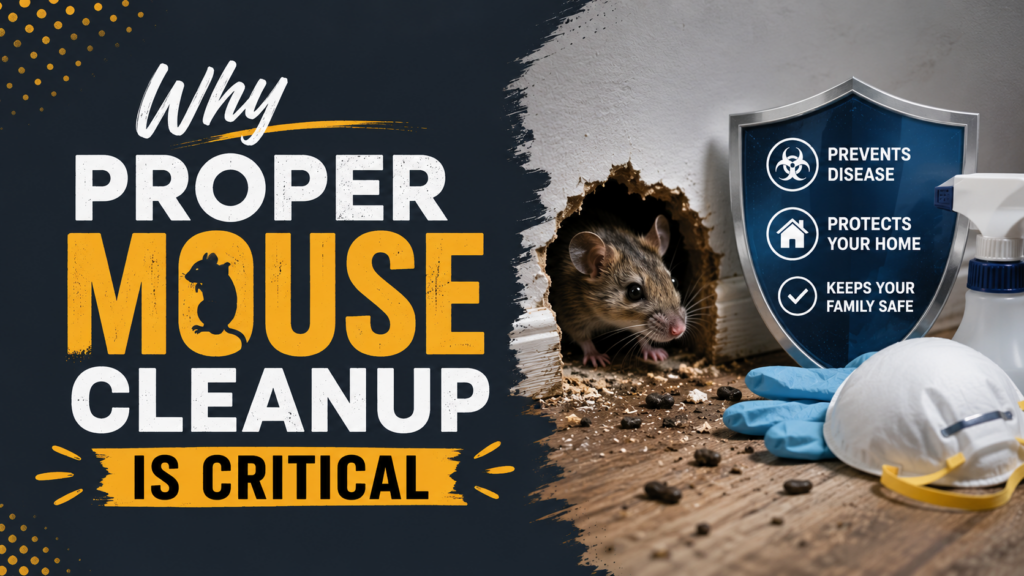
It is easy to look at a few scattered black dots and think a quick sweep will fix the issue. However, doing this can put your family in danger. The waste left by rodents can spread bacteria, trigger allergies, and transmit diseases such as hantavirus.
This specific virus is a severe respiratory condition that humans contract by breathing in contaminated dust. A careless hantavirus cleanup mistake, like sweeping up dry debris, can launch dangerous particles directly into your breathing zone. This is a significant health risk that makes standard dusting methods incredibly dangerous.
A proper post infestation cleaning requires you to change how you approach household chores. Your goal is to neutralize the pathogens completely before you even think about wiping down the surfaces.
Step-by-Step Mouse Droppings Cleanup Process
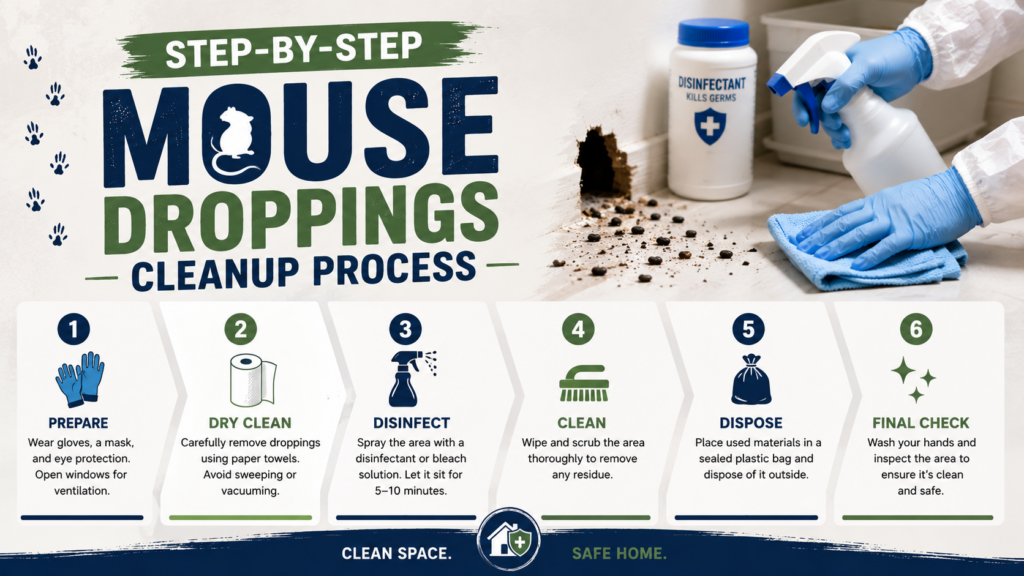
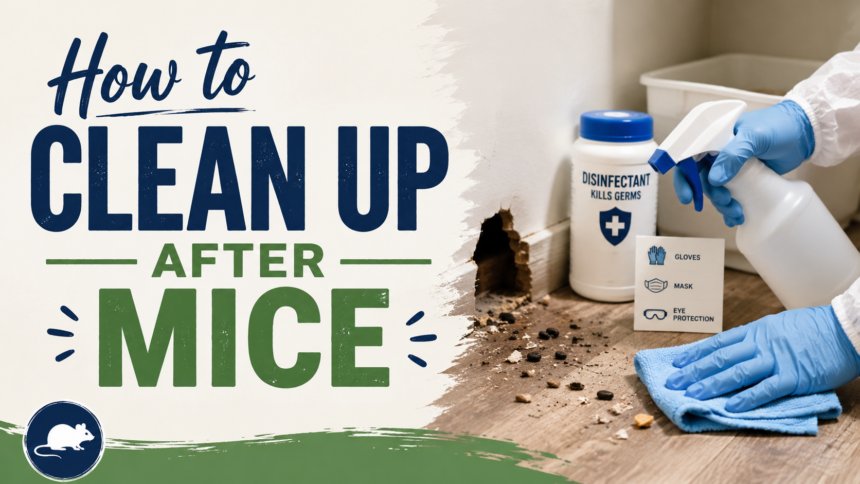
When you begin a mouse droppings cleanup, you must follow a strict safety protocol. You need to gather the right protective gear, including thick rubber gloves, long sleeves, and an N95 respirator mask.
Step 1: Put on rubber or plastic gloves.
Never touch any rodent debris with your bare hands. Put on your gloves before you open any cabinets or move any storage boxes.
Step 2: Spray urine and droppings with bleach solution
You must soak the mess completely to keep dust from rising. Avoid sweeping or vacuuming rodent droppings because stirring up dry waste can release particles into the air that may carry disease. Mix one part liquid bleach with ten parts water to create a strong disinfectant. Spray this bleach solution directly onto the droppings until they are thoroughly wet, then let it sit for five minutes to kill the pathogens.
Step 3: Use paper towels to wipe up the urine or droppings
Once the area is wet, use disposable paper towels to carefully pick them up. Wipe down the entire surface to clean rodent droppings away completely. Use gloves to place the waste into a sealed plastic bag, then toss that bag into an outdoor trash bin.
Surface-by-Surface Cleaning
Different areas of your home require different handling. If you find dried waste on wood floors, you must avoid scratching the surface. Once the wood is soaked in disinfectant, gently remove droppings with a sticky pad or a damp cloth that you can throw away immediately. For kitchen counters and cabinets, apply a food-safe disinfectant after the initial bleach wash to keep your food preparation zones pristine.
How to Remove Stubborn Mouse Urine Odor
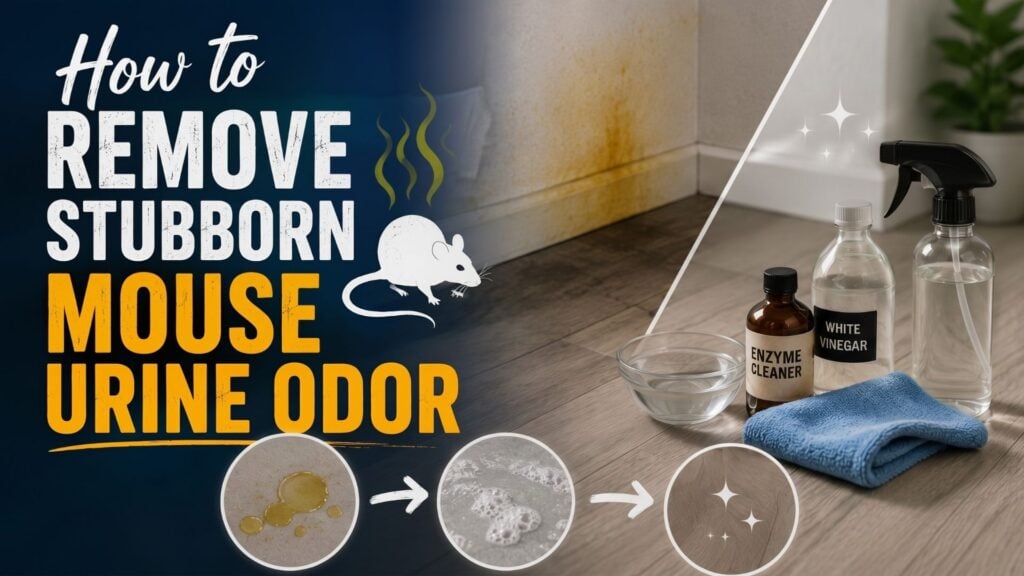
A lingering urine odor is one of the most frustrating parts of dealing with a past infestation. Mice use their waste to leave scent trails for other rodents, creating a stubborn smell that can last for months. To achieve permanent mouse odor elimination, standard household cleaners are rarely enough. You need specialized tools to break down the proteins in the waste.
Enzymatic cleaners are your best weapon against a strong remove mouse smell project. These solutions use active enzymes to eat away the urea and pheromones, completely neutralizing the scent instead of just masking it. If you are dealing with drywall or raw wood beams, spray the enzyme cleaner generously and let it air dry so it can soak deep into the porous material.
For soft surfaces like carpets and upholstery, a deep shampoo treatment is necessary. If a room still smells musty after a thorough scrubbing, a professional odor removal company can use an ozone generator to clear the air. These machines oxidize the scent molecules in the walls and ceilings, ensuring the smell is gone for good.
Cleaning Specific Areas After Mice
The location of the mess dictates how you should handle the job. A kitchen cabinet requires a gentle touch, while an attic mouse cleanup is a heavy-duty operation. In an attic or crawl space, you are often dealing with contaminated insulation. You must take out the soiled fiberglass entirely rather than trying to spot clean it.
Avoid using a standard HEPA vacuum on dry insulation because it can still cause dangerous air movement. Keep the area damp with your disinfectant spray as you bag up the trash.
If you find droppings in your garage or basement, you are likely dealing with concrete floors. These surfaces can hold moisture, so you should follow up your bleach wash with a stiff bristle brush to scrub the pores of the stone.
If you suspect pests have been inside your car, park the vehicle in an open space. Open the hood, vehicle doors, and trunk to allow the interior and engine compartment to air out for 20 minutes before you start cleaning. This prevents you from breathing in trapped fumes when you begin the safe rodent cleanup process.
Prevention Tips to Avoid Future Infestations
A successful cleanup is only permanent if you keep the pests from returning. You must transition your focus toward long-term prevention tips to protect your hard work.
- Seal any gaps, vents, or holes that could allow access into your living spaces.
- Seal gaps or holes in walls, vents, doors, and around pipes using steel wool and expanding foam, as mice cannot chew through metal mesh.
- Store food in sealed containers and keep trash tightly covered to eliminate any potential food sources.
- Declutter storage areas like basements, attics, and garages to remove potential materials for a nest removal project.
- Trim vegetation and remove outdoor debris that could shelter rodents near your foundation.
Maintaining a clean perimeter is the most effective way to ensure you never have to go through a deep sanitizing process again.
Frequently Asked Questions (FAQs)
Can I vacuum mouse droppings?
You should never use a household vacuum on dry droppings. The exhaust from the machine will blow tiny, contaminated particles into the air, creating a major inhalation hazard for your family.
What kills the hantavirus in droppings?
A standard solution of one part bleach to ten parts water will kill the virus within five minutes of contact. Commercial disinfectants labeled as virucidal will also work well.
How do I get rid of mouse smell in walls?
You need to locate the source of the smell, which often requires removing a small piece of drywall to perform a dead mouse removal. Once the dead rodent and mouse nest removal are complete, spray the inner wall cavity with an enzymatic cleaner.
Is it safe to clean up after mice myself?
Yes, as long as you wear protective gloves and an N95 mask, and use the wet cleaning method to disinfect mouse urine and droppings safely. If the infestation was massive, hiring a professional service is wiser.
How long does mouse smell last?
If you do not neutralize the area, the musk can linger for several months. Once you apply an enzymatic treatment to the soiled spots, the smell should vanish within a couple of days.
Wrapping Up…
Taking the time to disinfect area surfaces thoroughly is the final step in protecting your household from the aftermath of an infestation. Moving from a contaminated space to a pristine, sanitized home takes some effort, but the peace of mind is worth it. By sticking to a wet cleaning protocol and skipping the broom, you eliminate the risks associated with rodent waste. Combine your deep clean with smart structural repairs to seal out future intruders. Keep your kitchen dry, keep your storage bins sealed, and your home will remain a safe environment for years to come.