
You’ve been house hunting for months, and the place you just walked through checks almost every box. Good bones, an updated kitchen, a yard big enough for a dog. Then your agent mentions the wood destroying insect inspection, and suddenly a home that looked perfect might be hiding something in the walls.
Hidden termite damage is one of the most expensive surprises a new homeowner can inherit, and it rarely announces itself with a flashing sign. Termite damage before buying a home is a real risk in nearly every state, since these insects work slowly and quietly. They chew through support beams and subfloors long before anyone notices a problem.
Read on to figure out what to look for, what questions to ask to seller, and how a termite inspection for home buyers can protect your cash and your first years in the house from a very expensive mistake.
Table of Contents
What Makes Termite Damage So Hard to Detect?
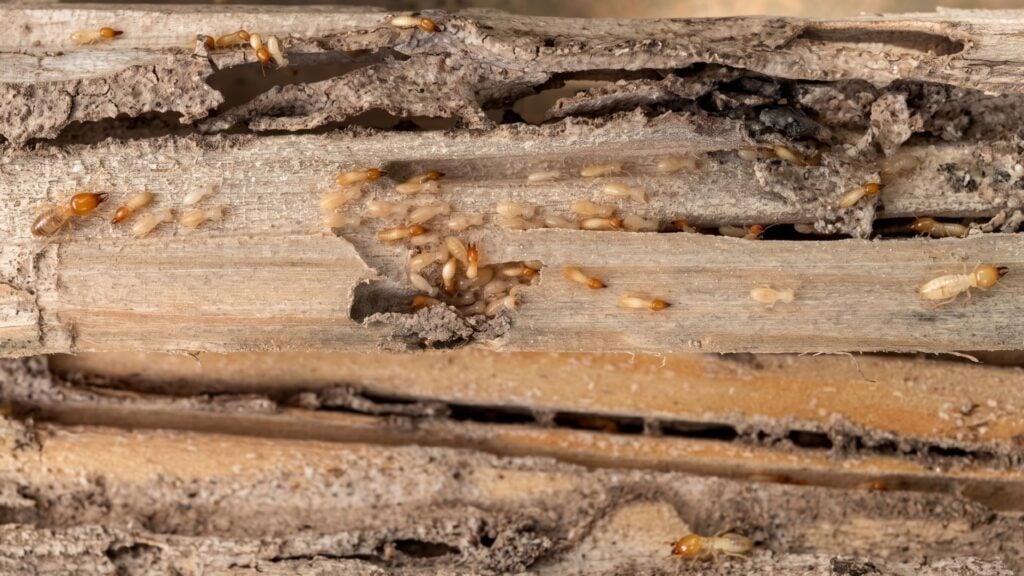
Termites eat wood from the inside out. Turns out, the surface can look absolutely normal while the structure underneath is hollow. A support beam riddled with tunnels might still hold its shape until someone leans on it or an inspector taps it with a tool.
Paint and drywall hide plenty too. They cover years of activity behind a smooth, freshly painted wall. That is exactly why hidden termite damage is so easy to overlook during a quick walkthrough. Termites avoid light and open air and tunnel through wood and soil where nobody thinks to look unless they know what to check first.
People sometimes confuse termite tunnels with wood ants, which carve smooth galleries through wood without actually eating it, so knowing the difference matters before you assume the worst. And termites do make noise if you listen closely. Soldiers bang their heads against tunnel walls to warn the colony. That behavior produces a faint clicking sound, usually too quiet to notice unless you press an ear right against the wall.
12 Signs of Hidden Termite Damage Before Buying a Home
These termite signs are worth checking room by room, not just glancing at from the doorway.
Hollow Sounding Wood
Wood damaged by termites loses density from the inside, so it sounds different than solid, healthy wood. Knock on it with the back of a screwdriver or your knuckle, and listen for a dull, papery sound instead of a firm thud. Baseboards, door frames, and porch railings are common spots to test, since they sit close to the ground and stay in constant contact with soil moisture.
Hollow wood usually means termites already ate through most of the interior, and only a thin outer shell holds everything together now. If several spots around the home sound hollow, that is a strong signal the wood destroying insect inspection needs to happen before you sign anything.
Mud Tubes Along the Foundation
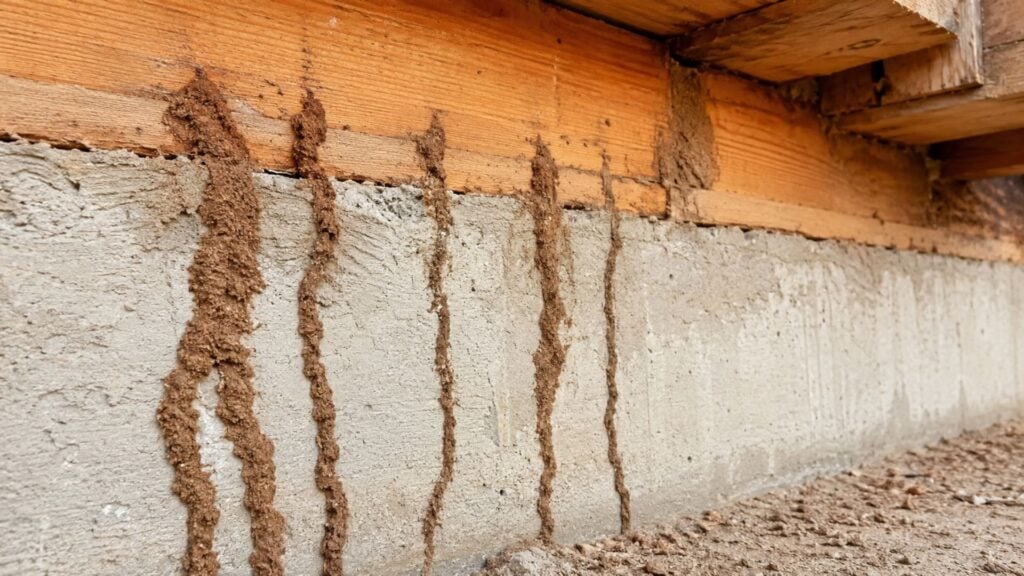
Subterranean termites nest in the soil and build narrow tunnels called mud tubes to travel safely between their colony and a food source without drying out in open air. Look along the foundation, the stem wall, and any support piers for these pencil width tubes that climb upward toward the wood framing above.
They are usually light brown or tan and about as wide as a pencil, sometimes thinner. Termite mud tubes are one of the clearest signs of an active problem. A broken, dried out tube does not always mean the colony left. Snap it open, and if worker termites scatter out, the colony is still very much alive.
Bubbling or Peeling Paint
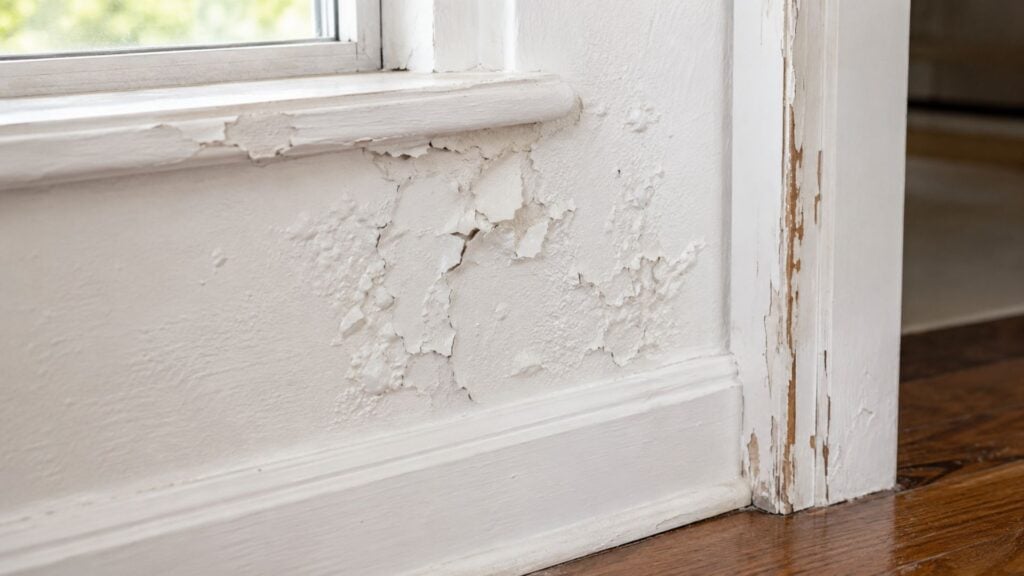
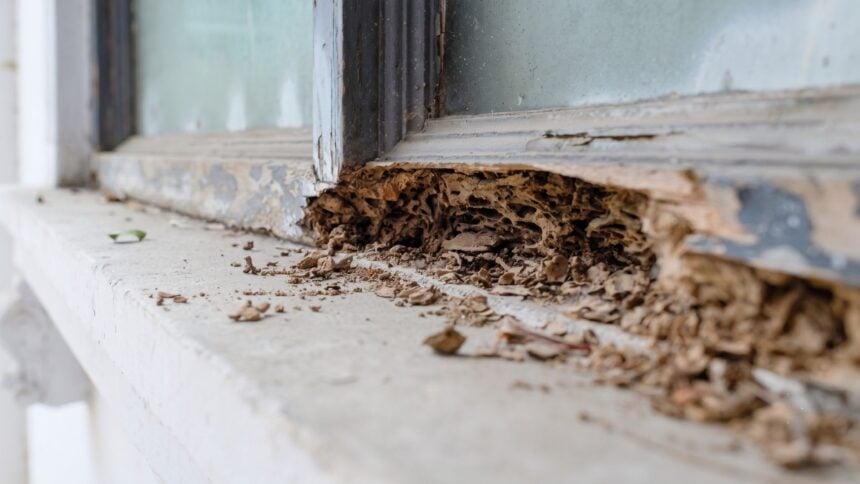
Moisture trapped behind a wall from termite tunnels often shows up as bubbling or peeling paint, especially on trim, window sills, and baseboards. Termites release moisture as they tunnel through wood, and that dampness pushes against the paint from underneath until it separates from the surface.
People often mistake this for regular water damage, so it helps to check nearby areas for other termite damage signs before assuming it is just an old leak. A quick tap test on the affected wood clears up the confusion fast. Termite damaged wood sounds hollow while water damaged wood usually still sounds solid, just softer.
Sagging Floors or Ceilings
Floors that feel spongy underfoot or ceilings with a slight dip usually point to structural damage that has been building for a while. Termites weaken floor joists and ceiling beams gradually, and by the time you can see or feel the sag, the damage underneath is often extensive.
A casual walkthrough will almost always miss this sign, cause sagging develops slowly enough that people living in the home get used to it without noticing. A home inspection checklist should always include walking every room slowly and paying attention to how the floor feels, not just how it looks.
Stuck Doors and Windows
Doors and windows that suddenly stick or will not close properly get blamed on humidity or a house settling with age, and sometimes that really is the cause. Other times, termites have warped the frame from the inside, and the wood swells just enough to throw the whole fit off.
If several doors and windows in the home stick around the same area, especially near ground level, treat that as a reason to look closer instead of a minor annoyance to fix later. Frames near bathrooms and kitchens deserve extra attention too.
Small Pinholes in Drywall
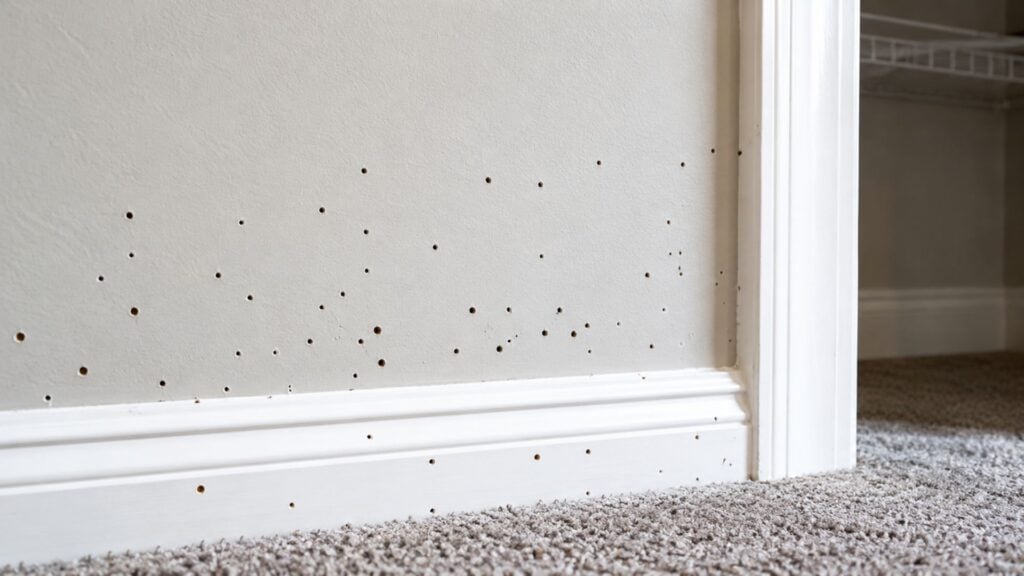
Drywood termites, unlike their subterranean cousins, live directly inside the wood they eat and do not need contact with soil to survive. As they tunnel, they push waste out through tiny holes. This process leaves a pattern of small pinholes scattered across drywall or wood trim.
These holes are easy to mistake for nail holes or minor wear, especially in an older home with plenty of both. Look closely at trim around closets, attics, and crawl spaces. Drywood termites often start in areas that get the least foot traffic and the least attention during a quick showing.
Discarded Wings Near Windows
Once a termite colony matures, it sends out winged swarmers to start new colonies elsewhere, usually during warm, humid weather in spring. These flying termites shed their wings almost immediately after landing. That shedding leaves small piles of translucent, uniform wings near windowsills, doors, and light fixtures.
Finding a cluster of discarded wings inside the home is one of the more reliable termite infestation signs. Turns out, a colony nearby has already reached full maturity. Spotting even one pile is worth mentioning to your inspector.
Wood That Crumbles Easily
Press a screwdriver into an exposed beam, a porch post, or a piece of trim near ground level, and healthy wood should push back with some resistance. Wood destroyed by termites often crumbles or flakes apart with almost no pressure at all. It sometimes breaks into small chunks that look chewed instead of rotted.
This test works especially well on wood that already sounds hollow when tapped. It confirms what your ears picked up with something you can actually see and feel. Crumbling wood found during a walkthrough is rarely a small fix, and it usually signals wood damage that needs repair work well beyond a simple patch job.
Tight Fitting Interior Doors
Interior doors that used to close with room to spare but now fit unusually tight against the frame can point to swelling caused by termite activity inside the wood. This overlaps with the stuck doors and windows sign, but it is worth checking separately, as interior doors sit further from moisture sources like bathrooms and exterior walls. A tight fit on an interior door, especially one nowhere near plumbing, often means termites are active somewhere close by instead of the home simply settling with age.
Visible Wood Tunnels
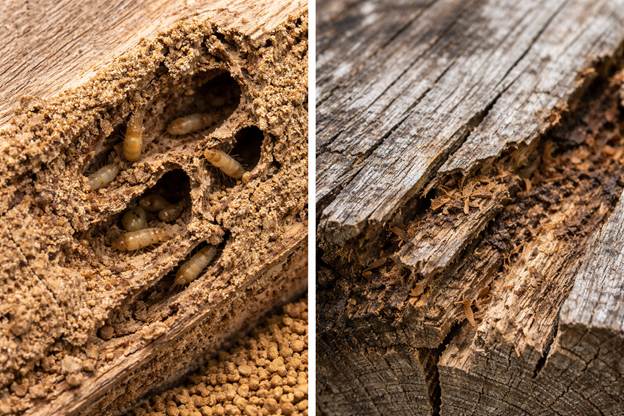
Pull back any loose baseboard, check under a porch step, or look inside an exposed beam in the attic. Visible tunnels carved through the wood grain confirm termite activity beyond any doubt. These tunnels run parallel to the wood grain most of the time. Termites eat along the softer growth rings instead of across the harder ones. Finding tunnels like this answers the question of how termites get inside your house in the first place.
Frass, or Termite Droppings
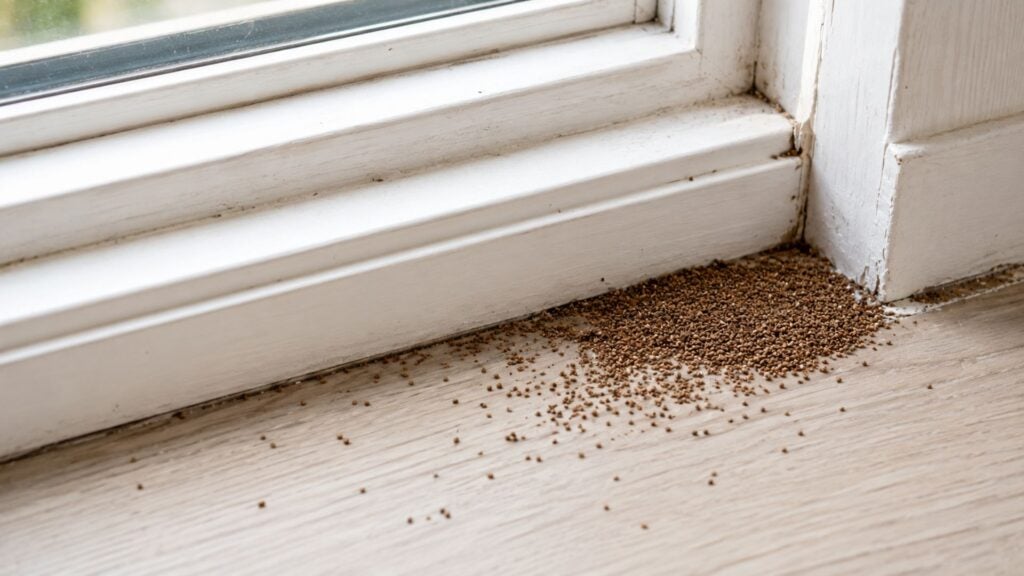
Frass is the technical name for termite droppings, and it looks a lot like small mounds of pepper or fine sawdust piled near baseboards, window sills, or furniture. Drywood termites push frass out of their tunnels to keep their living space clear, so finding small pellet shaped piles is a strong clue that an active colony is working somewhere close by. Termite droppings differ from typical sawdust in texture. A small pile that reappears after cleaning is a clear sign the colony producing it has not gone anywhere.
Areas with Excess Moisture
Termites need moisture to survive, so any part of the home with a history of leaks, poor drainage, or damp crawl spaces deserves a closer look. Subterranean termites in particular favor damp, contact with soil conditions, which is exactly why homes with poor grading around the foundation or clogged gutters tend to show more termite damage signs than homes with good drainage.
Check under sinks, around water heaters, and inside crawl spaces for damp wood, cause termites will often colonize the softest, wettest wood in the house first before spreading toward drier framing nearby.
Spotting even two or three of these signs during a showing is reason enough to slow down and schedule a real inspection. Catching hidden termite damage early, before the offer gets finalized, keeps you from inheriting someone else’s costly problem.
Questions to Ask the Seller Before Closing
A termite inspection for home buyers only tells part of the story, so pairing it with direct questions to the seller fills in the rest before you get anywhere near closing.
Has the Home Ever Been Treated for Termites?
Ask the seller directly whether the home has ever been treated for termites, and do not settle for a vague answer. Either way, state records can tell you about it. A home with a documented treatment history is not automatically a red flag. It often means a past problem was caught and handled properly, which can actually work in your favor during negotiations.
Can You Provide Previous Termite Inspection Reports?
A past inspection report tells you far more than a seller’s memory of what happened five years ago. Ask for copies of every wood destroying insect inspection completed on the home, along with the official NPMA-33 form if one exists, since that document lays out exactly what an inspector found and where they found it.
Comparing an old report against a fresh one shows whether previous damage was repaired properly or simply painted over. If the seller cannot produce any paperwork at all, factor that into your offer, because you are then relying entirely on a single inspection to catch years of potential activity.
Were Any Structural Repairs Completed?
If a past inspection did turn up damage, find out exactly what repair work followed. A seller who patched a few boards is in a very different position than one who replaced entire support beams and had the work inspected afterward.
Ask who completed the repairs, whether a permit was pulled for any structural work, and whether the same company that repaired the damage also stands behind the fix with a warranty. Knowing how to repair termite damage properly involves more than covering the visible hole, and a seller who cut corners on that process may have left weakened framing behind the new drywall.
Have There Been Any Moisture Issues?
Moisture and termites go hand in hand, so ask about past flooding, plumbing leaks, or drainage problems around the foundation. A home with a history of damp crawl spaces or a leaky roof is more likely to have attracted termites at some point, even if no formal treatment ever happened.
This question also helps you understand whether the current grading and drainage around the home actually protects it going forward, or whether the same conditions that invited termites once are still sitting there waiting to invite them again.
Who Pays for the Inspection and Any Treatment
Inspection costs and treatment costs get negotiated differently depending on the market and the contract, so raise this question early instead of assuming. In many deals, the buyer orders and pays for the wood destroying insect inspection, whilst treatment costs for any active infestation found become a negotiating point between buyer and seller. Get this in writing as part of the purchase agreement. A spoken promise about who covers termite treatment costs rarely holds up once real numbers show up after an inspection finds an active problem.
What a Termite Inspection Costs
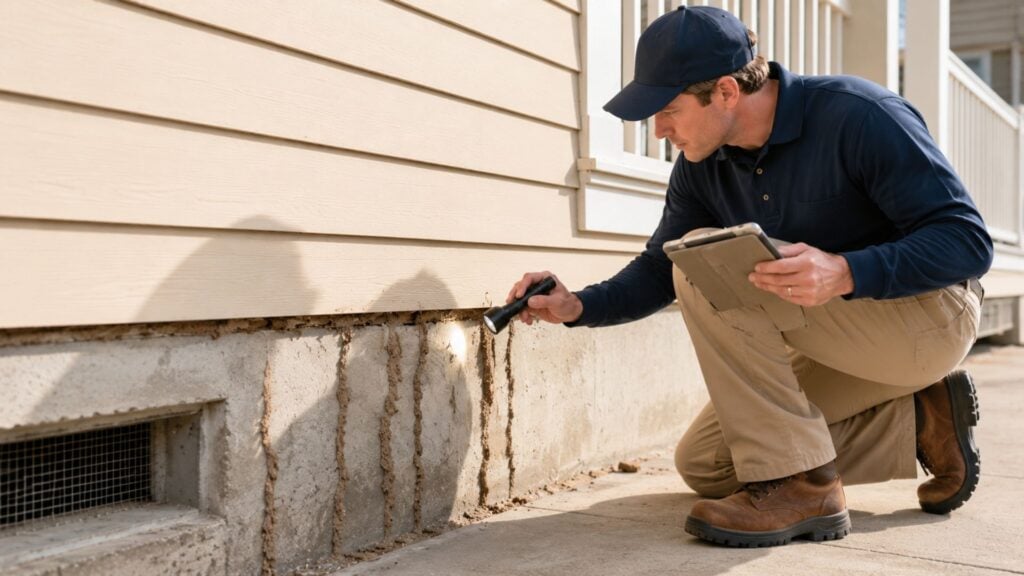
A termite inspection for home buyers is quick and inexpensive compared to almost every other cost in a home purchase. Across the country, a standard wood destroying insect inspection runs roughly $75 to $150, with $125 being a common price point in many markets. On a $350,000 purchase, that fee works out to about 0.036 percent of the price. Divide 125 by 350,000 and you get 0.000357, which comes out to a little over 3 cents for every $100 of home value.
For the inspection itself, the fee is small enough that it rarely becomes a sticking point during negotiations, and comparing rates between a few local companies is worth the extra ten minutes it takes. What the inspection covers usually includes the foundation, crawl space, attic, and any exterior wood in contact with soil. That gives a home buyer a clear look before the closing date arrives.
What to Do If the Inspector Finds Termites
If an inspection finds active subterranean termites, do not panic and do not walk away from the deal automatically. Compare the inspection cost to the treatment cost before making any decisions. A localized treatment runs about $900 on average, which is roughly seven times the inspection cost. 900 divided by 125 is 7.2.
Treatment, in turn, costs far less than repairing the damage those termites would eventually cause if left alone for another year or two. What it finds can shape your closing in a few ways. Some buyers renegotiate the price to cover treatment. Some ask the seller to handle treatment before closing.
Some simply scramble to get a second opinion before deciding whether the home is still worth pursuing. Knowing how to get rid of termites and protect your home going forward starts with addressing whatever the inspection turns up right away, not after you move in.
How to Protect the Home After You Move In
Termite prevention does not end once you close on the house. Keep mulch and soil at least six inches below your home’s siding. Piling it too high creates a bridge termites can use to reach the wood directly. Fix leaky faucets, gutters, and downspouts quickly, cause damp wood is exactly what subterranean termites look for when searching for a new food source.

Store firewood away from the foundation instead of stacking it against an exterior wall. Schedule a pest inspection every year or two even without visible signs. Catching a new colony early keeps repair costs low and protects the investment you just made. How long termite treatment lasts depends on the method used, but most preventive treatments need renewal every five to ten years to stay effective against a new colony moving in nearby.

When Should You Call a Professional Pest Control Company?
Spotting termite damage before buying a home protects you far more than discovering it during your first year of ownership. Call a licensed pest control company the moment you spot mud tubes, discarded wings, or wood that sounds hollow when tapped, even in the middle of the buying process. We recommend Orkin pest control company. Their trained professionals catches details an untrained eye misses easily. A quick call can save you thousands compared to discovering the full extent of an active infestation after closing.
Frequently Asked Questions (FAQs)
Can a home pass a regular inspection and still have termites?
A standard home inspection does not always include a specific check for termites unless you request a separate wood destroying insect inspection. Always ask for both.
What does hidden termite damage look like?
It often looks like nothing at all on the surface. Fresh paint or new flooring can hide it while hollow wood and mud tubes sit just underneath.
Should I buy a house with previous termite damage?
Often yes. Buying a home with termites in its past is common, as long as the damage was repaired properly and documented. Ask for repair records and a fresh inspection before moving forward.
Who pays for termite repairs during a home sale?
This is negotiable and varies by market. Some sellers cover treatment and repairs before closing, while others credit the buyer instead.
Wrapping Up…
Hidden termite damage rarely shows up on a for sale listing, and it will not stop you from falling for a house at first sight. Termite damage before buying a home is a real possibility in nearly every part of the country, but it is also one of the easiest risks to manage with the right questions and a proper wood destroying insect inspection. A quick and inexpensive check now protects your cash and your first years in the house from a repair bill nobody wants to inherit. Knowing the signs of a termite infestation and damage in your home gives you real leverage at the negotiating table, not just peace of mind.