
Clothes moths are one of those pests that wreak havoc super quietly. By the time most people notice the damage, a significant portion of the wardrobe has already been compromised.
Unlike pantry moths, which contaminate food with droppings and webbing, clothes moths target natural fibers. It includes wool, silk, fur, cashmere, and even carpets. The larvae do the actual damage, feeding on these materials and leaving holes that make clothing look worn beyond repair.
A single neglected storage bin or an unworn coat left in the back of a closet for a season can turn into a full clothes moth infestation before you realize anything is wrong. We will cover how to identify the problem and get rid of clothes moths completely.
Table of Contents
What Are Clothes Moths?
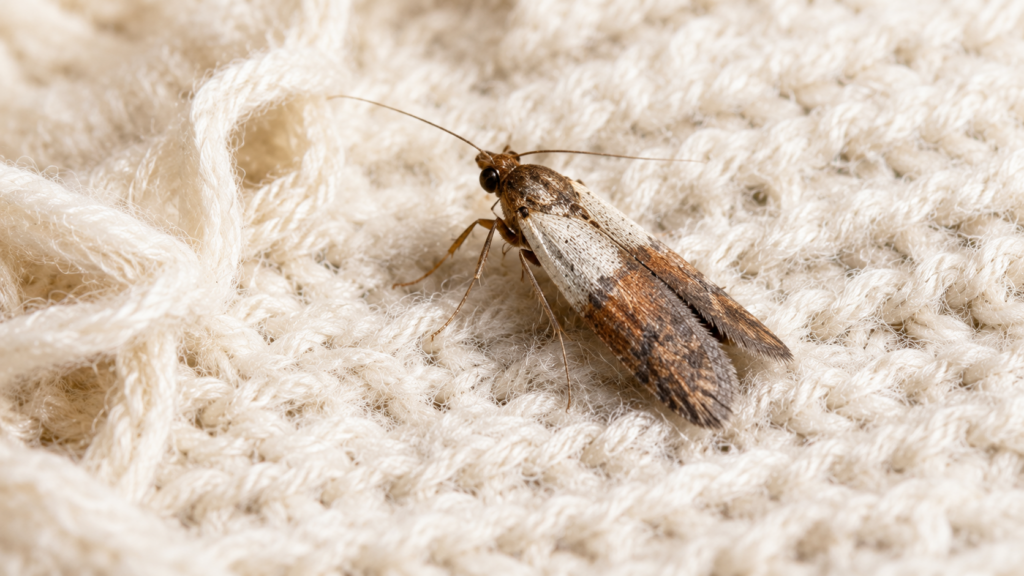
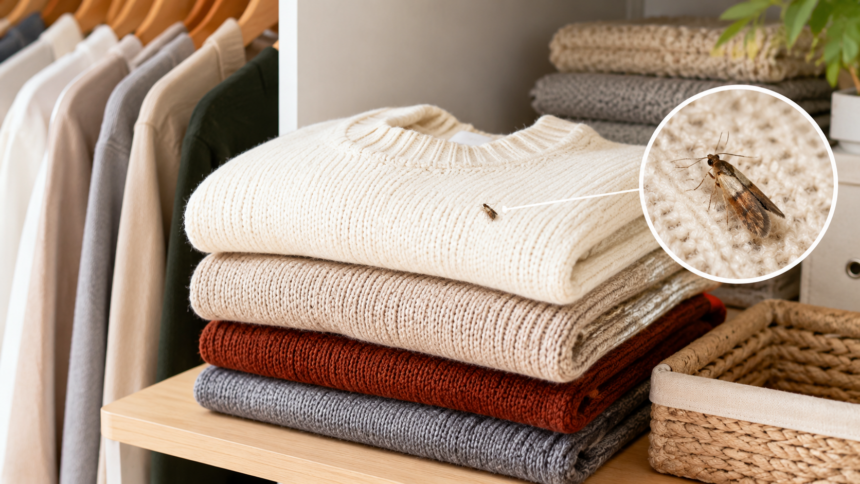
Clothes moths are small, buff-colored insects measuring roughly half an inch in length. They belong to two main species. The webbing clothes moth and the casemaking clothes moth. Both species avoid light and prefer dark, undisturbed spaces, which is exactly why closets, storage boxes, and the back corners of wardrobes are their preferred environment.
The adult moths do not eat fabric. It is the moth larvae that cause all the fabric damage, feeding on the keratin protein found in natural fibers like wool and silk. A female can lay 40 to 50 eggs in her lifetime, with larvae hatching and beginning to feed within a matter of days under warm conditions.
Signs of a Clothes Moth Infestation
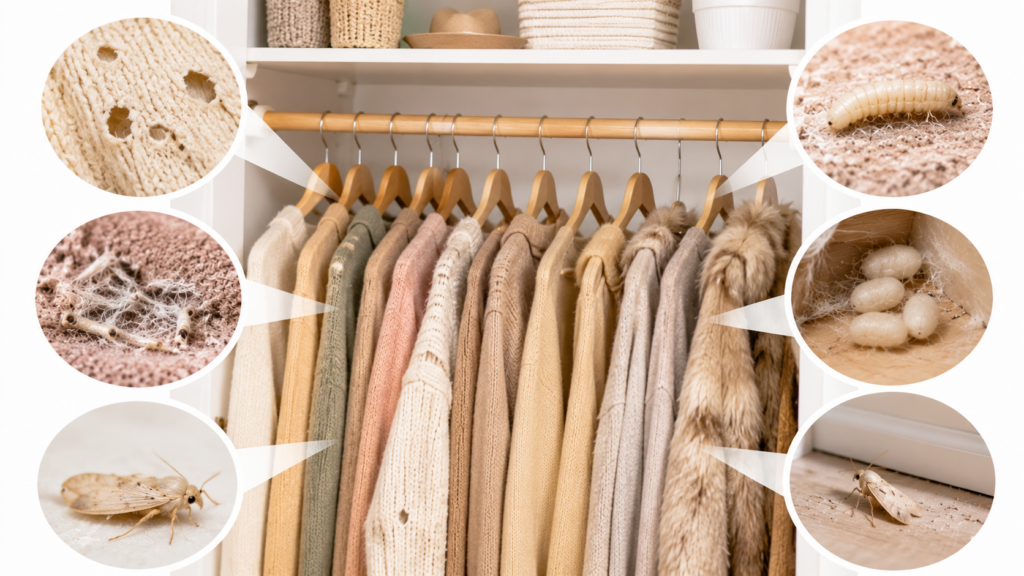
- Irregular holes in wool, silk, cashmere, or fur garments
- Silky webbing or tubes on fabric surfaces
- Tiny larvae or cream-colored cocoons in closet corners
- Adult moths moving slowly near the floor or on walls in dim areas

How to Get Rid of Clothes Moths
Inspect Your Clothing
Pull everything out of the closet and inspect each item individually. Pay close attention to natural fiber garments, particularly anything wool, silk, or cashmere, and check seams, folds, and collar areas where larvae tend to concentrate. Separate anything showing holes, webbing, or larvae immediately and keep it away from unaffected clothing while you work through the treatment process.
Wash or Dry Clean Infested Items
Heat is the most reliable method for killing moth larvae and eggs across all life stages. Washing infested clothing in hot water at 120°F or above kills both larvae and eggs within a single cycle. For delicate items that cannot withstand hot washing, dry cleaning achieves the same result. Freezing is the alternative for items that can handle neither: seal the garment in a plastic bag and leave it in the freezer at 18°F or below for at least 72 hours.
Vacuum Closets and Storage Areas
A thorough vacuuming of every closet surface, including floor corners, baseboards, shelf edges, and any cracks in the walls or flooring, pulls out larvae, eggs, and cocoons that direct treatment products might miss. Empty the vacuum canister or seal the bag immediately after finishing and dispose of it outside the home.
Use Clothes Moth Repellents
Cedar blocks placed in closets and storage containers produce natural repellents that deter adult moths from laying eggs in treated areas. Cedar loses its effectiveness as it dries out, so sanding the surface lightly every few months restores the scent output.

Moth traps using pheromone attractants capture adult male moths and break the breeding cycle. Lavender sachets work as a supplementary deterrent alongside cedar. For active infestations, a professional-grade clothes moth treatment spray containing permethrin applied to closet surfaces and storage areas provides stronger control than natural options alone.
Store Clothing Properly
Long-term clothing storage should use airtight containers or vacuum storage bags that prevent moth access entirely. Never store woolens or silk items without washing or dry cleaning them first, as body oils and food residue on fabric attract moth larvae even to clean-looking garments. Avoid cardboard boxes for long-term natural fiber storage, as moths access them easily through seams and flaps.
When to Call a Professional
A clothes moth infestation that has spread beyond the closet into carpets, upholstered furniture, or multiple rooms requires professional pest control intervention. Moth larvae embedded in carpet pile or furniture fabric are difficult to address fully without commercial-grade treatment products and equipment that consumer options cannot replicate. We recommend hiring Orkn pest control because they are extremely good at this business.
Frequently Asked Questions (FAQs)
Why should you not touch moths?
Handling adult moths directly can damage the scales on their wings, which they use for flight and temperature regulation. More practically, disturbing adults causes them to scatter into other areas of the home, spreading the infestation beyond its current location.
What is the fastest way to get rid of clothes moths?
The fastest path to get rid of clothes moths combines immediate heat treatment of all affected garments, thorough vacuuming of every closet surface, pheromone trap deployment for adult capture, and cedar or permethrin-based clothes moth treatment for the storage areas themselves.
What smells keep moths away?
Cedar, lavender, rosemary, thyme, and cloves all function as natural repellents that clothes moths avoid. Cedar is the most practical for closet use because it can be deployed in block or hanger form and refreshed easily. Lavender sachets add coverage in drawer storage.
Wrapping Up…
A clothes moth infestation moves slowly but leaves expensive and sometimes irreversible damage behind. The combination of heat treatment for affected garments, thorough closet vacuuming, pheromone traps for adult moths, and airtight storage for natural fiber clothing addresses the problem across every stage of the moth life cycle. Get rid of clothes moths early, and the damage stays contained. Let it run unchecked, and the repair cost across a wardrobe of quality natural fiber clothing adds up quickly.