
Hardwood floors may seem like the easier place to deal with fleas because there is no thick carpet for them to disappear into, though. The reality is, they are not flea proof. Flea eggs and larvae can still settle into the tiny gaps between floorboards, along baseboards, and underneath furniture where they can stay out of sight. That is a big part of why a flea problem can seem gone for a while, then suddenly show up again a couple of weeks later.
Getting rid of fleas on hardwood floors means looking beyond the adult fleas crawling across the surface. You also need to deal with the eggs, larvae, and pupae that may be hiding in protected areas around the room.
We will cover the practical steps for clearing fleas from hardwood floors and reducing the chance of the infestation starting all over again. Keep scrolling!
Table of Contents
What Are Fleas?
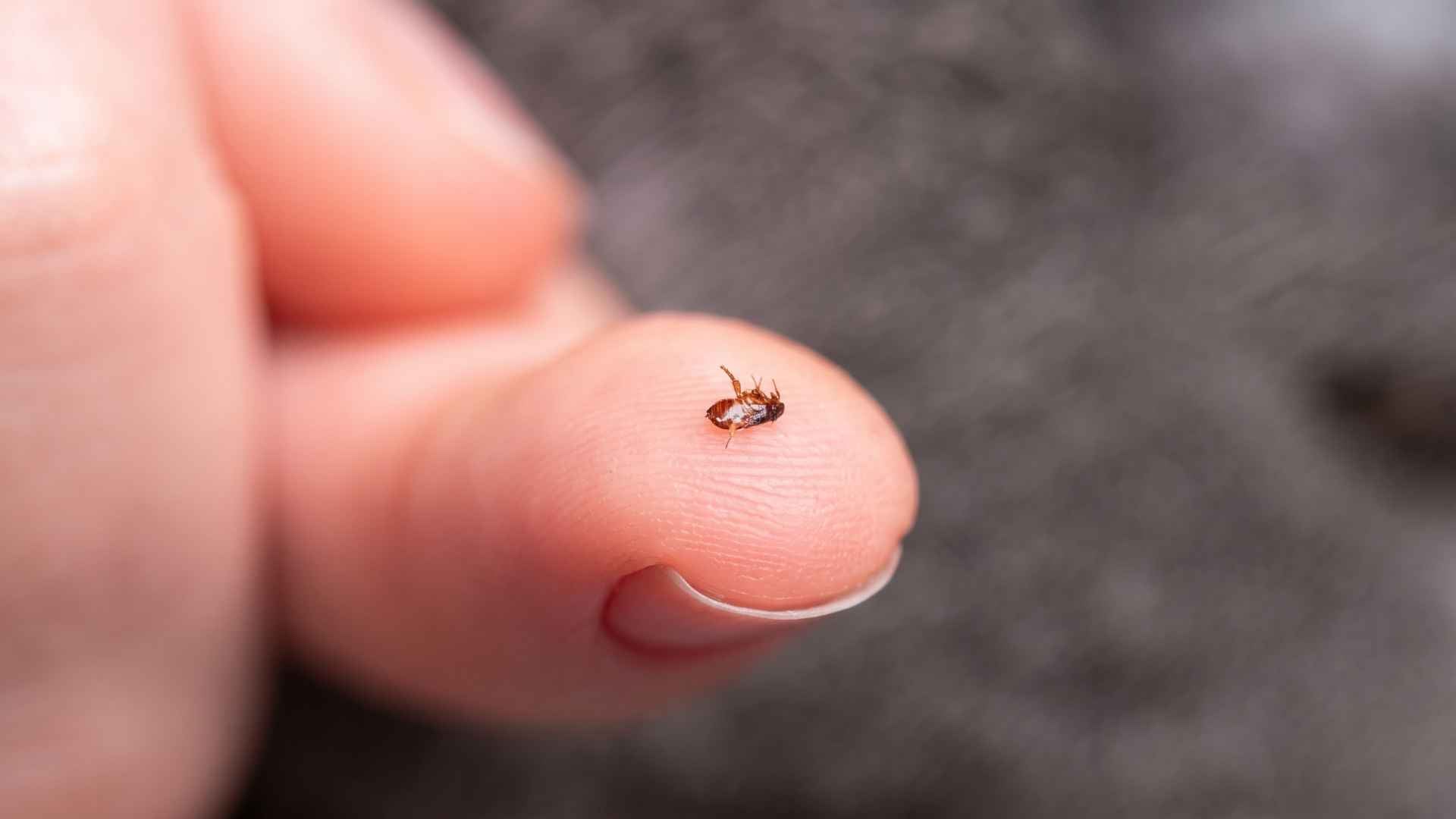
Fleas are tiny, wingless insects that live by feeding on blood, usually from dogs, cats, and other warm blooded animals. When a pet is not around, though, they have no problem biting people. Flea bites can leave small, itchy welts on your skin, especially around your ankles and lower legs.
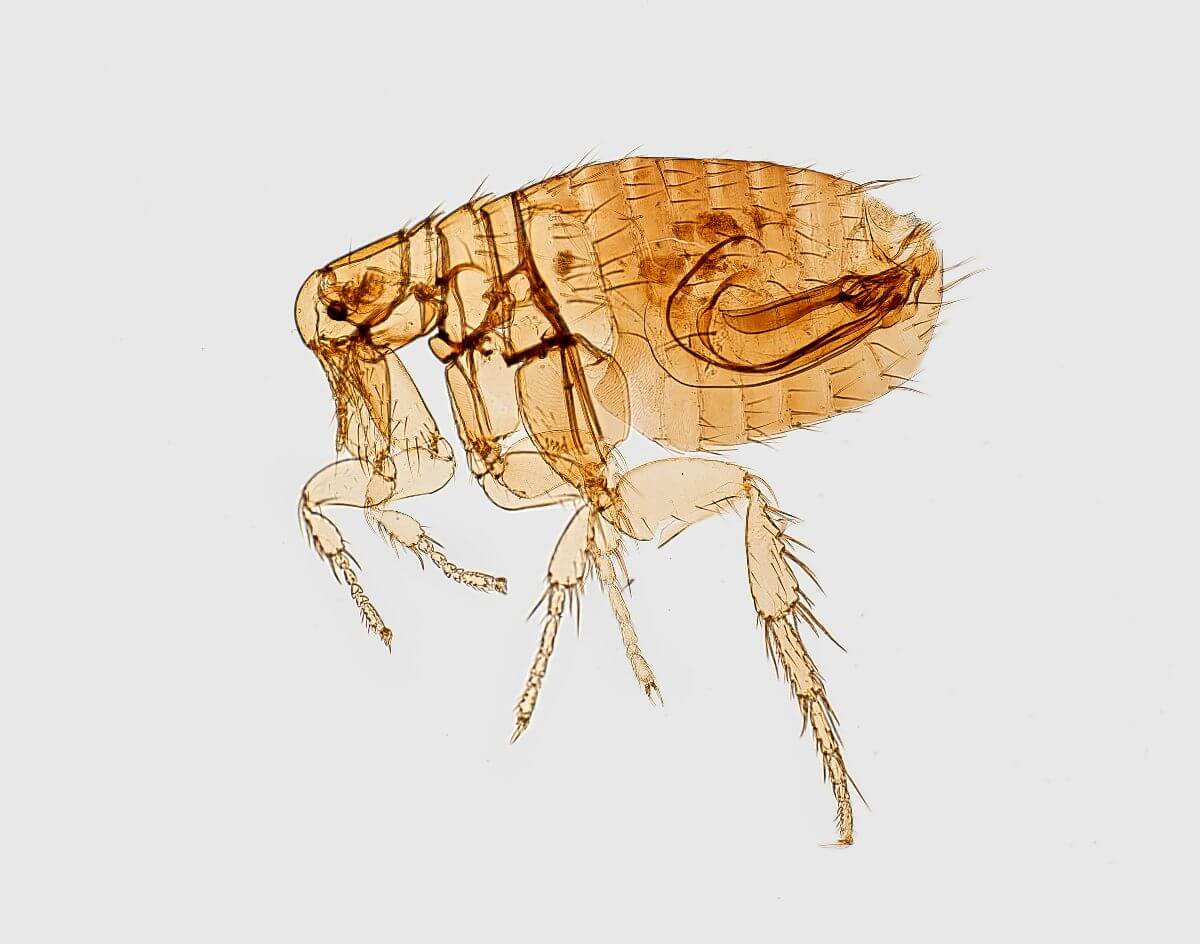
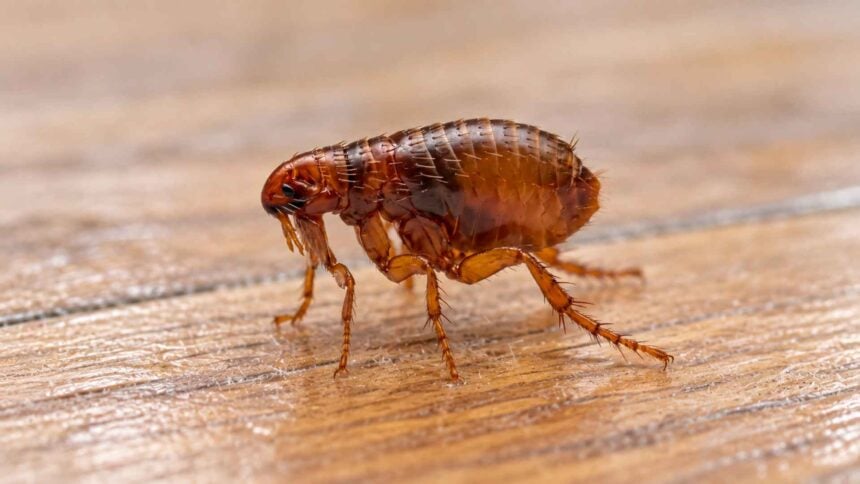
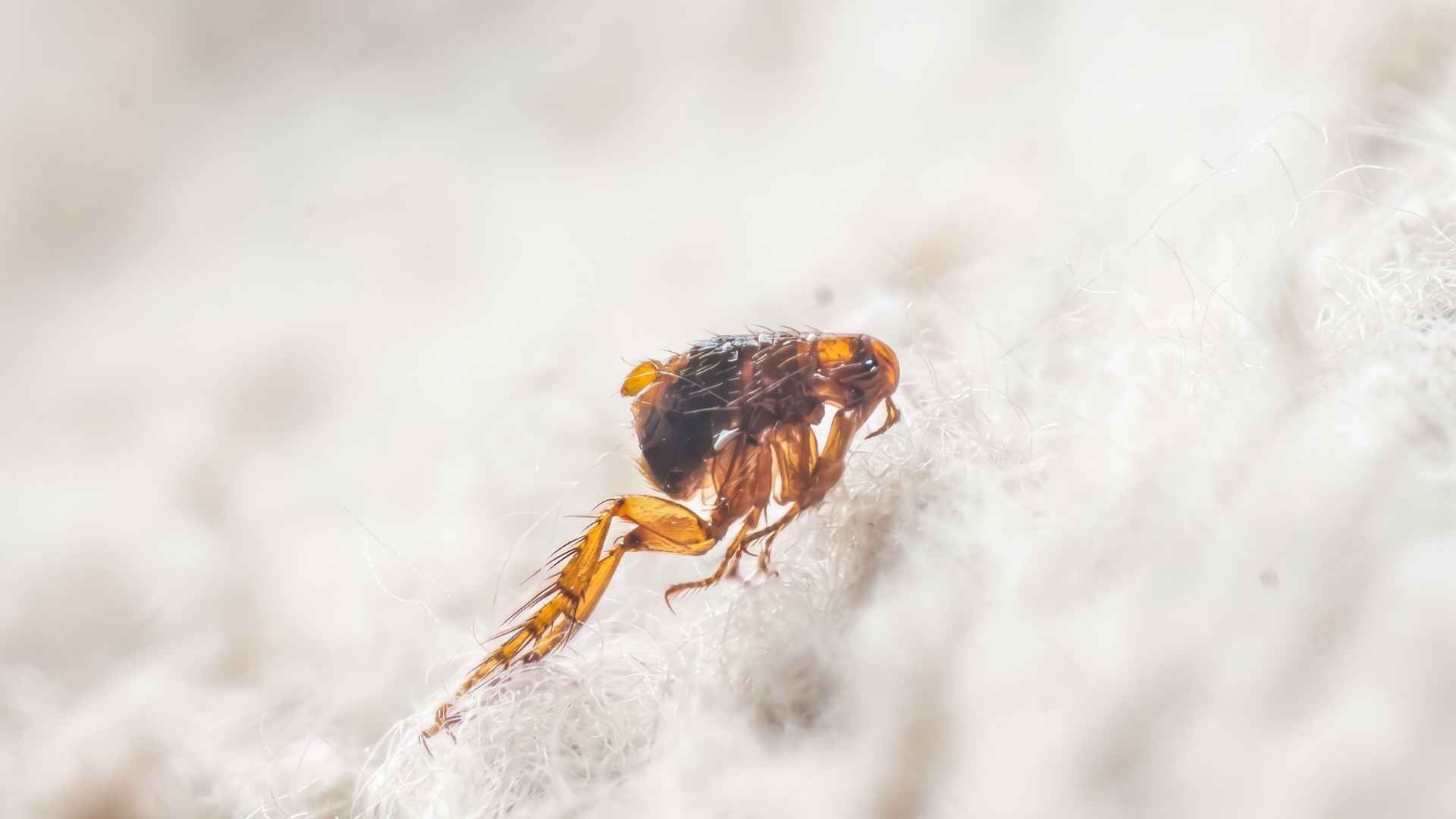
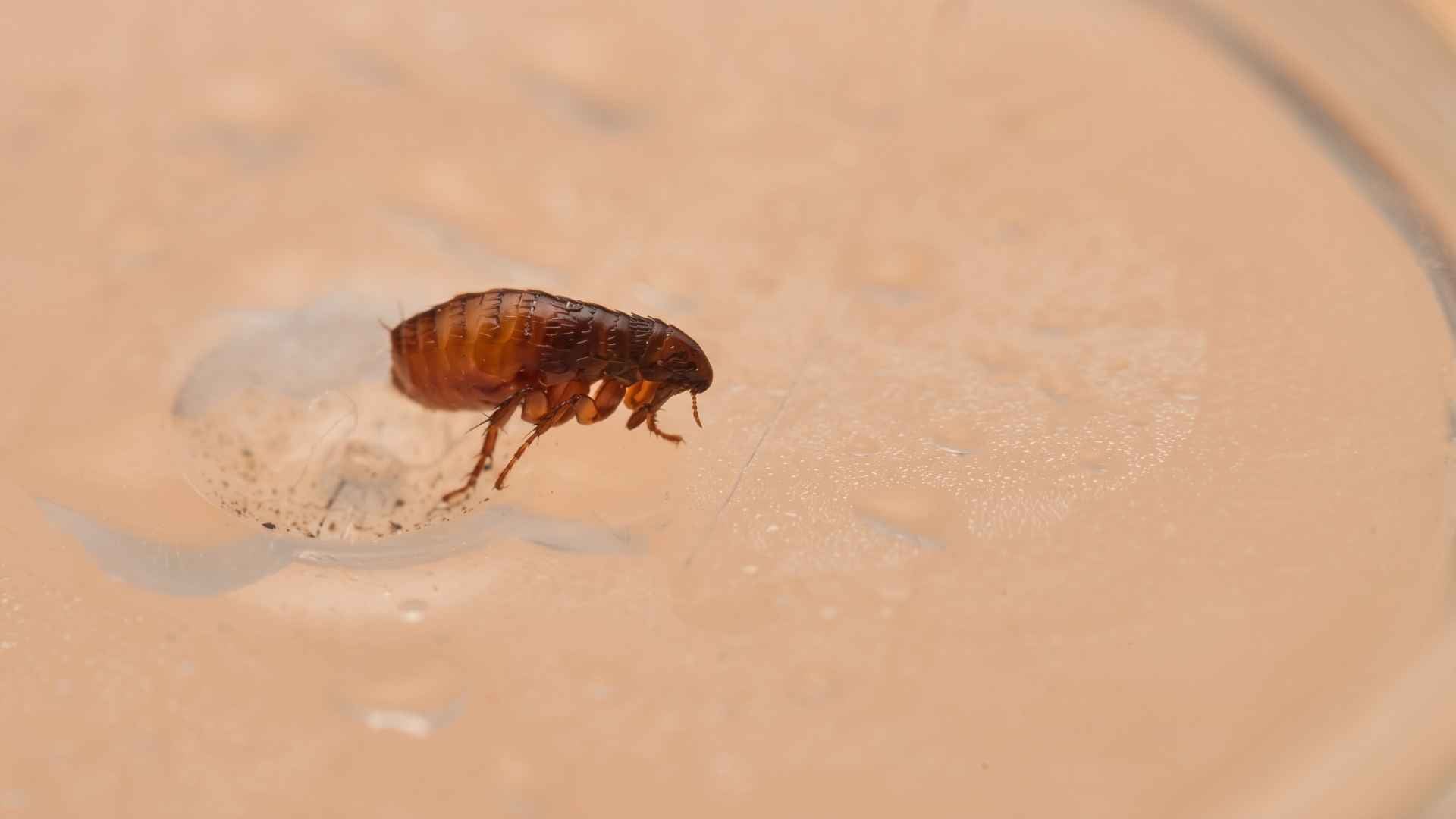
Adult fleas measure about 1/8 of an inch, dark reddish brown, with six legs built for both crawling through fur and jumping remarkable distances relative to their tiny size.
Fleas can jump nearly 150 times its own body length. They can therefore move between a resting pet, nearby furniture, and the floor beneath it super quickly. Since they are so tiny, it’s hard to spot them.
Signs You Have Fleas on Your Hardwood Floors
- Small, dark specks resembling pepper near baseboards or pet resting spots
- Pets overly scratching, biting, or grooming overly
- Tiny reddish brown insects jumping across the floor
- Bite marks or itchy welts on your own ankles and legs
- Fine, gritty debris in floorboard cracks that turns reddish when wiped with a damp cloth
- Larvae or eggs visible under furniture when inspected closely
8 Best Ways to Get Rid of Fleas on Hardwood Floors
1. Vacuum the Entire Hardwood Floor Thoroughly
Vacuuming is the single most effective first step in getting rid of fleas on hardwood floors. It works because it physically removes eggs, larvae, and adult fleas. Turns out, you do need to vacuum daily to break the flea life cycle and get your floors back. You can use a vacuum that has a crevice attachment for better results.
Use it deliberately along baseboards, corners, and any tight spot where a standard nozzle can’t reach. Switch to an upholstery attachment for nearby furniture, since fleas and their eggs collect just as readily on couch seams and chair legs as they do on the floor itself.

Once you’ve finished, immediately dispose of the dirt in a sealed bag and put it in the trash outside. It’s very important cause eggs and larvae can survive inside a vacuum canister for days.
2. Wash Pet Bedding and Toys
Pet bedding functions as a concentrated breeding ground. It sits in one place, stays warm, and collects flea dirt ( the digested blood waste that larvae actually feed on).
Wash all bedding, blankets, and soft toys in hot water, then run them through a hot dryer cycle. Heat is what actually kills eggs and larvae hiding in the fabric.
You need to keep doing it. Once a week is a good routine while the flea infestation is active because one cleaning will not catch every egg that has already been laid.
If a favorite bed or blanket can’t handle hot water, run a hot dryer cycle alone for at least 30 minutes. It still does meaningful damage to any eggs or larvae present there.
3. Give Your Pet a Bath
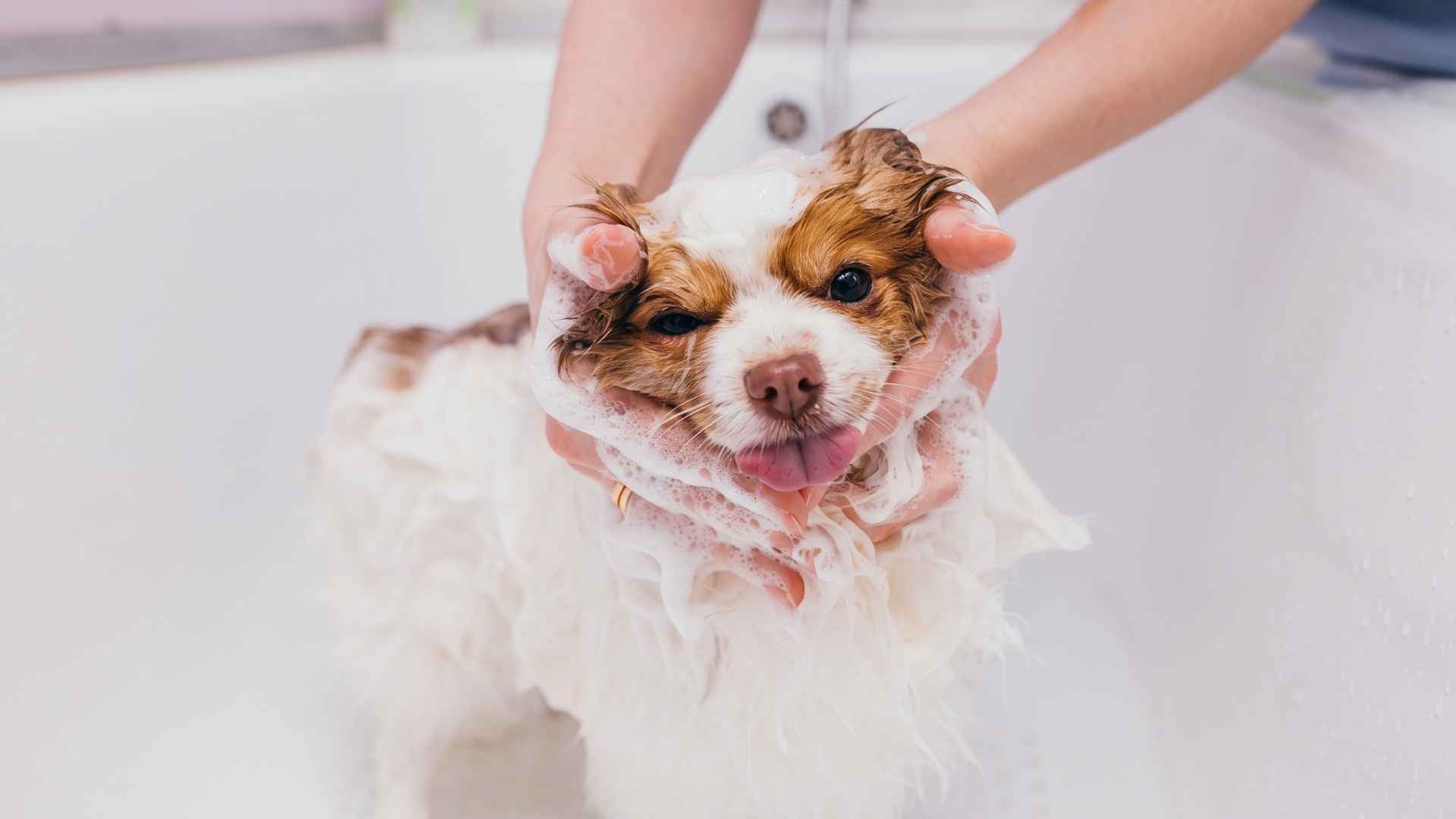
Although a bath cannot entirely get rid of all fleas living on your pet, it can meaningfully reduce the number crawling on their skin and coat. In turn, it eases some of the itching in the process.
Use a shampoo formulated specifically for fleas. Bathing your dog in warm, soapy water helps kill some fleas directly and physically removes others as they’re washed down the drain, though any eggs that have already fallen onto your hardwood floors won’t be affected by this step at all, though. Bathing needs to happen alongside floor treatment to speed up the flea removal process.
4. Clean the Cracks, Edges and Hidden Areas
Fleas on hardwood floors can stick around after the first cleanup because the places they settle are easy to miss. Floorboard seams, expansion gaps along walls, and the narrow space where flooring meets baseboard trim all create protected pockets where eggs and larvae settle out of reach of a standard vacuum pass.
Use a stiff brush or a narrow crevice tool to physically dislodge debris from these gaps before vacuuming again. Eggs can sit wedged into a seam without ever being pulled loose by suction alone.
Pay particular attention to fleas in hardwood floor cracks near pet resting areas, where the concentration of eggs and flea dirt tends to be highest. A damp cloth run along these same gaps afterward helps confirm whether you’ve actually cleared the area.
5. Steam Clean Appropriate Areas
Steam can be useful during flea cleanup because high heat can kill fleas at different stages of their life cycle. Temperatures above 60 degrees Celsius, or 140 degrees Fahrenheit, are lethal to flea eggs, larvae, and adults when the heat reaches them for long enough.
There is one important caution, though. Do not use a steam cleaner directly on finished hardwood floors. Too much moisture can seep into the wood and lead to warping or other damage over time.
Instead, focus on nearby rugs, upholstered furniture, and fabric surfaces around the floor. Fleas can move between these areas, so leaving one untreated can give them somewhere to survive and start the cycle again.
7. Use Flea Traps or Diatomaceous Earth

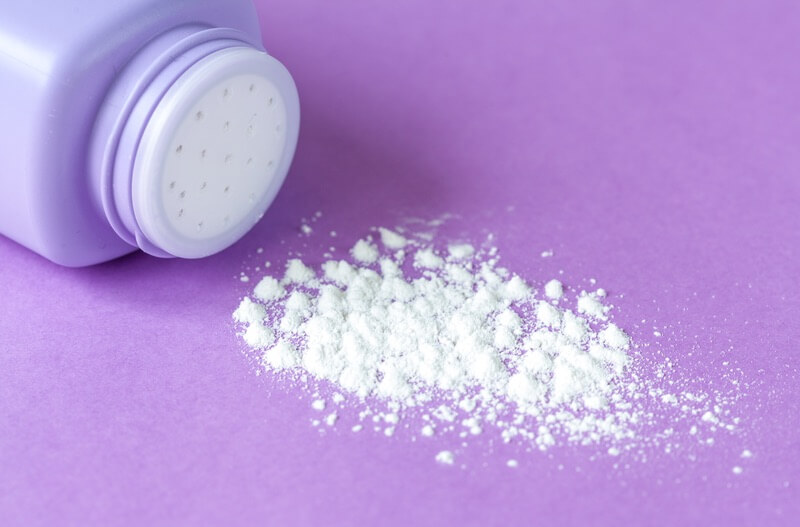
Diatomaceous earth works differently than a chemical spray. It kills fleas by drying them out rather than through any active insecticidal ingredient. Spread a thin layer across affected hardwood floors, carpets, stairs, and furniture, let it sit for a day or so, then vacuum it up thoroughly and reapply if needed.
Because it works through physical dehydration, fleas can’t develop resistance to it the way they sometimes can to other flea control products used repeatedly over time.

Besides, sticky flea traps, placed near baseboards or under furniture overnight, offer a low effort way to both catch adult fleas and monitor whether your other treatment steps are actually reducing the population.
6. Use a Flea Control Spray or Call Pest Control
A flea spray formulated for indoor hardwood surfaces can help finish off the adults and larvae that vacuuming and cleaning miss, particularly in cracks too narrow for physical cleaning tools to reach.
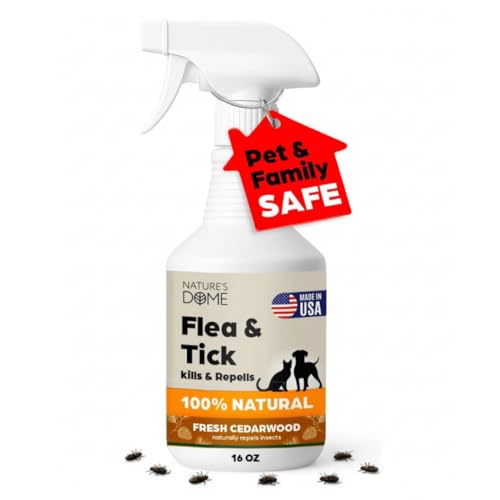
If you have pets, choose a spray labeled specifically safe for use around them, and follow label instructions on ventilation and reentry time closely. For flea infestations that keep returning despite consistent cleaning, calling in professional help is often the faster, more reliable path forward.
Orkin has extensive experience treating flea infestations at every stage of the life cycle, including the pupal stage that’s notoriously resistant to standard sprays, and a professional treatment plan can address both the visible floor areas and the harder to reach spaces a homeowner might miss entirely.
8. Follow-up
A single round of treatment rarely helps you get rid of fleas on hardwood floors completely. That’s because flea eggs can remain dormant in a protected crack for days before hatching into larvae.
You need to repeat vacuuming daily for at least two to three weeks, continue washing pet bedding weekly, and reapply diatomaceous earth or spray as needed based on continued sightings.
Staying consistent through this follow up period is what actually determines whether fleas infestation is fully resolved or simply quieted down temporarily before rebounding.
Where to Look for Fleas on Hardwood Floors
- Along Baseboards. The seam where flooring meets the wall collects dust, pet hair, and flea dirt.
- Between Floorboards. Expansion gaps and seams between individual boards provide exactly the kind of narrow, dark space fleas seek out to develop undisturbed.
- Under Furniture. Couches, beds, and cabinets create dark, low traffic zones where flea larvae in cracks and gaps beneath the furniture legs go unnoticed for weeks at a time.
- Beneath Area Rugs. Rugs trap warmth and moisture against the hardwood underneath. Turns out, it creates favorable conditions for flea eggs to hatch and larvae to develop.
- Around Pet Beds. Wherever your pet sleeps most often becomes the single highest concentration point for flea eggs and dirt in the entire house.
- Near Entry Points. Doors and windows that lead to outdoor areas where pets spend time are common points where new fleas enter the home in the first place.
Can Flea Eggs and Larvae Live on Hardwood Floors?
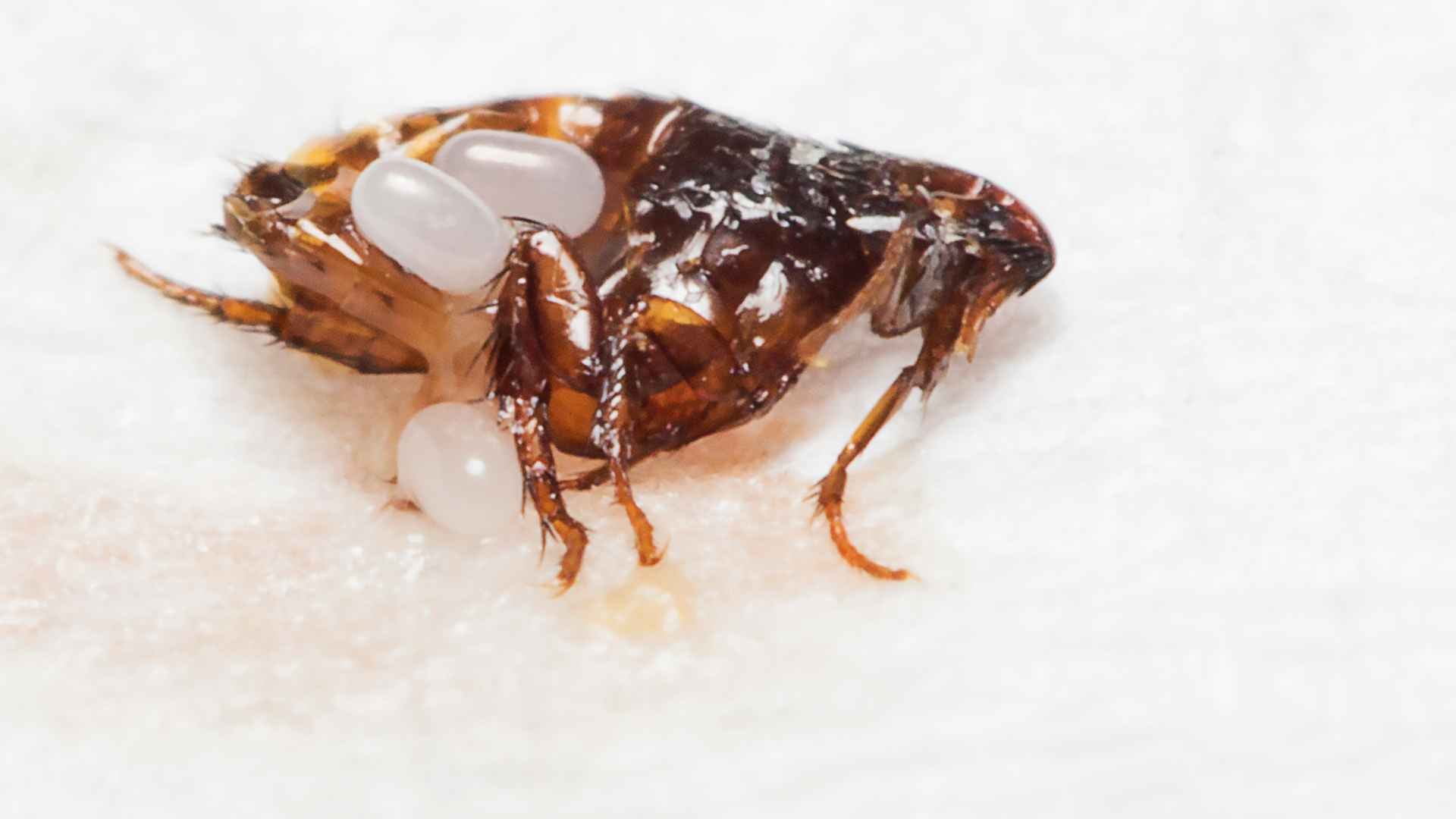
Yes, though they don’t cling to hardwood the way they might to carpet fibers. Flea eggs are smooth and not sticky, so they tend to roll into the nearest crack, seam, or gap.
Flea larvae are worm-like and range from 1/16 to 3/16 of an inch long. They actively avoid light and therefore like to burrow into floorboard seams, baseboard gaps, and the dark space beneath furniture to feed on flea dirt and organic debris.
How Long Does It Take to Get Rid of Fleas on Hardwood Floors?
Most flea infestations take anywhere from one to three months (or longer) to fully get rid of, largely because of how the flea life cycle overlaps.
A female flea can lay up to 50 eggs in a single day and as many as 2,000 over her lifetime, and depending on temperature and humidity, those eggs hatch into larvae anywhere from 1 to 12 days later.
Because eggs, larvae, and adults are often all present simultaneously at different stages, a single treatment only addresses whatever stage happens to be active at that moment.
Consistent, repeated treatment over several weeks is what actually breaks the full fleas cycle.
Frequently Asked Questions (FAQs)
Does mopping hardwood floors kill fleas?
Plain water alone won’t reliably kill fleas or their eggs, though mopping does help take off flea dirt and debris that larvae feed on. Adding a mild dish soap solution improves effectiveness somewhat, since soap can disrupt an adult flea’s exoskeleton on contact.
Can flea eggs hide between hardwood floorboards?
The small gaps between hardwood boards are easy to overlook during cleaning, yet flea eggs and debris can settle inside them. A standard vacuum may not reach deeply enough to pull everything out. Turns out, you need to use a narrow crevice attachment and brush along the seams first and then vacuum the loosened material for a more thorough cleanup.
Will vacuuming alone get rid of fleas?
Vacuuming removes a significant portion of eggs, larvae, and adults, but it rarely eliminates a flea infestation completely on its own, since some eggs and larvae inevitably remain lodged in cracks a vacuum can’t fully reach.
Can fleas survive on hardwood floors?
Yes, particularly in the protected cracks, seams, and areas beneath furniture where they’re shielded from light and disturbance, even though the exposed, flat sections of hardwood offer them little to cling to.
Does bleach kill fleas on hardwood floors?
Bleach can kill fleas on contact, but it’s not a practical or safe treatment for hardwood floors. It can damage the wood’s finish and doesn’t reach fleas hiding in cracks or under furniture.
Will salt kill fleas on hardwood floors?
Salt can dehydrate flea eggs and larvae in a manner similar to diatomaceous earth, though. It’s less commonly used indoors as it can be tracked around the house and doesn’t offer any real perk over diatomaceous earth as a treatment option.
Wrapping Up…
Getting rid of fleas from hardwood floors takes more than killing the adults you happen to spot. Vacuuming thoroughly, cleaning those cracks, washing bedding, and staying on top of follow up treatments gives you a much better chance of breaking the cycle.
The part people often get wrong is stopping too soon. Flea activity may drop before the infestation is actually gone, which can make it tempting to call the job finished. Stick with the cleanup for several weeks and keep checking the areas your pet uses most.