
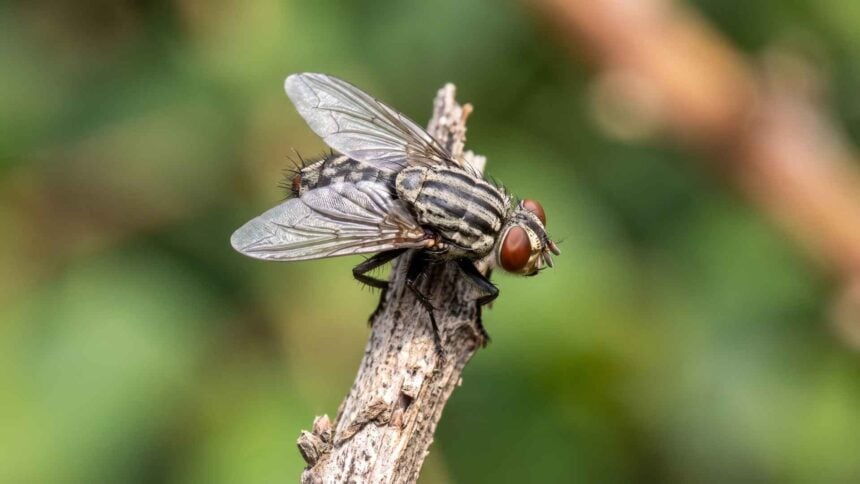
Flesh flies come into your home for a reason, and that particular reason could be a dead animal, or rotting organic matter. Flesh flies breed in animal carcasses and the female flesh fly lays her eggs on meat scraps or dog excrement.
They rarely infest your indoor space with a huge swarm unlike fruit flies, but their appearance could be really annoying and afterall they bring unwanted bacteria and viruses in your home. Turns out, you really need to get rid of flesh flies if you have been noticing them around your property.
We walk you through precise, practical steps to find the source, eliminate the population, and seal your home against future invasions. Keep scrolling!
Table of Contents
Key Takeaways
- To get rid of flesh flies, locate and remove the material that supports their development.
- Check attics, basements, wall voids, trash areas, and pet waste.
- Adult flies can be killed or trapped, but those measures alone may not solve flesh flies infestation entirely.
- Seal gaps around windows and doors to limit entry.
- Call a pest professional if maggots keep appearing or a hidden animal cannot be reached.
Flesh Flies at a Glance
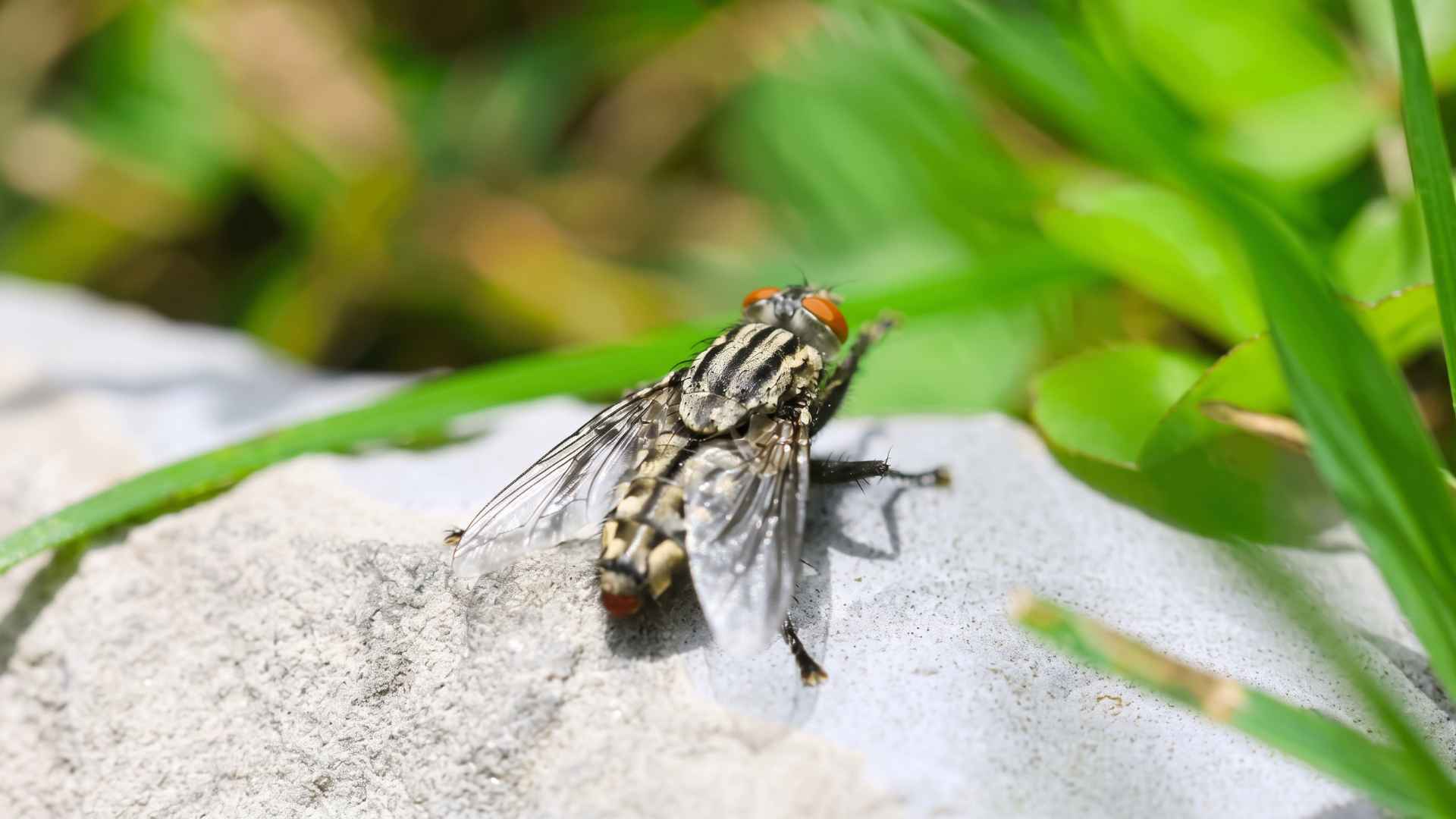
- Color: Usually gray, often with three dark stripes on the thorax.
- Size: They typically measure 3/8 to 7/16 inch long.
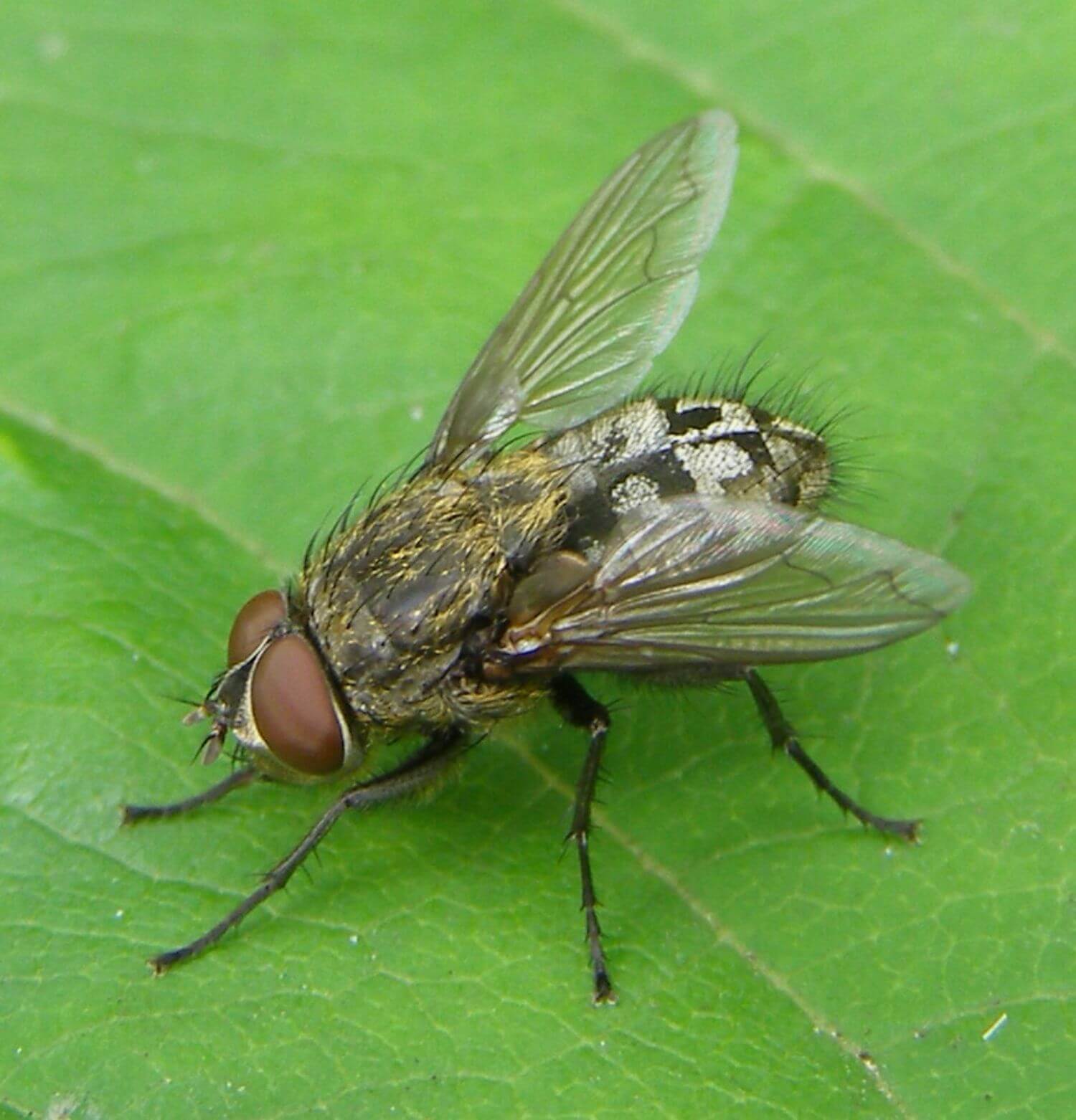
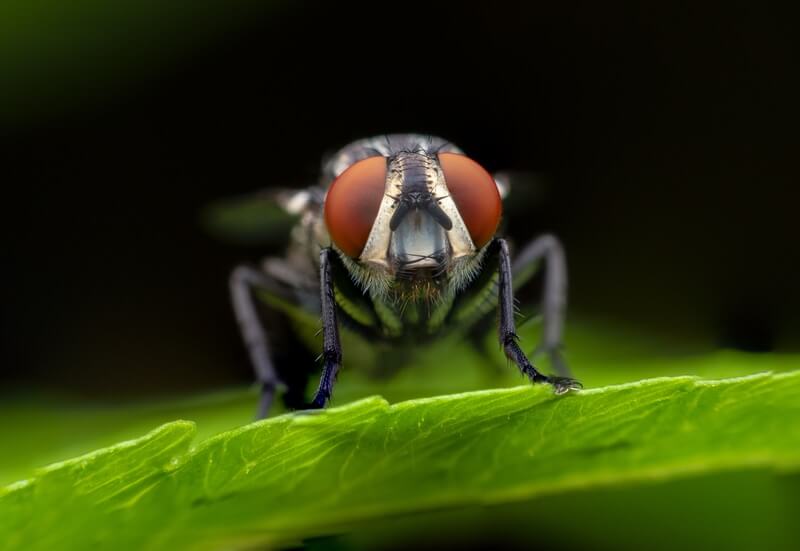
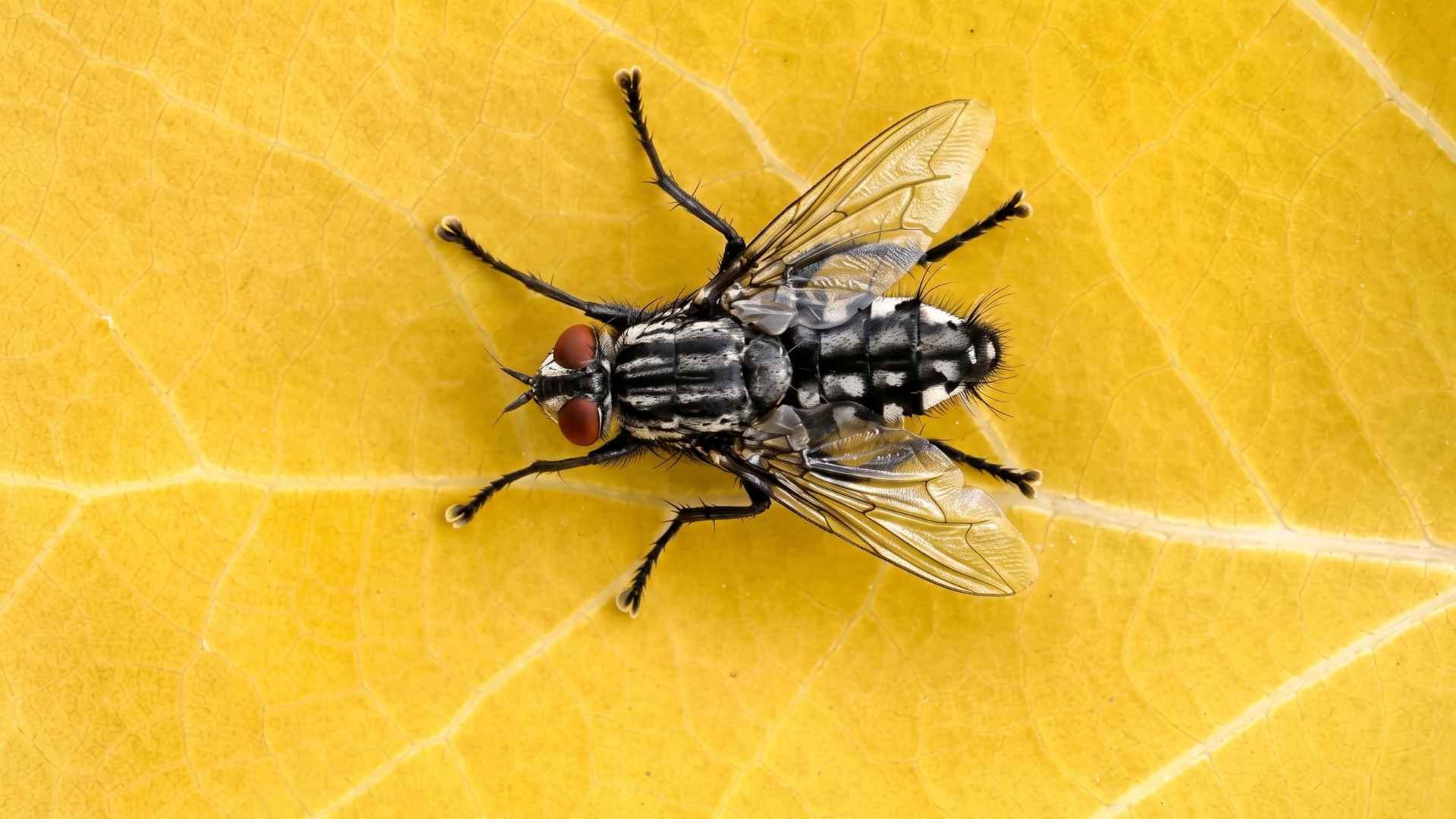
- Distinct Markings: They feature a prominent checkerboard abdomen pattern on the top of their rear section and often have bright reddish eyes.
- Lifespan: Their life for about 2 to 4 weeks (roughly 14 to 30 days) from birth to death.
- Eggs: Many flesh flies are larviparous. Turns out, they retain eggs inside their bodies and give birth to live, crawling maggots directly onto food sources.
- Common food sources: Animal carcasses, spoiled meat, feces, and other decaying organic material.
- Usual location: Most flesh flies live outdoors. Indoor sightings can point to a dead animal or another source nearby.
- Season: They are commonly encountered during warmer months, although local conditions and species affect activity.
What Are Flesh Flies?
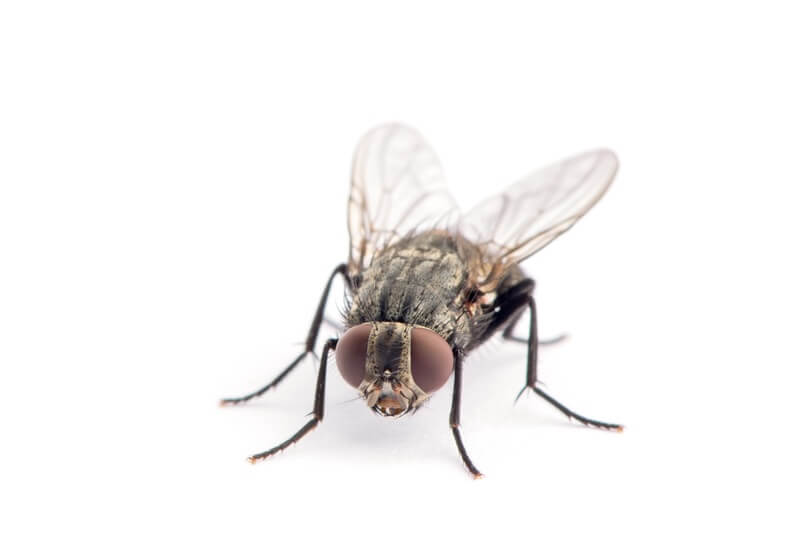
Flesh flies belong to the family Sarcophagidae. They have a distinct gray body and a striking checkerboard abdomen pattern on the top of their tail end. They are generally much larger than ordinary houseflies and have a loud and deep buzzing sound.
Flesh flies do not lay eggs on their food sources. Instead, the female hatches eggs internally and deposits live flesh fly larvae directly onto rotting matter.
This would, in turn, allow their maggots to kick off feeding straight away, cutting down development time and giving them a massive head start over other competitive scavengers
What Attracts Flesh Flies to a House?
Flesh flies possess an incredibly sharp sense of smell, so they could detect the faint odors of decomposition from miles away. Ain’t nothing more appealing to a female looking for a place to drop her larvae than a hidden scent source.
- Animal Carcasses: A mouse that died behind an appliance or a bird caught in a vent creates the ultimate breeding ground.
- Decaying Organic Matter: Rotting meat scraps, open compost bins, and neglected food waste draw flesh flies right to your kitchen windows.
- Dirty Trash Bins: Unwashed garbage cans with a buildup of liquid slime at the bottom emit strong, attractive odors.
- Pet Excrement: Accumulations of uncollected pet waste in the backyard serve as a major beacon for adult flesh flies.
- Exposed Wounds: In rare outdoor scenarios, flesh flies will even lay their eggs in open wounds on injured livestock or neglected pets.
How to Get Rid of Flesh Flies – 7 Effective Ways
To get rid of flesh flies if you have an active infestation, you need the right approach. If I had to tell you the core of getting rid of flesh flies, it would be nothing other than locating their source.
1. Find and Clear Out the Dead Animal Source
If you suddenly find a cluster of flesh flies in house, your first task is to do a thorough inspection for a dead animal. Don’t worry; it could be nearby; you just haven’t noticed it yet. Flesh flies primarily breed in animal carcasses, and they, as well as blow flies and bottle flies, are always the first insects at a dead animal carcass.
Go downstairs, inspect the basement, check the attic, and walk the entire perimeter of your structure. Check the building for anything decaying or deceased. It could be a dead rodent, bird, small mammal, or pet waste.
Flesh fly maggots feed for three or four days and develop through three instars. Soon afterward, these mature larvae enter the pupae stage. Adult flies emerge in 10 to 14 days. The life cycle is then repeated. Once flesh flies larvae grow to maturity within a few days, they crawl out of the breeding material to pupate.
2. Spray a Fast Acting Bug Aerosol Indoors
To kill off visible flesh flies straight away you can use flies sprays especially the one that contains pyrethrins. It will knock them out of the air instantly.

Close all the windows and doors in the affected room, aim the spray toward the upper corners where they tend to gather, and let the mist settle.
Leave the room closed for about fifteen minutes, then air it out completely and sweep up the dead flesh flies. Although this is great for immediate relief, remember that sprays only kill the adult flesh flies you see and won’t stop the hidden larvae from hatching out later.
3. Paint Fly Bait on Outdoor Walls
This is especially helpful if you have a huge yard and a forest nearby and most likely you spot dead animals near your yard. In that case, we think it would be a great idea to set up a protective layer on the outside wall of your home so you barely encounter them inside.
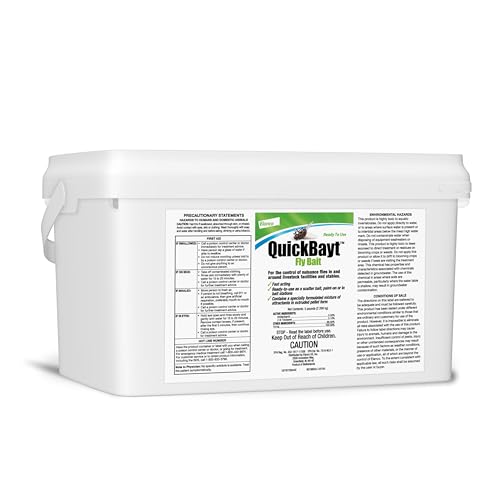
Apply the bait to your outdoor walls, especially around garbage areas and sunny entry points for long-term flesh fly control. These baits contain powerful attractants that draw the flies in to feed, combined with a slow-acting insecticide that eliminates them shortly after ingestion.
Paint the bait in small strips on surfaces where you notice the pests resting in the sun. This method drastically thins out the local flesh flies population before they can find an opening to sneak into your living space.
4. Plug In a Sticky UV Light Trap
UV light trap with a sticky glue board capture adult flesh flies that enter a room. Unlike an electric bug zapper, a glue board holds the insects instead of bursting them apart. This can be preferable indoors, especially near food preparation areas, where insect fragments are undesirable.
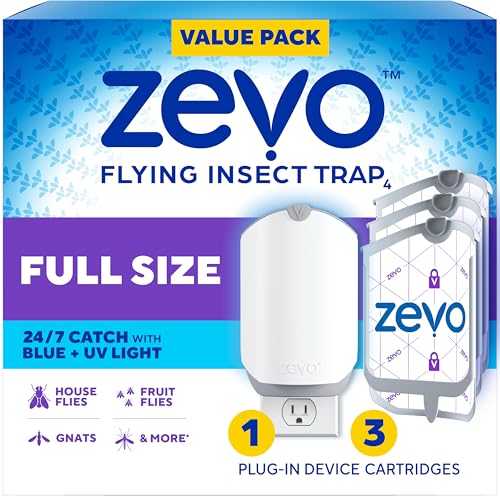
Place the unit where flesh flies tend to gather, such as a utility room or an area away from food and direct sunlight. Avoid setting the trap right beside an open window or exterior door. Bright light may draw flesh flies from outside toward the building, and a trap near an entry point may not help you understand where they originate.
5. Scrub and Disinfect Your Trash Cans
Outdoor waste containers attract flesh flies especially if it contains liquid and food residue at the bottom which it surely will (lol). A sticky film beneath the liner or residue around the lid can continue to produce odors that draw insects back.
Take the container to an appropriate outdoor cleaning area. Clear out loose waste, wash the interior and lid with detergent, and rinse thoroughly. Use a suitable disinfectant if needed. Allow the bin to dry before you place a fresh liner inside.
Keep lids closed between collections, secure leaking bags, and avoid leaving meat scraps exposed. If your household produces a lot of animal waste, tie bags tightly and take them out promptly. Clean the ground around the bin as well, especially if liquid has leaked onto concrete or soil. This will help you get rid of flesh flies for the most part.
6. Fix Broken Window Screens and Door Sweeps
Take a very close look at your windows and doors to identify exactly where do flesh flies come from when they enter your home.
Install sturdy door screens on all screen doors and check every single window frame for tears, holes, or loose fits.
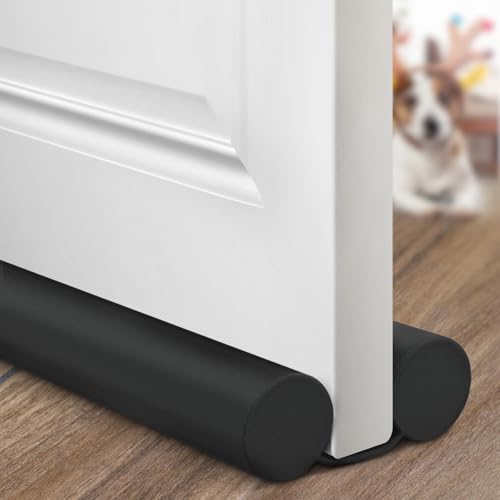
Besides, you need to check out the bottom of your exterior doors. If you can see even a sliver of daylight, a flesh fly can easily slip under. Install heavy-duty rubber door sweeps and apply fresh weatherstripping around all moving joints to create an airtight, insect-proof barrier.
7. Clean Up Pet Waste From the Yard Daily
Dogs and cats are popular household pets. However, their outdoor waste can easily attract flesh flies. The female flesh fly lays her eggs on meat scraps or dog excrement. Turns out, your backyard can quickly turn into a production line for new swarms.
Grab a pooper-scooper and clear the entire yard every single morning. You can place the waste into a small, sealable plastic bag before throwing it into the main outdoor trash container. Keeping your lawn clean sidesteps a major biological trigger and forces adult flesh flies to look elsewhere.
Flesh Flies vs. Blow Flies – How to Tell the Difference
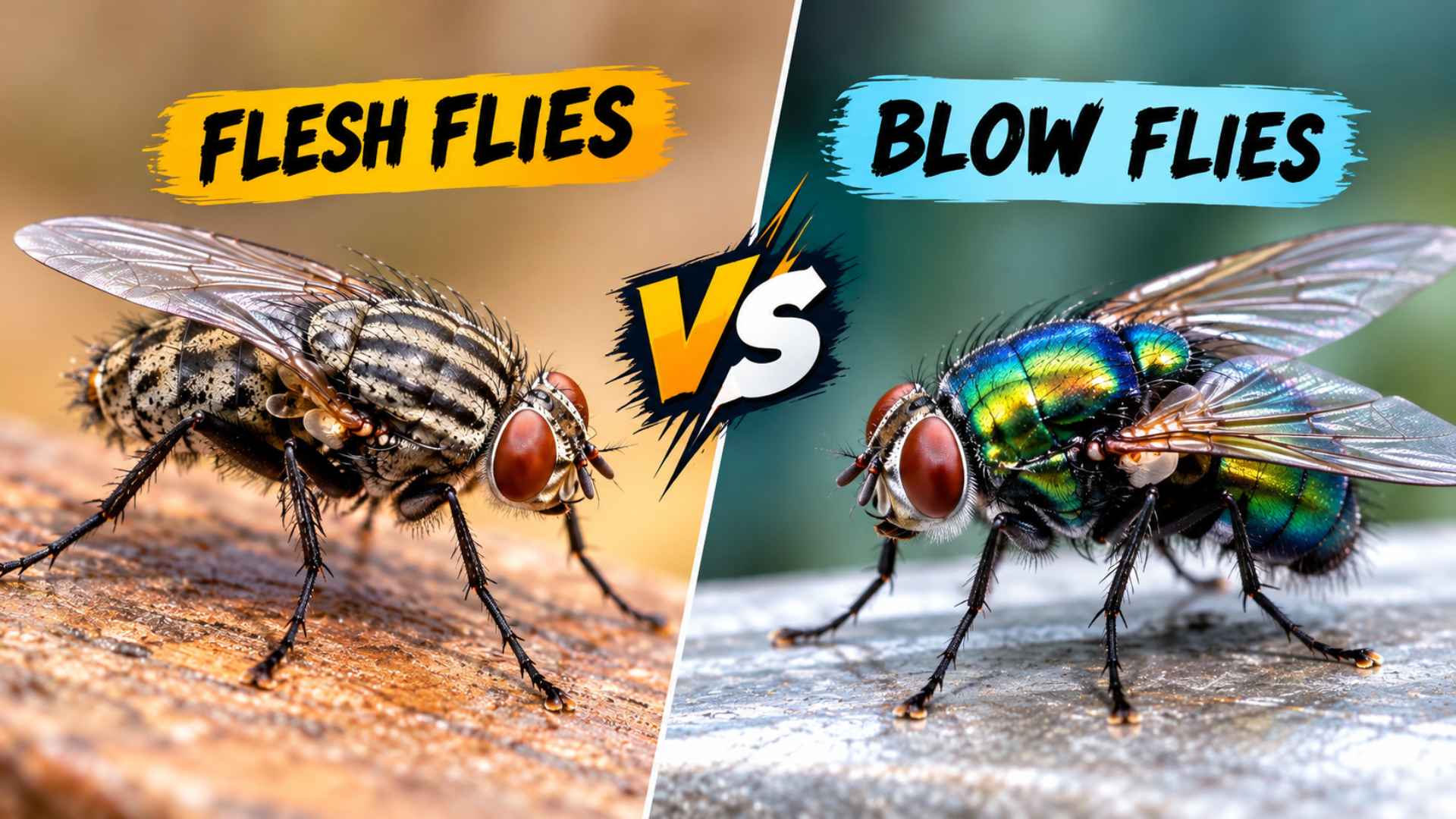
The phrase flesh flies vs blow flies comes up often because both groups visit dead animals and decaying material. The most useful clue is appearance. Blow flies typically feature a shiny, metallic green or blue sheen covering their entire body. In contrast, a flesh fly looks much more rugged, sporting a distinct gray body with dark vertical stripes on its back and that classic checkerboard abdomen pattern. Blow flies are also much more likely to enter homes in huge numbers over simple kitchen waste, while a sudden group of flesh flies almost always points directly to a larger piece of decaying matter or a dead animal nearby.
| Characteristic | Flesh Flies | Blow Flies |
|---|---|---|
| Coloring | Dull gray with black stripes | Shiny, metallic green, blue, or bronze |
| Abdomen Pattern | Clear checkerboard abdomen | Smooth, solid metallic finish |
| Reproduction | Deposits live flesh fly larvae | Lays clusters of white eggs |
| Typical Size | Large (10 to 13 mm) | Medium to Large (6 to 10 mm) |
| Primary Breeding Site | Decaying organic matter, carrion, dung | Carrion, open wounds, rotting meat scraps |
When Should You Call a Pest Control Professional?
Although DIY methods work pretty well. If you do it constantly, you can get rid of flesh flies; though it’s actually possible that you are going through a severe flesh fly infestation if you see them day after day even after you have thoroughly cleaned your home, washed your bins, and emptied the traps.
When a flesh fly infestation reaches this level, it is time to bring in the pros. We highly recommend contacting Orkin to handle the situation. Their expert technicians use advanced thermal imaging and moisture meters to pinpoint the exact location of the hidden breeding source behind your drywall.
They will safely cut out the problem, remove the source, deodorize the void, and apply targeted residual treatments to ensure no hidden pupae survive to start the cycle all over again.
Frequently Asked Questions (FAQs)
Do Flesh Flies Bite?
Flesh flies do not possess the mouthparts required to bite humans or animals. Their mouthparts are designed strictly for sponging up liquid nutrients and moisture. However, because they constantly land on filth, animal corpses, and waste, they can easily transfer dangerous pathogens to your food and countertops if they land on them.
Why Do I Have So Many Flesh Flies in My House?
If you are seeing a large number indoors, it means a female flesh fly found a perfect breeding source either inside the building or outside. Occasionally, an animal like a rat, mouse, or squirrel has died inside your attic, wall voids, or under the floorboards. Flesh flies sneak in your house through a tiny crack, crevice, or a millimeter-wide opening to find it, resulting in a sudden population explosion.
Do Flesh Flies Pose Any Health Concerns?
Flesh flies pose significant health risks. Because they feed and breed on rotting carcasses, feces, and garbage, they carry a massive amount of bacteria and viruses on their legs and bodies. When they walk across your kitchen surfaces, utensils, or exposed food, they can spread food poisoning, diarrhea, and other bacterial infections.
What Are Flesh Flies Attracted To?
They are commonly drawn to dead animals, spoiled meat, animal feces, and other decaying material. Odors from bins, dumpsters, or a dead animal inside the structure can draw adults close to a building.
Will Flesh Flies Eventually Go Away?
They will only disappear once their food and breeding source is completely exhausted. If there is a dead rodent in the wall, the activity will continue until the carcass is entirely consumed by the larvae and the final batch matures. However, if you do not implement proper protocols to get rid of flesh flies, a new generation will simply find another source nearby.
How Long Does It Take to Get Rid of Flesh Flies?
Once you find and eliminate the primary breeding source, you can clear out the remaining flesh flies adults within 24 to 48 hours using traps and aerosols. However, if the larvae have already crawled away to pupate in hidden cracks, you might see random adults emerging for another 10 to 14 days until the cycle completely finishes.
Wrapping Up…
Beating a flesh fly problem depends pretty much on how fast you act before the population grows and puts you into a large infestation. To successfully get rid of flesh flies, you have to hunt down the root cause, enforce strict sanitation standards, and seal up every single physical entry point around your property that they can get across. Clean out your trash bins, keep your yard clear of waste, and make sure your window screens are completely tight. If you take away their access to food and breeding sites, they simply cannot survive.