
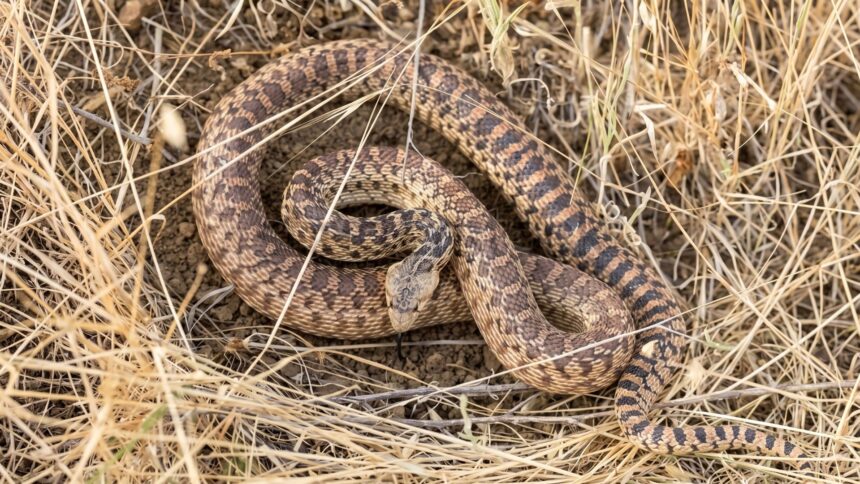
There aren’t many snakes that are as feared as the gopher snake. It is long, makes a loud hissing sound, and shakes its tail like a rattlesnake. Most people react the way you would expect them to, by grabbing a shovel or calling the pest control.
However, gopher snakes are non-poisonous snakes that spend most of their life hunting for rodents. Nevertheless, it’s understandable why you would want gopher snakes out of your yard, especially near the patio or henhouse. They are commonly found across North American residential properties.
If you want to get rid of gopher snakes on your property the right way, you have to avoid using poisons and traps, as well as change what your property offers to snakes in terms of food, cover, and entry points. Below, you’ll find how these snakes live, what works, what doesn’t, and how to tell one from a rattlesnake.
Table of Contents
Key Takeaways
- Gopher snakes are nonvenomous constrictors that hunt rodents.
- To get rid of gopher snakes, cut off food, cover, and access.
- ¼ inch mesh fencing keeps them out.
- Home remedies and repellents rarely work against gopher snakes.
- Treat an unidentified snake as venomous until proven otherwise.
Gopher Snake Quick Information
- Common name: Gopher snake, also called bullsnake on the Great Plains
- Scientific name: Pituophis catenifer (the Pacific subspecies is Pituophis catenifer catenifer)
- Size: Hatchlings measure about 20 inches (50 cm)
- Length: Adults range in size from 2.5 to 7 feet (76 to 213 cm), and a few giants top 9 feet
- Venom: None, since this is a nonvenomous colubrid
- Eggs: Commonly 3 to 9 eggs in early summer that hatch 2 to 2.5 months later
- Lifespan: Roughly 10 to 15 years in the wild
- Daily rhythm: Diurnal, though it can be active at night in warm weather
- Winter: In colder climates they overwinter without feeding, often in burrows shared with other snakes
- Prey: Rodents, lizards, birds and eggs, killed by constriction
- Range: Southern Canada to Mexico, across deserts, prairies, woodlands and farmland
What Are Gopher Snakes & How Do They Look?
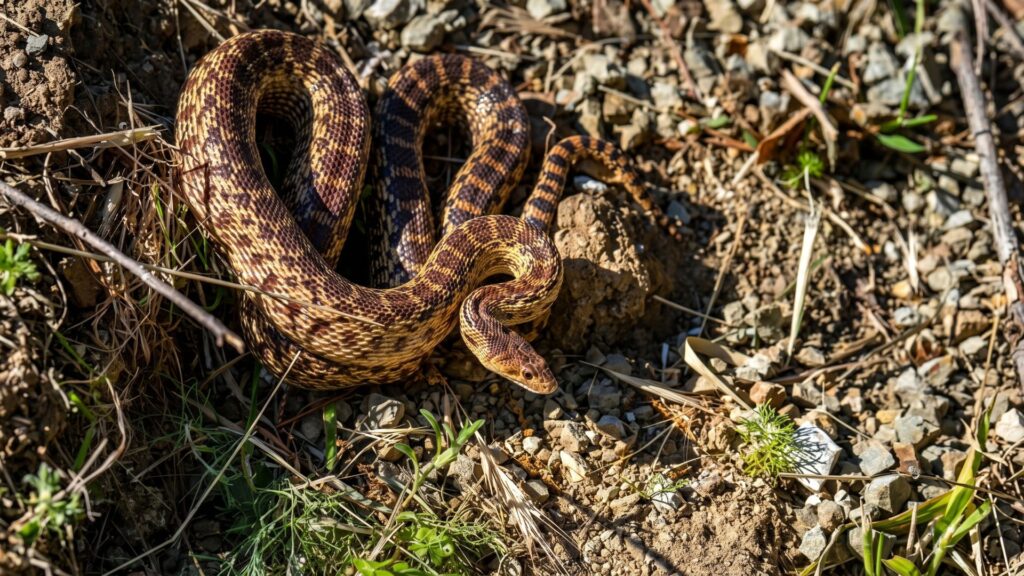
Gopher Snake sightings are common in the summer, and they’re also among the most mistaken. People confuse them for rattlesnakes because of the blotchy back, the loud hiss and the tail shake. These snakes are nonvenomous, and they’re not pit vipers. They are highly agile climbers. Unlike heavy-bodied rattlesnakes that struggle with vertical surfaces, gopher snakes frequently scale textured brick walls, mortar lines, rough timber fences, trees, and shrubs to prey on eggs and birds in coops or nests.
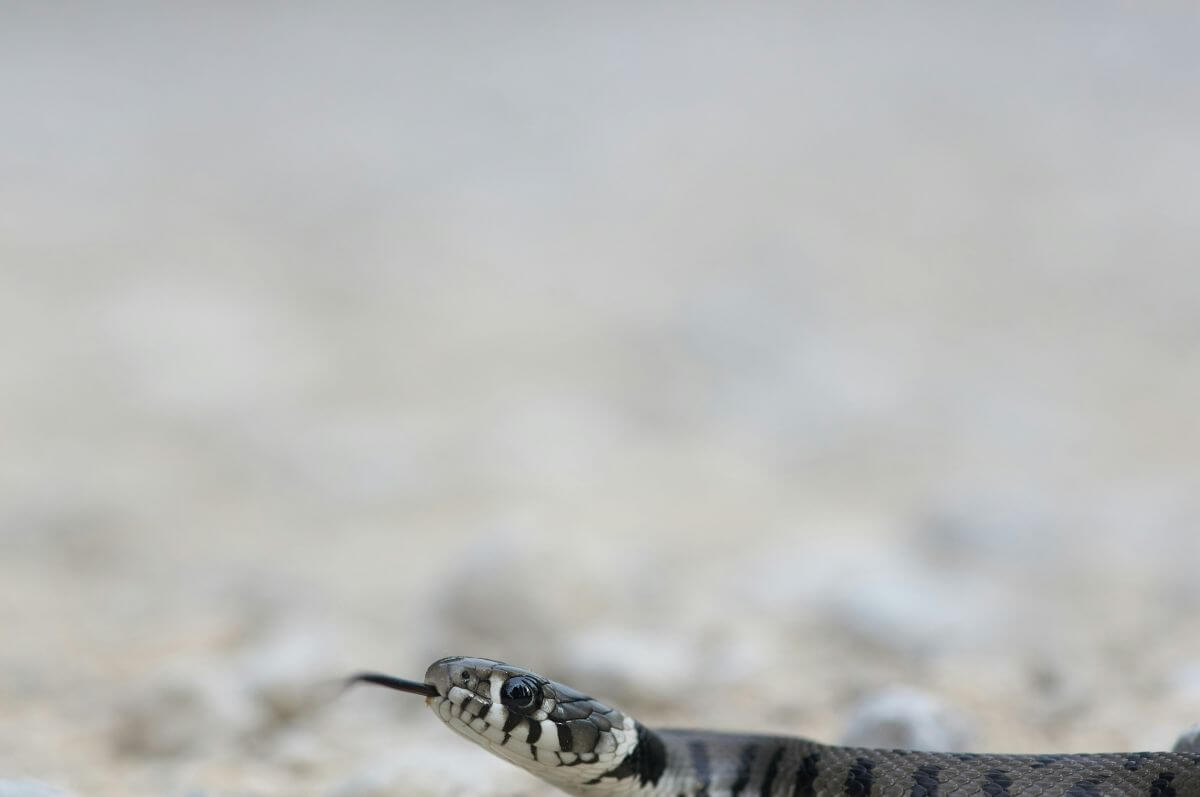
- Coloration: They feature a base color of cream, yellow, or light brown, overlaid with a series of dark, prominent rectangular blotches running down their back.
- Head: Narrow, though it looks triangular when flattened. A distinct eye stripe runs from the edges of the jaw through the eyes and across the snout, and a small dark tear like marking sits below each eye.
- Pupils: Round.
- Scale Texture: Their scales are heavily keeled. Turns out, they have a raised ridge down the center of each scale. It gives the snake a rough, dull texture rather than a shiny appearance.
- Defense: When threatened, it hisses loudly, can inflate its body, flattens its head and shakes its tail vigorously. In dry leaves, that gives off a rattling sound.
- Temperament: Not aggressive or harmful to humans.
Why Do Gopher Snakes Come To Your Yard?
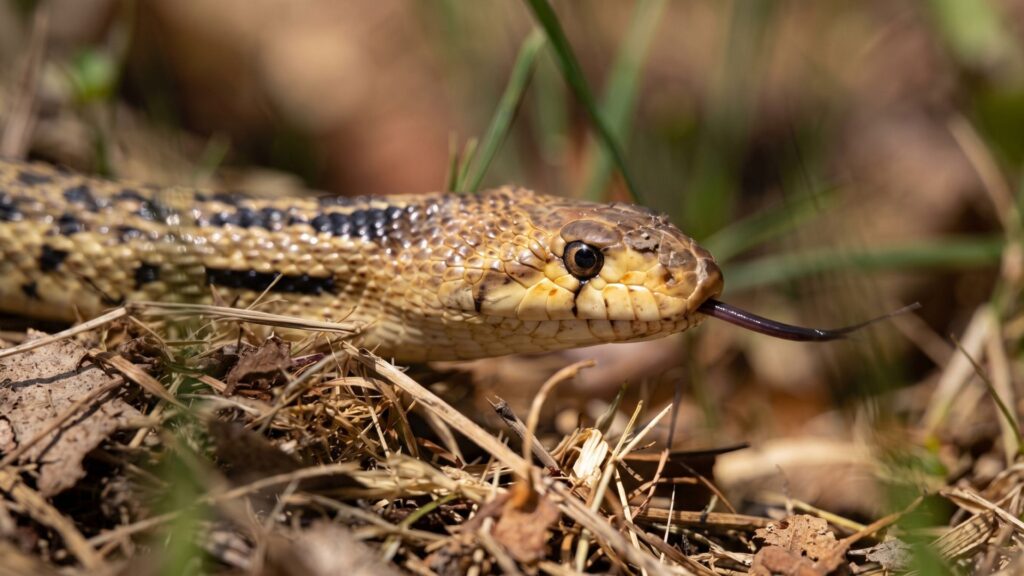
Gopher snakes usually come into a yard because there is food nearby. Mice, voles, pocket gophers, and ground squirrels make up a big part of their diet. They may also eat birds, eggs, lizards, and other small animals.
A messy yard can make the problem easier to notice. Tall grass, wood piles, brush, rocks, and stored debris give rodents places to hide, and those same areas can give snakes cover too. Spilled bird seed and outdoor pet food can also bring rodents closer to the house, giving gopher snakes another reason to follow.
In the springtime and early summer, females are also inclined to look for loose soil or burrows to lay eggs. Spotting a gopher snake in your backyard brush on an occasional basis is normal, but regular visits are a sign that you should look closely at your food supply.
8 Effective Ways to Keep Gopher Snakes Out of Your Yard
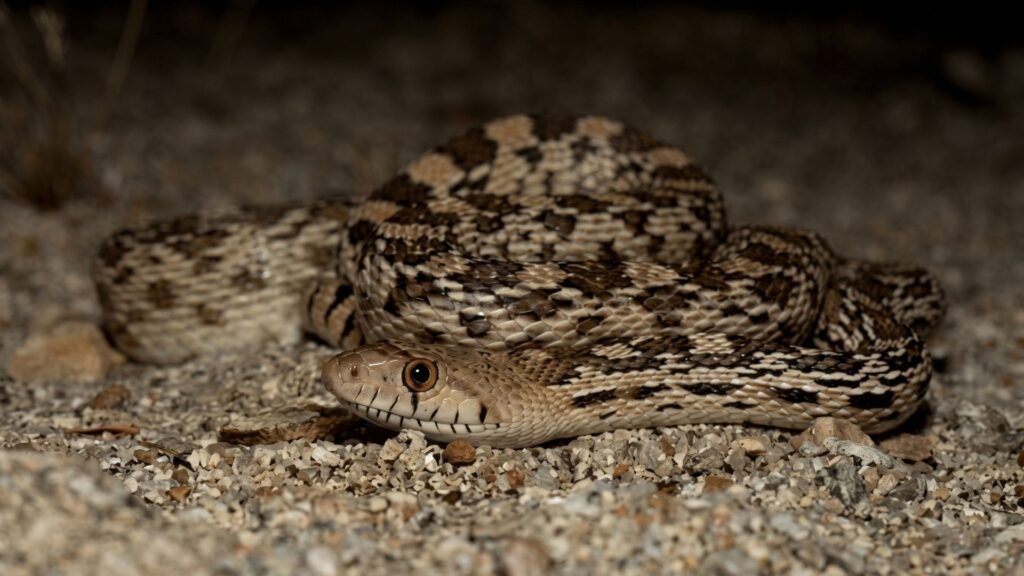
Here’s how to get rid of gopher snakes one step at a time. You won’t need all eight on every property. Start at the top and work down. Smart gopher snake yard control is literally about making the place less interesting to a hungry reptile.
1. Give the Snake Space and Let It Leave
You rarely need to get rid of gopher snakes the second you spot one. A snake sunning itself ain’t hunting you. Keep kids and pets inside, stay several feet back, and watch from a distance. Most snakes move on their own in a while if nothing interests them. Don’t poke it or chase it with a rake, because cornered snakes bite. If it’s blocking a doorway, a gentle hose spray from a distance can nudge it along. When you can’t tell whether it’s a gopher snake or something venomous, treat it as venomous and call for help.
2. Reduce Rodents Around the Property
The cheapest way to keep gopher snakes away is to starve them of mice. Solid Rodent Control makes the whole yard less appealing to gopher snakes. Store birdseed and pet food in sealed metal or heavy plastic bins, and keep ’em sealed.

Pick up fallen fruit and nuts. Close the compost bin. Use snap traps in protected stations, and keep the garage tidy. Skip anticoagulant rodent poisons. Poisoned mice get eaten by hawks, owls, and pets, and that creates a second round of trouble.
3. Shorten Grass and Clear Debris Piles
Tall grass provides gopher snakes a means to safely traverse an area. The need to cut grass must be frequent, and brush removed from the home premises.
Old woods and rocky heaps piled among other rubbish must be cleared out too. Be sure to store firewood properly and at least a foot distanced from the earth.
Carrying out a seasonal clean-up of the yard during early spring time would be extremely beneficial.
4. Install Snake Proof Fencing
The only option left to ensure that gopher snakes do not get into certain important locations such as a backyard patio, children’s play zone, or your most sought-after garden area is by setting up a unique fencing system. Regular fences made of chain link or wood allow snakes to slide in and out easily.
To build an effective snake-proof barrier, purchase 1/4-inch galvanized hardware cloth mesh and slant the fence outward at a 30-degree angle to significantly deter climbing.

Attach this heavy-duty wire mesh directly to the bottom of your existing fence. The mesh barrier must stand at least 3 feet high to prevent snakes from climbing over it. Crucially, you must bury the bottom edge of the mesh 4 to 6 inches deep into the ground. This underground barrier prevents both snakes and burrowing rodents from digging underneath the fence line.
For maximum effectiveness, slant the top of the fencing outward at a 30-degree angle to prevent climbing for the most part.
5. Seal Openings Around Buildings
Building a snake proof yard means looking at the house too. Entry Points hide in foundation cracks, gaps under doors, vent openings, utility pipe penetrations and crawl space access panels. Close them with caulk, mortar, door sweeps and quarter inch hardware cloth over vents. Check garage door seals. Do this walk around in spring and again in fall. Rodents use the same gaps. Every hole you plug works on two problems at once.
6. Secure Bird Feeders and Chicken Coops
Homeowners often do not realize that bird feeders and backyard chicken coops act as massive neon signs for hungry snakes. Although gopher snakes will absolutely raid nests to consume bird eggs and young chicks, the larger issue is the secondary pests these setups attract.
Spilled birdseed and chicken feed on the ground serve as a primary food source for mice, rats, and squirrels. As rodent populations surge around a coop or feeder, gopher snakes will follow the heavy scent trails directly to the area.
Clean up spilled feed daily, store all bulk animal feed in airtight metal containers, and elevate bird feeders on smooth metal poles that snakes cannot climb. For chicken coops, reinforce all nesting boxes, doors, and floor gaps with buried 1/4-inch hardware cloth to keep both the rodents and the snakes away from your livestock.
7. Eliminate Standing Water and Fix Outdoor Leaks
Like all animals, water is essential for the survival of gopher snakes. This makes water sources such as puddles and moist areas a magnet for snakes, both because they need to drink and because it’s where their food is likely to be found.
Check your yard for any outdoor spigots that may be leaking or sprinkler heads that aren’t spraying correctly. Make sure any low areas in your yard that collect standing water are being properly drained. Call a plumber to fix any broken pipes or irrigation system leaks.
If you have birdbaths or other water features in your yard, empty and clean them on a daily basis or remove them from your yard completely during months when snakes are likely to be present. By removing these sources of standing water, you’ll make your yard much less appealing to amphibians, small rodents, and the gopher snakes that hunt them.
8. Call a Wildlife Professional
If a snake keeps coming back, nests under a deck or you can’t identify it, call in a licensed expert. Professional Wildlife Removal teams can name the species, relocate the animal legally and track down what’s drawing it in.
Rules for gopher snake removal differ by state, and many places limit killing or moving native snakes. Check with your state wildlife agency or local animal control first.
Never grab one by hand. If you want to get rid of gopher snakes that keep returning, a pro can also inspect your fence and entry gaps.
Do Snake Repellents Work on Gopher Snakes?
Arkansas Cooperative Extension advises that no Snake Repellent has been found to be consistently effective. Their list of things that don’t work on snakes includes mothballs, sulfur, cedar oil, lime, cayenne spray, rope, liquid smoke and other home remedies.
There are plenty of bottles out there that say otherwise, but fancy labels don’t necessarily tell the truth. Mothballs contain dangerous chemicals such as naphthalene and paradichlorobenzene, both of which are harmful to children and pets, and using them as a snake deterrent would be a violation of the product’s fine print.
That would make it illegal to use mothballs in your yard according to federal law. If you want to get rid of gopher snakes for good, you’re much better off spending the money on a fence, rodent control and clean up rather than investing in poison or deterrents. It’s the snake’s habitat that ultimately attracts it to your home and that’s what you need to change in order to get rid of gopher snakes.
Gopher Snake vs Rattlesnake
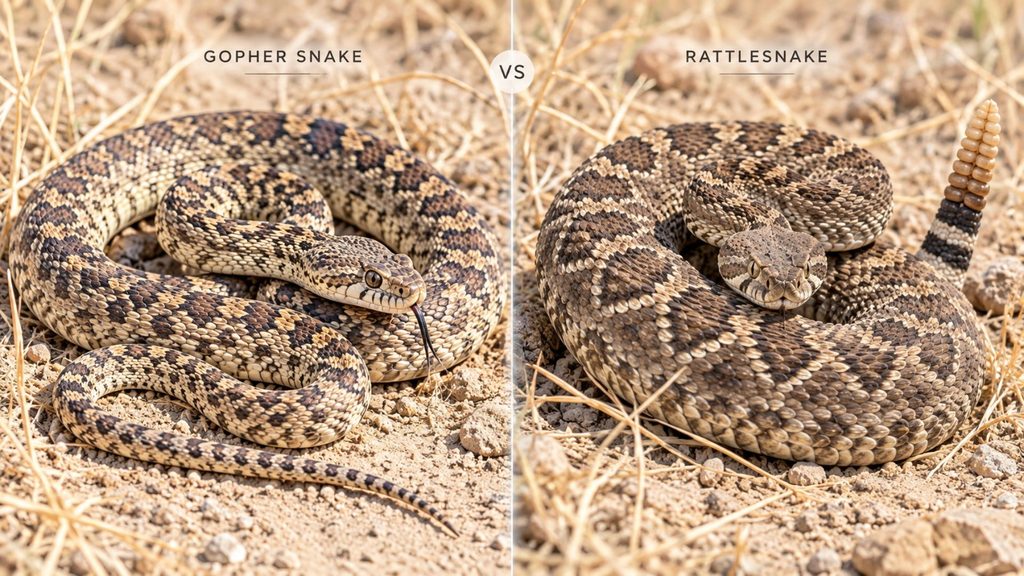
One of the biggest issues with gopher snakes is their striking resemblance to venomous rattlesnakes. To protect themselves from predators, gopher snakes are master mimics. When threatened, a gopher snake will flatten its head into a triangular shape, hiss loudly, and rapidly vibrate its tail against dry leaves to produce a buzzing sound that perfectly copies a rattlesnake’s warning.
However, misidentifying a harmless gopher snake as a dangerous pit viper often leads to unnecessary panic. By looking closely at specific, unchangeable biological features, you can easily tell them apart.
| Feature | Gopher Snake (Harmless) | Rattlesnake (Venomous Pit Viper) |
|---|---|---|
| Tail End | Pointed, tapered, completely lacks a rattle structure. | Equipped with a distinct, segmented button or rattle. |
| Eye Pupils | Perfectly round pupils. | Vertical, slit-like cat-eye pupils. |
| Facial Pits | Smooth face; no openings between nose and eyes. | Deep, heat-sensing pit openings behind nostrils. |
| Head Shape | Narrow, oval head (widens only slightly when threatened). | Permanently broad, distinctly triangular, spade-shaped head. |
| Body Scales | Dull and keeled, but slender and streamlined. | Very thick, heavy-bodied, and chunky appearance. |
Are Gopher Snakes Dangerous to People or Pets?
Gopher snakes are entirely non-venomous and pose no lethal threat to humans, dogs, or cats. They completely lack venom glands and fangs. Because they are constrictors, their primary defense mechanism against large threats is bluffing. When cornered, they hiss loudly, flatten their heads, and strike.
A bite from an adult gopher snake can cause minor, superficial scratches and brief localized bleeding due to their small, rowed teeth. However, it requires nothing more than basic first aid—washing the area thoroughly with soap and water to prevent bacterial infection. They are not aggressive and will only bite domestic pets or humans as a final, desperate act of self-defense if stepped on, handled roughly, or pinned down.
Frequently Asked Questions (FAQs)
Are gopher snakes good to have in the yard?
Often, yes. They hunt gophers, mice, rats, and voles that damage gardens and chew on plant roots. That makes them free pest help. The tradeoff is eggs and chicks.
Will a gopher snake leave on its own?
Gopher snakes are transient hunters. If a snake sweeps through your yard and finds no food or permanent hiding spots, it will naturally move on to look for a more resourceful territory within a few hours.
What attracts gopher snakes to a yard?
Gopher snakes are drawn to yards by food and shelter. An abundance of rodents, lizards, or bird nests, alongside ground clutter like rock piles, overgrown grass, and debris, creates the ideal hunting and basking habitat.
Why do they call it a gopher snake?
They are named “gopher snakes” because pocket gophers are their primary, preferred food source. Their bodies and hunting tactics are specialized for entering underground rodent burrows to hunt down these specific lawn pests.
How poisonous is a gopher snake?
Gopher snakes are 0% poisonous and 0% venomous. They carry absolutely no toxins or venom. They rely entirely on constriction to dispatch their prey and pose no chemical danger to humans or household pets.
Does a gopher snake bite hurt?
A gopher snake bite causes a minor, fleeting pinch similar to a severe briar scratch. Because they lack fangs, their tiny teeth only puncture the very surface of the skin, causing slight bleeding.
Should I kill a gopher snake?
No. You should never kill a gopher snake. They are harmless, highly beneficial to the local ecosystem, and keep rodent populations in check. Killing them is unnecessary and often drives up the rodent population in your yard. If you still want to get rid of gopher snakes, use habitat fixes or a licensed pro.
Wrapping Up…
Gopher snakes aren’t villains. They patrol for rodents, they’ll bluff like a rattler when scared, and most leave quietly once nothing keeps them around. If one is hanging around your place, cut the food, clear the cover and close the gaps.
Add a properly built mesh fence where you need a firm line. Skip the mothballs and sprays, and leave the shovel in the shed. A snake you haven’t identified deserves distance, and a call to a pro is smart. Put these steps to work and you’ll get rid of gopher snakes the right way, and your yard will stay quiet all season.