
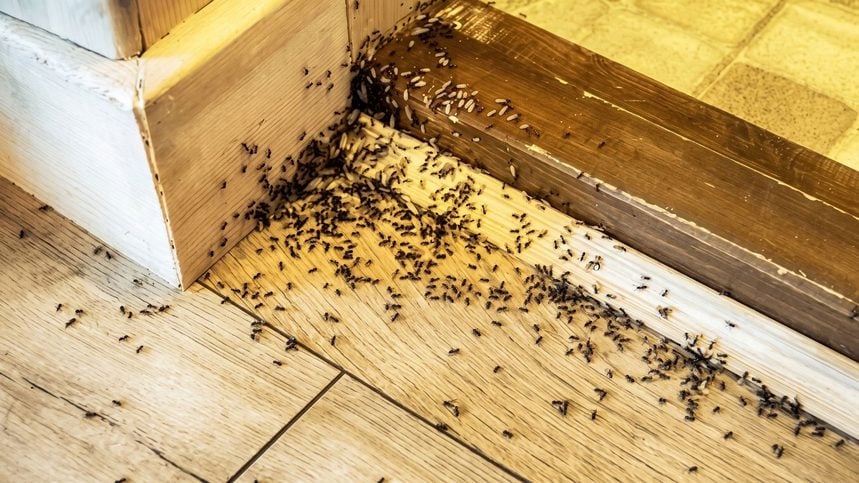
You get through a heavy storm, then the next morning there is a line of ants running across the counter or gathering near the sink. Your kitchen did not suddenly become dirty. The rain may be what changed.
Heavy rainfall can disturb outdoor ant nests and push some species toward drier shelter. At the same time, ants that make it indoors quickly find water, crumbs, pet food, or other easy resources and leave a trail for the rest of the colony to follow.
If you are wondering why ants appear after rain or why you suddenly notice ants worse after heavy rain, this guide breaks it down. You will learn what rain does to outdoor colonies, why ants after rain head toward the house, how to wipe out their trails, where bait fits in, and when the problem is big enough to call a pest control professional.
Table of Contents
Key Takeaways
- Flooded nests send ants searching for dry ground.
- Rain also washes away scent trails and outdoor food.
- Baits beat sprays for taking out a whole colony.
- Wipe trails, fix leaks, then seal gaps once activity fades.
- Winged ants signal a mating swarm, not always an infestation.
Where You Could Spot Ants After Heavy Rain
- Kitchen counters and sink edges are common first stops, especially when ants in kitchen after rain are looking for water or food.
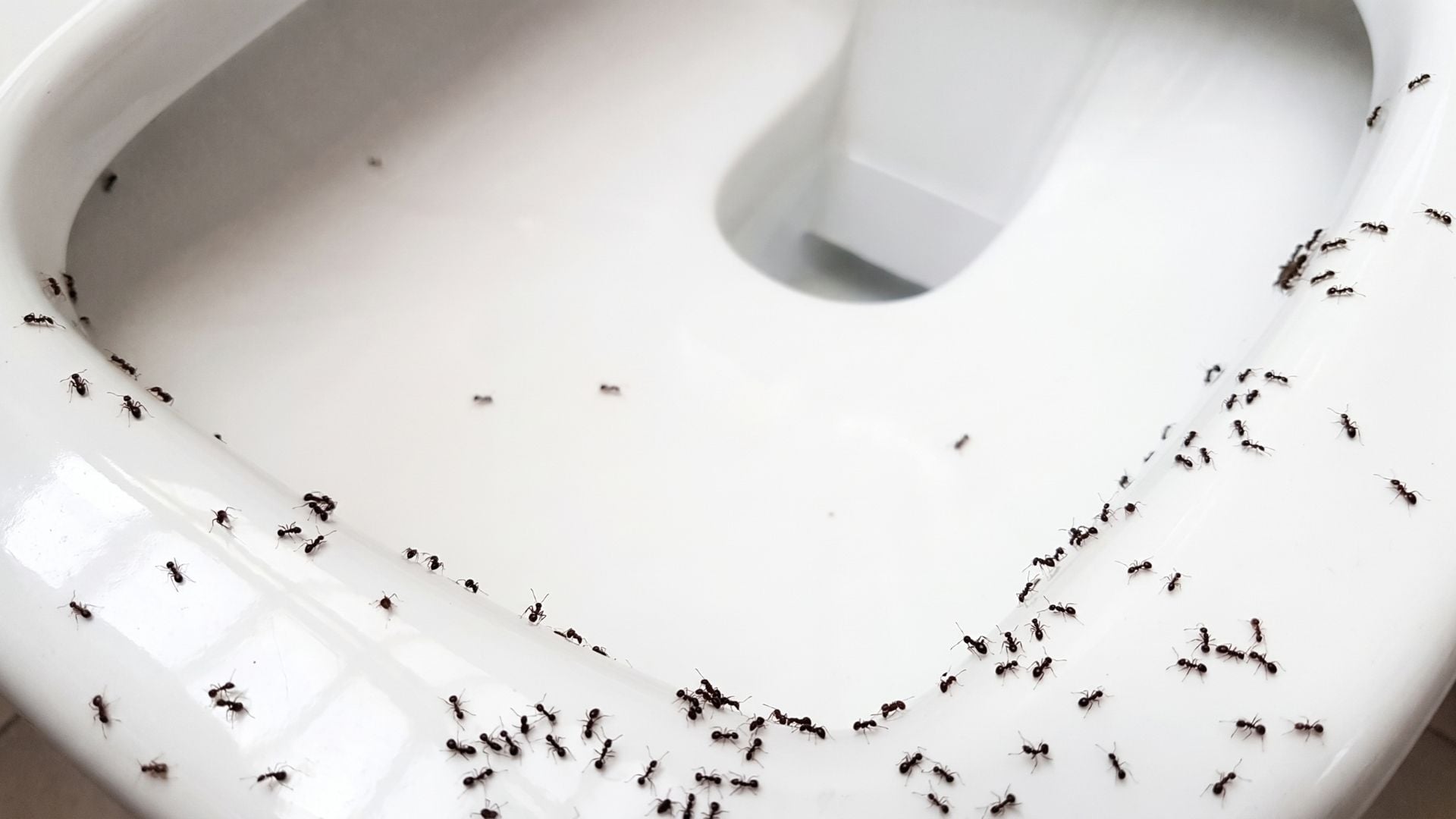
- Bathroom sinks, tubs, showers, and plumbing areas can attract ants in bathroom after rain because moisture is easy to find there.
- Window sills and door frames can reveal the route ants are using to get inside.
- Baseboards, wall cracks, and gaps around pipes give ants covered paths through the house.
- Behind fridges, dishwashers, and washing machines is worth checking for moisture and hidden trails.
- Basements, garages, and crawl spaces near the foundation can pick up activity after wet weather.
- Pet bowls often attract ants if food or water sits out for long periods.
- Outside, check foundation cracks, mulch, patio joints, sidewalks, and soil close to the house.
- Winged ants may also appear near windows or lights around the time colonies begin swarming.
6 Reasons Ants Get Worse After Heavy Rain
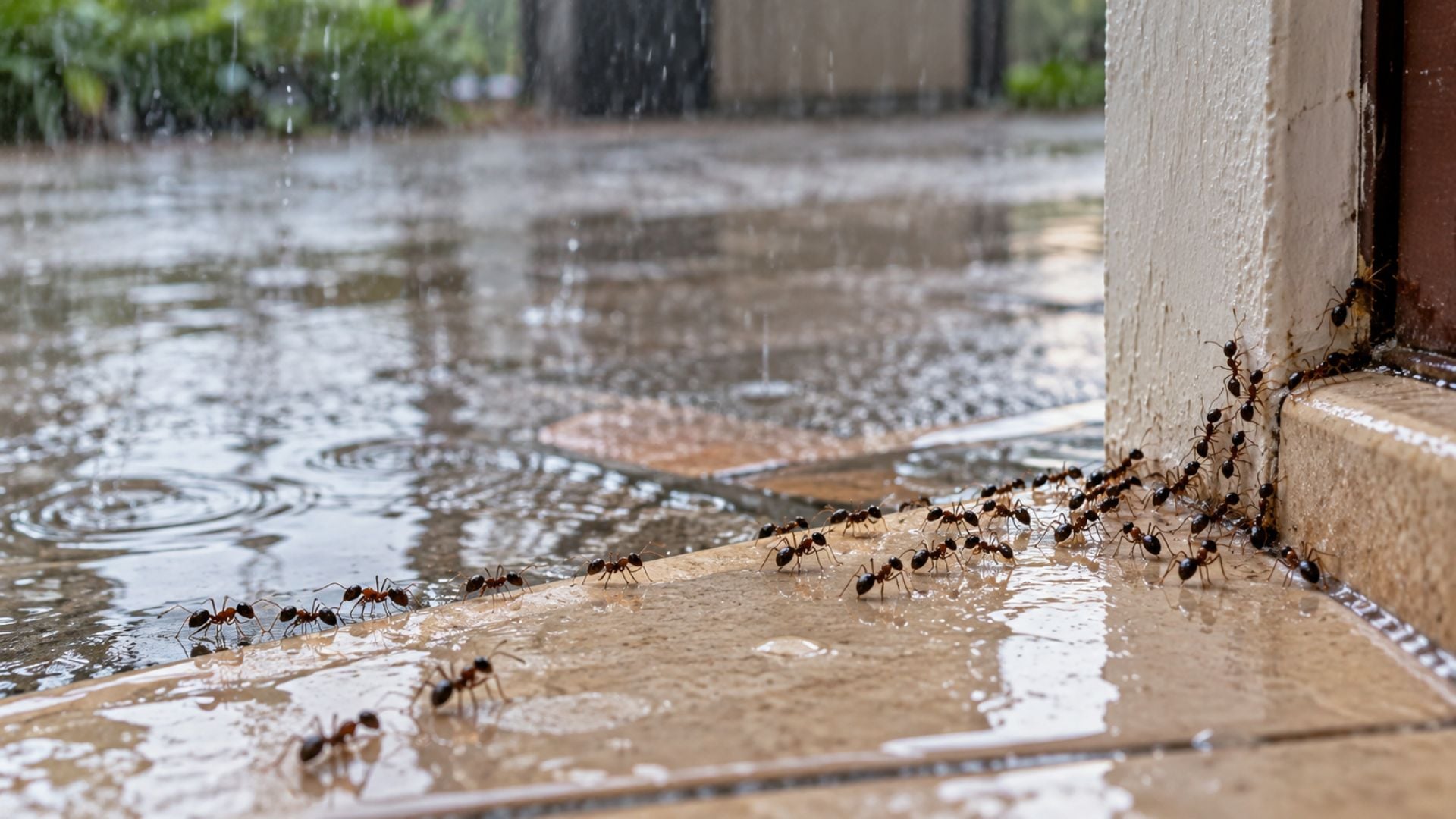
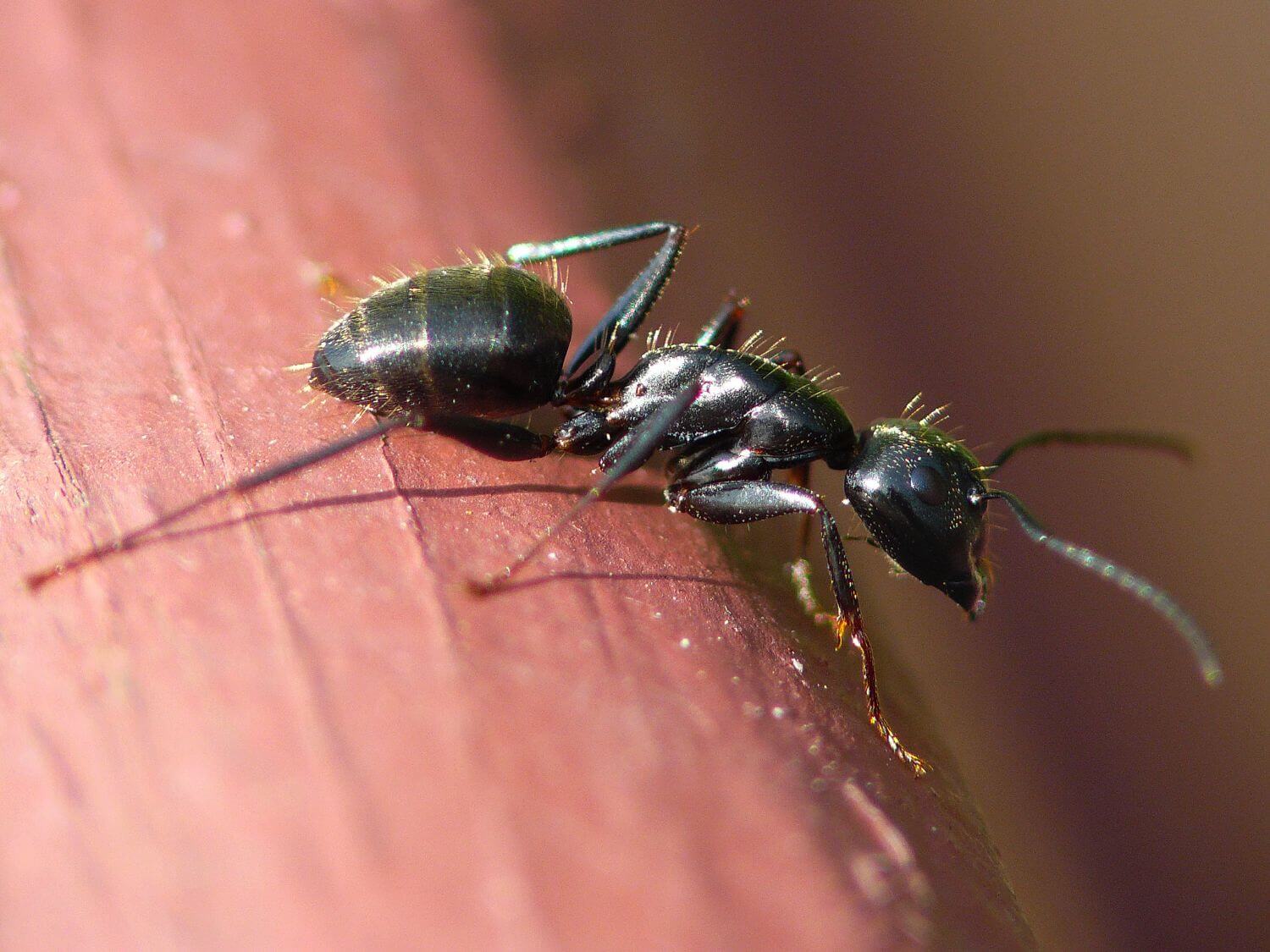
- Flooded underground nests. Many pest ants build nests in soil, under rocks, or close to foundations. After a long downpour, water can flood those nesting areas and force ants to move. That is one reason ants after rain can suddenly appear around the house. Fire ants take this even further. During floods, entire colonies can link together into floating rafts until they reach dry ground.
- Your house becomes dry shelter. During heavy rains and floods, ants have been known to find a way into houses, seeking higher ground. Ants will at times be able to enter through small cracks in the foundations, gaps in the doors, openings in piping, and other entry points. It is common to see ants searching for shelter from floods.
- Rain changes outdoor food availability. Many ants normally find plenty to eat outdoors. Carpenter ants, for example, feed heavily on honeydew produced by aphids and scale insects. Weather changes can disrupt normal foraging, and ants may widen their search when familiar food sources are harder to reach.
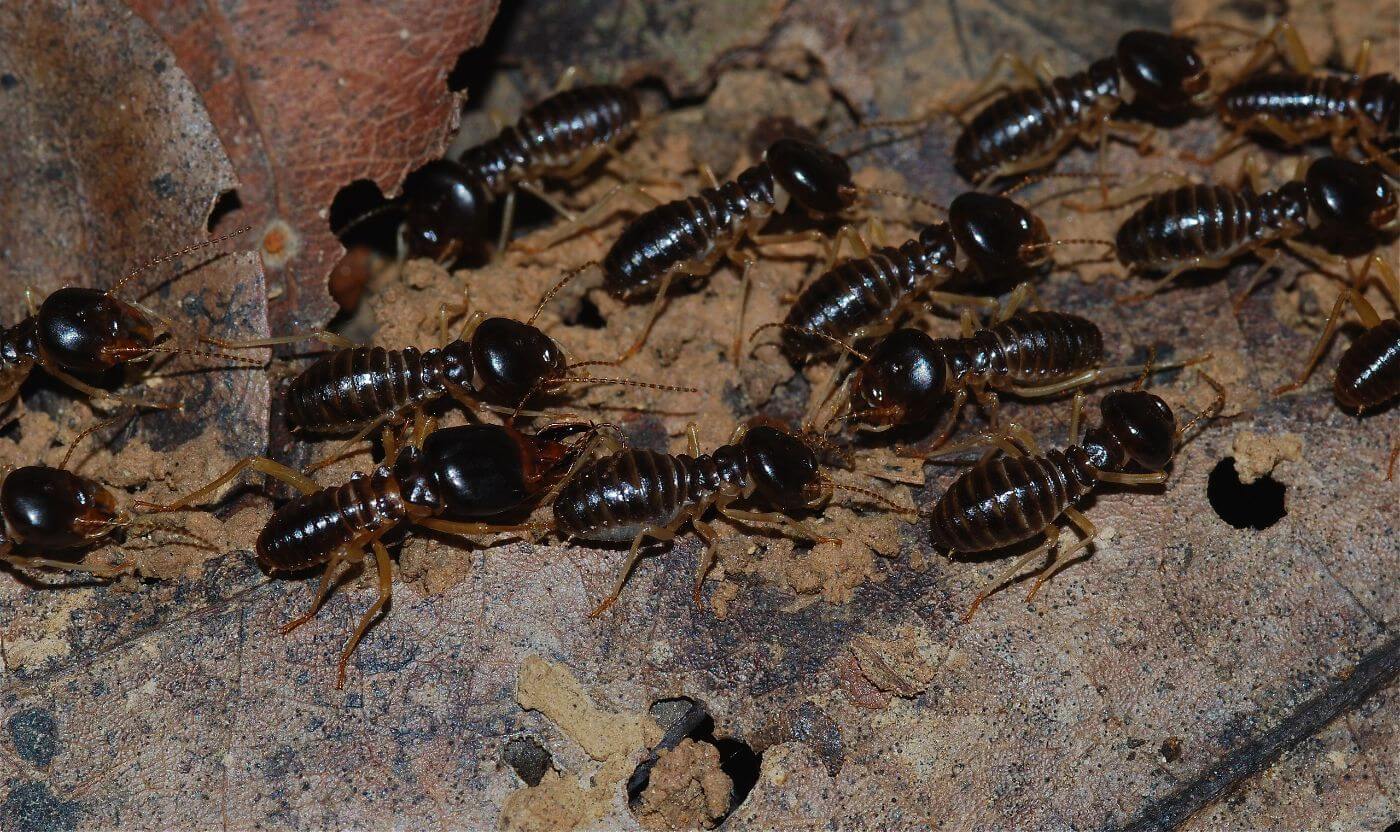
- Damp conditions can create better nesting sites. Moisture softens wood and leaks into wall cavities. Carpenter ants hollow out wood to nest, and damp lumber makes the job easy. Odorous house ants and Pharaoh ants settle into wall voids and near water pipes. Some ant nests end up inside your walls after one wet week.
- Disruption of existing scent trails. Foragers follow chemical trails like painted lines on a road. Rain can wash the paint away. Workers scatter, scouts start over, and fresh ant trails form along whatever route is dry and easy, often through a crack by the door.
- Post storm mating swarms. Warm, humid days after a storm cue winged males and young queens to leave the nest. Rain is one of the most common triggers, and one widespread field ant in the eastern U.S. flies almost always within a day of a soaking storm. Moist soil is easier for new queens to dig into. That is the story behind flying ants at porch lights and flying ants after rain along window tracks.
How to Prevent and Manage Post Rain Ants
Track Active Trails & Wipe Them Off
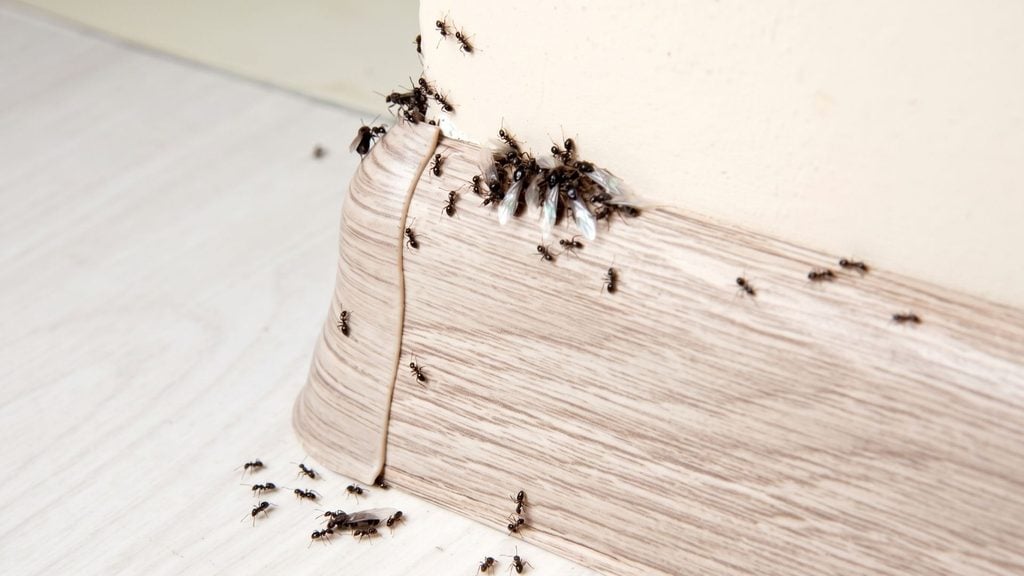
Follow the line before you touch it. Note where the ants enter, where they travel, and what they want. Then wipe the trail with a sponge and soapy water, or vacuum it up. Soapy water removes the scent trail, especially when you clean right at the entry spot.
Window cleaner works too. When ants in house after rain form a fresh line, wipe it again. This is the fastest way to stop ants after rain from turning into a daily routine.
Clear Out Indoor Food and Water Sources
Once ants get indoors, food and moisture give them a reason to stick around. Wipe up syrup, juice, grease, and crumbs, then move sugar, honey, pet food, and other easy targets into sealed containers. Rinse empty drink cans and take garbage out regularly too.
Water deserves the same attention. Fix dripping faucets, dry wet sink areas, and clean spills around pet bowls. Check under sinks, around the dishwasher, and near the washing machine for leaks or damp spots. Take those easy resources away and ants in house after rain have far less to find once they cross the door.
Deploy Ant Baits Along Active Pathways
Once you know where the ants are traveling, put ant bait close to that route. The whole idea is to let the workers find it, feed on it, and carry the slow acting insecticide back into the colony. Killing the ants on the counter is easy. Reaching the nest is the part that actually changes the problem.
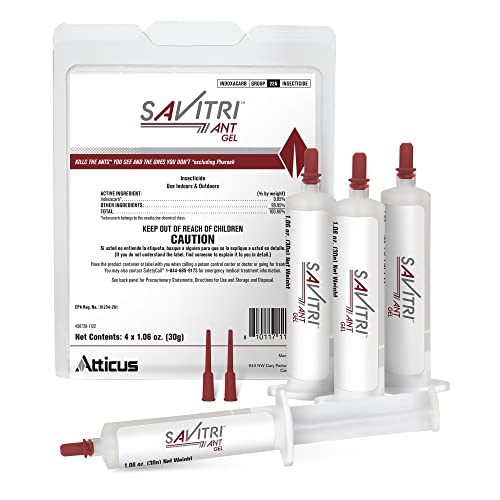
Outdoor bait stations are usually the better starting point for ants after rain. Set them beside trails, near nest openings, or along foundation edges where ants are active.
Do not assume every ant wants the same food. Some go for sugary bait, others prefer protein or greasy foods, and preferences can shift. If one bait sits untouched, try another rather than adding more of the same. Thief ants, for example, commonly feed on grease and protein, while Pharaoh ants may respond well to baits that combine fat and sweets.
Avoid Using Indoor Repellent Sprays
The spray can feels like action. It kills the workers you can see, a small share of the colony, and the rest keep coming. Sprays can make things worse by trapping ants indoors. Sprays also wreck a bait plan, since the workers that would carry bait home are dead or scared off. Don’t spray while you’re baiting. If the line looks scary, wipe it and keep going.
Seal Entry Points After Activity Drops
Once the trail thins out, grab the caulk. Ants love to travel along pipes and wires. Check where lines enter walls, around windows, under doors, and at utility openings.
Fill cracks, add door sweeps, and patch torn screens. Wait until activity drops, because sealing a busy route can trap workers inside and push the colony to search for a second way in.
Caulk on a dry day so it cures well. Outside, keep plants, grass, and mulch at least a foot from the foundation, and clear gutters so water doesn’t pool at the base. Those fixes shrink the entry points before the next storm.
Why You May See More Ants After Putting Out Bait
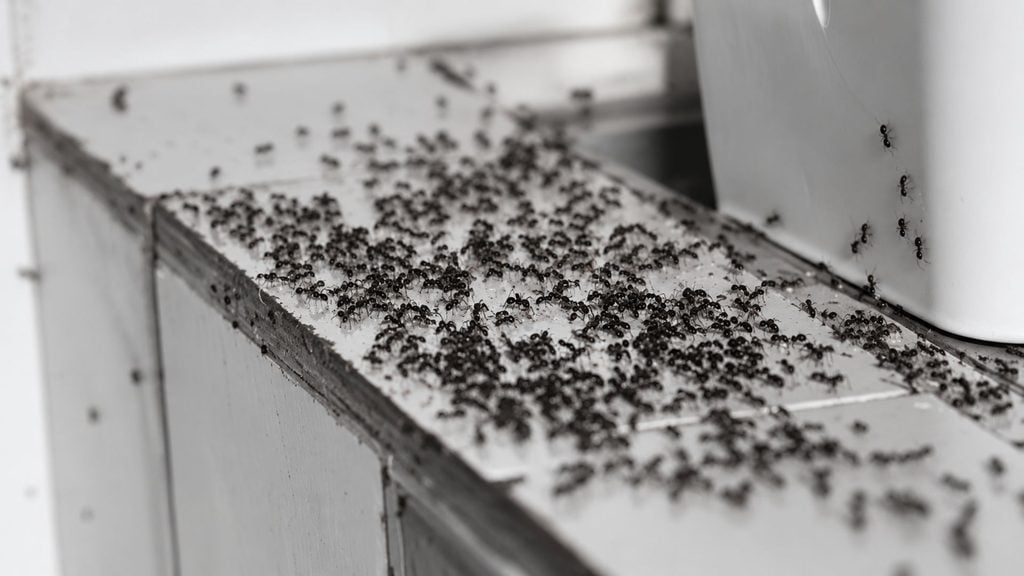
Seeing more ants around a fresh bait station can actually mean they found it. The bait attracts foraging workers, and those workers recruit more ants to the food source. They carry small amounts back to the nest and share it with other workers, larvae, and queens.
That is why activity can look worse before it gets better. Give the bait time to work. A noticeable drop may take around 5 to 10 days, and full control can take longer with a larger colony.
Leave the station in place while ants are feeding. Keep other food cleaned up, dry nearby surfaces, and skip repellent sprays near the bait because they can push ants away from it.
If the ants completely ignore the station, move it closer to their trail or try a different bait. Check it often and replace it once it dries out, gets contaminated, or runs empty.
When to Call Pest Control
Most ant trail problems after heavy rain fade in a couple of weeks with the steps above. Bring in help if lines hang on after bait has been out for several weeks, if you spot sawdust like debris near window frames or hear faint rustling in a wall, or if winged ants keep showing up indoors.
Repeat sightings of ants inside house after rain usually mean the colony has moved into the structure. In that particular scenario, going with pest professional is a smart move. A licensed pest control technician can find the nest, check for damp wood, trace leaks, and treat with bait.
Frequently Asked Questions (FAQs)
Why are there flying ants after rain?
Warm and moist weather following a storm causes the male ants plus the virgin queens to fly away and begin mating. The dampness allows new queens to dig into the ground. So, if you have a bunch of flying ants outside the house, it’s normal. But if you’re seeing them inside the house, you might have a mature colony nearby. Check the house for holes or damp spots.
Do ants die when their nest floods?
Some do, when they can’t get away fast enough. Many do get away because the workers will gather the eggs, larvae, and queens to higher parts of the nest, or take them out.
Why do I have ants in my bathroom after it rains?
The obvious answer is water. The bathroom has pipes, drains, plus wet grout, which makes it easy for ants to get in through pipes and wires, and they end up going into where something is.
How long will ants stay after rain?
One storm usually brings a short burst. If trails hang on after the ground dries out, a colony has likely settled in and needs bait. Track how many ants after heavy rain keep coming back before you decide on a plan, and note which room they favor. That detail tells a technician where to look.
Wrapping Up…
Rain provokes more ants to march than create. Flooded tunnels, washed away trails, and vanished food sources compel colonies to seek the nearest reliably dry and well provisioned establishment. Which is to say your home is the target of ants after rain and the reason the ants worse after heavy rain pattern recurs each year.
You can cut through this by erasing trails, removing food and water sources, baiting the outside, forgoing interior insecticides, and closing up entryways when the trails have ceased. Keep mulch back and gutters clear before the next storm, and check your bait stations every week or so. If the trails hold on or wood is involved, call a pro and don’t wait.