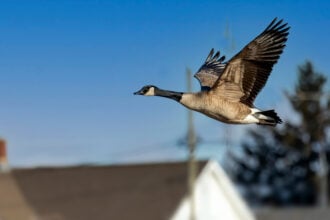

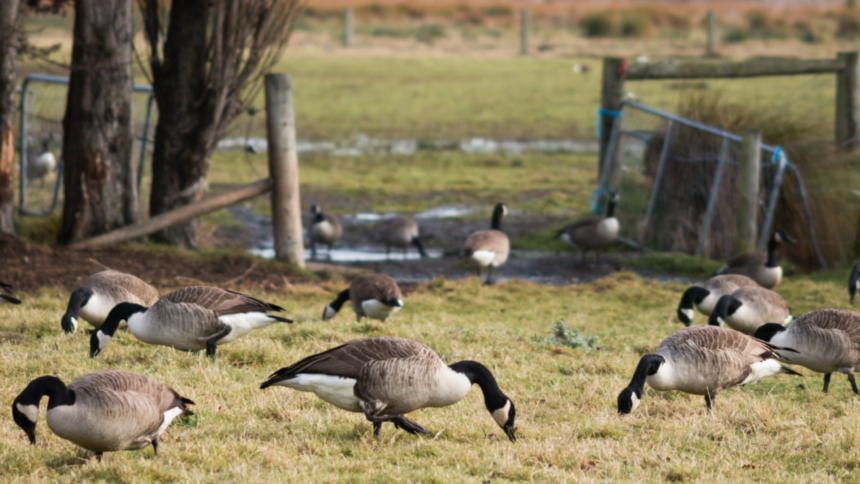
If you have stepped onto your grass lately and felt like you were navigating a minefield, you are not alone. Knowing how to stop geese from pooping in your yard is a top priority for thousands of homeowners because these birds are incredibly efficient at making a mess. A single Canada goose can produce up to two pounds of droppings every single day. When a flock of twenty settles on your property, you are looking at nearly forty pounds of waste daily.
To solve the problem of geese pooping in yard spaces, you have to break their biological feeding loop. Geese don’t just poop randomly. They poop where they eat. If your lawn is their favorite restaurant, it will also be their favorite bathroom. This guide delivers a 9-step system designed to deliver a 90 to 97 percent reduction in bird activity within three weeks. We will cover immediate cleanup, behavioral deterrents, and permanent habitat changes that finally take your yard off their itinerary.
Table of Contents
Why Geese Choose Your Yard for Pooping
To fix the issue, you need to understand the math behind their behavior. Canada geese are attracted to very specific “biological triggers.” Most suburban lawns are kept at a height of two to four inches. For a goose, this is the perfect grazing height. It is easy to digest and allows them to see predators from a long distance.
When they eat your grass, the nitrogen-rich droppings actually fertilize the lawn. Turns out, the grass grows back even thicker and tastier. This creates a self-reinforcing cycle where the geese are literally farming your backyard. If you don’t interrupt this loop, the geese will treat your property as a permanent residence.
Immediate Goose Poop Removal & Lawn Recovery
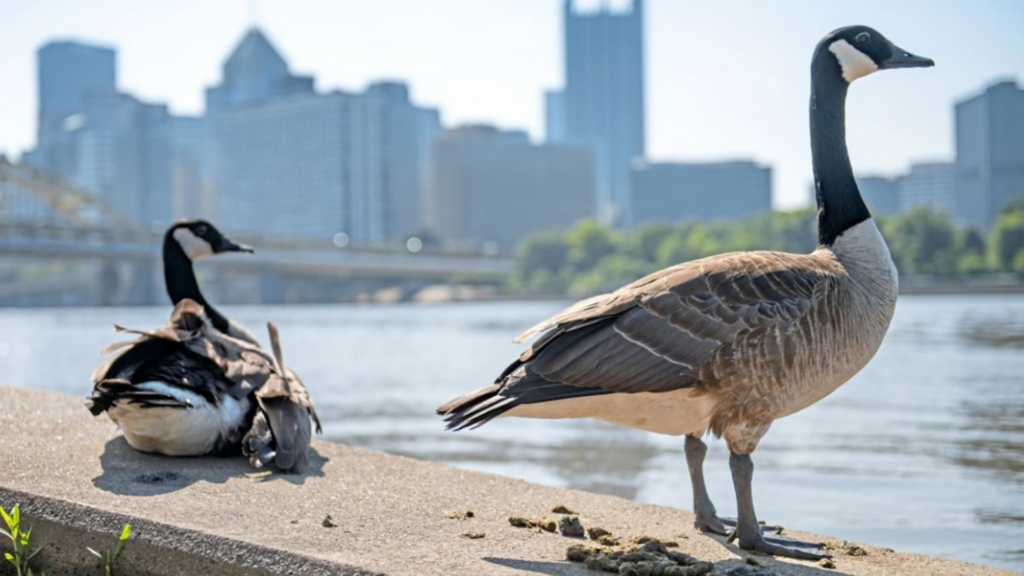
Before you start the deterrent process, you have to clear the field. Leaving old Canada goose droppings on the lawn tells new birds that the area is safe and “occupied” by their kind.
The Cleanup Protocol
For safe droppings removal, use a long-handled poop scoop or a specialized lawn vacuum to avoid direct contact. Do not use bleach to disinfect the grass, as it will kill the roots and leave large brown spots. Instead, use a garden-safe enzyme cleaner designed for pet waste. These products neutralize the fecal odor and break down the pathogens without hurting the turf.
Lawn Recovery
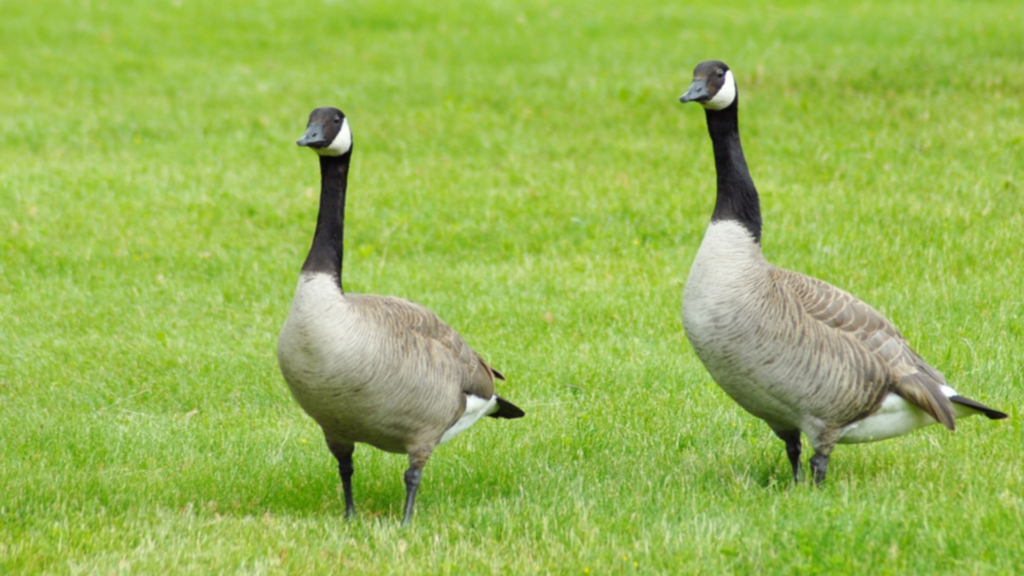
Goose poop is very high in nitrogen. In small amounts, it is a fertilizer, but in large piles, it “burns” the grass. If you have dead patches, rake out the debris and apply a quick-repair seeding formula. You can expect lawn recovery to take about 14 to 21 days once the birds are gone. The cost for a 500-square-foot cleanup and reseeding usually runs about $45 in materials and two hours of labor.
9 Proven Tactics to Stop Geese from Pooping in Yard
To get them off of your property, you have to make the “cost” of eating there higher than the reward. Here are nine field-tested tactics to take out the attractants and break the cycle for good.
1. Motion-Activated Sprinklers (The Heavy Hitter)
If you want to get geese off your lawn without spending every waking hour standing guard, motion-activated sprinklers are the most reliable tool in your arsenal. These devices use an infrared eye to scan for movement. The moment a goose steps off the sidewalk and onto your grass, the unit fires a high-pressure jet of water accompanied by a loud, mechanical clicking sound.
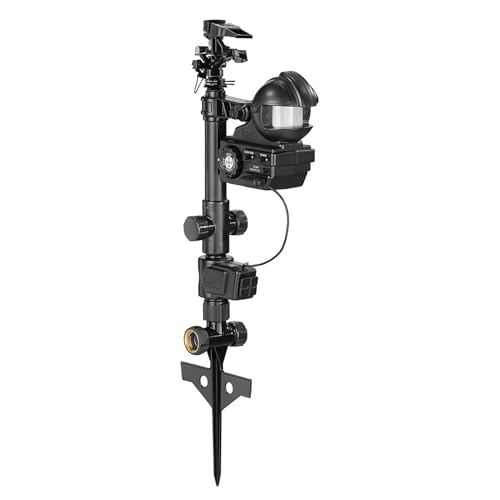
This works so well because it hits two of a goose’s primary fears: sudden movement and noise. Unlike a static scarecrow, the sprinkler is reactive. The birds can’t just get used to it because it only goes off when they move. For the best results, you want to set these up at the “entry points”—the spots where the birds typically waddle out of the water or off of the street. By placing a couple of these units in a staggered pattern, you create a digital “fence” that keeps the geese off your property. It usually only takes three or four “hits” before the flock decides your yard is a high-stress zone and heads out to find a quieter place to poop.
2. Taste & Smell Repellents (The Bitter Buffet)
When you are looking for how to stop geese from pooping in yard naturally, liquid repellents are the way to go. The active ingredient you want to look for is Methyl Anthranilate. This is a grape-derived compound that is used in human food, so it is safe for your family and pets. However, for a goose, it is a nightmare.

- STOPS DAMAGE FAST - Combines powerful natural ingredients and botanical oils that are proven to repel geese and prevent new activity in treated areas.
- PROTECT YOUR LAWN - Stop letting geese ruin your outdoor activities and enjoyment. I Must Garden Goose Repellent will stop geese from destroying your grass and fouling up your outdoor areas. All...
- NATURALL STRONGER - I Must Garden Goose Repellent contains more active ingredients than other leading brands - providing you with more-reliable and longer-lasting protection against geese, ducks, and...
- SAFE ON GRASS & SAFE FOR PETS - You can spray I Must Garden Goose Repellent at any stage of seeding or growth without any fear of harming your lawn. The natural ingredients in our repellents are safe...
Geese have a sensitive nerve in their beaks called the trigeminal nerve. When they take a bite of grass treated with this repellent, it creates a harmless but incredibly irritating sensation, similar to how a human feels when they eat a ghost pepper. They don’t just dislike the smell; they hate the physical sensation of eating the grass. To use this effectively, you need to spray your lawn thoroughly during the growing season. If you are persistent and keep the grass coated, the geese will eventually associate your yard with that burning sensation and take out your lawn from their list of grazing spots.
3. Visual & Reflective Scare Systems
Geese are hardwired to be paranoid. They are constantly scanning for anything that looks like a pair of eyes or a flickering wing. You can exploit this by using Mylar reflective tape and 3D predator decoys. The tape is a metallic ribbon that flashes in the sun and makes a sharp “crackling” noise in the wind. When you string this across your yard, it creates a visual barrier that makes it very hard for the birds to land comfortably.
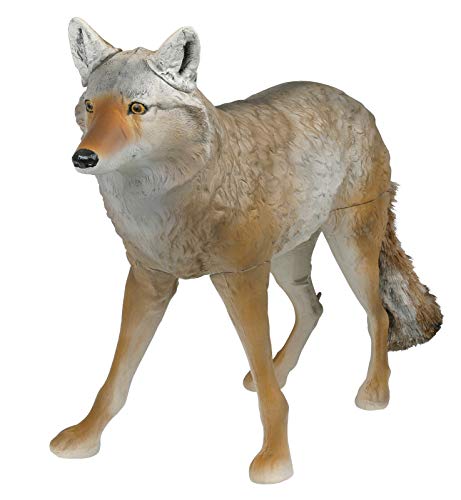
- PREDATOR HUNTING DECOY: Ultra-realistic body detail mimics the true-to-life definition of a coyote with the coloration of a mature male
- NUISANCE ANIMAL DETERRENT DECOY: Excellent deterrent for unwanted vermin, including rodents, geese, and smaller bird species, when placed in or near barns, gardens, orchards, ponds, etc
- VERSATILE DESIGN: Ultra-sturdy hard plastic construction with heavy-duty threaded leg posts and locking lugs. Features a removable leg design that allows the legs to fit conveniently in the body...
- DETAILS & FEATURES: Includes faux fur tail with a wire backbone for easy manipulation and realistic motion in the wind, a scent pad spike on the rear leg, and poseable ears to mimic a relaxed, alert,...
To take this tactic to the next level, you can add coyote or fox decoys. The trick to making decoys work is movement. If a coyote stays in the same spot for three days, the geese will realize it is a fake and will start pooping right next to it. You have to move the decoy every morning or evening to keep them off-balance. By shifting the “predator” around the yard, you maintain the illusion of a dangerous environment, which is often enough to keep geese out of your yard.
4. Physical Barriers and Low Fencing
Geese are heavy birds, and they actually prefer to walk rather than fly whenever possible. This is especially true if they have goslings with them or if they are in their molting season when they can’t fly at all. You can use this to your advantage by taking out their “walking paths.”
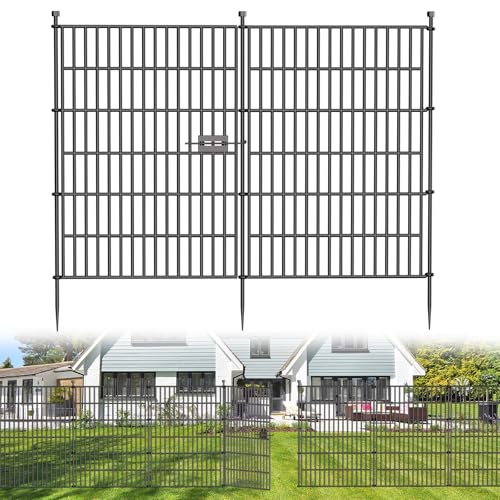
- GARDEN FENCE & ANIMAL BARRIER — Create a defined boundary around flower beds, vegetable gardens, and planted areas with this metal garden fence. Use connected panels as an animal barrier fence to...
- NO DIG FENCE & CONNECTING STAKES — Align the connection loops on adjacent panels, insert the metal stakes through the loops, and secure them in suitable soil. The stakes connect and anchor the...
- WELDED STEEL & POWDER-COATED FINISH — Welded steel construction provides structure, while the black powder-coated finish helps resist rust during outdoor use. The flat-top grid design gives this...
- FLEXIBLE LAYOUTS & EXPANDABLE COVERAGE — Connect panels into straight borders, angled runs, or enclosed layouts. Use them as a temporary fence for garden boundaries or create an outdoor dog playpen...
A small, two-foot-tall fence made of green mesh or even decorative wood is usually enough to stop a goose. They aren’t great at jumping, so even a low barrier feels like a massive wall to them. If you have a pond, a fence along the shoreline is the most effective way to keep them off of your grass. If they can’t easily waddle from the water to the “buffet” on your lawn, they will stay in the water or move to a neighbor’s yard where the access is easier.
5. Ultrasonic Repellers and Laser Deterrents
High-tech solutions have become much more affordable in 2026. Ultrasonic units emit a high-frequency sound that is completely silent to humans but sounds like a loud, grating siren to birds. This creates an “audio fence” that makes it uncomfortable for them to stay in the area for long periods.
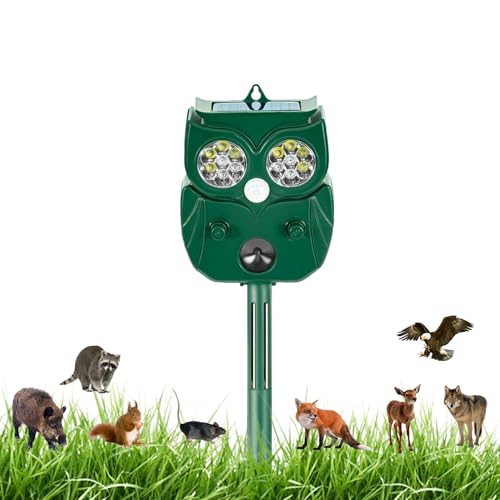
- Intelligent Motion Detection:Equipped with a 120° wide-angle sensor and a 20-25 yard detection range, this solar pest repellent ultrasonic outdoor device provides coverage for backyards, garden...
- Ultrasonic Technology for Outdoor Use:This outdoor device utilizes ultrasonic waves (13.5kHz - 45.5kHz), an audible alarm sound, and LED flashing lights to startle animals. It is powered by the...
- Weather-Resistant Design:Powered entirely by an integrated solar panel, this solar pest repellent ultrasonic outdoor unit eliminates the need for disposable batteries or electrical wiring. With an...
- Versatile Placement Options:The base of the motion activated owl pest deterrent includes a compartment that can accommodate additional solid repellent materials (sold separately). When motion is...
For homeowners dealing with persistent geese pooping at night, green lasers are a game-changer. Geese have incredible night vision, but it makes them vulnerable to bright, focused light. When you shine a green laser toward a flock at dusk, they perceive the beam as a solid object—like a long stick or a snake—moving toward them. It triggers an immediate flight response. If you do this for a few nights in a row, the geese will stop seeing your yard as a safe place to sleep and will head off to find a darker, quieter spot.
6. Habitat Modification (Tall Border Plants)
This is the most permanent and professional-looking way to stop geese from pooping. Geese love short grass because it allows them to see predators coming from a mile away. If you change the “sightlines” of your yard, you change their sense of safety.
Instead of mowing your grass right down to the edge of the property or the water, plant a thick border of tall Fescue, native shrubs, or tall flowers. A three-foot-wide strip of vegetation that is at least two feet tall will act as a psychological barrier. Geese fear that a predator like a coyote or a dog is hiding in the tall plants, waiting to jump out. By taking out their clear line of sight, you make your yard feel like a trap. They would much rather spend their time in a wide-open park where they can see everything around them.
7. Rotating Harassment Techniques
Sometimes, you just have to be a nuisance. Humane harassment is the act of making the geese feel unwelcome through constant, non-harmful pressure. This can be as simple as opening your back door and waving a large flag or using a handheld air horn when you see them land.
The goal isn’t to hurt the birds, but to convince them that your yard is an annoying place to be. If you have a dog, letting them run in the yard is one of the best ways to get geese off of your property. Even a small dog that bark and runs toward them will trigger their flight instinct. The key is to be more stubborn than the birds. If you chase them off every time they land for a week straight, they will eventually give up and find a new place to hang out.
8. Professional Goose Poop Barrier Installations
If you are dealing with a massive property or a corporate campus, you might need to take out the big guns and hire a professional. These services use specialized tools like “goose-proof” pond netting or automated acoustic systems that vary the sounds they play so the birds don’t get used to them.
Professionals can also help with “egg addling” if the geese are nesting on your property. By coating the eggs in a special oil, they prevent them from hatching, which slowly reduces the population over time without harming the adult birds. While this requires specific permits and expertise, it is a highly effective way to manage a long-term poop problem on a large scale.
9. Chemical-Free Long-Term Solutions (Native Restoration)
Finally, one of the most beautiful ways to keep geese off your lawn is to replace the lawn itself. If you have areas of your yard that you don’t use for walking or playing, consider “rewilding” them with native plants. Geese cannot eat most native wildflowers and woody shrubs.
By converting a portion of your “goose buffet” into a native garden, you are literally taking food out of their mouths. They will have no reason to spend time in that part of the yard, which means they won’t be there to poop. This not only stops the mess but also helps local pollinators and reduces the amount of mowing and watering you have to do. It is a win-win for you and the environment, while being a total loss for the geese.
If geese continue to return to your yard despite using deterrents like visual scare tactics, barriers, or repellents, the problem may be more persistent than it seems. In many cases, geese become conditioned to specific feeding or nesting areas, which makes DIY methods less effective over time.
Angi can help you connect with local wildlife control and yard maintenance professionals who understand how to manage recurring geese problems safely and effectively. You can compare experts in your area, check availability, and choose a service that fits your property needs.
Effectiveness Comparison Table
| Tactic | Success Rate (14 Days) | Cost (1,000 sq ft) | Effort | Pet/Kid Safe |
| Motion Sprinkler | 95% | $80 – $120 | Low | Yes |
| Taste Repellent | 85% | $65 | Medium | Yes |
| Visual Scare | 70% | $30 | High | Yes |
| Physical Barrier | 90% | $150 – $300 | Low | Yes |
| Ultrasonic Unit | 75% | $100 | Low | Yes |
| Tall Grass | 97% | $0 | Low | Yes |
| Active Chasing | 95% | $0 | Very High | Yes |
Frequently Asked Questions
What is the fastest way to stop geese from pooping in yard?
The fastest way is a combination of a motion-activated sprinkler and a professional cleanup. Removing the existing poop takes out the scent cues that attract more birds, while the sprinkler provides an immediate physical deterrent.
Do taste repellents actually stop Canada geese from returning?
Yes, but they require consistency. Products with Methyl Anthranilate work because they affect the bird’s trigeminal nerve. It is like eating a spicy pepper for them. Once they associate your yard with that sensation, they will search for a new feeding ground.
How do I clean goose poop without killing my grass?
Avoid using heavy chemicals or power washers that can blast the soil away. Use a rake for the dry bits and a garden-safe enzyme spray for the rest. This will help with droppings removal and prevent “nitrogen burn” from the waste.
Are ultrasonic repellers effective against persistent geese pooping?
They are effective as part of a larger system. On their own, some geese may habituate to the sound, so it is best to use them alongside a motion sprinkler or visual deterrent.
What permanent solution stops geese pooping forever?
Changing your landscaping is the only “forever” fix. By replacing short grass with tall native plants or installing a permanent fence, you make the yard physically impossible for the geese to use as a grazing site.
Wrapping UP…
Stopping the cycle of geese pooping in yard areas is not about being mean to animals; it is about protecting your health and your property. By using a mix of the tools in this playbook, you can effectively take out the attractants that bring these birds to your lawn. Start with a thorough cleanup to remove the fecal odor and then set up a motion sprinkler as your first line of defense. If you remain more persistent than the geese, they will eventually move on to a yard that is easier to navigate. Within two to three weeks, you can expect to have a clean, green space that you can actually enjoy again.