
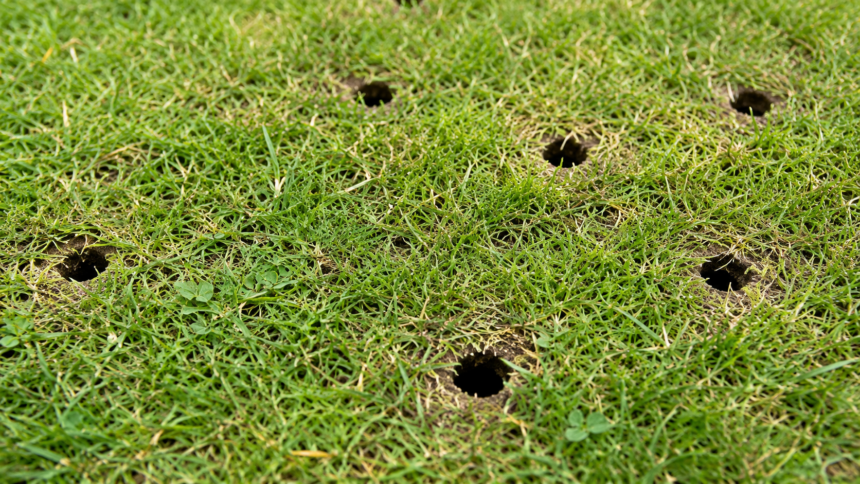
Waking up to a fresh set of small holes in lawn areas that looked perfectly fine the night before is one of those moments that stops a homeowner in their tracks. Nothing was there yesterday, and now the whole backyard lawn looks like it hosted a tiny construction crew overnight.
The truth is, a wide variety of animals dig in a lawn, and figuring out what causes small holes in lawn spaces kicks off with looking closely at size, depth, and pattern. We’ll break down the most common culprits behind holes in the lawn overnight, walk through what each one looks like, and cover real ways to stop the digging before it spreads across the whole yard.
Table of Contents
What Do Small Holes in a Lawn Mean?
Holes in lawn areas almost always mean something was hunting for food underground or looking for a place to nest. It could be that grubs, worms, and other common lawn pests live just beneath the surface, and a wide variety of animals dig in a lawn to reach them. Whether they hunt in daylight or out of sight overnight.
Some animals create tunnels in a lawn as they search for food, tho there could be others that just dig a quick, shallow pit and move on. Lawn holes come in a wide range of shapes and sizes, and reading those details in small holes in lawn areas is usually the fastest way to narrow down exactly which animal paid a visit.
Small Holes in Lawn Overnight (Causes + Pictures)
Here is the full breakdown of what causes small holes in lawn spaces overnight, animal by animal.
1. Skunks Looking for Grubs
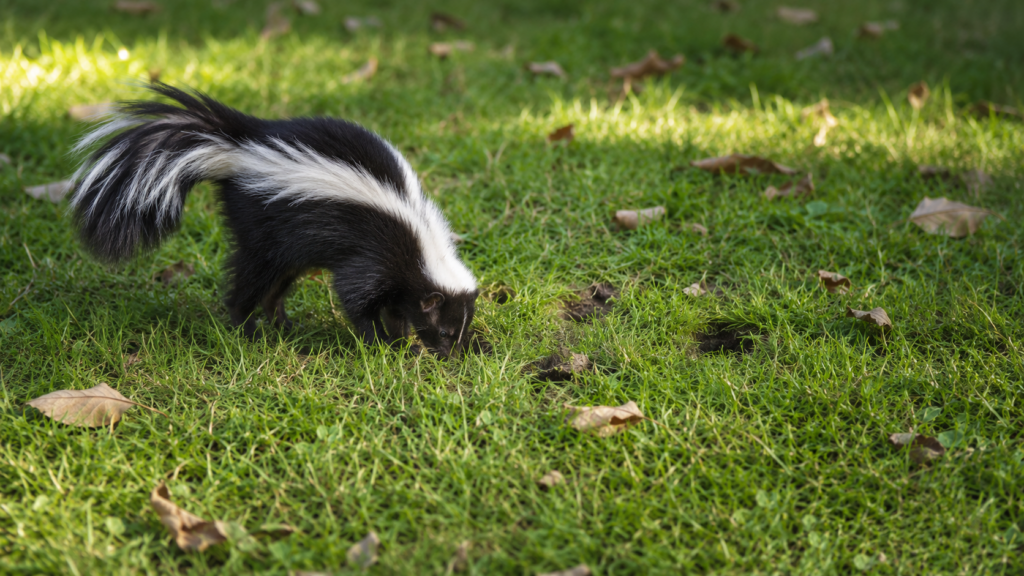
Skunks and raccoons are both omnivores, and skunks specifically dig small, cone shaped holes about 2 to 3 inches wide to hunt grubs just under the turf. These holes tend to show up scattered across the whole yard, since skunks work methodically overnight.
Turns out, it’d leave a classic small holes in lawn pattern behind. Skunk lawn damage is usually easy to identify due to the telltale smell that often lingers nearby, along with small, discrete divots as opposed to large torn up patches.
2. Raccoons Digging for Insects
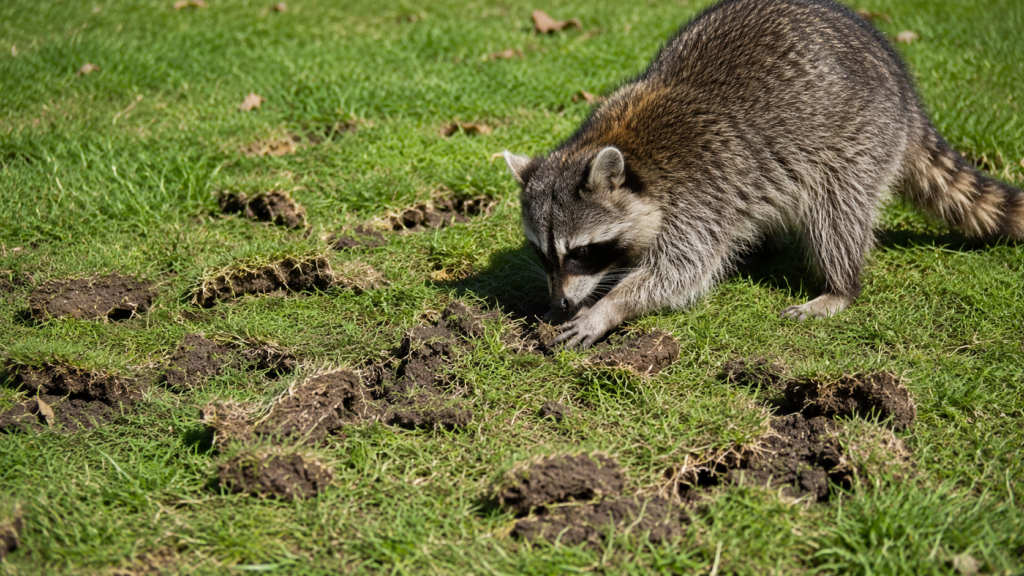
Raccoons leave a messier signature than skunks, often tearing up small chunks of turf. Being omnivores too, they go after grubs and earthworms, and their damage tends to look like small flaps of grass peeled back. A yard with several small holes in lawn areas paired with loose, flipped up patches of sod is a strong sign raccoons were the ones responsible.
3. Squirrels Burying or Digging Up Nuts
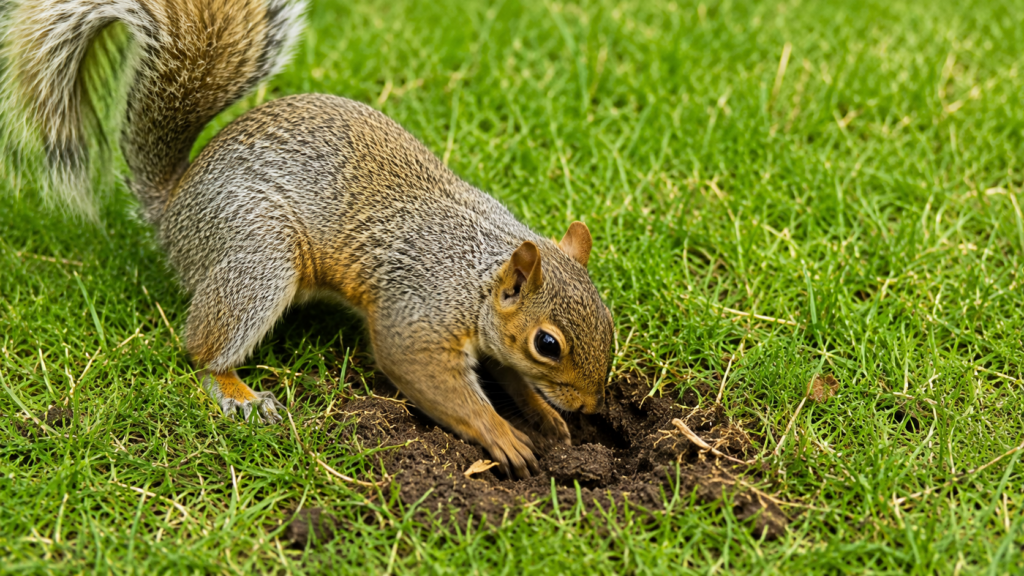
Squirrels dig for a completely different reason than skunks or raccoons. They are usually caching food to be eaten later. Squirrel digging holes tend to be small, about 2 inches in diameter, and often show up near trees where acorns or bird feeder peanuts have fallen. These holes are typically shallow depressions just a few inches deep, scattered individually.
4. Birds Searching for Grubs
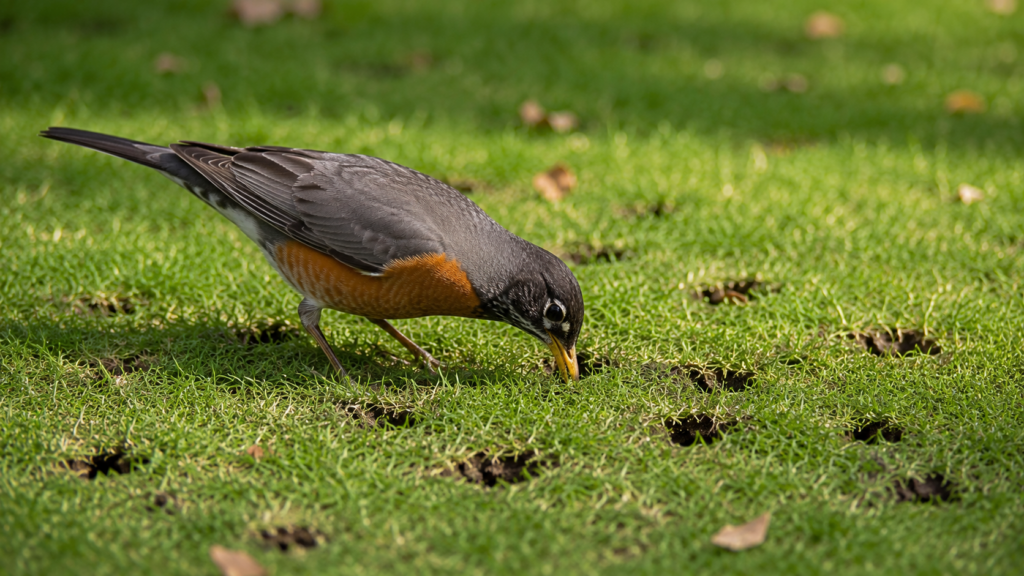
Several species of birds, particularly starlings and robins, will jab small holes into soft turf whilst hunting grubs near the surface. These bird related holes are usually tiny, barely wider than a pencil, and show up in loose clusters across areas where the soil stays consistently moist. Bird damage rarely goes very deep, since these grubs live close enough to the surface that a bird does not need to dig far to reach them.
5. Moles & Voles
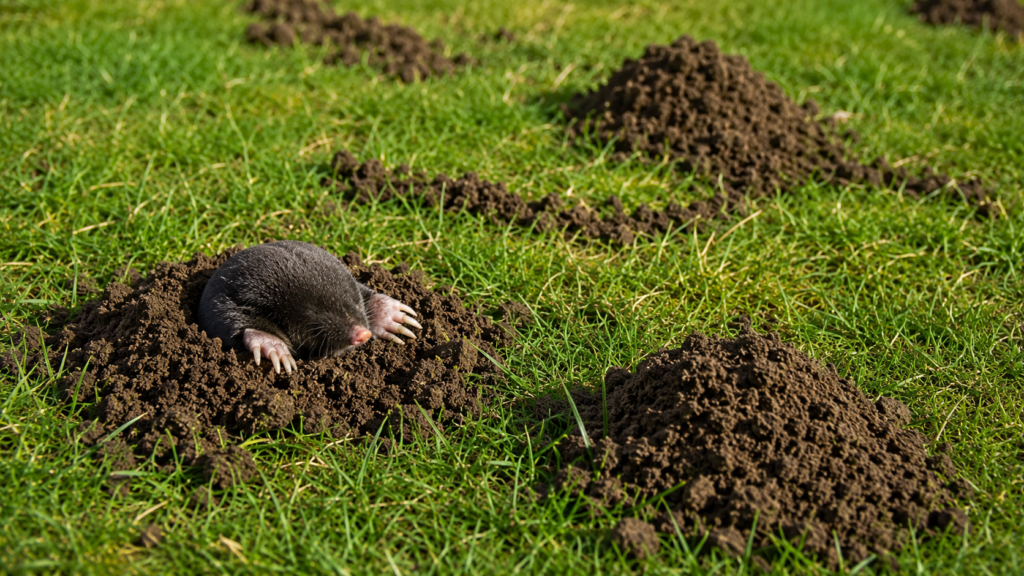
Moles and voles get confused constantly, though they behave quite differently and leave distinct kinds of small holes in lawn surfaces behind. Moles are actually related to shrews, not rodents, and they tunnel primarily to hunt earthworms and grubs. It would in turn leaves raised ridges across the lawn along with occasional volcano shaped mounds where they push soil to the surface.
Voles, unlike moles, are rodents that create shallow surface tunnels and small round entry holes about an inch or two across, usually while foraging on roots and grass. Telling moles vs voles apart usually comes down to looking closely, moles have a long, pointed nose with small eyes and ear openings hidden under fur, while voles have short legs, a blunt nose, and small but noticeable eyes.
6. Chipmunks
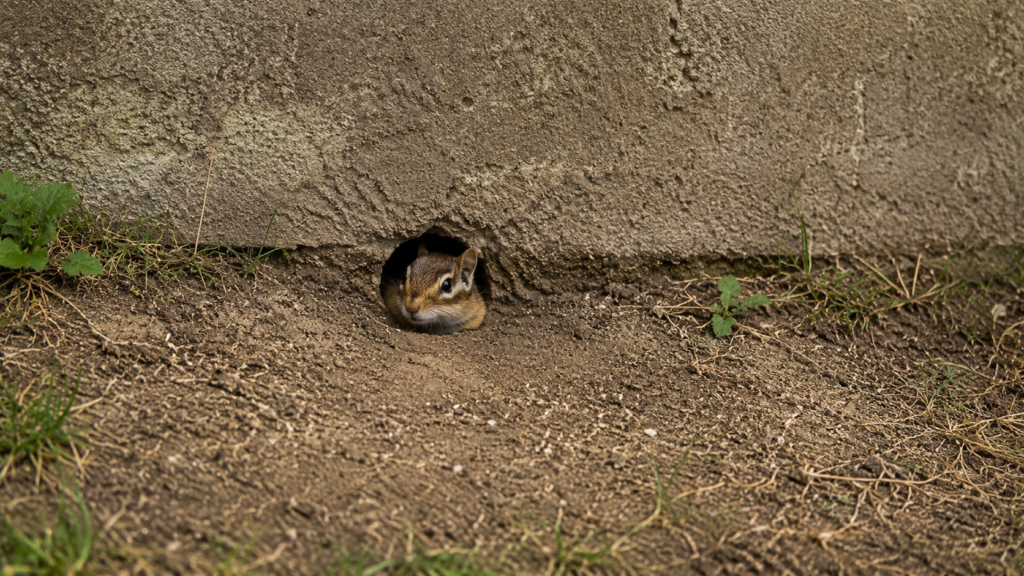
Chipmunks dig burrow entrances that look remarkably clean for how much digging happens underground, since they tend to carry excavated dirt away from the site and do not leave an obvious pile of soil nearby. Entry holes usually run about two inches in diameter, often tucked near a foundation, retaining wall, or woodpile where the burrow system can extend several feet in multiple directions.
7. Ground Nesting Wasps or Bees
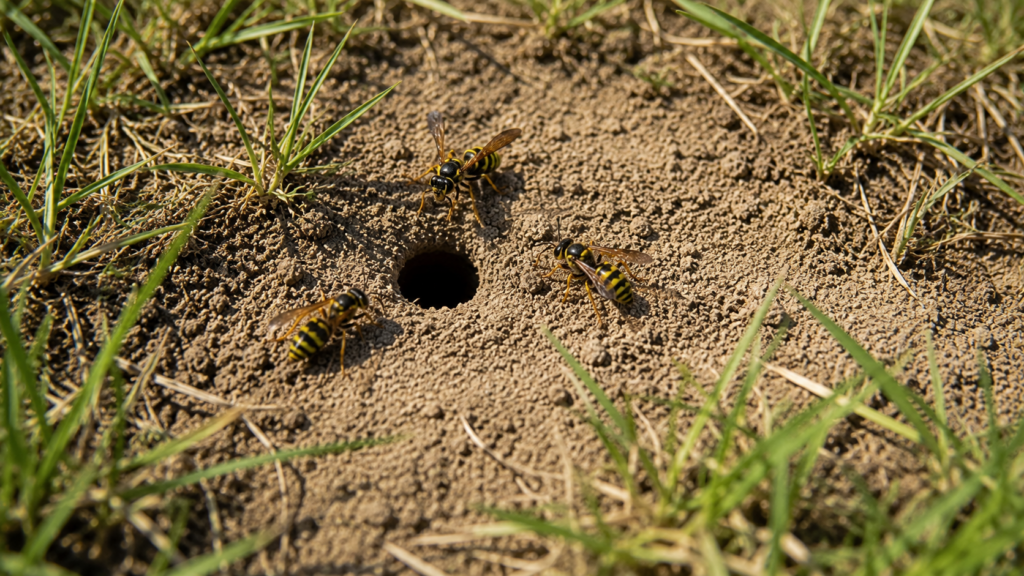
Ground nesting bees and wasps, including bumblebees and sweat bees, live and lay eggs directly in the soil. Holes in lawn spaces caused by wasps could indeed vary in size from about one to one and a half inches wide. Although entrance holes to these bee dens are usually about a half inch wide and most apparent in spring, especially in sandy, dry soil. These holes are easy to find out simply by watching the area for a few minutes on a warm afternoon, since the insects fly in and out repeatedly.
8. Earthworms and Other Soil Insects
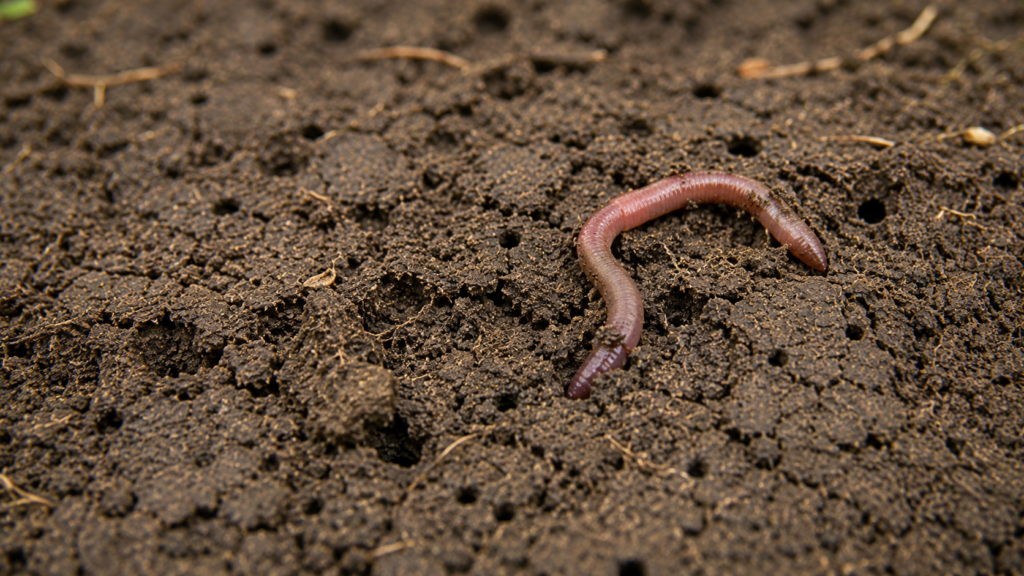
Earthworms and various other soil insects create some of the smallest holes a lawn will show, often no wider than a pencil tip, and these are almost always harmless and even beneficial for soil health.
Grubs themselves, along with leatherjacket grubs, are actually the food source drawing in most of the larger animals on this list, so a lawn with an active grub population is usually the real root cause behind repeated Holes in lawn damage and animal holes in yard visits alike.
How to Stop Holes in Your Yard
Once you have a decent idea of the culprit and what can I do about it, the next step is putting together a plan that actually works across the whole backyard lawn.
- Tidy up: Clear pet food left outside and secure garbage cans, since both attract raccoons and skunks looking for an easy meal.
- Address grubs: Treating the grub population directly removes the food source drawing most digging animals to your yard in the first place, which cuts down on small holes in lawn areas fast.
- Use deterrents: Motion activated sprinklers, granular repellents, or ultrasonic stakes all discourage animals from sticking around and do not cause harm.
- Add barriers: Fencing off garden beds or vulnerable turf sections keeps larger digging animals like raccoons and skunks from reaching the areas most prone to wreck.
Best Repellents to Prevent Lawn Damage
Based on solid research and spending a lot of time dealing with grubs, moles, and voles problems, we’ve rounded up a list of products you could get to secure your lawn for the most part. The list includes, but is not limited to, pest repellents, sprays, granules, and trap cages. Together, they would let you tackle holes in the lawn that appear overnight.
Wondercide Outdoor Pest Control Spray

Why It Made Our List: Since grubs are the underlying food source behind most digging damage, tackling them directly does more to stop small holes in lawn areas than any repellent aimed at the animals themselves. This concentrate uses natural essential oils, cedar oil among them, as opposed to synthetic pesticides, and one 32 ounce bottle covers up to 20,000 square feet once diluted through a hose end sprayer. It kills on contact with no wait time before pets or kids can go back into the yard, which makes it a practical pick for households juggling both a pest problem and an active backyard.
Specs Overview:
- Coverage: Up to 20,000 sq ft per 32 oz concentrate
- Active ingredients: Natural essential oils including cedar oil
- Application: Hose end or compression sprayer
- Best for: Grubs, ants, roaches, and general insect control outdoors
Bonide Mole & Vole Repellent Granules

Why It Made Our List: For anyone dealing with moles vs voles specifically, this castor oil based granule works by making the soil genuinely unpleasant to burrow through. It wouldn’t harm the animals directly, though. It’ll help you keep them off your lawn. Becasue of this perk we think it’s a reliable fix for anyone battling small holes in lawn areas caused by burrowing rodents.
A ten pound bag treats up to 5,000 square feet and keeps working for roughly three months per application, covering moles, voles, gophers, armadillos, and rabbits all at once. It is safe to apply near kids and pets once watered in, and the granules can go straight from the bag onto the lawn or through a standard broadcast spreader.
Specs Overview:
- Coverage: Up to 5,000 sq ft per 10 lb bag
- Active ingredient: Castor oil
- Duration: Up to 3 months per application
- Targets: Moles, voles, gophers, armadillos, rabbits, ground squirrels
- Application: Direct from bag or broadcast spreader
Peepst Ultrasonic Mole Repellent

Why It Made Our List: This set of eight solar powered stakes uses low frequency sonic pulses and ground vibration. It does that specifically to make burrowing animals uncomfortable. It’s completely different from relying on scent or taste as granules do.
Each stake charges automatically during the day and runs through the night, with an IP65 waterproof rating that holds up through rain and sprinklers without issue. Coverage claims run up to several thousand square feet across the full set, and most users report noticeably fewer small holes in lawn areas within two to three weeks of steady use, though it ain’t an overnight fix by any means.
Specs Overview:
- Coverage: Up to 5,000 to 7,000 sq ft total (8 pack)
- Power: Solar charging, no batteries required
- Waterproof rating: IP65
- Targets: Moles, gophers, voles, armadillos, chipmunks, snakes
- Sound: Low frequency pulses, largely inaudible to humans and pets
Anyhall Humane Mouse Trap

Why It Made Our List: When a specific animal keeps returning to the same burrow entrance despite repellents, a humane live trap becomes the more direct option. We picked this up from another particular reason. Some people do not like to harm or injure animals, and to them this would be a great addition, cause it would gonna help you eliminate the small holes in the lawn, all while not hurting the animals.
This cage measures roughly 12.5 by 5.5 by 4.5 inches, sized for rats, mice, voles, and chipmunks, with a sensitive pedal trigger that snaps the door shut and locks it the moment an animal steps inside. It is reusable, works both indoors and outdoors, and lets you relocate the animal alive.
Specs Overview:
- Dimensions: 12.5 x 5.5 x 4.5 inches
- Targets: Rats, mice, voles, chipmunks, and similarly sized animals
- Trigger: Sensitive pedal with auto locking door
- Material: Galvanized wire construction
- Use: Reusable, indoor or outdoor
Orbit Motion-Activated Sprinkler
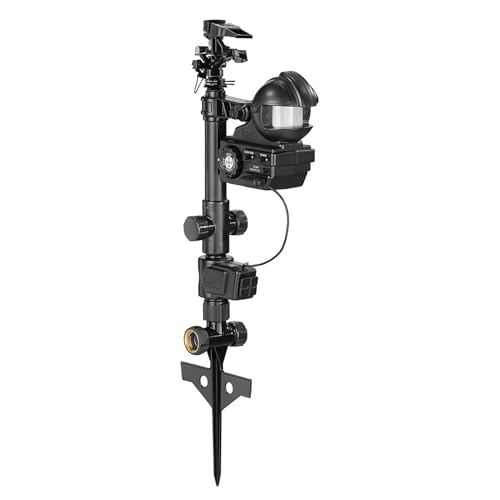
Why It Made Our List: For larger animals like deer, raccoons, and skunks, a motion activated sprinkler tends to outperform granules or stakes entirely. We have seen so many YouTube videos where homeowners claim they rectify the small holes in the lawn overnight by using sprinklers. And since it did a great job for our lawn too, we think it’d be a great addition to this list.
The Orbit Yard Enforcer detects movement up to 40 feet away using an infrared sensor, then fires a short, startling burst of water without causing any harm. A single unit covers up to 1,600 square feet, runs on four AA batteries for thousands of activation cycles, and can also double as a regular timed sprinkler when pest pressure is not an issue that day.
Specs Overview:
- Detection range: Up to 40 feet
- Coverage: Up to 1,600 sq ft per unit
- Power: 4 AA batteries, up to 7,500 activation cycles
- Modes: Day only, night only, always on
- Bonus feature: 30 minute timed watering cycle
When to Call a Professional
Sometimes the digging keeps happening no matter what you do, how many deterrents you get your hands on, and that usually points to a larger underlying grub population or a persistent animal that has claimed your yard as a regular stop. It speaks about a severe infestation that should be treated by a professional pest control. And we think Orkin outshines a lot of pest control companies in this regard.
Their technicians offer real grub control services that remove the food source drawing digging animals back again and again, preventing further yard damage down the line. For anyone who has tried repellents and traps without lasting results, working with a proven name like Orkin is often the fastest path to a lawn that finally stays intact.
Frequently Asked Questions (FAQs)
What animal digs small holes in the lawn overnight?
Several animals are candidates depending on hole size and pattern, skunks, raccoons, squirrels, chipmunks, and moles all dig at night, while birds and ground nesting insects tend to work during the day. Inspecting the size and shape of small holes in lawn areas usually narrows it down fast, since each animal leaves a distinct signature.
Should I fill the holes immediately?
Filling individual holes rarely solves anything if the underlying grub population or animal is still active nearby. Addressing the actual cause first, then filling and reseeding afterward as part of proper lawn repair, gives grass an actual chance to grow back into healthy grass instead of getting dug up again within days.
Are small lawn holes harmful to my grass?
Mild cases rarely cause lasting harm, though severe and repeated digging can be genuinely damaging, tearing up roots and leaving bare patches that struggle to recover without reseeding. The difference between mild, severe, and very severe Holes in lawn damage usually comes down to how many animals are active and how long the problem goes untreated.
Wrapping Up…
Small holes in lawn areas are rarely random, they almost always point to something specific happening just beneath the surface, whether that is a grub population, a hungry skunk, or a mole tunneling through in search of dinner. Once you can identify the shape, size, and pattern of the damage, stopping it becomes a lot more straightforward. Address the grubs, add a deterrent that matches the animal involved, and give your yard time to recover through proper lawn repair. A little healthy lawn care now keeps holes in lawn spaces from becoming a recurring headache every single season.