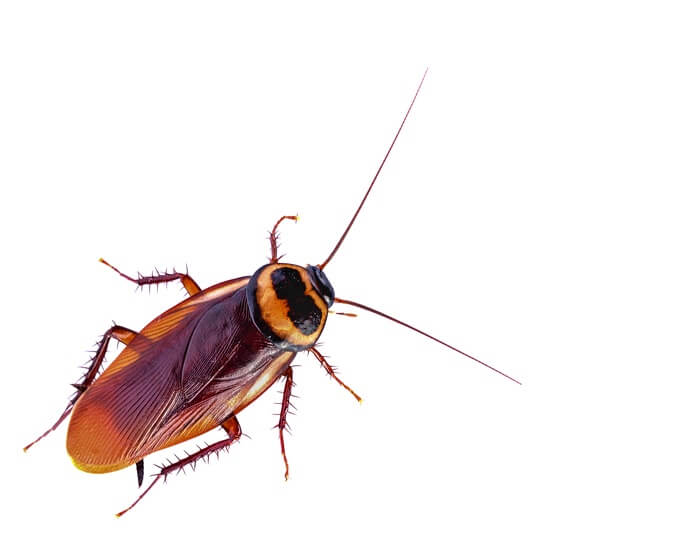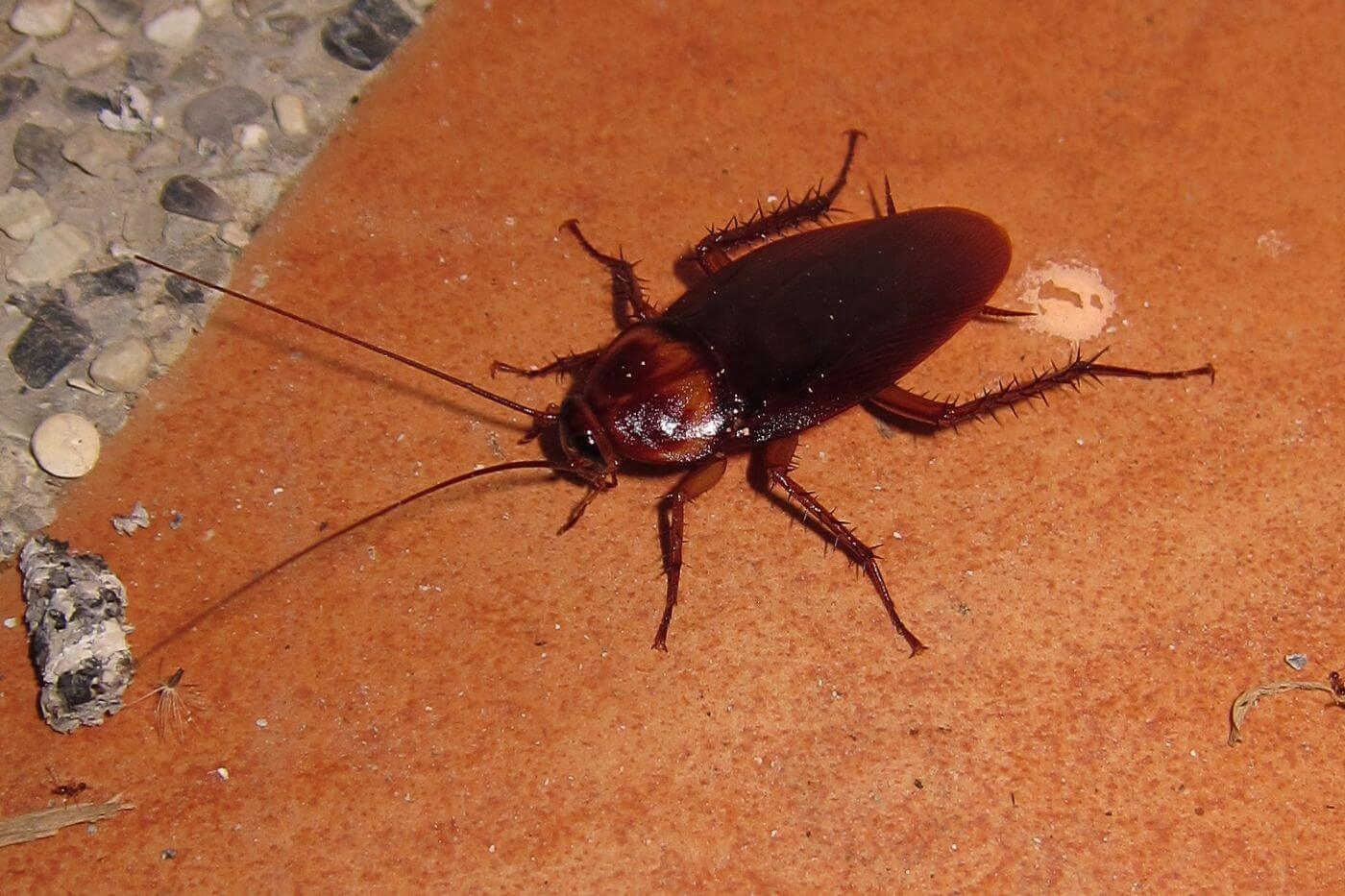

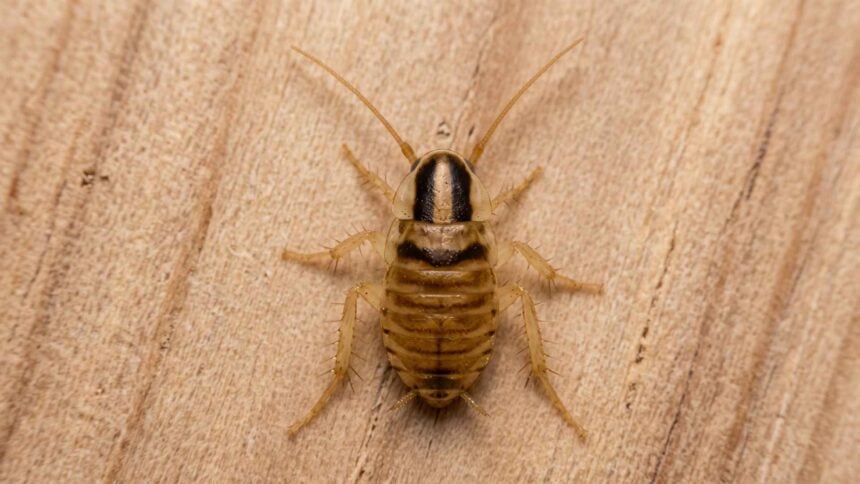
Every cockroach nymph is a wingless, flat, oval insect with long antennae and spiny legs, and it moves fast. You can confirm it in under a minute. Baby cockroaches (nymphs) lack the developed wings of adult cockroaches, but they look like smaller copies of the adults.
Because of their shape you can distinguish them from most small insects in your home. The colour, patterns and where they were found will also help you determine exactly which species you have.
To identify a baby cockroach, check the antennae and legs first, then look for stripes or bands, and finally note where you found it. This cockroach nymph identification guide covers the five common species, compares nymphs with the insects most often mistaken for them, and explains what to do next.
Table of Contents
What Does a Cockroach Nymph Look Like In General?
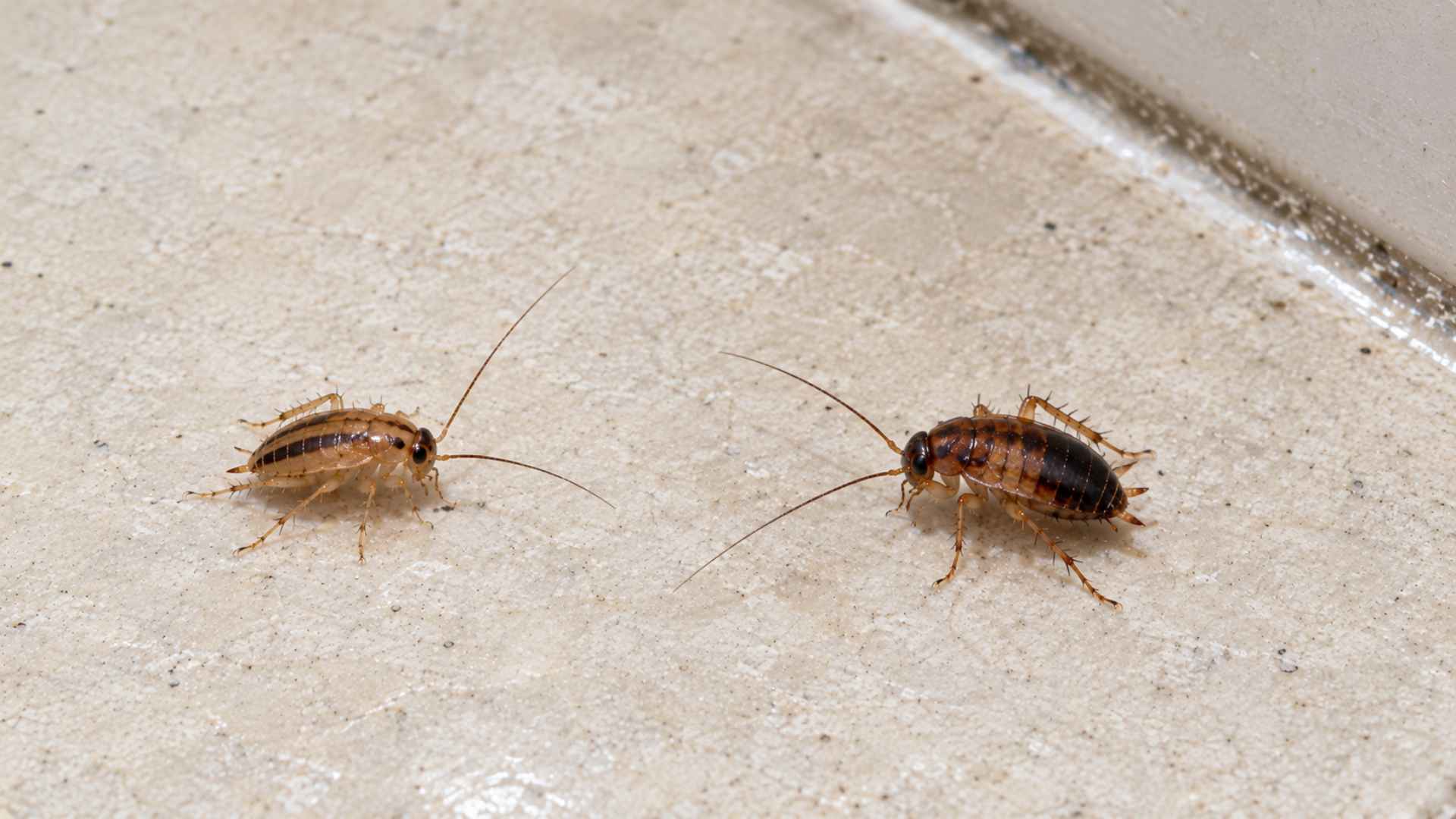
Baby cockroaches, technically called nymphs, look like miniature versions of their parents, but they have a few critical developmental differences. The most defining characteristic of a wingless nymph is that it lacks functional, fully developed wings.
Although an adult cockroach uses wings to fly or glide, a nymph only possesses tiny wing pads that are useless for flight. Feature-wise, a roach nymph has a distinctly flattened oval body that allows it to squeeze into impossibly tight crevices.
They sport a pair of exceptionally long antennae that constantly sweep the air ahead of them. They basically act as their primary sensory tools. If you look closely at their lower half, you will notice six long, spiny legs that let them run that fast.
As roach nymphs grow they will pass through anywhere from five to ten stages. It takes anywhere from six weeks to a year to complete the molting process to turn into a full adult. This process depends largely on the species and room temperature. Baby cockroach nymphs are usually anywhere between 1/8 to 1/4 inches when they hatch and have light to dark brown bodies.
Baby Cockroaches by Species
Not all roaches are created equal. To build a smart treatment plan, you must pinpoint the exact species invading your space. Each common household cockroach has a unique nymph stage.
American Cockroaches Nymph Appearance
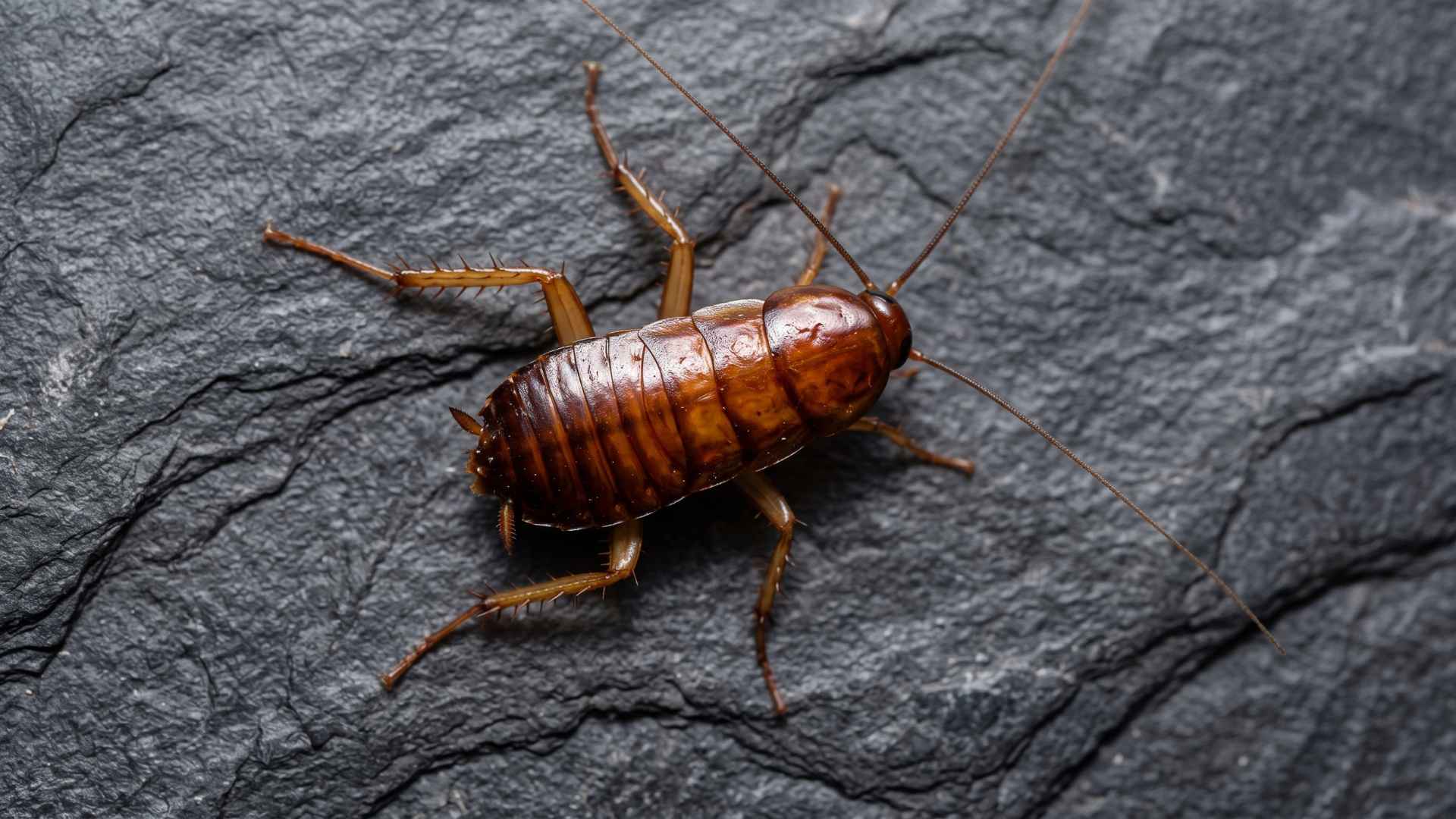
The American cockroach nymph is the largest of the species. These nymphs are around a quarter of an inch long when they are born. However, they reach over an inch long before their final molt. The colour is even all over and is a grayish brown when they are very small. As they mature, the colour changes to a distinct red brown or mahogany shade. They are long and sturdy in build. They do not have any contrasting markings or stripes along their back. American roaches babies are extremely fast and enjoy living in very damp areas.
German Cockroaches Nymph Appearance
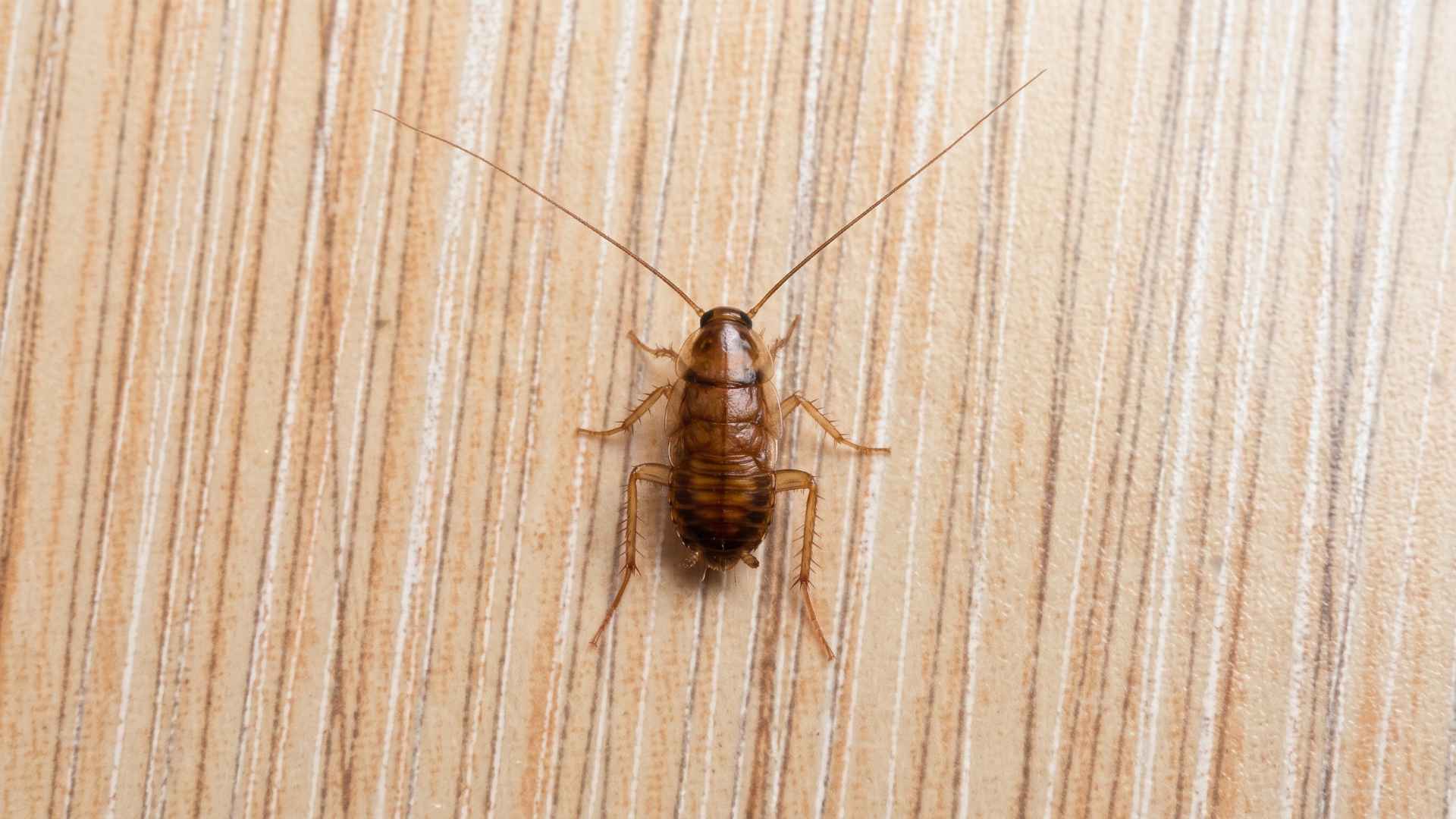
The German cockroach nymph is the one you are most likely to meet indoors. It hatches at about 1/8 inch, dark brown to nearly black, and grows toward half an inch over several molts. Every nymph german cockroach carries a pair of stripes or parallel dark bars along the pronotum, the shield just behind the head, and younger nymphs also show a pale tan stripe down the middle of the back.
Short wing pads appear on older nymphs. The bands stay visible at every stage and give you the most reliable mark. German nymphs hide in cracks near warmth, food, and water, mainly in kitchens and bathrooms, and they scatter fast when you switch on a light.
Oriental Cockroaches Nymph Appearance
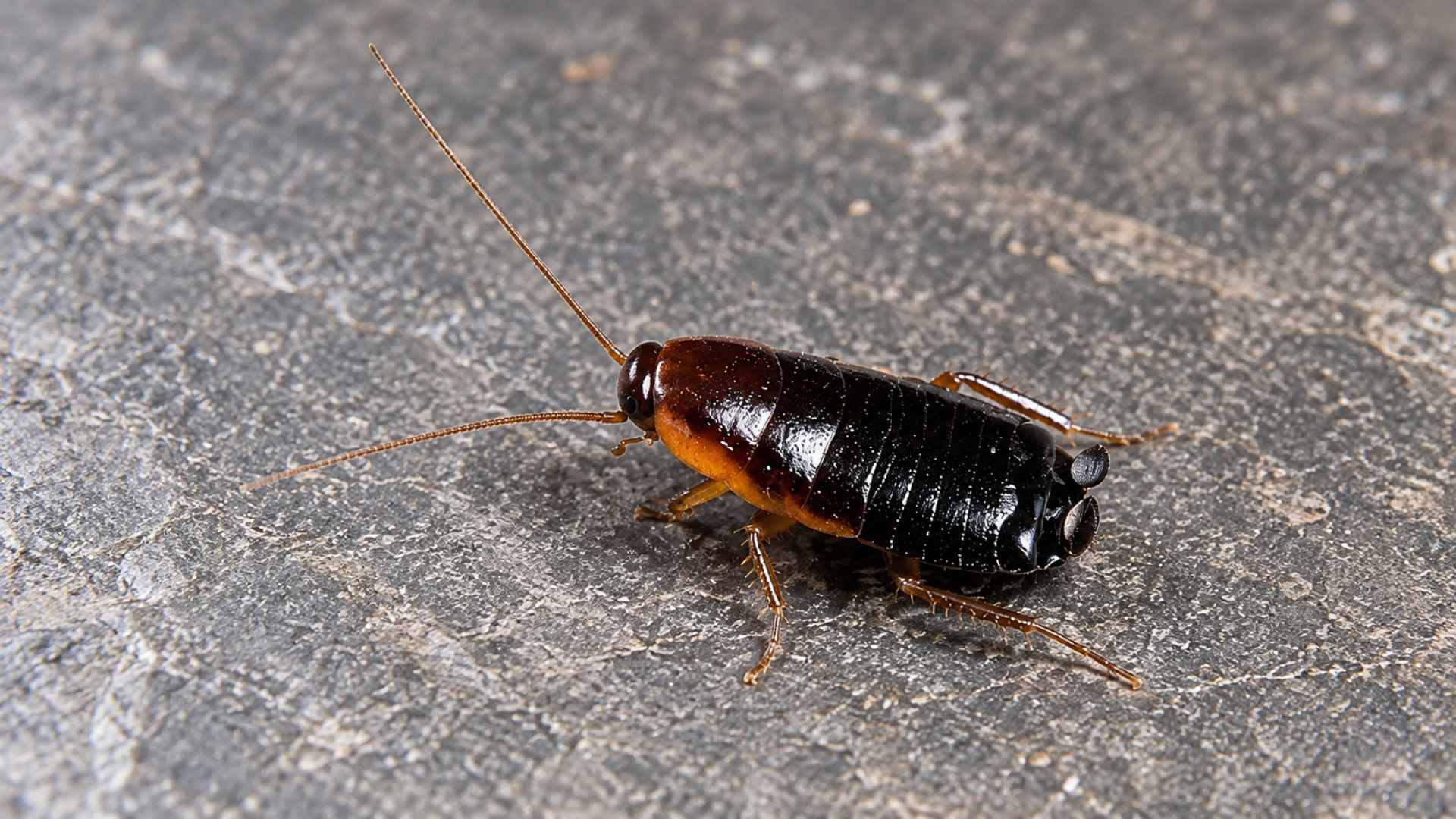
Oriental cockroach nymphs are uniformly reddish brown to black, and the shell grows shinier and darker as they mature. They have no stripes or bands, and that rules out German and brownbanded nymphs.
The body looks stout, and these nymphs move more slowly than American or German ones. They need up to a year to reach adulthood. Look for them in floor drains, damp basements, crawl spaces, and around leaking pipes.
Without markings to guide you, habitat does most of the work, and a dark nymph in a damp basement drain is a strong candidate.
Brown Banded Cockroaches Nymph Appearance
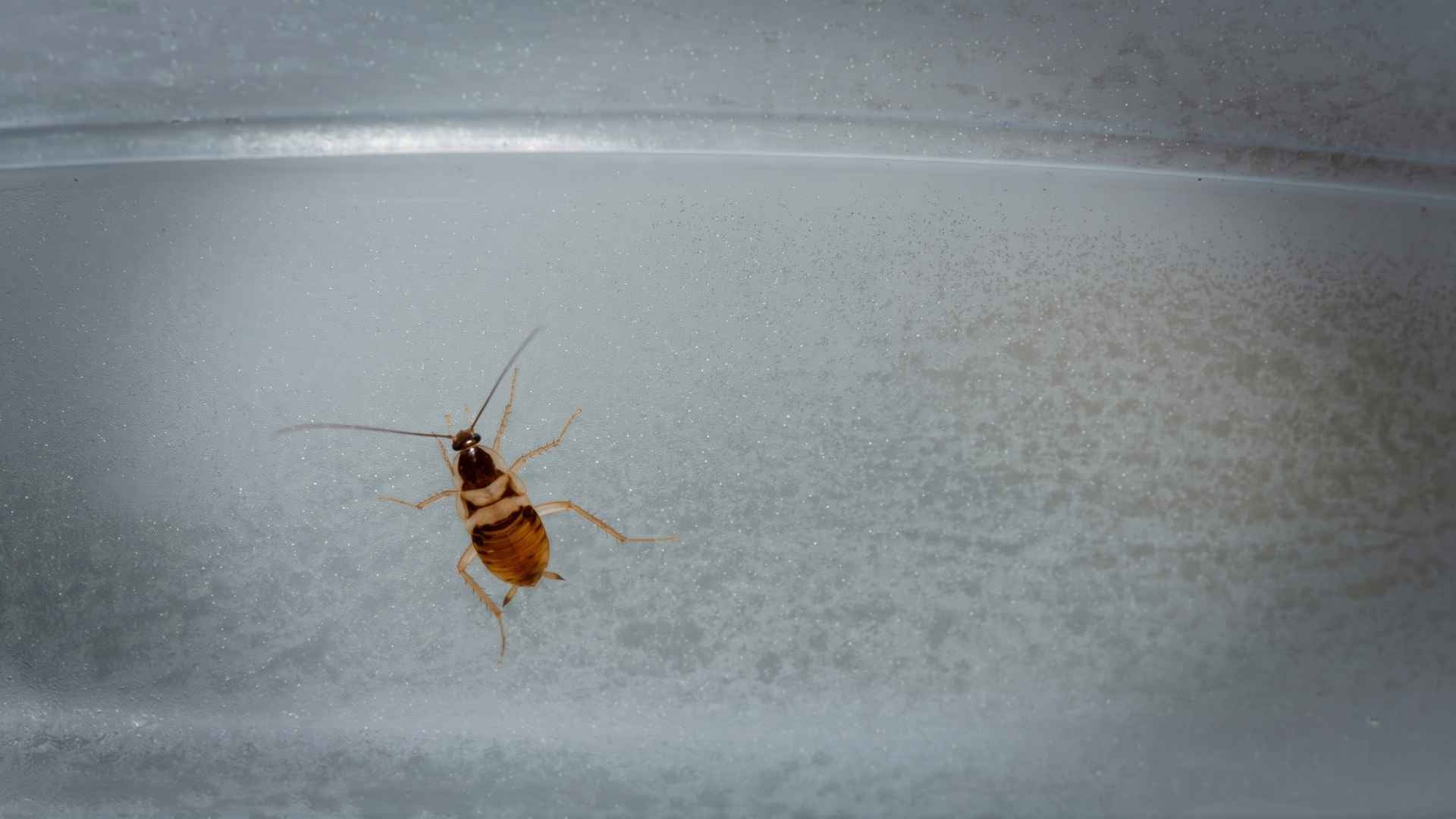
True to their name, these nymphs are easily identified by two prominent, light-colored bands that contrast against their dark bodies, stretching horizontally across their abdomen and thorax. They are small, light brown, and lack the vertical stripes found on German roaches.
Unlike most other species that stick close to water pipes, brown-banded nymphs thrive in dry, elevated areas like upper kitchen cabinets, closet shelves, and behind picture frames on your walls.
Smokybrown Cockroaches Nymph Appearance
Smokybrown nymphs look strikingly different from adults. When very young, their bodies are almost entirely black with a stark white stripe across their backs. They also have white tips on their antennae. As they grow older, they shed this stark contrast and take on a uniform, dark smoky-brown coloration. They are common in the southern states and love nesting in tree holes and mulch piles before wandering indoors.
Cockroach Nymph vs Other Insects: Key Differences
To help you sort through the confusion, use this direct anatomical table to compare a cockroach nymph vs other insects you might encounter around your home.
| Insect | Common appearance | Main clue |
|---|---|---|
| Cockroach nymph | Flat, oval, wingless, tan to black, sometimes striped or banded | Antennae as long as the body, spiny legs, and a fast run |
| Bed bug nymph | Round, flat, pale yellowish brown, shaped like an apple seed | Short antennae, slow crawl, found near beds |
| Beetle | Hard shell with wing covers that meet in a straight line | Short, often beaded or clubbed antennae |
| Cricket nymph | Humped back, brown, wingless | Long folded hind legs and a hop when disturbed |
| Booklouse | Tiny, soft bodied, translucent white to gray, large head | Under 2 mm and found in damp spots with mold or old paper |
Where Do Cockroach Nymphs Hide, and What Does Their Presence Mean?
Finding cockroach nymphs in house areas is a definitive warning sign that you cannot ignore. Adult roaches are sneaky, but nymphs are even smaller and can squeeze into cracks narrower than a coin. They prefer dark, tight, warm places with easy access to moisture. Common hiding spots include:
- Behind and under refrigerators, stoves, and dishwashers
- Under sinks and around plumbing gaps
- Cabinet hinges and drawer corners
- Bathroom vanities and floor drains
- High, warm spots such as upper cabinets and ceiling vents
Spotting roach babies is one of the classic signs of cockroach infestation. It tells you that adults are nearby and actively breeding inside your walls. Because nymphs do not travel far from where they hatched, seeing them means a nest is likely within just a few feet of that exact spot.
What to Do if You Confirm It Is a Cockroach Nymph
Once you look closely at the nymph you find and make sure it actually is a roach nymph, you need to act immediately. The longer you wait, the worse the infestation could get.
Eliminate Food and Water
Wipe counters and stovetops every night, store food in sealed containers, and take out the trash daily. Fix drips under sinks and dry the basin before bed. Roaches nymphs need water more than anything, and a dry kitchen is hard for them to survive.
Set Up Monitoring Traps

Lay sticky traps flat against walls, under sinks, and behind appliances for a few nights. Compare the catch with the species guide above so you can identify a baby cockroach accurately and see which rooms or areas are the busiest.
Identify Species for Targeted Control
Different cockroach species have different habits, so correct identification helps guide treatment. Gel baits, monitoring, sanitation, and sealing entry gaps may all play a role, depending on the species and location. If you cannot confidently identify a baby cockroach, save a clear photo or collect the insect in a sealed container for identification.

When To Call a Pro?
Call a professional when you find roach nymphs in more than one room, see them in daylight, or spot new ones two weeks after you cleaned and baited. Daytime activity usually means their hiding spots are actually crowded.
Companies like Orkin have spent over a century mastering the art of pest elimination. Their technicians do not just spray baseboards; they use advanced thermal imaging and specialized baits to disrupt the roach life cycle entirely. Investing in a professional service saves your sanity and protects your home’s equity. If you want the job done right the first time, getting a professional inspection from Orkin is the smartest move you can make.
Frequently Asked Questions (FAQs)
Are cockroach nymphs smaller than bed bugs?
It depends entirely on their growth stage. A brand-new cockroach nymph can be roughly the same size as an adult bed bug, which is about 4 to 5 millimeters. However, as the roach nymph matures through its various molts, it quickly outgrows any bed bug.
Do cockroach nymphs have wings?
Nymphs are wingless at every stage. Older nymphs show small wing pads, and full wings appear only after the final molt in species that develop them.
What baby cockroaches bite?
In general, cockroach nymphs do not bite humans. Their mouthparts are designed for scavenging soft organic matter, crumbs, and glue. Itchy marks on your skin more often come from other insects (could be bed bugs or fleas).
Does finding cockroach nymphs mean there is an infestation?
Finding a baby roach almost always points to a larger problem. Because nymphs are weak travelers, their presence proves that an egg case recently hatched nearby. You are almost certainly dealing with an active, breeding population inside the building.
What can be mistaken for a cockroach nymph?
Homeowners frequently mix up a cockroach nymph vs beetle or a cockroach nymph vs cricket due to their similar color palettes. A carpet beetle or a tiny booklice specimen is also commonly misidentified as a roach.
Wrapping Up…
Four traits give a cockroach nymph away: no wings, a flat oval shape, antennae that often stretch the length of the body , and spiny legs. Add the color pattern and you can name most species in under a minute. German nymphs show dark stripes behind the head, brownbanded nymphs carry bands across the back, and smokybrown nymphs wear white tipped antennae. Then check where you found it, because location separates a roach from a beetle or a booklouse. Once you confirm a nymph indoors, treat it as a sign that a colony is close. Cut off food and water, watch the activity with sticky traps, match the species, and call a professional if sightings keep coming back.