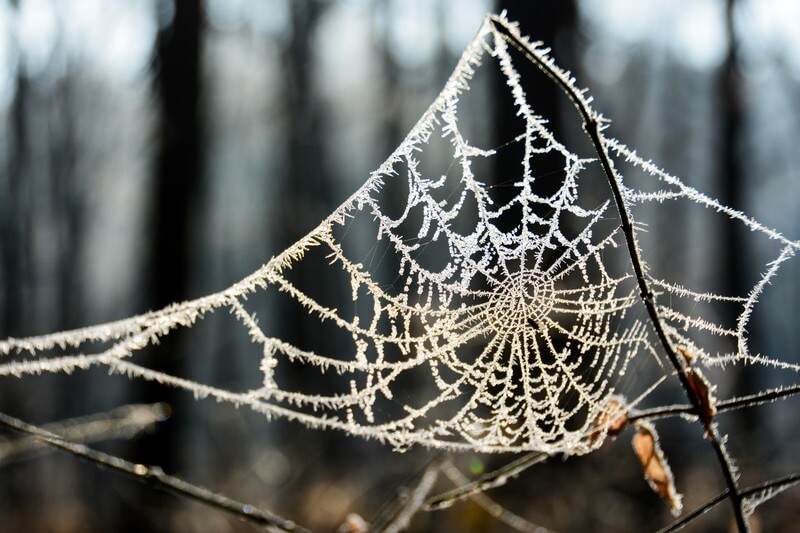

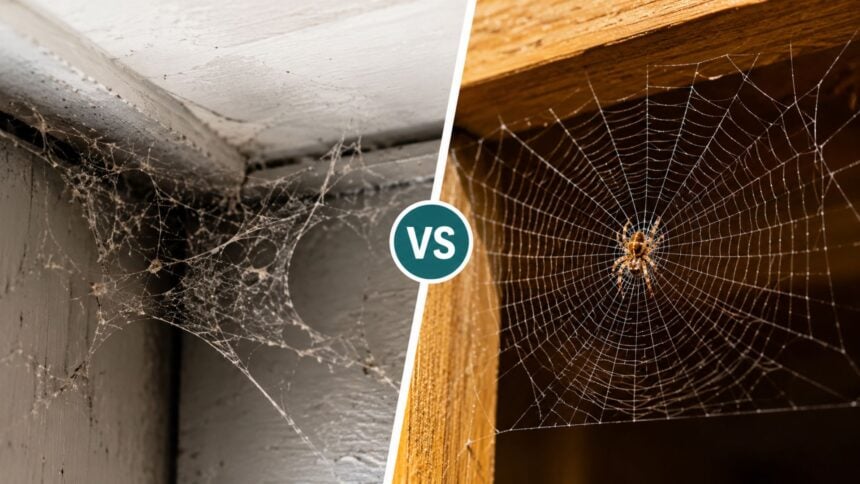
You spot a spider web in the corner of your porch. Question is, does something still live there, or is it just an abandoned mess collecting dust. That’s the whole point of learning how to tell if a spider web is old or active. It’s not complicated once you know what to look for.
Clean silk, tight structure, a spider hanging around nearby, those all point to something still in use. Dust, sagging strands, dead bugs nobody bothered to eat, that’s usually a sign the spider packed up and left.
We’ll look into every sign worth checking, the different web types you’ll run into around a house, and what to actually do once you’ve made the call.
Table of Contents
Old vs. Active Spider Web at a Glance
These are the core signs of an active spider web worth checking first, laid out side by side.
| Sign | Active Web | Old Web |
|---|---|---|
| Appearance | Clean and intact | Dusty and dull |
| Silk | Clear/bright | Gray or fuzzy |
| Structure | Defined and maintained | Sagging or broken |
| Insects | May contain fresh prey | May contain old debris |
| Location | Often maintained near shelter | May be undisturbed |
| Spider nearby | Possible | Usually absent |
Key Signs a Spider Web Is Still Active
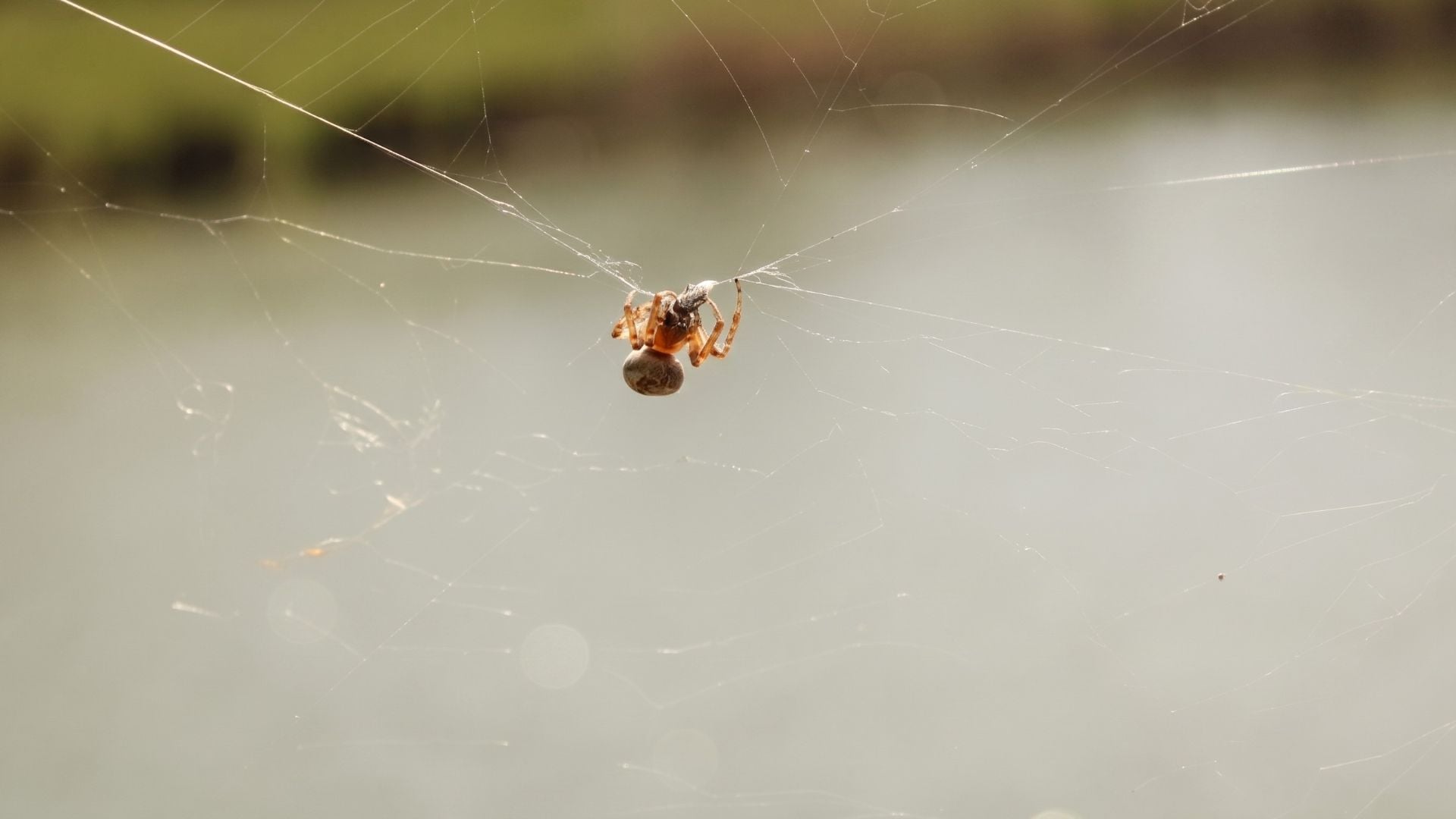
Here’s how to tell if a spider web is active, sign by sign.
- The Silk Looks Clean and Fresh: Fresh silk catches light differently than old silk. A fresh spider web practically glows under a flashlight at the right angle, not gray or matted down like something that’s been sitting for weeks.
- The Web Has a Defined Structure: An active spider web holds its shape. Strands stay tight, spokes stay even, and no web strands hang loose or disconnected. Once a web starts drooping or the pattern falls apart, that structure usually means nobody’s maintaining it anymore.
- The Web Appears Recently Repaired: Spiders patch damage fast. A web with a few obviously newer, cleaner strands woven into an otherwise normal pattern means somebody’s been doing upkeep recently, probably within the last day.
- Fresh Prey or New Catches Are Present: A bug still wrapped up tight, or one that’s clearly recent rather than dried out and dusty, tells you the web caught something not long ago. That’s about as direct a clue as you’ll get.
- You Notice a Spider Nearby: Sometimes the spider sits right in the middle of her web. Spiders hiding near webs more often tuck into one corner or a nearby crack instead, but either way, spotting it settles the question fast.
- An Egg Sac Is Nearby: A silk wrapped egg sac attached to or near a web is a strong sign the spider hasn’t gone anywhere. She’ll usually stick close to guard it until the eggs hatch.
Signs You’re Looking at an Old Spider Web
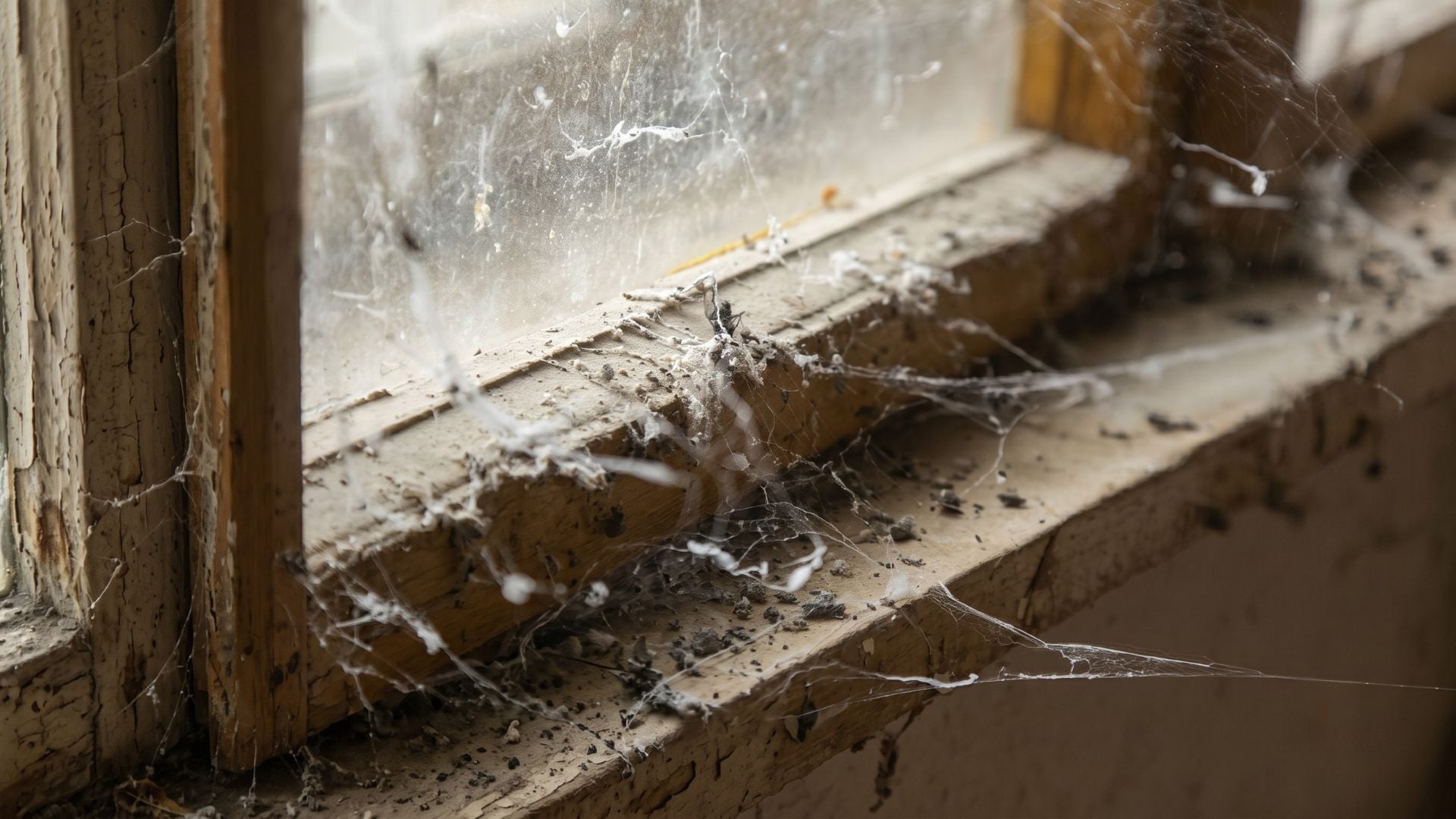
- Dust Has Built Up on the Silk: Dust doesn’t lie. It settles fast on abandoned silk, and spider web dust buildup is one of the clearest old spider web signs there is.
- The Web Looks Loose or Saggy: Without regular upkeep, silk stretches and sags. The tight, geometric shape falls apart into something loose and shapeless, especially in orb style webs that depend on tension to hold their form.
- There Is a Lot of Debris Caught in It: A dusty web piled with dead leaves and dried out bugs is about as clear a sign as you’ll get. A spider actively using a web keeps it relatively clean, since debris interferes with catching prey for the most part.
- No Spider Activity Appears Nearby: Watch a web for a while. No movement, no spider poking out, no new damage or repair over a day or two, that’s about as good a sign as you’ll get that it’s been abandoned.
5 Common Types of Spider Webs
Not every web looks the same, and knowing the type helps you figure out which type of web it is and whether the web is old or active.
Orb Webs
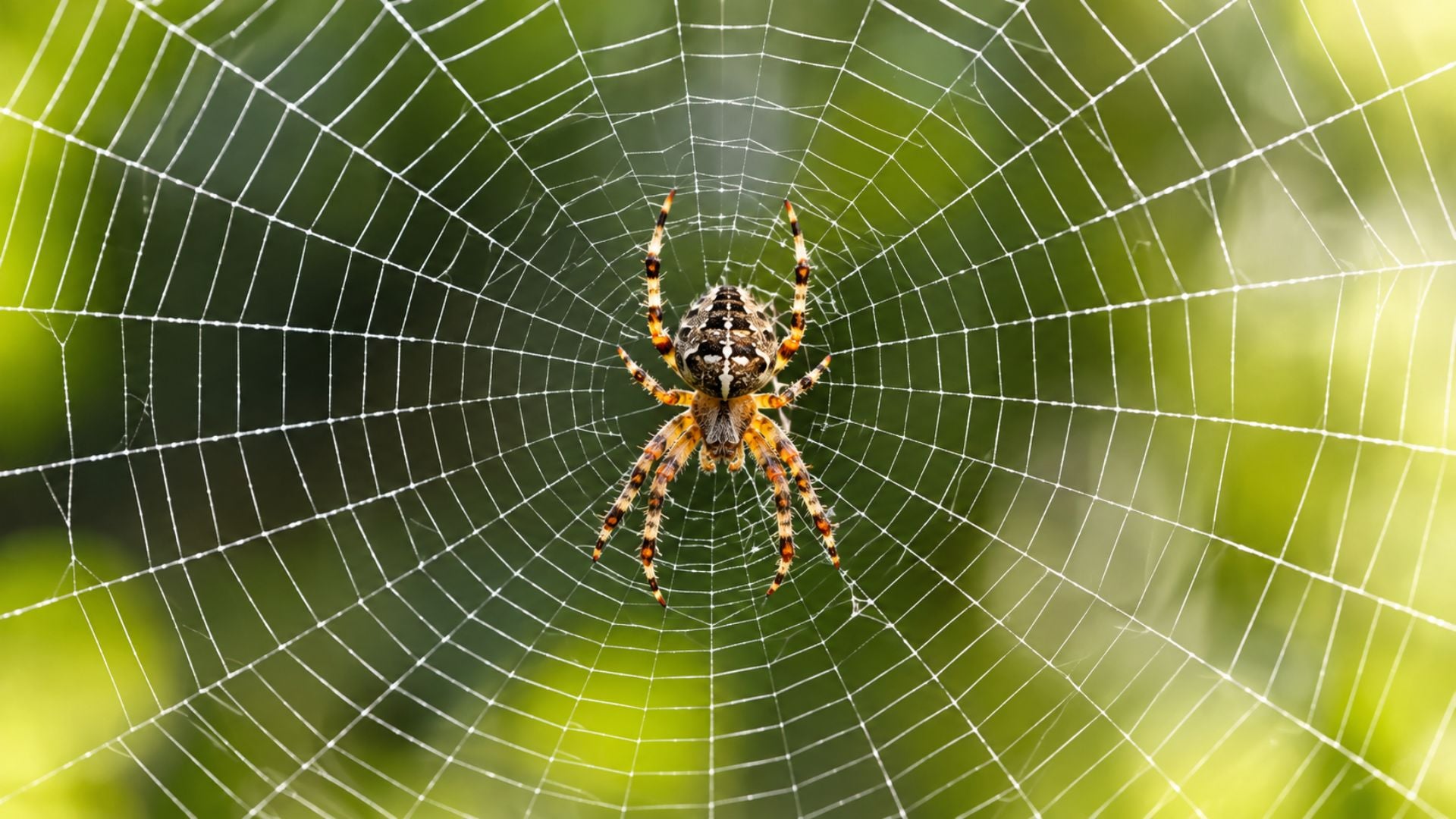
Orb webs are the classic spider web most people picture, a circular pattern with spokes radiating out from a center hub, wrapped in a spiral of sticky capture silk. Garden spiders and their relatives build these, and they’re genuinely common. Orb weavers alone account for roughly a quarter of all known spider species worldwide.
What’s wild about them is how often they get rebuilt. Many orb weavers eat their own web every evening, recycling somewhere around 80 to 90 percent of the silk proteins, then spin a completely fresh one overnight, usually in 30 to 60 minutes.
That daily rebuild cycle is a big part of how long spider webs last in general, most simply don’t stick around more than a day before getting replaced. It’s also exactly why a web that looks identical two days running probably doesn’t have anyone living in it anymore.
Cobwebs
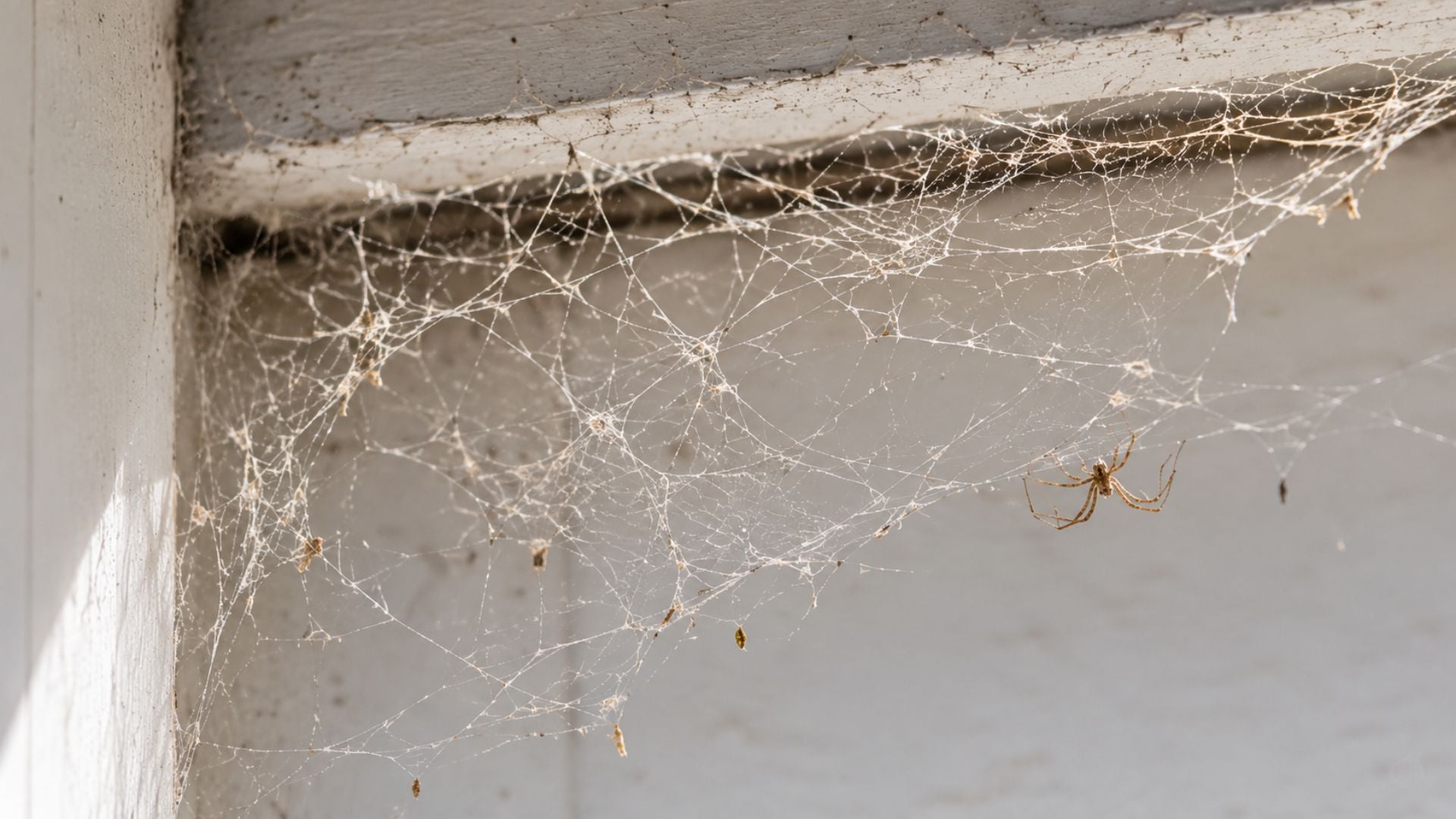
The spider web vs cobweb distinction trips a lot of people up, tho it really just comes down to species and building style. Cobweb spiders make messy, irregular webs with no real shape or pattern, nothing like the neat geometry of an orb web.
Their legs are long and thin, with the first pair being the longest and the third pair the shortest, and the fourth pair carries tiny comb like hairs used to fling silk over struggling prey.
Their webs can have big open patches next to tangled clumps, and honestly, some cobweb spiders just build messy webs by nature, so a chaotic look doesn’t automatically mean abandoned.
Funnel Webs
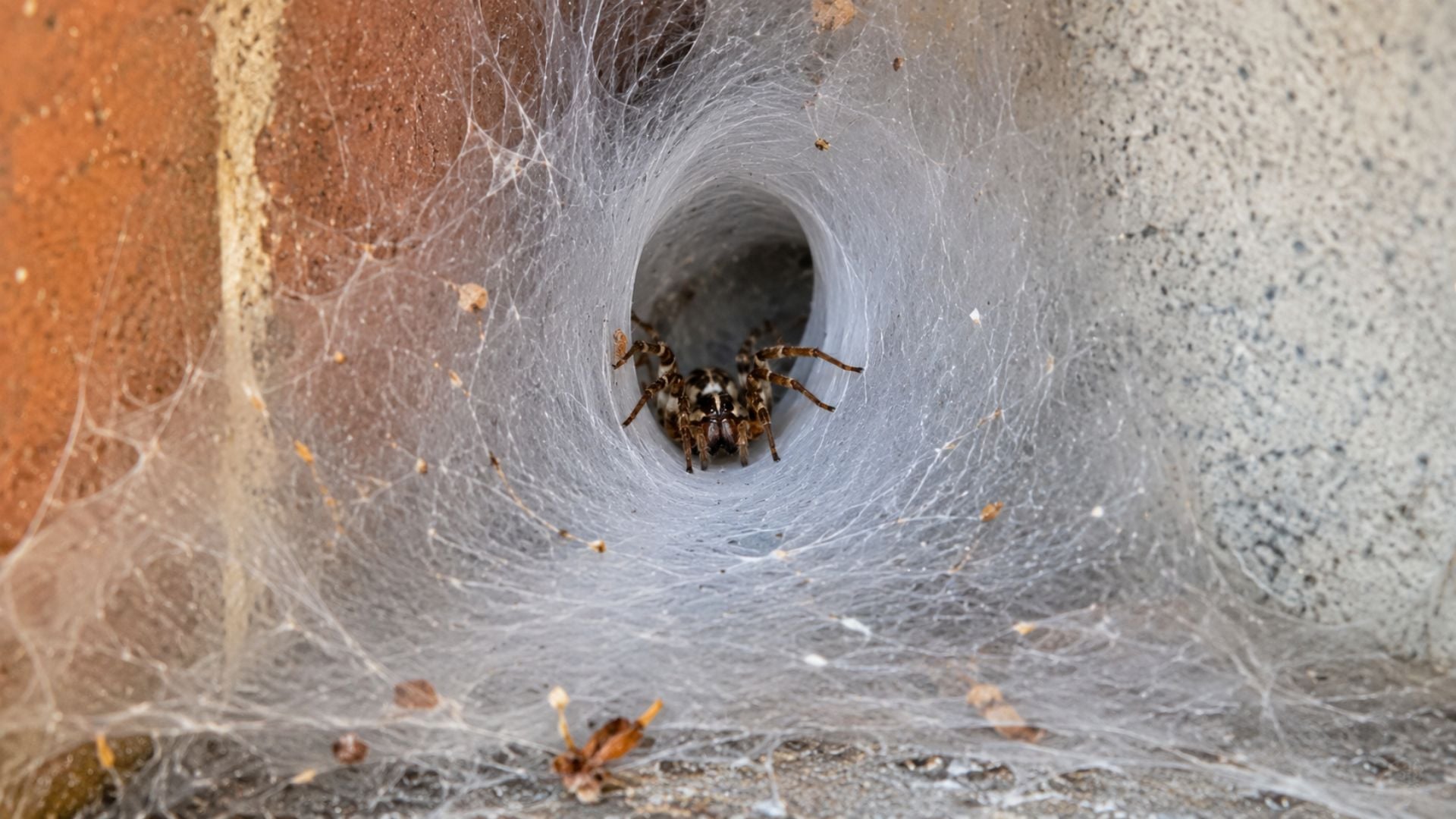
Funnel webs are exactly what they sound like, a wide, flat sheet of silk that narrows down into a tunnel where the spider hides. Grass spiders build these constantly in yards, tucked into corners of porches, along foundation edges, wherever there’s a stable anchor point. The spider waits inside the funnel and darts out the second something lands on the flat part.
Sheet Webs
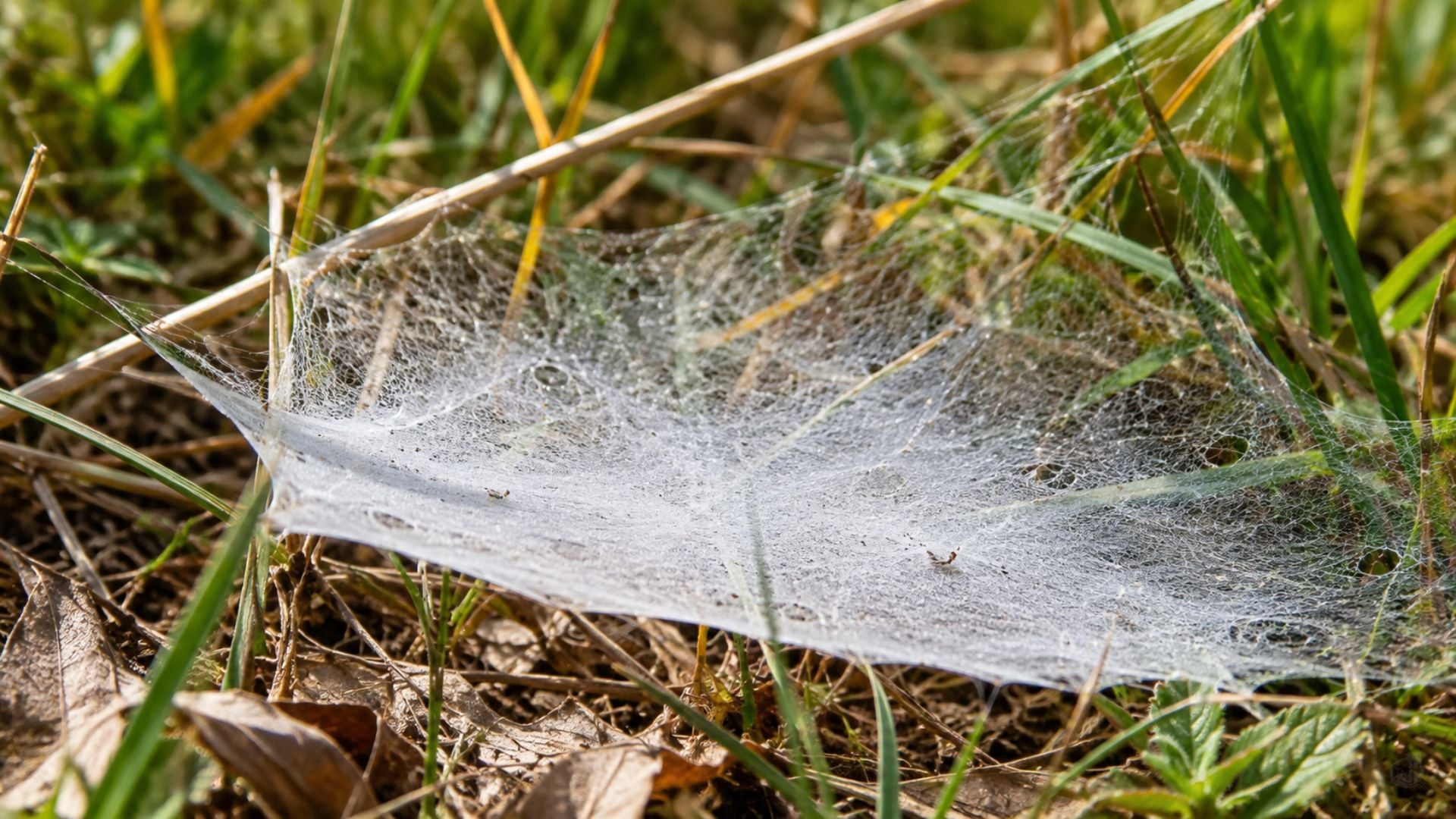
Sheet webs form a flat, dense layer of silk, often stretched horizontally between grass blades or low shrubs. Unlike an orb web’s open spiral, a sheet web works more like a net, insects fly into it, get tangled, and the spider moves in from underneath or the edge.
Triangle Spider Webs
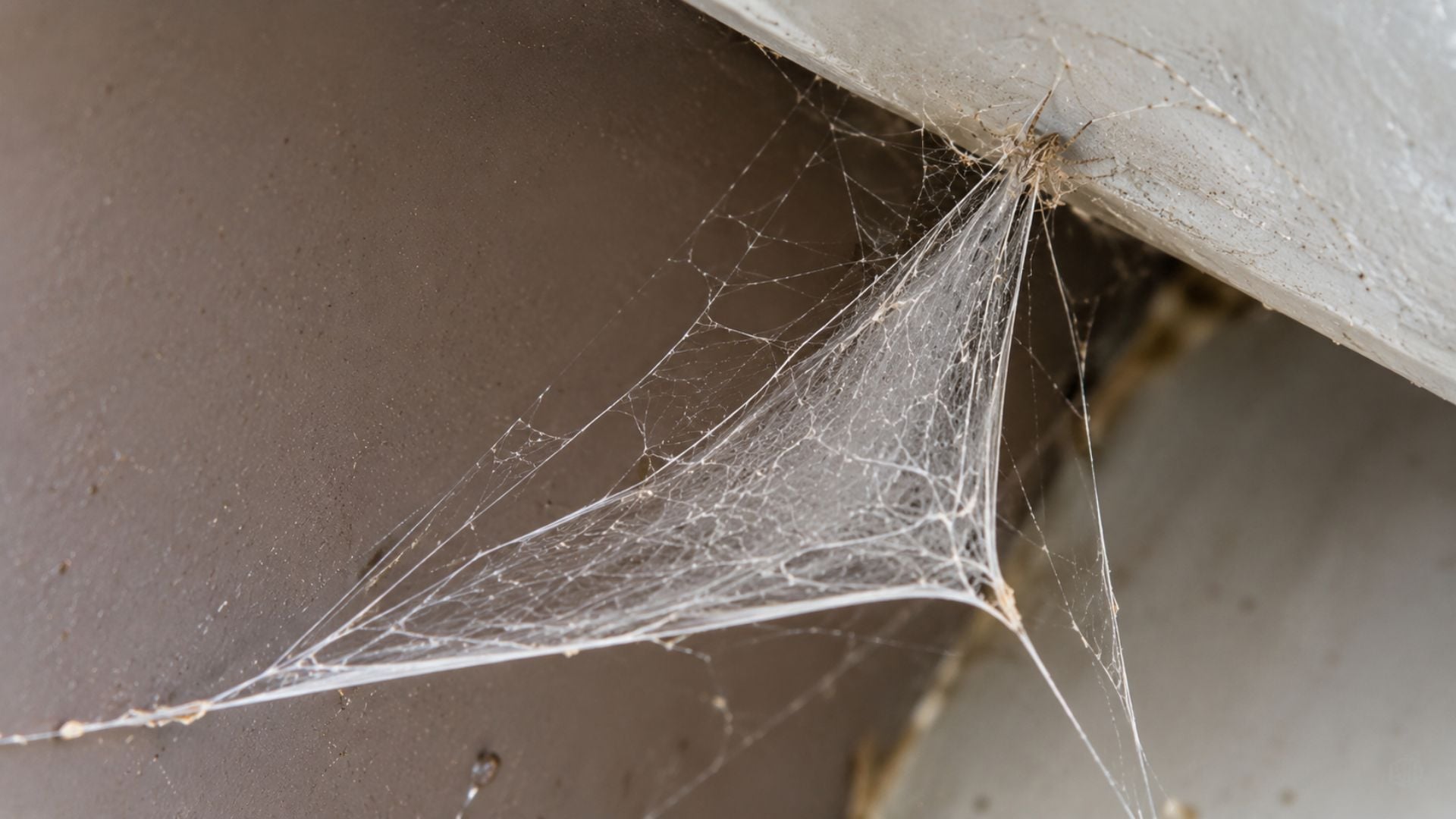
Triangle webs are a smaller and pretty less common style. They shaped roughly like a wedge with the spider anchored at the narrow point holding a line of tension. When prey hits the web, the spider releases that tension, and the whole structure snaps forward to trap the insect. It’s a clever, mechanical kind of trap you don’t see with most other web builders.
Want a more complete approach to keeping pests out of your home? We cover spider prevention, pest identification, and practical control strategies in our ebook, The Pest-Free Home, along with printable tools to help you stay on top of problems before they become infestations.

Get practical help identifying pests, preventing infestations, and protecting your home throughout the year.
View the Pest Control eBookIs a Cobweb Always an Abandoned Spider Web?
Not necessarily. Cobweb spiders just build messy webs as their normal style. A cobweb full of dust and dead bugs with nothing moving in it for days is very likely an old spider web. But a cobweb with fresh looking strands, or an actual spider tucked into one corner, is still very much active.
It’s just never going to look as tidy as an orb web. Judging a cobweb by neatness alone is a mistake. Judge it by dust, by movement, and by whether new damage keeps getting patched.
A Simple 30 Second Spider Web Check For Homeowners
Here’s a fast way to tell if a spider web is old or active without overthinking it.
- Look at the Silk: Clean and slightly glossy means active. Gray, dull, or fuzzy means old web.
- Check the Web’s Shape: Tight and defined points to active. Sagging or falling apart points to old.
- Look for Fresh Activity: New prey, recent repairs, or a visible spider all point to active.
- Check the Surrounding Area: Piles of dust, dried debris, or bug carcasses nearby suggest nobody’s been maintaining things.
- Watch Before taking it off: Give it a day or two before tearing anything down. A web that looks identical two days in a row almost certainly has no spider left in it.
Key takeaway: no single clue proves a web is active or abandoned. Combining several signs gives you a much better indication.
Where Are Active Spider Webs Usually Found?
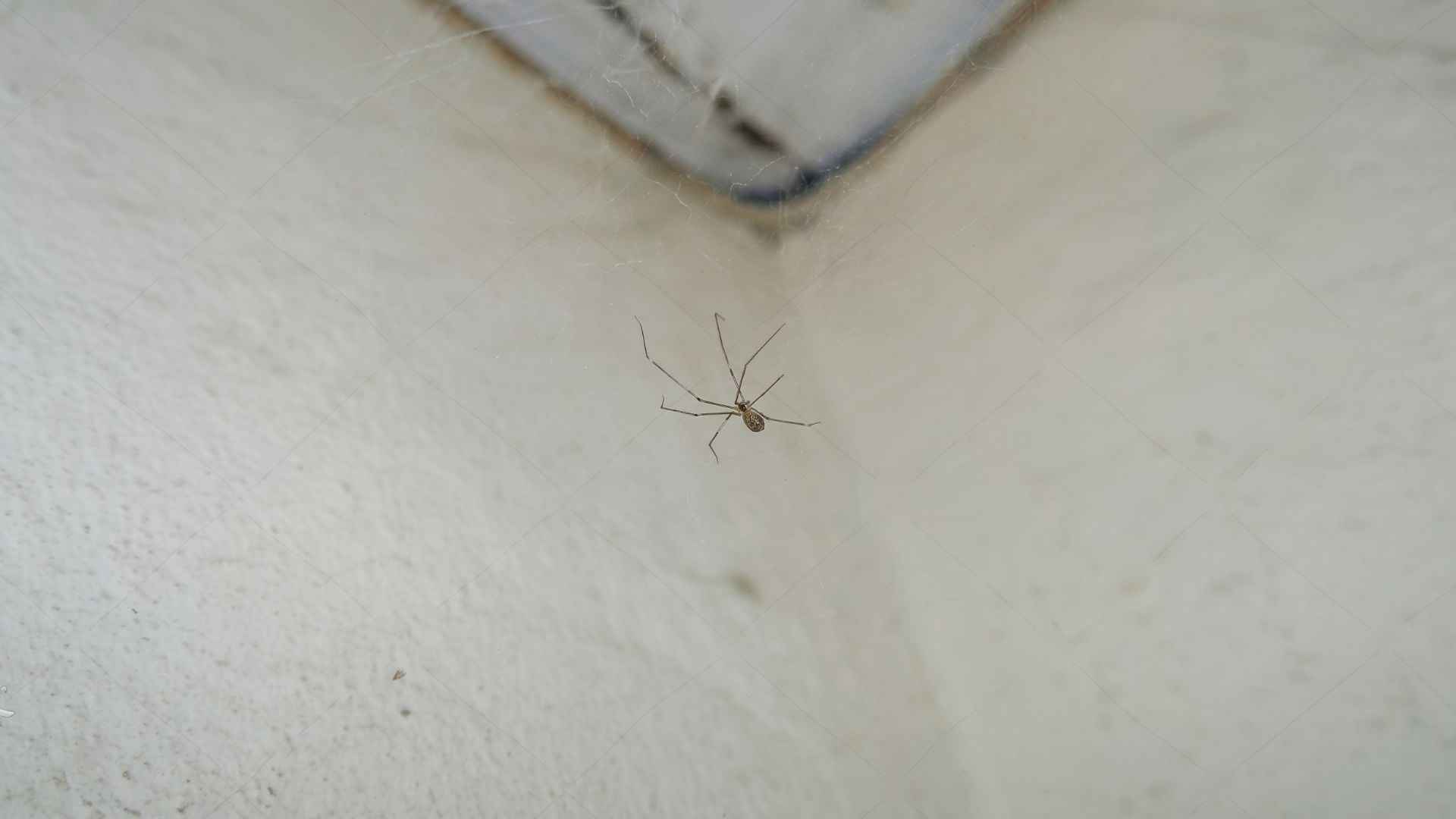
Spider’s web location could tell you as much as the web itself. Certain spots around a house draw spiders over and over again, mostly because they offer shelter, steady insect traffic, or both.
- Corners and Ceiling Edges: Corners are prime real estate for a reason. Two stable walls to anchor silk to, minimal foot traffic, and usually decent insect activity nearby. Ceiling corners especially stay undisturbed for long stretches. That is exactly why webs pile up there pretty faster than almost anywhere else in a house.
- Windows and Doorways: Bugs get drawn to light and gaps around frames. It, in turn, makes windows and doorways a genuinely smart hunting spot for a spider. Bridge spiders specifically favor building on man made structures like this, taking full perks of artificial light pulling insects in at night.
- Basements and Crawl Spaces: Dark, undisturbed, and usually a little damp, basements check every box a spider could ask for. Cellar spiders and cobweb weavers especially favor these spots, since nobody’s down there vacuuming corners on a weekly basis.
- Garages and Sheds: Garages and sheds combine clutter, minimal disturbance, and often a light left on overnight, a genuinely reliable combination for spider activity in house adjacent structures. Boxes, shelving, and tool corners all make solid anchor points.
- Around Outdoor Lights: Porch lights and outdoor fixtures pull in moths and other flying insects most nights, which makes the wall or eave right nearby a smart spot for a web. Orb weavers in particular love setting up shop near a consistent light source, since it basically guarantees a steady meal.
Key takeaway: wherever there’s steady insect traffic and a stable anchor point, expect webs to show up again eventually, even after you clear one out.
What Should You Do With an Old or Active Web?
For a genuinely abandoned spider web, feel free to sweep it down without a second thought. It’s not going to hurt anything, and creating webs is kinda a spider’s whole job anyway, it won’t take long for one to rebuild somewhere if it wants to.

For an active web, you’ve got options. Leave it if the spider’s tucked somewhere harmless and doing its job on flies and gnats. Relocate it outside with a jar and a piece of paper if it’s somewhere inconvenient. Or knock it down if you’d rather not share space with it, spiders ain’t holding a grudge, and most species will simply move on and start fresh somewhere else nearby.
When a Spider Web Could Mean a Bigger Problem
A single web here and there is normal. A growing number of webs, frequent spider sightings, or webs showing up in multiple rooms at once suggests something bigger might be going on, usually an insect problem feeding a larger spider population.
If you’re noticing web builders that look genuinely unusual, or you suspect a potentially dangerous species like a black widow or brown recluse, that’s worth taking seriously rather than handling casually. Routine cleaning, dusting and vacuuming corners regularly, keeps most ordinary spider activity from ever building up into something that looks unseemly in the first place.
Frequently Asked Questions (FAQs)
How to tell if a spider web is abandoned?
Look for a buildup of dust, a sagging or broken structure, and dead insects that have piled up without being eaten. Watch the web for a day or two as well, since a web that stays exactly the same, no new damage, no repairs, almost certainly has nobody living in it anymore.
What month are spiders most active?
Late summer and early fall typically bring the most visible spider activity in most parts of the United States, as many species reach full maturity and start actively searching for mates, which puts more spiders out in the open than during spring or early summer.
Are cobwebs just old spiderwebs?
Cobwebs refer specifically to the messy, irregular webs built by cobweb spiders, a distinct group that never builds the neat, circular pattern seen in orb weaver webs. A cobweb can be brand new and actively used just as easily as it can be old and abandoned, the messy shape comes from the species, not necessarily from age.
Will spiders take over abandoned webs?
Most spiders build their own web from scratch rather than moving into one left behind by another spider, and it’s very unlikely a new web will end up resembling the old one in shape or location.
How long does a spider web stay active?
Many species, orb weavers especially, rebuild nightly, meaning an individual web might only stay active for about 24 hours before adhesive breakdown and debris accumulation reduce how well it actually functions. Other web types, like funnel webs or cobwebs, can stay in active use for weeks as long as the spider keeps maintaining them.
Wrapping Up…
Figuring out whether a spider web is old or active really comes down to a handful of details, silk clarity, structure, debris, and whether anything’s moving nearby. None of it requires an expert, just a closer look and maybe a flashlight to catch the real spider signs. An old spider web is nothing to worry about, sweep it away and move on. An active one just means something’s doing its job nearby, catching flies you’d probably rather not deal with yourself. Check a few signs together rather than relying on just one, and you’ll get it right almost every time.