
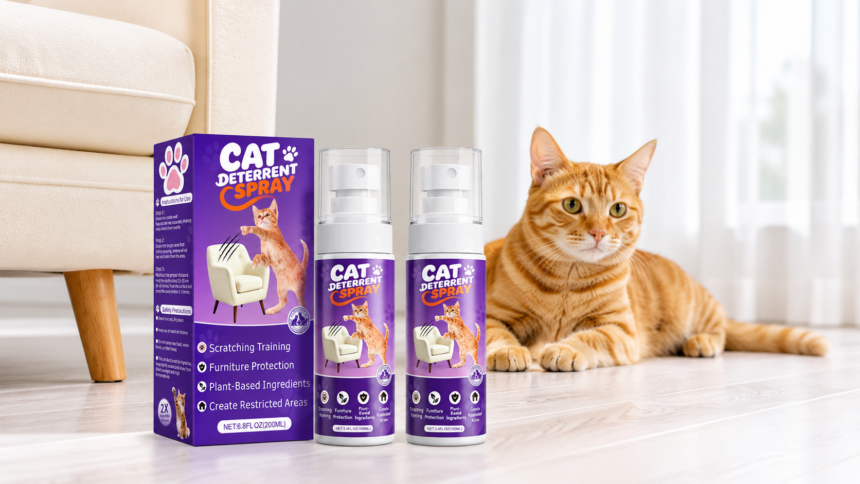
If you have ever come home to a shredded armrest or a chewed up lamp cord, you already know why the cat deterrent spray aisle exists. The Jszwzj cat deterrent spray promises to keep cats off furniture, carpets, and plants using a citrus and mint scent instead of a locked door or a squirt bottle.
That sounds appealing, though the real question for anyone about to spend money is simpler. Does it work, and does it work without turning training into a fight with your cat.
We’ll look into what the product actually claims, what the research on cat scratching says, and where a cat spray to stop scratching fits into a bigger plan.
Table of Contents
Jszwzj Cat Deterrent Spray Specifications at a Glance
| Feature | Details |
|---|---|
| Quantity | 2 pack |
| Intended use | Indoor and outdoor |
| Main scent | Lemon, orange, mint |
| Target behaviors | Scratching, chewing, urine marking |
| Suggested initial use | 3 to 4 times daily |
| Intended surfaces | Furniture, carpets, Christmas trees, patios, porches |
Key Features of Jszwzj Cat Deterrent Spray

Lemon, Orange, and Mint Based Formula
The active scent profile here leans on citrus and min.These are the two smells that show up again and again in natural repellent products aimed at cats. It positions itself as a natural cat deterrent built around plant extracts. It is part of why it gets shopped under names like Jszwzj cat repellent spray as well.
There is decent behavioral evidence behind the idea. Cats generally find citrus unpleasant, and many will move away from a lemon or orange scented surface rather than settle on it. Peppermint tends to work the same way. That part of the formula is grounded in real feline behavior.
Veterinary toxicology sources, including guidance published by the ASPCA and reiterated by veterinary hospitals like VCA, list concentrated citrus oil, specifically the compounds limonene and linalool, among the essential oils that can be toxic to cats when exposure is frequent or concentrated.
Cats process certain compounds more slowly than dogs or people because they are missing an enzyme most mammals have plenty of. That does not automatically mean a diluted, fragrance based spray carries the same risk as pure essential oil applied directly to a cat’s coat.
The listing does not specify oil concentration, and that is a legitimate gap. If your cat grooms a sprayed surface right after application, or if you have a cat with a known sensitivity, it is worth letting the area dry fully and keeping your vet’s number handy just in case.
Designed for Scratching and Chewing
Jszwzj markets this as a cat scratching deterrent as much as a chewing deterrent. That dual purpose is fairly common in this product category. The idea is that an unpleasant smell on a couch arm or a table leg makes the object less inviting to paw or gnaw at, without any physical barrier involved.
As a cat chewing deterrent, it is going after the same instinct from a different angle. Cats explore texture with their mouths sometimes, especially younger cats and kittens, and a bitter or sharp scent can interrupt that habit before it becomes routine.
Indoor and Outdoor Use
Although this liquid formula relies purely on smell, it works great both inside your rooms and out in the yard. Indoors, it protects couches, drapes, and Christmas trees from curious paws.
Outside, you can spray it on porches, decks, flowerbeds, and spaces under your patio stairs. This wide use is a huge benefit over sticky tape options, which really only make sense to use inside your living room.
Fine Spray Application
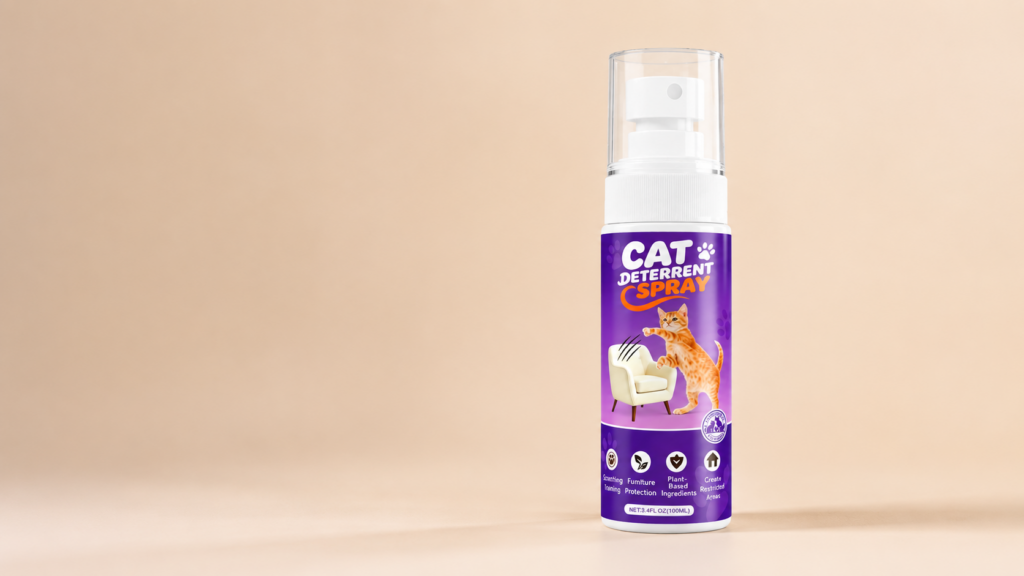
The bottle comes with a basic light mist pump. A furniture spray needs to cover a couch evenly without wetting the cloth too much. A thick, wet layer takes too long to dry and can stain light fabrics.
A light spray is much simpler to guide and stays off your fingers while you use it. So, that is really a plus point with this Jszwzj cat deterrent spray, and we do appreciate it.
2 Pack for Multiple Areas
Most households do not have just one problem spot. A cat that scratches the couch is often also going after the stair carpet or a table leg. Getting two bottles in one purchase means you can treat more than one area without running out halfway through the first week.
Suggested Frequent Application
The listing recommends spraying three to four times a day at the start. That is a meaningfully quite higher frequency than some competing sprays, and it lines up with how scent based deterrents generally behave.
Citrus and mint fade fast, especially outdoors or in a well ventilated room. Turns out, a single morning application will not hold a scent boundary through an entire day.
How Does Jszwzj Cat Deterrent Spray Work?
The mechanism behind any cat deterrent spray in this category is straightforward. Citrus and mint compounds are unpleasant to a cat’s nose. That’s cuz their nose is far more sensitive than ours.
When the spray is applied to a surface, the scent creates a kind of invisible fence, and the cat is expected to sidestep the treated spot. It is not a physical barrier and it does not train the cat directly. It simply makes one option less appealing while, ideally, a better option sits nearby.
Why Cats Scratching Is Hard to Stop Completely
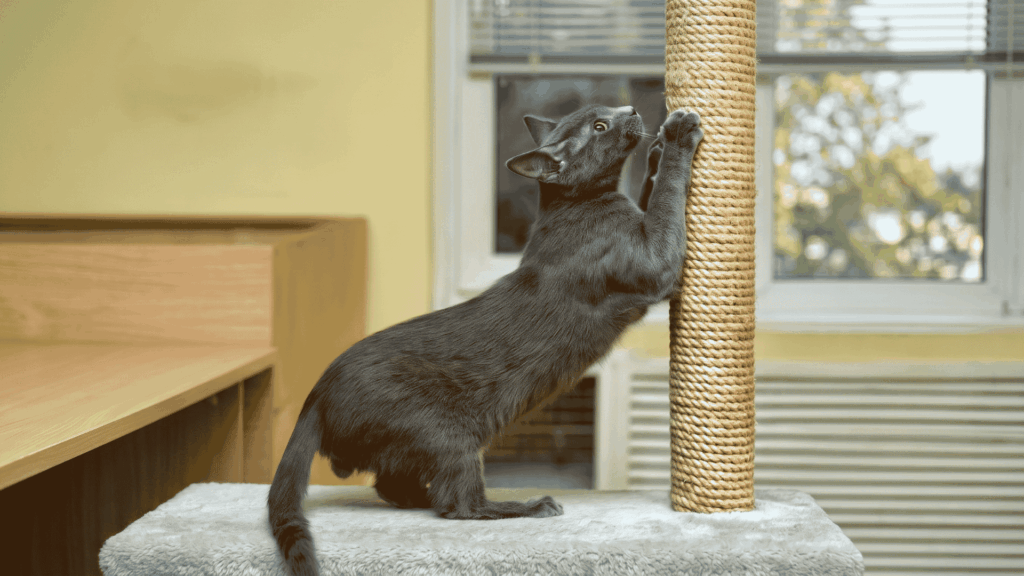
Scratching is not misbehavior in a cat’s mind. It sharpens claws, marks territory through scent glands in the paw, and stretches the back and shoulders. Research published through veterinary behavior journals puts the share of owners who report problem scratching anywhere from about 15 percent to more than 80 percent, depending on how the survey defined the behavior, with several large surveys landing near the 58 to 60 percent range.
No scratching spray changes that baseline instinct, and no reputable product claims otherwise. That wide spread tells you something important. Scratching is close to universal, and no spray, post, or piece of tape takes off the underlying drive to do it. You just need to redirect their behavior with a scratching post.
Does Jszwzj Stop Cats From Scratching Furniture?
Based on the formula and how similar citrus based sprays perform, this cat deterrent spray is likely to make a treated surface less appealing to scratch, at least for a while, functioning as a genuine cat spray to stop scratching on the specific spot you treat.
It functions as a cat spray for furniture in the sense that it discourages a specific spot. What it will not do on its own is teach the cat to stop scratching altogether. Without an approved alternative nearby, a deterred cat often just shifts a few feet over to an untreated spot on the same piece of furniture.
Can It Help With Cat Chewing and Urine Marking?
The same logic applies to chewing and to marking. As a cat urine marking spray deterrent, the scent can discourage a cat from choosing a treated spot to spray or rub against. It is useful around doorways, plant pots, and holiday decorations.
For chewing control, especially with cords or plant leaves, a bitter or sharp smell can break the habit for cats still testing textures with their mouths. In both cases, the spray is working on the symptom. Marking in particular is frequently tied to stress or territorial tension between cats, so a household with ongoing marking issues usually needs more than a bottle to fix it.
What We Like About Jszwzj Cat Deterrent Spray
- The scent profile is grounded in real feline aversions, and the fine mist nozzle makes it easy to apply without oversaturating fabric.
- Getting two bottles in one order is a practical touch for anyone dealing with more than one trouble spot, and the fact that it works both indoors and outdoors means you are not buying a second product for the porch or garden.
- The suggested tapering schedule, heavy at first and lighter later, also matches how behavior professionals generally recommend introducing a scent deterrent.
What Could Be Better
- As with most products in the cat deterrent spray category, the listing is light on specifics that matter for a product going near pets.
- There is no stated concentration for the citrus and mint extracts, no ingredient percentage breakdown, and no mention of third party safety testing.
- The recommended three to four applications a day is also a real time commitment for the first week or two, which some buyers may not expect going in.
How to Use Jszwzj Cat Deterrent Spray More Effectively
Clean the Problem Area First
Cats often return to a spot because their own scent is already there from prior scratching or marking. Wipe the surface down with a mild, unscented cleaner before your first application so the new scent is not competing with old residue. This step alone improves how well any cat spray to stop scratching actually performs, since a half masked old scent gives the cat a reason to come back regardless of what you spray on top.
Apply the Spray Consistently
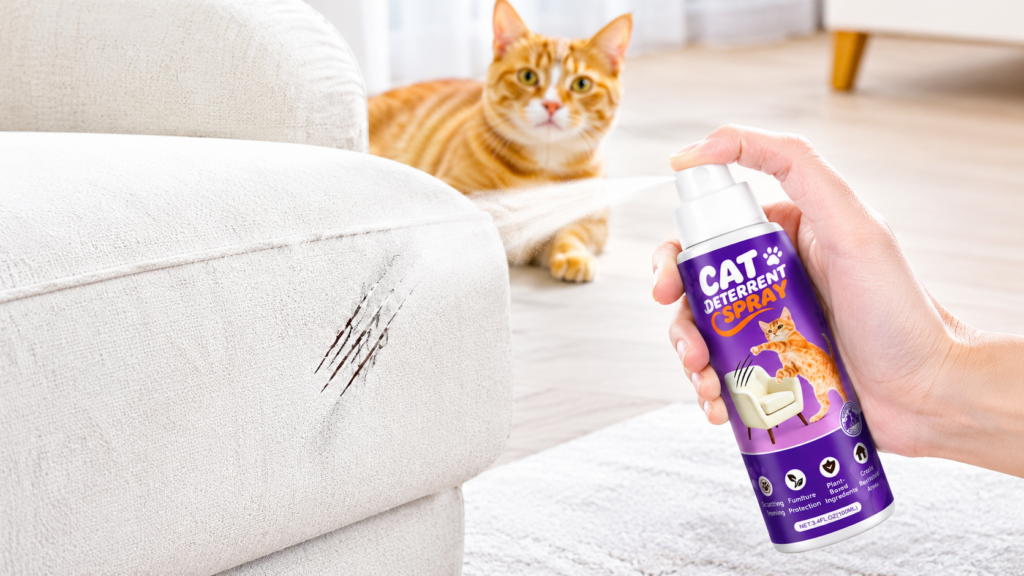
Hold the bottle roughly six to ten inches from the surface and mist evenly, then let it air dry completely before letting your cat near the area again. Skipping days in that first week undoes a lot of the early progress, because the whole point of frequent application is to build a consistent boundary the cat learns to expect. This is where most of the actual work of a cat training spray approach happens, in the daily repetition.
Put a Scratching Alternative Nearby
This extra step changes a basic spray into a real training routine. Place a sturdy scratching post or a cardboard pad a few inches from the treated couch. If the furniture smells bad but your pet has no other place to play, their natural urge to scratch stays strong. They will simply find a new spot you missed. Pet health experts agree on this fact. Blocking bad behavior works much better when you give your animal a fun, approved outlet at the exact same time.
Reward the Behavior You Want
When your cat uses the scratching post or the approved surface instead of the treated one, a small treat or some praise right in that moment reinforces the choice. Unlike dogs, cats generally respond better to this kind of pet training built around reward than to correction.
Yelling or spraying a cat directly with water can damage trust with an owner and, in some cases, increase stress related behaviors rather than reduce them. A spray applied to furniture is a very different thing from punishment aimed at the cat itself, and that distinction is worth keeping in mind the whole way through.
Frequently Asked Questions (FAQs)
Can Jszwzj spray be used on carpets?
The listing includes carpets among the intended surfaces. As with any fabric, it is worth testing a small hidden patch first to check for staining before treating a visible area.
What is the strongest scent that cats hate?
Citrus tends to top most lists of scents cats avoid, with mint and eucalyptus close behind, though individual cats vary quite a bit in what actually bothers them.
Can you use Jszwzj cat deterrent spray outdoors?
Yes, the product is marketed for patios, porches, gardens, and entry points under decks or porches, in addition to indoor furniture and carpet.
Is Jszwzj Cat Deterrent Spray Worth Buying?
For an owner who wants a cat repellent option that does not involve tape, foil, or a locked door, Jszwzj deterrent spray is a reasonable place to start. The citrus and mint base has real behavioral backing, the two bottle pack is practical, and it covers both indoor and outdoor problem spots. Just go in with realistic expectations. This is one piece of a furniture protection plan, not a replacement for a scratching post or consistent training, and the missing detail on scent concentration means cautious owners should introduce it gradually and keep an eye on sensitive cats. Treat it as support for good habits, not a substitute for them, and it is a fair value for the price.