
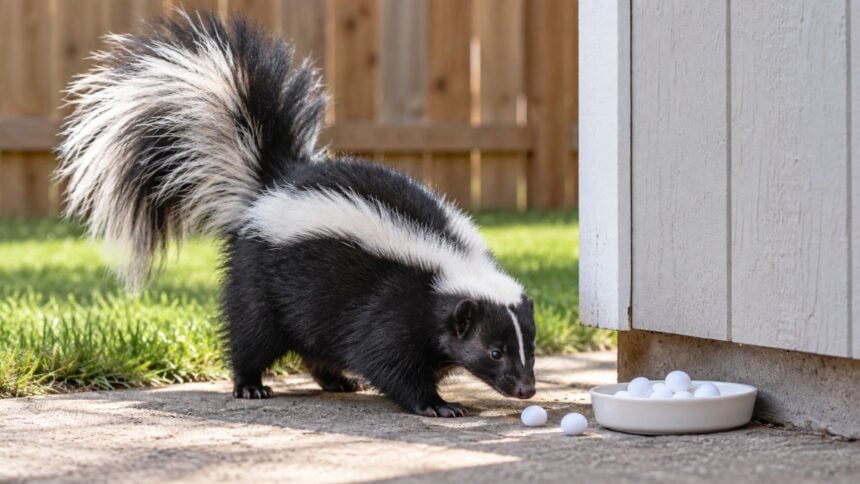
Skunks are easily some of the most frustrating backyard visitors you can deal with, and their awful defensive spray is only part of the problem. Skunks are also a recognized rabies vector species in the United States. According to official CDC data, skunks actually account for roughly 17 percent of all reported wildlife rabies cases across the country. That stat puts ’em right up there with raccoons and bats as the main culprits for spreading the disease.
When you combine a nasty spray with a real disease risk, it makes total sense why you want a skunk gone the second it takes up residence under your deck or backyard shed.
Mothballs are usually the first thing people grab, mostly because they are super cheap and sitting on the shelf at basically any grocery store. But if you are wondering how to use mothballs to get rid of skunks, the honest opinion is that you shouldn’t use ’em at all. They don’t work well, they are highly toxic to neighborhood pets, and scattering them outdoors is flat-out illegal under federal pesticide laws.
Fortunately, there are plenty of safer, more effective ways available that you could use to get rid of skunks and we walk you through them all.
Table of Contents
Key Takeaways
- Mothballs are pesticides, not wildlife repellents. Using them around a yard or under a deck can violate the product label and is not a reliable way to get rid of skunks.
- Skunks are not easily driven away by the smell of mothballs. If they have food, shelter, and a safe place to den, they may simply ignore the odor.
- The best way to deal with skunks is to remove what is attracting them. Secure trash, clean up pet food, reduce yard clutter, and block easy access to sheltered spaces.
- Exclusion works better than odor based skunk repellents. Once you are certain the den is empty, sealing off entry points can stop skunks from moving back in.
What Are Mothballs?

Mothballs are solid pesticides that have been used traditionally to protect natural fiber clothes, including wool clothing, from attacks of moth larvae. The active ingredients in mothballs include either paradichlorobenzene or naphthalene.
Both ingredients are strong smelling solids that slowly turn into vapor through a process called sublimation. If you put it into a tightly sealed container or garment bag, those fumes build up to levels that can kill moths and larvae.
That sealed space is important because mothballs are designed to work through concentrated vapor, not by simply sitting out in the open.
The Environmental Protection Agency regulates mothballs as pesticides, which means the directions on the label are legal requirements. Using them outside those directions can expose people and pets to unnecessary fumes.
Naphthalene exposure has also been associated with health problems such as hemolytic anemia and liver damage, and the EPA considers it a possible human carcinogen. That is why scattering mothballs around a yard is more than an ineffective home remedy. It can create a real exposure risk.
Do Mothballs Get Rid of Skunks?
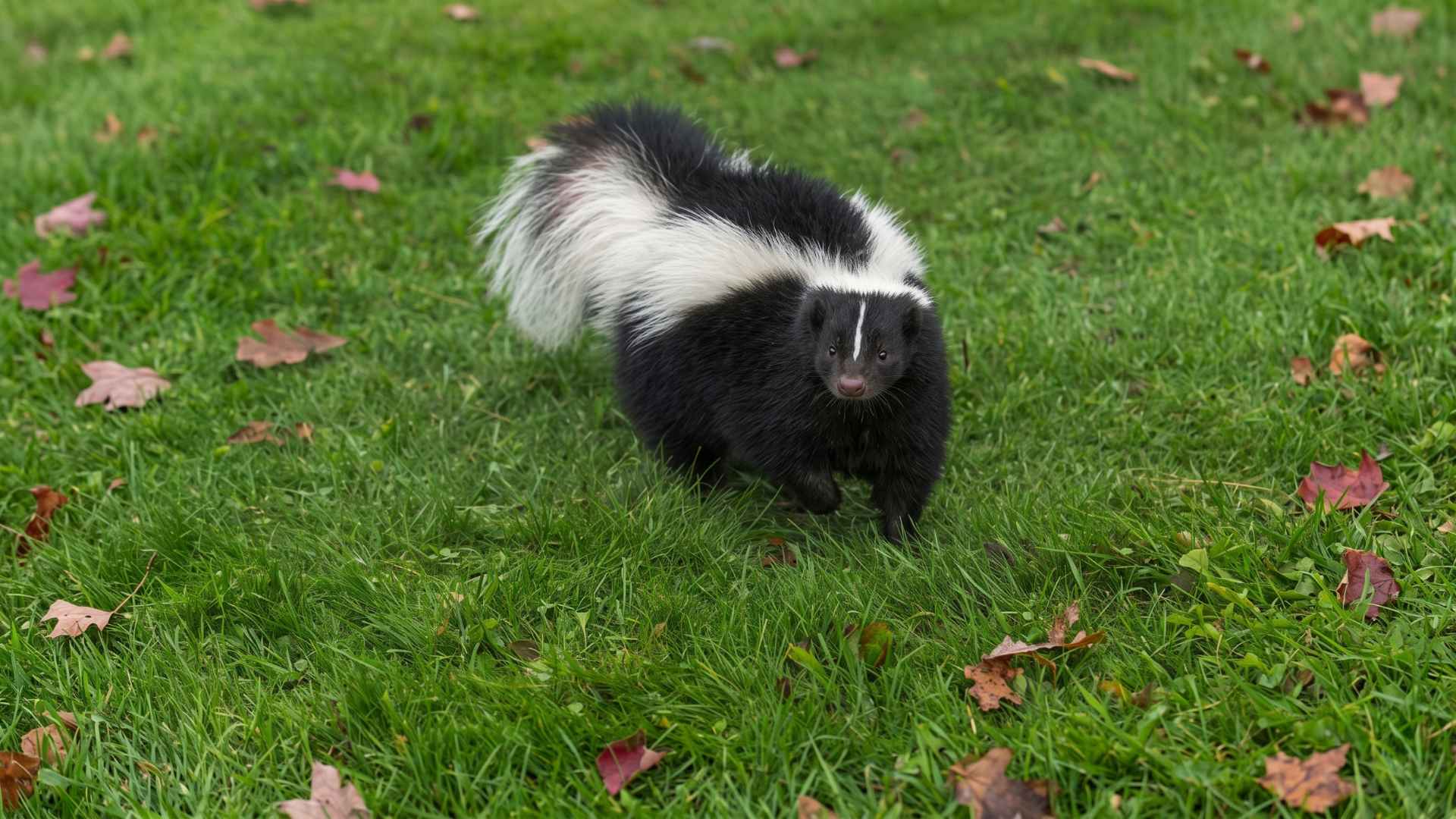
Mothballs for skunks is one of the most persistent pieces of bad advice in pest control folklore, right alongside using them for snakes, rats, and raccoons, and none of it holds up under actual scrutiny.
Skunks don’t like the scent of naphthalene, but it doesn’t hurt them, and it definitely won’t take out the food or shelter that drew them to your property in the first place.
Faced with a strong but ultimately harmless smell versus giving up a warm den during the coldest part of winter, skunks will almost always just put up with the odor.
Outdoors, the problem gets worse, since open air disperses the fumes so quickly that mothballs for skunks barely register as a deterrent at all beyond a few feet from the source.
Use mothballs around to get rid of skunks, and you’re likely to end up with the same exact pest, an illegal pesticide application, and a yard that smells like an old closet for no real benefit.
Why You Should Not Scatter Mothballs Around a Skunk Den
- It’s illegal. Mothball labels specify airtight containers only, and outdoor application is a direct label violation enforced by state agriculture departments.
- It’s a health risk. Naphthalene fumes can cause headaches, nausea, and respiratory irritation in people and pets nearby, especially in enclosed spaces like under a deck.
- It contaminates soil and runoff. Scattered mothballs can leach into groundwater or wash into nearby waterways during rain.
- It doesn’t address the actual problem. Mothballs for skunks do nothing about the food, shelter, or safety that drew the animal there to begin with, so even a mildly effective smell rarely results in permanent removal.
What Are The Alternative Ways To Get Rid Of Skunks
Since mothballs for skunks isn’t a real solution, effective skunk control comes down to making a property genuinely less appealing, removing food, blocking access, and using exclusion methods correctly.
1. Clear Out Outdoor Food Sources
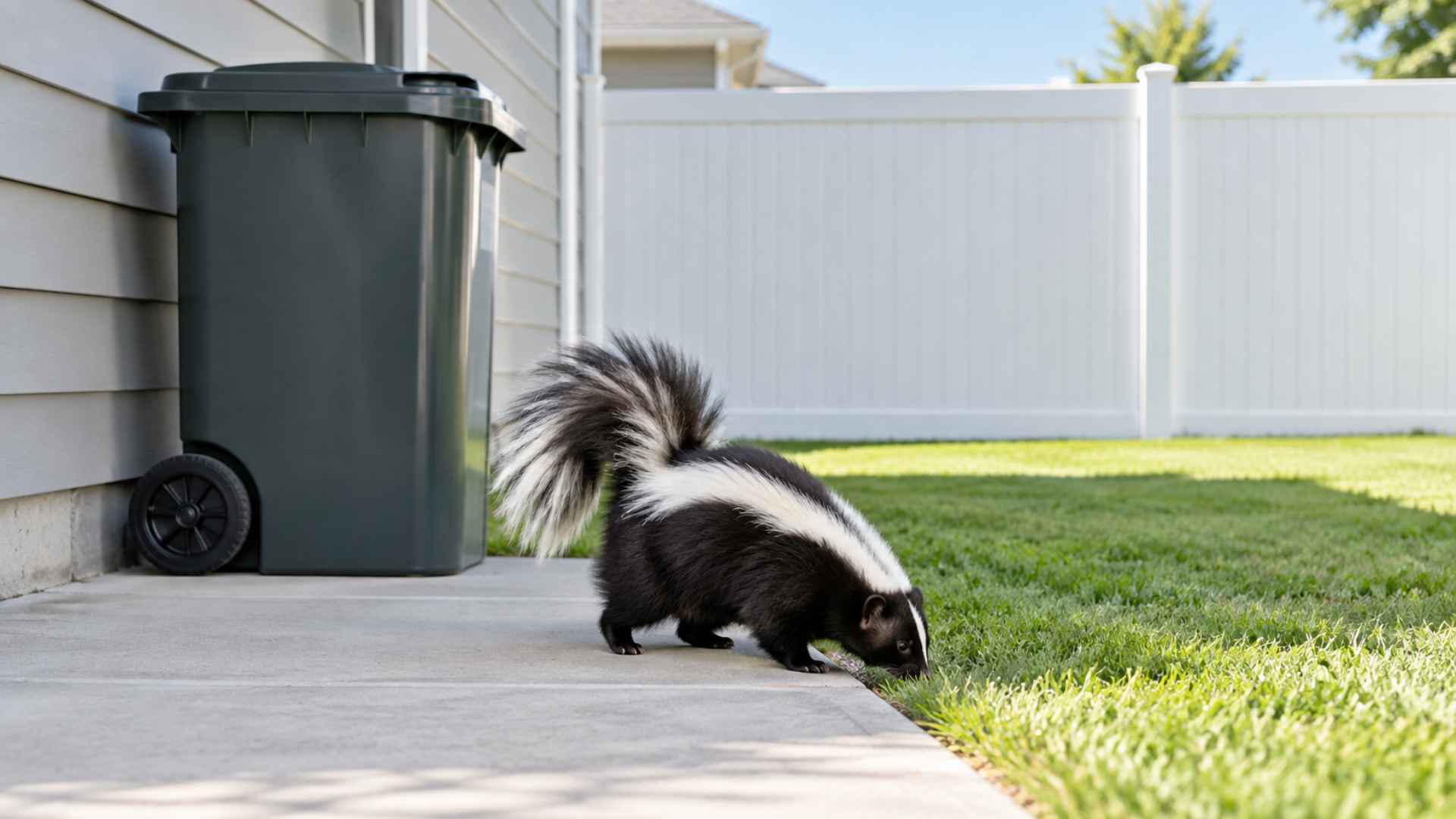
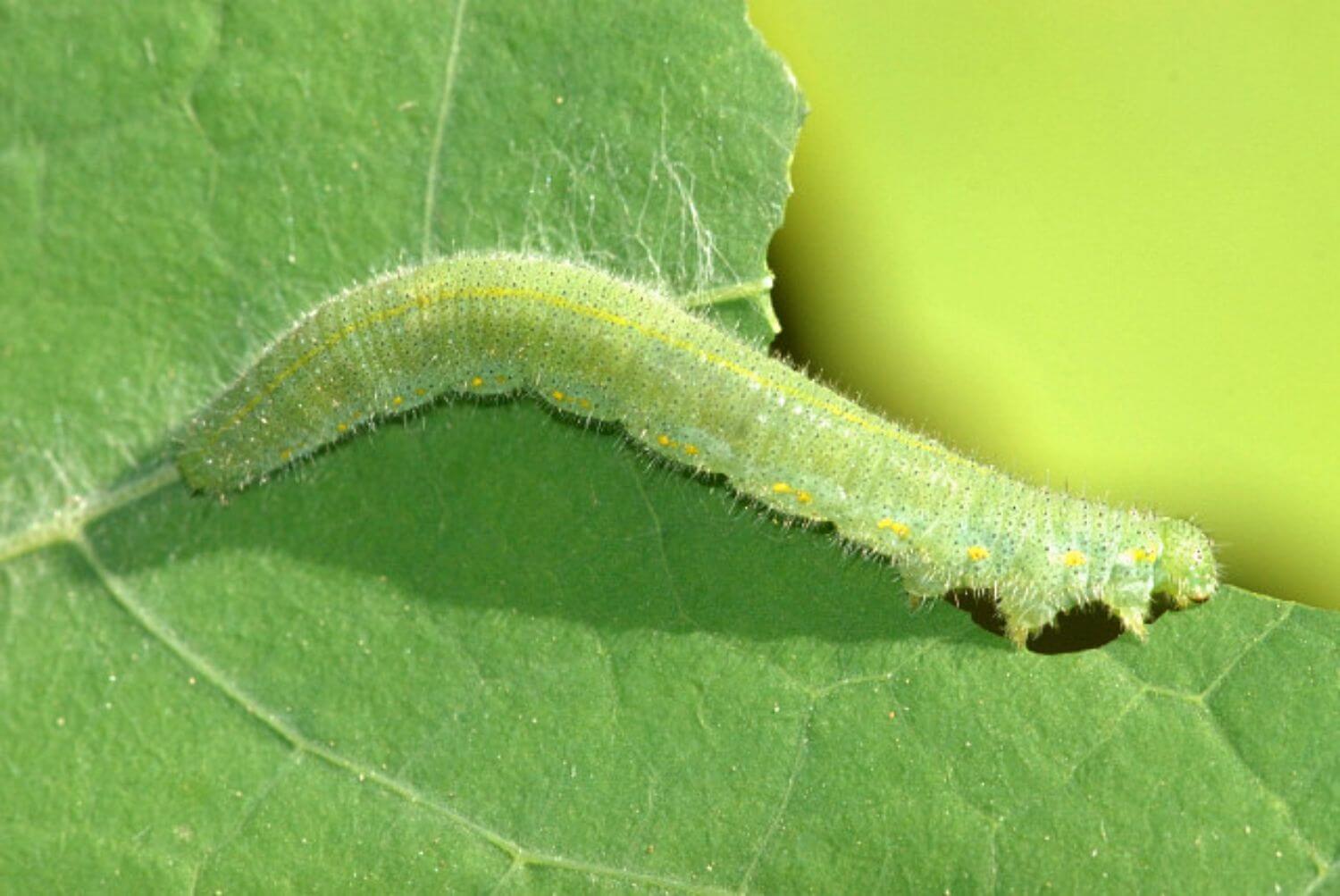
Skunks are opportunistic feeders and eat whatever food is easy to find and catch. Their preferred diet leans heavily on insects (Beetles, grasshoppers, crickets, wasps, and grubs in the lawn), fruits, and garbage. They are primarily omnivores. Skunks can also eat mice or rabbits and ground-nesting birds.
They can dig 3 to 4 inch cone shaped holes across lawns and flower beds while hunting for grubs. Turns out, a lawn with a heavy grub population is effectively feeding them without anyone realizing it.
Treating problem areas for grubs removes one of the more overlooked food sources, drawing skunks onto a property in the first place, especially if there’s no fence keeping them out of garden beds entirely.

Cutting off these food sources is one of the most direct ways to repel skunks naturally, since it removes the actual incentive instead of trying to mask it with a mothball smell they can simply tolerate.
2. Secure Garbage Cans
An unsecured trash can is another easy win available. Skunks are persistent enough to knock over a lightweight can or pry open a loose lid without much effort.
Use garbage cans with locking or tightly clamped lids, and store them in a garage or shed whenever that is practical. Avoid leaving full bins outside overnight if collection is not until the next morning.
This works especially well when combined with removing other outdoor food sources. Once the trash, pet food, fallen fruit, and other easy meals are gone, your property becomes much less rewarding to visit.
3. Use Motion Activated Lights or Sprinklers

Skunks are most comfortable moving through quiet, dark areas where they do not feel exposed. Motion activated lights and sprinklers interrupt that routine by creating a sudden burst of light, movement, or water the moment an animal enters the area.
That can be surprisingly effective because skunks tend to use the same paths and feeding spots repeatedly. If one section of the yard becomes consistently unpleasant to cross, they may start avoiding it altogether. Position lights near walkways, garden beds, den entrances, or other places where you regularly see activity.
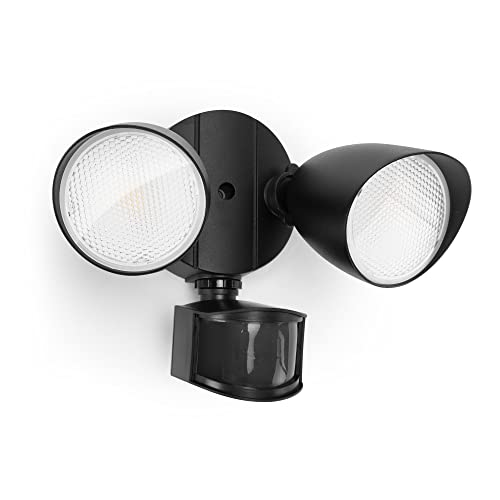
Pairing them with a motion sprinkler can make the deterrent even harder to ignore. It’s the best possible way to get rid of skunks from specific trouble areas without trying to defend every corner of the property.
4. Block Access Under Decks, Sheds and Porches
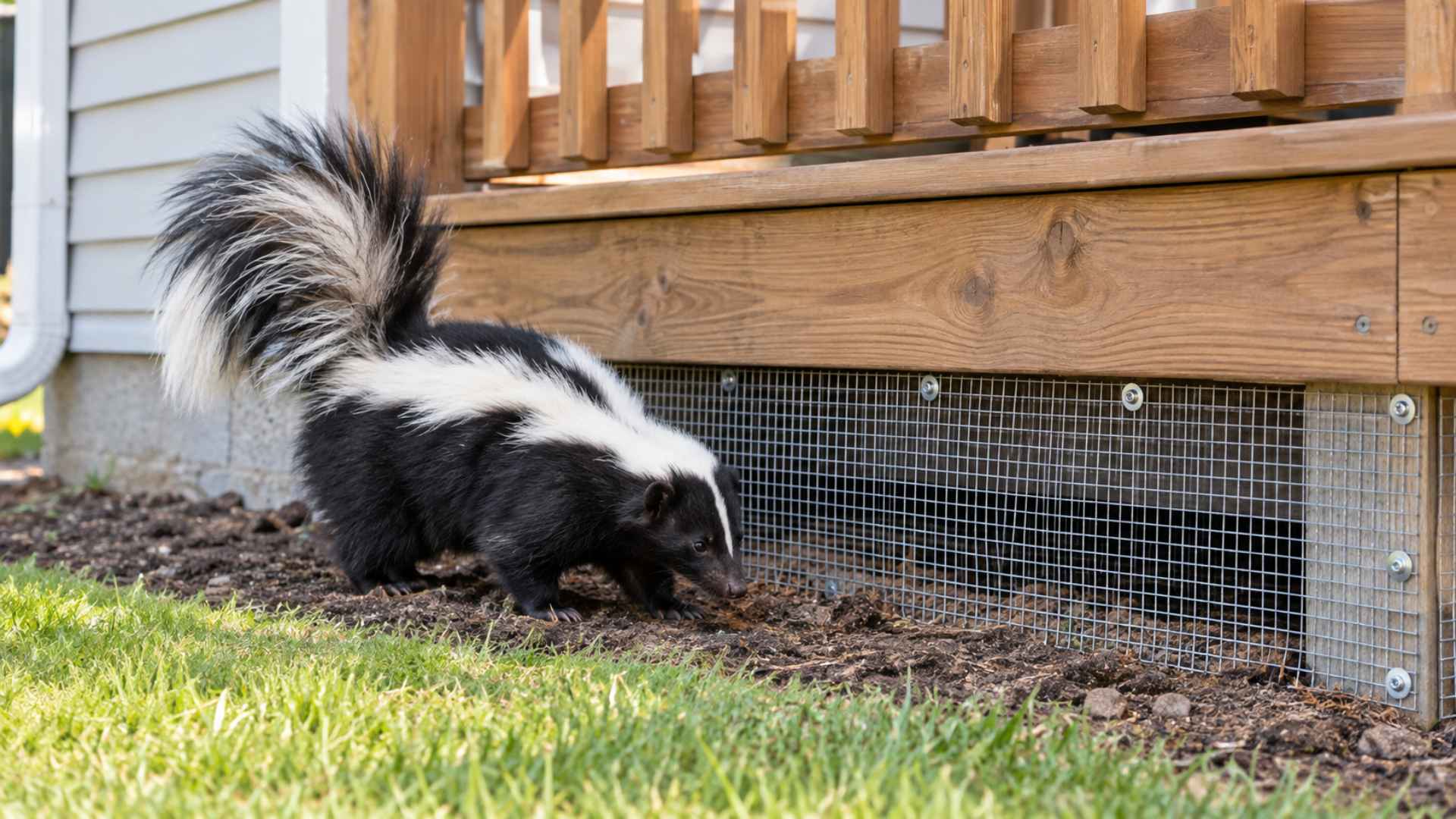
Finding a skunk under deck usually means there was already a gap big enough for it to squeeze through. The same goes for sheds and porches, where even a small opening can become an easy den entrance.
Walk around the perimeter of raised structures and close off gaps with heavy gauge wire mesh or hardware cloth. Burying the material a few inches into the soil helps stop skunks from digging underneath it and getting back in.
This also applies to a skunk under house problem. Foundation vents and crawl space openings are easy to miss until the smell gives the animal away. Before sealing any suspected entrance, make sure the den is empty. Closing off an active den can trap the skunk inside and turn a manageable problem into a much worse one.

5. Remove Brush, Lumber and Yard Clutter
Overgrown shrubs, brush piles, stacked lumber, and other yard clutter can give skunks the kind of sheltered spots they look for when choosing where to hide or den. The more cover a yard offers, the easier it is for them to move around without feeling exposed.
Trim back dense shrubs, keep the grass cut, and clear away unused lumber, fallen branches, and brush piles. None of these steps will solve a skunk problem overnight, but together they make the yard less inviting.
The biggest benefit comes from keeping up with it. Regular cleanup reduces hiding places over time, and a neater yard can work as a simple skunk deterrent without relying on sprays or skunk mothballs. You also end up with a cleaner looking property in the process.
6. Use a One Way Exclusion Door When Appropriate
One way exclusion doors can be very effective when a skunk is already living under a deck, shed, or porch. The device installs directly over a confirmed den entrance and uses a flap or gate mechanism that swings outward only. Turns out, the skunk can leave to forage, but once it exits, the door will not let it back inside.

This method depends entirely on confirming the den is a single access point and that no skunk offspring are present inside, since sealing off a mother from dependent kits could create a serious problem and may cause her to dig aggressively around the structure trying to get back in.
7. Call a Wildlife Professional for Persistent Denning
Some skunk problems are simply harder to handle on your own, especially when young are involved or the den has more than one entrance. In those cases, it can be difficult to tell whether the space is truly empty before sealing it up.
Orkin professionals can confirm whether the den is active, figure out the safest time for exclusion, and close off entry points once the animals have moved out.
Some denning situations go beyond what a homeowner can safely resolve alone, especially once young are involved or a den has multiple access points that are hard to identify without experience.
If you are dealing with a skunk that’s resisted every other skunk deterrent on this list, bringing in a pest control professional is a reasonable next step.
Can You Put Mothballs Under a Deck to Repel Skunks?
Mothballs are not a good choice for a skunk living under a deck. Do mothballs repel skunks when the space is somewhat enclosed? In practice, not very well. Mothballs are designed to work in tightly sealed containers where the fumes can build up, and the open airflow under a deck lets that vapor disperse too quickly.
The idea of using mothballs skunk repellent under a structure has stuck around mostly through old household advice. It is not a reliable fix, and using mothballs outside their labeled directions can create unnecessary exposure risks. When a skunk has settled under a deck, dealing with the den access and whatever is attracting the animal is a much better approach.
Can You Put Mothballs in a Skunk Hole?
Putting mothballs directly into a skunk den does not make the method any more effective. The odor may be stronger at the entrance, but smell alone does not change the reason the animal chose that space. If the den offers shelter and easy access to food, the skunk may continue using it.
That is why attempts to use mothballs to get rid of skunks usually fall short. The treatment does not solve the denning problem. If you need to find out whether a skunk den is still active, there is a much simpler approach. Loosely place soil, leaves, or crumpled paper near the entrance and check it the next morning. If the material has been pushed aside, the den is probably still being used.
How Long Does It Take to Get a Skunk to Leave?
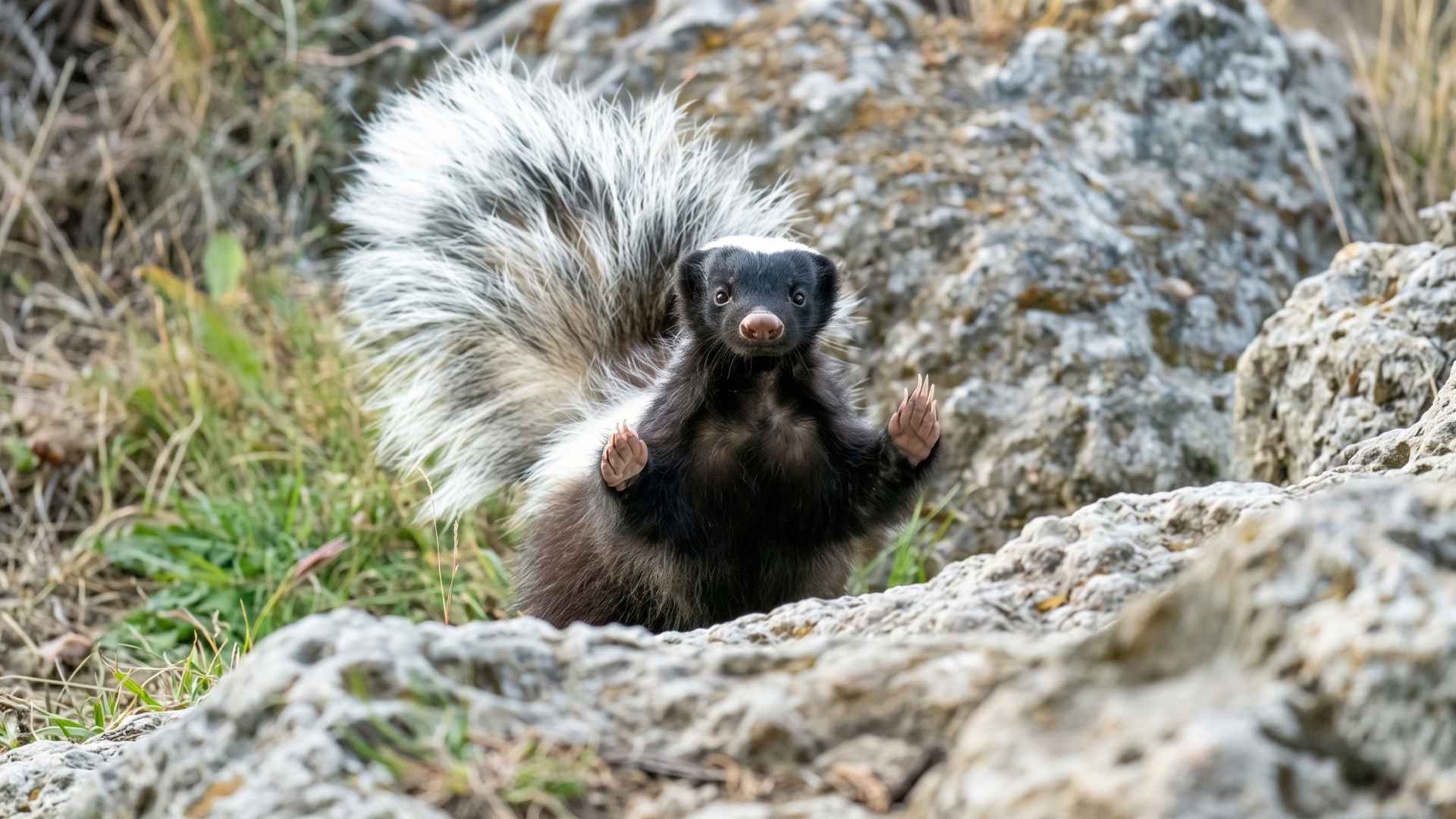
How quickly a skunk leaves depends a lot on the season and whether young are in the den. If there are no dependent kits and the yard suddenly becomes less comfortable, with motion lights, fewer food sources, and less cover, the animal may move on within a week or two.
Things can take longer during winter or when a mother is raising young in spring. Skunks are much less likely to give up a secure shelter during those periods, and trying to force the issue can create problems if kits are still inside.
If your goal is to get rid of skunks, consistency usually works better than trying to frighten the animal once and hoping it never returns. Keep food secured, maintain the deterrents, and wait until the den is empty before sealing any entrance.
Frequently Asked Questions (FAQs)
Do Mothballs Really Repel Skunks?
Skunks may tolerate the smell, especially if they have already found a safe den or easy food nearby. Mothballs are also not meant to be used outdoors as wildlife repellents.
Is it legal to use mothballs outside for skunks?
Mothballs are EPA regulated pesticides labeled strictly for use inside sealed containers, and applying them outdoors or around a den is a direct violation that can result in fines depending on your state.
What smell do skunks hate?
Strong odors such as ammonia are sometimes used as short term deterrents, but scent alone is rarely dependable. Removing food, blocking shelter, and using motion activated lights or sprinklers usually gives you a better chance of keeping skunks away.
What is the fastest way to get a skunk to leave?
Make the area less comfortable by removing food and adding motion lights or sprinklers. Once the den is empty, properly sealing the entrance or using a one way exclusion device can prevent the skunk from returning.
How do you get rid of skunks?
Remove food sources, secure garbage, block potential den entrances, and use exclusion methods once a den is confirmed empty. This combination addresses the actual reasons a skunk chose your property.
What should I do if I encounter a skunk?
Stay calm, back away slowly, and avoid sudden movements or loud noises. A skunk that stamps its feet or raises its tail is warning you before it sprays, up to 15 feet with real accuracy.
What attracts skunks to your yard?
Accessible food, whether that’s pet food left outside, unsecured trash, fallen fruit, or a grub infested lawn, along with open access points under decks and sheds, are the main draws. Skunks are also drawn to yards that border a neighbor’s property, offering an easy food source, even if your own yard isn’t the direct target.
Wrapping Up…
Mothballs for skunks remains one of the most common pieces of bad pest advice still circulating, and it’s worth retiring for good, both because it’s illegal outdoors and because it simply doesn’t work against an animal willing to tolerate a strong smell in exchange for safe shelter.
Real skunk removal comes down to removing food, sealing access points, and making a yard genuinely less appealing through light, noise, and consistent maintenance. Get rid of skunks the right way, and the problem tends to stay solved rather than resurfacing every few weeks with a fresh can of mothballs and no real progress to show for it.