
Bed bugs turn a bedroom into a battleground fast, and once blood stains start showing up on the sheets, most people want something that works now, not a product that sounds good on the label but does nothing once it’s actually sprayed.
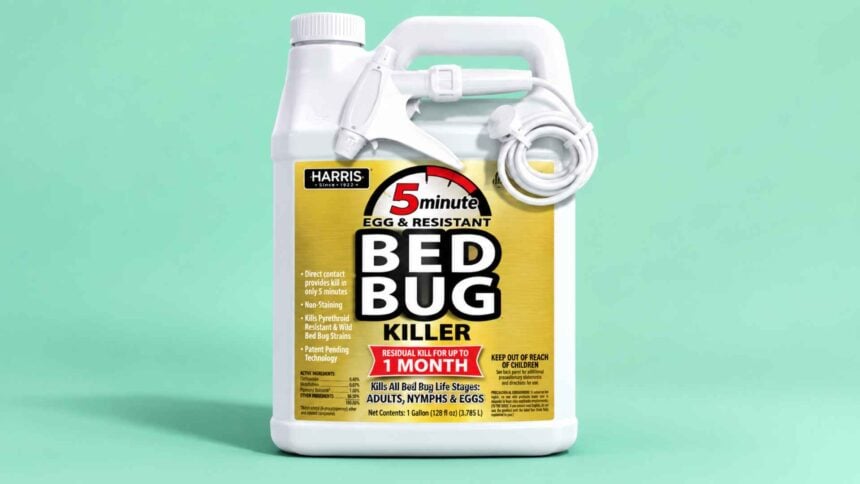
That’s the exact test Harris bed bug spray has to pass, and this Harris Bed Bug Killer Spray review looks at whether the five minute contact kill claim and the month long residual protection actually hold up once you’re dealing with the bed bug infestation.
Between three active ingredients built specifically to handle pyrethroid resistant populations and a gallon sized bottle meant for whole room treatment, this is one of the more heavily marketed options in the category. Turns out, it’s worth a genuinely close look before you commit to it over anything else on the shelf.
Table of Contents
Harris 5 Minute Bed Bug Killer Specifications
| Specification | Details |
|---|---|
| Type | Ready to use liquid spray |
| Container Size | 128 oz / 1 gallon |
| Main Actives | Clothianidin, metofluthrin, PBO |
| Clothianidin | 0.4% |
| Metofluthrin | 0.01% |
| Piperonyl Butoxide | 1% |
| Direct Contact Claim | 5 minutes |
| Targeted Stages | Adults, nymphs and eggs |
| Residual Claim | Up to 4 weeks |
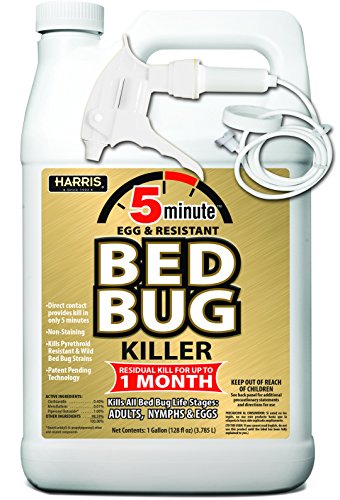
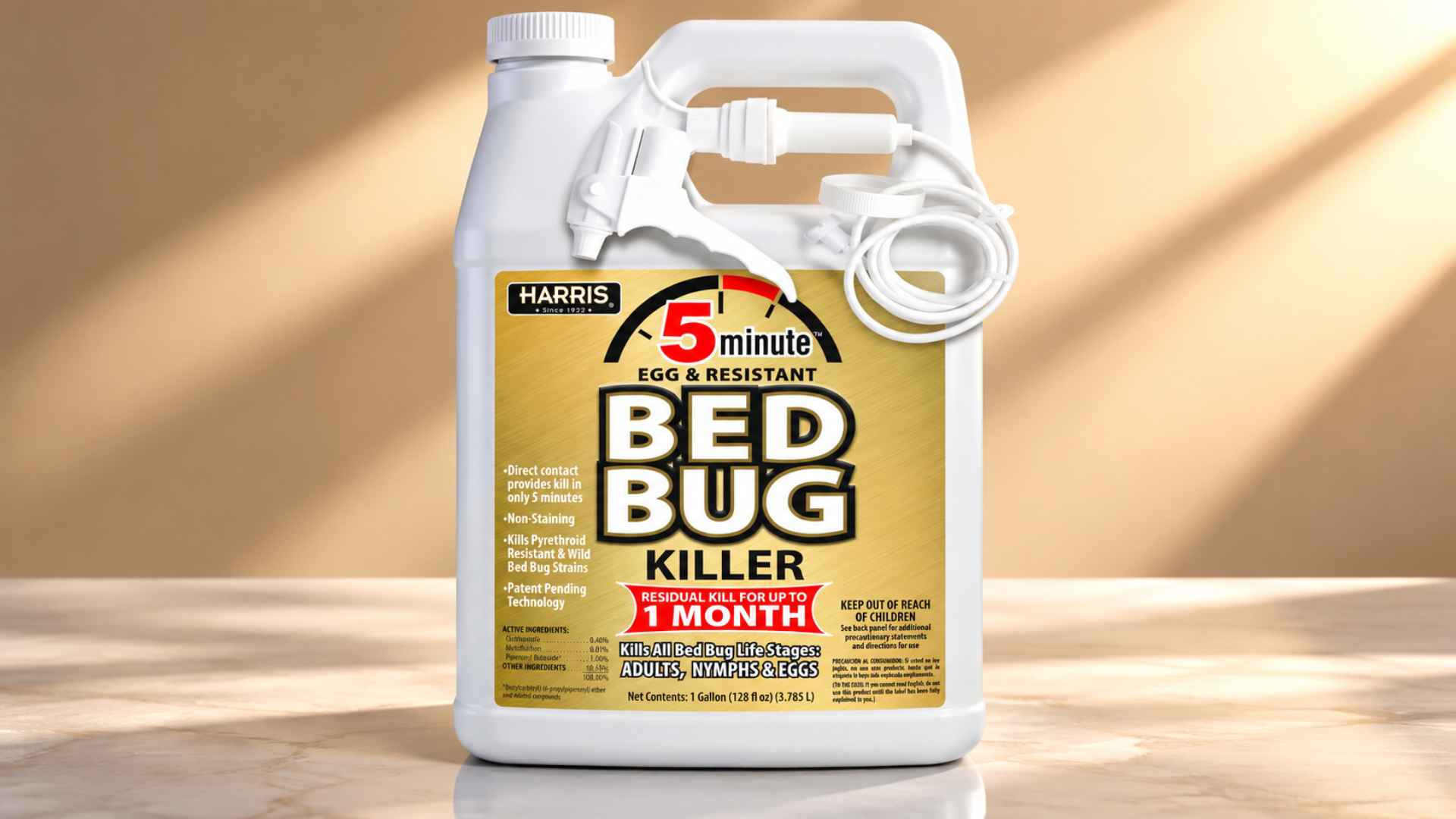
Harris confirms all of this directly, the gallon size, the three active ingredients, the five minute kill claim, the four week residual window, the resistant strain labeling, and the EPA registration number itself, which is about as verifiable as a pesticide claim gets.
Why Harris Bed Bug Spray Caught Our Attention
We used diatomaceous earth for a flea infestation before, and that powder is excellent for open areas like carpets. Liquid sprays simply serve a different purpose when bed bugs show up. A liquid formula can soak directly into the deep mattress seams, tight frame joints, and hidden cracks. Harris bed bug spray stood out mostly because it is completely odorless.
Not having to evacuate a bedroom just to spray it made the whole process considerably less disruptive. It’s a bit costly compared to a basic aerosol can, though. A gallon covers enough ground that the price starts making sense if you have a severe bed bug infestation and you really really want something that could turn out to be helpful.
Key Features of Harris Bed Bug Killer Spray
Three Active Ingredients for Resistant Bed Bugs
What makes this bed bug killer spray more interesting is the way the three ingredients work together. Clothianidin is a neonicotinoid, so it attacks bed bugs differently from older pyrethroid based products. This change is critical. Many bed bug populations have developed resistance to pyrethroids over time.
Metofluthrin is a pyrethroid, and it delivers a fast knockdown effect to eliminate the bed bugs. Piperonyl butoxide, or PBO, serves as a synergist. It does not kill bed bugs on its own. Instead, it multiplies the strength of the main active ingredients.
That combination gives Harris bed bug spray more than one way to affect the pests. Turns out, it literally breaks down infestations when basic sprays miss the mark.
Fast Direct Contact Kill
Harris Bed Bug Killer promises that direct contact knocks out adults, nymphs, and eggs within five minutes on a treated surface. Five minutes absolutely doesn’t mean it could kill a whole bed bug infestation under or in five minutes. It actually means the spray is so aggressive that any bed bug that comes into contact with it would be killed. We really appreciate its strength cause even though the Harris bed bug spray is quite expensive, it works, and it works pretty efficiently. Along with using this spray, we highly recommend taking other actions, including daily vacuuming to get rid of as many bed bugs as you possibly can.
Four Weeks of Residual Protection
Beyond the initial contact kill, the EPA claim backs a residual window of up to four weeks. Turns out, your treated surface would keep killing bed bugs that walk across it well after the spray has dried.
This residual control helps enormously for an infestation with bed bugs still hatching from eggs that survived the first application. Those newly emerged nymphs will cross a still active surface before they ever get the chance to bite anyone.
Treatment Options Beyond Cracks and Crevices
You can apply Harris bed bug spray to bed frames, headboards, baseboards, furniture, carpet perimeters, luggage, and other common harborage spots. Bed bug colonies rarely confine themselves to a single spot, and therefore any bed bug spray should not be limited to crevices only.
Being able to treat the whole bed frame, the box spring, the mattress, and the surrounding floor with one product simplifies what would otherwise mean juggling several different sprays for different surfaces.
How To Use Harris Bed Bug Spray The Right Way
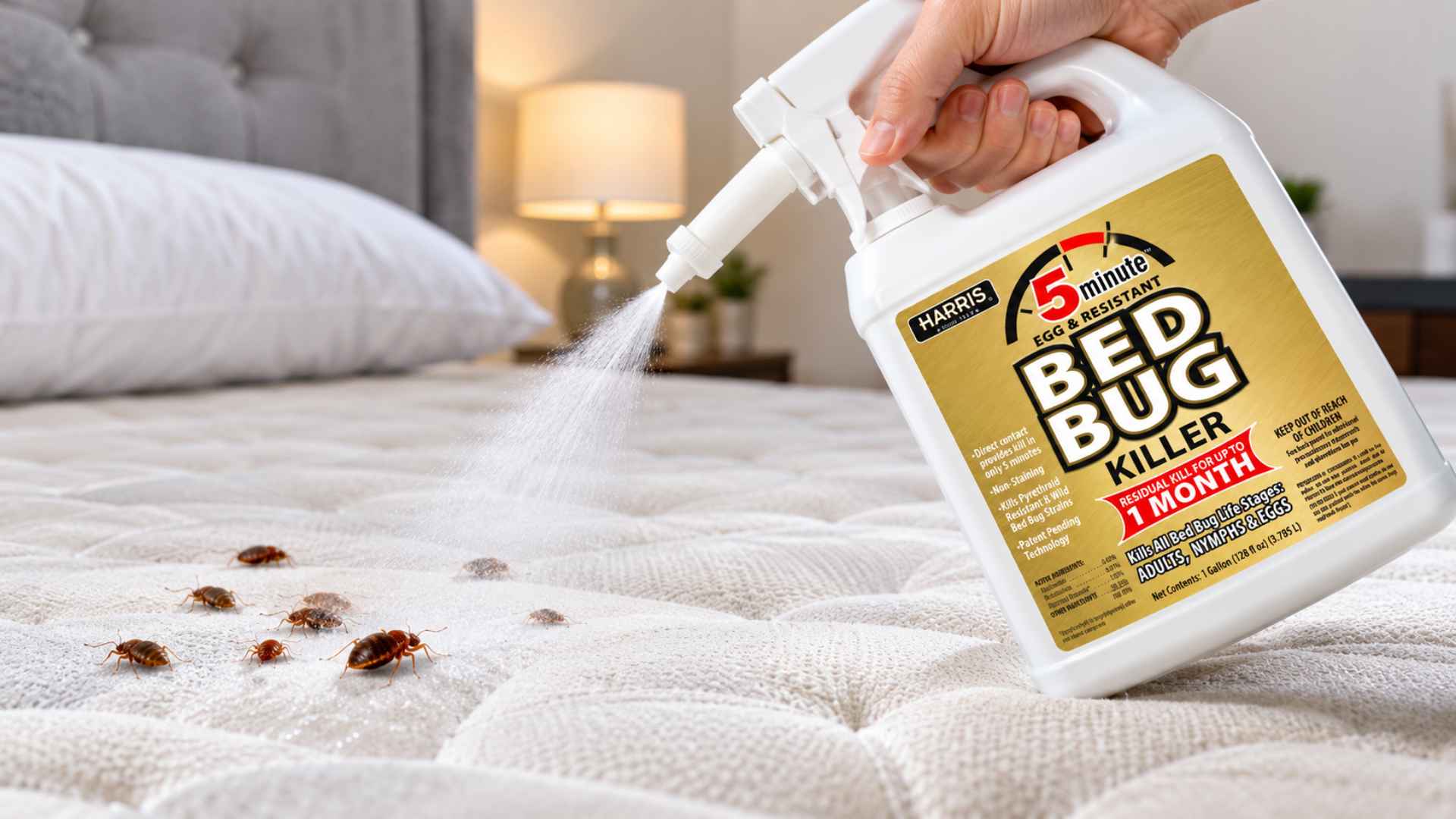
- Kick off with the areas closest to where bed bugs are most likely to hide. This includes the bed frame, box spring, mattress seams, nearby furniture, baseboards, and cracks along the wall. Follow the bed bug spray label closely, especially around mattresses and other surfaces that come into contact with people.
- The sprayer included with the gallon size gives you some control over how the spray is applied. A finer spray works better across broader areas, while a more focused stream can help reach narrow cracks and seams.
- Vacuuming before treatment is useful too because it clears out live bugs, eggs, and debris before the spray has to do the rest of the work. Bed bug control also usually takes more than one pass. We recommend following the label for any repeat treatment schedule instead of relying on one heavy application.
Can Harris Bed Bug Spray Eliminate an Entire Infestation?
Realistically, no single bed bug spray can kill off an entire infestation in one go. Pesticide performance depends heavily on bed bug infestation size, how well the space was prepared before treatment, how thoroughly the product was applied, whether all life stages were actually targeted, and the level of resistance already present in that specific bed bug population.
Harris bed bug spray performs pretty well in terms of getting rid of bed bugs, and combining it with regular vacuuming helps you take out those pesky critters even faster. Vacuuming removes loose bugs and eggs instantly. It also cleans away dust so the spray contacts surfaces directly.
| What We Like | What We Don’t Like |
|---|---|
| Stops visible biting bugs immediately | Requires real patience to complete |
| Knocks out tough, immune strains | Costs more than cheap sprays |
| Destroys eggs before they hatch | |
| Keeps protecting for several weeks | |
| EPA registered | |
| Best value for the money |
Harris Bed Bug Spray Alternatives
Harris Toughest Bed Bug Killer Spray

If you want a longer window between applications, Harris Toughest steps up the residual claim considerably, and it’s built from the same trusted brand.
It’s a reasonable upgrade path if a treated area sees heavy foot traffic or gets cleaned frequently, since a shorter residual can wear down faster under those conditions than in a room left undisturbed.
Choosing this over the standard formula makes sense when longer lasting surface protection against bed bugs is your priority. And it also makes perfect sense for a persistent bed bug infestation that’s already resisted a first round of treatment.
EcoVenger Bed Bug Killer Spray

EcoVenger takes a different approach entirely. It’s built around a plant based formula instead of synthetic actives. It mainly appeals to households who wants a lower impact bed bug treatment option. It is also a great pick if you do have pets or small children in the home.
The tradeoff is a shorter residual window compared to either Harris bed bug spray formula, so it typically needs more frequent reapplication to maintain the same level of ongoing protection.
As one of the more established plant based options built for contact control, it’s a solid choice for lighter bed bug infestations or as a supplement alongside a stronger synthetic product.
Quick Comparison of the Three Bed Bug Sprays
| Feature | Harris 5 Minute | Harris Toughest | EcoVenger |
|---|---|---|---|
| Main Strength | Fast contact kill | Extended residual | Plant based formula |
| Direct Kill Claim | 5 minutes | Fast direct kill | Contact control |
| Residual Claim | Up to 4 weeks | Up to 16 weeks | About 2 weeks |
| Resistant Bugs | Yes | Yes | Yes |
| Egg Control | Yes | Yes | Yes |
Frequently Asked Questions (FAQs)
How effective is Harris bed bug spray?
It can be effective against bed bugs that are directly exposed or later cross treated surfaces, but no spray should be treated as a complete solution by itself. Results are usually better when chemical treatment is combined with vacuuming, heat, encasements, and monitoring.
How long does it take for Harris Bed Bug Killer to work?
Direct contact takes out target bed bugs within five minutes if the liquid lands right on them. Colony members tucked away in hidden nesting spots have to crawl over a treated zone first, so that timeline depends on how thoroughly you coated the room.
Can I spray Harris bed bug spray on my mattress?
The label specifically allows application across the entire mattress surface, not just the tufts and folds some competing bed bug sprays restrict treatment to.
How often should Harris Bed Bug Killer be reapplied?
Weekly or biweekly applications over several weeks are typical for an active bed bug infestation, since new bugs can continue hatching from eggs that survived earlier treatment rounds.
Should I use Harris spray with bed bug interceptors?
Interceptors placed beneath furniture and bed frame legs trap bugs as they try to move up or down. Keeping these traps in place tells you whether your overall population is actually shrinking over time.
Wrapping Up…
Between the layered active ingredients, the month long residual window, and label approval for full mattress and bed frame application, Harris bed bug spray holds up as a genuinely strong option. It won’t replace vacuuming, encasements, or consistency across several weeks of treatment, but as the chemical backbone of a real infestation plan, this is a solid pick for the best bed bug spray category, especially for households dealing with a population that’s already shrugged off weaker, pyrethroid only products.