

Food-grade pest treatment refers to pest control methods and products that are explicitly safe for use in food-related environments, preventing contamination of food surfaces, stored goods, and food-contact areas. The industry term for this practice is food-safe pest management, and it draws on two distinct concepts: food-grade purity (materials safe for human consumption) and EPA-registered food-safe pesticides (products legally approved for use near food). For homeowners who cook, store food, or simply want to protect their families without harsh chemicals, understanding this difference is the first step toward making genuinely safe choices.
Table of Contents
What is food-grade pest treatment and how does it work?
Food-grade pest treatment is pest control that prioritizes human health and food safety above all else. It combines non-toxic physical methods, sanitation practices, and carefully selected EPA-registered products to manage pests without leaving harmful residues on food or surfaces. The approach is grounded in Integrated Pest Management, or IPM, which aims for zero contamination and minimal hazard to humans and food surfaces.
The most recognized material in this space is food-grade diatomaceous earth, a powder made from fossilized algae. The FDA recognizes it as safe for consumption at up to 2% concentration, but that classification does not mean it has been tested for pest control efficacy. It also carries inhalation risks when misapplied. That distinction matters enormously when you are deciding what to use in your kitchen.
Food-grade vs. food-safe: what is the real difference?
| Term | What it means | Pest control use |
|---|---|---|
| Food-grade | Purity level safe for human consumption | Not automatically approved for pest control |
| Food-safe | EPA-registered and labeled for use near food | Legally approved for food-area pest control |
| EPA-registered pesticide | Tested for safety and effectiveness | Required for any chemical pest treatment near food |
The phrase “food-grade” is frequently misunderstood by homeowners. A product can be food-grade and still be ineffective or even unsafe when used as a pesticide. Only EPA registration and an explicit food-use label certify a product as food-safe for pest control.
Pro Tip: Always read the product label before applying anything near food prep areas. If the label does not say “for use in food-handling areas,” do not use it there, regardless of what the packaging claims.
How IPM principles guide food-safe pest solutions
Integrated Pest Management is a proactive, science-based strategy that treats pest control as a system, not a single spray event. Experts recommend shifting from reactive chemical sprays to IPM with non-toxic monitoring and prevention strategies, an approach favored by food safety auditors globally. The goal is to reduce pest pressure through prevention first, and reach for pesticides only as a last resort.
The four pillars of IPM in food environments are:
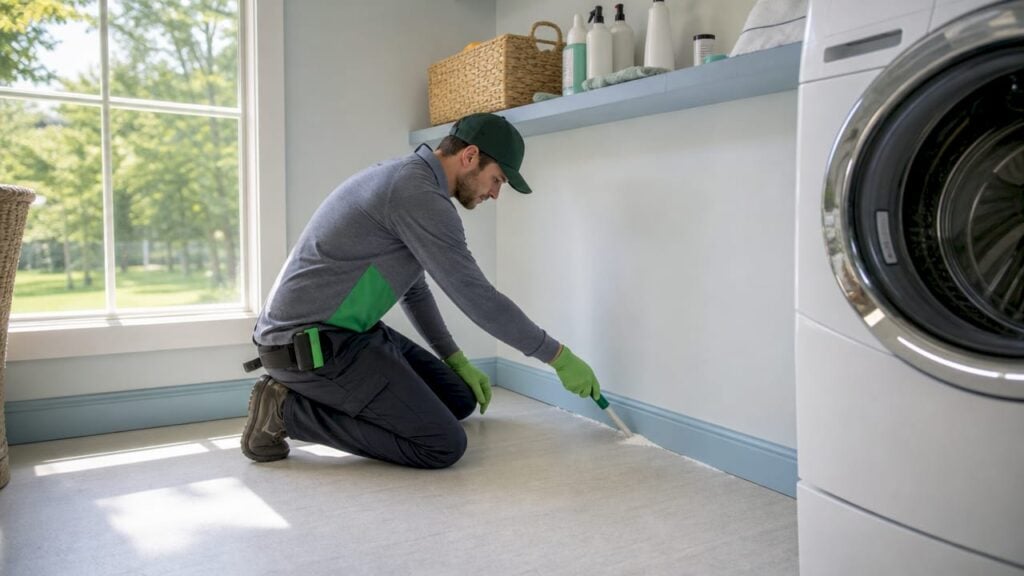
- Sanitation: Remove food debris, seal garbage containers, and clean behind appliances regularly. Pests need food, water, and shelter. Eliminate all three and most infestations never start.
- Physical exclusion: Seal cracks around pipes, install door sweeps, and use fine mesh screens on vents. Physical barriers are highly effective, energy efficient, and prevent contamination completely.
- Monitoring: Place glue traps and pheromone traps at entry points and along walls. These are not just control tools. Pheromone and glue traps primarily serve as data collection tools that identify species and pest pressure at entry points, enabling targeted treatment rather than broad chemical application.
- Targeted treatment: Use EPA-registered bait stations or food-safe sprays only when monitoring data confirms an active infestation. LED insect light traps (ILTs) are another non-chemical option that captures flying insects without contaminating surfaces.
Pro Tip: Place glue traps in corners and along baseboards near your pantry and under the sink. Check them weekly. A single trapped insect tells you more about where pests are entering than a whole-home spray ever will.
Bcpestcontrol covers practical fruit fly control methods that apply these same IPM principles directly to kitchen environments.
Safety and regulatory requirements for food-area pest treatments
The regulatory framework for pest control in food environments is stricter than most homeowners realize. The FDA’s Food Safety Modernization Act, codified at 21 CFR Part 117, requires food facilities to maintain written pest management programs with documented inspections and corrective actions retained for at least two years. Noncompliance can result in regulatory warnings or facility shutdowns.
For homeowners, these rules do not apply directly. But they set the standard for what “safe” actually means in a food environment. The same principles translate to home kitchens.
Here is what safe, compliant pest treatment in a food area requires:
- Use only EPA-registered products labeled specifically for food-handling areas. The label is a legal document. It tells you exactly where and how to apply the product.
- Document what you use. Even at home, keeping a simple log of products applied, dates, and locations helps you track what works and protects you if a health concern arises.
- Follow application instructions exactly. Regulatory bodies require documented service reports detailing chemicals used, application sites, and service personnel, with records retained for at least two years. Missing or improper records can be penalized as severely as the presence of pests themselves.
- Never apply unregistered substances as pesticides near food, even if they carry a food-grade label.
“Food-safe means product is approved for use near food according to label directions. Food-grade means purity for direct human consumption, which does not guarantee safety or effectiveness for pest control.” — HACCP Pest Control | Food Facility FDA Compliance
The legal and safety distinction between food-safe labeling and food-grade labeling is not a technicality. It is the line between a product that has been rigorously tested for your kitchen and one that has not.
How to apply non-toxic pest treatments in your kitchen safely
The best pest control for kitchens starts before any product touches your home. Physical exclusion and sanitation eliminate the conditions pests need to survive. When those measures are not enough, food-safe products applied correctly fill the gap.
Practical steps for safe pest management in food areas:
- Food-grade diatomaceous earth: Apply a thin, dry layer along baseboards, under appliances, and inside cabinet corners. Keep it away from food surfaces and never apply it where it can become airborne. Wear a dust mask during application to avoid inhalation. Check Bcpestcontrol’s guide on diatomaceous earth for ants for specific application advice.
- Bait stations: Use EPA-registered bait stations for ants, cockroaches, or rodents. Place them inside cabinets or behind appliances, never on open countertops. Bcpestcontrol’s review of top roach killers includes options specifically rated for kitchen use.
- Pheromone and glue traps: Position these near entry points, not near food. They monitor pest activity without any chemical release into the air or onto surfaces.
- Avoid: Broadcast sprays of any kind in food prep areas unless the product label explicitly permits it. Never use pool-grade diatomaceous earth, which contains crystalline silica and is a serious respiratory hazard.
- Ventilate: After any treatment, open windows and run exhaust fans before returning food to treated areas.
For homeowners dealing with ants specifically, Bcpestcontrol’s guide to pet-safe ant control covers products that overlap with food-safe standards.
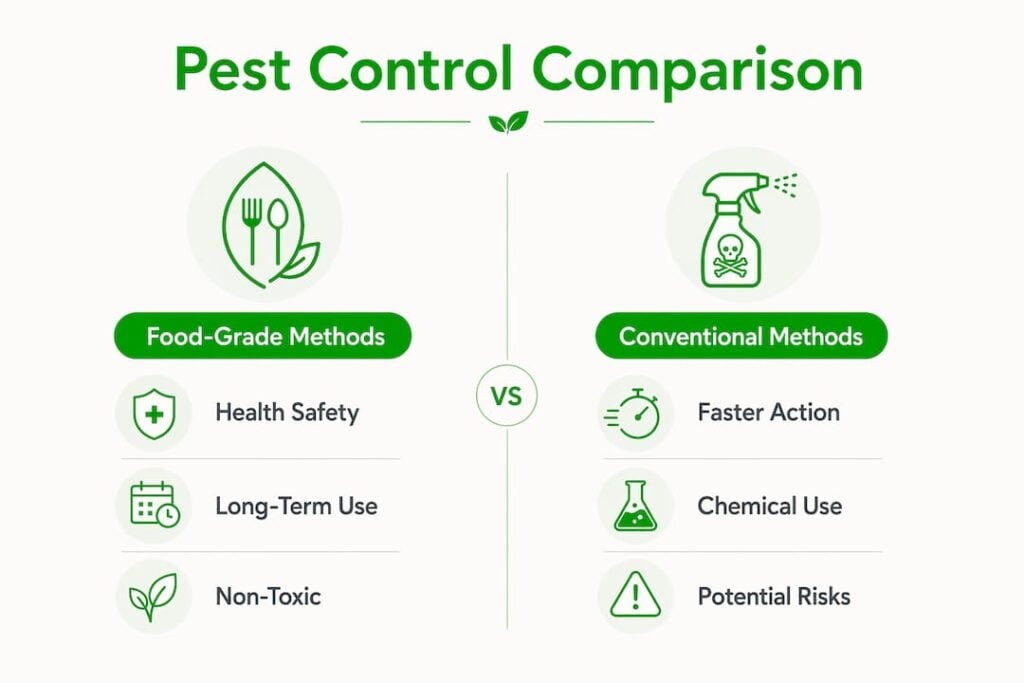
Food-grade vs. conventional pest control: benefits and limitations
Food-safe pest management is not always the fastest solution. Understanding where it excels and where it falls short helps you make the right call for your situation.
| Factor | Food-grade or food-safe methods | Conventional chemical methods |
|---|---|---|
| Health safety | High. No toxic residues near food | Lower. Residues may persist on surfaces |
| Environmental impact | Minimal. Non-toxic, biodegradable options | Higher. Broad-spectrum chemicals affect non-target species |
| Effectiveness | Moderate. Best for prevention and light infestations | High. Faster knockdown for severe infestations |
| Ease of use | Requires more monitoring and consistency | Simpler single-application options available |
| Regulatory compliance | Fully compliant with FDA FSMA and EPA requirements | Compliant only if EPA-registered and correctly applied |
Food-safe methods work best as a long-term prevention system. They are the right choice for routine kitchen pest management and for households with children, pets, or anyone with respiratory sensitivities. Conventional chemical methods may be necessary for severe infestations, such as a large cockroach colony or a rodent problem that has spread beyond one room. In those cases, hire a licensed pest control professional and ask specifically for EPA-registered products labeled for food-handling areas.
Key takeaways
Food-grade pest treatment is only effective and safe when it combines EPA-registered food-safe products, IPM prevention strategies, and consistent monitoring in food-related environments.
| Point | Details |
|---|---|
| Food-grade does not mean food-safe | Only EPA-registered products labeled for food areas are legally approved for pest control near food. |
| IPM is the foundation | Sanitation, exclusion, and monitoring prevent most infestations before any product is needed. |
| Monitoring tools are data, not just traps | Glue and pheromone traps reveal entry points and pest species, enabling targeted treatment. |
| Documentation matters | Keep a log of products used, dates, and locations, even at home, to track results and stay safe. |
| Conventional methods have a place | Severe infestations may require professional chemical treatment using EPA-registered, food-safe products. |
What I have learned about safe pest control in food areas
The biggest mistake I see homeowners make is treating “food-grade” as a synonym for “safe to use anywhere.” It is not. I have spoken with people who dusted food-grade diatomaceous earth directly onto pantry shelves, thinking the food-grade label made it harmless. The inhalation risk alone makes that a bad idea, and the product was never tested for that application anyway.
The shift that actually works is moving from reactive to proactive. When you seal entry points, clean consistently, and use monitoring traps to catch problems early, you rarely need to reach for any pesticide at all. That is not idealism. That is what food safety auditors and regulatory agencies have been recommending for years.
I also think homeowners underestimate how much the label matters. The EPA label on a pesticide is the result of years of safety and efficacy testing. A food-grade label on a bag of powder is not. When you are protecting your kitchen, that difference is worth taking seriously.
When in doubt, consult a licensed pest control professional who specializes in IPM. Ask them to show you the product labels and explain exactly where and how they will apply anything. A good professional welcomes that question. One who does not is a red flag.
Eco-friendly pest control resources from Bcpestcontrol
Bcpestcontrol focuses on pest management that protects your home without putting your family or the environment at risk. Their guides cover everything from non-toxic kitchen pest prevention to product reviews tested against real-world conditions.
For homeowners ready to move beyond guesswork and build a genuinely safe pest management routine, Bcpestcontrol’s eco-friendly pest control methods guide covers 11 proven approaches suited to food-safe environments. If you are starting from scratch, the pest proofing guide for beginners walks you through exclusion and sanitation step by step. Both resources are free, practical, and built for homeowners who want results without compromising safety.
FAQ
What does food-grade mean in pest control?
Food-grade describes a substance’s purity level for human consumption, not its safety or effectiveness as a pesticide. Only EPA-registered products with an explicit food-area label are approved for pest control near food.
Is food-grade diatomaceous earth safe to use in kitchens?
Food-grade diatomaceous earth is FDA-recognized as safe for consumption at up to 2% concentration, but it carries inhalation risks and has not been tested for pest control efficacy. Apply it only in dry, enclosed spaces away from food surfaces, and wear a dust mask.
What is the best pest control for kitchens?
The best pest control for kitchens combines sanitation, physical exclusion, and monitoring traps as the primary defense, with EPA-registered bait stations or food-safe products used only when monitoring confirms an active infestation.
Do I need to document pest treatments at home?
Home kitchens are not subject to FDA FSMA record-keeping requirements, but keeping a simple log of products used, application dates, and locations is good practice. It helps you track what works and provides a safety record if a health concern arises.
How do I know if a pest control product is food-safe?
Check the product label for EPA registration and explicit language such as “for use in food-handling areas” or “for use in areas where food is prepared or stored.” If that language is absent, the product is not approved for use near food.