
If you have ever flicked on a kitchen light only to see something scuttle under the fridge, you know that immediate pit of dread in your stomach. It is a universal feeling of disgust, but once the initial shock wears off, you need to know exactly what you are dealing with. Identifying the specific intruder is the first step toward reclaiming your home because not all roaches are created equal. The two most common culprits you will run into are the American and German varieties.
Although they both belong to the same broader family, they act, breed, and hide in very different ways. American cockroach vs German cockroach dynamic is the only way to choose the right strategy to kick them out for good. If you treat a German infestation like an American one, you are basically just wasting your time and money while the problem gets worse.
Table of Contents
Quick Identification Table
| Feature | American Cockroach | German Cockroach |
| Adult Size | 29–53 mm (Large) | 13–16 mm (Small) |
| Color | Reddish-brown with yellow halo | Tan with two dark stripes |
| Primary Habitat | Outdoors/Basements/Sewers | Indoors (Kitchens/Bathrooms) |
| Flight | Capable of flight/gliding | Rarely flies |
| Breeding Rate | Moderate | Very High |
| Control Difficulty | Easier (Seal entry points) | Difficult (Requires baiting) |
Physical Differences – Size, Color & Appearance
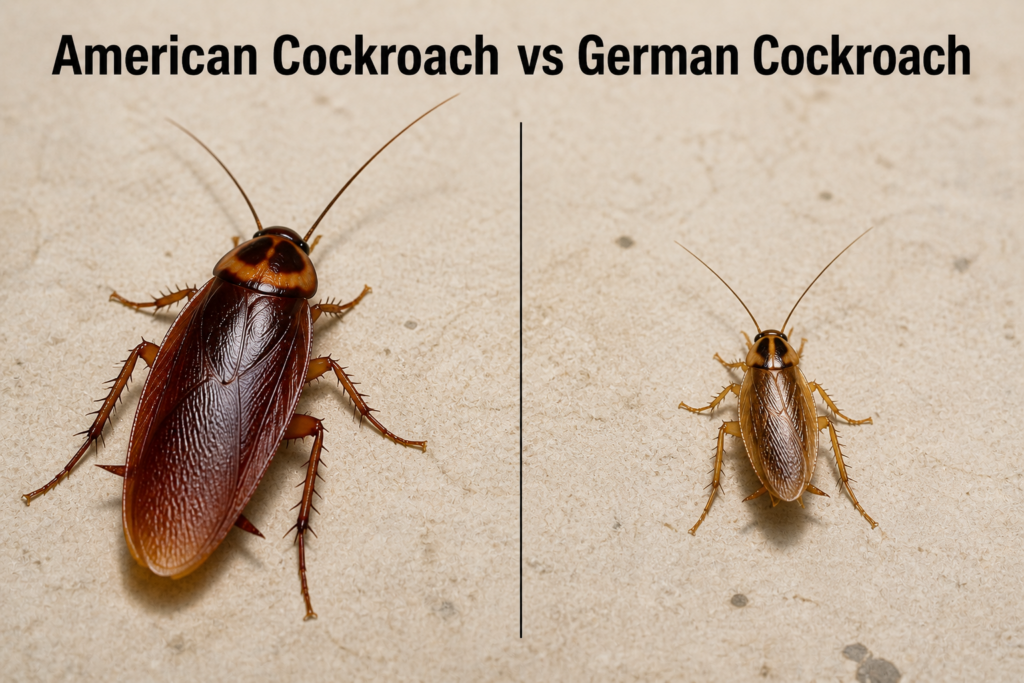
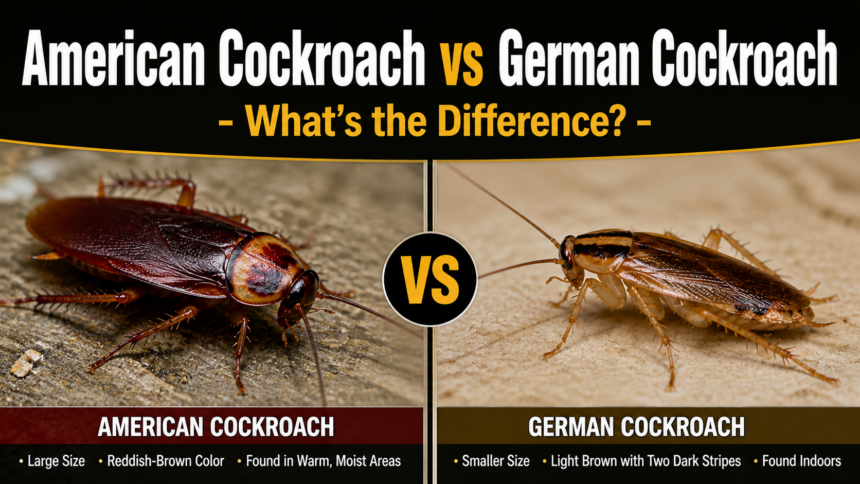
When it comes to cockroach identification, the very first thing you will notice is the scale. The American cockroach size is frankly intimidating, with adults reaching anywhere from 29 to 53 mm in length.
They are widely considered the largest cockroach species likely to invade a home. They have a reddish-brown, shiny exterior and a yellow figure-eight pattern on the back of their heads.
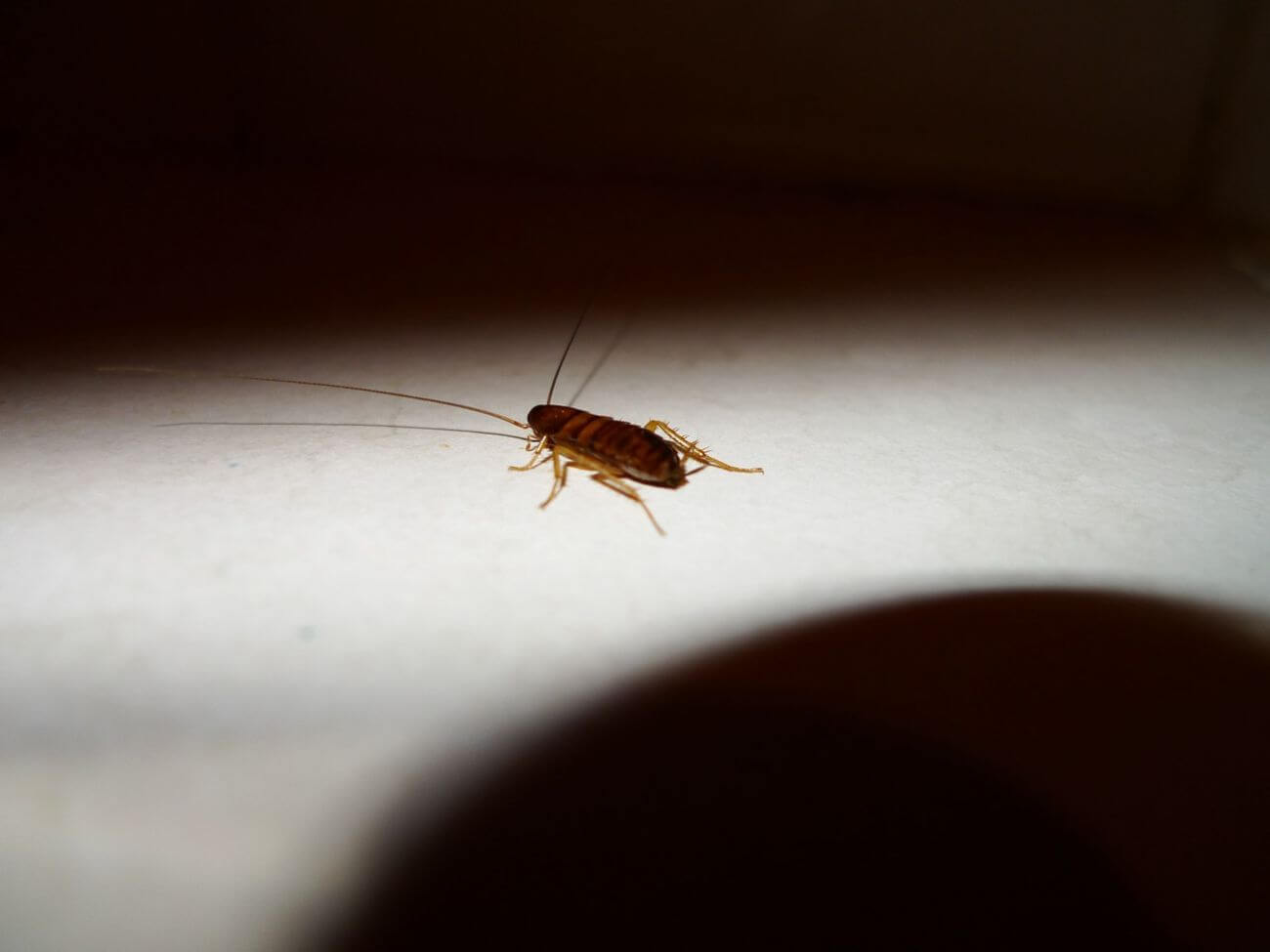
On the flip side, the German cockroach size is much more modest, usually topping out between 13 and 16 mm. You can spot them by their tan or light brown color and the two dark, parallel stripes running down their backs.
There is also a massive size difference when you compare them to everyday objects. An American roach is about the size of a large paperclip or a small lighter, though a German roach is closer to the width of a penny.
Another major distinction lies in their wings. The American roach is a flying cockroach, or at least it has the capability to glide if it feels threatened or needs to find a new food source. German roaches have wings too, but they almost never use them to fly, preferring to use their speed to dart into cracks.
If you see younger ones, or nymphs, they look a bit different. Baby American roaches start out grayish-brown and slowly turn that deep mahogany color as they molt. German nymphs are very dark, almost black, with a light stripe down their backs. Since the German variety is so small, people often mistake the adults for babies of a larger species, but those two dark stripes on the head are the dead giveaway that you have a full-grown German intruder.
Life Cycle & Reproduction Comparison (American Cockroach vs German Cockroach)
The way these two species multiply is where the real trouble starts. Every roach starts inside an egg case called an ootheca. The American female carries her case for about a day and then glues it to a hidden surface near a food source. Each case holds about 16 embryos, and it takes them a couple of months to hatch. Because they live for about a year or two, their population grows steadily but not necessarily overnight.
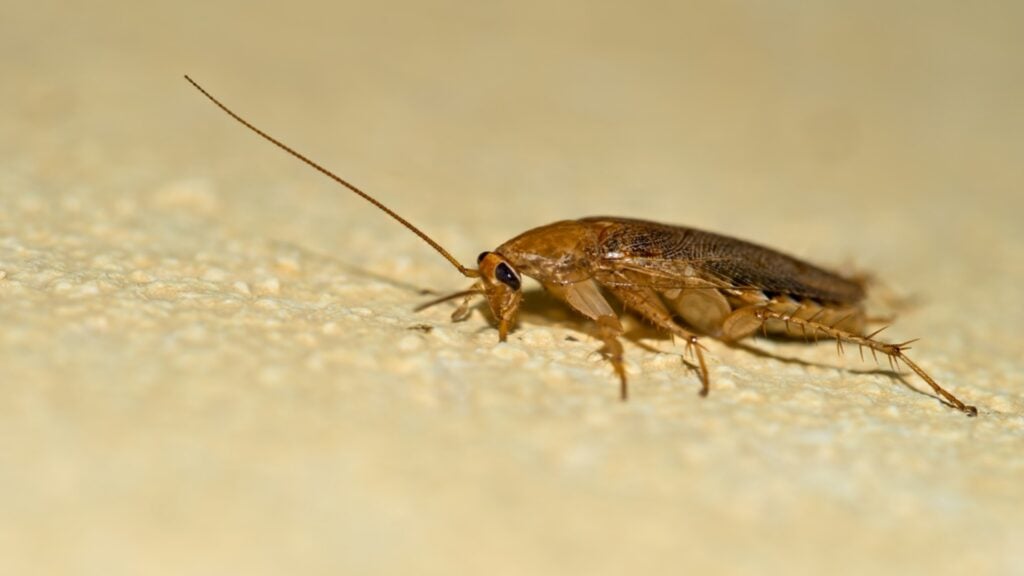
However, a German roach infestation is a completely different beast because their reproduction is on overdrive. A German female carries her egg case with her until just before it hatches, which protects the young from predators and cleaning products. Each of her cases can hold up to 40 eggs.
Because they reach adulthood in about three months, a single female can lead to thousands of descendants in a single year. This is why German populations explode so fast indoors. They are built for a high-speed takeover, making them a much more urgent threat to your sanity and your kitchen.
Habitat & Behavior – Where Each Species Thrives
Where you find these pests tells you a lot about which one has moved in. The American variety is primarily an outdoor roach that loves a warm damp environment. You will usually find them in sewers, steam tunnels, or flower beds. They only really head inside when the weather gets too dry or too cold. Once they are in, they stick to basements, crawl spaces, or laundry rooms. Because of their size and habit of living in filth, seeing an American roach usually means there is an entry point from the outside or a plumbing issue that needs to be fixed.
The German variety is strictly an indoor roach. You will almost never find them living in the woods or your garden. They want to be exactly where you are because they rely on human scraps to survive. They thrive in kitchens and bathrooms where they can find water and heat. Their American roach behavior is a bit more adventurous since they might wander from the basement to the attic, but the German roach is a specialist at hiding in the tiny gaps of your toaster, microwave, or behind the backsplash.
You should also keep an eye out for flying roach activity. During the hottest months, American roaches might take to the air to move from one building to another. German roaches will stay grounded, relying on their ability to hitchhike in grocery bags, used furniture, or cardboard boxes to move into new territory.
Health Risks & Why German Cockroaches Are Often Worse
Both of these pests are walking magnets for bacteria, but the German variety usually poses a higher risk for indoor air quality. Because they live in such close quarters with humans, specifically in areas where we prep food, they spread pathogens like Salmonella and E. coli very easily. They also produce a high amount of allergens. In many urban environments, German roaches are a leading cause of asthma attacks in children.
The American roach is also dangerous, especially since they come from sewers, but they tend to stay in less frequented parts of the house like the cellar. The German vs American cockroach health debate usually ends with the German roach being the bigger villain simply because they are so hard to get out once they settle into your kitchen cabinets.
How To Get Rid Of American Cockroaches & German Cockroaches?

The control method you use needs to match the species you are dealing with. Treating a German roach infestation the same way you would handle the occasional American roach wandering in from outside will not get you far.
For German cockroaches, the focus has to be on eliminating the indoor colony entirely. Gel baits placed in harborage areas, insect growth regulators that disrupt the breeding cycle, and thorough sanitation to cut off food sources are the core pieces of an effective plan. Because they breed so fast indoors, a partial treatment almost always leaves enough survivors to rebuild the population.
For American cockroaches, the strategy shifts toward exclusion and outdoor treatment. Sealing entry points around pipes, drains, and foundation gaps keeps them from wandering in. Treating outdoor harborage areas like mulch beds and around the perimeter of the home reduces the population at the source.
For either species, Orkin offers targeted pest control roaches treatment plans built around proper identification. Their technicians know the difference between a German vs American cockroach infestation and apply the right approach for each. Orkin does not use a one-size-fits-all spray and walk away method. They assess the infestation, treat the right areas, and schedule follow-ups to make sure the problem is fully cleared. If you are dealing with either of these species, getting a professional inspection through Orkin is one of the most effective steps you can take.
Frequently Asked Questions (American Cockroach vs German Cockroach)
Can American cockroaches fly?
Yes, they can fly, though they are more like clumsy gliders than agile flyers. They usually use their wings to move from a high spot to a lower one or to escape a predator. You will mostly see this behavior when it is very hot and humid outside.
Which is harder to get rid of – German or American cockroaches?
The German cockroach is definitely the harder of the two to kick out. Their fast breeding cycle and ability to hide in tiny spots make them incredibly resilient. While the American cockroach vs German cockroach struggle is real, the German variety usually requires a professional touch or a very dedicated baiting routine.
How do I know if I have German cockroaches?
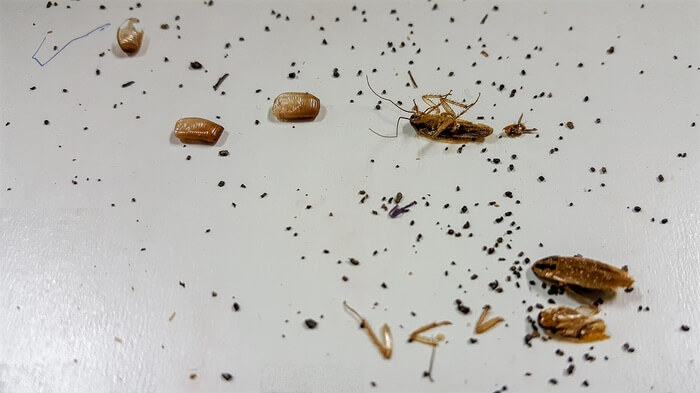
The biggest clue is seeing small, tan roaches in your kitchen or bathroom during the night. If you see them during the day, it usually means the infestation is getting crowded. Look for small dark spots of fecal matter in the corners of your cabinets or under the sink.
Do American cockroaches come from outside?
Most of the time, yes. They prefer the great outdoors and only come inside when they are looking for water or a break from extreme temperatures. They often enter through drains, sump pumps, or gaps under the garage door.
Are German cockroaches more dangerous to health?
In a residential setting, yes. Because they live so close to our food and produce such a high volume of allergens in a short time, they are a major trigger for respiratory issues and food poisoning.
Wrapping Up…
At the end of the day, knowing the difference between the German vs American cockroach is what saves you time and money. One is a giant visitor from the outside that you can usually block out with a little home maintenance. The other is a tiny, fast-breeding specialist that wants to share your apartment and your snacks. Regardless of which one you are seeing, the best time to act is the moment you spot the first one. Keep your home dry, keep it clean, and keep those entry points sealed tight to make sure your house stays yours alone.
If you are currently seeing these pests in your home, it might be time to inspect your kitchen for any hidden leaks or crumbs. Which of these two do you think is currently causing you the most trouble in your home? For a more detailed look at German cockroach size at every life stage, check out our recent post on How Big Do German Cockroaches Get? where we break it all down with comparisons and identification tips.