
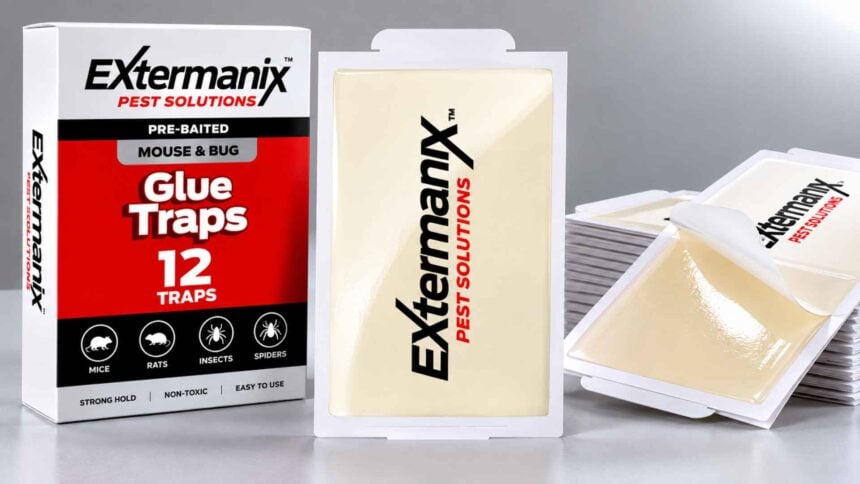
Nobody wants to think hard about rodent control until the heavy squeaking starts behind the stove at 1 a.m. When that happens, most people want something that works fast, doesn’t require handling poison, and doesn’t cost a fortune for a dozen mice traps.
That’s the pitch behind Extermanix glue traps, a pre baited, no power option built for mice, roaches, spiders, and whatever else decides your kitchen looks inviting. This Extermanix mice glue traps review covers how they hold up in actual use, where they work best, and whether a box of twelve glue traps for mice and bugs is worth adding to your cart before the weather turns and everything starts looking for a way inside.
Table of Contents
Extermanix Glue Traps Specifications
| Specification | Details |
|---|---|
| Trap Style | Pre-baited adhesive trap |
| Pack Size | 12 glue traps |
| Target Pests | Mice, rats, cockroaches, spiders, and other crawling pests |
| Setup Options | Can be used flat or folded into a covered shape |
| Recommended Placement | Along walls, corners, baseboards, and other confined areas |
How We Tested Extermanix Glue Traps

We wanted to see whether the Extermanix mice glue traps could actually do what they were supposed to do, catch mice, without making the process any more complicated than it needed to be.
Before writing the review, we spent some time getting familiar with how mice glue traps work and where they make the most sense around a house. We placed several along the kitchen baseboards, put one near the pantry, and added a couple in the basement and crawl space after hearing signs of activity in those areas for a few weeks.
We also tried adding a small smear of peanut butter to a few traps. The Extermanix traps already come pre baited, but we had seen plenty of advice suggesting that an extra food scent could improve the chances of attracting a mouse, so we decided to test it for ourselves.
A few days into the test, I was finishing up some work when I headed into the kitchen to get something for dinner. Then I heard a loud squeaking sound coming from near the cabinet. One of the traps had caught two mice, including one that appeared to be fully grown. I will admit, we were not expecting to find two on the same trap, and it caught us off guard for a moment, really.
Getting the trap out without handling it directly took a grabber tool, and that turned out to be a useful thing to have around. It made the mice removal much easier, especially since there was no desire to get close to the trap itself.
We disposed of it and got the mice out of view fairly quickly, since that part isn’t exactly pleasant no matter how effective the trap was. We’d thought about reusing the untouched traps from that same batch, but once a glue trap sits exposed to open air for a while, it starts losing its stickiness, so fresh ones are worth keeping on hand.
How Well Do Extermanix Glue Traps Work For Mice, Cockroaches & Other Bugs
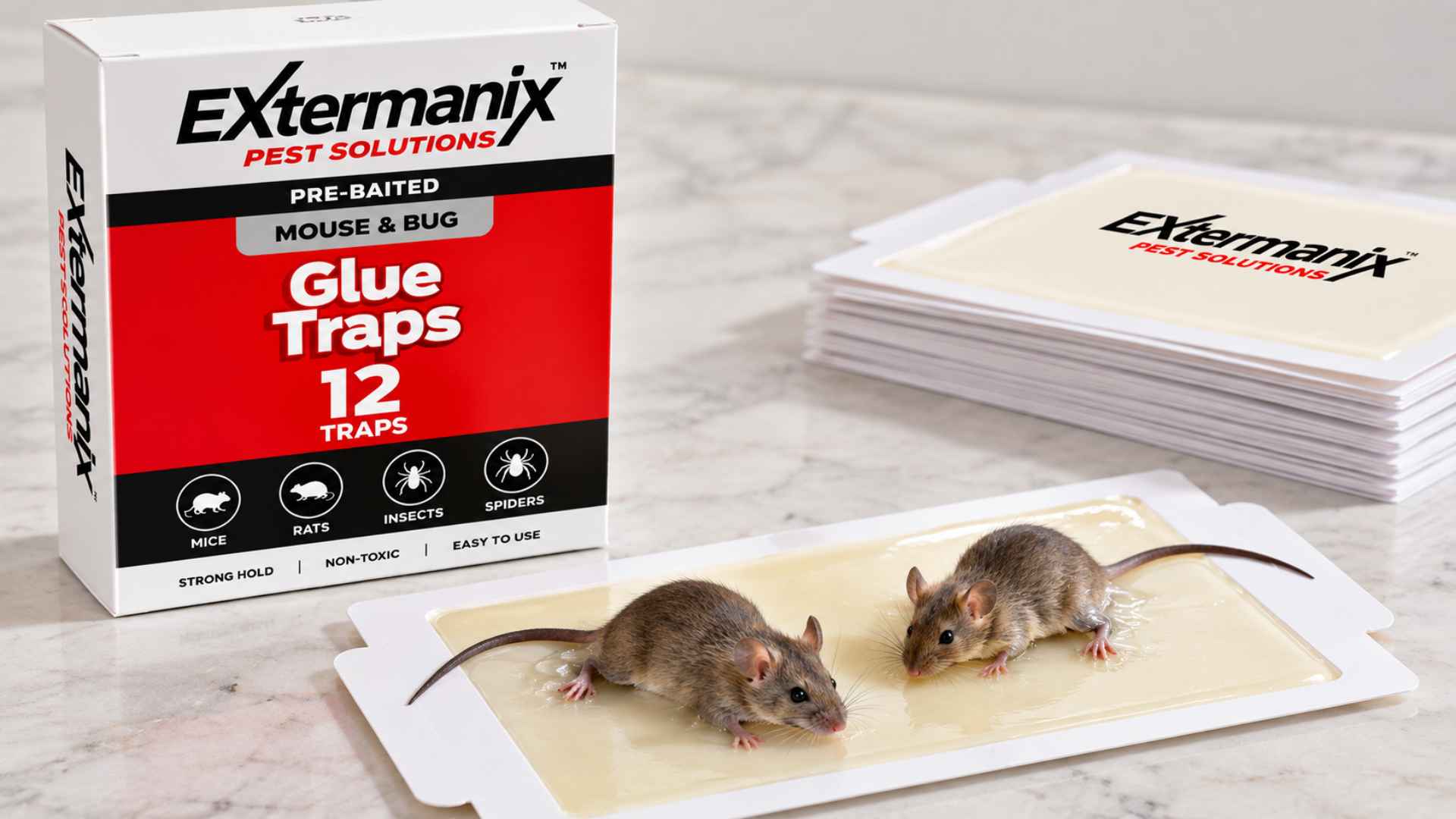
The sticky adhesive on these traps is strong enough that once a mouse steps on the glue, it genuinely cannot escape, and that held true across every trap we caught something on.
For roaches and spiders, results came a bit faster, since lighter insects get stuck the moment they cross the surface.
As glue traps for mice and bugs go, this one handles both ends of that range reasonably well, though a larger rat would likely need a heavier duty trap built specifically for that size.
Where Should You Place Extermanix Glue Traps?
Where you put a glue trap can make a bigger difference than the trap itself. Mice need to actually walk across it, so placing one in the middle of an open room is usually a waste. Baseboards, corners, and spots close to small holes or cracks are much better choices, especially if you have already seen a mouse moving through the area. Mice droppings, gnaw marks, and other signs of activity can also help you figure out where a trap is most likely to get some attention.
Kitchens, basements, attics, and areas along walls are good places to start because mice tend to stick close to edges as they move around. They are also less likely to cross a wide, open floor when there is a wall nearby that gives them some cover.
Put the glue trap directly along one of those established paths and you have a much better chance of a mouse stepping onto it. The closer the trap is to the route between a hiding spot and a food source, the better.
How Easy Are Extermanix Mice Traps to Use?

There are very few parts to figure out, and you can have a trap positioned within seconds. For homes with children, the lack of loose bait and complicated mechanisms may also be appealing, although the traps should always be placed somewhere a child or pet cannot access them.
The setup is about as straightforward as you could ask for. The Extermanix traps come pre baited, so there is no need to add food, prepare a spring, or handle a chemical treatment.
Depending on the location, you can leave the trap flat or fold it into a small box shape. A flat trap works well along a baseboard, while the folded configuration can make more sense in a corner or another tighter space.
| What We Like | What We Didn’t Like |
|---|---|
| No poison or chemicals involved | Larger rats aren’t a realistic match for this size trap |
| Simple to set up | Lose effectiveness once exposed to open air for too long |
| Affordable price | Disposal isn’t a pleasant task |
| Works on more than one type of pest | |
| Flexible design |
Extermanix Glue Traps Alternatives
If Extermanix doesn’t feel like the right fit, a couple of other glue traps for mice and bugs are worth comparing before you commit to a full box.
Tomcat Glue Traps For Mice

Tomcat adds eugenol, a natural compound pulled from clove oil, into the adhesive formula. It is marketed as boosting stickiness beyond a standard glue trap. In practice, that extra grip does a pretty good job with lighter pests like spiders that might otherwise wriggle partway off a weaker adhesive.
The six pack runs smaller than the Extermanix mice glue traps box of twelve. Turns out, per trap cost tends to run a bit higher, though the name recognition and wider distribution mean you can usually find these at a regular hardware store in a pinch rather than waiting on a shipment.
Sticky mouse traps in this line come in a compact size built specifically for mice. The tradeoff is fewer traps per box for anyone dealing with an active mice infestation across multiple rooms, where twelve traps stretch a lot further than six. For a smaller, more contained mice problem, though, this is a reasonable pick worth setting side by side with Extermanix before deciding.
Catchmaster Mouse Glue Traps

Catchmaster markets these as heavy duty, pesticide free glue boards used by pest professionals, and the sixteen count box beats both Extermanix and Tomcat on raw quantity.
That makes it a strong option if you are dealing with a larger indoor pest trap setup spanning a garage, basement, and kitchen all at once, since sixteen traps cover a lot more ground than a dozen or half a dozen.
The adhesive rodent and insect catcher design targets both mice and general crawling insects, similar to the multi pest approach Extermanix takes. Since it’s pesticides free, it keeps the trap limited to physical capture without any chemical exposure risk.
The higher trap count also means a lower cost per trap in most cases. It really adds up if you’re restocking regularly during an active mice infestation.
Frequently Asked Questions (FAQs)
How Effective Are Extermanix Glue Traps for Mice?
The adhesive does what it is supposed to do once a mouse makes contact with it. During our testing, mice that stepped onto the trap remained stuck, including larger adults as well as smaller mice. Placement still plays a major role, since the trap has to sit directly in a mouse’s normal travel path to have a chance of working.
Do Extermanix glue traps work for other insects?
Roaches, spiders, and other crawling insects are also susceptible to the adhesive. Because these insects weigh less than a mouse, they do not need much contact with the glue before becoming stuck.
How long should I leave a glue trap out?
A few weeks is reasonable if the trap has not caught anything and the adhesive still looks clean and usable. Over time, though, dust and exposure to air can reduce how sticky the surface remains. So, you need to replace older glue traps with fresh ones periodically.
Are Mice glue traps safe around pets?
They’re free of poison but curious pets can still get stuck to the adhesive themselves so you should place it strategically.
Wrapping Up…
There are a lot of reasons you don’t want mice around, no matter which angle you’re looking at it from. They chew wires, they leave droppings and urine behind constantly, and a single female can produce up to ten litters a year, adding up to as many as sixty mice from one animal alone.
Extermanix glue traps offer a straightforward, chemical free way to deal with that problem without setting snap traps or handling poison, and across our own placements they caught everything from roaches to a fully grown mouse without issue.
For a household that’s never dealt with mice before, or one that’s had recurring issues come and go, Extermanix provides a simple way to monitor and catch mice and crawling pests.