
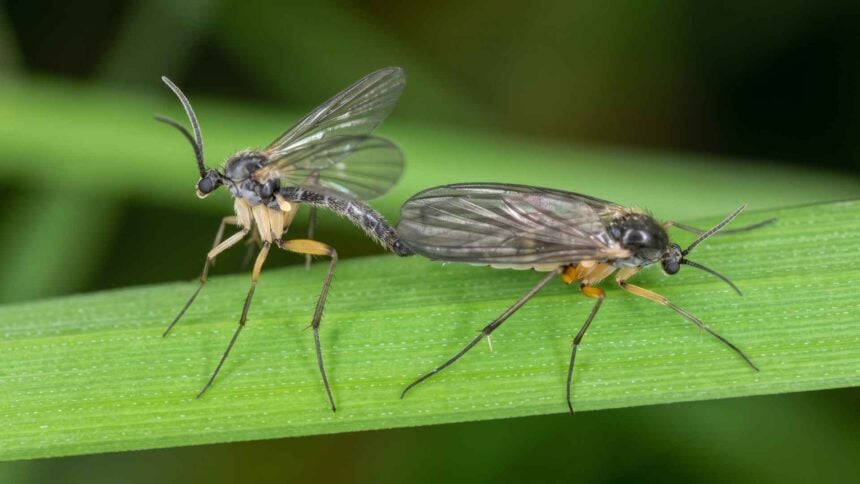
Fungus gnats have a very close association with something almost every houseplant owner is going for: moisture in the soil. Thus, you have a rather frustrating scenario where the very care of your houseplant creates a breeding ground for these pesky bugs.
Initially, you may see just a couple of adults floating in the air in the vicinity of the pot or even gathered near a window. However, the bulk of the activity is actually taking place under the surface of the soil.
The fungus gnat larvae grow in the moist potting soil, feeding on fungi and decomposing organic matter. It turns out that in order to get rid of fungus gnats, you will need more than just treating the flying adults. Read further to find out everything there is to know about what fungus gnats are, signs of their infestation and nine ways to get rid of them.
Table of Contents
Key Takeaways
- Fungus gnats flourish in moist potting soil where overwatering is a frequent reason for the problem.
- Adults are dark flies, whereas larvae are transparent-bodied and dark-headed.
- Dry the soil, use sticky traps, and kill larvae with Bti to remove the infestation.
- Fungus gnats neither bite humans nor pets, although they may be a bothersome presence indoors.
- Checking for fungus gnats on new plants before adding them to your collection helps prevent infestations from spreading.
What Are Fungus Gnats?
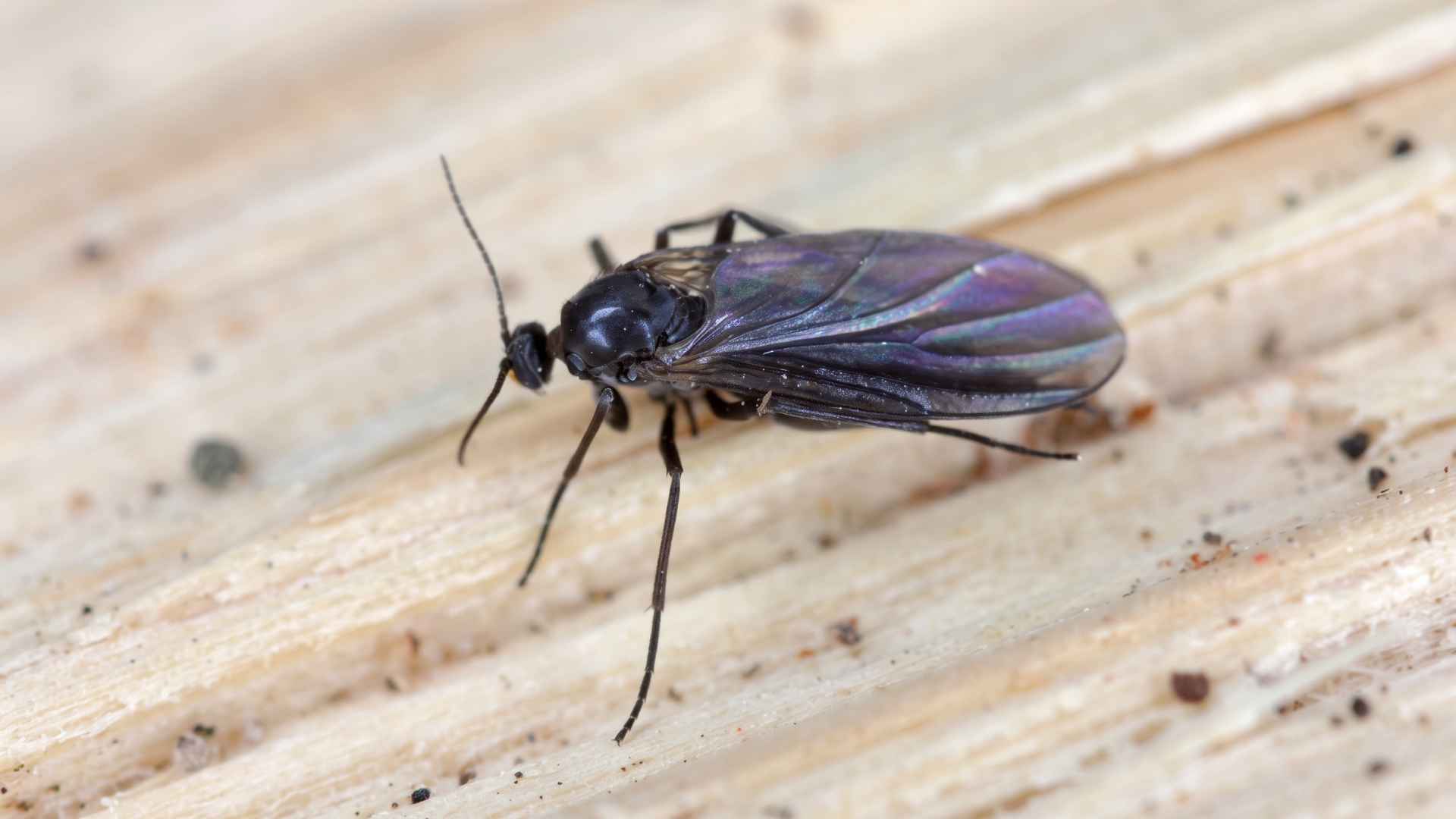
Fungus gnats are a prevalent indoor insect that feeds on houseplants and the organic debris present in potting soils. They can be easily confused with their diminutive cousins, fruit flies, except when viewed up close.
Female fungus gnats deposit eggs directly into the potting soil or other organic debris that is moist. Upon hatching, the larvae will feed on the fungi and decomposed organic debris within the soil.
Fungus gnats in house settings are present all across the United States and other continents as long as plants and moisture are both present. Their presence is particularly high at the end of fall and winter months, mainly because the plants are taken indoors in order to protect them from the cold, and the fungus gnats come with the plants.
How Do Fungus Gnats Look Like?
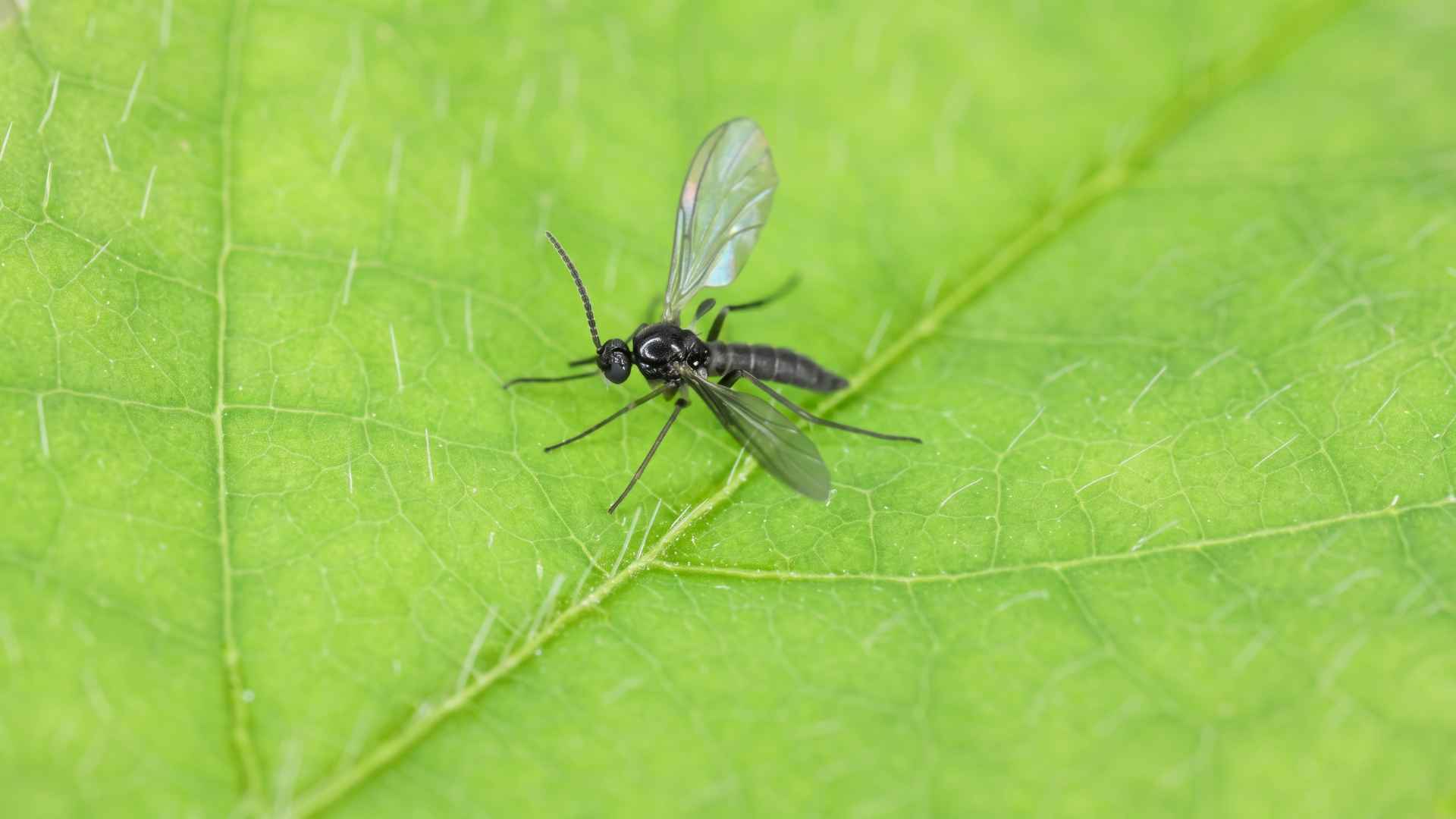
Adult fungus gnats are tiny, usually around 1/8 inch long, with gray to black bodies, long legs, thin antennae, and one pair of wings. At a quick glance, they can look a little like miniature mosquitoes, although their flight gives them away. They are weak fliers and often move in short, awkward bursts instead of making smooth trips across the room.
Fungus gnats larvae look completely different. They reach roughly 1/4 inch in length and have a pale, translucent body with a shiny black head. That dark head is especially noticeable against light potting soil. Fruit flies have a different look, with lighter colored bodies and red eyes.
Fruit flies, by contrast, have light colored bodies and red eyes, which is usually the fastest way to tell the two apart if you’re not sure what’s actually flying around your kitchen window. Fungus gnats around houseplants also tend to stay close to the pot, instead of roaming all over the room, and that can be one of the easiest clues of all.
Signs Of Fungus Gnats Infestation
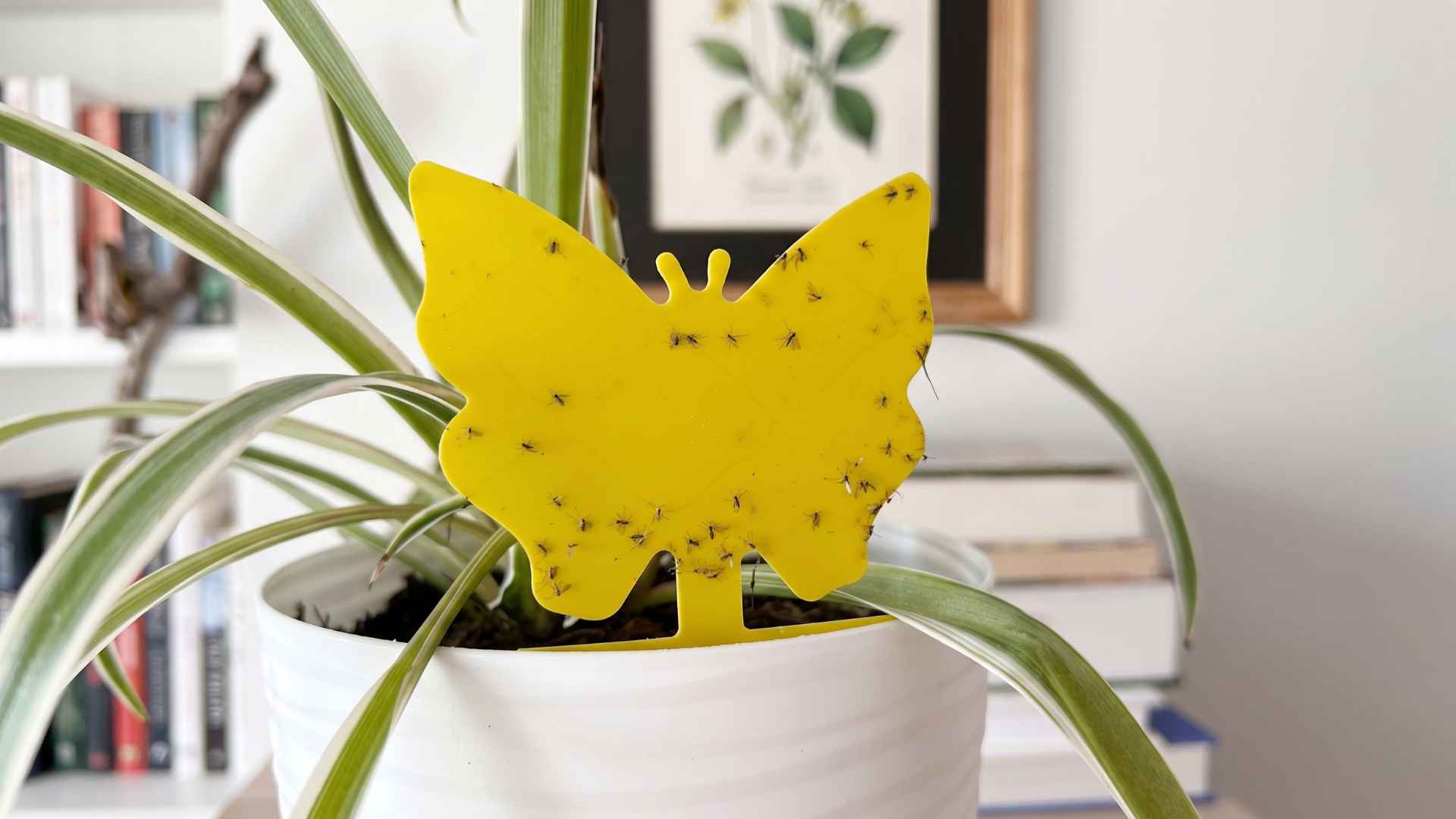
- Small, dark flies rising in a cloud when you water or disturb a plant
- Weak, clumsy adults resting on soil, nearby leaves, or windows
- Visible larvae in the top layer of soil when gently disturbed
- Yellowing or wilting plants despite a normal watering routine
- Gnats appearing near sinks, drains, or standing water in the home
- A noticeable increase in activity during fall and winter months
What Do Fungus Gnats Eat & Their Life Cycle?
Fungus gnat larvae feed primarily on fungi, algae, and organic matter breaking down in moist soil, and they’ll feed on plant roots directly once that preferred food supply runs short.
The females can lay 100-300 eggs in their lifetime, and they generally hatch after four-six days in warm and wet soil. The larvae then take twelve-fourteen days to become adult gnats while continuously eating all throughout these days in the top two-three inches of soil.
Thereafter, the pupae develop in the soil and stay there for four-six days. The whole process takes about four weeks to complete at normal room temperature, and this is precisely why an initial minor problem during September may escalate to a serious infestation in November if the soil remains wet through and through.
9 Best Ways to Get Rid of Fungus Gnats Indoors
Most effective fungus gnat control methods target either the adults flying around your home or the larvae living in the soil. Most of the time the best outcome is achieved when these two methods are combined. These nine different methods, as a whole, provide almost all angles that can be used to get rid of fungus gnats in your house.
1. Avoid Overwatering Plants
This is the cheapest and most effective fix available, and it costs nothing beyond a little patience. Allow the top two inches of potting mix to dry out completely between waterings. That dry layer kills off eggs and larvae naturally without any product or spray involved.
Fungus gnats need consistently moist soil to complete their life cycle. Turns out, backing off on watering removes the exact condition they depend heavily on. Let the soil get as dry as you reasonably can without letting your plants wilt.
You can easily check that out by putting your finger an inch or two deep. We heavily recommend trying out this method along with using other ones we have described below if you are sure you are dealing with fungus gnats.
2. Replace Problematic Potting Soil
Sometimes the soil itself is the actual source of the problem, especially if it was already holding eggs or fungus gnats larvae before it ever reached your home.
Cheap potting mixes heavy on undecomposed organic material give larvae exactly the kind of food source they’re looking for. That fungus gnat soil environment can sustain an infestation almost indefinitely if it’s never addressed directly.
If there hasn’t been any overwatering that might have caused the infestation or when you bought new soil with fungus gnats in it only days after repotting the plants, then the easiest way would be to replace the entire potting soil.
3. Create a Sand Barrier on the Topsoil
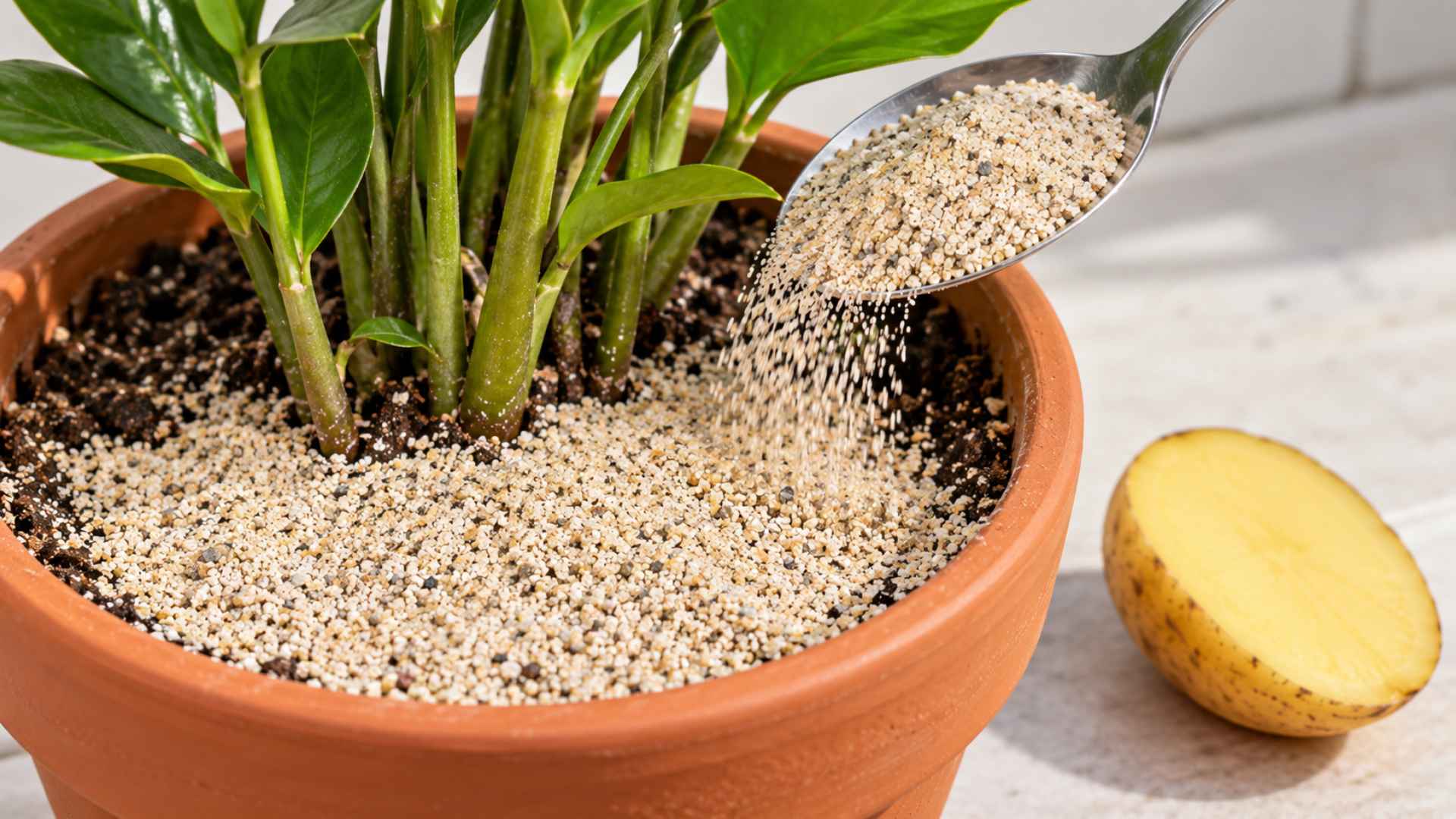
A thin layer of horticultural sand across the soil surface works as a simple physical barrier that female gnats can’t easily lay eggs through. Adding a layer of about 1/4 inch is enough for most containers with active gnat problems.
Make sure you use horticultural sand instead of play sand. Play sand usually holds moisture, and it doesn’t form the dry and unwelcoming environment like horticultural sand does. It is a good technique to combine with drying the soil out, because when you put a dry sand layer on top, adult females don’t have a comfortable place to land and reproduce eggs even if the soil is still moist.
There is another trick you can try to get rid of fungus gnats and it involves a piece of raw potato. Place the cut side directly on the soil for a day or two, and larvae may move toward it because of the moisture and food source. You can then take the slice out and discard it.
4. Improve Pot Drainage and Empty Saucers
If water remains at the bottom of a pot, the soil stays wet for much longer periods compared to when you water it. This extra moisture is what drives a breeding process of fungus gnats even when you start reducing watering.
Good soil drainage comes from a pot, proper drainage holes through which water escapes, and the saucers that get emptied one hour after watering. Without the drainage holes, water remains at the bottom of the pot and creates a permanently wet layer of the soil where fungus gnats larvae can find a place to feed irrespective of how dry the soil surface is.
The addition of gravel or perlite to the bottom of a pot will help drain the water well. Checking saucers for excess water will take seconds, but it is a good practice that enhances the effectiveness of all other treatments that you apply to kill fungus gnats for good.
5. Isolate and Inspect New Houseplants
Quite a few cases of fungus gnat infestations begin with the arrival of one infected plant from a local nursery or large store, with gnats along with it and nobody noticing the presence of these pests.
To prevent fungus gnats in your houseplants, prior to placing the new purchase among other plants, look closely at the top layer for the tiny white eggs females lay in batches.
Keeping new arrivals separated for a week or two gives you a chance to catch a problem in fungus gnats in houseplants before it spreads to every pot in the house.
6. Use Yellow Sticky Traps

Yellow sticky traps are a simple way to get rid of adult fungus gnats from flying around your plants. Fungus gnats are naturally attracted to yellow color. Turns out, placing a few traps near the soil can catch adults before they get another chance to lay eggs. Check them every few days and pay attention to the number of gnats caught.
Sticky traps have one clear limitation, though, when it comes to dealing with fungus gnats. They only deal with adult gnats. Larvae remain in the potting soil. The traps cannot solve an infestation on their own. We recommend combining them with measures that target the soil and weaken the conditions fungus gnats need to reproduce.
7. Treat the Soil With Bti

Bti is another name for Bacillus thuringiensis israelensis and is a natural occurring bacteria that works against fungus gnat larvae. Products like Mosquito Bits contain Bti to do this very thing, and you could use them to get rid of fungus gnat larvae in your potting soil.
What you will need to do is that you will have to soak the bits into water and then use this mixture on your plants, as mentioned in the instructions of the products. Bti will go down into the potting soil and work on the larvae that have been feeding there.
8. Try Fungus Gnats Killer Spray

In case there are adult fungus gnats that fly above your plants daily and the infestation continues to get worse and worse every single day, then this is definitely one of the options you should consider using. After all, it’s a more efficient way to get rid of their numbers.
Fungus gnat killer sprays are specialized products designed to kill adults upon contact. Usually, such sprays contain pyrethrin or other type of contact insecticides that are safe to use indoors and around plants.
The main feature of fungus gnats sprays is that they must be sprayed on adults resting on the ground or leaves. Fungus gnat killers get rid of the existing adults but will do absolutely nothing against the eggs and larvae developing in the soil, which means they’re just supplementary to soil treatment.
Reapplying every few days during an active outbreak helps knock down the adult population faster while Bti or a dry soil routine works on the next generation before it hatches.
9. Use Light Traps
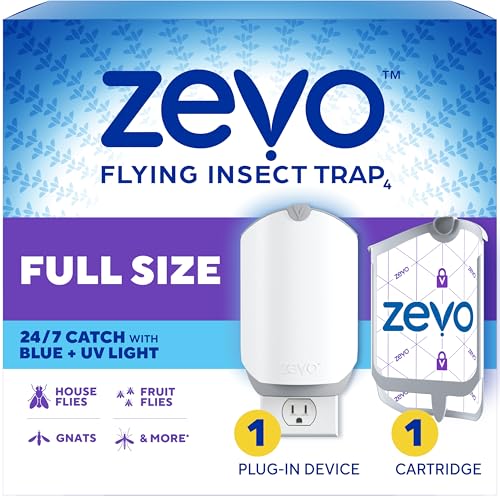
Light traps offer a chemical free way to reduce adult fungus gnats numbers. It uses UV and blue light to mimic body heat and attract flying insects like gnats, fruit flies, and houseflies. Just like sticky traps, light traps will be effective at getting rid of adult gnats but ineffective against their larvae in soil.
Do Fungus Gnats Bite?
Fungus gnats do not bite people or pets. They are a nuisance around houseplants, but they are not the source of the itchy bites you may notice on your skin.
If you are waking up with bites or finding irritated spots, you are probably dealing with mosquitoes, fleas, another insect, or something unrelated to the gnats.
Adult fungus gnats can still be annoying. They may hover around your face, land near your eyes or ears, and move toward the moisture those areas give off.
How Long Does It Take to Get Rid of Fungus Gnats?
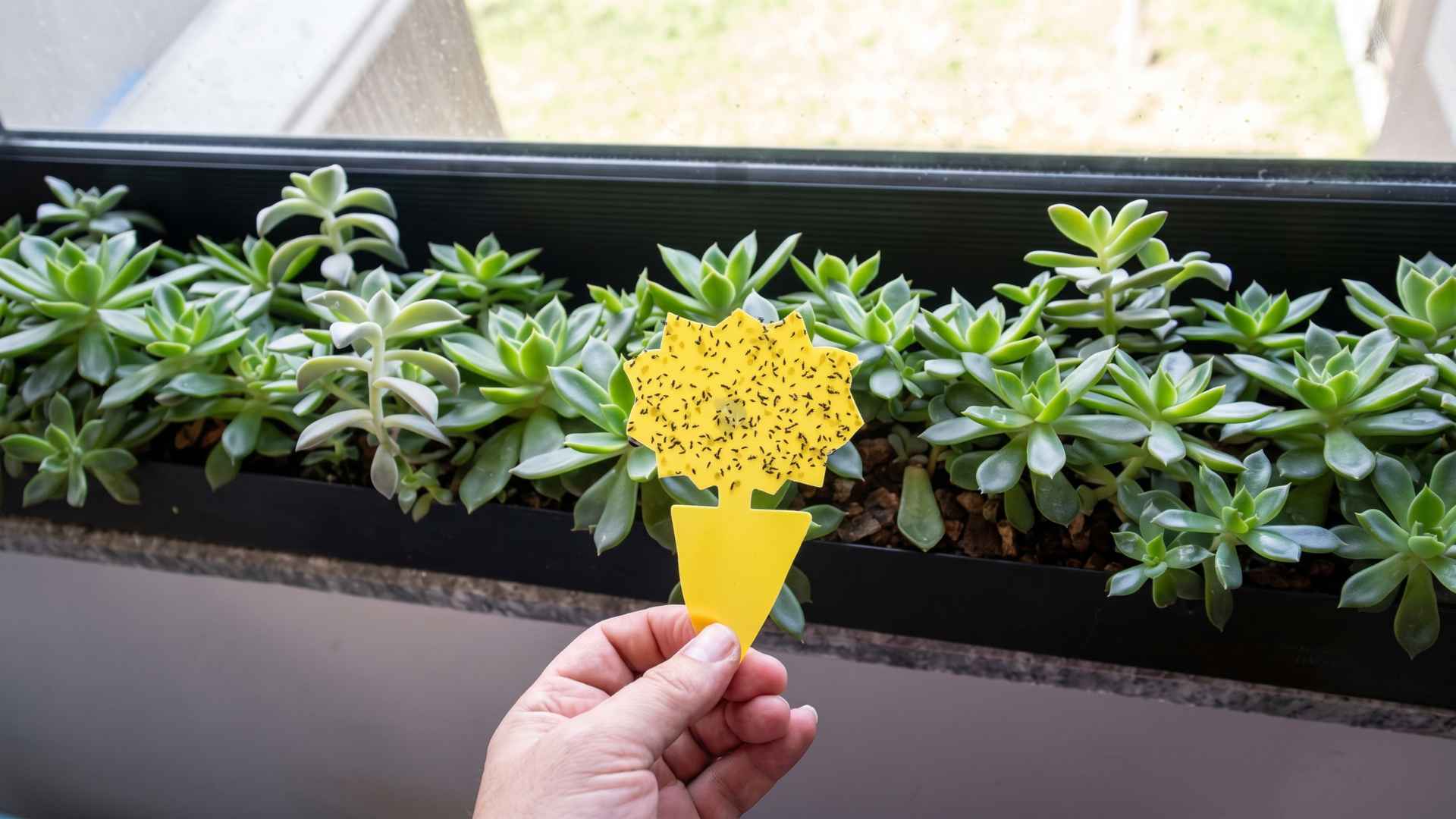
Realistically, plan on two to four weeks to fully clear an established population, since that lines up with how long a full generation takes to complete its life cycle from egg to adult.
Cutting off new egg laying with drier soil or Bti treatment stops the cycle from continuing, but eggs and larvae already present when you start still need to finish developing and get caught by traps or die off before the population actually disappears.
A light fungus gnat infestation caught early, before eggs have had a chance to spread across several pots, can clear up faster, sometimes within 2 to 3 weeks of consistent treatment.
Can Fungus Gnats Live Without Houseplants In Your House?
Fungus gnats are unlikely to establish a lasting population without some source of moist organic material. Indoors, that usually means potting soil from houseplants. The adults may occasionally enter through doors or windows, but they need suitable conditions for eggs and larvae to develop. Take away the damp soil and the problem usually has nowhere to continue.
Still, houseplants are not the only possible source. Damp soil left in an empty planter, an indoor compost container, or decaying organic material in a consistently humid area can sometimes support a small population. Turns out, if fungus gnats keep appearing in a plant free home, do not assume they simply came in from outside. Look for hidden moisture and organic debris first.
Fungus Gnats vs Fruit Flies vs Drain Flies
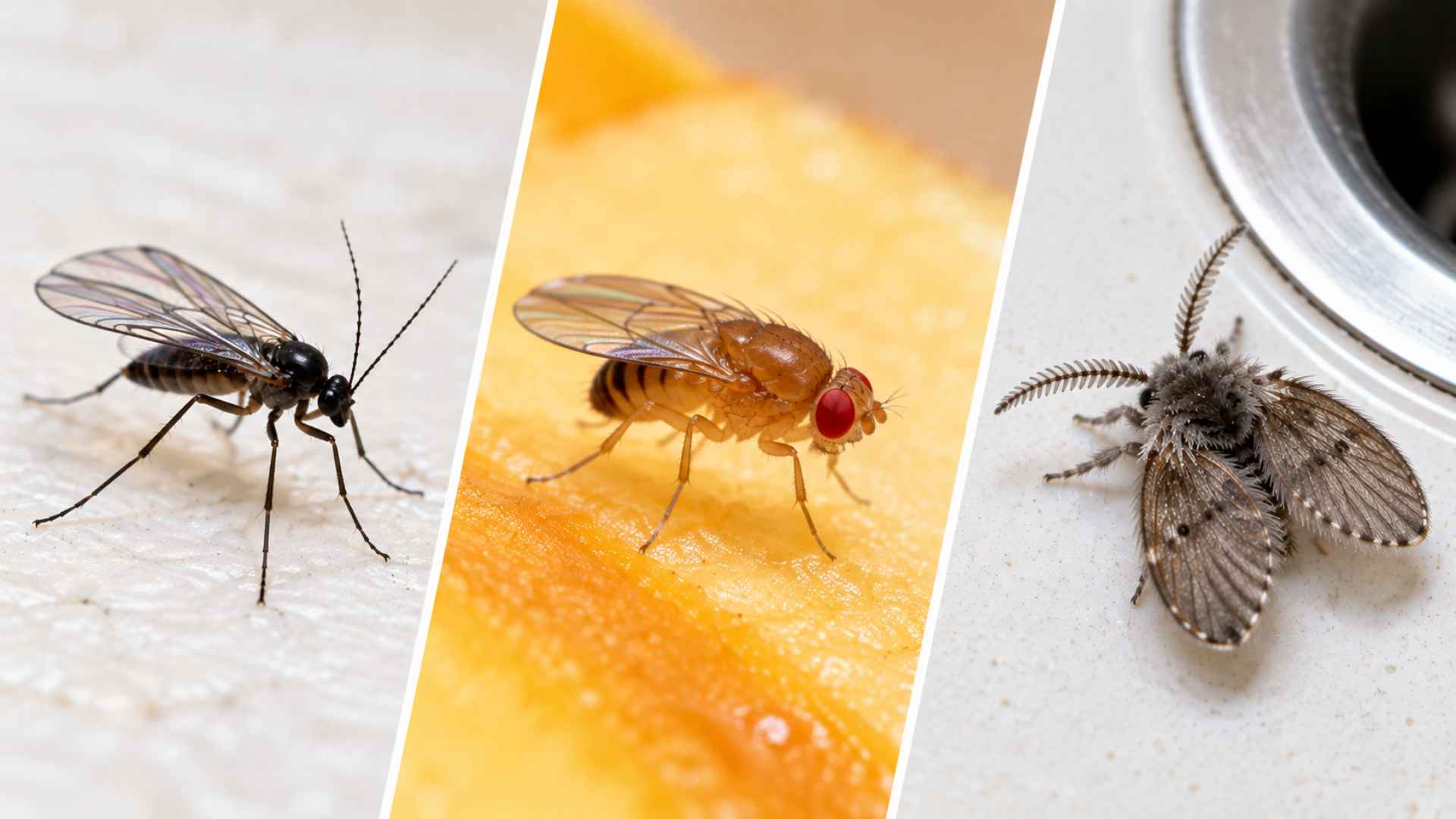
These three get confused constantly, and treating one like another almost never works, since each breed prefers a pretty different location.
- Fungus gnats are dark gray to black, mosquito like in shape, with long legs and weak, erratic flight. They breed in moist potting soil and stay close to houseplants.
- Fruit flies have light colored, tan bodies and noticeable red eyes. They breed in fermenting or overripe produce and tend to hover around kitchens.
- Drain flies look distinctly different from both, with fuzzy, moth like wings and bodies that give them a slightly fuzzy silhouette at rest. They breed in the organic buildup that coats the inside of drains and pipes, not in soil or fruit.
Unlike the drain flies which are drain breeders, the fungus gnats may not necessarily be drain breeders, hence if the problem persists after the correction of soil moisture and treating the plants, you should not overlook a second problem that could cause the activity. In addition, the drains have a moisture environment that allows the growth of organic substances, and if such is not cleaned, then the buildup can create another habitat for breeding even as the fungus gnat problem in your plants is being sorted out.
When To Call Pest Control Company
Most fungus gnat problems are genuinely something you can handle yourself with the methods above.
That said, if you’ve tried adjusting watering, treating the soil, and using traps for several weeks with no real change, or if the fungus gnats infestation has spread across a large number of plants faster than you can manage, bringing in a professional service can help move things along quicker than continuing to DIY a problem that isn’t responding.
Orkin technicians can assess whether something beyond a typical fungus gnat issue is going on and apply treatment options that aren’t available over the counter. For most households, though, this is a problem you can solve at home with a bit of consistency.
Frequently Asked Questions (FAQs)
What kills fungus gnats instantly?
A hydrogen peroxide soil drench is about as close to instant as it gets, killing larvae on contact within the soil. For adults in the air, a direct hit from a fungus gnat killer spray works within seconds too.
Will hydrogen peroxide kill fungus gnats?
Yes. Mixing one part 3 percent hydrogen peroxide with 4 parts water and drenching dry soil destroys larvae almost immediately without harming most houseplants.
Do mosquito bits kill fungus gnats?
Mosquito Bits use Bti, the same active ingredient effective against fungus gnat larvae specifically, and watering with a Bti mixture made from these bits is one of the more reliable non chemical soil treatments available.
How do I get rid of fungus gnats without killing my plants?
Stick to watering adjustments, Bti treatments, sticky traps, and light traps first. All of these target the gnats specifically without putting the plant itself at risk the way a strong systemic pesticide might.
How to get rid of gnats overnight?
A single night won’t clear an established population, but combining a hydrogen peroxide drench with a light trap running overnight knocks down both larvae and adults faster than either method alone, giving you the most noticeable overnight difference available.
What smell do fungus gnats hate?
Peppermint and neem oil are commonly used as natural gnats deterrents on soil surfaces, though neither replaces addressing the actual moisture and organic matter drawing gnats in to begin with.
Wrapping Up…
Fungus gnats are annoying, but they’re rarely difficult to solve once you understand that the soil, not the air around your plants, is where the real problem lives. Letting soil dry out, improving drainage, and adding traps or a Bti treatment where needed covers nearly every angle available for fungus gnat prevention going forward. Get rid of fungus gnats for good by staying consistent for a few weeks rather than expecting an overnight fix, and keep an eye on new plants coming into the house, since that’s where most infestations actually start.