
House sparrows are no doubt among the most adaptable pest birds in North America. That adaptability is exactly what makes them such a persistent problem for homeowners. They nest in roof vents, eaves, signage gaps, and wall cavities with remarkable speed, and once a pair establishes a nesting site, the population builds quickly. House sparrow control does not require harming the birds, and in many US states the migratory bird treaty act adds a legal layer worth knowing about before taking action. We will cover the practical, humane approaches that actually work with some products you could used againest them to keep them off of your yard.
Table of Contents
Why Are House Sparrows Attracted to Your Property?
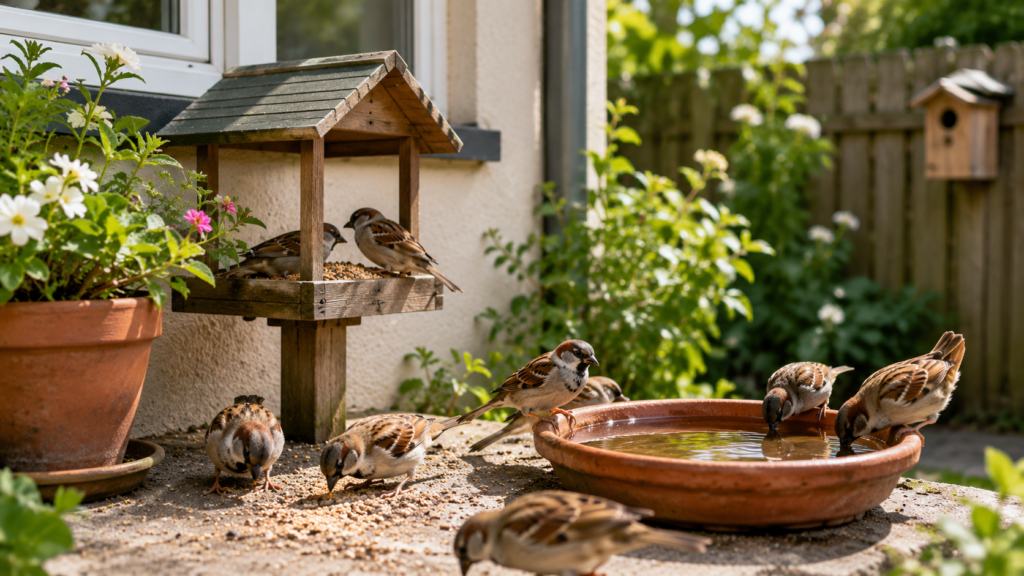
House sparrows are drawn to properties that offer three things. Accessible food, suitable nesting sites, and shelter from weather and predators. Bird feeders, uncovered garbage, pet food left outside, and gardens with seed-producing plants all provide reliable food sources. Gaps in soffits, open roof vents, dense shrubs near structures, and cluttered eaves provide the sheltered nesting opportunities these birds actively seek out. Taking away those attractants is the core of any effective house sparrow control strategy.
Signs You Have a House Sparrow Problem
- Chirping noise inside walls or roof
- Nesting material in gutters or vents
- Bird droppings along roof lines
- Feathers near entry points
- Blocked roof vents or soffits
- Visible nests under eaves
How to Get Rid of House Sparrows
Remove Food Sources
Sparrows nesting in house situations almost always trace back to a consistent, accessible food supply nearby. Kick things off by taking down or modifying bird feeders. If you want to keep feeding other birds, you could switch to feeders with smaller ports that sparrows cannot use effectively, or switch to nyjer seed. Sparrows generally ignore these.
Eliminate Nesting Opportunities
A house sparrow infestation grows fastest when nesting sites are abundant and undisturbed. Check the full exterior of your home for gaps in soffits, open pipe ends, loose siding, and uncovered vents. Install vent covers with fine mesh that allows airflow tho still could block bird access. Clear out any existing nests before sparrows return to reinforce them, and do so before eggs are present. Once eggs appear, legal doff requirements vary by state, so check local wildlife regulations before you start proceeding the process.
Install Bird Deterrents
Physical bird deterrents work best when installed at the specific surfaces where sparrows land and congregate consistently. Bird spikes along fence tops, window sills, roof edges, and ledges make those surfaces uncomfortable for a bird to land on.
Bird netting over garden areas, under eaves, and across balconies creates a physical barrier that blocks access to nesting sites entirely. Reflective devices, which you would find below, positioned near high-activity zones disrupt the birds’ visual comfort and encourage them to move on. The most effective house sparrow control approaches combine physical exclusion with visual deterrents instead of relying on either alone.
Seal Entry Points
Every gap larger than roughly three-quarters of an inch is a potential entry point for house sparrows. Work around the full building perimeter with hardware cloth, metal flashing, and expanding foam to close openings around pipes, cables, and structural joints. Roof vents are the most common house sparrow infestation entry point and the most consistently overlooked.
Use Visual and Sound Repellents
Reflective tape, predator decoys, and motion-activated sound deterrents all add pressure on sparrows to relocate without physical contact. Reflective surfaces disorient birds through unpredictable light patterns that they associate with threat.
3 Best House Sparrow Deterrents
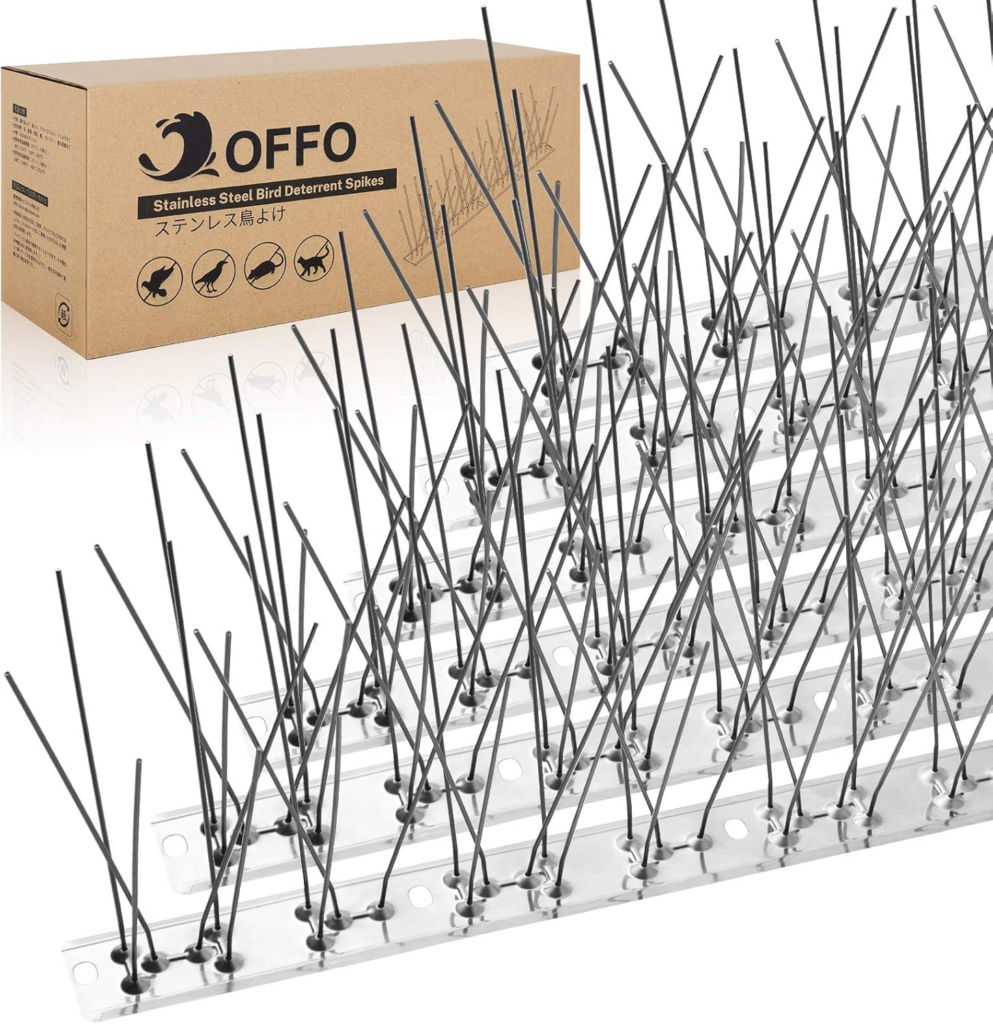
OFFO Bird Spikes To Keep Birds Away

Why It Made Our List
These come pre-assembled. Turns out, the most tedious part of bird spike installation already has been taken out. The 304 stainless steel construction holds up against rust and weathering without the coating degradation that cheaper options show after a single wet season. They bend around curved surfaces cleanly.
The color matches common exterior finishes, so they do not visually disrupt the building facade the way bare metal options do. Buyers note they work as advertised, though sparrows do eventually find adjacent surfaces and the process of adding coverage continues.
Key Specs
- Material: 304 stainless steel
- Coverage: 10.8 feet per pack
- Installation: Adhesive or screw mount
- Application: Roof edges, window sills, ledges, fences
| What We Like | What We Don’t Like |
| +Pre-assembled out of box | -Pricey |
| +Bends around curves | |
| +Weather-resistant steel |
Meanchen Bird Netting 20×30 Ft

Why It Made Our List
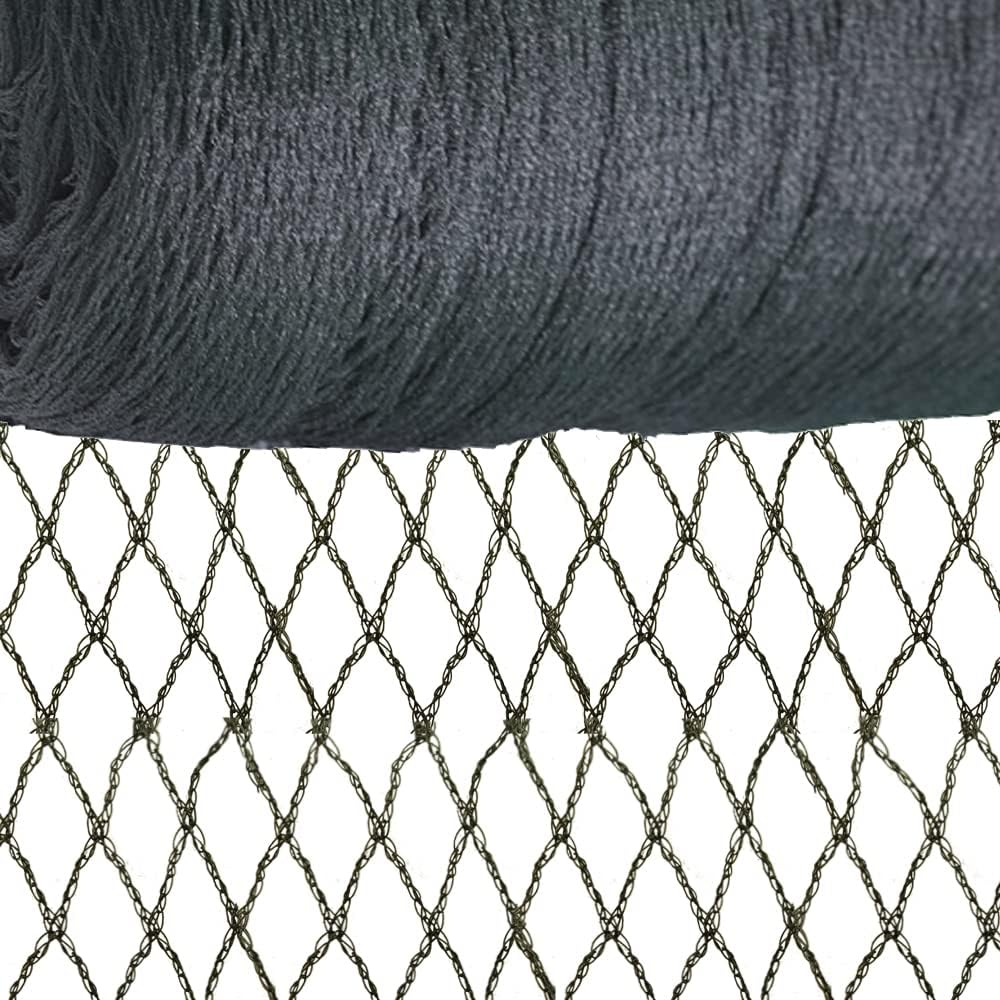
Bird netting is what i personally like cause it’s the most harmless and at the same time works quite efficiently in keeping birds away from your property. The Meanchen 20×30 ft option covers a substantial area at a reasonable cost and the half-inch mesh blocks sparrows specifically rather than just larger birds.
The heavy-duty woven construction holds up to outdoor exposure better than the lighter netting options that stretch and sag after a season. Users have put this to creative use beyond birds, including as batting cage netting, which speaks to the durability of the construction. For garden beds and fruit trees where sparrows are causing direct damage, this is one of the most practical solutions available.
Key Specs
- Size: 20 x 30 feet
- Mesh: Half-inch heavy duty woven
- Material: Durable polymer
- Application: Gardens, eaves, balconies, fruit trees
| What We Like | What We Don’t Like |
| +Large coverage area | -Requires secure anchoring on all edges |
| +Half-inch mesh blocks sparrows | |
| +Multi-purpose durability |
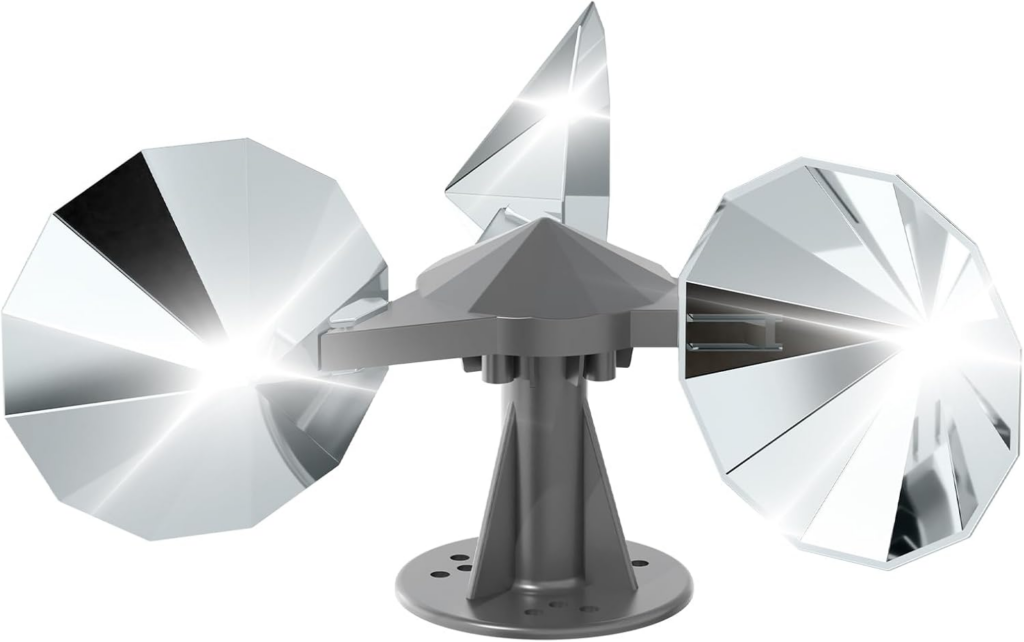
OFFO Bird Scare Reflective Device

Why It Made Our List
This reflective device works differently from static mirrors or tape. The faceted construction reflects light in a 40-foot radius on each side even when the unit is barely moving. It therefore creates a disorienting visual field that birds actively avoid.
The lightweight build turns out to be responsive to even slight breezes. We used this reflective device personally cause lately we had been dealing with doves coming over a fence from a neighbor’s bird-feeding setup. Since we placed this near the back fence line, it dramatically reduced landings along the fence and kept mallards out of the pool area as well.
The older reflective deterrents we had used were heavier, single-faceted, and since they required stronger wind to move, we cut them off and went with this offo bird scare reflective bar, and the outcomes were great.
Key Specs
- Reflection radius: 40 feet per side
- Mount: Plastic base with pole compatibility
- Weight: Lightweight for movement in low wind
- Application: Gardens, patios, roof areas, fences
| What We Like | What We Don’t Like |
| 40-foot reflection radius | Requires repositioning periodically |
| Moves in light breeze | |
| Multi-faceted surface |
When to Call a Professional
If a house sparrow infestation has established nesting inside wall voids, attic insulation, or HVAC systems, the scope of the problem typically exceeds what homeowner-level deterrents can address. A licensed wildlife or pest control professional can inspect interior entry points, assess the extent of nesting activity, and apply exclusion solutions in areas that are not accessible from ground level. Properties with recurring infestations despite comprehensive exterior deterrent installation almost always have a structural gap that is feeding the problem and that requires professional identification to locate.
Wrapping Up…
House sparrow control that holds up over time works through a combination of taking away the food and shelter that attract them, installing physical deterrents at the surfaces they use, and sealing the entry points that give them access to the building envelope. No single product or approach resolves a house sparrow infestation on its own. The three deterrent products above each address a different part of the problem, and using them together, spikes on landing surfaces, netting over garden and eave areas, and reflective devices near high-activity zones, produces the most durable outcome available without harming the birds in the process.