
If someone in your household has been treated for head lice, the immediate follow-up question for pet owners is almost always similar: can the cat catch them too? Parents especially tend to worry about this, asking whether the cat in their home can get head lice from their children, or whether the children can get head lice from the cat.
Both questions are worth responding clearly cause the misconceptions around lice and pets lead to unnecessary treatment, missed diagnoses, and a lot of preventable stress. We’ll cover the science behind lice species particularity, what cat lice actually look like, and how to address a genuine feline lice situation if one develops.
Table of Contents
What Are Head Lice?
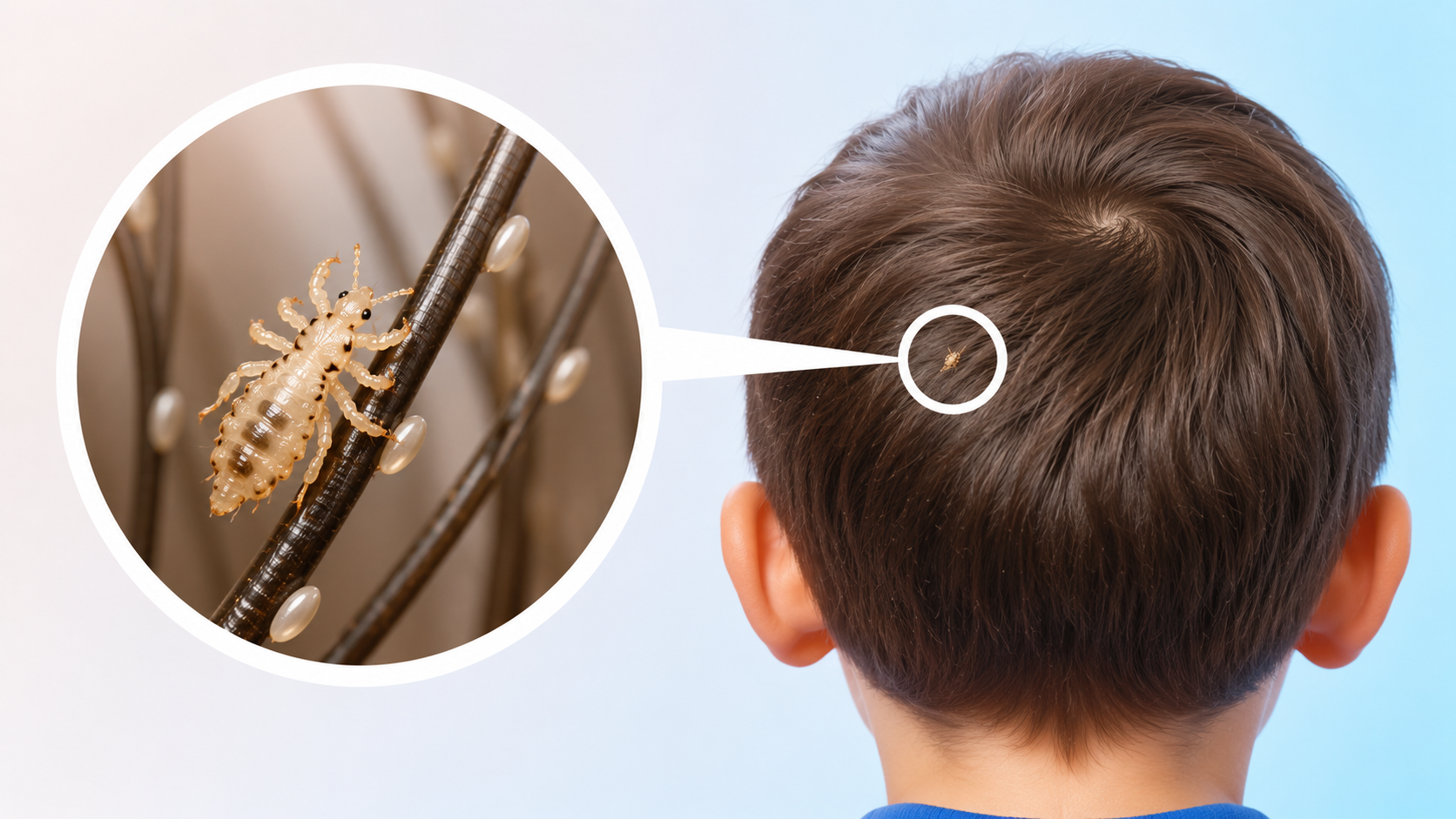
Head lice are parasites, specifically very small wingless insects that live on the human scalp and feed on blood. Adult lice are flat, six-legged insects with no wings, measuring roughly two to three millimeters in length. They spread primarily through direct head-to-head contact and cannot jump or fly, which limits their transmission range considerably.
There are approximately 3,000 species of lice worldwide, and the critical detail for pet owners is that each species is highly host-specific. Turns out, it evolved to survive on one type of host and cannot complete its life cycle on another.
Can Cats Get Lice from Humans?
The direct answer to can cats get head lice from humans is no. Human head lice cannot survive on cats, and feline lice cannot survive on people. The lice that infest humans are a different species entirely from those that affect cats, and neither can establish a viable population on the wrong host.
Lice transfer between humans and cats simply does not occur in any meaningful biological sense. If your child has head lice and your cat is scratching, those two situations are not connected. Do head lice live on cats is a question that comes up frequently, and the answer is definitively no, not the human variety.
Symptoms and Types of Lice in Cats
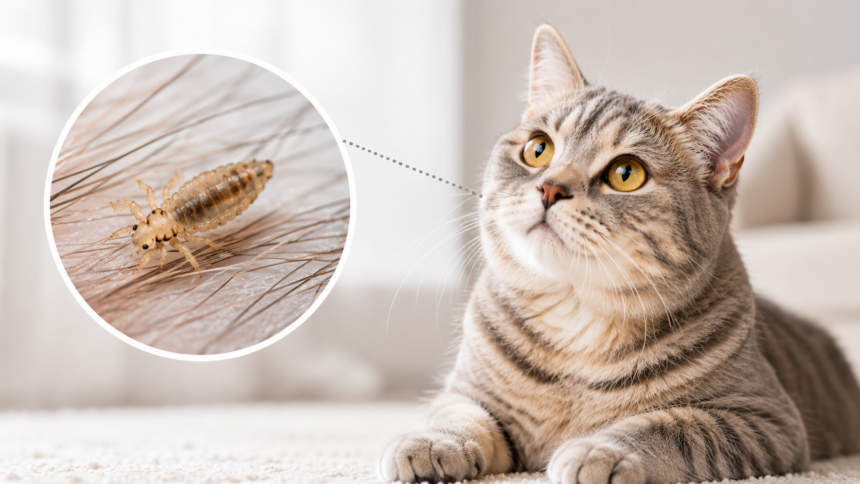
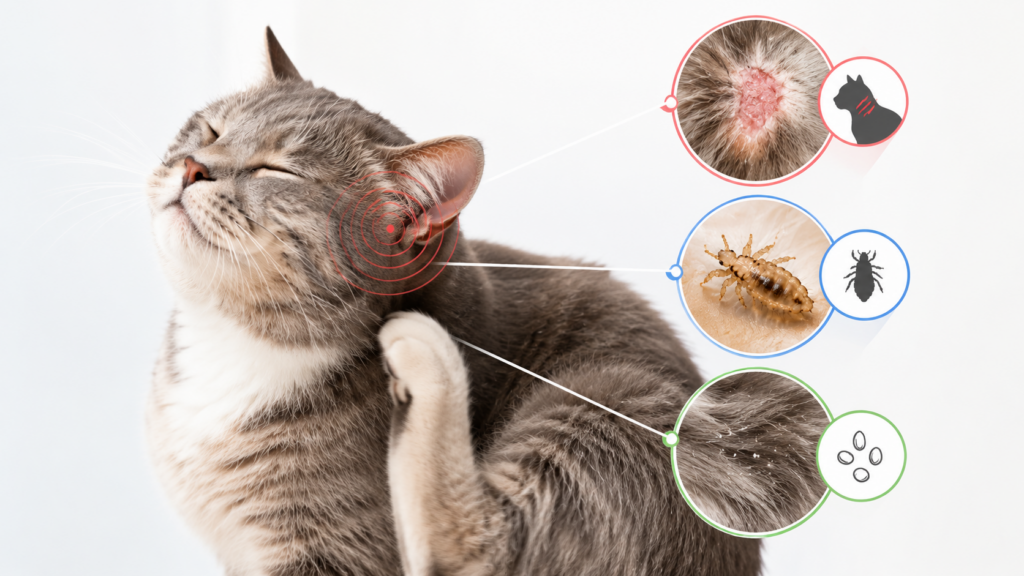
Cats can get lice, just not from humans. The species that affects cats is Felicola subrostrata, a chewing louse that feeds by chewing on the skin and hair of the animal it is infesting. This louse grows to become a full infestation on the cat’s body when left untreated, and the symptoms are recognizable once you know what to look for.
The primary signs of cat lice include excessive itchiness, persistent scratching, a dry and scruffy-looking coat, and hair loss most often concentrated around the ears, neck, shoulders, groin, and rectal area. Nits, which are lice eggs, can be seen attached to individual hair shafts and appear as small white dots that do not brush off the way dandruff does. The visual similarity between nits and dandruff is one of the reasons cat lice go undiagnosed longer than they should.
In severe cases, particularly in kittens or immunocompromised cats, a lice infestation can progress to anemia from the blood loss associated with heavy parasite load.
What Causes Lice Infestations in Cats?
Poor Grooming Habits
Cats that are unable to groom themselves properly due to age, illness, obesity, or injury are significantly more vulnerable to cat lice than healthy, active groomers. Regular self-grooming disrupts the lice life cycle by physically removing eggs and adults before a population can establish itself. You can buy the best brush for your cat that you can use to groom her every day or at least once a week. This would also prevent tangles and mats, and if you’ve a maine coon, persian or ragdoll that we’d highly recommend you groom her daily to prevent shedding and so does the fur.

Stray and Outdoor Cats
Outdoor cats and strays have direct contact with other cats in conditions where lice transmission is straightforward. Cat lice spread through direct physical contact between animals, and a cat that shares space with other cats, whether on the street or in a shelter environment, has considerably higher exposure risk than an indoor-only cat.
Newly adopted stray cats should be checked for parasites including lice as part of the standard intake health assessment before being introduced to other pets in the household.
Multi-Pet Households
In homes with multiple cats, a lice infestation in one animal creates immediate transmission risk for all animals in close contact with it. Cat lice move from host to host through direct contact and through shared grooming tools, bedding, and resting areas. A cat diagnosed with lice in a multi-cat household requires that all cats in the home be assessed and treated simultaneously rather than addressing only the symptomatic animal.
How to Treat Lice on Cats
Take Your Cat to a Nearby Vet Clinic
Feline lice require veterinary diagnosis and treatment rather than over-the-counter products designed for humans or dogs. A veterinarian will confirm the diagnosis by identifying the lice or nits on the coat and recommend an appropriate parasite control treatment for the specific species involved. Prescription and veterinarian-approved topical treatments are effective against cat lice, and the treatment protocol typically runs across multiple sessions to address the full life cycle of the parasite. Follow your veterinarian’s directions closely throughout the treatment period without shortening the course based on visible improvement, as surviving nits can restart the infestation if the full cycle is not addressed.
Home Care During Treatment
- Disinfect all grooming utensils thoroughly
- Wash all bedding the cat uses in hot water
- Vacuum all surfaces where the cat spends time regularly
- Clean all resting spots and cat furniture
- Keep treated cats separated from untreated animals
- Recheck all household cats for symptoms
- Avoid sharing grooming tools between animals
- Monitor coat condition throughout the treatment period
Frequently Asked Questions (FAQs)
Can my cat catch head lice from me?
Do head lice live on cats transferred from human contact is not a scenario that occurs biologically. Human head lice are species-specific to humans and cannot complete their life cycle on a cat. A cat that develops lice symptoms while a human in the household has head lice is dealing with a completely separate and coincidental situation. The two infestations require separate treatment approaches and have no relationship to each other.
Can I get lice from my cat?
No. Feline lice are species-specific to cats and cannot survive on human skin or hair. The louse species that infests cats cannot transfer to people, establish itself on a human host, or cause any lice-related symptoms in humans. Human head lice and cat lice are entirely different organisms with different biological requirements. Contact with a cat that has lice carries no lice transfer risk to the humans in the household.
What parasites are commonly mistaken for lice?
Dandruff is the most frequent misidentification because nits and dandruff flakes look similar on the coat. The key difference is that nits attach firmly to the individual hair shaft and do not move when the coat is disturbed, while dandruff flakes brush off freely. Fleas are another common confusion because both cause scratching and coat disruption, but fleas move rapidly across the skin surface and their flea dirt, which is digested blood, shows up as small dark specks rather than white ones.
Wrapping Up…
Head lice are a human parasite that stays on human hosts, and feline lice are a cat-specific parasite that stays on cats. The cross-species transfer question that most pet owners worry about when a household head lice situation arises has a clear answer: it does not happen. What does require attention is a genuine cat lice infestation, which is identifiable through coat symptoms, treatable through veterinary-directed parasite control, and manageable at home through thorough cleaning and disinfection of shared surfaces and tools. If your cat is scratching and showing coat changes, a vet visit resolves the question quickly and gets the right treatment started without delay.