
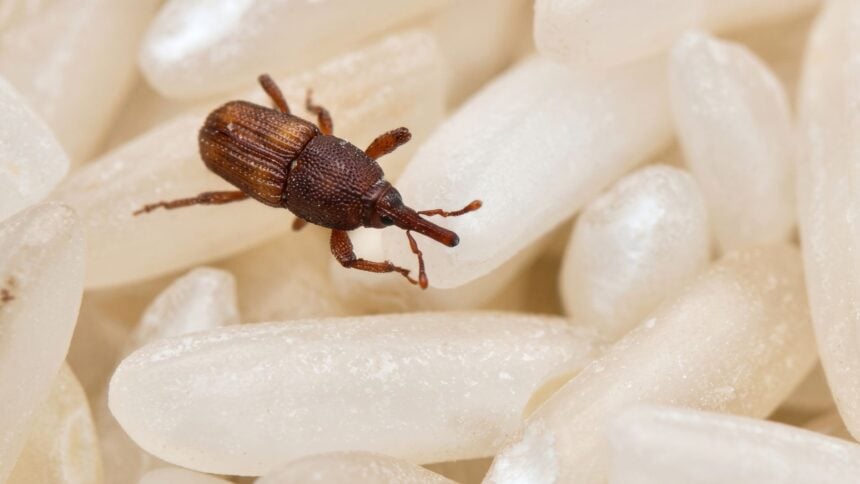
Rice weevils are tiny pantry beetles that can quietly turn a small storage slip into a full kitchen headache. Although rice weevils rely on whole grains like rice, wheat, and corn to breed, they also attack many other pantry staples. You can easily find them feeding on pasta, birdseed, dry pet food, seeds, nuts, and dried beans.
The tricky part is that rice weevils do much of their damage out of sight. Females drill tiny holes straight into whole kernels to lay their eggs, and the grubs grow inside until they are ready to chew their way out. By the time you notice adult rice weevils crawling around your kitchen, other packages may already be affected.
Below, we break down 15 everyday pantry foods rice weevils infest, along with how fast they multiply and the early warning signs to check for in your cabinets.
Table of Contents
15 Pantry Foods That Attract Rice Weevils
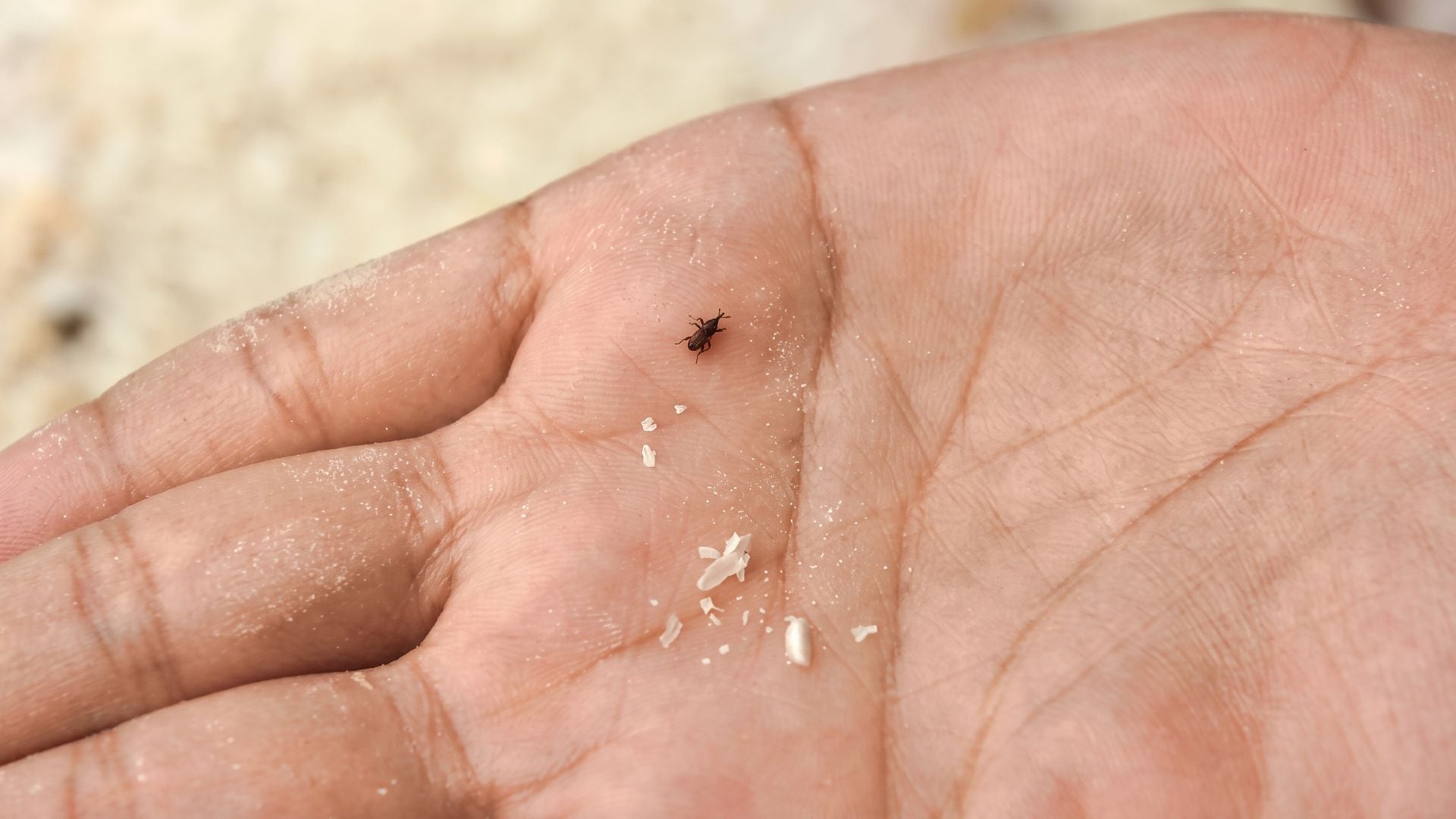
These are the foods rice weevils eat most often, grouped by type. The foods that attract rice weevils share one trait. They’re dry, starchy, and stored for weeks or months. University of Florida entomologists list rice, wheat, corn, sorghum, oats, rye, barley, buckwheat, dried beans, cashews, wild bird seed, and macaroni among their targets.
Adult rice weevil females chew into whole kernels to feed and lay eggs, and the hatched larvae hollow out the food from the inside. That’s why intact grains, seeds, and dense pasta top the list, though adults will also feed on finely milled flour and cereal. Check every group, since adults can fly and crawl from one infested bag to the shelf next to it.
Whole Grains
1. Rice (White, Brown, and Wild)
Rice is the namesake. Adult females chew a tiny hole in a single grain, lay one egg inside, and seal the opening. You’ll rarely see it happen. Most weevils in rice go unnoticed until the adults emerge and leave small exit holes. Weevil larvae in rice are legless, soft, whitish grubs that stay inside one kernel. White, brown, and wild rice all get hit.
2. Whole Corn & Popcorn Kernels
Hard, intact corn kernels offer an ideal nursery for developing weevil grubs. Bags of unpopped popcorn, dried field corn, and hominy give adult beetles plenty of starch to bore into and hollow out. You will often spot tiny circular exit holes along the golden hull once a new generation chews its way out.
3. Wheat Berries
Whole wheat berries sit right near the top of the foods that attract rice weevils list. People who store bulk buckets of hard red or soft white wheat for home milling face a high risk of hidden rice weevils infestations. The dense, starchy interior of a single wheat berry provides enough calories for a larva to complete its entire growth cycle with barely an issue.
4. Barley
Pearled and hulled barley both support active beetle populations inside warm kitchen cabinets. Because barley grains hold onto a mild amount of natural moisture, adult rice weevils easily pierce the surface with their snouts.
5. Rye & Buckwheat
Dark rye berries and whole buckwheat groats provide rich carbohydrates that keep adult rice weevils fed for months. Although buckwheat is technically a seed instead of just a true grass grain, its hard triangular shell mimics cereal grains closely enough for females to lay eggs inside.
6. Oats
Oats are also susceptible to rice weevil infestation. Whole oat grains provide a more suitable environment for larval development than finely processed oatmeal.
Dried Beans, Seeds, and Nuts
7. Dried Beans
Spotting rice weevils in beans may surprise you since bean weevils are the ones that infest dried beans quite often. Well, you know rice weevils prefer whole cereal grains like rice, wheat, and corn, hungry adults regularly chew on dried kidney, pinto, black, and navy beans when grain supplies run low. Chickpeas and black eyed peas are especially vulnerable because their softer outer skins yield easily to a weevil snout.
8. Split Peas & Lentils
Dried green peas, yellow split peas, and brown lentils offer dense starch and protein in small, bite sized packages. Pantry weevils (especially bean and cowpea weevils) feed directly on the exposed edges of split legumes and leave behind fine, powdery crumbs at the bottom of your storage jar. Rice weevils can and will occasionally nibble on beans or split peas if nothing else is around.
9. Nuts
Rice weevils infest certain stored nuts, including cashews and other whole nut products. The larvae need suitable material to develop, while adults can feed on a wider selection of stored foods.
10. Sunflower Seeds
Raw sunflower seeds, whether hulled or still inside their striped shells, attract hungry rice weevils looking for quick energy. Backyard gardeners who save raw seeds for planting or roasting often find tiny beetles clustered around the bottom of paper seed envelopes.
11. Birdseed
Wild birdseed mixes rank among the biggest sources of rice weevils in pantry closets. Commercial birdseed blends contain cracked corn, milo, millet, wheat, and sunflower seeds that rarely go through strict food grade sanitation. Storing a bag of bird food next to your kitchen staples practically invites beetles straight into your cooking ingredients.
Processed Pantry Staples & Pet Food
12. Pasta & Noodles
Thick dried pasta shapes like rigatoni, macaroni, lasagna sheets, and egg noodles consist of compressed wheat flour and water. Because dried pasta mimics the hardness of a whole grain kernel, female weevils can bore into thick walls of macaroni and lay eggs directly inside the noodle.
13. Breakfast Cereals
Breakfast cereals can attract several types of stored food insects. Rice weevils are associated with cereal products, although other beetles and pantry moths may be responsible for an infestation. This is particularly relevant when cereals contain whole grain pieces or have become damp and compacted.
14. Flour & Cornmeal (Note: Adults eat it, even if they don’t lay eggs in it)
Adults rice weevils feed on flour and cornmeal. Females rarely lay eggs in loose flour, since larvae need a solid piece to develop. Compacted flour can change that. Finding rice weevils in flour often points to an infested grain bag close by. Flour weevils are a likelier culprit when the flour itself is the problem.
15. Dry Pet Food
Kibble for dogs, cats, rabbits, and hamsters relies heavily on ground corn, wheat, rice, and soy meal. If large paper bags of pet food sit open in laundry rooms or pantries for weeks in your home, it would usually give rice weevils an endless buffet and a solid opportunity for an infestation.
The Rice Weevils Life Cycle
- Egg Stage: A single female rice weevil can lay 300 to 400 eggs during her lifetime. She drills a tiny hole into one grain kernel, lays a single egg inside, and seals the opening. Under warm kitchen conditions, the egg hatches in roughly 3 days.
- Larva Stage: Larvae feed inside a single grain kernel and hollow out the starchy center over roughly 18 days. Because they stay hidden inside the seed coat, you will never see them until they finish growing.
- Pupa Stage: Once fully developed, the larva forms a pupa inside the hollowed grain. This stage lasts approximately 5 to 6 days under favorable conditions.
- Lifespan: Adult rice weevils can live for several months (about 4 to 5 months) and if the conditions (environment and food availability) are highly suitable, they could live for up to 6 months or even more.
Signs Your Pantry Food Has Rice Weevils
You do not always need to see a large number of rice weevils to recognize an infestation. Sometimes, the damage inside the food gives you the first clue.
- Small reddish brown beetles: Spotting adult rice weevils crawling across shelves or wandering near kitchen windows is usually the first obvious sign of trouble. Adult rice weevils measure about 1/8 inch long (roughly 2 to 3 millimeters) and range from dull reddish brown to nearly black. They have six legs, a long and slender snout extending from the front of the head with bent antennae attached near the middle, and four faint reddish or yellowish spots on their wing covers, two on each side. Unlike confused flour beetles, rice weevils have functional wings and occasionally fly toward bright ceiling lights.
- Tiny Round Holes in Grains: Look at individual kernels of weevil rice, corn, or pasta under bright light. Small, neat circular pinholes show exactly where rice weevils chewed their way out of the kernel after pupating.
- Fine Powdery Dust at the Bottom: Also check the bottom corners of clear jars and plastic bags for a layer of fine, flour-like dust. This powder consists of crushed grain starch and rice weevils’ waste left behind as they tunnel through the food.
- White larvae inside grains: Weevil larvae in rice are creamy white, soft, legless grubs with darker heads. They develop inside individual kernels and are difficult to spot without breaking the grain open.
How to Keep Rice Weevils Out of Your Pantry
Once you are sure you are dealing with a rice weevil infestation, you can, with the help of a few techniques, get rid of them. In the first place, store all of your dry food items like rice, corn, wheat, and the one we mentioned above in a sealed, airtight container so they have a minimal chance to infest the food. When you bring food into the store, check it carefully for tiny rips or dust at the bottom, and put it into thick glass jars or heavy plastic bins with rubber gasket lids.
If you confirm a rice weevil infestation in the food items you already have in your kitchen cabinet, you can freeze the kitchen-sized packages of grain at 0 degrees Fahrenheit, or minus 18 degrees Celsius, for 4 days, or up to 7 days for large bulk bags, to kill all life stages of pantry pests like weevils. Keep shelves clean by vacuuming crumbs out of corners every month, and always store birdseed and pet kibble in separate rooms away from human food. If you want to know how these pests get inside in the first place, check out our full guide on where rice weevils come from.
Frequently Asked Questions (FAQs)
Do rice weevils eat flour?
Adults do eat flour and cornmeal. Larvae cannot develop in loose flour, though, because they need whole kernels or tightly compacted flour to survive and grow. If you find weevils in flour, they usually wander over from a nearby bag of rice, pasta, or whole grains or they are actually flour beetles, which look similar from a distance but lack the long snout.
Do rice weevils eat sugar?
Dry white sugar and brown sugar are not among the foods rice weevils eat in your pantry. While adult beetles can sip on liquid sugar solutions for brief energy, dry granulated sugar lacks the moisture, complex starches, and proteins they need to survive or lay eggs. Your sugar jars will stay pest free unless crumbs of flour or cereal get mixed inside.
Can I eat rice with rice weevils in it?
Yes, as long as the infestation is light and the rice is dry and unspoiled. Rice weevils aren’t known to carry disease, and they don’t bite. Pick out the insects, rinse the rice, and skim off floaters. Thorough cooking kills any eggs or larvae left inside the grains. Toss it if the rice is heavily infested, damp, or smells musty and plenty of people toss lightly infested rice anyway, which is a fair call if you’re uneasy.
Wrapping Up…
The foods rice weevils eat cover most of a dry pantry, from rice and wheat to beans, pasta, birdseed, and pet food. Since their larvae develop inside suitable grains, an infestation can remain hidden for weeks. If you find beetles in one package, inspect the surrounding supplies before the problem spreads. Store susceptible foods in airtight containers, clean your shelves regularly, and check older packages.