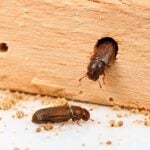

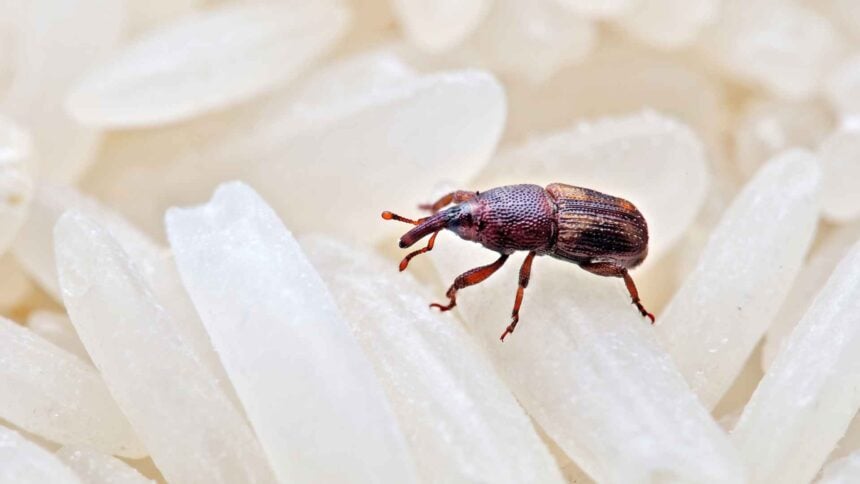
Rice weevils are a common problem in pantries across the country. They are usually colored dull reddish-brown to black and they infest dry food storage and contaminate grains. If these beetles make their way into your pantry, their numbers can grow quickly and become difficult to control.
Where do rice weevils come from, and why did they show up in your pantry of all places. We’ll look into exactly how these pests get in, what draws them, and what actually works to get rid of rice weevil problems. Keep scrolling!
Table of Contents
Key Takeaways
- Rice weevils usually enter the home as eggs already laid inside grain kernels before the product reaches store shelves
- A female weevil can lay 300 to 400 eggs and the larvae develop hidden inside the kernel where they’re impossible to see
- Common signs include tiny holes in grains, fine powder at the bottom of containers, and small reddish beetles near pantry shelves
- Extreme cold or heat kills eggs and larvae. It makes freezing new purchases one of the most effective prevention steps
- Airtight containers stop weevils from spreading between food items once they’re already in the pantry
- A persistent or spreading infestation across multiple products is a sign it’s time to call a professional
Where Do Rice Weevils Come From in the House?
Most of the time, rice weevils don’t sneak into your home through a window or a crack in the wall. They made their way to your home already, starting off as eggs laid inside grain kernels back at a processing facility, a warehouse, or a store shelf.
That unopened plastic bag of rice sitting in your cabinet may look sealed and untouched, but the eggs were already there when you bought it. In other cases, adult weevils entered the bag from elsewhere, drawn in by nearby flour or other grains that weevils like, slipping through packaging that looked fine at first glance but had tiny puncture holes easy to miss during a quick inspection at the store.
Signs of Rice Weevil Infestation
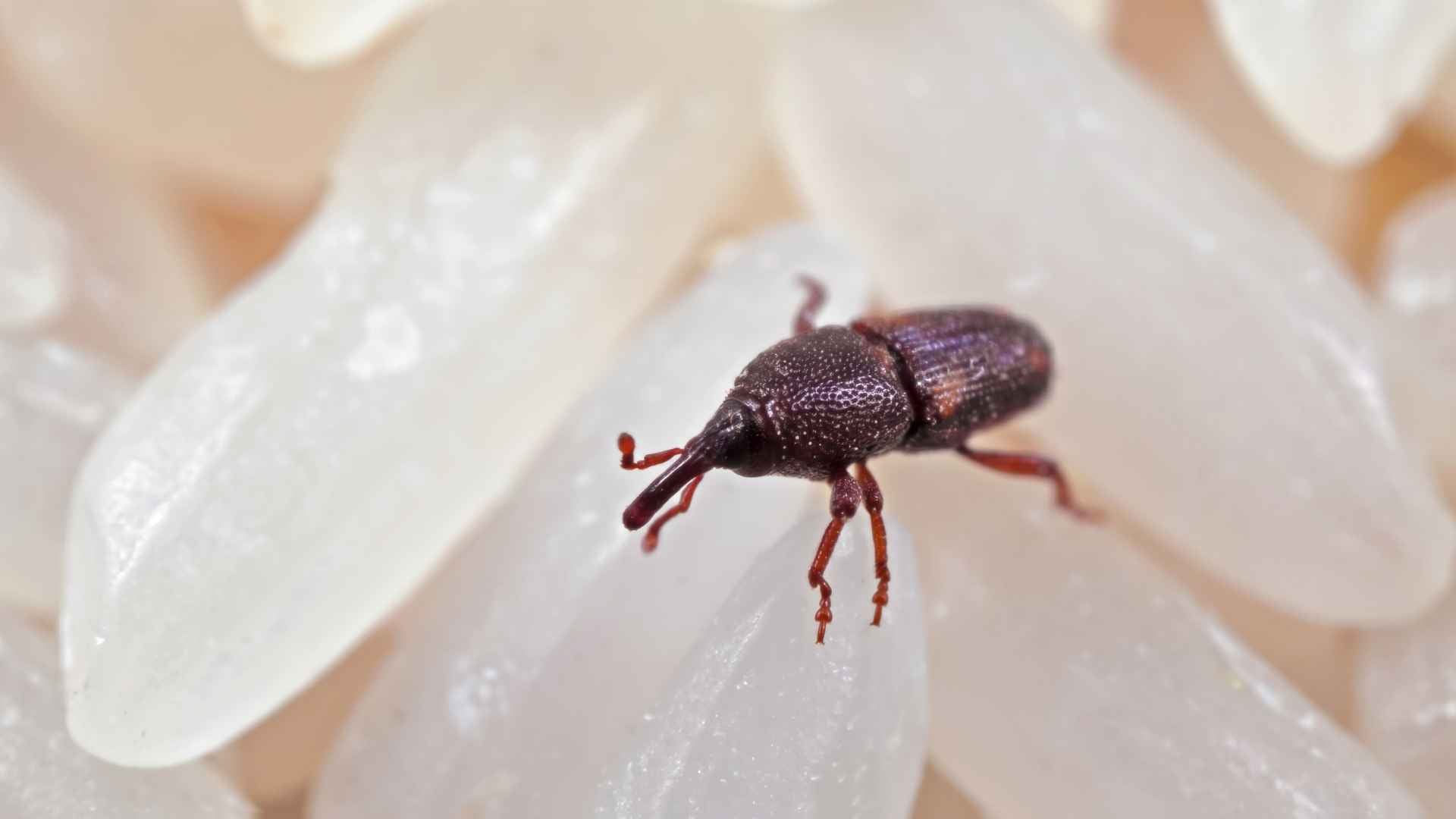
A few clues give away a rice weevil infestation before it gets out of hand.
- Look for small reddish or dark beetles crawling near your pantry shelves.
- Fine powdery residue at the bottom of a rice or flour container.
- Grains that look chewed or hollowed out.
- Some people notice a faint musty smell coming from affected containers.
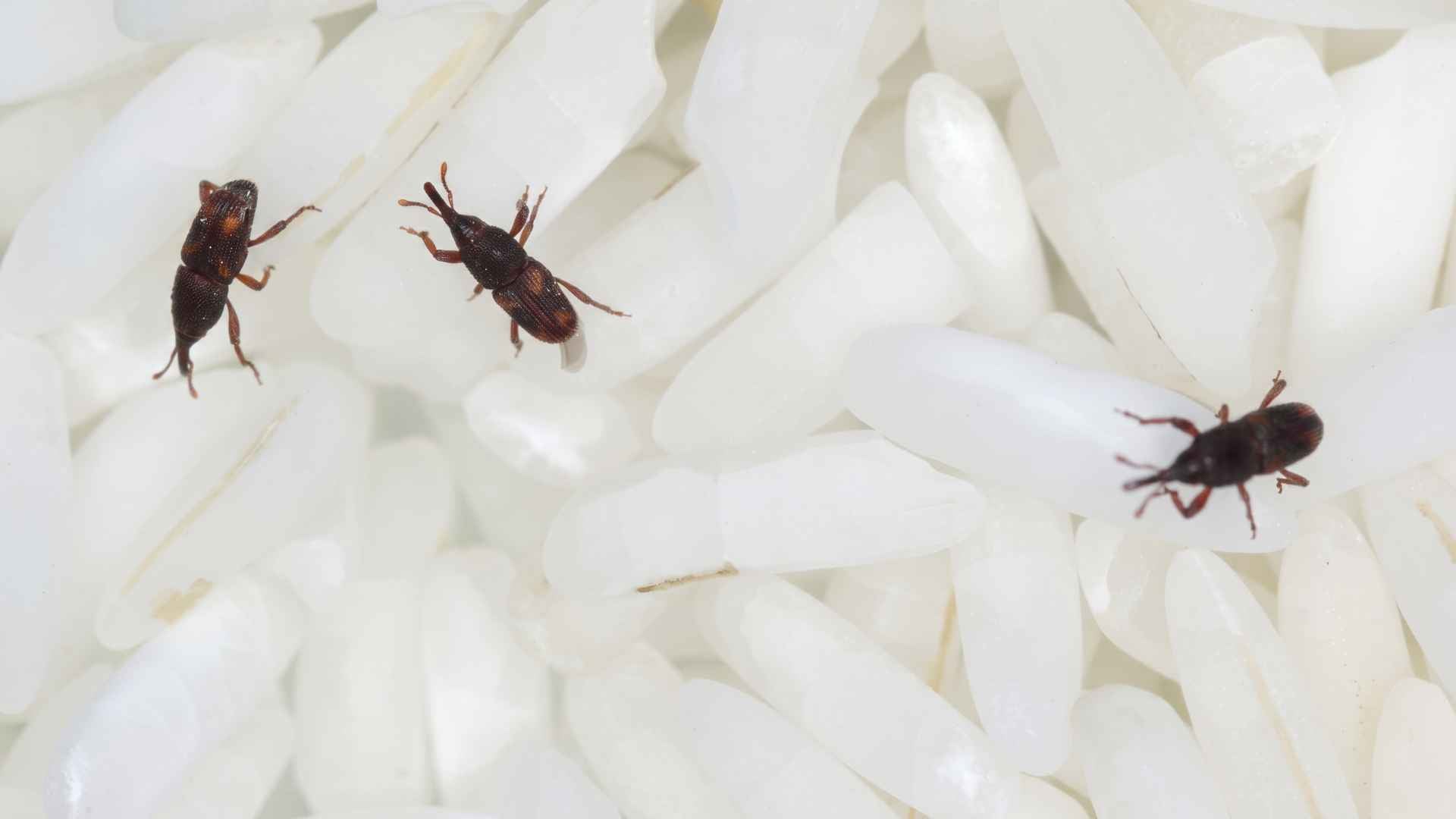
Weevils are small beetles, roughly 0.125 to 0.25 inches or 3 to 6 millimeters long, shaped like tiny pears or light bulbs, so they’re easy to miss unless you’re looking closely at your stored grains.
How Rice Weevils Enter Your Pantry
A female rice weevil can kick out up to 400 eggs in her lifetime. She does not just throw them around the bottom of the bag. She takes out a tiny piece of a single grain by drilling into it with her snout. She puts one little white egg right inside and seals the hole with a gelatinous secretion that blends right back into the grain’s surface.
This is exactly how rice weevils get into your home completely unnoticed. The outside of the grain looks totally regular. You will not find any holes or bugs walking around, so it ain’t going to raise any red flags while you grab groceries from the shelf.
Why You May Not Notice an Infestation Immediately
The egg, and later the larva, develop entirely inside the kernel, out of view and out of reach. You could store a bag of rice for a month before the first adult chews its way out and starts wandering across your shelf. By that point, dozens of other kernels in the same bag may already be carrying the next generation.
The egg hatches into a larva within about three days, and the larva feeds on the interior of the kernel for roughly two to three weeks, consuming it from the inside. It then pupates inside that same hollowed out shell, forming a sort of cocoon and undergoing metamorphosis.
Within a month, in warm conditions, the weevil eats through the seed coat and emerges as a fully formed adult with a hardened exoskeleton and wings. The adults mate soon after emerging, and the cycle starts over.
According to researchers at the University of Florida, the entire life cycle of rice weevils can be completed in as little as 26 to 32 days under warm conditions, and a female can produce 300 to 400 eggs during her four to five month lifespan.
What Foods Attract Rice Weevils The Most?
Rice weevils aren’t picky eaters once they’ve found their way into a kitchen. They’ll infest and feed on whole grains, and their preferred targets include:
- Rice
- Wheat
- Corn
- Whole grains
- Beans
- Cereals
- Seeds
- Birdseed
- Pet food
Unlike beetles that live and feed on the outside of food, rice weevils actually live and feed inside the food itself, which is exactly why bugs in rice can go undetected for so long. Anything dry and starchy sitting in your cabinet for an extended stretch is fair game, from pasta and flour to baking mixes tucked in the back of a shelf.
How to Get Rid of Rice Weevils in the House
Find the Infested Food First
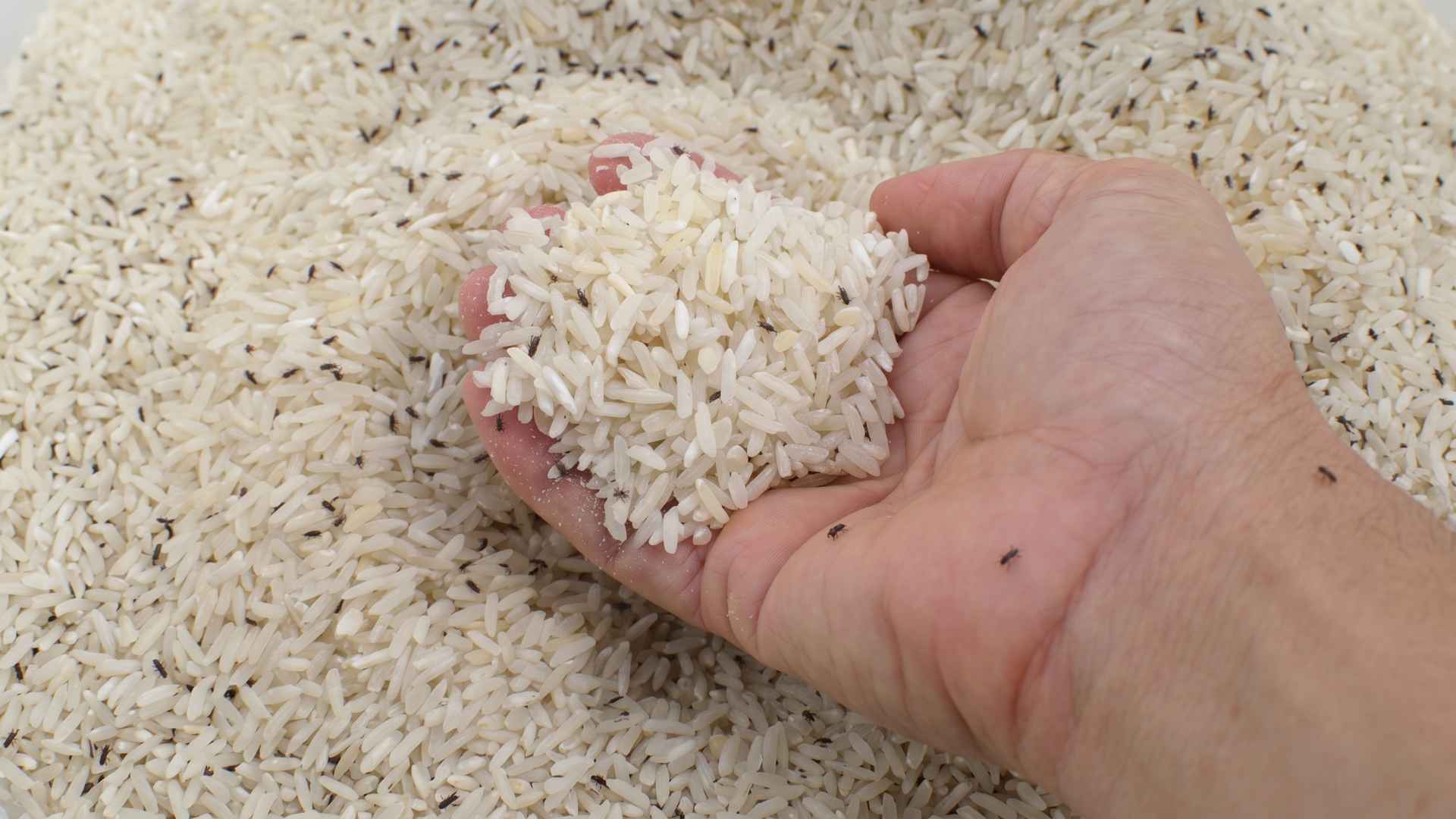
You must find the infested food first. Before you do anything else, check every single dry good in your pantry. Do not just look at the bag where you first spotted a problem. Rice weevils spread easily between containers that sit close together.
Because of this, a jar of pasta right next to an infested bag of rice is absolutely worth checking too. Take a close look at the packaging. You need to look out for small holes, fine dust, or actual beetles moving around inside.
Throw Away Clearly Infested Products
Once you’ve confirmed a product is infested, don’t try to save it. Throw the weevil infested rice, flour, or grain straight into a sealed outdoor trash bin, away from your other pantry weevils prevention efforts. Trying to sift out the bugs and keep the rest of the bag rarely works, since eggs and larvae you can’t see are almost certainly still inside other kernels.
Clean Your Pantry Regularly
Vacuum shelves and corners thoroughly, since spilled grains or flour dust can sustain a small population even after you’ve tossed the main source. If you’re also seeing small flying pantry pests, a pantry trap can help you determine whether moths are part of the problem.
The Black Flag Pantry Pest Trap is designed to attract and trap pantry moths and can be placed near cabinets or other food-storage areas. It isn’t specifically designed to lure rice weevils, though, so I’d treat it as a monitoring tool.

Store Food in Airtight Containers
You need to store food in airtight containers. This single habit does more than almost anything else to prevent rice weevils in dry food from spreading. Glass jars or hard plastic bins with tight sealing lids keep adult rice weevils from getting in. They also keep any hidden eggs from spreading to nearby items if they do hatch. It is one of the simplest forms of rice weevil prevention available. Best of all, it costs far less than replacing an entire pantry worth of infested grain later.
Freeze Grains You Won’t Use Soon
Freeze all grains, flours, baking mixes, and rice as you purchase them before you place them in long term storage, then transfer them to airtight containers once they’ve spent a few days in the freezer.
Extreme cold kills eggs and larvae that may already be present, since these pests are killed by extreme cold or heat exposure over a sustained period. A few days below freezing handles most hidden infestations before they ever get the chance to spread through your kitchen.
When To Call Professional
Sometimes a pantry cleanout and a few airtight containers aren’t enough, especially if the infestation has spread across multiple food storage areas or keeps returning after you’ve thrown out the source.
At that point, calling in a licensed pest control company makes sense. Orkin has decades of experience identifying and eliminating stored product pests like rice weevils, and their technicians can pinpoint sources you might miss on your own, including gaps in cabinetry or storage areas where residue has built up over time.
Frequently Asked Questions About Rice Weevils
How Long Do Weevils Live?
Adult rice weevils typically live between four and six months. A female spends much of that time laying eggs continuously inside stored grain.
What Do Rice Weevils Eat?
They feed on rice, wheat, corn, oats, beans, cereals, seeds, birdseed, and pet food. They also target other starchy pantry staples left in storage.
How common is it to find weevils in rice?
It is more common than most people assume. Eggs are often laid before the product ever reaches store shelves. Bulk grain shipments carry a real risk of contamination somewhere along the supply chain.
Why do I have rice weevils if my rice bag was unopened?
The bag may look unopened. However, tiny puncture holes from an adult weevil entering, or eggs laid before packaging, can easily escape your initial cursory inspection at the store.
Can rice weevils spread to other food?
Once adults emerge, they crawl and fly between containers. This happens especially with ones stored close together. A single infested bag can contaminate an entire pantry shelf if left unchecked.
Do rice weevils bite?
These pests do not poison the food they eat. They have no interest in biting people or pets. Their entire life cycle revolves around grain, not human skin.
Wrapping Up…
A rice weevil infestation feels alarming the first time you spot one crawling out of a cabinet, but the fix is manageable once you understand where these pests actually come from. Most of the time, they arrived as eggs long before you ever opened the bag. Regular pantry checks, airtight storage, and a freezer step for new grain purchases go a long way toward keeping your kitchen clear. If the problem keeps coming back despite your best efforts, a professional service like Orkin can track down what you’re missing and clear it out for good.