
Powderpost beetles cause massive structural issues, though they stay all the way out of sight. You might have found a weird pile of dust on a windowsill or a stair tread and have no idea how it got there. The reason could most likely be powderpost beetles.
These pests chew from the inside out, so they often spend months destroying wood before you see any proof on the surface. We are going to look at where powderpost beetles emerge from wood, how they get past your doors, and what treatments actually stop them before they move on to the next piece of wood.
Table of Contents
Key Takeaways
- Powderpost beetles lay eggs inside bare, unfinished wood, and the larvae feed inside the wood for months or years before emerging as adults
- Emergence holes are small, roughly 1 to 3 millimeters wide, about the size of a pencil tip, with fine powdery frass around or beneath them
- Hardwood floors, furniture, and structural framing lumber are the most common targets, especially older or untreated wood
- Wood moisture between 13 and 30 percent supports larval development, while wood under 10 percent moisture slows growth significantly
- Sealing, finishing, and controlling humidity are the most reliable prevention steps for wood already in the home
- A spreading or active infestation across multiple wood surfaces usually calls for professional treatment
What Are Powderpost Beetles?
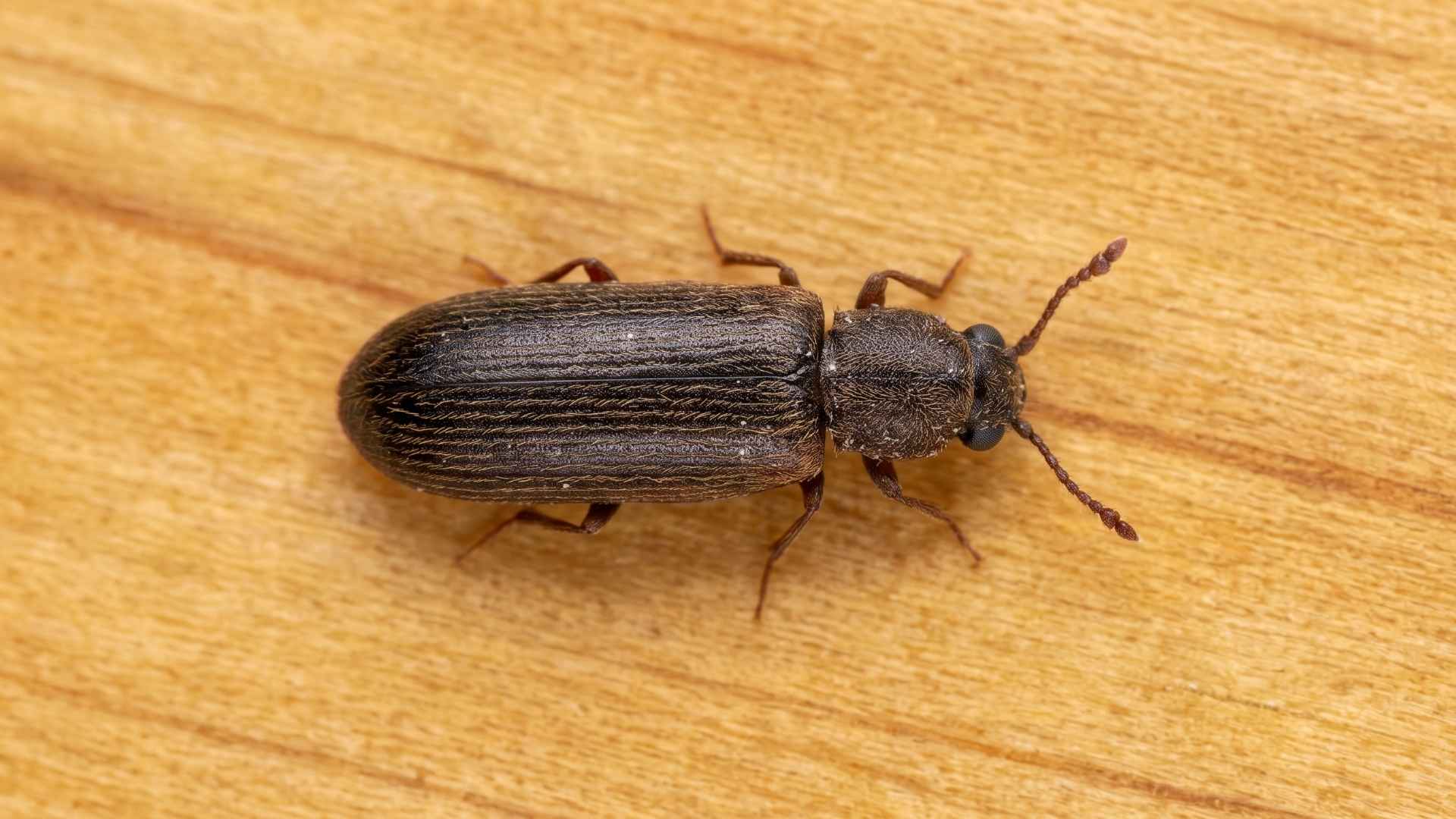
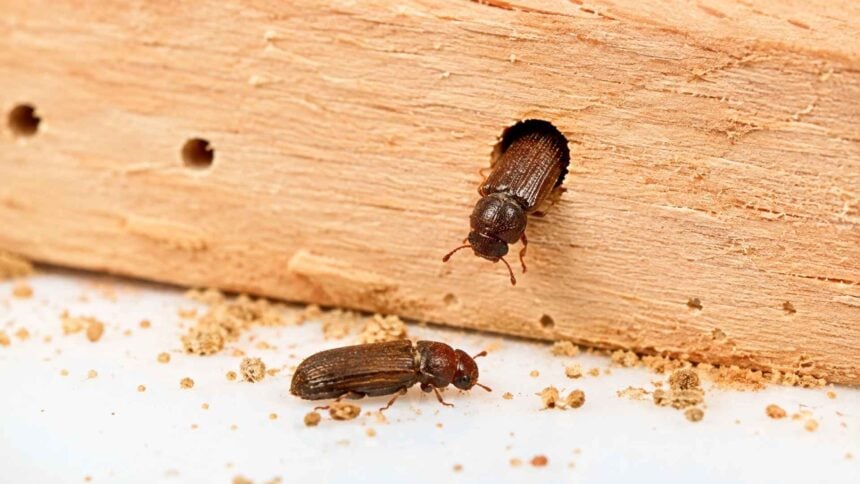
Powderpost beetles belong to a category of wood-boring insects that feed on the sapwood of hardwood trees. They heavily target oak, ash, hickory, and walnut. The mature bugs reach a length of 3 to 6 millimeters. They have a cylindrical torso, short antennae, and two sets of wings.
Powderpost beetles are often confused with termites because both species target dry wood. However, their habits differ completely. Termites build hidden highways inside the beams and rarely break the surface. These beetles chew their way out of the timber once they grow up. That exit process leaves tiny circular holes and fine wood dust.
How to Identify Powderpost Beetles
You cannot rely on spotting the actual beetle since the adults are tiny and vanish quickly after they break out of the timber.
A cluster of tiny exit holes on the surface of wood is usually the first visible sign. These entry and exit marks typically bunch together. A fine powder called frass looks like baking flour and pools directly beneath the openings.
These indicators are the absolute best proof of an active powderpost beetle infestation. The damage pops up on furniture, hardwood floors, cabinets, trim, and structural framing. You can test the wood by tapping on the surface. If fine dust tumbles out or the beam sounds hollow, you need to take action straight away.
Where Do Powderpost Beetles Usually Emerge From Wood?
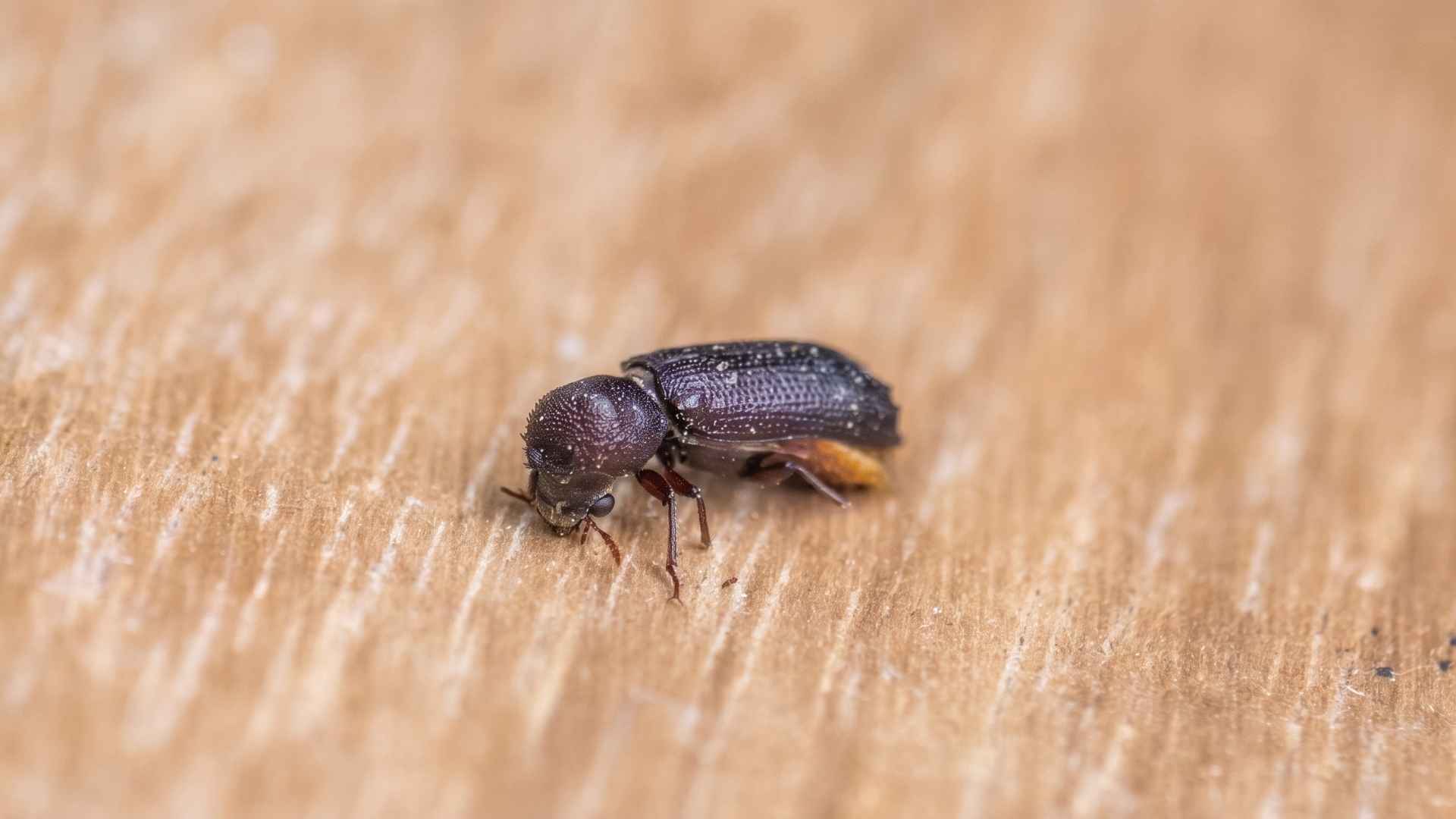
Hardwood Floors and Flooring Boards
Hardwood flooring is one of the most common places homeowners discover an active infestation, largely because older floors made from ash, oak, or hickory offer exactly the kind of untreated sapwood these beetles prefer.
Emergence holes tend to show up along seams, under rugs, or near baseboards where the wood was never sealed properly during installation.
Furniture and Wooden Cabinets
Older, untreated wood furniture is particularly vulnerable to powderpost beetle attack, especially antique pieces or furniture built from raw hardwood without a protective finish.
Powderpost beetles in furniture often go unnoticed for a long stretch since pieces sit in one place for years, giving larvae plenty of time to develop undisturbed inside table legs, drawer bottoms, and chair frames.
Beams, Joists, Trim and Other Structural Wood
Structural lumber, including exposed beams, floor joists, and wood trim, gives these beetles a stable, undisturbed environment to develop in.
This is where powderpost beetle damage becomes most serious, since compromised structural wood affects the integrity of a home rather than just its appearance.
Stored lumber that sat in a warehouse or yard before construction is a common entry point for the original infestation.
Paneling, Plywood and Bamboo
Decorative paneling, plywood, and even bamboo products aren’t immune either. Powderpost beetles in hardwood paneling often go undetected for a long time since these surfaces are rarely inspected closely, and damage can spread behind walls or under trim before anyone notices the telltale holes.
How Do Powderpost Beetles Get Inside the Wood?
The cycle starts with a female beetle laying eggs directly into the pores and vessels of bare wood. She usually seeks out surfaces without paint, varnish, or sealant to block her access.
She’ll lay anywhere from 10 to 50 eggs and tuck them into tiny pores and vessels on the wood’s surface where they’re nearly impossible to spot. Once the eggs hatch, the larvae tunnel deep into the wood and begin feeding, and this stage is where the real structural damage happens.
Larval development depends heavily on moisture. Wood with 13 to 30 percent moisture content supports strong development. On the other side, wood under 10 percent moisture significantly slows the larvae down, and in some cases they die off even without any intervention.
After feeding for months or sometimes years, the larva pupates inside the wood, then emerges as an adult beetle ready to mate and kick off the cycle again in a new piece of wood nearby.
What Do Powderpost Beetle Emergence Holes Look Like?
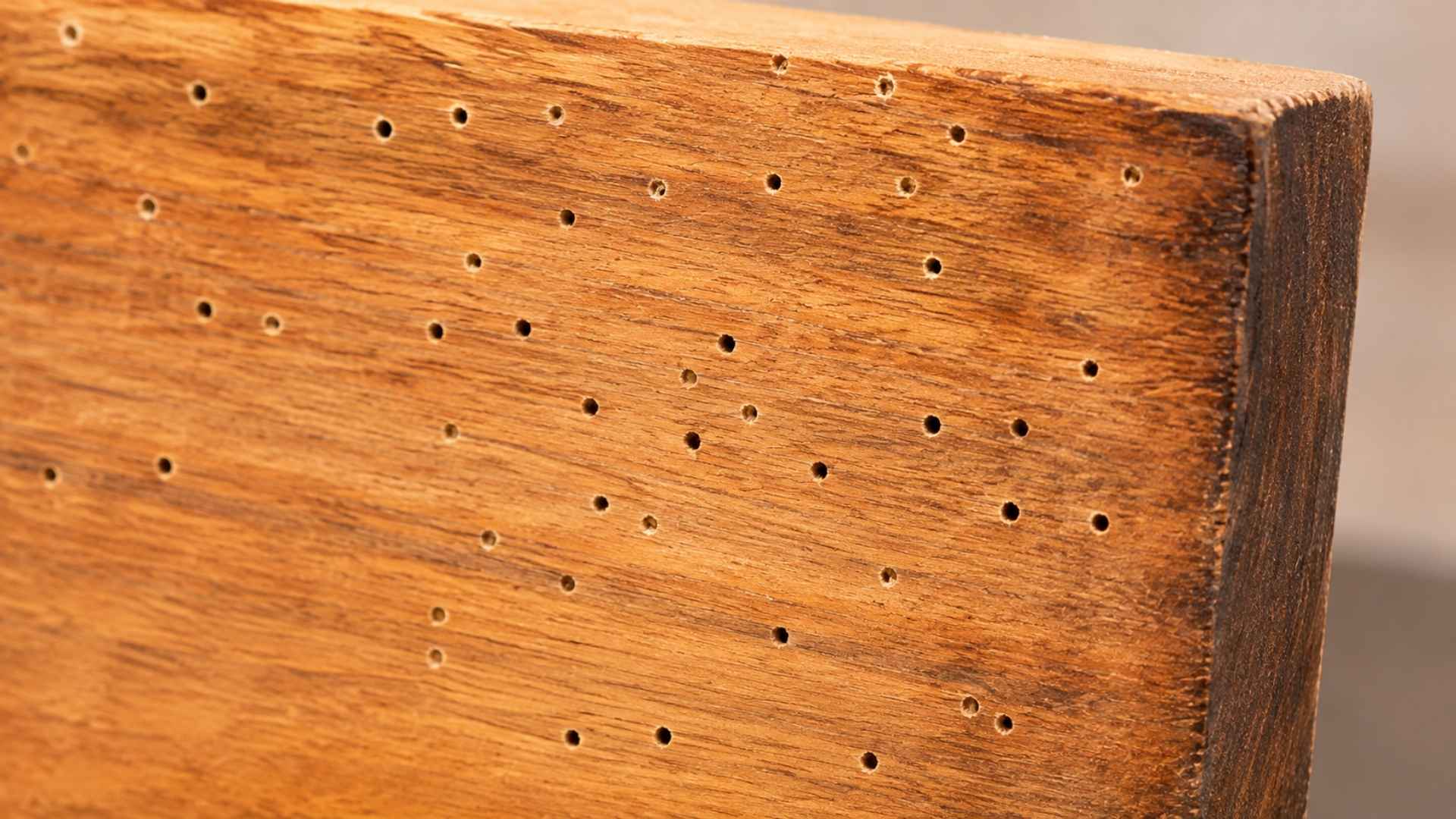
Powderpost beetle emergence holes are small and round, typically 1 to 3 millimeters in diameter, roughly the size of a pencil tip. They are incredibly easy to overlook on darker timber or heavy wood grain. That camouflage helps the powderpost beetles colony stay hidden for a pretty long time.
Fresh holes usually have fine, light colored frass in or around them, while older holes tend to look darker and cleaner since the dust has settled or been cleaned away over time.
A cluster of these holes in one area is a strong indicator that an infestation is active, and if so, how it should be managed depends heavily on how widespread the damage already is.
How to Prevent Powderpost Beetles from Invading
Lower Wood Moisture
Since larvae need moisture between 13 and 30 percent to develop, cutting that moisture down is one of the most effective long term defenses. Improve ventilation in damp crawl spaces and basements, fix leaks promptly, and use a dehumidifier in areas prone to humidity buildup.
Seal and Finish Exposed Wood
Bare, unfinished wood is exactly what powderpost beetles look for when laying eggs. Painting, varnishing, or sealing exposed wood surfaces, including the undersides of furniture and the backs of cabinets, closes off the entry points females rely on.
Clear Out Heavily Infested Wood
When wood damage is extensive, removing the infested wood entirely is often more practical than trying to treat it in place. This is especially true for furniture or trim pieces where the structural integrity has already been compromised.
Treat Bare Wood With Borates

Borate based wood treatments penetrate wood to kill the larvae dwelling inside, and they work well as a preventive layer on new or replacement lumber before installation. The treatments are especially useful for stored lumber that sat in a yard or warehouse before use, since that’s a common point where the original infestation begins.

Consider Professional Treatment for Serious Infestations
Once powderpost beetle infestation spreads across multiple pieces of wood or reaches structural framing, professional treatment becomes the safer route. Orkin has extensive experience identifying active powderpost beetle infestations and applying targeted treatments, including heat treatment methods that raise wood temperature to roughly 125 to 140 degrees Fahrenheit for a period of hours, sufficient to kill all life stages of the beetle.
Temperatures used for powderpost beetles run similar to those used against bed bugs, generally 120 to 135 degrees, though exposure times often need to run longer, sometimes up to 24 hours depending on wood thickness.
A licensed inspection also matters for another reason. Powderpost beetle damage is a reportable wood destroying issue in many states and can affect property resale value for the most part. Turns out getting an accurate assessment protects more than just the wood itself.
Frequently Asked Questions (FAQs)
What time of year do powderpost beetles come out?
The adults usually emerge during spring and early summer. However, heated indoor spaces keep temperatures steady, so home infestations can show activity during any season.
What are the signs that powderpost beetles are present?
Tiny circular exit points, fine wood dust pooling below the openings, and a hollow feedback when you knock on the timber are the top clues.
Are powderpost beetles hard to get rid of?
You can handle a small, isolated issue with borate sprays and a dehumidifier. A massive structural crisis is much tougher to fix on your own. The larvae eat deep inside the core where you cannot see them, so you will likely need a professional crew.
Where do powderpost beetles come from?
Most outbreaks start with timber that already housed eggs or larvae. The wood gets infested at the sawmill or during storage long before the finished lumber or furniture ever enters your house.
Wrapping Up…
Powderpost beetles destroy timber in absolute silence. The wood itself always reveals the truth long before you see the actual culprit. Small holes, fine frass, and hollow sounding wood are critical warnings. You must take these signs seriously when they appear in vintage hardwood floors, antique furniture, or structural joists. Spotting a powderpost beetle infestation early prevents the bugs from migrating to your trim, panels, and cabinetry. If you notice fresh damage in multiple rooms, a formal inspection from an expert team like Orkin is the safest path. It tells you exactly how far the colony spread and ensures you eliminate the threat permanently.