
If you’ve found yourself dealing with winged ants in house spaces recently, you’re far from alone. This is one of the most common seasonal pest questions homeowners search for every spring and summer, and there’s a very specific biological reason behind it. Winged ants in house sightings are not random.
They follow a predictable pattern tied to colony growth, weather conditions, and the reproductive cycle of the ant species living somewhere nearby, sometimes closer than you’d like to think. We’ll breaks down exactly why these swarms happen, how to tell them apart from termites, and what actually works to get rid of them for good.
Table of Contents
What Are Winged Ants?
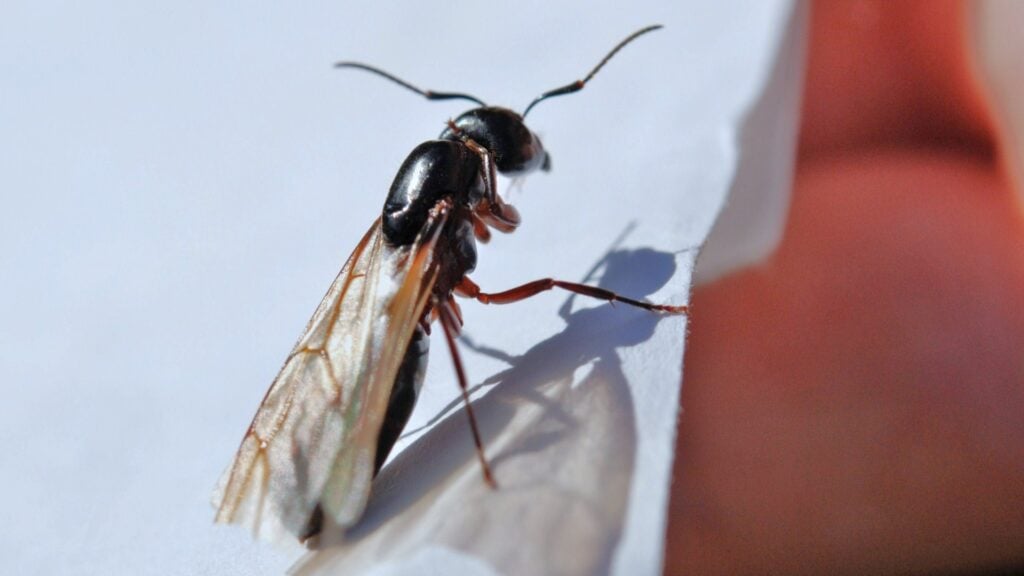
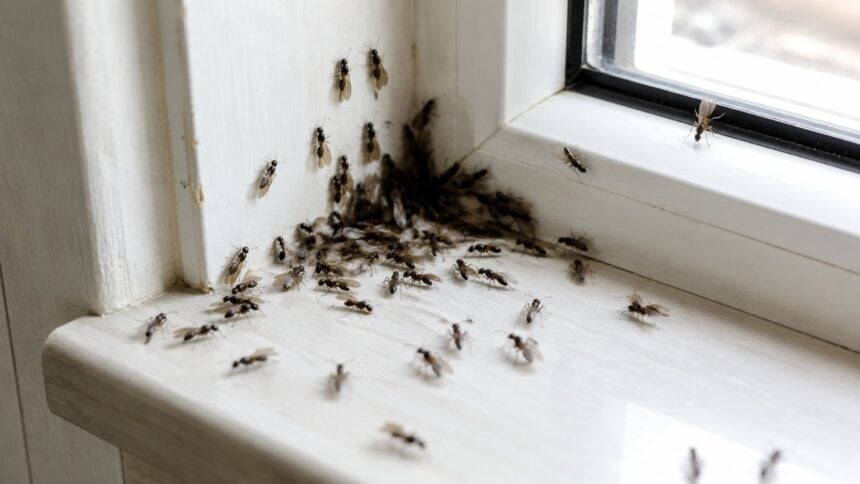
Winged ants, sometimes called alates or swarmers, are the reproductive members of an ant colony. Every mature colony eventually produces a batch of males and females built specifically to fly off, mate, and start new colonies elsewhere.
Once that mating flight, known as a nuptial flight, is finished, the males die and the newly mated queens chew or rub off their own wings before searching for a nesting site. Seeing winged ants in house spaces almost always means a colony nearby, sometimes inside your walls, has reached the age and size needed to reproduce.
Why Are Winged Ants Suddenly Appearing in Your House?
A Hidden Ant Colony Is Nearby
The most common reason for winged ants in house sightings is straightforward. A colony has matured somewhere close by, whether that’s in your yard, under a porch, or inside the structure itself, and it’s now sending out its next generation. Seeing them indoors doesn’t always mean the nest is inside your walls, but it’s a strong enough signal that it’s worth taking seriously.
Seasonal Swarming During Warm, Humid Weather
Swarming isn’t random. Most species wait for specific weather, warm temperatures, high humidity, and calm wind, before sending swarmers out. That’s part of why activity seems to spike out of nowhere after a rainy stretch followed by a hot, still afternoon. This is often called swarm season, and it can run for weeks rather than a single afternoon.
Indoor Nesting in Walls or Wood
Some species, particularly carpenter ants, build satellite nests directly inside wood framing, wall voids, or damp support beams. When that happens, the flying ants in house locations aren’t wandering in from outside at all. They’re emerging from a nest that’s already been living rent free inside your home for years.
Attracted to Lights at Night
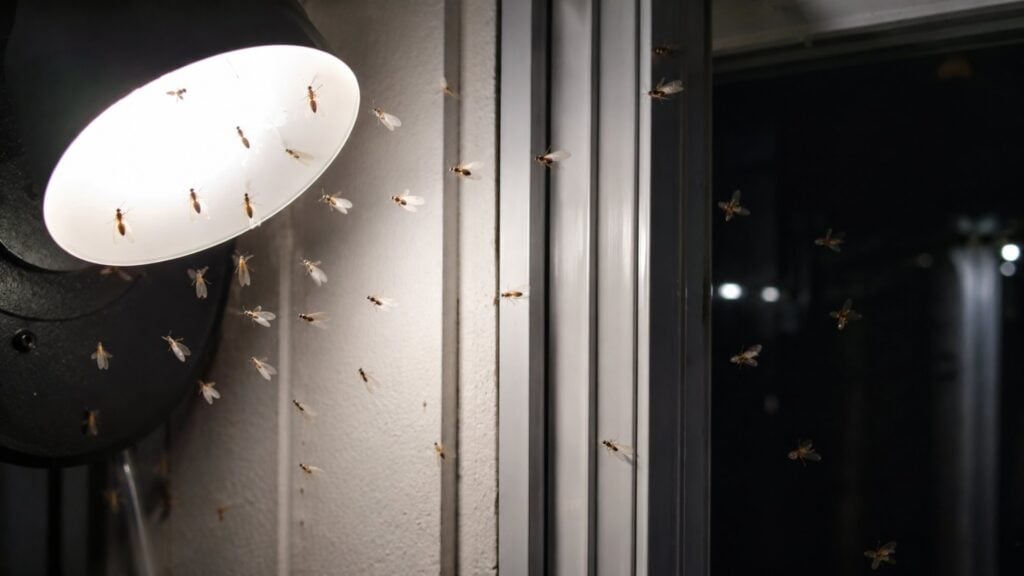
Many winged ants are drawn toward light sources the same way moths are. A porch light left on, a bright kitchen window, or even a phone screen in a dark room can pull swarmers toward your house and then straight through any gap they can find.
Moisture Problems Around the Home
Damp wood is a magnet for several wood nesting ant species. Leaky pipes, poor drainage, a slow roof leak, or a damp crawl space all create the soft, moisture softened wood these ants prefer for building satellite nests close to a steady food and water source.
Easy Entry Through Cracks and Gaps
Even a healthy, well built home has small gaps, around utility lines, under door sweeps, along window frames, that are more than wide enough for a winged ant to squeeze through. Once inside, they don’t need much space to establish a foothold.
Winged Ants vs Termites: How to Tell the Difference
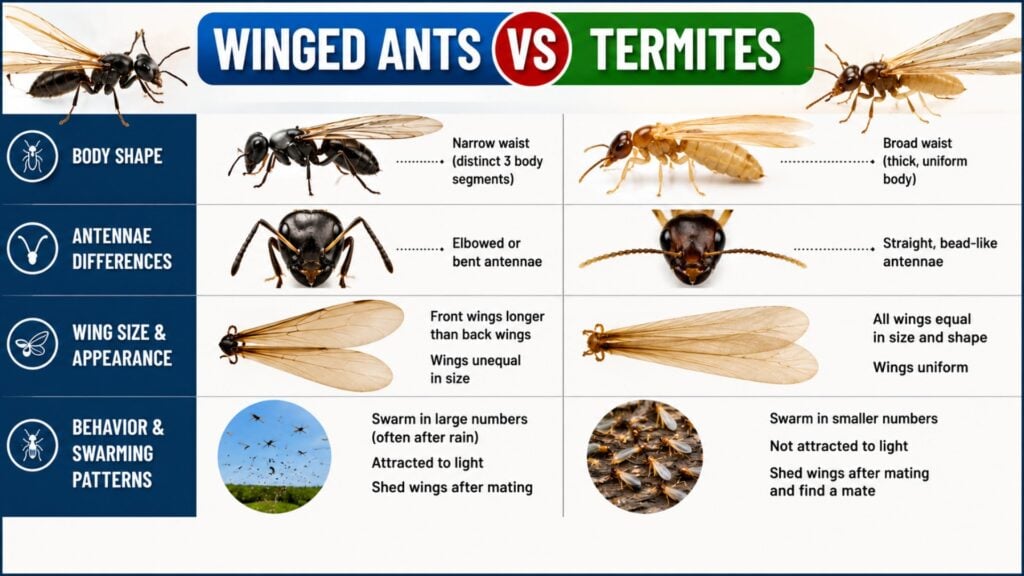
Confusing a termite vs flying ant situation is one of the most expensive mistakes a homeowner can make, since the treatment approach for each is completely different.
Body Shape
Ants have a narrow, pinched waist between their thorax and abdomen, giving them a distinct hourglass silhouette. Termites have a broad waist with no real pinch at all, so their body reads as one continuous shape from head to tail.
Antennae Differences
Ant antennae are bent, almost elbowed, partway along their length. Termite antennae are straight, running in a gentle, beadlike line without any sharp angle.
Wing Size and Appearance
Ant wings come in two different sizes, with the front pair noticeably longer than the back pair. Termite wings are the opposite story, both pairs are equal in length and shape, and they extend well past the body.
Behavior and Swarming Patterns
Ants tend to swarm in shorter, more localized bursts and often return activity to normal within a day or two. Termite swarms, particularly subterranean species, can be a warning sign of an established colony that’s already been feeding on structural wood for years, since a mature termite colony typically needs more than five years to grow large enough to cause serious damage.
Where Do Winged Ants Usually Hide?
- Inside Wall Voids
- Around Window Frames and Doors
- Damp Basements and Crawl Spaces
- Attics and Roof Spaces
- Under Floors and Carpets
- Rotten or Moist Wood
Any one of these spots offers what a nesting queen wants most, darkness, stability, and a moisture source close by. An ant nest in house framing rarely announces itself until the swarmers show up.
Signs You May Have an Ant Infestation
- Repeated Sightings of Winged Ants
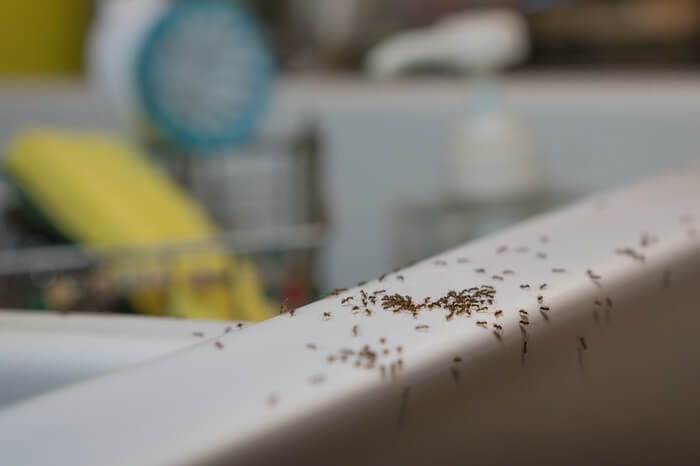
- Worker Ant Trails
- Small Piles of Wings
- Sawdust Around Wooden Structures
- Rustling Sounds in Walls (Carpenter Ants)
If any of these show up more than once, it’s rarely a coincidence. A single stray ant is background noise. A pattern, especially wings scattered near a windowsill or faint rustling inside a wall at night, points to an active winged ant swarm cycle already underway somewhere close.
How to Get Rid of Winged Ants in Your House
Identify the Ant Species
Before doing anything else, confirm exactly what species you’re dealing with, since treatment approaches genuinely differ between carpenter ants, odorous house ants, pavement ants, and others. Misidentifying winged ants in house situations as a minor nuisance rather than a carpenter ant colony actively damaging structural wood can lead to expensive repairs down the line.
Eliminate the Nest
Treating visible swarmers without addressing the actual nest only handles a small fraction of the problem. The colony producing those winged ants will simply send out another batch once conditions are right again, so locating and treating the nest itself is the step that actually resolves the issue long term.
Use Ant Baits, Granules Or Ant Spray
Baits work by allowing worker ants to carry poisoned food back to the colony, which is particularly effective against nests you can’t physically access.

Granules scattered around the home’s perimeter create a protective barrier, while targeted sprays handle visible trails and active swarms indoors.

Combining these approaches typically produces better results than relying on just one method alone.
Seal Entry Points
Caulking gaps around windows, doors, foundation cracks, and utility line penetrations closes off the easiest paths both worker ants and winged swarmers use to get inside. This single step meaningfully reduces future flying ants in house encounters even when a colony remains active somewhere nearby.
Fix Moisture Problems
Address leaking pipes, poor drainage, and any damp or rotting wood around your home. Since moisture is such a core requirement for several major ant species, particularly carpenters, removing that resource makes your home a far less appealing place for a colony to settle in the first place. If it feels too damp, a dehumidifier should balance things right out.

Keep Food Properly Stored
Sealed containers and prompt cleanup reduce the food sources that draw worker ants indoors in the first place. Less foraging activity near your home generally correlates with a lower chance of a colony establishing itself close enough to send swarmers your way.
Monitor for New Activity
After treatment, keep an eye on the areas where you previously saw activity. New winged ants appearing weeks or months later can indicate the original nest wasn’t fully eliminated, or that a second colony has established itself nearby.
The Science of the Swarm: What Triggers Flying Ant Production?
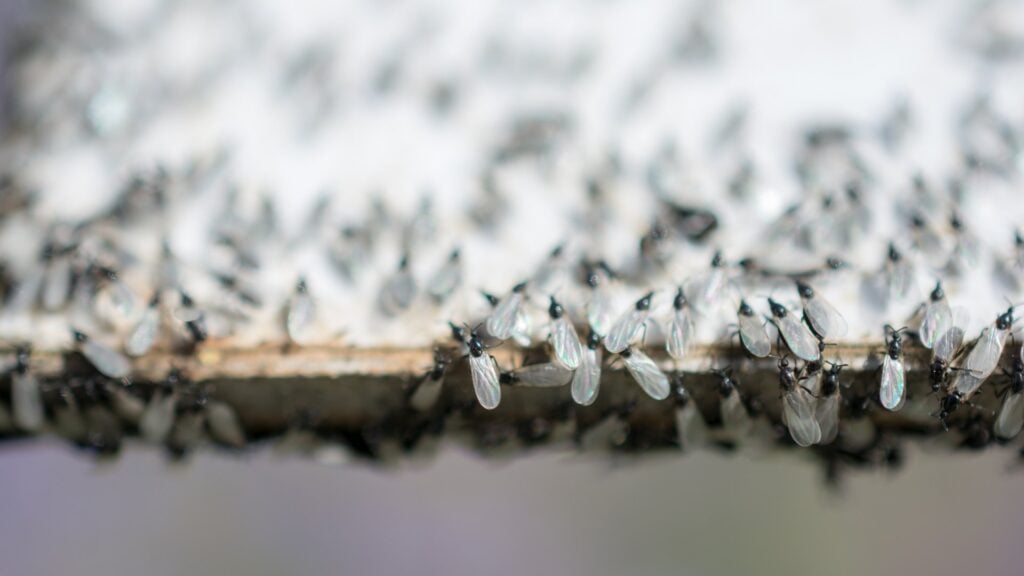
1. Colony Maturity
A colony has to reach a certain age and size before it can afford to produce reproductives at all. According to Ohio State University’s entomology extension, black carpenter ant colonies typically need three and a half to four years before they’re mature enough to produce swarmers, by which point the colony usually holds somewhere between two thousand and four thousand individuals.
2. The Pheromone Threshold
Queens release chemical signals that suppress the development of new reproductives while the colony is still small. Once the worker population crosses a certain threshold, that suppression weakens, clearing the way for the next generation of alates.
3. The Royal Menu
Larvae destined to become winged reproductives are fed a richer, more protein heavy diet than standard worker larvae. That extra nutrition is what allows them to develop wings and reproductive organs instead of becoming another sterile worker.
4. The Production of Males
Unlike female workers and future queens, male ants develop from unfertilized eggs. Their sole biological job is mating, and most die within hours of the nuptial flight, their part in the colony’s cycle abruptly interrupted almost as soon as it begins.
It’s worth noting that the swarm doesn’t always follow the tidy single day story people expect. A multi year citizen science project by the Royal Society of Biology tracking flying ants in the UK found winged ants present on as many as 96% of days across an entire summer season, not clustered into one dramatic afternoon. What looks like the sudden appearance of thousands of flying insects on one lucky or unlucky day is really the visible peak of a much longer swarm season, one that folk tradition eventually nicknamed Flying Ant Day even though the science says otherwise.
When Should You Call a Professional Pest Control Company?

If you’re finding winged ants in house locations repeatedly, hearing rustling in the walls, or you simply can’t locate the nest yourself, it’s time to bring in a professional. Trained technicians can identify the exact species, locate hidden nests with specialized tools, and apply treatments that aren’t available over the counter. Orkin, one of the most established names in pest control for ants and termites, offers full inspections and tailored treatment plans backed by decades of field experience. For a persistent or unclear infestation, a same week inspection from a company like Orkin can save you months of guessing and far more in potential structural repair costs down the road.
Frequently Asked Questions (FAQs)
Does seeing winged ants mean I have an infestation?
Not always immediately, but it’s a strong warning sign worth taking seriously. A single swarmer that wandered in through an open door might just be a stray. Repeated sightings over several days, especially indoors, usually point to an active colony nearby that’s mature enough to be reproducing, which warrants a closer inspection.
Are winged ants the same as termites?
No, though they’re commonly mistaken for each other. Winged ants have a pinched, three segment body, elbowed antennae, and front wings noticeably larger than their back wings. Termites have a straight, uniform body, straight antennae, and four wings that are equal in size and length.
What time of year do flying ants swarm?
Most species swarm during the warmer months, typically late spring through summer, particularly following a stretch of warm, humid weather or right after rainfall. Timing can vary somewhat by species and region, but the underlying trigger, favorable temperature and humidity, remains fairly consistent across most ant species.
Our Verdict
Winged ants showing up inside your home is usually pointing to a mature colony that’s finally big enough to reproduce, whether that colony is tucked into your yard or already settled into a wall void. The good news is that winged ants in house situations are almost always solvable once you correctly identify the species, locate the nest, and treat the actual source instead of just the ants you can see. Catch it early, fix the moisture and entry points feeding the problem, and you’ll turn a startling evening discovery into a manageable, one time fix rather than a recurring one.