
Finding a surprise deposit somewhere other than the litter box is one of those things that immediately makes you question your relationship with your cat. Are they mad at you? Is this personal? It almost never is. There’s always a reason, and more often than not, it’s something you can actually fix once you figure out what you’re looking at.
Start with the vet, seriously
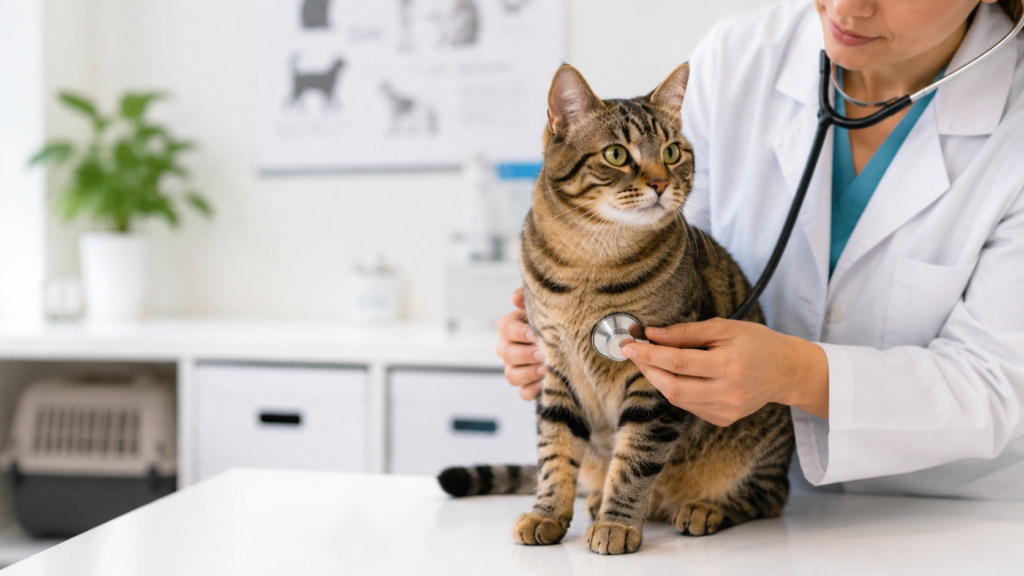
If this came out of nowhere — cat was totally fine, litter box habits were normal, and then one day things changed — that’s your cue to call the vet before you do anything else. A few medical issues that commonly cause this:
Constipation. When going hurts, cats start associating the litter box with that pain and look for somewhere that feels different. If you’re seeing tiny, hard stools showing up in weird places, that’s a clue.
Diarrhea or IBD. Some cats physically can’t make it to the box in time. If your cat has inflammatory bowel issues or food sensitivities, the urgency is just too much. It’s not defiance — they didn’t make it.
Arthritis. Easy to overlook with older cats. A box with high walls isn’t just inconvenient — it can genuinely hurt to climb into. A cat in joint pain will choose the easier option, which usually means the nearest rug.
Parasites. Tapeworms, roundworms, giardia — any of these can mess up their whole GI situation. A basic fecal test at the vet rules this out fast, and it’s worth doing whenever the behavior changes without an obvious reason.
So: sudden change, no obvious cause, see the vet first. Don’t spend a week rearranging litter boxes before you know what you’re dealing with.
Litter box issues — more complicated than they look
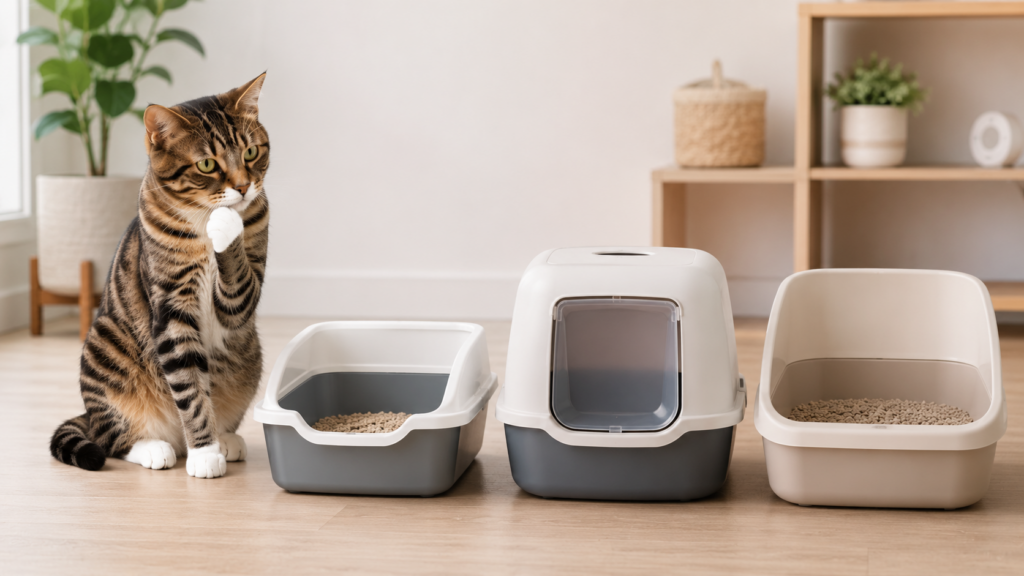
Assuming the vet gives you a clean bill of health, the litter box itself is usually the culprit. And this is where I think a lot of people underestimate how specific cats’ preferences actually are.
The cleanliness bar is higher than you think. Cats have a sense of smell that’s wildly more sensitive than ours. A box that smells fine to you might genuinely be unusable to them. Scoop at least once a day, full litter swap and box wash once a week. A cat going right next to the box instead of somewhere random is almost always telling you the box needs attention.
Not enough boxes. The rule of thumb is one per cat, plus one extra. In a multi-cat house, one cat can effectively claim the boxes and make the others too stressed to use them. You’d be surprised how often adding a second box in a different room fixes things immediately.
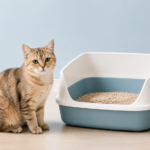
The box is too small. Most of what’s sold at pet stores is genuinely undersized for a full-grown cat. If your cat can’t turn around freely or is hanging off the edge, they’re going to find somewhere else to go.
The litter itself. Cats can be weirdly particular about this. Most prefer unscented, fine-grain clumping litter, around two to three inches deep. Scented litters are made for us, not for them — the smell often puts cats off. If you recently switched brands or types and the timing lines up with the problem, that’s probably your answer.
Where the box is located. Cats want privacy and a way out when they’re doing their thing. A box shoved next to a loud washing machine, or tucked in a corner where the cat can get trapped, is one they’ll avoid. Quiet, accessible, not a dead end.
Stress and behavioral stuff
Sometimes the box is totally fine and the issue is emotional. Cats don’t handle change well. A new baby, a new pet, moving to a new place, even rearranging furniture — any of it can trigger anxiety that shows up as litter box problems. It sounds dramatic, but it’s genuinely how they process stress.
In multi-cat homes, conflict between cats is a big one. A lower-ranking cat might avoid the litter box area entirely if another cat has claimed it as territory. More boxes, spread around the house, takes that pressure off.
There’s also the surface preference problem. If a cat has been going on carpet or soft bedding for a while, they can start to actually prefer that texture over litter. The longer it goes on, the harder it is to undo — which is why catching it early matters.
Actually fixing it
The fix depends entirely on the cause, which is why working through this methodically beats just randomly trying things.
For medical causes: follow whatever the vet recommends, and make the box more accessible while your cat recovers. A box cut down on one side, or a shallow cardboard tray, helps cats dealing with mobility issues.
For litter box issues: deep clean the box, add another one if you have multiple cats, move boxes to quieter spots, and switch to plain unscented clumping litter if you haven’t. Change one thing at a time so you know which fix actually worked.
For behavioral causes: the most important thing is cleaning up any spots outside the box with an enzyme cleaner — not a regular household cleaner. Cats can smell what we can’t, and they’ll return to spots they can still detect. Enzyme cleaners specifically break down the compounds in cat waste that their noses pick up.
Feliway plug-ins (synthetic calming pheromones) can take the edge off anxiety-related cases. They don’t solve anything on their own, but they can lower the baseline stress enough to help other changes stick.
The litter box that finally worked for my Persian
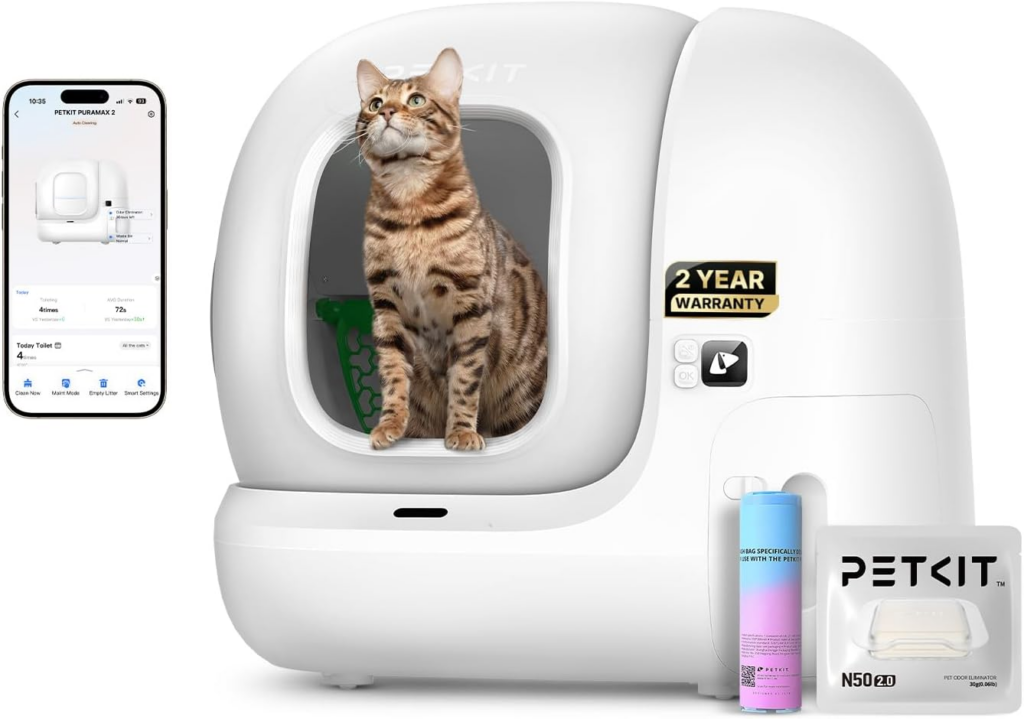
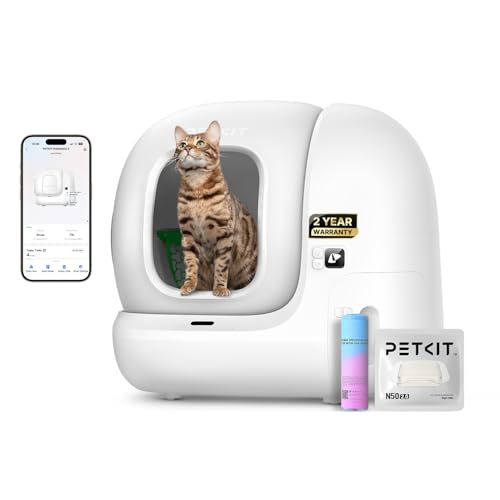
After going through all of this with my own cat, I eventually tried the PETKIT PuraMax 2 Automatic Self-Cleaning Litter Box, and I’ll be honest — it worked better than I expected.
My Persian had been inconsistent for a while, and after ruling out everything else, I figured the cleanliness between scooping sessions was probably the issue. She’s fussy. The PuraMax 2 handles cleaning automatically after each use, so the box is basically always fresh.
A few things I noticed after setting it up: it’s sturdier than it looks in photos, the self-cleaning mechanism is actually precise (it pulls out clumped waste without flinging clean litter everywhere), and the app is straightforward — WiFi connected on 2.4G without any drama. I’d been bracing myself for something that would take up half the corner of a room, but it’s surprisingly compact. Friends have walked past it without registering what it was.
The app tracks each cat individually and notifies you if one hasn’t used the box — genuinely useful if you have more than one cat or a cat that’s prone to urinary issues.
Most importantly: my Persian took to it immediately and has been consistent ever since. I can’t tell you exactly why it clicked for her — maybe the low entrance, maybe the cleaner environment, maybe some preference I’ll never fully understand. But the outside-box behavior stopped.
Key specs:
- Automatic self-cleaning with safety sensors
- App-connected via 2.4G WiFi
- Odor control system
- Anti-leakage design
- Low entrance for easier access
- Includes trash bags
- Suitable for cats up to about 15 lbs
Bottom line
Cats don’t do this to be difficult. There’s always a reason, and most of the time it’s either medical or fixable with some litter box changes. Start with a vet visit if anything changed suddenly. Then work through the box variables one by one. In most cases, once you figure out what the actual issue is, the behavior stops — and faster than you’d expect.