
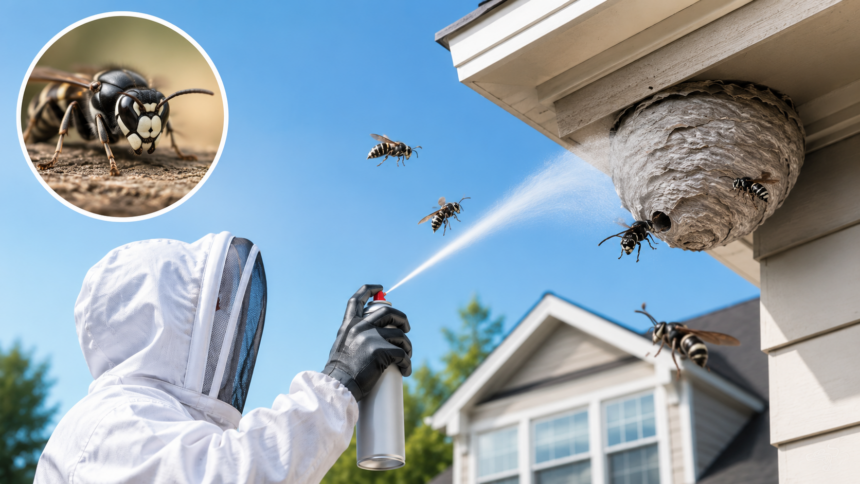
Bald-faced hornets are indeed not something you want to discover close to your home, and they are certainly not something to approach without a clear plan. These stinging insects are aggressive defenders of their nests and will sting repeatedly without provocation when they feel their colony is threatened.
Unlike honeybees, they do not lose their stinger after a single sting. Turns out, a single disturbed nest can produce dozens of stings in seconds. Nests should not be permitted to develop near a home, and when one appears, the response needs to be deliberate and appropriately cautious.
We faced this issue last summer, and based on our research and personal experience, we are here to help you how to get get rid of bald-faced hornets. Also, if the infestation worsens, you can hire Angi pest control services.
Table of Contents
How to Identify Bald-Faced Hornets
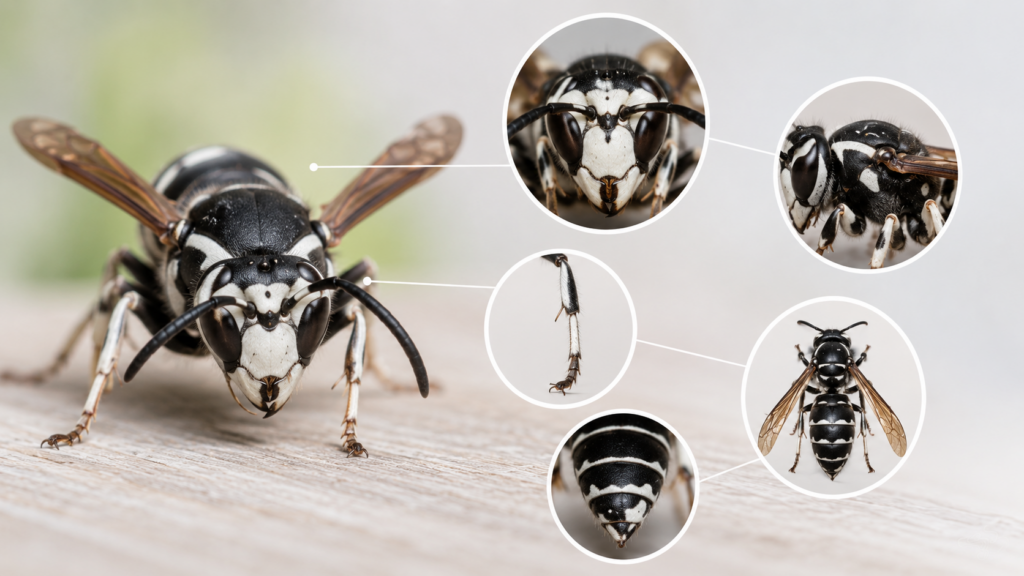
- Black body overall
- White facial markings
- White thorax markings
- 15 to 20mm in length
- Larger than yellow jackets
- Aerial paper nest
- Teardrop nest shape
- Grey papery exterior
- Found in trees or overhangs
- More closely related to yellow jackets than true hornets
Bald-faced hornets are taxonomically pretty closely related to yellow jackets than they are to true hornets. The white face markings against a black body are the clearest visual identifier at a distance, and the aerial paper nest they build distinguishes them from ground-nesting species. For your information, a single nest, especially during peak population, could easily hold around 700 workers. It sounds scary. Isn’t it?
How to Get Rid of Bald-Faced Hornets
Locate the Nest
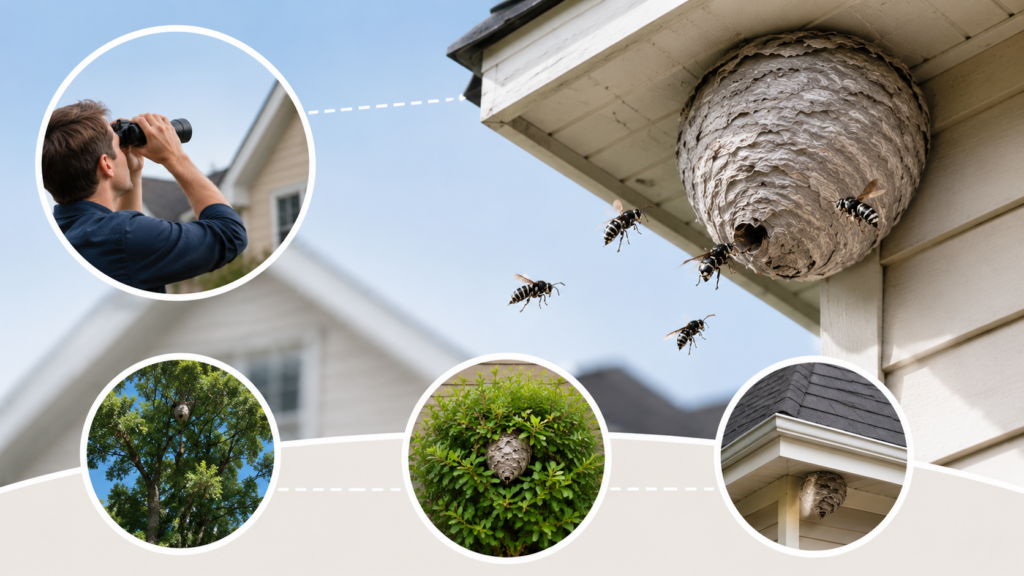
For safe hornet nest removal, you should kick things off by locating the nest. Bald-faced hornets usually build aerial nests made of paper in places like trees and shrubs, and most of the time under roof overhangs.
Keep a Safe Distance
Do not position yourself directly below the nest at any point during the process. The colony cycle begins in spring when the queen lays a single egg inside each cell, placing insects and nectar inside with the egg to feed the developing larvae.
Through summer, the worker population builds toward its peak of up to 700 individuals, and that population is most aggressively defensive from late July through October when the nest is at full size. Hornet control methods applied earlier in the season when the colony is smaller carry less risk than attempting hornet nest removal in peak late-summer conditions.
Use Approved Hornet Sprays
Commercial aerosol insecticides labeled specifically for hornets and stinging insects are the most reliable treatment tool for residential hornet nest removal.

Do not use a flashlight pointed directly at the nest during nighttime treatment, as the light draws workers toward it. A light positioned off to the side or covered with a red filter reduces that risk considerably.
These hornet control methods require patience. Retreat immediately after application and do not attempt to assess the results until the following morning from a safe distance.
Remove the Nest After Treatment
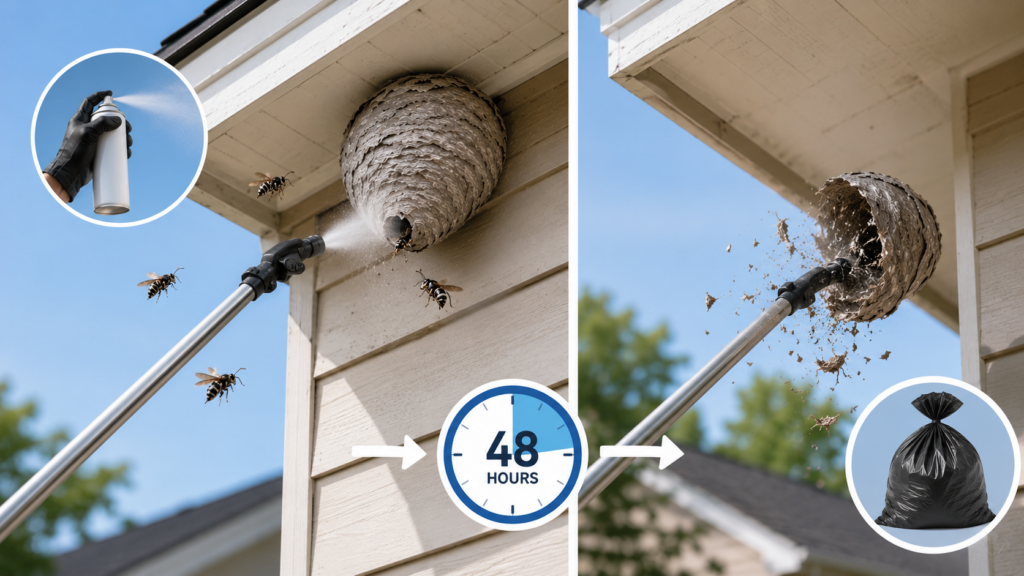
Hornet nest removal of the physical structure should wait at least 48 hours after the final treatment application to confirm that no active colony remains inside.
Once confirmed inactive, knock the nest down using a long tool rather than by hand. A broom handle or a similar long implement maintains the distance buffer during this step.
The paper material of the nest breaks apart relatively easily. Do not grab the nest with bare hands at any point even after treatment, as venom residue can remain on the nest surface.
When to Call a Professional
Hornet nest removal on a nest larger than a basketball, a nest positioned inside a wall void or structural space, or a nest located where safe standoff distance is not achievable should go to a licensed pest control professional.
Angi connects you with licensed pest control professionals in your area who handle hornet infestation situations regularly and bring the right protective equipment and treatment products for situations that carry genuine physical risk. Getting a professional quote through Angi takes minutes and removes the guesswork around whether a specific nest situation is safely manageable as a DIY project.
Frequently Asked Questions (FAQs)
Are bald-faced hornets dangerous?
Bald-faced hornets are among the more aggressive stinging insect species encountered in residential settings. They sting repeatedly without losing the stinger, and a disturbed colony will mobilize a large number of workers toward a perceived threat simultaneously.
Will bald-faced hornets return to the same nest?
Bald-faced hornets do not reuse old nests. A nest treated and cleared in one season will not be reoccupied the following spring. However, a new queen in the following season may select the same general area if conditions there are favorable.
What attracts bald-faced hornets?
Bald-faced hornets do prey upon other insects. Turns out, properties with high insect populations provide a reliable food source that attracts foraging workers. Adults consume liquids, primarily sugars like fruit juices and nectar, tho will bring back solid insect material to feed the developing larvae inside the nest.
Wrapping Up…
Bald-faced hornets earn their aggressive reputation, and any hornet nest removal effort needs to account for that from the planning stage through disposal. Locate the nest from a safe distance, treat at night with appropriate protective gear and a jet-spray insecticide, wait 48 hours before approaching for removal, and seal all nest material for disposal immediately. When the nest size, location, or your own allergy history makes the risk unacceptable for a DIY approach, a licensed professional is the right call rather than an afterthought.