
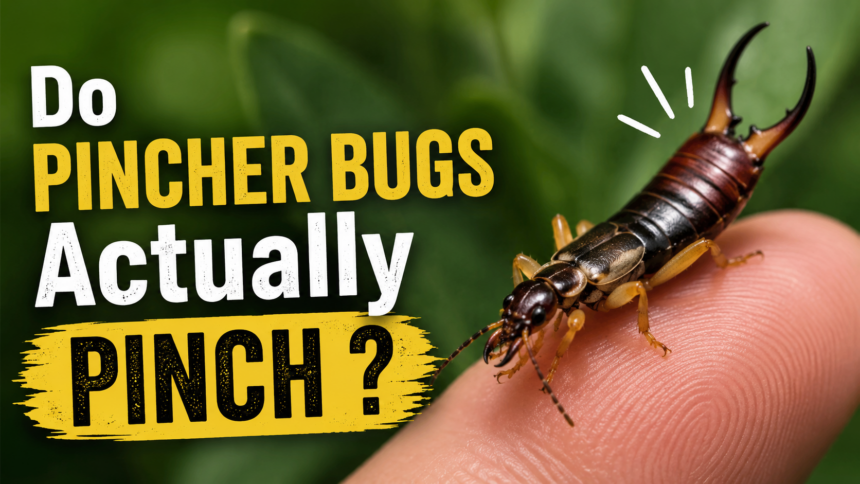
Technically speaking, most of you might have shown a crazy reaction after seeing a pincher bug up close. It’s normal, and it could definitely happen. They’ve got forceps-like appendages at the back end of the insect that no doubt are hard to look past. Though the question is, do pincher bugs actually pinch? How serious is it? Are they dangerous to your home? How concerned should you actually be? We are going to answer all of the most commonly asked questions about pincher bugs. Before going forward, you need to know that pincher bugs do bite.
Table of Contents
How Did Pincher Bugs Get Their Name?
More formally, pincher bugs are known as earwigs, and their name aside carries a folklore. It originates from the Old English words “ēare,” meaning ear, and “wicga,” meaning insect or, more literally, beetle. The name fed an old wives’ tale that these insects would crawl into a sleeping person’s ear and could bore into the brain, tho. In reality, it’s just a story and has no connection with reality from any angle.
It would be extremely rare for any insect to seek out a human ear as a destination. Earwigs, turns out, show no behavioral tendency toward doing so. The name stuck anyway, and so did the fear that came with it.
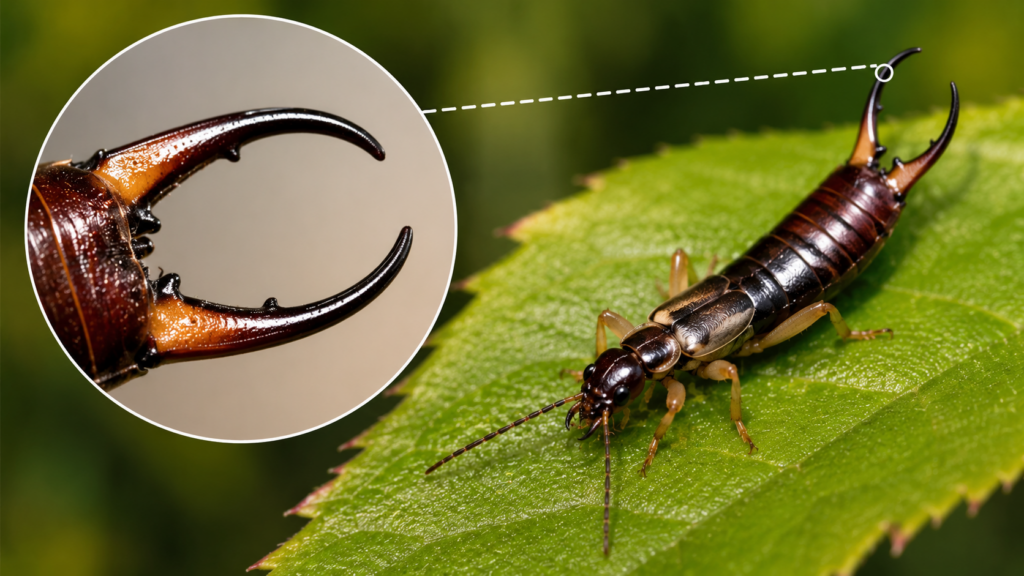
The pincers themselves, technically called forceps, sit at the abdomen’s end and are the feature that generates most of the anxiety around these insects. What they actually used for are defense, predation, and mating, not for attacking people unprovoked.
Are Pincher Bugs Dangerous to Your Home?
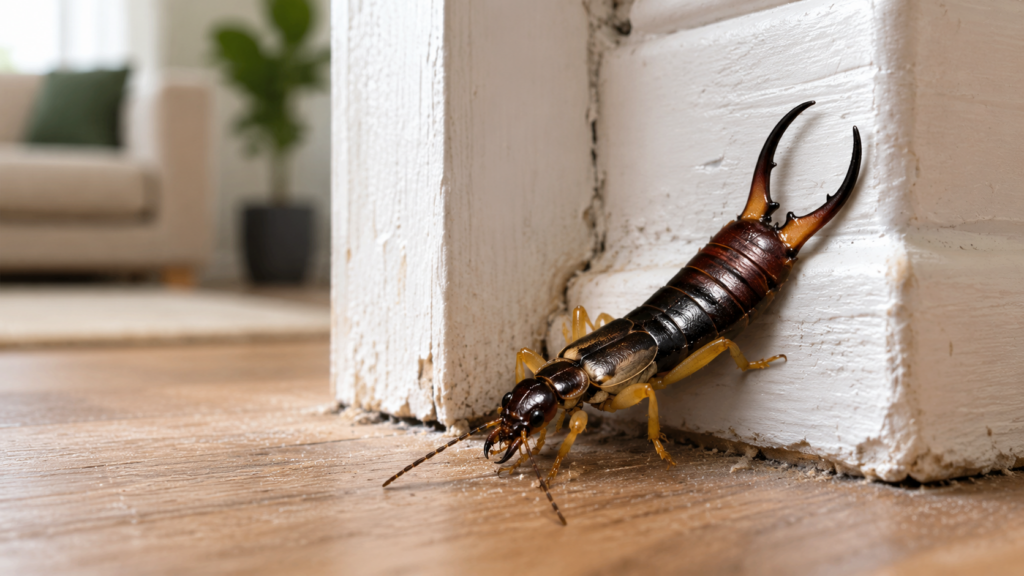
Pincher bugs are considered a household and garden pest in the United States, though. As invasive species go, they probably sit at the lower end of the concern scale. We have literally found that with research, neither do they chew through structural wood nor do they damage electrical systems. Alongside this, they haven’t been regarded as a cause of any diseases that could be or are nearly transmissible to humans.
However, the damage they could cause falls between your garden plants. In addition, they could be more of a nuisance presence than a destructive one inside your home.
What Can You Do When You See Pincher Bugs in Your Home?
You should have no worries that pincher bugs will attack you at first sight cause that wouldn’t gonna happen. They are not aggressive in the first place, especially toward humans.
If you find one inside your sweet home, the practical response we think could be to put it outside. What should warn you is spotting a cluster under bathroom fixtures or basement items cause that’s what indicates an infestation that should be treated before they fan out.
How to Identify Pincher Bugs: Their Anatomy
- Earwigs have a recognizable body structure built around a head, thorax, and abdomen, with six legs and two antennae extending from the front.
- The abdomen is elongated and segmented, and the pincers at its end are the most distinctive feature of the insect.
- Male pincers are curved and more pronounced.
- Female pincers are straighter and shorter.
- The insects also have wings that fold beneath short forewings, though they rarely use them in spite of having them.
- Body color runs from reddish-brown to dark brown across most common species.
- Adults typically measure between half an inch and one inch in length depending on the species and the individual.
What Do Pincher Bugs Eat?
Earwigs are omnivores with a diet that covers considerable ground. They consume pollens, lichens, certain plants, decaying organic matter, and smaller insects. In garden settings, they feed on aphids, mites, and other soft-bodied insects that damage plants, which is part of why they are sometimes considered beneficial in outdoor environments.
The same feeding behavior that makes them useful in the garden also leads them to damage seedlings, soft flower petals, and vegetable plants when their population grows large enough. Inside homes, they go after damp organic matter, soft food residue, and the kind of decomposing material that accumulates in poorly ventilated spaces.
Where Do Pincher Bugs Live?
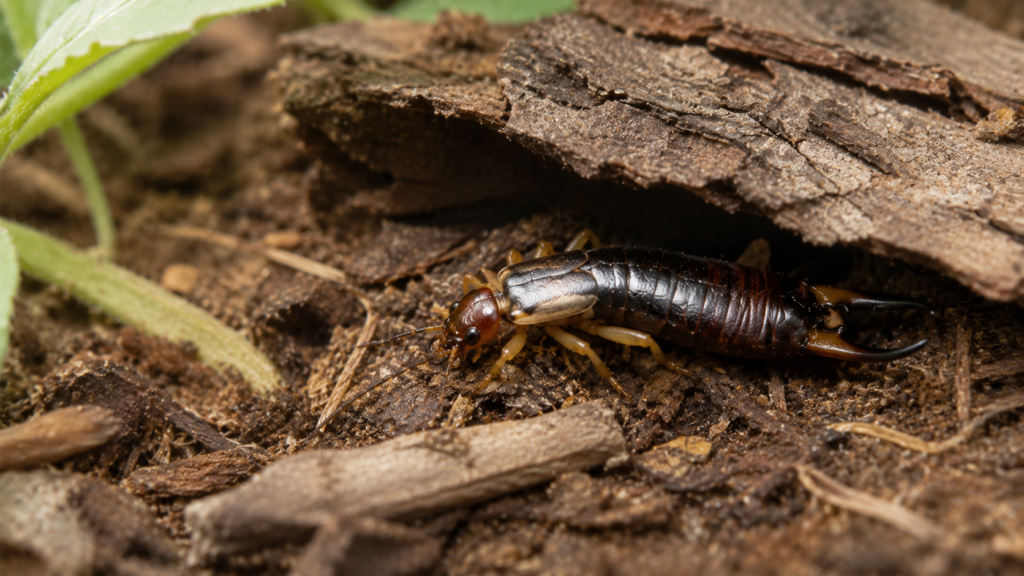
There are around 2,000 species of earwigs worldwide, found on every continent except Antarctica. They make up the insect Order Dermaptera and are characterized by their rarely used wings and the distinctive pincers that generate so much concern. In the United States, there are 10 native species, with several introduced species also established across different regions.
They live in damp, dark environments including leaf litter, soil, mulch, under stones, and inside rotting wood. Indoors, they concentrate in bathrooms, basements, crawl spaces, and anywhere moisture accumulates consistently. They move around on the ground rather than flying, which is why you tend to find them at floor level rather than on walls or ceilings.
How to Prevent a Pincher Bug Infestation
Eliminate Moisture and Harborage
Earwigs need damp conditions to survive, mostly and thereby running a dehumidifier could save you. What else you can do is fixing leak pipes inside the bathroom and pull mulch at least six inches back from the foundation perimeter. We also recommend you clear leaf litter, stacked wood, and organic debris from the immediate area around the structure to stay at the safe side.
Seal Entry Points
Gaps around door frames, window frames, pipe penetrations, and foundation cracks give earwigs direct access from the outdoor harborage zones into the structure. Work around the exterior perimeter with silicone caulk on any gap wider than a few millimeters.
When to Call a Professional
If interior sightings are consistent, concentrated in multiple rooms, and not responding to moisture reduction and exclusion work after two to three weeks, the infestation may have an established interior population that surface-level measures cannot fully address. Angi connects you with licensed pest control professionals in your area who handle earwig infestations with targeted perimeter treatments and structural assessments that go further than DIY approaches. Their network is vetted and reviewed, and the platform makes it simple to compare quotes from local operators who know the specific pest pressures in your region.
How Pincher Bugs Reproduce and What Their Life Cycle Looks Like
The reproductive behavior of earwigs is one of the more surprising aspects of the insect. Females lay eggs in soil or, most often, under debris and actively guard them through the incubation period. It could run several weeks, depending on the temperature.
After hatching, the young go through a series of nymphal stages. In some earwig species, the mother continues guarding the young after hatching.
The darker side of earwig reproduction involves a behavior called matriphagy, the eating of one’s mother, which is practiced by certain earwig species and a handful of other insects. Young hump earwigs prepare to leave the nest by turning the mother into their final meal.
From an evolutionary standpoint the logic holds: the mother has already fulfilled her reproductive role, and her body provides the nutrition that gives the next generation a strong start. Mom pays the ultimate price, but the next generation is fat and healthy. It is genuinely difficult to find earwigs endearing after reading that, but the behavior reflects a survival strategy rather than anything with moral weight.
Wrapping Up
Pincher bugs carry a reputation that runs well ahead of the actual threat they present. The pincers are real, and the pinch is possible for the most part. None of that translates into meaningful danger tho. Address the moisture conditions and entry points that bring them indoors, bring in professional support if the infestation goes beyond a certain level, and take comfort in the fact that the insect causing all this anxiety rarely causes anything worse than a momentary surprise.