
That scratching sound behind your bedroom wall at 2 am is not something you convince yourself out of. Rats in walls are a real problem, and they tend to get worse the longer you wait on them. These animals chew through electrical wiring, which creates a genuine fire risk, contaminate insulation with urine and droppings, and can establish a breeding population inside your wall cavities within weeks of first moving in.
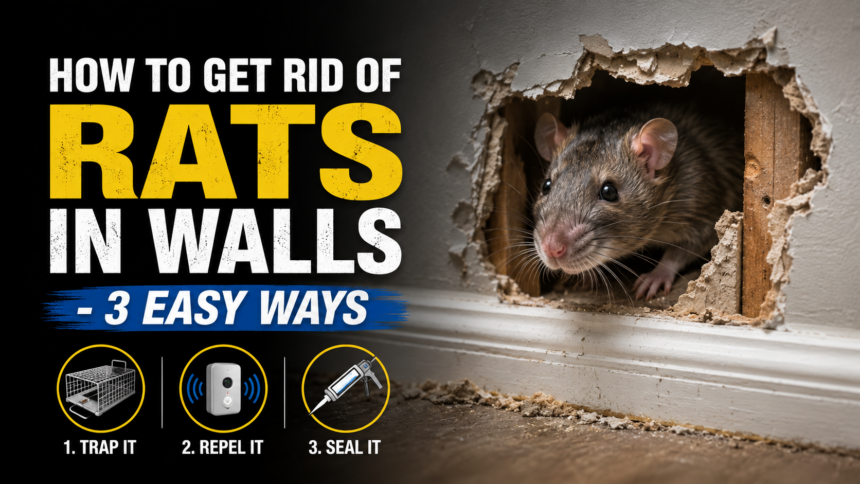
Knowing how to get rid of rats in walls requires more than setting a trap near a baseboard and hoping for the best. The process that actually produces permanent results has three distinct steps: accurate inspection to confirm location and entry points, targeted removal using the right methods in the right places, and thorough exclusion work that closes off every route back in. Skip any one of those steps and the problem returns. This guide walks through all three in sequence so you can deal with it properly the first time.
Table of Contents
Signs You Have Rats in Your Walls
The clearest early indicator is wall sounds at night, specifically scratching, scurrying, and occasional squeaking coming from inside wall cavities, ceiling spaces, or around the baseboards. Rats are most active between dusk and early morning, so the noise pattern tends to be loudest in the two to three hours after you turn off your lights.
Beyond sound, look for grease marks along the base of walls and around pipe penetrations where rat fur deposits a dark smear over repeated passes. Droppings signs are one of the most reliable confirmation tools: dark, capsule-shaped pellets around a quarter inch to three-quarters of an inch in length appearing near wall edges, inside cabinets, or around any gap in the building interior. A persistent musty or ammonia-forward odor in a room with no obvious source often indicates a rat nest nearby inside the wall structure.
Why Rats Choose to Live Inside Walls
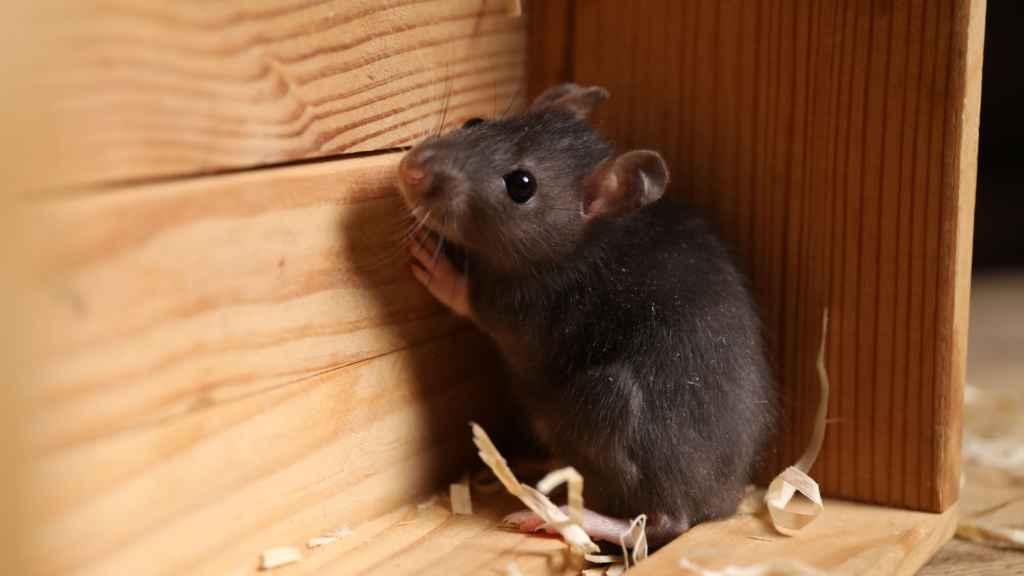
Wall cavities offer rats everything they look for in a nesting site. The space is warm, enclosed, and almost completely undisturbed by human activity. Insulation material gives them easy nesting material without any effort on their part. The internal pathways inside a wall connect to floor joists, ceiling cavities, and pipe chases that allow movement through a large portion of the building without ever coming into open space.
Access to food and water from kitchen areas or bathroom plumbing makes a wall nest genuinely self-sufficient for a rat population. The proximity to human food sources without direct exposure to human activity is essentially the ideal environment for a rat colony to grow. Once a pair establishes a nest inside a wall, the population can expand to dozens of animals within two to three months under favorable conditions.
The 3-Step Process to Eliminate Rats in Walls
Step 1: Inspection and Location
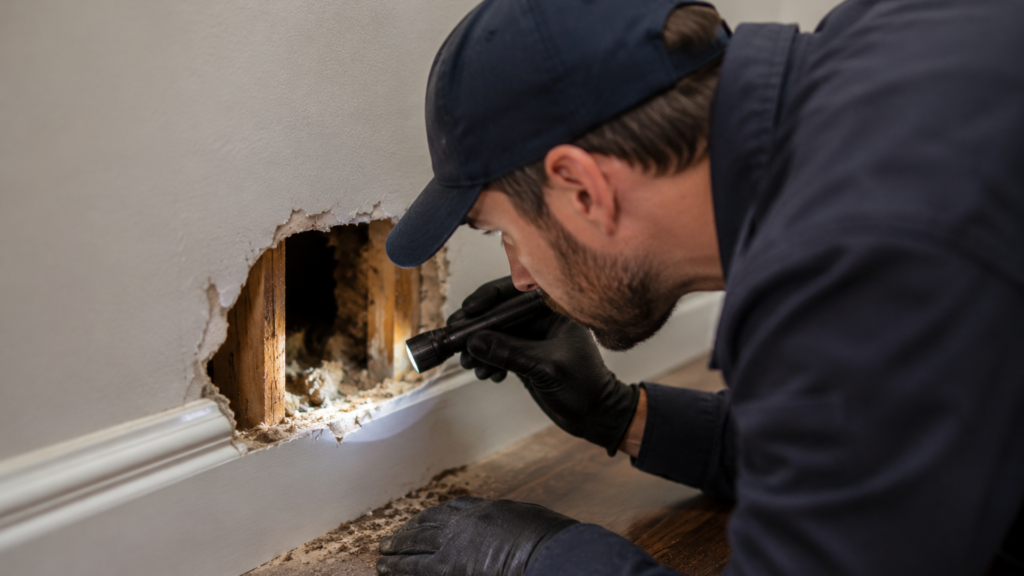
Before any traps go down or any gaps get sealed, you need to know exactly where the rats are entering the structure and where they are moving once inside. Start on the exterior of the building and work methodically around the full perimeter at ground level and up to the roofline. Entry holes are typically found where pipes and utilities enter the wall, along the foundation where it meets siding, around window frames and door frames, and at any point where two building materials meet with a gap larger than a quarter inch.
Inside the building, look for grease trails along walls, concentrated droppings near specific wall sections, and any gnaw damage on baseboards or wall surfaces. Shining a flashlight along the base of walls in low-light conditions makes grease marks and debris trails significantly easier to spot. Tap along wall surfaces and listen for hollow sections that might indicate a cavity being used for nesting. Mark every entry point and active runway you find before moving to step two, because thorough mapping at this stage determines how effective the removal phase will be.
Step 2: Safe and Effective Removal
Snap traps are the most reliable and responsible removal tool for rats in walls. Place them at confirmed entry points, along grease trails, and at any gap or opening where rat activity is concentrated. Position the trigger end of the trap facing the wall so the rat approaches from the side it naturally travels, which produces a cleaner catch than a trap placed in open space. Use peanut butter, nesting material, or chocolate as bait in small quantities. Check and reset traps every 24 hours and clear any caught animals with gloves before disposal.
Live traps work for smaller infestations where the homeowner prefers not to use lethal methods, but they require daily checking and a plan for relocating the captured animals well away from the property. A rat released within a quarter mile of your home will find its way back in a matter of days.
Poison inside walls carries serious risks that most product labels do not fully communicate to buyers. A rat that consumes rodenticide and dies inside a wall cavity creates a decomposition problem that produces a severe odor for three to six weeks and can attract secondary pest problems. Poison is also a risk to non-target animals including pets and wildlife that may encounter a weakened or dead rat. For rats already established inside wall cavities, snap traps remain the safer and more practical option.
Step 3: Exclusion and Sealing
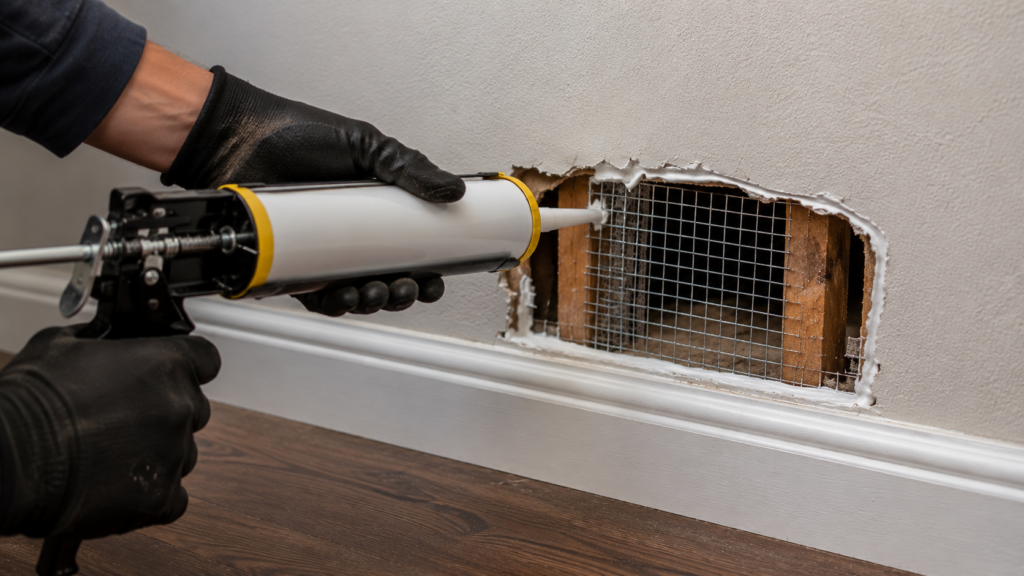
Exclusion work is what turns a temporary fix into a permanent solution. Once trap catches drop to zero across a full week of checking, begin sealing every entry point identified during inspection. Steel wool packed firmly into gaps followed by an application of caulk or expanding foam provides a barrier that rats cannot chew through within a practical timeframe. Copper mesh works equally well and holds its integrity in damp conditions better than steel wool over the long term.
Focus your prevention plan on the most vulnerable points first: pipe penetrations through exterior walls, foundation-to-siding gaps, and any gap along the roofline or soffit where roof rats access upper wall cavities. Hardware cloth with a quarter-inch mesh stapled over larger openings and secured with construction adhesive handles gaps too large for mesh or wool alone. Check your sealing work after the first rain to confirm no new gaps have opened along caulked sections.
When to Call Professional Rat Removal
Some rat in walls situations exceed what DIY methods can address reliably. If trap counts stay high after two weeks of consistent trapping, the population is larger than a standard exclusion and trapping effort can manage alone. Evidence of chewed electrical wiring inside wall cavities is a situation that requires a licensed professional and potentially an electrician before any further work proceeds. Rental properties with tenant safety obligations and multi-unit buildings where infestation has spread across shared wall systems are both scenarios where a licensed pest control operator is the appropriate first call rather than the last resort.
Prevention Tips to Keep Rats Out of Walls Forever
- Store all food in sealed hard containers rather than bags or cardboard.
- Keep compost bins elevated or in sealed units.
- Cut back tree branches and dense shrubs that touch or overhang the roofline, since these are primary access routes for roof rats reaching upper wall cavities.
- Stack firewood at least 18 inches off the ground and away from the building perimeter.
- Run a quarterly exterior check of every sealed entry point to catch any new gaps that have opened through settling, weathering, or pest activity.
- Setting one or two snap traps in the attic and basement as permanent monitoring stations gives you early warning of any new activity before it develops into a wall infestation.
Frequently Asked Questions (FAQs)
What do rats in walls sound like?
Rats in walls produce scratching, scurrying, and gnawing sounds that move through the wall cavity. The movement pattern is often directional, suggesting travel between points rather than stationary activity. Squeaking is less common but occurs in nesting areas, particularly when young are present.
Can rats chew through walls?
Rats chew through drywall, soft wood, insulation board, and most soft sealants without significant resistance. They cannot chew through steel, copper mesh, or properly installed hardware cloth, which is why those materials are the standard for exclusion work rather than foam or plastic alternatives.
Is it dangerous to have rats in walls?
Rats in walls chew electrical wiring at a rate that creates a documented fire risk in residential buildings. Beyond fire risk, their droppings and urine contaminate insulation and can become airborne during HVAC operation. Hantavirus is carried by certain rat species and transmits through dried droppings disturbed during cleaning or renovation work.
How long does it take to get rid of rats in walls?
A straightforward infestation addressed with proper trapping and exclusion typically resolves within two to four weeks from the start of active trapping. Larger infestations or cases where exclusion work reveals extensive entry points take longer, sometimes six to eight weeks for the full three-step process to run its course.
Should I use poison for rats in walls?
Poison inside wall cavities creates more problems than it resolves for most homeowners. Dead rats inside sealed wall sections decompose and produce severe odors over three to six weeks, and there is no practical way to retrieve the carcass without opening the wall. Snap traps positioned at entry points produce a contained and retrievable result that poison cannot match in an enclosed space.
Wrapping Up…
Rats in walls are not a problem that resolves on its own or responds to half-measures. The three-step process of thorough inspection, targeted snap trap removal, and complete exclusion sealing is what produces a permanent result rather than a temporary reduction in noise. Work through each step in order, do not seal entry points until trap counts confirm the population is cleared, and run a prevention plan afterward to close off the conditions that made your walls attractive in the first place. That sequence works consistently when it is followed completely.