
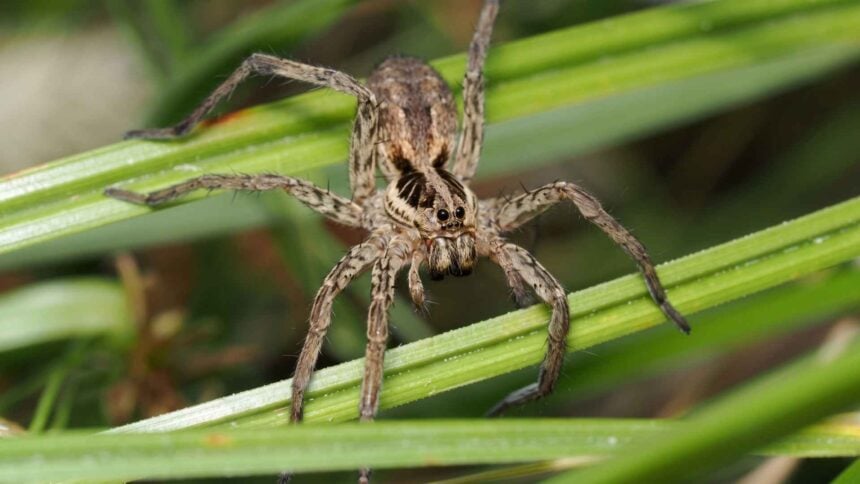
Wolf spiders have a way of making people panic fast, especially when one darts out from under furniture or across a garage floor. Before you grab a shoe, it helps to know that a female may be carrying an egg sac, and crushing her can leave spiderlings scattered around the room.
We break down how to get rid of wolf spiders in a way that actually makes sense. That starts with identification, then moves into the things that attract them, the places they get inside, and ten methods you can use to bring the activity down.
Although wolf spiders do not nest, breed, or build spider webs indoors, you could still keep seeing them if your home gives them easy access to insects and dark hiding spots. Keep scrolling to figure out how to kill wolf spiders and prevent them from finding their way into your house.
Table of Contents
How to Identify a Wolf Spider
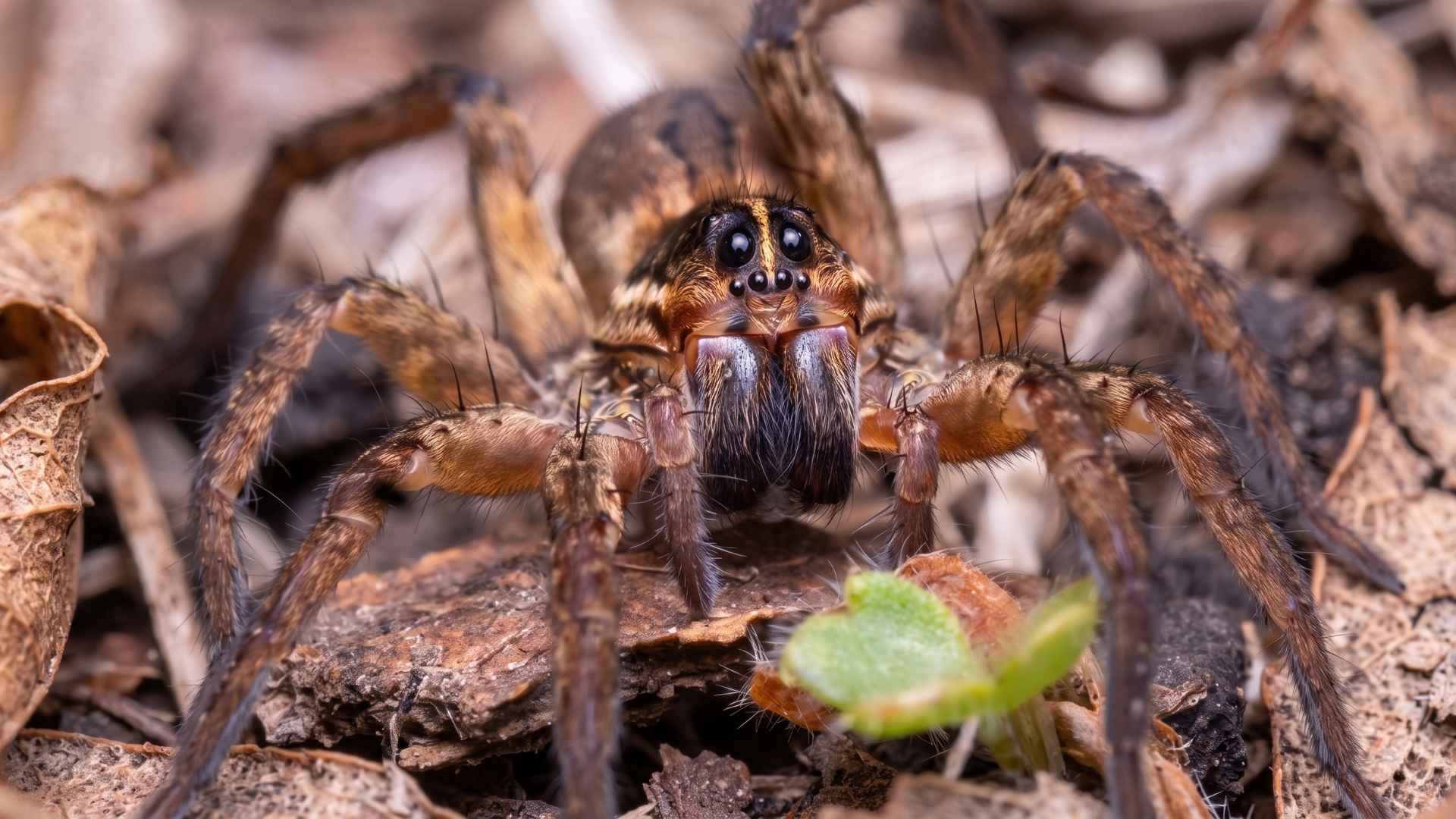
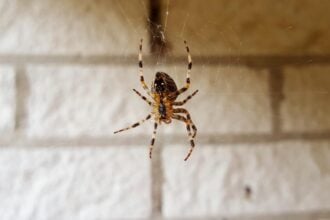
- Color: Usually gray, brown, black, or tan, often with darker stripes running along the body
- Size: Females are usually around 3/8 to 1 3/8 inches long, and males are around 1/4 to 3/4 inches, measured by body length alone
- Shape: Thick, sturdy body with two main sections and eight eyes arranged in three rows
- Eyes: Four small eyes sit along the bottom, two large eyes sit in the middle, and two medium sized eyes sit higher up
- Legs: Eight long, spiny legs built more for running and chasing prey than sitting still
- Mouthparts: Two short pedipalps sit near the jaws and can look like a tiny extra pair of legs
- Region: Found in many parts of the world and common across the United States and Canada
- Behavior: Hunts by running after insects on the ground instead of waiting in a web
- Unique trait: Female wolf spiders carry their egg sacs attached to the spinnerets and later carry the young on their backs
What Is a Wolf Spider?
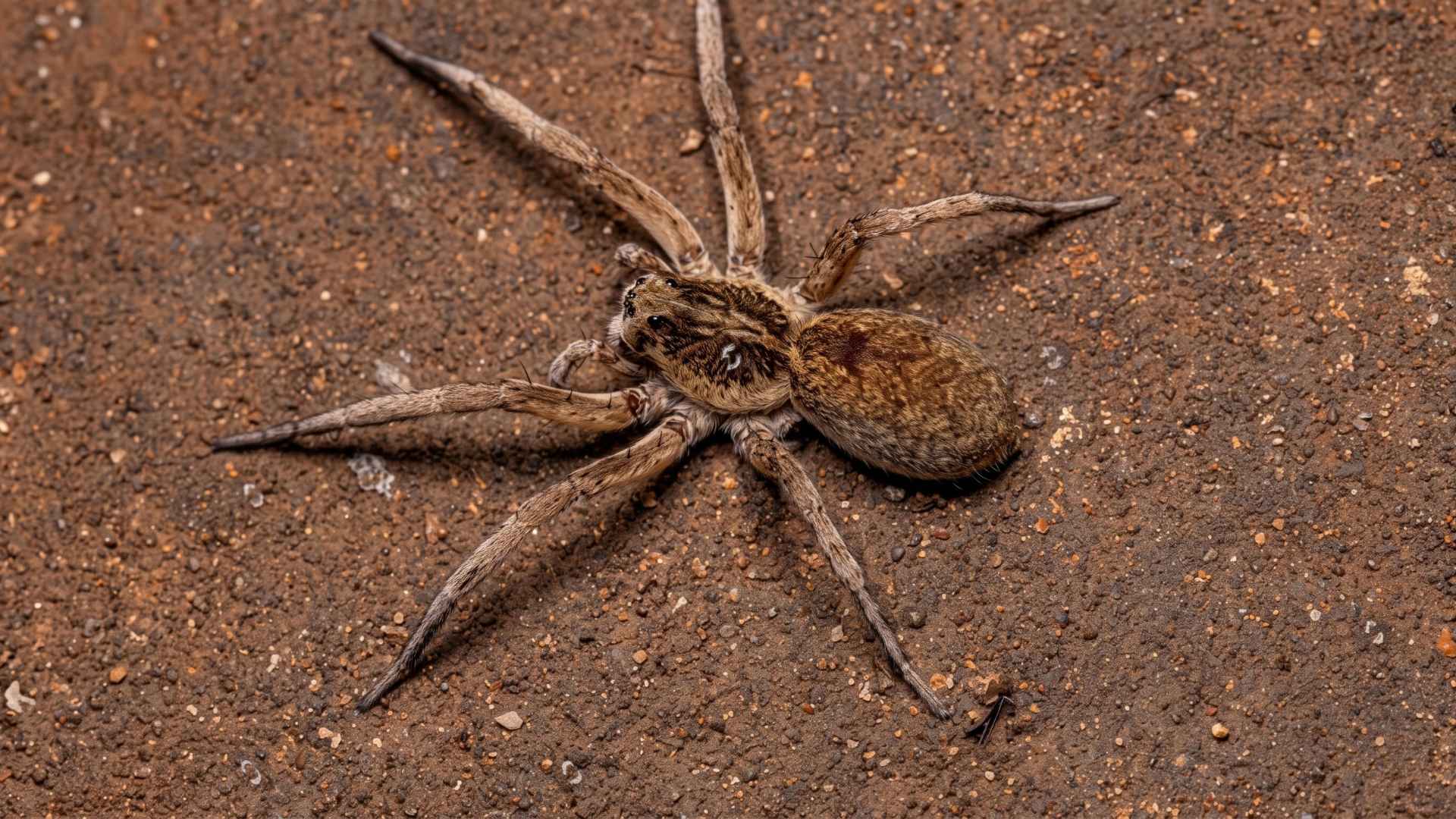
Wolf spiders belong to the Lycosidae family and get their name from the way they hunt. They chase insects across the ground and pounce on them instead of waiting for prey to get caught in a web.
Wolf spiders live almost everywhere except Antarctica. During the day, they usually stay tucked under rocks, leaves, logs, or other dark cover, then become much more active at night.
Their habit of roaming around on the ground is one reason they end up indoors (garages, basements, and other low areas of the home). They are usually looking for food or shelter and barely are trying to settle permanently inside the house.
Are Wolf Spiders Poisonous?
Wolf spiders are venomous, not poisonous. Poison has to be swallowed, touched, or breathed in, while venom gets injected through a bite.
Wolf spiders usually bite only when they feel trapped, handled, or pressed against the skin. Their venom is not considered dangerous to most people, though the bite can still sting and leave some redness, swelling, or itching around the area.
Some bites barely cause a reaction. Others can feel closer to a bee sting and leave two small fang marks. The pain usually fades fairly quickly, while swelling or itching can hang around a bit longer.
Clean the area, use a cold pack if needed, and keep an eye on how the skin reacts. If the pain keeps getting worse, swelling spreads, or you notice any unusual symptoms, contact a doctor or poison center.
Where Do Wolf Spiders Live?
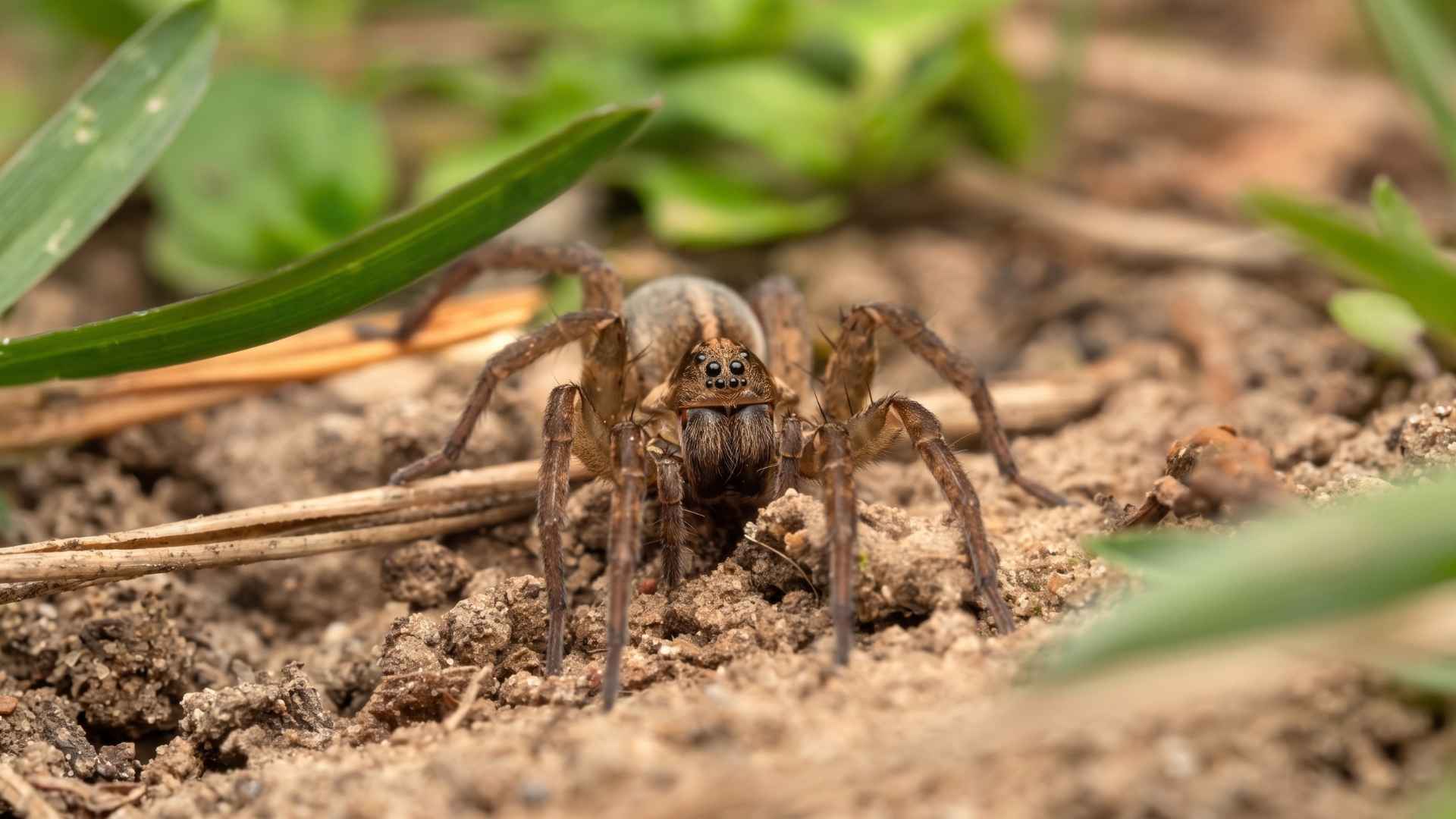
Wolf spiders spend most of their time close to the ground. Outdoors, you will usually find them around leaf piles, woodpiles, tall grass, gardens, rocks, and other covered areas where insects are easy to hunt.
Inside the house, they tend to show up in garages, basements, sheds, closets, near doors and windows, behind furniture, or around houseplants. Dark and quiet spots close to the floor are the places they seem to favor most.
Seeing one spider inside is not enough to call it an infestation. Most that wander indoors either wandered in by mistake or were trying to overwinter somewhere warmer once outdoor temperatures dropped. If you keep spotting them in the same area though, check nearby doors, foundation gaps, vents, and window edges for places they may be getting through.
What Do Wolf Spiders Eat?
- Crickets and grasshoppers
- Beetles
- Ants
- Other spiders
- Small moths
- Occasionally other wolf spiders
10 Effective Ways to Get Rid of Wolf Spiders
1. Never Squish a Wolf Spider
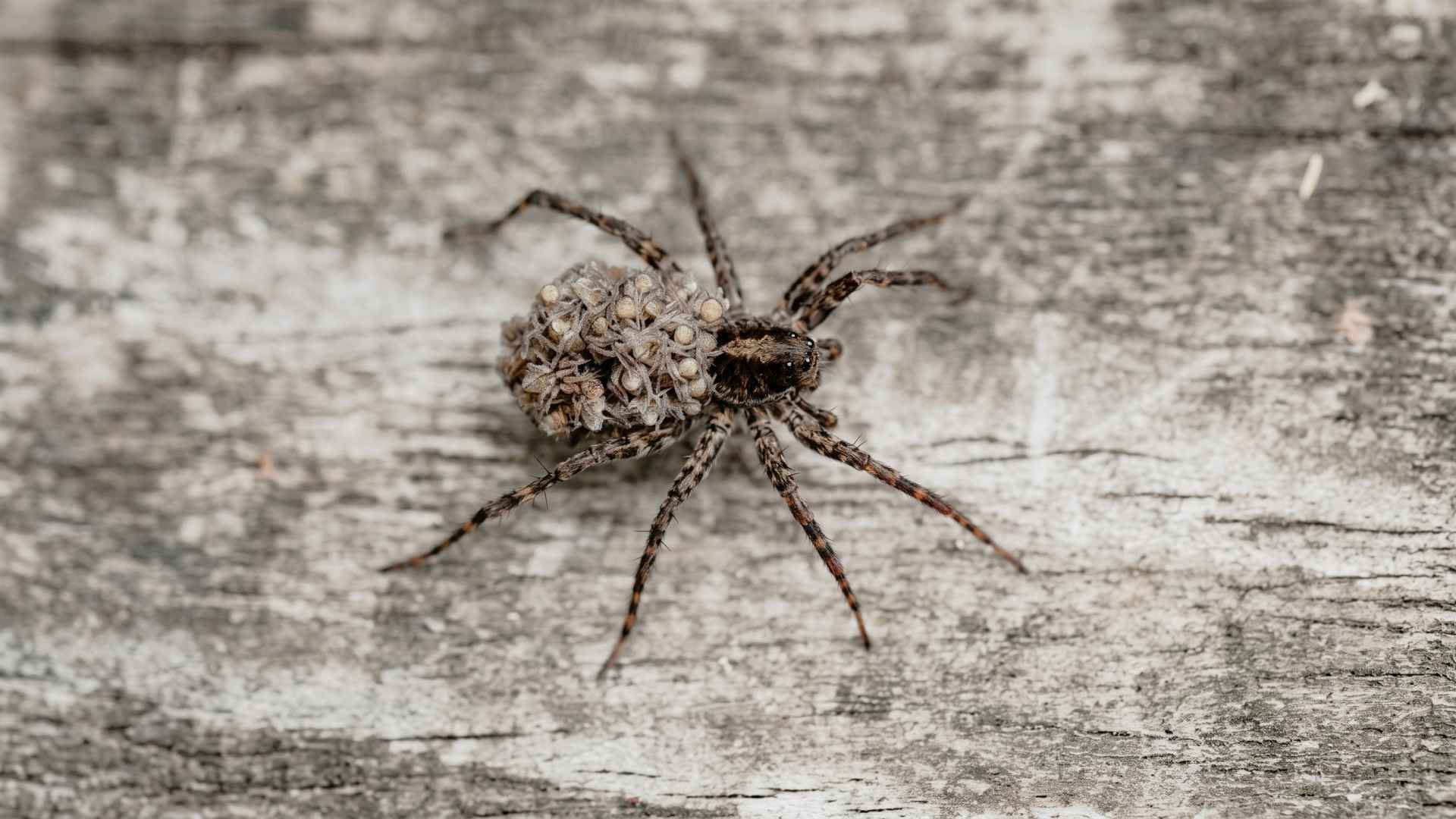
The first rule, when it comes to getting rid of wolf spiders, never ever squish one you find indoors. Females frequently carry a silk egg sac attached to their spinnerets, packed with dozens of eggs ready to hatch, and squashing her releases every one of them across your floor at once.
Even without an egg sac present, crushing a spider leaves a mess behind and does nothing to address whatever drew it inside in the first place. This single habit shift, resisting the instinct to stomp on sight, prevents the exact scenario that turns one spider sighting into a wolf spider infestation spreading room to room within days.
2. Vacuum Wolf Spiders You Find Indoors
A vacuum is usually the easiest way to deal with a wolf spider indoors. The hose lets you pick it up quickly and keeps your hands away from the spider the whole time.
Pay close attention to closets, basement corners, behind furniture, and other dark spots where they like to hide. Running the vacuum through those areas every few weeks can also help catch new spiders before they stick around.
Empty the bag or canister outside once you are done. If the spider is still alive, leaving it inside the vacuum gives it a chance to crawl back out later.
3. Block Entry Points
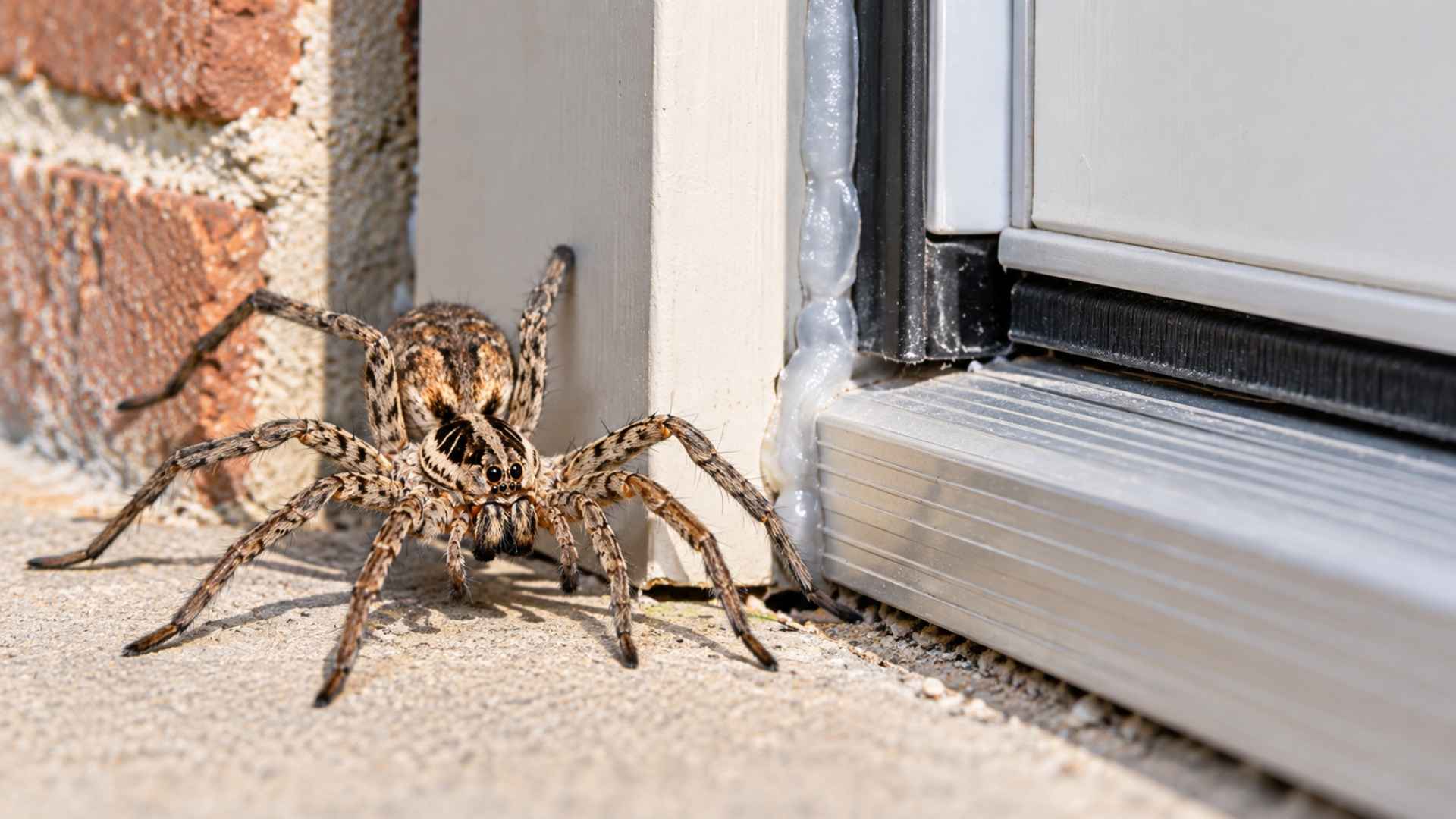
The real fix for wolf spider control starts outside the room where you spotted one. Check the foundation, utility lines, window screens, and door frames for gaps that give wolf spiders an easy way in.
Most small openings can be handled with caulk, and weatherstripping helps around door frames where the gaps are wider. That cuts off the routes wolf spiders use when they wander in from outside.
Once those openings are closed, you should see fewer spiders making their way inside. If you want to get rid of wolf spiders long term, cutting off their entry routes is one of the most useful steps you can take.
4. Remove Yard Debris Around Your Building
Leaf piles and organic debris give bugs a harborage right up against your foundation, and bugs are exactly what draws wolf spiders in close enough to eventually find their way indoors.
Keep those leaves raked up and you resist both problems at once, fewer insects for spiders to hunt and fewer hiding spots for the spiders themselves.
Lawn clutter, tall grass, and weeds along the foundation line make a yard considerably more inviting to the insects wolf spiders feed on. Turns out, clearing that debris does double duty against the whole food chain drawing them toward your home.
5. Create a Barrier
A good barrier can cut down the number of wolf spiders that make it indoors. Use a labeled indoor perimeter product like Ortho Home Defense around baseboards and entry areas, then add door sweeps where garage or basement doors leave space near the floor.

Repairing loose window and vent screens should be considered as well, since a torn screen undoes the benefit of a sealed door entirely. Put those steps together and you get a more complete wolf spider control setup that helps block new activity before it reaches the room.
6. Reduce Areas of Moisture
Wolf spiders love moisture, and a damp basement or a leaking outdoor spigot gives them exactly the environment they’re drawn to.
You should also pay attention to fixing leaks, running a dehumidifier in consistently damp spaces, and improving drainage around the foundation to cut that draw off directly.
This step alone won’t clear an existing wolf spider population, though. If you pair it with sealing and yard cleanup, it closes one more reason wolf spiders keep choosing your property.
7. Place Sticky Traps Along Wolf Spider Travel Routes
Sticky traps can help you catch wolf spiders in the spots they actually use. Put them along baseboards, inside closets, near basement walls, and around quiet corners where spiders are more likely to pass through.

Place a few traps in every room where you have seen spiders before. They tend to follow the same routes, especially along walls and furniture edges.
8. Reduce the Insects Wolf Spiders Feed On
Food supply and population size have a direct relation here. Wolf spiders stick around wherever prey is abundant. It turns out that the fewer crickets, beetles, and other bugs available around your home, the less reason a hunting wolf spider has to stay.
General insect control, sealing food sources, fixing screens, and treating for other pests, cuts off their food supply at the same time it addresses whatever other bug problem prompted the treatment in the first place.
9. Turn Off Outdoor Lights
Porch lights and exterior fixtures draw flying insects at night, and those insects draw hunting wolf spiders right along with them.
Switching to motion activated lighting instead of leaving exterior lights on continuously cuts down on that insect traffic considerably.
10. Use Labeled Spider Insecticides
For an established population that hasn’t responded to sealing and cleanup alone, a labeled spider spray applied along baseboards, entry points, and known travel routes handles what prevention alone can’t.

Always follow label directions closely, since spider specific products differ from general insect sprays in both concentration and application methods.
Will Boric Acid or Diatomaceous Earth Kill Wolf Spiders?
Not reliably, and the reason comes down to basic wolf spider anatomy. Wolf spiders stand tall on long legs, keeping their bodies well clear of any powder scattered across a floor, and they don’t groom themselves the way cats or many insects do. Turns out, they almost never ingest boric acid accidentally.
At best, a spider walking through the powder might lose a small amount of moisture through its feet, rarely enough to actually kill it. If your wolf spiders infestation is centered more outdoors than in, sprinkling boric acid or diatomaceous earth around the affected area is worth trying anyway. It will at least help you keep them away.
Do Natural Wolf Spider Repellents Work?
- Peppermint Oil: It may help keep wolf spiders away for a short time, but the smell fades fast and usually needs to be reapplied often.
- Vinegar: People recommend it a lot, but it is not something we would rely on for serious wolf spider control.
- Cedar and Essential Oils: These can act as mild deterrents, but they work better as a small part of a bigger prevention plan.
Natural repellents can help for a short period, but they do not fix the real problem. If spiders still have open entry points, insects to feed on, and dark places to hide, scent based repellents will only do so much.
Why Do I Keep Finding Wolf Spiders in My House?
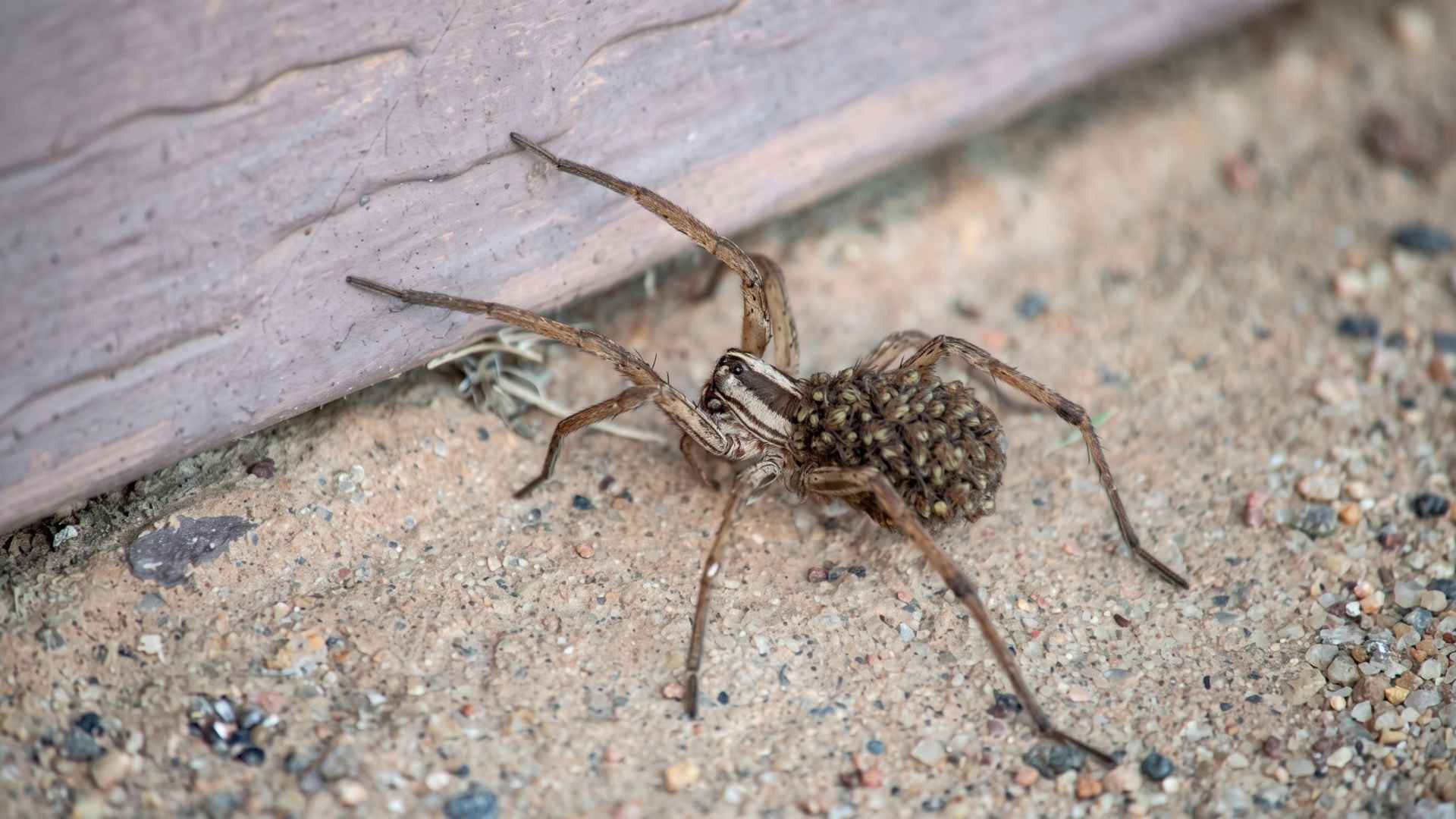
Repeated sightings almost always trace back to one of three things, an unsealed entry point, an active insect food source nearby, or a damp area drawing them in.
Wolf spiders don’t build webs or nests indoors the way some spiders do, so a steady stream of sightings usually means new spiders keep wandering in from outside rather than one population breeding indoors repeatedly.
Walking your home’s exterior and checking for gaps, moisture, and insect activity typically reveals the actual cause faster than treating the spiders you’re seeing one at a time.
When to Call a Pest Control Professional
A handful of sightings each month is manageable with the steps above, but a Wolf spiders infestation that keeps growing despite sealing, cleanup, and traps points to something bigger going on, often a larger insect problem feeding the population or an entry point you haven’t located yet.
Orkin’s technicians can inspect your property for exactly these overlooked gaps and food sources, then apply treatment options beyond what’s available over the counter. For a property with a genuinely persistent problem, bringing in professional help early tends to resolve things faster than continuing to manage spiders one sighting at a time indefinitely.
Frequently Asked Questions (FAQs)
What will keep wolf spiders away?
Sealing entry points, reducing outdoor lighting, and cutting back yard debris address the core reasons wolf spiders wander toward a home in the first place, and combining all three works far better than any single method alone.
Why does my house have so many wolf spiders?
Usually an unaddressed insect food source nearby, an unsealed gap somewhere along the foundation, or a consistently damp area drawing them in from outside.
Are wolf spiders dangerous?
They look intimidating, but they are not considered dangerous to most people. Although their bite can give you some pain, redness, swelling, or itching, their venom is not lethal to humans.
Do wolf spiders make webs in houses?
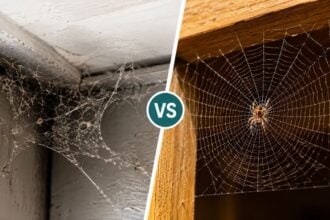
Wolf spiders hunt by running after prey, so they do not build webs to catch insects. If you keep findingwebs indoors, another spider species is probably responsible.
Wrapping Up…
Most wolf spiders that show up indoors are there because they found food, moisture, or an easy way inside. They are usually passing through, not trying to build a long term indoor population.
Seal the gaps, clear debris around the house, reduce outdoor lighting near entry points, and use sticky traps where activity keeps showing up. A labeled insecticide can help with spiders that are already inside.
If you want to get rid of wolf spiders long term, prevention is what does most of the work. If sightings keep increasing even after cleanup and sealing, bringing in a pest control professional may be the next step.