
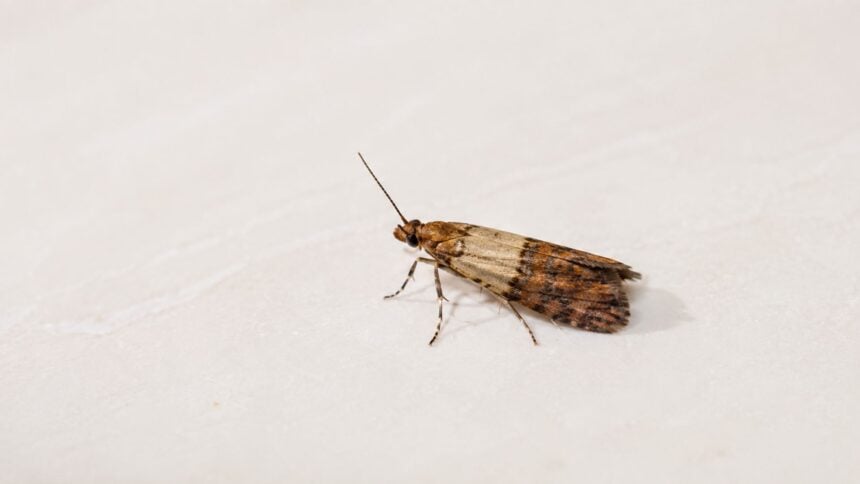
Finding a moth flying around your stove at ten at night is never a good sign. You need to inspect your baking flour, look through your white rice bags, and check any corner where dry staples have rested for months. Solving a breakout requires you to verify exactly what kind of moth is crawling around your kitchen. A stray moth from outside looks nothing like the real thing once you know what to check.
A genuine pantry moth infestation almost always traces back to one bag of something in the cupboard, and it spreads fast from there. We’ll go through the signs, the actual cleanup process, and what to do if moths keep showing up even after you think you’ve cleared everything out.
Table of Contents
Types Of Moths
Two main insects cause trouble in local American homes. These are the Indian meal moth and the Mediterranean flour moth.
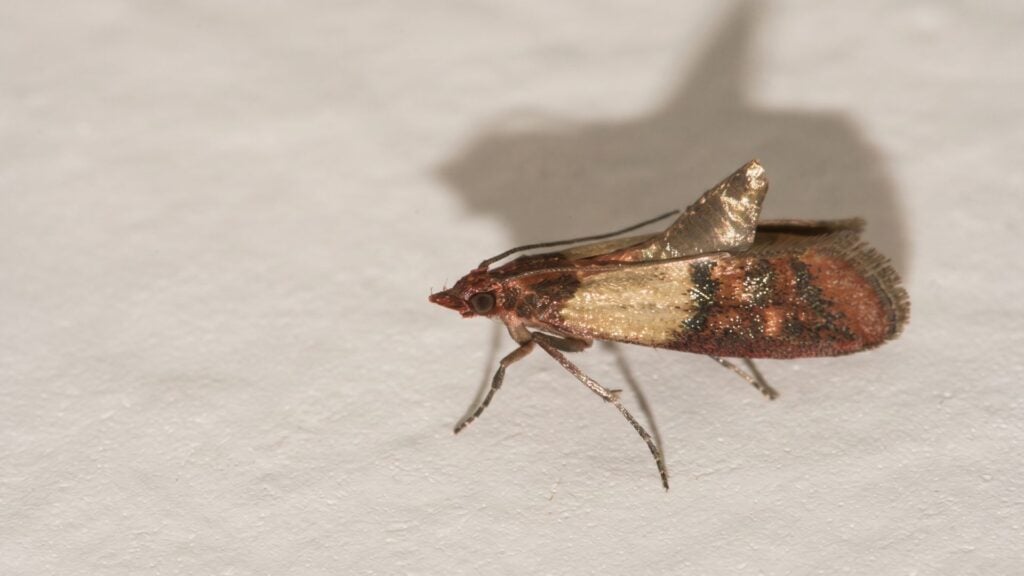
- Indian meal moths hit pantries most often. Em, you can spot them by the warm, copper-colored bars on the back half of their wings, along with pale white shapes near the body.
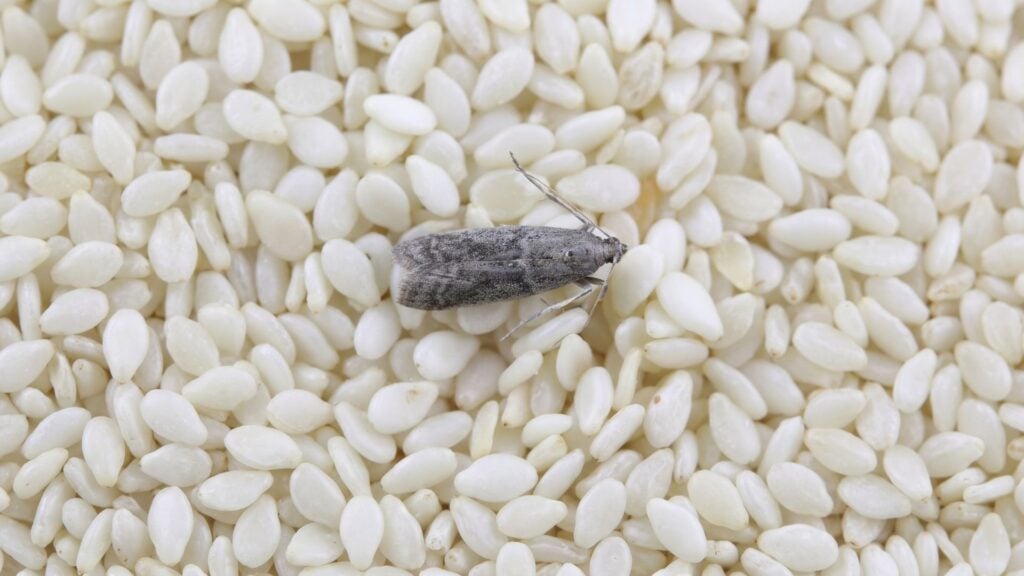
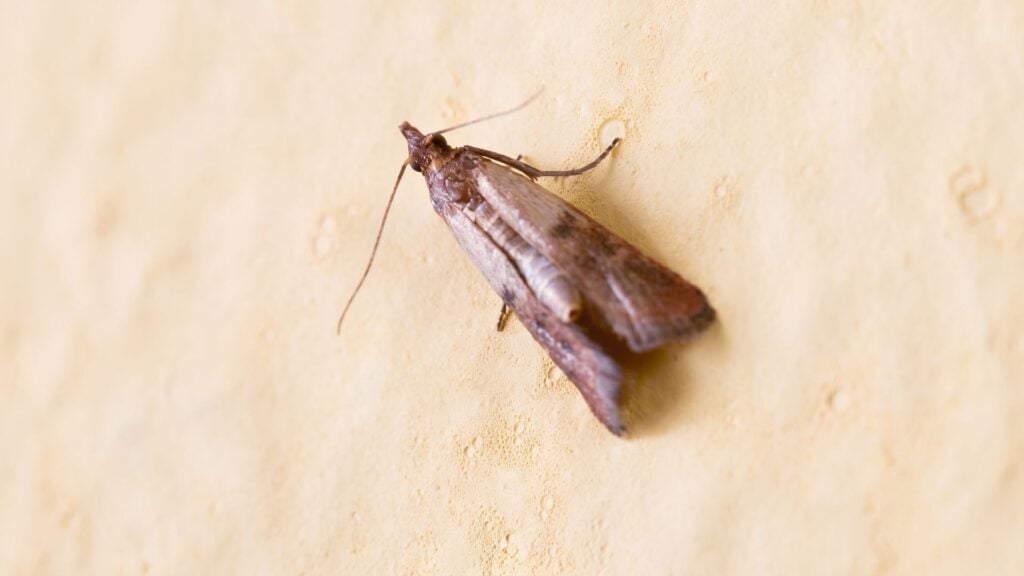
- Mediterranean flour moths look completely basic. They stay gray and dull with zero special color patterns.
Both feed on the same stuff, dry goods sitting in a cupboard, and both of these pantry pests cause the exact same kind of mess. Worth noting, these are entirely different from clothes moths, the ones that chew through wool sweaters. Pantry moths eat food. Clothes moths eat fabric.
What Are the Signs of Pantry Moths Infestation
A few clues give away pantry moths in kitchen cupboards pretty quickly.
- Small caterpillars crawling on walls or ceilings, near the pantry especially.
- Silky webbing matting together grains or flour clumps.
- Tiny moths fluttering out the second you open a cupboard.
- Fine, powdery debris in a bag of rice or flour that wasn’t there before.
A pantry moth infestation rarely announces itself with just one sign, usually it’s a combination of two or three at once.
Get practical help identifying pests, preventing infestations, and protecting your home throughout the year.
View the Pest Control eBookCommon Foods Pantry Moths Infest
- Flour and baking mixes
- Rice and pasta
- Cereal and grains
- Nuts and seeds
- Dried fruit
- Spices
- Chocolate
- Pet food and birdseed
Key Takeaway: Spotting pantry moths in food early saves you from losing an entire shelf’s worth of groceries at once.
How to Tell If You Have a Pantry Moth Infestation
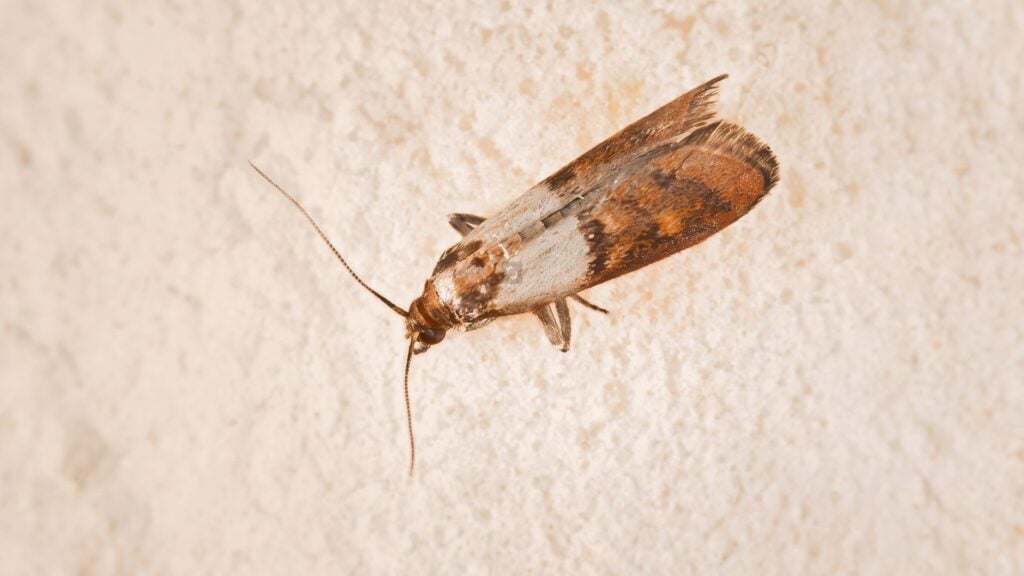
An infestation seems likely once you’re seeing moths repeatedly. A single moth might’ve wandered in from outside. Five moths over three days means something’s actively living and breeding in your cupboard.
Check every open package, flour first, since that’s the favorite. Look for webbing clumping grains together, small pantry moth larvae near the tops of jars, or caterpillars wandering along walls looking for a spot to pupate.
If you find even one infested bag, treat the whole pantry as suspect, cuz pantry moth eggs are basically invisible to the naked eye and could already be sitting in three other packages you haven’t opened yet.
How To Get Rid Of Pantry Moths Step by Step
Here’s exactly how to get rid of pantry moths for good, not just knock the visible ones down for a week.
1. Find the Infested Food and Throw It Out
Go through everything. Flour, rice, cereal, nuts, spices, even that half eaten bag of dog food in the corner. Anything with webbing, caterpillars, or a musty smell gets tossed, sealed in a bag first so nothing escapes into the trash can and crawls right back out. Don’t try to salvage infested food by picking out visible bugs, eggs you can’t see are already in there.
2. Empty and Vacuum the Pantry
Pull everything off the shelves, every single item, even stuff in sealed containers. Vacuum every corner, crack, and seam, since pantry moth larvae wander before they pupate and end up hiding in spots you’d never think to check. Get the vacuum into hinges, shelf supports, anywhere a moth might have tucked a cocoon.
3. Clean the Shelves and Pantry Interior
This step is really the core of how to clean pantry moth infestation damage properly. Wipe every shelf down with hot, soapy water, then follow up with a vinegar and water solution for good measure. Get into corners and along the back wall where crumbs and residue tend to collect unnoticed.
4. Store Dry Foods in Airtight Containers
Once your shelves are totally clean, no dry goods should go back without a tight lid. Smart storage routines are your actual long-term defense against these weirdos. Sealed jars, using glass or tough plastic, stop new pantry moths from dropping eggs on items you purchase.
They also prevent a small problem from moving between boxes sitting right next to each other. This single habit does more for pantry moth prevention than almost anything else on this list, and it’s genuinely how you get rid of pantry moths and keep them from ever coming back.
5. Use Pantry Moth Traps

Pheromone traps work by luring adult male pantry moths to a sticky surface using a synthetic version of the female mating scent. It cuts off reproduction rather than just killing whatever’s currently flying around.
Traps alone won’t tell you how to kill pantry moths already established in food. That part still requires the toss and clean approach. They’re genuinely useful for monitoring how bad things actually are and catching new adults before they lay another few hundred eggs.
A single female moth can lay somewhere between 200 and 300 eggs over about eighteen days, all directly onto food, which is exactly why an infestation that looks small on day one can explode within weeks if nothing’s done.

Place traps a few feet from the pantry. It’s because some people find the concentration of moths drawn toward the trap unpleasant up close. Check them weekly. Replace the sticky insert once it’s covered, and keep at it for at least a month or two even after catches slow down. The larval stage alone can run six to eight weeks before a new batch of adults emerges.
Why Are Pantry Moths Still Appearing After Cleaning?
Usually it comes down to one missed spot. A single overlooked bag in the back of a cupboard, a jar of birdseed in the garage, pet food stored loosely in a bin, any of these can keep feeding a population you thought you’d cleared out.
Eggs are nearly impossible to spot with the naked eye. Plus, the crawling worms can march several feet away from their meal to spin cocoons. They often end up stuck behind a wall baseboard or inside a cabinet hinge.
If moths keep showing up two or three weeks after a full cleanout, go back through every dry good in the house again. You cannot just look in the kitchen. Knowing how to keep pantry moths away long term really just means never skipping the airtight container step again.
Should You Use Insecticide for Pantry Moths?
You should avoid using bug sprays in your kitchen cabinets because most insect experts actively speak against the practice. To wipe out a pantry moths colony safely, you can skip harsh toxins entirely and just stick to throwing out old boxes, scrubbing shelves, and setting up sticky boards.
Spraying chemicals right next to your plates risks poisoning the ingredients you plan to cook later. It also does absolutely nothing to kill off hidden eggs buried inside cardboard cereal boxes.
Simply throwing away ruined meals, washing your cabinets, and using scent baits clears up almost every single household outbreak. You can take out the stress without using poison around your dinner setup.
How Long Does It Take to Get Rid of Pantry Moths?
You should expect to spend four to eight weeks minimum to clear out this problem completely. The larval stage alone can run six to eight weeks depending on temperature, and any eggs present during your initial cleanup will keep hatching for a while after you think you’re done. Checking your sticky boards regularly, looking for fresh pantry moths, and using sealed jars will help speed up the process.
Rushing the process, declaring victory after one cleaning and moving on, is exactly how people end up dealing with the same pantry moth problem over and over and over again even a month later.
Frequently Asked Questions (FAQs)
What is the fastest way to get rid of pantry moths?
Throwing out every infested item immediately, followed by a full vacuum and wipe down of the pantry, cuts the population down fastest if your goal is to get rid of pantry moths quickly. Pheromone traps speed up the process further by catching adults before they can lay another round of eggs, though nothing eliminates an infestation overnight given how the life cycle works.
Where do pantry moths come from?
Kitchen breakouts usually start because of dry goods you carry home from the market that already contain tiny eggs. Checking your bags before they hit your cabinet is a prime habit to stop future problems.
Can pantry moths come from unopened food?
Unfortunately, these bugs can even sneak in inside brand-new, unopened packages. Female moths often drop their eggs right on the grains during the packaging or shipping phases at the factory. Turns out, a sealed plastic bag is not a guarantee that your food is clean.
Does vinegar kill pantry moths?
Vinegar helps with cleaning surfaces and breaking down residue that attracts moths, but it doesn’t reliably kill eggs or larvae on contact. Use it as part of a full cleaning routine alongside proper food disposal, not as a standalone treatment.
Will pantry moths go away on their own?
No, and waiting them out ain’t going to work, it almost always makes things worse. Without intervention, breeding continues, and one small infestation compounds into something covering multiple shelves within a few generations. The longer you wait, the more food and time it ends up costing.
Wrapping Up…
Dealing with a pantry moth infestation comes down to being thorough. Toss anything infested, clean every surface the moths could’ve touched, switch to airtight containers, and use traps to catch stragglers while you wait out the life cycle. Most people who struggle with these pests sticking around missed one bag somewhere or gave up on the cleanup too early. Consistent pest prevention beats a rushed one time cleanup every time. Stay consistent for a few weeks, and get rid of pantry moths for good rather than dealing with round two a month from now.